Solo travel in Seville: tips, safety and itineraries
Is Seville a good city to visit alone?
Yes, and it is one of the easier ones in Europe. The centre is compact and walkable, the bar culture means nobody looks twice at a person eating alone, and the sights are close enough together that you never spend a day stuck in transport (our guide to getting around Seville covers the rest). The honest caveat is that Seville is a city of long, social meals. Eating alone is easy; eating well alone takes a little tactics, which we cover below.
Solo travel here mostly comes down to four decisions: where you sleep, how you eat, how you meet people, and how you pace the heat. Get those right and the rest looks after itself.
How safe is Seville for a solo traveller?
Violent crime aimed at visitors is not what you should worry about. The realistic risks are small, annoying and avoidable: pickpockets and one persistent street scam. Our full Seville safety guide goes through it in detail; the short version for someone alone is this.
- Pickpockets work crowds. The queues around the Cathedral, the area around La Campana and public transport are where bags get opened. Carry your phone in a front pocket or a zipped cross-body bag, and never leave it on a bar or a terrace table.
- The rosemary scam targets people who look unsure. A woman offers a sprig, “reads” your hand, then demands money. Refuse firmly, keep your hands closed and keep walking. Do not take the sprig at all. Our rosemary scam guide explains how the approach unfolds so you recognise it early.
- Late-night walking is generally fine in the centre. Main streets stay busy well into the night, because Seville dines late. Quiet side streets after a long evening are where we would take a taxi rather than a shortcut, as we would in any city.
- Heat is a safety issue too. In summer the city is often well above 40 °C. Sightsee early, rest in the middle of the day, go out again once the sun drops. Alone, you have nobody to notice that you are overdoing it.
None of this is a reason to stay in. It is a reason to behave like a local: bag closed, pace slow, no shortcuts through empty streets late at night
Where to stay when you are on your own
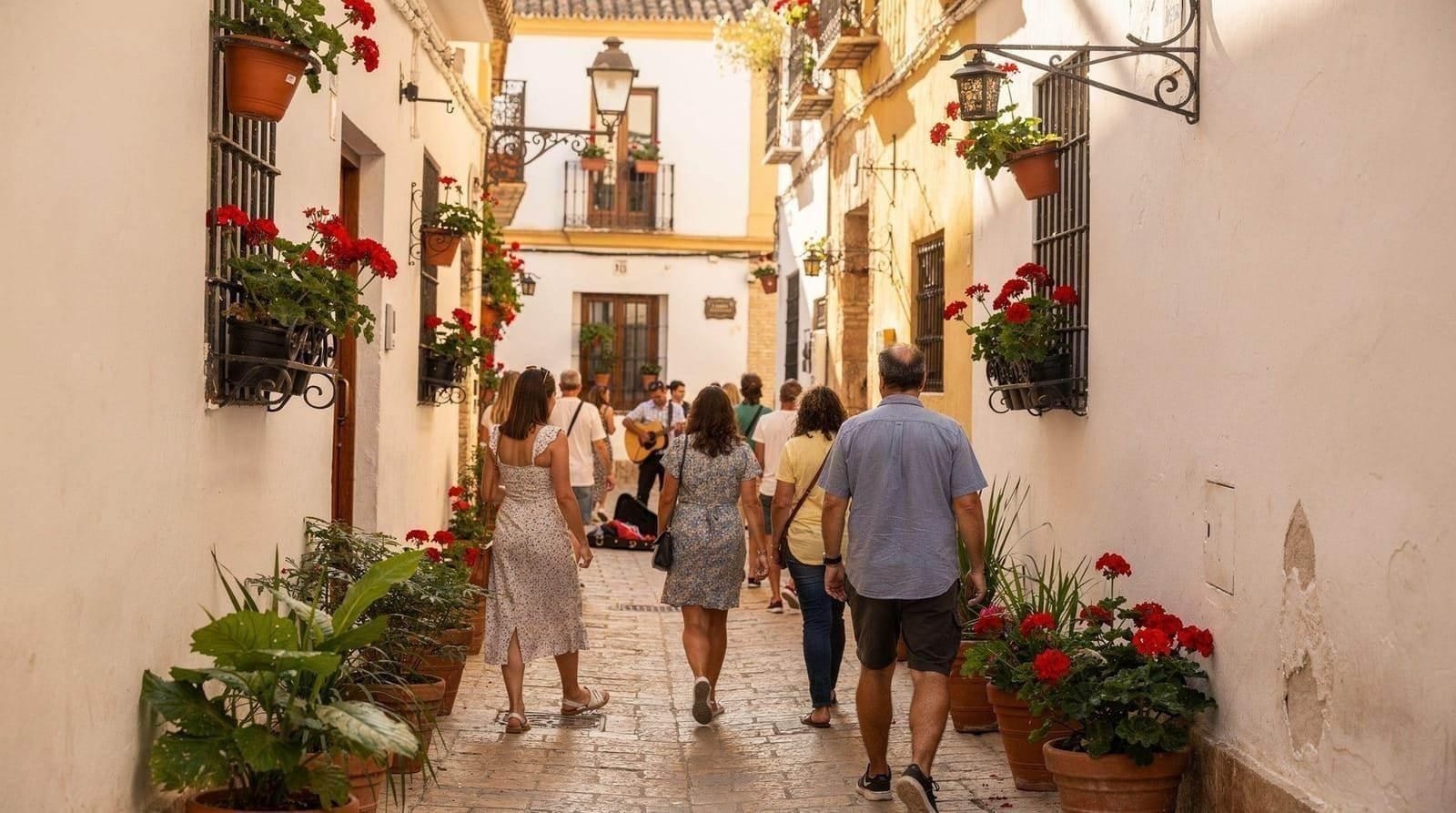
For a first solo visit we would stay in or beside Santa Cruz (see our Santa Cruz neighborhood guide), or in Triana. Both are lively in the evening, so you walk home past open bars rather than dark streets, and both put the main sights within walking distance. Santa Cruz is the most central and the most touristy; it is also where most visitors end up, so expect crowds by day. Triana, across the river, is more local and a little calmer at night, and works well if you want to feel part of a neighbourhood rather than a sightseeing stage set.
Whichever you pick, a few solo-specific rules help:
- Choose somewhere you can reach on foot from the station or by a short taxi ride, so you are not dragging luggage through unfamiliar lanes.
- Read recent reviews from other solo guests, especially on noise and on how easy the door is to find after dark.
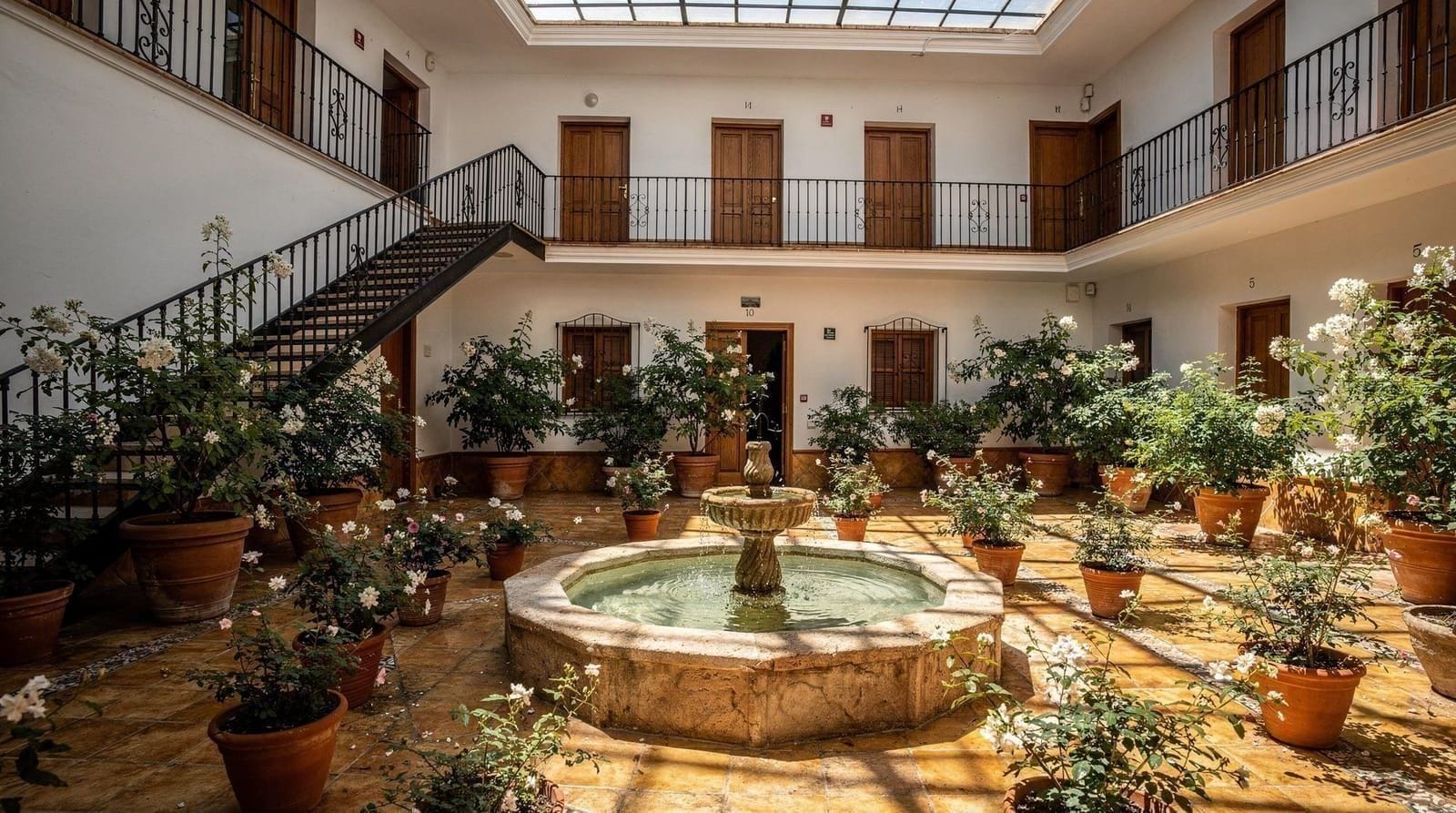
- A place with a shared courtyard or a friendly front desk is worth more than a view. Conversations start there.
For the full breakdown by area, see where to stay in Seville.
Eating alone: the barra is your friend
This is where solo travel in Seville is better than almost anywhere. Standing at the barra, the counter, is the normal way to eat tapas. You order a drink and a few small plates, you eat at your own speed, and the barman talks to you whether you want it or not. It is also the cheapest way to eat. Counter prices are local prices; the same plate on a terrace carries a premium.
A few habits make it work:
- Go in the right order. Two or three small plates, then move on to another bar. Seville eating is a walk, not a booking.
- Order a half portion (media ración) rather than a full one, so you can taste more dishes without being stuffed after the first bar.
- Eat late. Locals dine late, and early evening rooms are mostly other visitors.
- Avoid the sit-down tourist restaurant when you are tired. Menus in six languages and a photo of a paella are the signal. We explain how to spot them in our tourist-trap restaurant guide.
If standing at a crowded bar alone still feels awkward on night one, start with a guided food walk (our Seville food tour guide explains how to choose one). It teaches you how bars work, what to order and how to ask for the bill, and the next evening you do it yourself with confidence. A Seville tapas and local food walking tour is the format we would choose for that first night.
Meeting people without forcing it
Seville makes solo socialising easy if you put yourself in the right rooms. The best ones are the structured ones, where a shared activity does the talking for you.
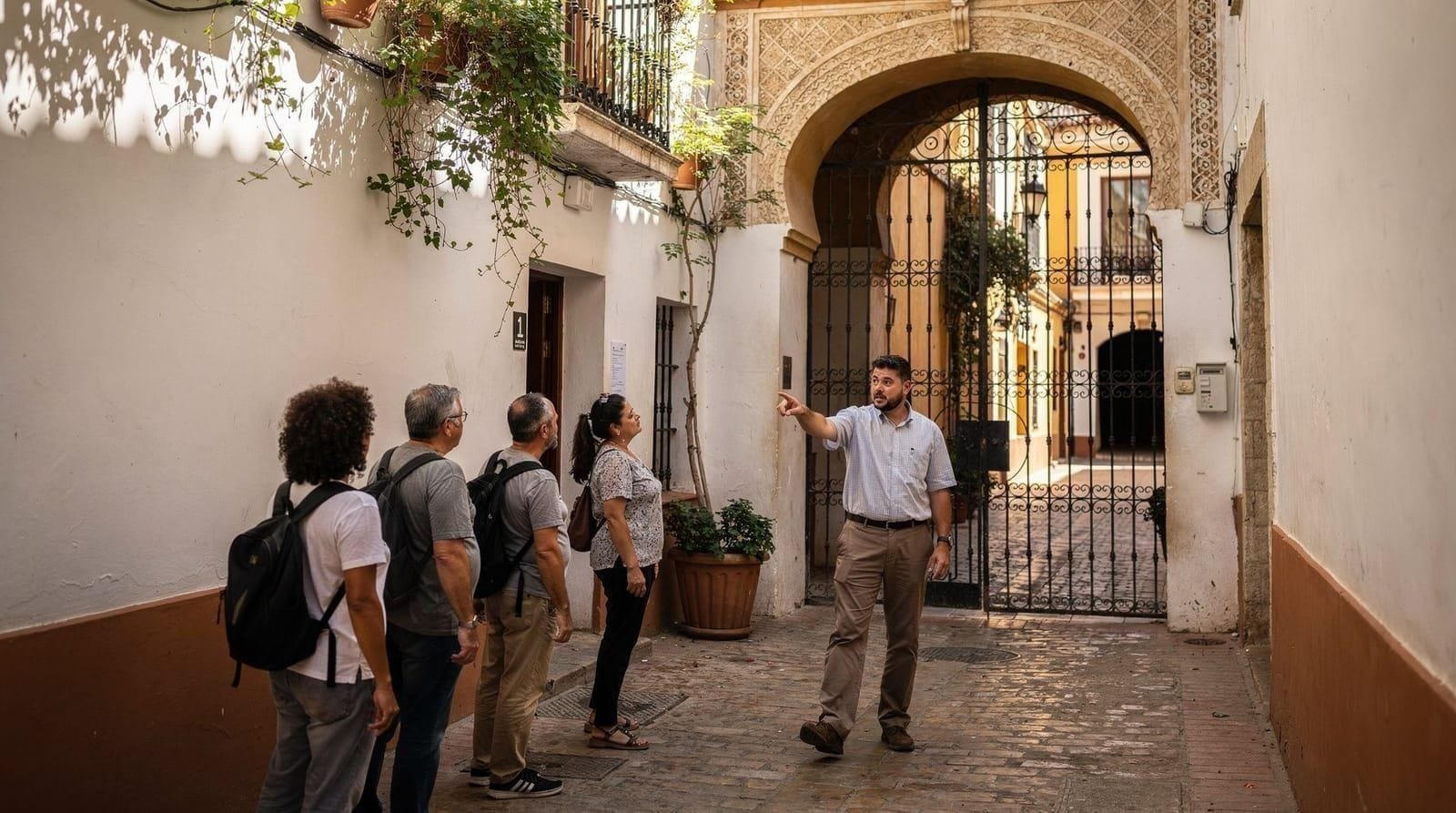
Small-group walks. A guided walk in the first morning gives you orientation and a few people to compare notes with later. A small-group walk through the Santa Cruz quarter is a gentle way in, and our guide to the best walking tours in Seville compares the formats so you can pick one that matches your pace.
Flamenco. A tablao is one of the few evening activities where being alone is not just acceptable but ideal. You sit, you watch, nobody expects conversation, and you leave when it ends. For an intimate room, a flamenco show at Casa de la Memoria is the one we would book first. Reserve ahead: the better rooms are small, and our honest guide to the best flamenco shows in Seville helps you pick a real tablao.
Cooking classes. Shared tables, a shared task and a shared meal at the end. A tapas cooking class in Seville is probably the most reliable way to leave with new dinner companions; our guide to cooking classes in Seville covers what to expect.
A 3-day solo itinerary
This is a loose frame, not a timetable. For a fully structured version, see our 3-day Seville itinerary.
Day one: orient and eat. Arrive, drop your bag, and walk Santa Cruz without a goal. In the evening, do the tapas walk described above, so you have a feel for the bars. Early night.
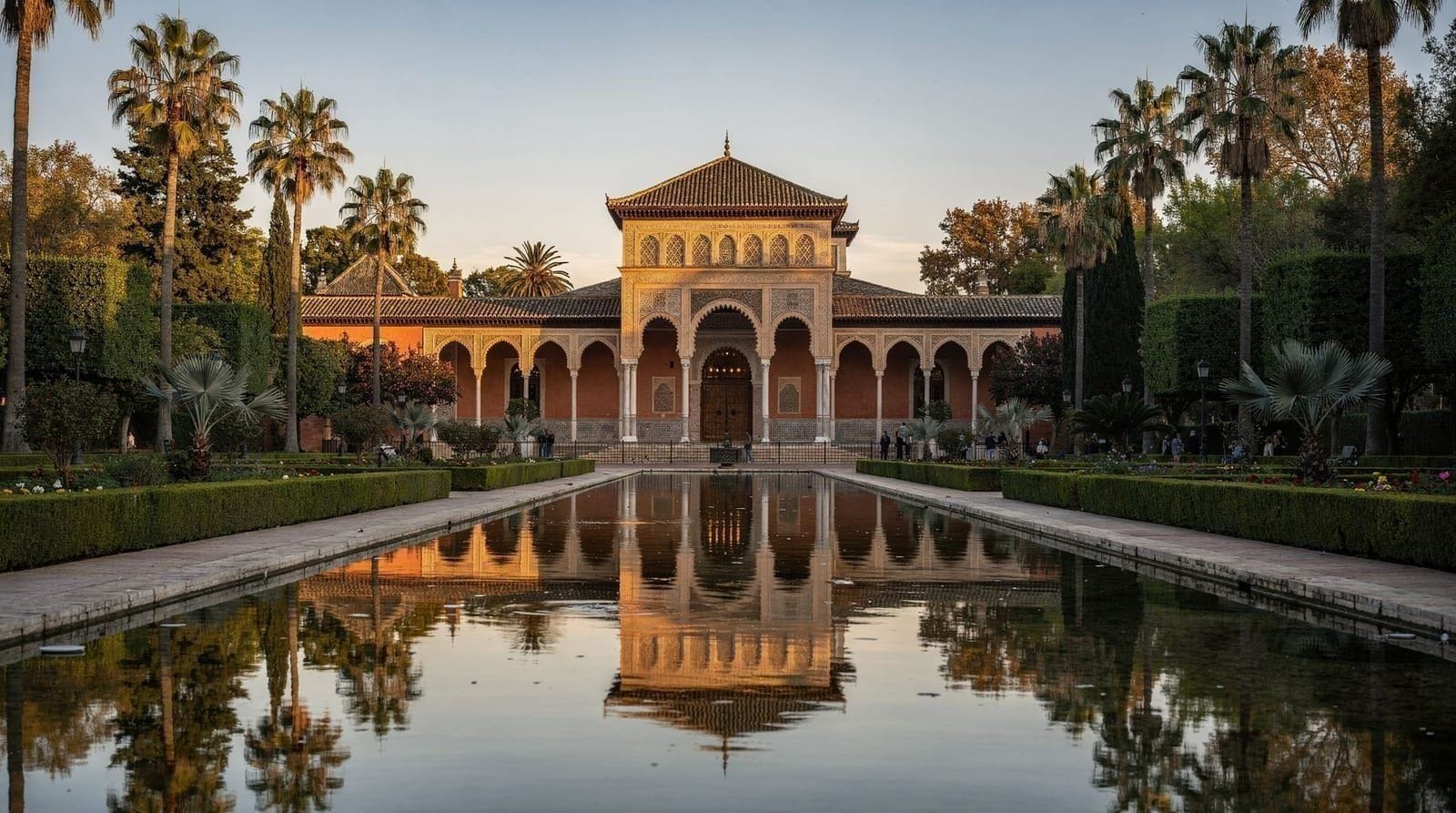
Day two: the big sights, early. Start at the Real Alcázar when it opens, before the crowds, with a ticket booked ahead. Standard adult entry is 15,50 €, reduced 8 € for ages 14 to 30 and 65 and over, and children up to 13 enter free; check alcazarsevilla.org for current hours and closures. If you prefer a skip-the-line option, a skip-the-line Alcázar entry ticket saves you standing alone in a queue in the sun. Afterwards visit the Cathedral and the Giralda (13 € online, 14 € at the ticket office; see catedraldesevilla.es for opening times), then spend the afternoon resting. In the evening, flamenco.
Day three: Triana and a slow finish. Cross the river in the morning, walk the streets and the market, and have a long lunch at the counter. Use the evening for a farewell dinner somewhere you have already learned to love.
A solo day trip: Córdoba
If you have a spare day, Córdoba is the easiest escape from Seville, and it is very comfortable alone. The high-speed train takes about 45 minutes from Santa Justa, you do not need a car, and the Mezquita and the old Jewish quarter are walkable from the station. For a first visit, a guided option removes the planning: a Córdoba day trip by high-speed train with a guided Mezquita visit keeps the logistics simple and puts you in a small group. Our Córdoba day trip guide covers the independent version if you would rather go alone.
Budget: solo does not have to cost more
The usual solo penalty is the single-room supplement. Seville softens it, because food is cheap if you eat like a local and many sights are priced per person anyway. Our site data puts a budget day at about 65 €, and a mid-range day at 120 to 195 €. Eating at the counter is the biggest saving. Eat at the counter and book sights ahead to keep it there.
Final tips before you go
- Share your hotel address and a rough daily plan with someone at home.
- Download offline maps; the old lanes are confusing and signals bounce.
- Learn a few Spanish phrases. A simple “una caña y una tapa de…” earns more goodwill than any guide can buy.
- Leave a gap in each day. The city rewards wandering more than ticking.