Best flamenco shows in Seville 2026: honest tablao guide
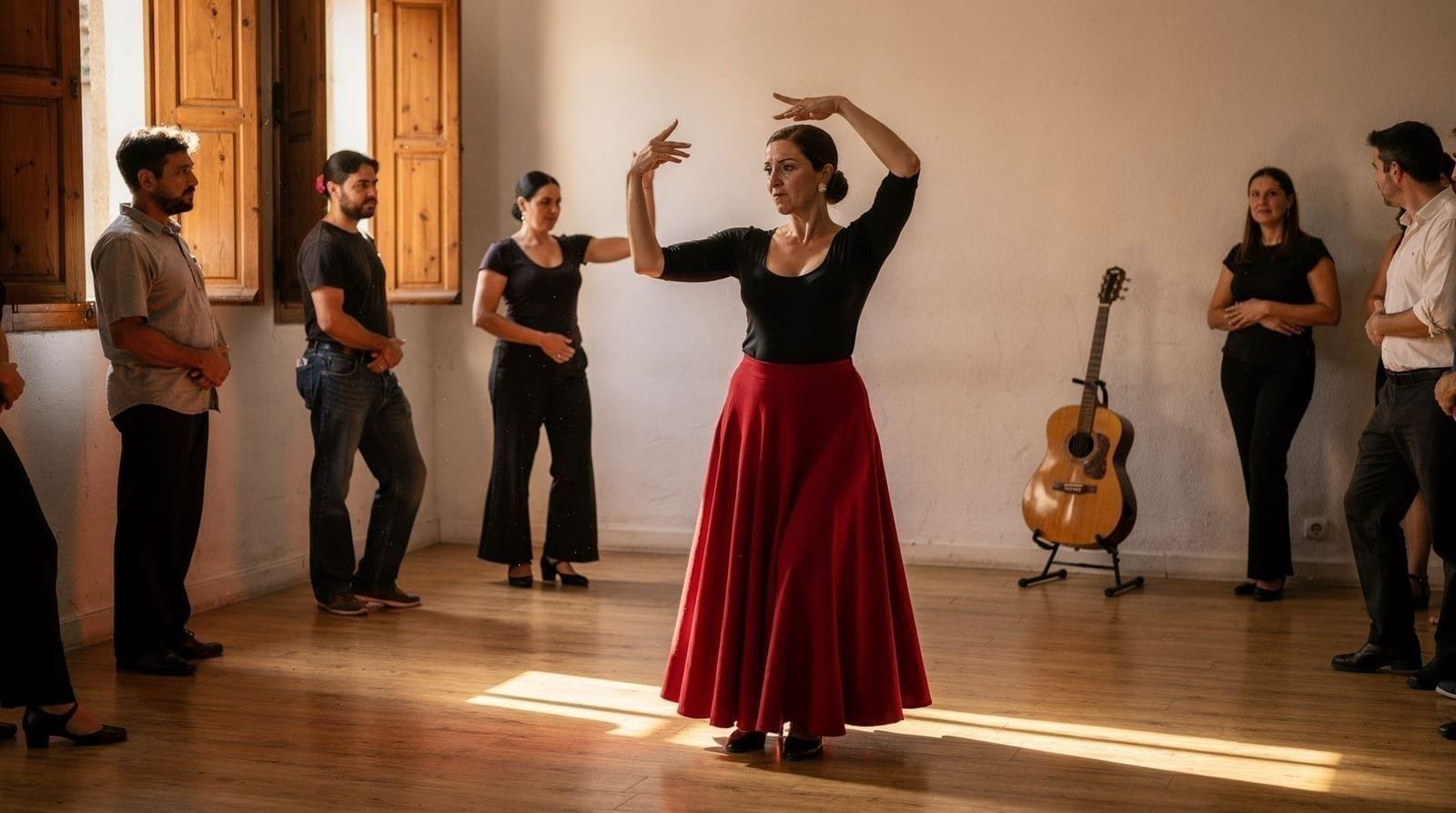
Seville: Casa de la Memoria flamenco show
Which flamenco show in Seville is best?
Casa de la Memoria in Santa Cruz is widely considered the most intimate and artistically serious option (around €24, no food, limited to 100 seats). Los Gallos in Santa Cruz is the city's oldest continuous tablao, strong on authenticity. El Arenal in the Arenal district offers dinner-show combos but at a premium price. For atmosphere over polish, Triana-based venues give a more neighbourhood feel.
Seville has more flamenco shows per square kilometre than anywhere else in Spain. It also has more mediocre ones. This guide cuts through the marketing copy and covers the city’s main tablaos honestly — who performs well, who charges too much for what they deliver, and which shows are worth the money versus which ones are tourist infrastructure.
| Best overall | Casa de la Memoria, Santa Cruz — around €24, no food, ~100 seats |
| Oldest / most consistent | Los Gallos, Santa Cruz — since 1966, around €38 |
| Dinner-show format | El Arenal — €71-86 with dinner, around €45 show-only |
| Neighbourhood atmosphere | Triana tablaos (Almoraima, La Cantaora) — around €18-25 |
| Booking window | 3-5 days ahead in high season; sooner for Casa de la Memoria on weekends |
| Show length | Around 60-90 minutes depending on venue |
What to look for before you book
The word “tablao” originally referred to the wooden platform (tabla) on which dancers performed. It now denotes any dedicated flamenco venue, though the word carries no quality guarantee — a tablao can be anything from a serious artistic space to a dinner theatre serving frozen paella between flamenco medleys.
Useful filters before booking:
Venue capacity. Smaller is better. A venue with 80-100 seats forces better sightlines and creates genuine feedback between audience and performers. Venues seating 300+ are concerts, not intimate flamenco.
Food option. Dinner-show combos are not inherently bad, but they change the dynamic significantly. Eating while watching flamenco is awkward; the performers compete with your plate. If you want dinner, eat first and attend a show-only session.
Performer roster. Well-known tablaos publish their performers online. If you cannot find who is actually performing, that is a signal.
Reviews after 2023. Many reviews on major platforms date from pre-pandemic periods and may not reflect current quality at venues that have changed ownership or artistic direction.
Casa de la Memoria: the benchmark
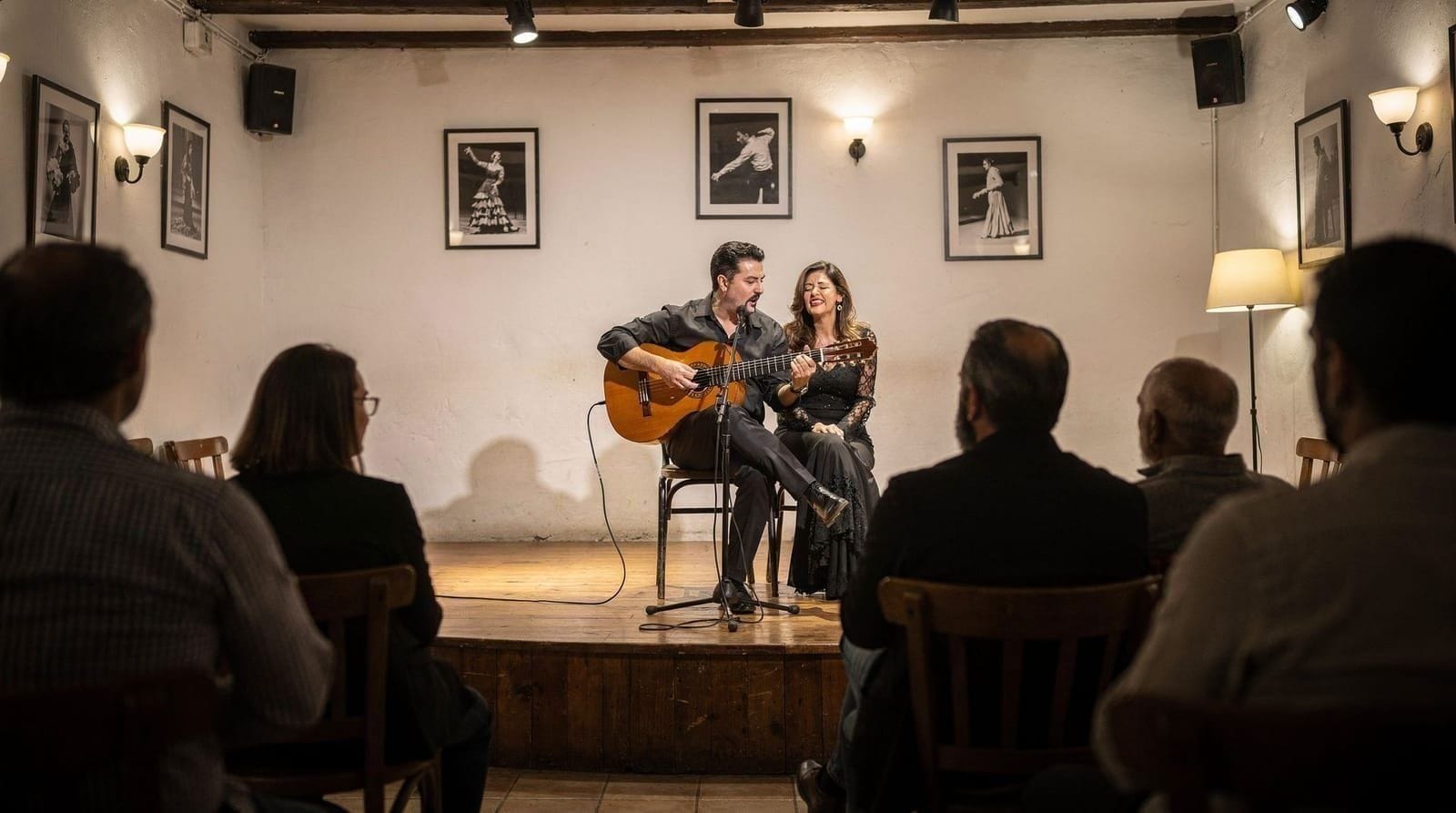
Located in a restored historic building (15th-century origins, once the stables of the Countess of Lebrija’s palace) on Calle Cuna in the historic centre, Casa de la Memoria is consistently the most recommended tablao among people who take flamenco seriously. Its capacity of approximately 100 people creates an environment where you can hear a dancer’s footwork at full force, see every hand movement, and watch the singer’s face during deep cante jondo passages.
The venue does not serve food. This is deliberate — the artistic focus is total. Drinks are available at the bar before and after, but not during the performance. The show runs about an hour and typically includes two or three performers rotating across singing, guitar, and dance.
Prices in 2026 are around €24 per person. At this price, it is significantly better value than the dinner-show options, which can run to €70-90 per person.
Practical note: Seats are assigned at entry, and the venue fills from the front and sides first. The intimate space means there is no bad seat, but arriving 10-15 minutes before the show starts gives you better choice. Booking via GetYourGuide provides advance confirmation without requiring in-person queuing.
Book Casa de la Memoria flamenco showLos Gallos: oldest and most consistent
Tablao Los Gallos has operated continuously in the Barrio Santa Cruz since 1966, making it the oldest tablao in Seville. Age alone means nothing — there are old venues coasting on reputation — but Los Gallos has maintained a serious artistic programme across six decades.
The venue seats around 120 people in a long, low-ceilinged room that concentrates the sound effectively. The programme is typically 75 minutes and rotates through multiple performers. The audience skews toward experienced flamenco-goers rather than purely package tourists.
Current prices are around €38 for the show, with drinks available at the bar. Unlike some larger tablaos, Los Gallos does not push high-margin bar packages during entry.
The main limitation is that a venue this well-established can occasionally run on autopilot. Quality varies by night depending on which artists are performing. If you have the flexibility, checking who is on for specific nights is worthwhile.
Book Los Gallos flamenco showEl Arenal: professional but positioned for dinner-show audience
El Arenal sits near the Maestranza bullring in the Arenal quarter — appropriately, since both venues serve a visitor audience seeking a defined Seville experience. The tablao is larger than Casa de la Memoria or Los Gallos (around 250 seats), and a significant share of its revenue comes from dinner-show packages.
The performances themselves are technically accomplished and well-staged. El Arenal employs experienced performers and the production values are high. The issue is that the venue’s scale and dinner-show orientation create a different atmosphere — more theatrical presentation, less spontaneous interaction (duende) between performers and audience.
Dinner-show packages run €71-86 depending on the menu. Show-only tickets are around €45. If you are choosing between El Arenal show-only and Casa de la Memoria, the latter typically delivers more per euro at a lower price.
El Arenal is a reasonable choice if you want a professionally managed, no-uncertainty experience and prefer the dinner-show format. It is not the best choice if you want to experience flamenco at its most concentrated.
Book El Arenal flamenco dinner showTriana venues: neighbourhood character, variable quality
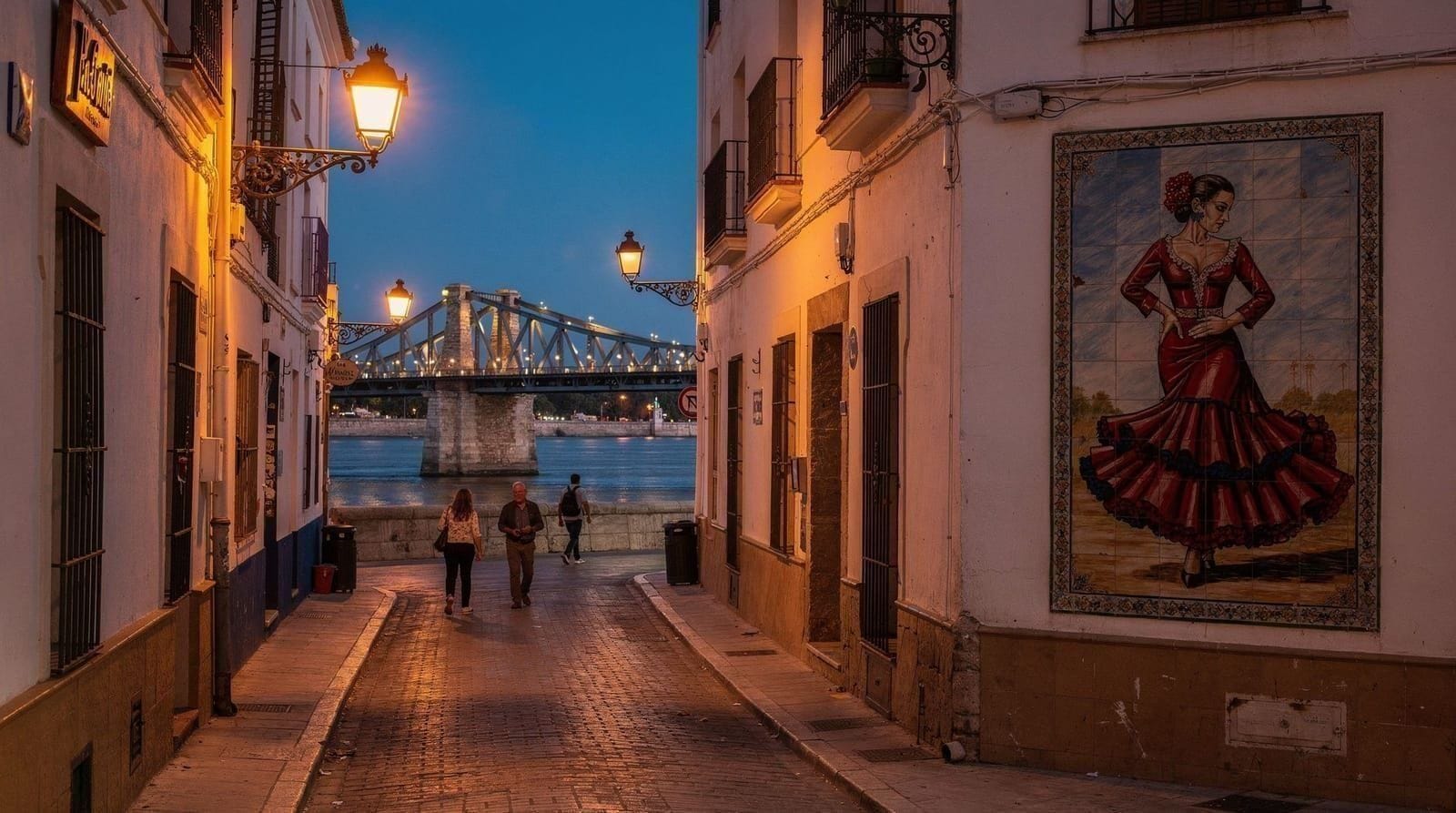
Triana — the working-class quarter west of the Guadalquivir, historically home to Seville’s Gitano community — has its own flamenco venues distinct in character from the Santa Cruz tablaos. The neighbourhood connection to flamenco is genuine and deep; the venues reflect this with a less produced, more embedded feel.
Tablao Almoraima is one of the more established Triana venues. It seats around 80 people and draws a local audience alongside tourists. The programme is typically 60-75 minutes with guitar, cante, and dance. Drinks included in some packages.
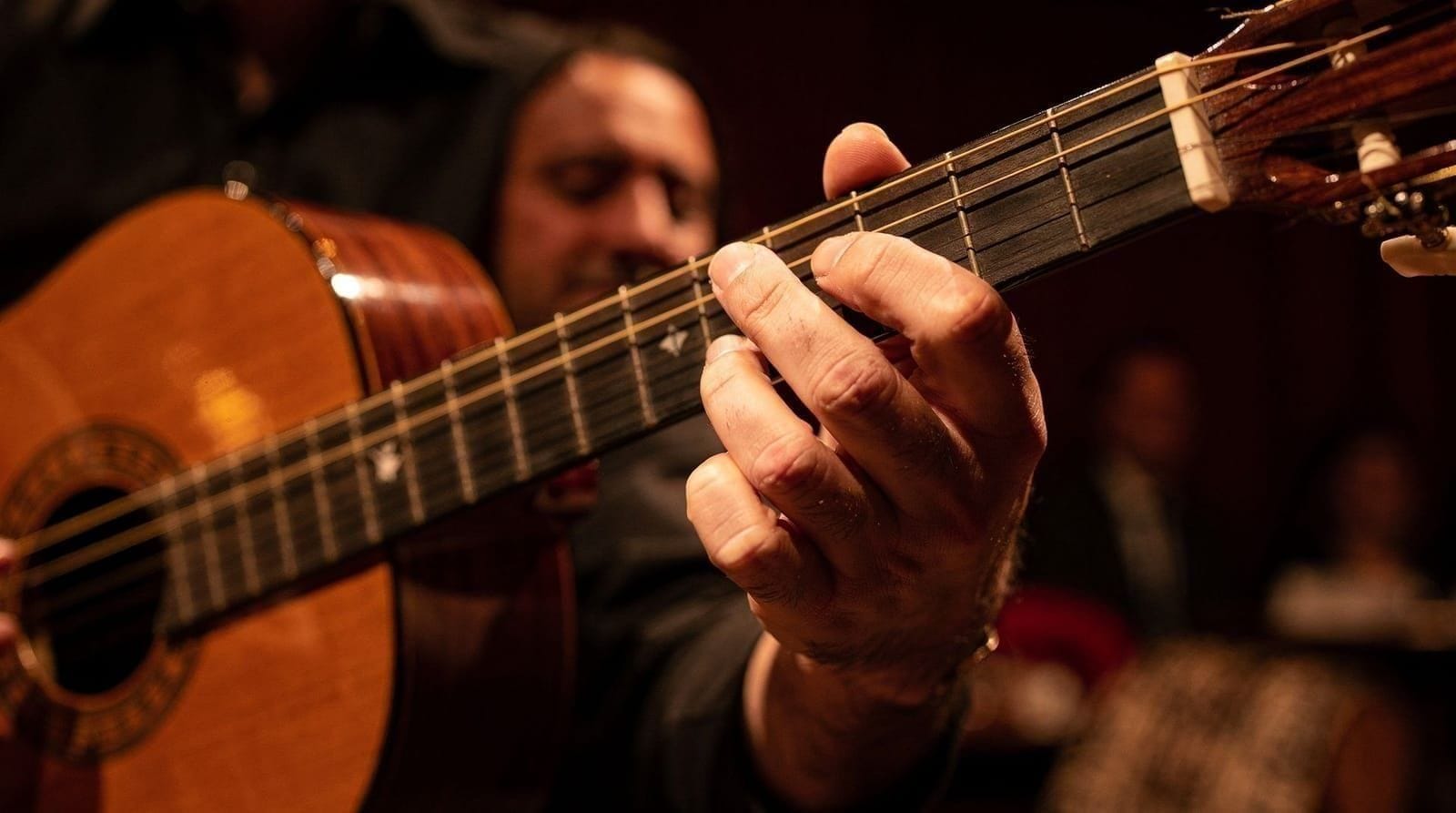
La Cantaora is smaller still and focuses on what the name implies — cante (singing) above choreographic spectacle. This is an honest choice if you want to understand flamenco as music rather than as dance performance.
For visitors specifically interested in the Triana flamenco tradition, pairing a tablao visit with a walk through the neighbourhood and the Puente de Triana crossing is worth the planning. The guide at Flamenco in Triana: the neighbourhood where it all began covers this in more detail, and best neighbourhoods in Seville puts Triana in context alongside Santa Cruz for anyone still deciding where to base themselves.
Book Triana tablao flamenco show Book La Cantaora flamenco show in TrianaHonest comparison: tourist show warning signs
Several venues in and around the Barrio Santa Cruz market “flamenco” as part of tapas-and-show packages. The warning signs:
- Prices bundled with tapas or dinner from the outset, with no show-only option
- Marketing that leads with the food rather than the performers
- Capacity over 200 with theatre-style seating
- No information about who the performers are
- Descriptions emphasising “energy” and “spectacle” rather than artistic tradition
This does not mean every large or bundled show is bad. It means you should read the fine print before assuming “flamenco in Seville” equals the authentic tradition.
The tapas-and-flamenco combo tours (see the GYG catalog: seville-tapas-walking-tour-flamenco-show) offer a condensed version of both experiences and can be good value as an introduction, provided you understand you are getting a sampler rather than a full evening.
When to go: timing considerations
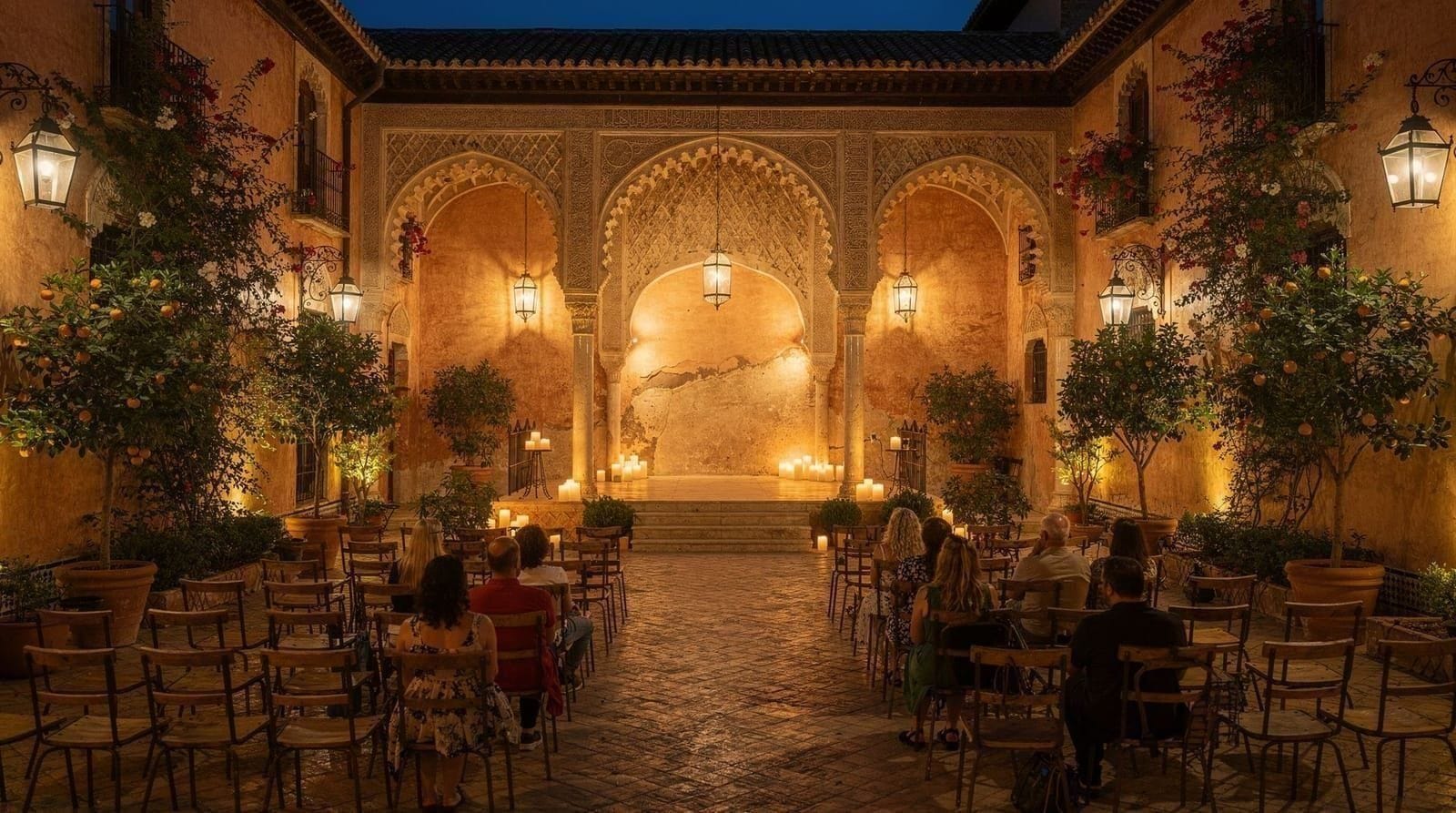
Bienal de Flamenco (September-October, even years): 2026 Bienal runs 9 September to 3 October. This is the world’s most significant flamenco event, with international performers at the Teatro de la Maestranza, Teatro Lope de Vega, and open-air venues. Tickets range from €15 to €80+ for headline shows. If your trip overlaps with the Bienal, attending a programmed show at the Maestranza is a different category of experience from any permanent tablao.
Feria de Abril (April, moveable): 2026 dates: 21-26 April. During the Feria, flamenco and sevillanas (a related but distinct folk dance) are performed throughout the week inside the casetas (private marquees). Access to casetas is typically by invitation, but some are open to the public. The Feria is not a tablao context — it is communal and participatory.
High season (March-May, September-October): Tablaos fill quickly. Book 3-5 days in advance, or further for Casa de la Memoria on weekend nights.
Summer (June-August): Capacity is lower as some locals leave for the coast, but tourist volume remains high. Later shows (21:30+) are cooler.
Practical logistics: what to know before you arrive
Dress code: Smart casual is the norm at established tablaos. There is no formal dress requirement, but appearing in beach wear or gym clothes will stand out. Seville evenings in spring and autumn are mild; a light jacket is sufficient.
Photography: Most tablaos allow photography before and after the show but prohibit camera use during the performance. Flash photography is universally prohibited. Respect these rules — not because venues will enforce them aggressively, but because photographing during a flamenco performance is genuinely disruptive to the experience.
Language: The performances are wordless except for the cante (singing), which is in Spanish/Caló regardless of audience nationality. Programme notes at better venues are bilingual. No Spanish is required to appreciate the show.
Getting there: Santa Cruz venues (Casa de la Memoria, Los Gallos) are walkable from the Alcázar and most central hotels. Triana venues require crossing the Guadalquivir via the Puente de Triana — a 15-minute walk from Santa Cruz. Taxis are inexpensive within the city.
Comparing the main tablaos side by side
| Venue | Capacity | Price (2026) | Food | Feel |
|---|---|---|---|---|
| Casa de la Memoria | ~100 | around €24 | None | Intimate, artistically serious |
| Los Gallos | ~120 | around €38 | Bar only | Historic, consistent |
| El Arenal | ~250 | €45 show / €71-86 dinner | Optional dinner | Polished, theatrical |
| Tablao Almoraima (Triana) | ~80 | around €18-25 | Some packages | Neighbourhood, local audience |
| La Cantaora (Triana) | Small | around €18-25 | Drink only | Cante-focused, unpolished |
Etiquette: applause, jaleo, and silence
Flamenco audiences participate, but on the music’s terms, not the tourist’s. A well-timed “olé” during a strong bulería or an intense seguiriya passage is genuinely welcomed — it is called jaleo, and it is part of the tradition, not an interruption. What is not welcomed: talking during quiet cante passages, checking phones (screens are visible in a small dark room), or clapping along off the compás (rhythm) if you are unsure of it — better to simply listen. Photography rules are covered above; the same logic of restraint applies to conversation.
Is a flamenco show worth it if you’ve already seen one on TV or video?
Genuinely, yes — flamenco is a physical art built on proximity. Recorded flamenco loses the compás you feel through the floor, the visible effort in a dancer’s footwork, and the eye contact between performers that drives the improvisation. Even a short, no-frills tablao like La Cantaora communicates something video cannot. If your time in Seville is limited to one flamenco experience, prioritise a live tablao over a recorded substitute every time — see how many days in Seville you’ll need to fit one in alongside the Alcázar and Cathedral.
Combining flamenco with other Seville experiences
A flamenco show pairs naturally with a pre-show tapas crawl in Santa Cruz or Triana — see best tapas in Seville for where to eat before the curtain. Eating before the show rather than during is both better for digestion and better for the flamenco experience.
The Museo del Baile Flamenco on Calle Manuel Rojas Marcos provides context on flamenco history and technique before attending a live show. The museum is small but well-curated; the combination of museum visit plus show is a fuller introduction to the art form than a show alone.
If you are staying in Seville for multiple nights, attending one show and then taking a flamenco dance class the following day is a genuinely effective way to understand what you watched — the hour or two of trying to produce basic footwork yourself illuminates everything you saw the previous night.
For those visiting during the Bienal, the guide at Bienal de Flamenco de Sevilla 2026: the complete visitor guide covers the full programme structure and which events are worth prioritising. Pair the evening with a walk past the Metropol Parasol or a stroll to the Plaza de España beforehand — both are close to the Santa Cruz tablaos and make the evening feel less like a single scheduled activity.
Frequently asked questions about Best flamenco shows in Seville 2026
How much do flamenco shows cost in Seville?
Prices range from around €18 to €55+ depending on the venue and whether food or drink is included. Casa de la Memoria charges around €24 for the show only. Los Gallos is around €38. El Arenal charges €71-86 for dinner-show packages, or around €45 for show-only. Triana venues typically run €18-25 with a drink included.Do I need to book flamenco shows in advance in Seville?
Yes, for Casa de la Memoria especially — it holds only around 100 people and sells out 2-3 days ahead in high season (March-May, September-October). Los Gallos and El Arenal have more capacity but still fill up on weekends and during Semana Santa and Feria. Book at least 3-4 days in advance in spring.What is the difference between an authentic tablao and a tourist show?
The key differences are: venue size (smaller = more intimate), performer quality (professional versus beginner), repertoire (authentic palos — soleá, seguiriyas, bulerías — versus crowd-pleasing medleys), and atmosphere (audience engagement versus passive viewing). Tourist-oriented shows often serve food simultaneously, which dilutes both the dining and the performance. See the full comparison at /guides/authentic-flamenco-vs-tourist-show/.Is flamenco originally from Seville?
Flamenco developed across Andalusia in the 18th and 19th centuries, with Seville and Jerez de la Frontera as twin cradles of the art form. Triana — Seville's historically Gitano and artisan quarter across the Guadalquivir — is specifically associated with some of the oldest flamenco lineages (the Peña flamenca de Triana dates to 1963). Seville's Bienal de Flamenco, held every two years in September-October, is the world's most important flamenco festival.What are the main styles of flamenco performed at tablaos?
Tablaos typically showcase several palos (styles): soleá (slow, deep, associated with Seville), seguiriyas (the most intense and tragic), bulerías (fast, festive), alegrías (upbeat, from Cádiz), and tangos flamencos (not to be confused with Argentine tango). The better venues rotate styles across a full show; tourist-oriented venues often repeat the most visually dramatic moves regardless of musical context.Can beginners enjoy flamenco without knowing anything about it?
Yes. A good tablao performance is emotionally communicative regardless of prior knowledge. You do not need to know flamenco theory to be moved by it. That said, the guide /guides/flamenco-101-beginners-guide/ provides a 10-minute primer on the main palos and what to listen for — useful before attending a show.What time do flamenco shows start in Seville?
Most tablaos run two shows: an early session around 19:00 or 19:30, and a late session around 21:00 or 21:30. The late session often has a slightly looser, more charged atmosphere since performers and audience are both warmed up. For families with children, the early session is more practical. During summer (June-August), late sessions can run until nearly midnight.Is there a free or low-cost way to see flamenco in Seville?
Yes. Peñas flamencas — private flamenco clubs — occasionally hold open rehearsal nights or events at minimal cost (check each club's own announcements for current prices). The Casa de la Guitarra on Calle Mesias holds low-key shows; check its official site for programme and prices. During the Bienal de Flamenco (September-October in even years), some outdoor performances are free or heavily subsidised. The Museo del Baile Flamenco on Calle Manuel Rojas Marcos holds shows and has a small museum component; check its official site for current prices and times.Is it rude to talk or move during a flamenco show?
Yes, and it is noticed. Flamenco relies on close listening — the compás (rhythm) and the jaleo (vocal encouragement like 'olé' at the right moments) are part of the art, not background noise. Keep conversation for before or after the show, silence phones fully, and save applause for natural breaks between palos rather than mid-phrase. If you want to show appreciation, a well-timed 'olé' during a strong passage is welcomed, not intrusive.Are flamenco shows suitable for young children?
It depends on the child and the venue. Shows generally run 60-90 minutes without an interval, in a quiet, seated format that can be tough for children under about 6. Casa de la Memoria and Los Gallos are intimate spaces where a restless child is more noticeable. Larger, dinner-show venues like El Arenal are more forgiving logistically, since the meal gives younger children something to do. For most families, the early show (around 19:00-19:30) works better than the late one.
Top experiences
Bookable activities with verified prices and instant confirmation on GetYourGuide.