Jerez de la Frontera
Sherry bodegas, Andalusian horses, and flamenco roots. How to visit Jerez from Seville in a day, with real prices and honest tips.
From Seville: Jerez guided visit with horse show and wine
Quick facts
- Best for
- Sherry bodegas, Andalusian horses, flamenco roots
- Days needed
- 1 day
- Getting there
- Train from Seville 1h15, or guided tour
- Peak crowds
- May (Feria del Caballo), October–November (harvest)
- Currency
- EUR
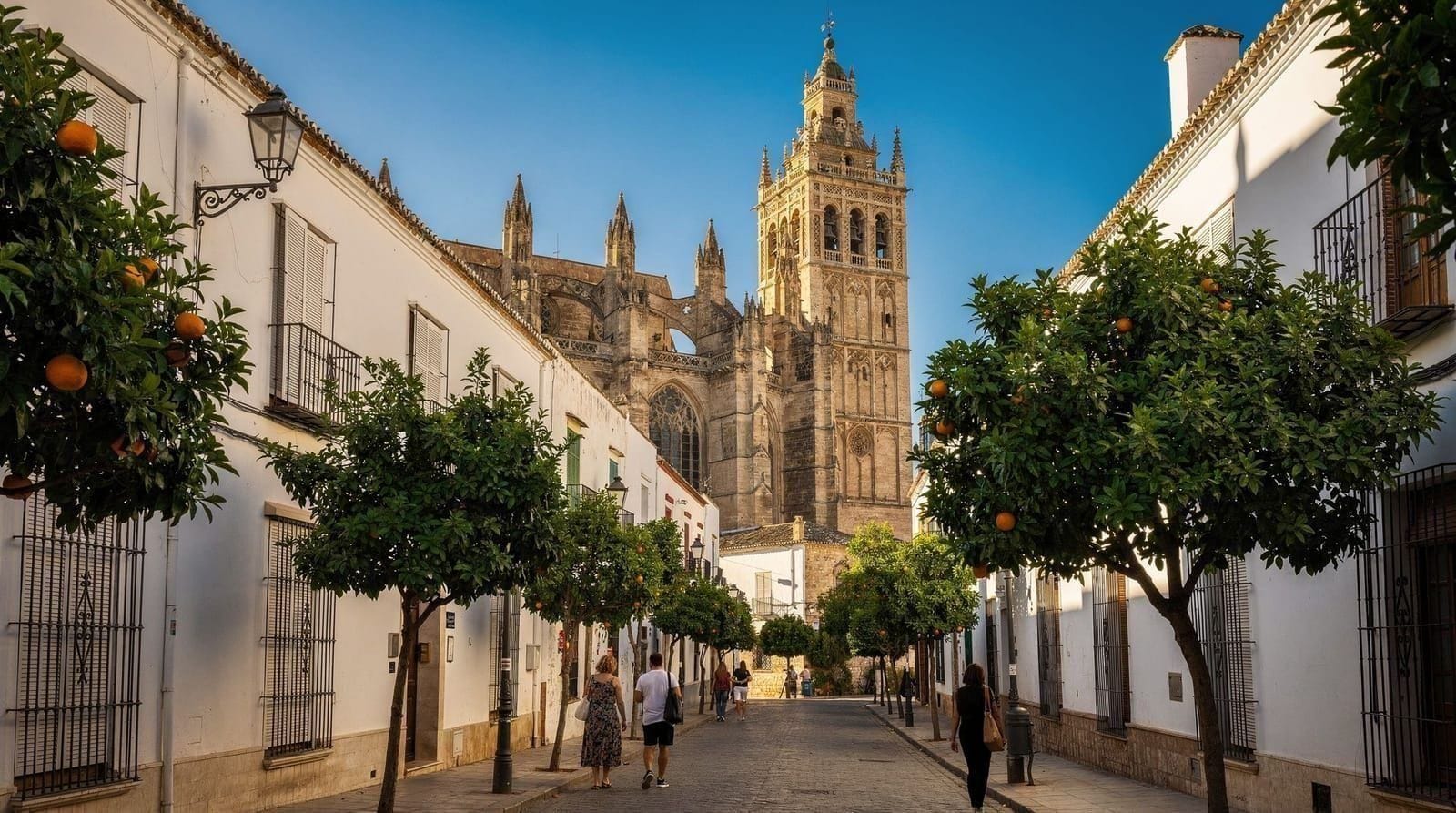
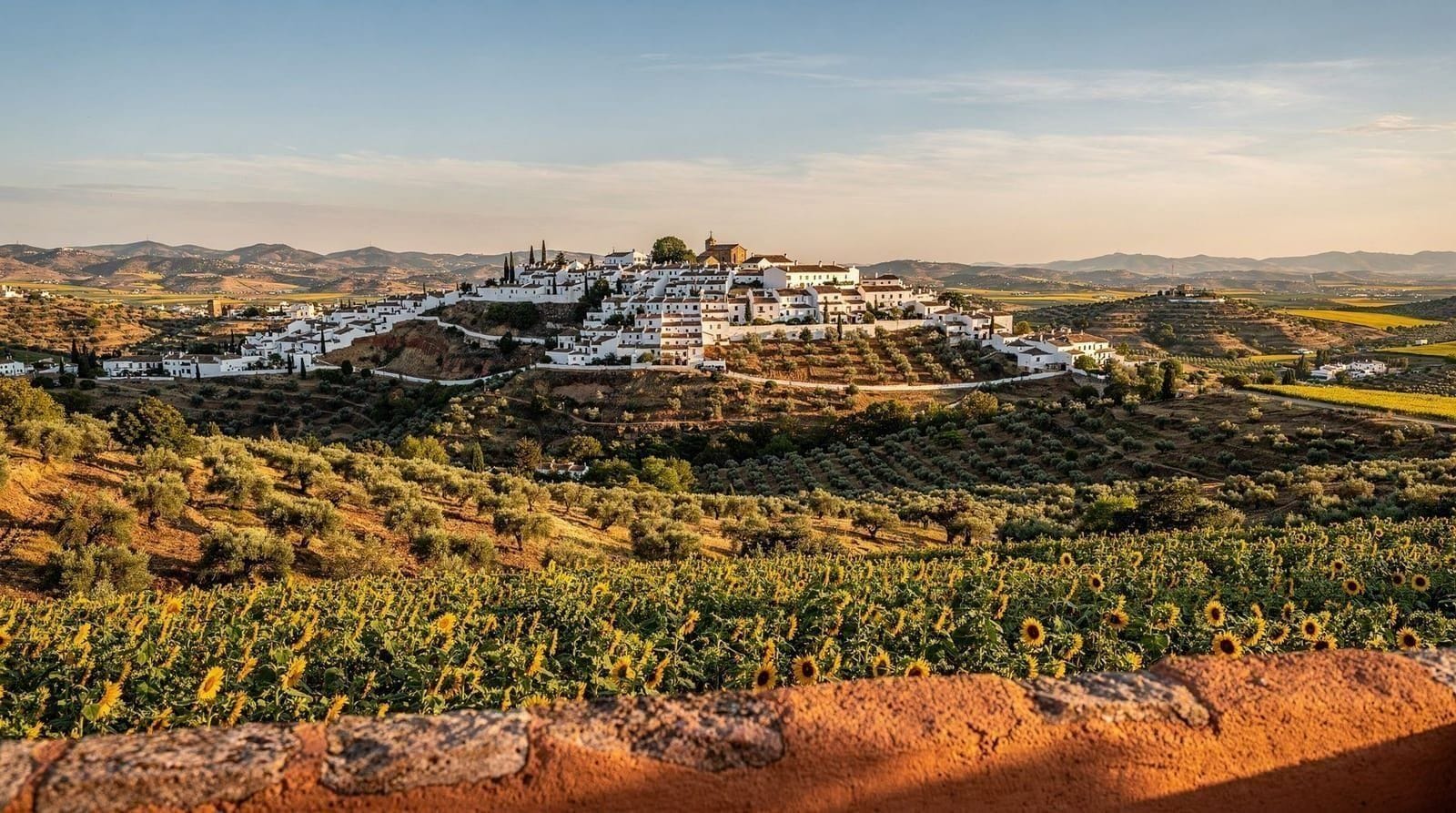
Jerez de la Frontera is a mid-sized Andalusian city (around 212,000 people) that punches above its weight in three very specific domains: sherry wine, Andalusian horses, and flamenco. The word “sherry” is itself an Anglicisation of “Jerez.” The city gave its name to the wine and has been producing it since Phoenician times.
| Where | Cádiz province, around 1h15 from Seville by train |
| Cost | Bodega tours from €26; horse show €24–31 |
| Time needed | 1 day, or half a day if combining with Cádiz |
| Getting there | Renfe Cercanías train (~1h15) or guided day tour |
| Best time | October for harvest season; March–April for horse shows with fewer crowds |
Getting from Seville to Jerez
The Renfe Cercanías regional train runs from Seville Santa Justa to Jerez de la Frontera station approximately every 30–60 minutes. Journey time: about 1h10–1h20. Check current fares on the Renfe website. Jerez station is about 1.5 km from the city centre — walkable in 20 minutes or a short taxi.
Book the guided Jerez visit from Seville with horse show and sherry tasting for the most efficient combination of the city’s main attractions.
Sherry bodegas: what to expect
The “sherry triangle” covers Jerez, Sanlúcar de Barrameda, and El Puerto de Santa María. The bodegas in Jerez are the largest and most visited.
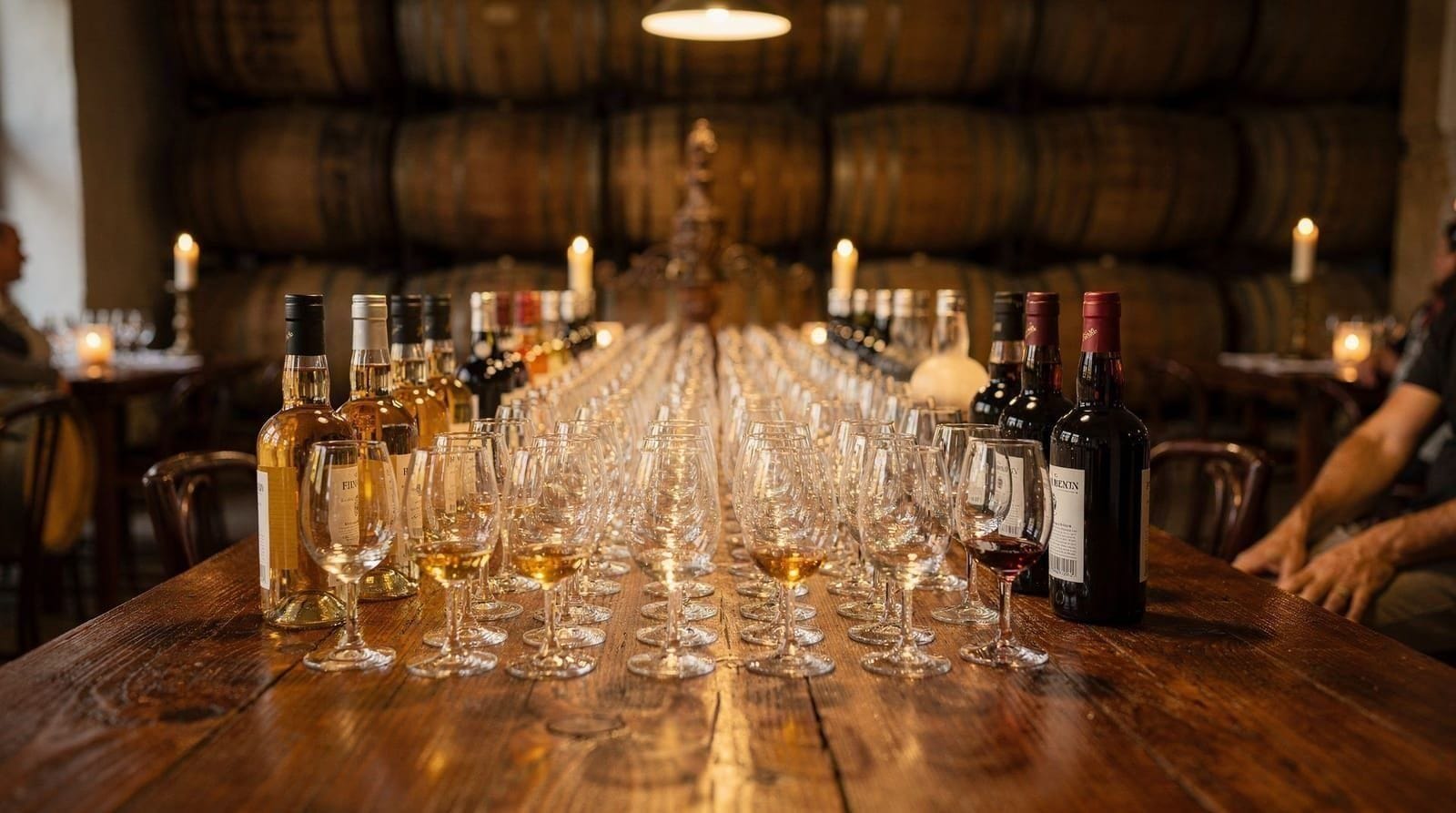
González Byass (Tío Pepe): the city’s most famous bodega, named after the fino sherry that has been produced here since 1835. The tour (from €26.90) covers the aging cellars (naves), the solera system (how sherry is blended across vintages), and finishes with a tasting of 2–4 wines. The cathedral of soleras — enormous barrels stacked in Gothic stone nave-like buildings — is architecturally striking.
Bodega Tradición: a smaller, more specialist bodega with exceptional aged olorosos and Pedro Ximénez wines and a private collection of Spanish paintings (Goya, Velázquez, Zurbarán). Entry €60 per person. Requires booking. Worth it for serious sherry or art interest.
Sandeman: international brand, guided tour with the distinctive cape-and-hat figure branding. Check current tours and prices on the Sandeman website.
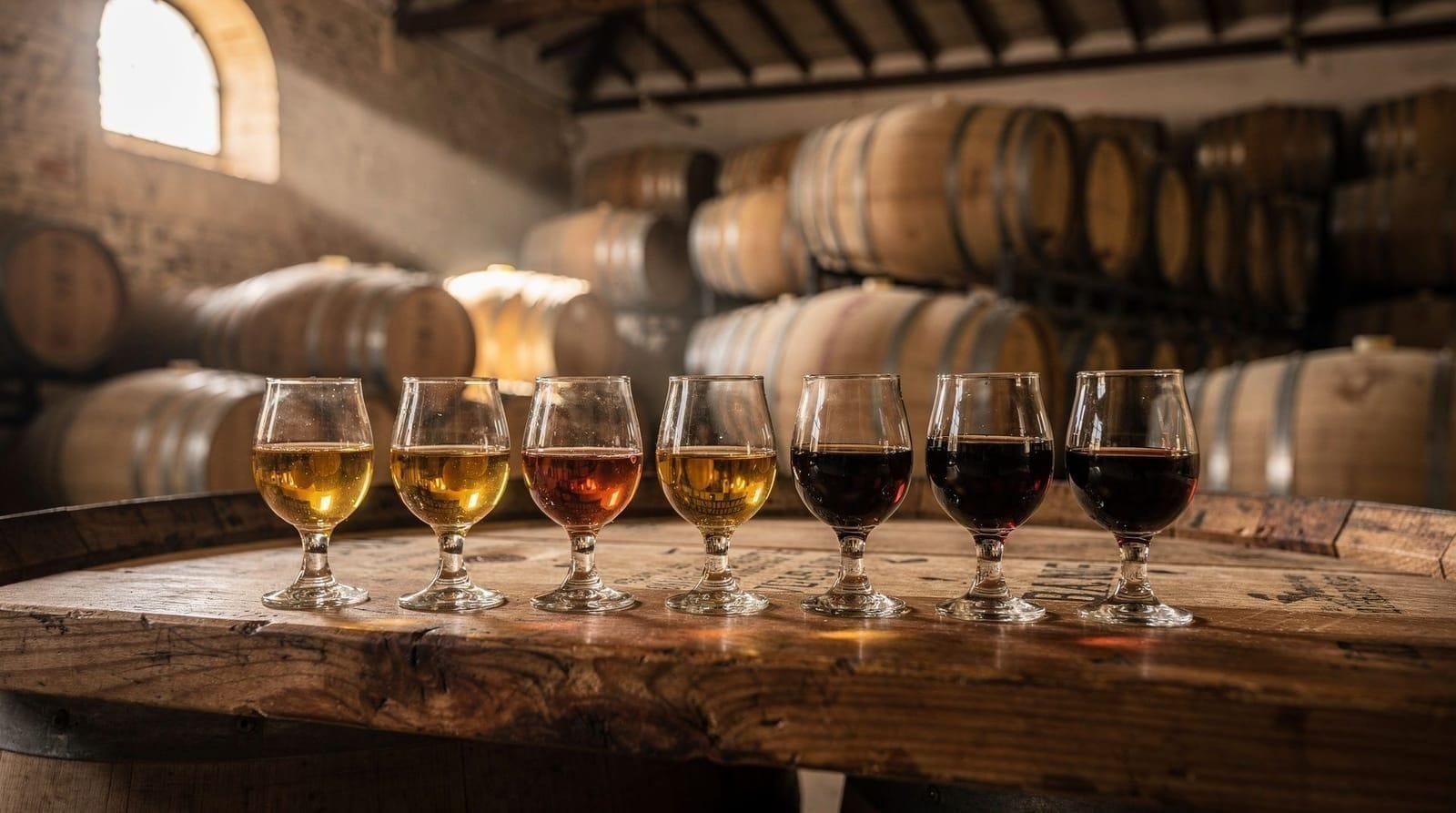
The key sherry styles to understand: fino (pale, dry, under flor — a layer of yeast), manzanilla (fino specifically from Sanlúcar, lighter and more saline), amontillado (aged fino that lost its flor), oloroso (oxidatively aged, darker and richer), Pedro Ximénez (intensely sweet, raisin-like). For a fuller regional picture of the sherry triangle, see the sherry guide to Andalusia and the Jerez bodegas guide, which compares the main houses in more depth.
Comparing the three main bodegas
| Bodega | Price | Best for |
|---|---|---|
| González Byass (Tío Pepe) | From €26.90 | First-time visitors, the classic solera-cellar experience |
| Bodega Tradición | €60 | Serious sherry or art interest, smaller and more specialist |
| Sandeman | See Sandeman website | A shorter, cheaper introduction with a well-known brand |
Real Escuela Andaluza de Arte Ecuestre
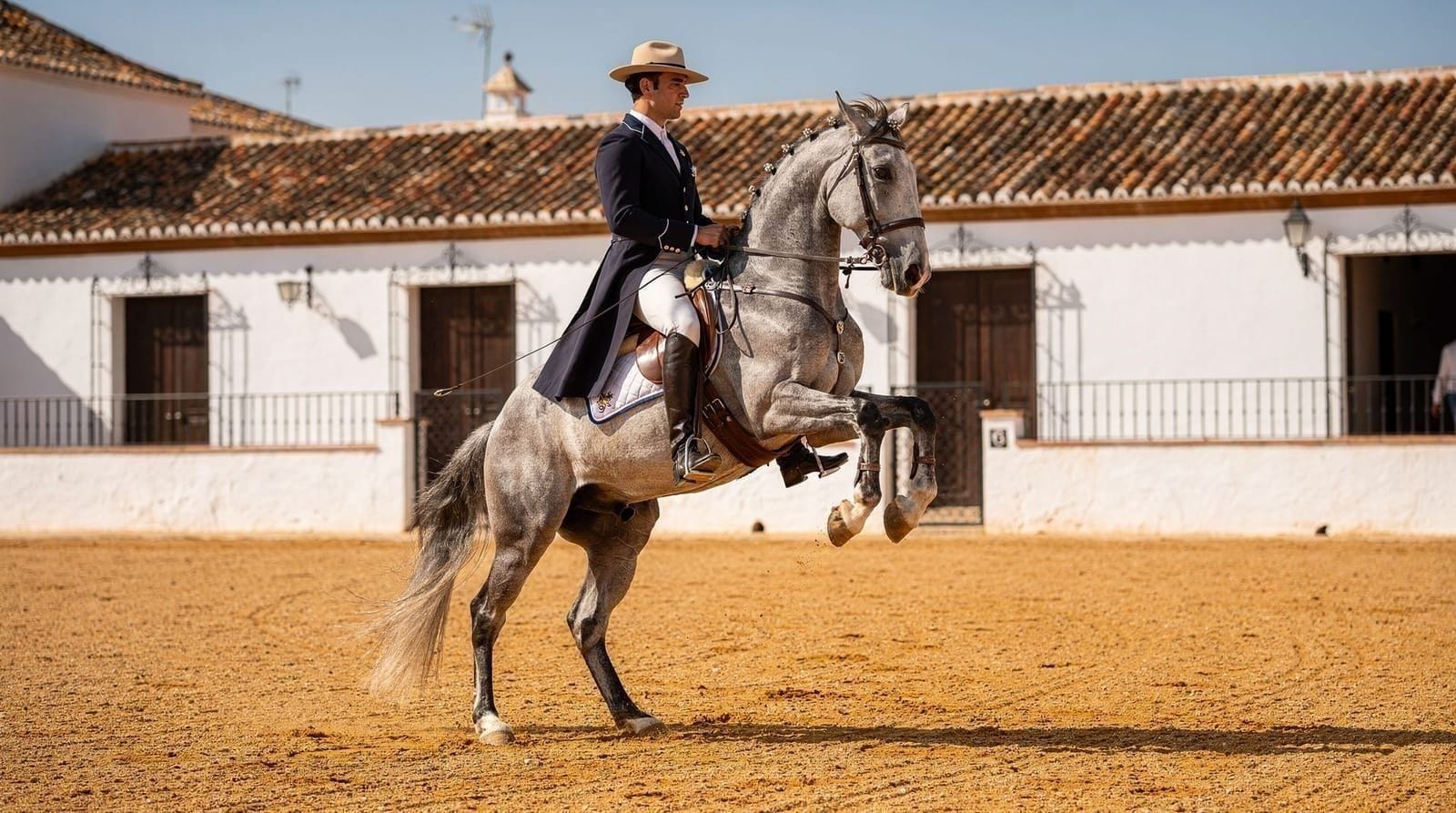
The Royal Andalusian School of Equestrian Art is one of only four classical riding schools in the world (alongside the Spanish Riding School in Vienna, the Cadre Noir in Saumur, and the Portuguese School in Lisbon). The Andalusian horse (Pura Raza Española) was partly developed here.
The “How the Andalusian Horses Dance” show runs on set days that change through the year (see the calendar on the Real Escuela website). Entry for adults: €24–31 depending on seat location; the show starts at 12:00 and lasts about 90 minutes. Book in advance — the best seats sell out weeks ahead.
On non-show days, training sessions (entrenamientos) may be open to visitors; ask the Real Escuela for current times and prices. This is lower-key than the full show but authentic.
Book the Seville to Jerez and Cádiz combined trip with Andalusian horses to combine the equestrian school visit with both cities in one day.
Flamenco in Jerez
Jerez has its own flamenco tradition — Jerez-style flamenco (bulerías por soleá, bulerías al golpe) is distinct from Seville’s style and is less known to international visitors. The Barrio de Santiago and Barrio de San Miguel are the traditional flamenco neighborhoods.
Peña Flamenca Torres Macarena (Barrio de Santiago): local peña (flamenco club). Occasional open evenings, primarily for aficionados. Check their schedule on arrival.
Festival de Jerez: an annual flamenco festival in late February/early March that attracts top performers. The best opportunity to see high-quality Jerez-style flamenco.
If flamenco is a big reason for your trip, treat Jerez as a complement to Seville rather than a replacement. The flamenco 101 beginners guide explains the basic forms so the bulerías you hear in Jerez make more sense, and authentic flamenco versus a tourist show gives you the questions to ask before you buy a ticket anywhere. Back in Seville, the best flamenco shows in Seville and the flamenco in Triana guide cover the evening options once your day in Jerez is over.
The old town
The Alcázar of Jerez (Alcázar de Jerez) is an 11th-century Moorish fortress near the González Byass bodega. The octagonal tower offers city views. Entry €5 (€7 with the camera obscura). The attached camera obscura projects a live image of the city — novel, worth 10 minutes.
The Catedral de Jerez is a 17th-century Baroque church built partly on a former mosque. Entry €8 (audioguide included). The collection includes a Zurbarán painting (La Virgen Niña) considered one of his finest works.
Where to eat in Jerez
La Carboná (Calle San Francisco de Paula 2): upscale but worth it for the sherry-paired tasting menu. The octopus with fino sherry reduction is a signature. Budget €35–50 per person.
Bar Juanito (Calle Pescadería Vieja 8): local institution since 1945. Sherry by the glass (€2–3), jamón ibérico from the Serranía, alcachofas (artichokes) al montadito. Essential Jerez experience.
Tabanco El Pasaje (Calle Santa María 8): a tabanco is a traditional wine shop-bar that serves sherry direct from the barrel. El Pasaje is one of the best preserved in the city. Order a manzanilla or fino by the glass (€1.50–2.50) and a plate of tapas. Occasional live flamenco.
Tabancos are the authentic Jerez equivalent of Seville’s tablaos — rough-edged, unpolished, and the real thing.
Understanding sherry in Jerez
Sherry is a fortified wine — grape brandy is added after fermentation, raising the alcohol content to 15–20%. The style is determined primarily by whether a layer of yeast (flor) develops on the wine’s surface. Fino and manzanilla develop under flor, remaining pale and dry. Oloroso develops without flor, oxidising to a darker, richer, nuttier wine.
The solera system is the aging process unique to sherry. Barrels of wine are arranged in rows (criaderas) by age. When some wine is removed from the oldest barrels for bottling, it is replaced by wine from the next oldest criadera, which is in turn replaced from younger barrels. The result is a consistent blended product that combines wines from multiple years — there is no vintage sherry in the conventional sense. A 30-year solera contains wine from 30 different harvests.
The sherry styles in practical terms:
- Fino: pale gold, very dry, delicate almond notes, serve cold. The standard aperitif of Jerez. Best from González Byass or Lustau.
- Manzanilla: fino from Sanlúcar specifically, lighter and more saline. Barbadillo is the dominant producer.
- Amontillado: aged fino that lost flor, darker amber, nutty and complex. Bodegas Tradición produces outstanding examples.
- Palo Cortado: rare, between amontillado and oloroso. Exceptionally complex. Expensive.
- Oloroso: oxidatively aged, dark mahogany, dried fruit, rich and warming. Served with food, not as aperitif.
- Pedro Ximénez (PX): made from sun-dried PX grapes. Intensely sweet, thick as syrup, with raisin and fig notes. Pour over vanilla ice cream.
- Cream sherry: blended sweet style, popularised for export. Less interesting than the dry styles.
Where to taste: the cheapest and most authentic setting is a Jerez tabanco. A glass of fino or manzanilla costs €1.50–2.50. At González Byass’s bodega bar, similar wines are €3–4. Bodegas Tradición charges €60 for a full tasting with premium aged wines.
The Feria del Caballo (Horse Fair)
Jerez’s Feria del Caballo takes place in May (2026 dates: approximately May 4–10). It is one of Spain’s finest horse fairs and the most prestigious showcase for the Andalusian horse breed. The fairground fills with carriages, riders in traditional dress (traje corto — short jacket, flat-brimmed hat), and the constant sound of flamenco.
The fair is largely for locals — the casetas (tents) are private and association-owned. But the horse parade (paseo de caballos) along the main avenue is public and extraordinary. Access to the fairground is free.
Jerez practical information
Jerez-Xérès-Sherry Airport (XRY) is 8 km north of the city centre. It receives low-cost flights from several European cities, making it an alternative arrival point to Seville for visitors focused on the Cádiz province.
Getting around: the city centre is walkable. The main monuments are within 1 km of each other.
Timing: sherry harvest (vendimia) takes place in September, the most atmospheric time to visit the bodegas. The harvest festival (Fiesta de la Vendimia) takes place in early September.
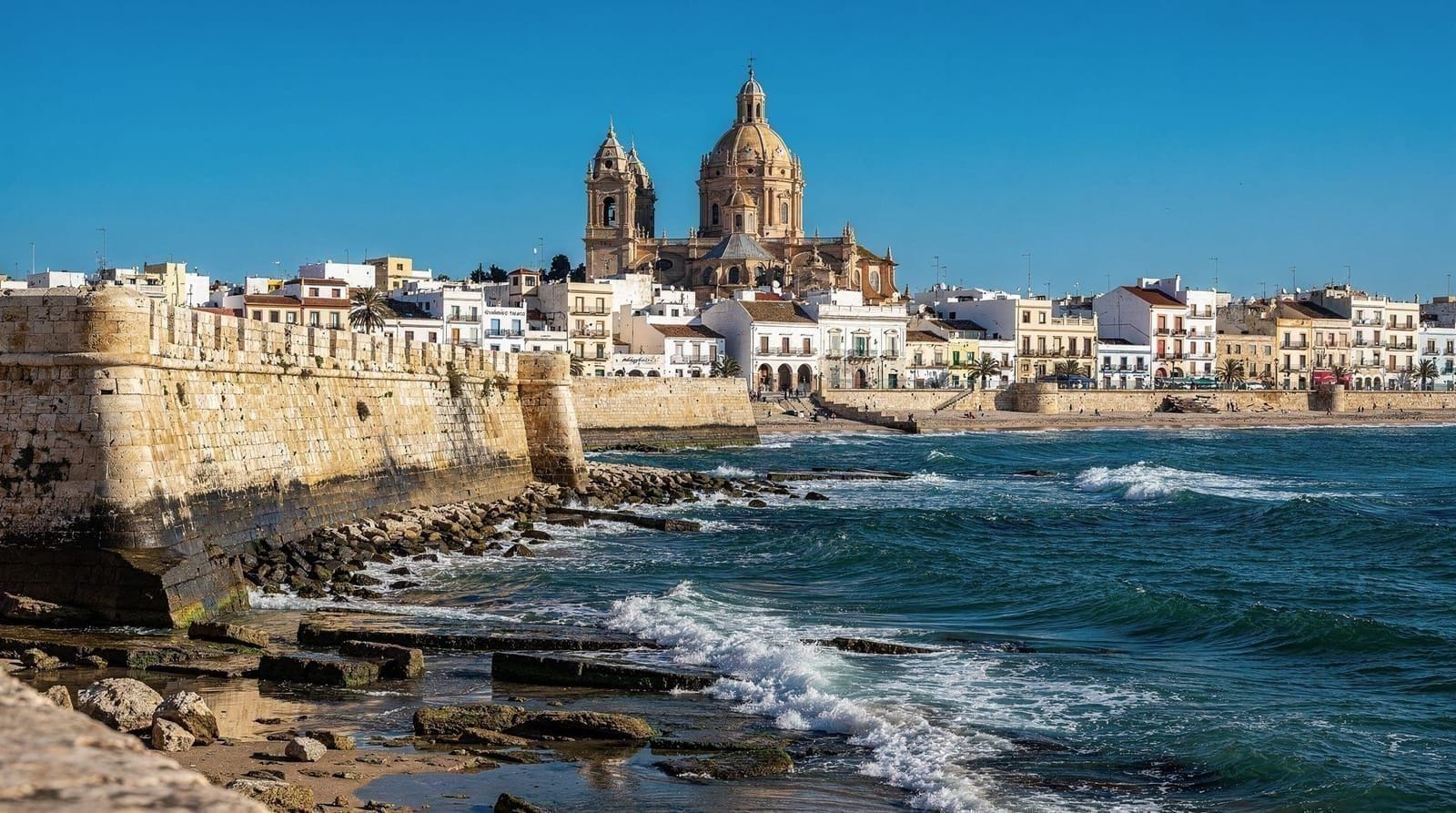
Combined Jerez and Cádiz itinerary: if arriving from Seville in the morning, stop in Jerez for 3–4 hours (equestrian school or bodega tour), then take the train to Cádiz for the afternoon. Return to Seville in the evening. This is a long but satisfying day. See Jerez day trip from Seville: sherry, horses, and flamenco heritage for the full schedule, or the best day trips from Seville overview for how Jerez compares to Seville’s other options.
Choosing between a guided tour and the train
The train is the flexible choice: you set your own pace, linger in a tabanco if the mood takes you, and decide on the spot whether the horses or the bodegas deserve more of your day. The cost of that freedom is logistics. You have to book the horse show yourself, work out how to reach each bodega from the station, and keep an eye on the return timetable.
A guided day tour removes those decisions. If you are visiting for the first time, travelling with people who do not drink much, or simply do not want to plan, a tour that bundles transport, a bodega visit and a tasting can be the easier route. Travellers who want both cities without handling the trains can choose a day trip that pairs sherry tasting in Jerez with a visit to Cádiz. If you would rather compare more options first, the wine tours from Seville guide lays out the formats side by side, and sherry tasting in Seville is a useful option if you want a taste before committing to the trip.
Fitting Jerez into a wider Andalusia plan
Jerez works best as one anchor in a longer trip, not as an afterthought. Because the city sits close to the coast, it pairs naturally with Cádiz, El Puerto de Santa María and Sanlúcar de Barrameda, the other two corners of the sherry triangle. If you have a few extra days, the Costa de la Luz is the natural next stop for beaches and a slower pace.
Travellers building a longer route can use the Andalusia week from Seville itinerary or the Seville day trips itinerary to see where Jerez sits among Córdoba, Granada and the white villages. For a first visit to the region, how many days to spend in Seville helps you decide how much time to set aside for excursions at all.
If you want a personal account before you go, the blog post Jerez: sherry and horses tells the story of a visit from a traveller’s point of view, including what felt rewarding and what felt rushed.
Making the most of your time in Jerez
Start with the activity that has a fixed time, whether that is the horse show or a booked bodega slot, and build the rest of the day around it. The old town is compact, so the gaps between appointments are easy to fill with a walk, a coffee or a tapas stop. Leave the tabanco visit for the afternoon, when a glass of fino and a few small plates make a relaxed way to end the day before heading back to the station.
Pace yourself with the sherry. A full bodega tasting plus a tabanco stop adds up, and the styles get stronger and sweeter as you move from fino towards oloroso and Pedro Ximénez. Water between glasses and a proper meal in the middle of the day make the afternoon much more enjoyable, especially if you still have a train to catch.
Frequently asked questions about Jerez
Is Jerez worth a day trip on its own, or should I combine it with Cádiz?
Jerez alone fills a satisfying day if you do a bodega tour and the equestrian school. Combining it with Cádiz works well if you start early and limit Jerez to 3–4 hours, since both cities are on the same train line and only 30–40 minutes apart.
Do I need to book the horse show in advance?
Yes, for the main “How the Andalusian Horses Dance” show — good seats sell out weeks ahead, especially in spring. The lower-key morning training sessions are easier to attend without advance booking.
What is the difference between sherry and manzanilla?
Manzanilla is fino sherry made specifically in Sanlúcar de Barrameda, where the coastal humidity gives it a lighter, more saline character than fino made in Jerez itself. Both are pale, dry, and served cold — manzanilla is simply the coastal variant.
Top experiences
Bookable activities with verified prices and instant confirmation on GetYourGuide.