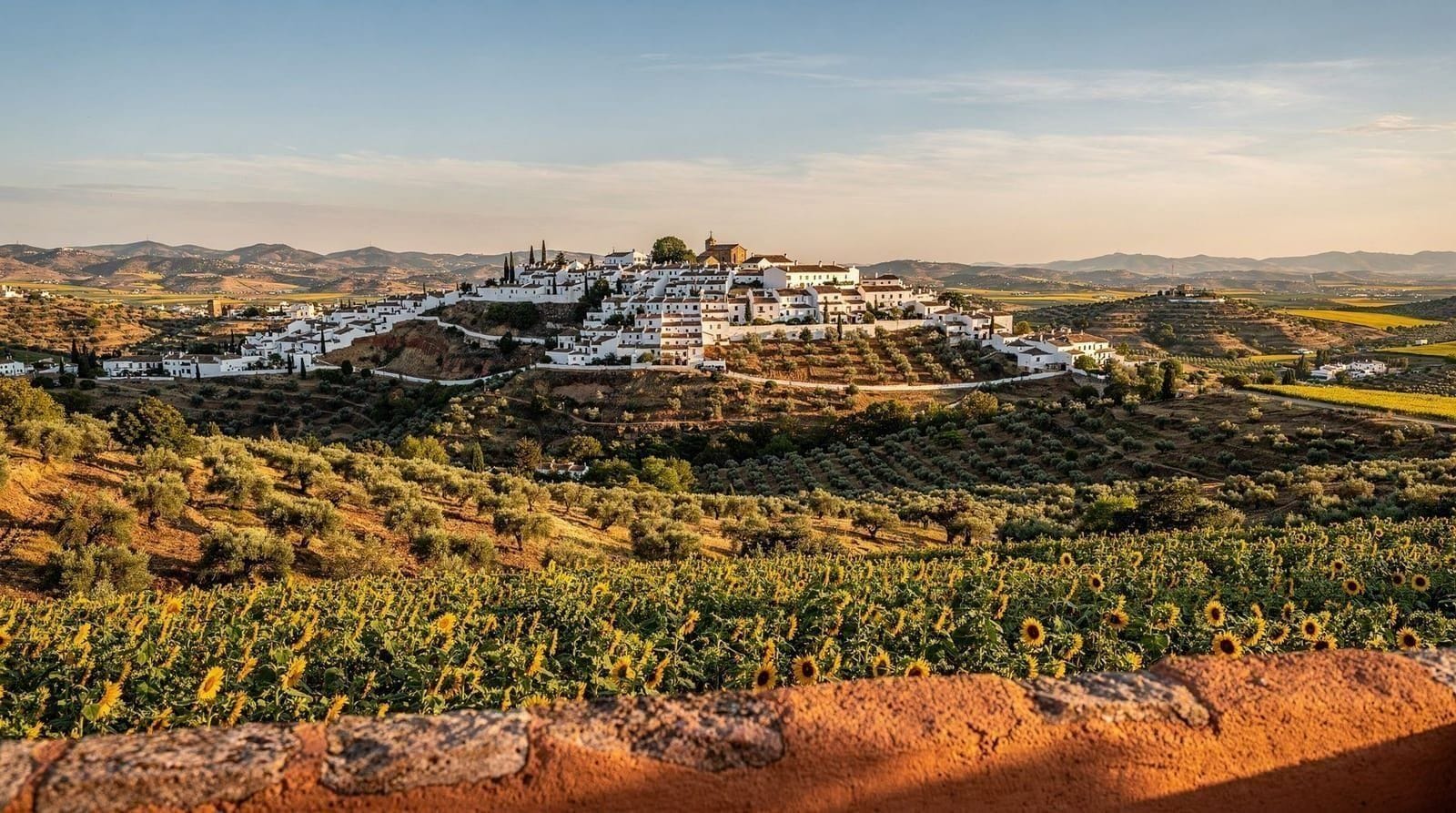
Córdoba
The Mezquita-Catedral, the Jewish quarter, and the best day-trip logistics from Seville. Honest guide with real ticket prices and timing.
From Seville: Córdoba trip with Mezquita by high-speed train
Quick facts
- Best for
- Mezquita-Catedral, Roman history, Jewish quarter
- Days needed
- 1 day (day-trip) or 1–2 nights
- Getting there
- AVE from Seville 45 min, ~€15–28 one-way
- Peak crowds
- April–June and September–October
- Currency
- EUR
Córdoba is arguably the most impressive day-trip from Seville and one of the most historically loaded cities in Europe. At the peak of the Caliphate of Córdoba in the 10th century, it was the largest city in Western Europe — home to around 500,000 people when London had perhaps 15,000. The Mezquita-Catedral, the Roman bridge, and the compact Judería (Jewish quarter) pack extraordinary density into a walkable space.
| Where | 140 km northeast of Seville |
| Cost | Mezquita around €15; Medina Azahara around €1.50 (free for EU citizens) |
| Time needed | Full day, or 1–2 nights to include the free morning entry and Medina Azahara |
| Getting there | AVE high-speed train, 45 minutes from Santa Justa |
| Best time | October–November and February–March; avoid May’s Patios Festival unless that’s the goal |
The Mezquita-Catedral: what you actually need to know
The Mosque-Cathedral of Córdoba is the defining monument of Andalusian architecture. Built between the 8th and 10th centuries on the site of a Visigoth church, it is 23,400 square metres of horseshoe arches, marble columns, and the extraordinary mihrab (prayer niche) in red and gold Byzantine mosaics. The Spanish cathedral was built directly inside the mosque in the 16th century — a decision that even King Carlos I is reported to have regretted.
Tickets: the standard entry is €15 (adults), €12 (over-65s and students aged 15–26), €8 (ages 10–14); under-10s enter free. There is also a free entry period from 8:30 to 9:30, Monday to Saturday (no groups). This is genuinely worth taking if you are staying in Córdoba overnight or arriving on an early train. By 10:00 the interior is dense with tour groups.
Book the Córdoba day-trip with Mezquita entry and high-speed train from Seville for a structured visit that handles both transport and the monument entrance. This is the highest-value option if you are combining the train logistics with wanting a guide for the Mezquita’s complex history.
Self-guided visitors: buy tickets online at the Mezquita website or at the ticket office. Online booking recommended April–June.
If you are still deciding how to organise your time in the capital before heading north, the Seville in one day and Seville in three days itineraries show where a Córdoba day fits. Visitors who have already seen the Real Alcázar of Seville often find the Mezquita a fascinating contrast: the same Islamic heritage, expressed on a much larger and more austere scale.
Getting from Seville to Córdoba
The AVE high-speed train is the definitive way to do this trip. The journey takes 45 minutes from Santa Justa station in Seville to Córdoba station. Trains run roughly every 30–90 minutes. Fares vary with the time and how far ahead you book — check and book at renfe.com.
From Córdoba station, the Mezquita is a 20-minute walk or a short taxi ride. Bus Line 3 also connects the station to the historic centre.
Alternatively, a guided day-trip from Seville handles all transport and includes a guided tour of the main monuments — useful if you want context without having to navigate arrivals and tickets yourself.
The journey by car from Seville takes about 1h20 via the A-4 motorway. Córdoba has a congestion zone in the historic centre; paid parking is available on Paseo de la Victoria.
Beyond the Mezquita: what else to see
The Judería (Jewish quarter) surrounds the Mezquita and is one of the best-preserved medieval Jewish quarters in Spain. The Synagogue of Córdoba (Calle Judíos 20) is one of only three surviving medieval synagogues in Spain and is free to enter. The Zoco Municipal artisan market in the same street has decent ceramics.
Alcázar de los Reyes Cristianos: the 14th-century fortress and palace of the Catholic Monarchs, where Columbus reportedly presented his plans for the New World voyage. Beautiful terraced gardens with fish ponds. Check prices and opening hours on the official Alcázar de los Reyes Cristianos website, as they change. Allow 1.5 hours.
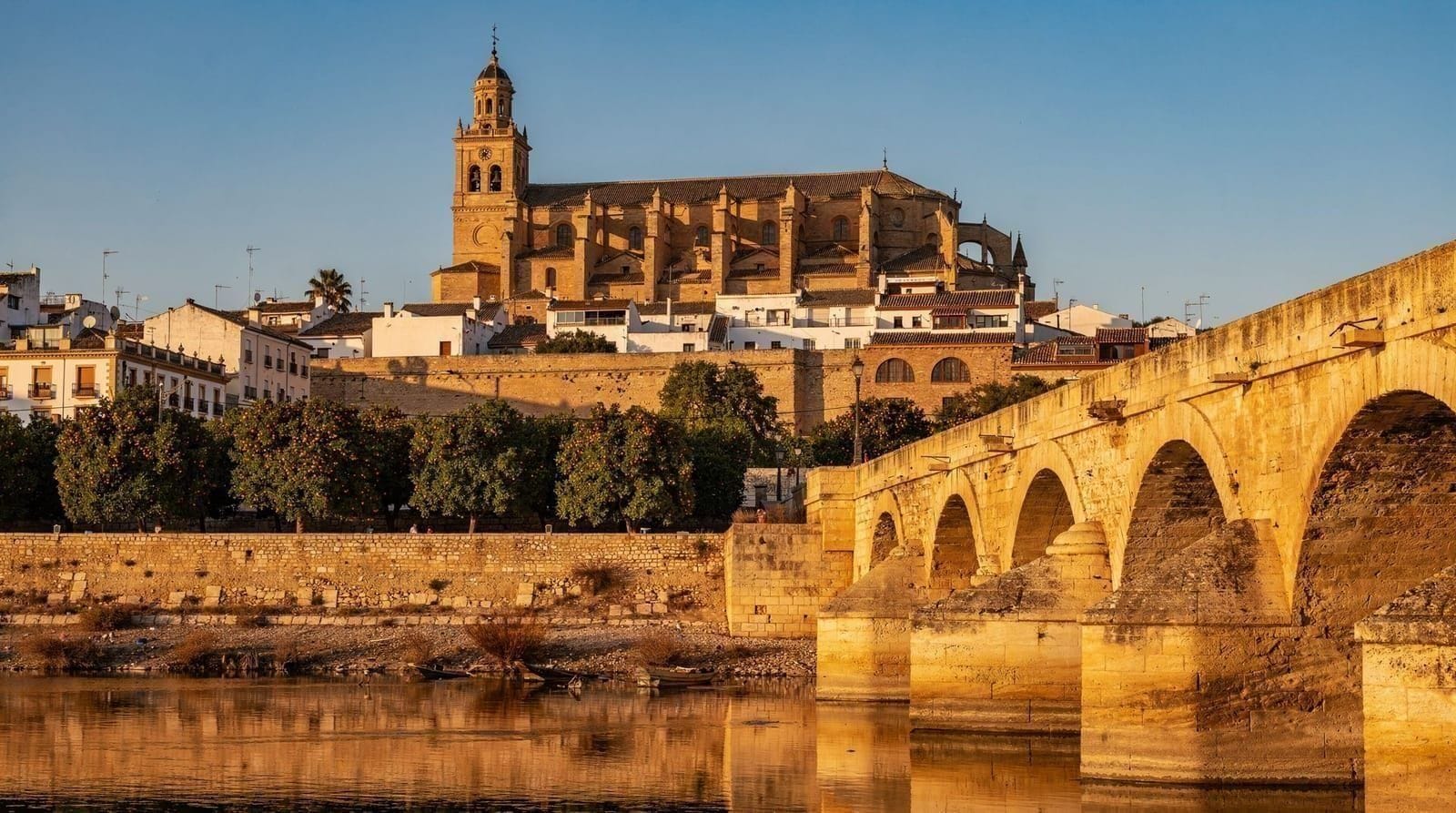
The Roman Bridge (Puente Romano) spans the Guadalquivir and dates to the 1st century BC. The views back to the Mezquita are the classic postcard shot and are genuinely impressive, especially in early morning light.
Medina Azahara (Medina Azahara Archaeological Museum, 8 km west of the city): the ruins of the 10th-century caliphal city built by Abd al-Rahman III. UNESCO World Heritage Site. Entry €1.50 (EU citizens free). A half-day excursion from Córdoba, requiring transport — the shuttle bus runs from Paseo de la Victoria in the city.
If Córdoba is one stop in a longer plan, the best day trips from Seville guide and the Seville day trips itinerary show how to combine it with other excursions without exhausting yourself. Travellers weighing several cities can also read Seville vs Granada vs Córdoba before committing to a route.
The Patios Festival (May)
The Festival de los Patios de Córdoba takes place in early May. Private patios are opened to the public, decorated with thousands of flowers — carnations, geraniums, jasmine. It is genuinely beautiful. The city is also very full: hotels book out months in advance and the Mezquita queues are long. If you want to visit in May, book everything 3–4 months ahead.
Where to eat in Córdoba
Taberna Salinas (Calle Tundidores 3) has operated since 1879. Rabo de toro (oxtail stew) is the signature dish; the €14 menú del día is honest value. Arrive by 13:30 or expect a wait.
Casa Pepe de la Judería (Calle Romero 1) is in the heart of the Jewish quarter and appropriately busy. The salmorejo — Córdoba’s thicker, richer version of gazpacho, topped with jamón and boiled egg — here is excellent. Budget €12–18 for a full meal at the barra.
Taberna El Pisto (Calle Magistral González Francés 3): small, standing room, honest prices. Good for a quick lunch of tapas and a glass of Montilla-Moriles (the local wine equivalent, without the appellation — produced from Pedro Ximénez grapes in a non-sherry zone).
Salmorejo is the dish to order in Córdoba. It is not a tourist trap item here — it is what locals eat at lunch. Order it everywhere and compare.
Córdoba’s food is closely related to what you will eat in Seville, so the traditional Andalusian dishes guide is a useful primer, and the sherry guide explains the fortified-wine tradition that Montilla-Moriles shares. Back in Seville, where to eat in Seville picks up the thread once you return from your day out.
Getting around Córdoba
The historic centre is walkable. The Mezquita, Judería, Alcázar, and Roman bridge are all within a 15-minute walk of each other. The train station is 1.5 km from the historic centre — walkable in 20 minutes or a short taxi ride.
Where to stay in Córdoba
Staying overnight allows you to hit the Mezquita’s free 8:30 entrance and see the city after day-trippers have left — the streets of the Judería in the late evening are a different city.
Hospedería Alma Córdoba (Calle Buen Pastor 28): small boutique hotel near the Mezquita with good breakfast.
NH Collection Córdoba Califa (Lope de Hoces 14): mid-range chain option, central, reliable.
Casa de los Azulejos (Calle Fernando Colón 5): characterful rooms with azulejo-tiled courtyard, good value in the €80–120/night range.
Whichever base you choose, the Seville destination page covers the city you will return to, and where to stay in Seville helps if you are splitting your nights between the two cities. For a longer loop through the region, the Andalusia week from Seville itinerary places Córdoba alongside Granada and the white villages.
Frequently asked questions about Córdoba
Is Córdoba worth a day-trip from Seville?
Yes — it is the best day-trip from Seville for architecture and history. The AVE makes it genuinely easy (45 minutes), and the Mezquita is one of the top 5 buildings in Spain. Even a half-day gives you the Mezquita, Roman bridge, and Judería. A full day adds the Alcázar and time for lunch. Read the comparison guide if you’re trying to choose between Córdoba and Granada.
How much time do you need in the Mezquita?
Allow at least 1.5 hours to walk the interior properly — more if you want to study the architectural details or use an audio guide. The mihrab area gets crowded between 11:00 and 14:00. Arriving at opening (10:00 paid entry, free entry from 8:30 to 9:30 Monday to Saturday) is strongly recommended.
Do you need to book Mezquita tickets in advance?
In spring and summer, yes. The free 8:30–9:30 slot is popular and queues build up early. Paid entry tickets are available at the door but can sell out on busy days. Booking online avoids the ticket queue and guarantees entry time.
What is the local wine of Córdoba?
The area produces Montilla-Moriles wines — still and fortified wines from Pedro Ximénez grapes. They are not strictly sherry (which comes from Jerez) but are similar in style. Fino Montilla-Moriles is the standard local white; amontillado and oloroso styles are available. These are often cheaper than equivalents from Jerez.
Córdoba in depth: architecture and history
The Caliphate of Córdoba at its peak (912–1031 AD) was the most advanced society in Western Europe. The Great Mosque-Cathedral represents the synthesis of Islamic architectural knowledge from Syria, Persia, and Byzantine Constantinople — the two-tier horseshoe arches in alternating red brick and white stone derive from Roman aqueducts adapted for the mosque structure. The mihrab (prayer niche) at the far end is covered in Byzantine-style gold mosaics commissioned from Constantinople. The Spanish cathedral built inside in 1523 is a significant work of Renaissance architecture in its own right, though architecturally jarring.
The key rooms to understand in the Mezquita-Catedral:
- The original section (8th–9th century): the oldest arches, closest to the Patio de los Naranjos entrance
- The Alhakam II expansion (961–966): the Capilla de Villaviciosa, the Capilla Real, and the mihrab — the artistic peak
- The Almanzor extension (987–990): added to the east, the largest but least ornate section
- The Christian cathedral (1523): vaulted nave in pure Renaissance style, rising from the centre of the mosque
Audio guides add meaningful context that plaques alone cannot provide.
The Judería: what is actually historical
The Judería around the Mezquita was Córdoba’s Jewish quarter from Moorish times through the expulsion of 1492. The Synagogue of Córdoba (Calle Judíos 20) is one of only three medieval synagogues surviving in Spain (the others are in Toledo). It was built around 1315 during a period of relative tolerance under Christian rule. The Hebrew inscriptions and Mudéjar plasterwork are intact. Entry is free — one of the best-value significant monuments in Spain.
The nearby Casa Sefarad (Calle Judíos 17) is a small private museum on Sephardic Jewish culture in Spain. Worth 45 minutes.
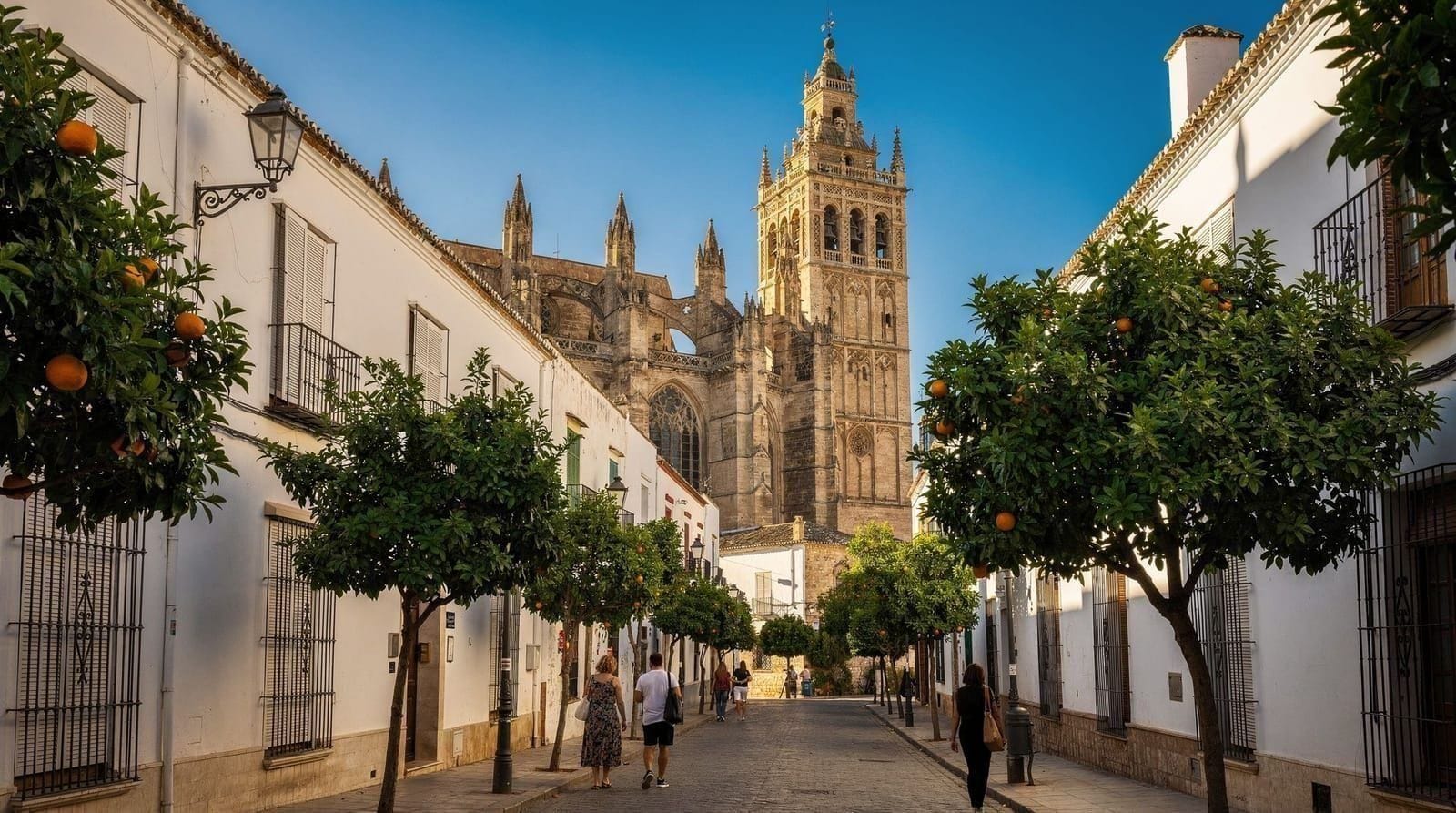
The Calleja de las Flores (Lane of Flowers) near the Mezquita is a narrow alley with a framed view of the bell tower through a riot of flower pots. This is Córdoba’s most photographed lane and is genuinely pretty rather than manufactured. The geraniums and carnations are changed seasonally.
Córdoba from a day-trip vs overnight perspective
Day-trip: leaves from Seville by AVE, arrives Córdoba by 9:30–10:00, visits the Mezquita (2 hours), Roman bridge and Judería walk (1.5 hours), lunch (1 hour), Alcázar or Medina Azahara if time allows, returns to Seville by 20:00. Feasible and satisfying. The Córdoba day-trip guide has full timing.
Overnight: adds the free Mezquita morning entry at 8:30, allows an evening walk through the Judería when day-trippers have cleared, enables the Medina Azahara as a half-day excursion, and gives time for the Jewish quarter at leisure. The city in the evening belongs to locals rather than tourists.
How Córdoba compares to Granada: Córdoba is shorter travel time, slightly less visually arresting overall, but the Mezquita may surpass the Alhambra in raw architectural impact for many visitors. Granada has the fuller city experience. See the comparison guide.
Practical info for Córdoba
Best time to visit: October–March for comfortable temperatures and fewer crowds. The Festival de los Patios in May is extraordinary but the city is at its most crowded.
Getting around: the historic centre is compact and walkable. Taxis are inexpensive for the station-to-centre journey.
Language: Spanish throughout. English is spoken at the Mezquita ticket office, main hotels, and tourist restaurants. Tabernas in the Judería are largely Spanish-only.
Money: ATMs throughout the historic centre. Cash is preferred at smaller tapas bars and the market.
Train versus organised tour
Independent train travel and a guided day tour both get you to Córdoba, but they suit different travellers. Buying your own AVE tickets and Mezquita entry is cheaper and gives you full control of timing — arrive for the free 8:30 slot, linger in the Judería, decide on lunch spontaneously. A guided tour costs more but removes the ticket-queue and navigation friction, and includes commentary that self-guided visitors miss unless they book an audio guide separately. The train versus tour guide breaks down the cost and time trade-offs in detail. Either way, Córdoba pairs naturally with Carmona on a longer day, and travellers extending into a multi-day Andalusia route often combine it with Granada — see the Seville–Córdoba–Granada itinerary for how the three cities connect by train.
Top experiences
Bookable activities with verified prices and instant confirmation on GetYourGuide.