Córdoba day trip from Seville: complete guide 2026
From Seville: Córdoba trip with Mezquita by high-speed train
How do you get from Seville to Córdoba?
The AVE high-speed train from Santa Justa station reaches Córdoba in 45 minutes, costing €20-35 return. Trains run roughly every hour from early morning. This is the fastest and most convenient option — no need for a guided tour unless you want one.
Of all the day trips from Seville, Córdoba is the most compelling. The 45-minute AVE journey is painless. The Mezquita-Catedral is one of the great buildings of the medieval world. The Judería is compact and ungentrified by Seville standards. And unlike Granada, you don’t spend a third of the day on transport. This guide gives you everything you need to plan a Córdoba day trip correctly.
| Where | Córdoba old city, 45 min by AVE from Santa Justa |
| Cost | around €50-75 total for the day, independently |
| Time needed | 5-6 hours on the ground, full day including travel |
| Getting there | AVE high-speed train, roughly hourly from 6am |
| Best time | spring or autumn; early May for the patio festival |
Getting there: AVE, regional train, or bus
AVE high-speed train (recommended): Santa Justa to Córdoba station in 45 minutes. Trains run roughly every hour from 6 AM onwards. Return tickets cost €20-35 depending on timing and advance booking. Book at renfe.com — do not pay travel agent markups. The journey itself passes through olive groves and farmland; the arrival at Córdoba’s modern station is efficient.
Renfe Media Distancia (slower but cheaper): The regional train takes 1h15-1h30 and costs €10-13 single. Useful if you’re flexible on timing and price-sensitive.
Bus (not recommended for day trips): The Seville-Córdoba bus via ALSA takes 2 hours and costs €12-16. There is no reason to take the bus when the AVE exists.
Organized tour (with transport included): Various operators run day trips from Seville that include AVE travel, coach transfer, and a guided visit to the Mezquita. These cost €60-100 per person and are worth considering if you want the historical commentary and Mezquita entry guaranteed.
From Seville: Córdoba day trip by AVE with guided Mezquita visitFrom Córdoba station, the Mezquita is a 15-minute walk along the river, or a 5-minute taxi.
The Mezquita-Catedral: what to know before you go
The Mezquita is not just a mosque or just a cathedral — it is both, simultaneously, in the same building. Understanding how this happened makes the building more legible.
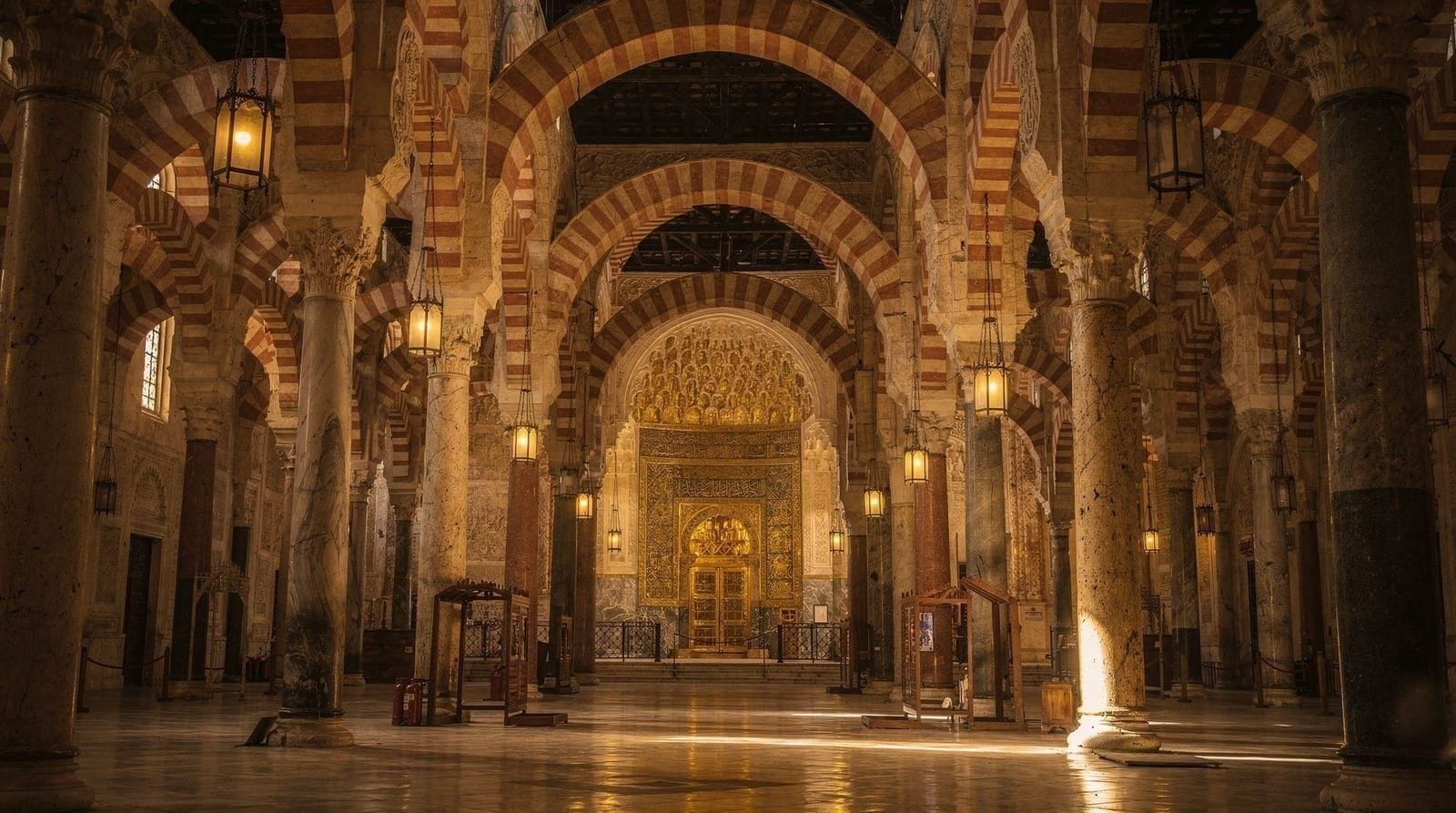
The Umayyad mosque (8th-10th century): The original mosque was built on the site of a Visigoth basilica in 784-786 by Abd al-Rahman I, the first Emir of Córdoba. His successors expanded it four times; by the 10th century under Caliph Abd al-Rahman III, it covered 23,400 square metres. The iconic double-tiered arches in red brick and white stone — creating the forest of columns effect — date from this period. The mihrab (prayer niche indicating the direction of Mecca) is a masterpiece of 10th-century decorative work.
The Christian conversion (13th-16th century): After Fernando III of Castile took Córdoba in 1236, the mosque was converted to a cathedral. A series of chapels and a chapter house were inserted around the perimeter. In 1523, despite objections from the Córdoba city council, Bishop Alonso Manrique ordered a full Renaissance cathedral nave constructed through the centre of the hypostyle mosque. Holy Roman Emperor Carlos V, who had given permission, is reported to have said on seeing the result: “You have destroyed something unique to build something ordinary.” This is probably apocryphal but captures the architectural violence of the intervention.
What to see inside: The forest of 856 columns (red jasper, onyx, marble, granite) with double-arch bays is the most immediately overwhelming space. Allow your eyes to adjust — photographs do not capture the spatial experience adequately. The mihrab in the south wall is the artistic highpoint: geometric mosaics made by craftsmen sent from Constantinople, carved stucco of extraordinary precision. The cathedral nave is genuinely impressive in its own right (Renaissance and Baroque elements); the contrast with the surrounding mosque is architecturally fascinating.
Tickets: €15 adult. Children under 10 free. Book online at mezquita-catedraldecordoba.es. Opening hours: Monday-Saturday from 10 AM, with free entry from 8:30 to 9:30 AM (no groups). Hours change with the season and for religious services, so check the calendar on the official website before you go.
The Judería and old city
The Jewish Quarter surrounds the Mezquita on its north and west sides. Narrow whitewashed lanes, pots of geraniums on every wall, quiet plazas. The Calleja de las Flores is the most famous street — a narrow alley framing a view of the Mezquita tower with flower-covered walls. It is genuinely beautiful and the photographs don’t exaggerate.
Synagogue of Córdoba: A tiny 14th-century synagogue on Calle Judíos, one of only three surviving medieval synagogues in Spain. Free entry. The carved plasterwork inside uses the same geometric Arabic patterns found in the Mezquita — religious communities in medieval Córdoba shared craft traditions. Allow 20-30 minutes.
Casa Árabe: A restored Moorish house with a traditional courtyard. Free or minimal entry. One of several courtyards (patios) that give a domestic-scale sense of how the city was organized.
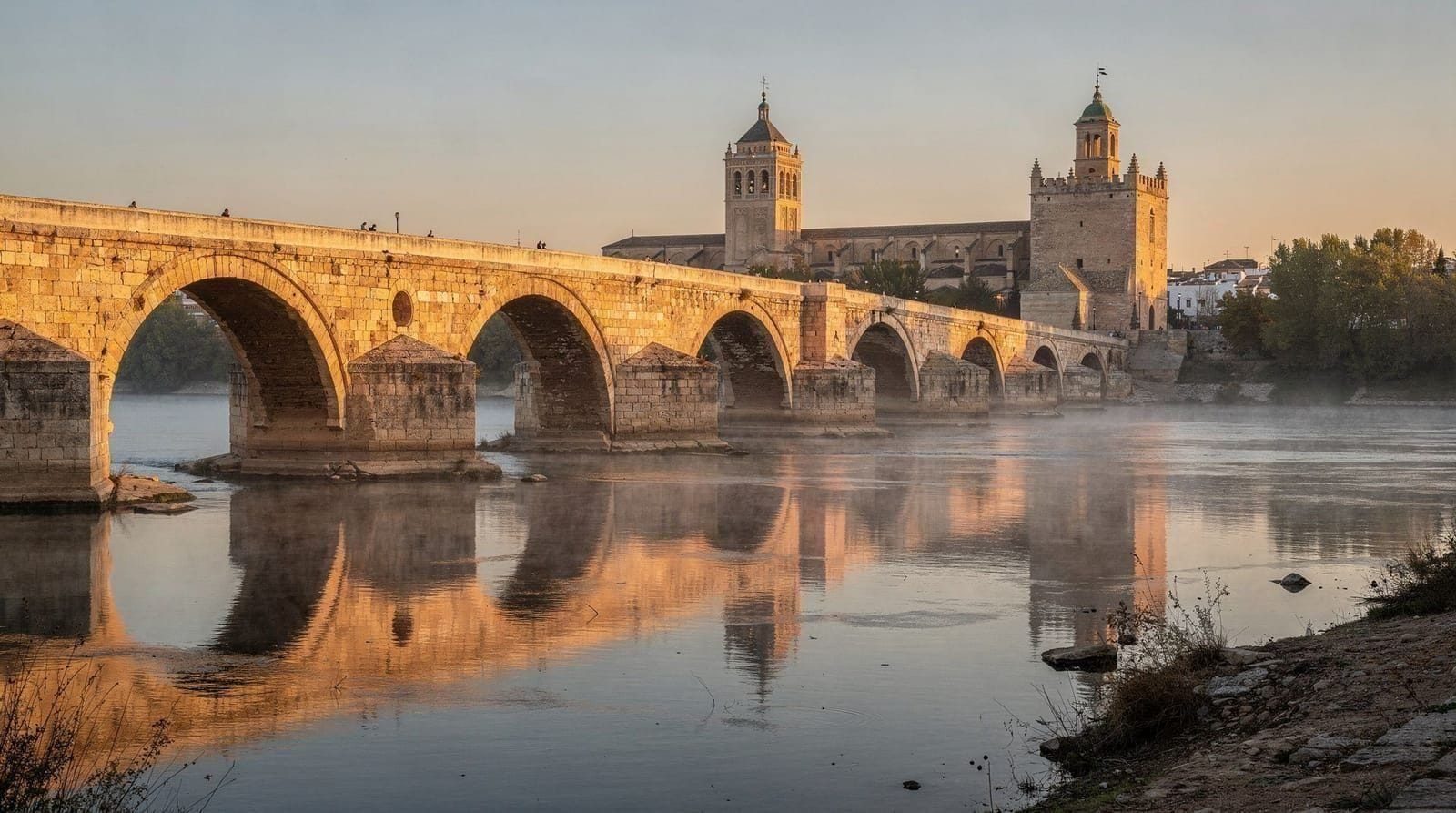
Puente Romano: The Roman bridge over the Guadalquivir, dating from the 1st century BC. The current bridge is largely medieval reconstruction but the site is original. The view back toward the old city from the far bank is excellent for photography in morning light.
If the Judería leaves you wanting more of this kind of slow, whitewashed atmosphere, the same mood shows up in Seville’s own old quarter. The Santa Cruz neighborhood guide and the Triana neighborhood guide are good companions for the days you spend back in the city.
Alcázar de los Reyes Cristianos
The Alcázar of the Christian Kings is a 14th-century fortress palace built by Alfonso XI, used subsequently by Fernando and Isabella as their headquarters during the Granada Campaign. Columbus was granted an audience here before his first voyage. The Roman mosaics in the museum (found near Maimónides Square) are outstanding — one of them, depicting an Augustan-era consul, is 3 metres wide.
The Alcázar gardens are well maintained with fountains and topiary. Check the official Alcázar de los Reyes Cristianos website for current prices and opening hours. Plan 1-1.5 hours. Located 2 minutes’ walk from the Mezquita south entrance.
Medina Azahara (if you have time)
Medina Azahara is a 10th-century palace city built by Caliph Abd al-Rahman III outside Córdoba — a UNESCO World Heritage Site and one of the great archaeological sites of al-Andalus. It was destroyed by Berber forces in 1010 and remained buried until the 20th century. The ongoing excavations and the museum are fascinating.
The problem for day trippers: it is 8 km outside Córdoba, requiring either a taxi, the tourist bus from Córdoba, or a rental car. Adding Medina Azahara to a Mezquita day trip requires either cutting time at the Mezquita or arriving in Córdoba before 9 AM. It’s worth considering if architecture or archaeology is your primary interest.
Where to eat in Córdoba
Taberna Casa Pepe de la Judería (Calle Romero, near the Mezquita): reliable Córdoban food, outdoor seating in a pleasant courtyard, prices moderate for a tourist-area restaurant. Rabo de toro (oxtail stew) is the local specialty.
Mercado Victoria: A covered food market in the city centre with multiple stalls serving tapas, jamón, and local wines. Good for a quick lunch without committing to a sit-down meal.
Bodegas Mezquita (Calle Corregidor Luis de la Cerda): traditional bodega atmosphere, good wine list, solid tapas. Slightly off the main tourist path.
Avoid the restaurants immediately on the Mezquita’s tourist side (Calle Cardenal Herrero): classic tourist-trap positioning, inflated prices, mediocre food.
From Seville: Full-day Córdoba tour with Mezquita and JuderíaSuggested itinerary for a Córdoba day trip
07:30 — Breakfast in Seville, walk to Santa Justa station
08:00 — AVE to Córdoba (45 min)
09:00 — Walk from station to Mezquita along the river
10:00 — Enter Mezquita at standard opening (free entry is 8:30-9:30 AM, Monday to Saturday)
11:30 — Exit Mezquita, explore the Calleja de las Flores and Judería
12:30 — Lunch at Taberna Casa Pepe or Mercado Victoria
14:00 — Alcázar de los Reyes Cristianos and gardens
15:30 — Puente Romano and optional visit to Synagogue
16:30 — Walk back to station
17:00 or 18:00 — Return AVE to Seville
This itinerary fits comfortably in a day with time to linger at the Mezquita. Add Medina Azahara if you want a longer, more intensive visit and are arriving on an early train.
Córdoba by season: what to expect
| Season | Weather | What it’s like |
|---|---|---|
| Spring (Mar-May) | Mild, 15-25°C | Best overall; early May brings the Concurso de Patios courtyard festival |
| Summer (Jun-Aug) | Very hot, often 38-42°C | Arrive early (9am), Mezquita interior crowded and hot by midday |
| Autumn (Sep-Oct) | Mild, 18-27°C | Comfortable walking weather, fewer crowds than spring |
| Winter (Nov-Feb) | Cool, 8-16°C | Quietest season, shorter days, Mezquita entry queues shortest |
If your dates are flexible, spring and autumn make the Judería and the walk from the station genuinely pleasant rather than something to endure. In deep summer, front-load the day: catch the earliest practical AVE, be at the Mezquita for opening, and treat the afternoon as recovery time rather than more sightseeing. Winter visitors get the shortest queues and the most peaceful Mezquita interior of the year, at the cost of a couple of hours of daylight — plan the Alcázar gardens for early afternoon rather than late, since it closes earlier outside summer.
Combining Córdoba with Carmona
Some visitors ask whether Córdoba can be combined with Carmona in the same day, since Carmona is only 40 minutes from Seville. It’s possible in theory but not recommended in practice — a full Córdoba day already fills 9 hours comfortably, and adding Carmona means rushing both. If you want to see Carmona, treat it as its own half-day: see the Carmona day trip from Seville guide for the logistics. For the wider set of options if you’re planning several excursions from Seville, the best day trips from Seville guide and Seville day trips itinerary cover how to sequence them across a longer stay.
Practical information
Córdoba station to old city: 15-minute walk south along Calle Carlota Alessandri and across the gardens. Or a short taxi ride. The walk is flat and pleasant.
Currency: Euro. ATMs at the station.
Water: Bring water — the old city has limited free water points. In summer, a water bottle is essential.
May courtyard visits: The Concurso de Patios (Festival of Patios) typically runs in early May. Participating houses open their flower-filled private courtyards. If you’re visiting in this period, Córdoba becomes a different experience — one of Spain’s most distinctive local traditions.
Guided tour vs independent: A good guide at the Mezquita is genuinely valuable — the building repays detailed explanation. Many visitors who go independently wish they’d had commentary. A 2-hour guided visit to the Mezquita alone (not a full day tour) costs €25-40 per person and is available on site and via GYG.
If you are still deciding which excursion to prioritise, the which Andalusian city to visit guide and the Seville vs Granada vs Córdoba comparison put the three big cities side by side. A longer stay can stretch into the Seville, Córdoba and Granada trip itinerary, and our Córdoba beats Granada trip story gives a first-hand view of why this day works so well.
For a full comparison of Córdoba vs Granada for a day trip, see Córdoba vs Granada day trip. For planning your Seville schedule, see Seville day trips itinerary.
Frequently asked questions about Córdoba day trip from Seville
Is Córdoba worth a day trip from Seville?
Yes — Córdoba is the easiest and most rewarding day trip from Seville. The Mezquita-Catedral is one of Europe's most extraordinary buildings. The Judería is compact and atmospheric. The journey is 45 minutes each way by AVE. It's genuinely feasible as a relaxed day without feeling rushed.How much does it cost to get to Córdoba from Seville?
AVE return tickets cost €20-35 depending on the train and booking lead time. Booking through Renfe.com directly is the cheapest option. The tourist train (Renfe Media Distancia) is slower (1h15-1h30) but cheaper (€10-13 single) if you're flexible on time.Do you need to book Mezquita tickets in advance?
It's strongly recommended in peak season (March-May, September-October). The Mezquita does not sell out as quickly as the Alhambra, but the early morning slots (free entry 8:30-9:30 AM Monday to Saturday, paid entry from 10 AM) fill fast. Tickets are €15 adult. Book online at mezquita-catedraldecordoba.es.How much time do you need in Córdoba?
5-6 hours on the ground is comfortable. The Mezquita takes 1.5-2 hours, the Alcázar de los Reyes Cristianos 1-1.5 hours, and the Judería (Jewish Quarter) plus Calleja de las Flores another hour of walking. Getting there at 9 AM and leaving at 3-4 PM is ideal.Is it better to visit Córdoba independently or with a guided tour?
For most visitors, going independently by AVE is cheaper and more flexible. A guided tour adds value if you want deep historical context at the Mezquita — a good guide makes a significant difference to understanding the building. Tours from Seville that include AVE travel and Mezquita entry start at €60-80.What is the Mezquita-Catedral and why does it matter?
The Mezquita-Catedral (Mosque-Cathedral of Córdoba) is a UNESCO World Heritage Site and one of the finest examples of Islamic architecture in Europe. A 10th-century hypostyle mosque of 856 columns, it was converted to a cathedral in 1236 after the Christian Reconquista, with a full Renaissance cathedral inserted into its centre in the 16th century. The result — mosque and cathedral coexisting in the same building — is unique in the world.Can I combine Córdoba with another day trip on the same day?
Yes — Carmona is 40 minutes from Seville and you can visit it in the morning before an afternoon AVE to Córdoba, or vice versa. The combined Córdoba-Carmona tour covers both in a single long day. Combining Córdoba with Granada in one day is not recommended — too little time at each.What is the best time of year to visit Córdoba?
May is when the courtyards competition (Concurso de Patios) opens the private flower-filled courtyards of the old city to the public — uniquely beautiful and well worth planning around. Spring and autumn are best for weather. July-August is very hot (40°C+) and the Mezquita interior gets crowded early.Should I book the AVE and Mezquita tickets on the same day I travel?
No — book both in advance where possible. AVE fares rise as departure approaches and can sell out on popular morning slots, especially in spring. Mezquita tickets don't sell out as fast as the Alhambra's, but the early morning slots (free entry 8:30-9:30am, paid entry from 10am) fill up in peak season, so booking online the day before removes the only real risk in an otherwise low-stress day trip.
Top experiences
Bookable activities with verified prices and instant confirmation on GetYourGuide.