Italica
Italica is Rome's first colony in Spain, 9 km from Seville. Birthplace of emperors Trajan and Hadrian. Half-day trip with honest logistics.
From Seville: Italica Roman ruins city tour
Quick facts
- Best for
- Roman ruins, amphitheatre, mosaic floors, Game of Thrones fans
- Days needed
- Half day
- Getting there
- Bus M-170A from Plaza de Armas, Seville — 30 min
- Peak crowds
- Spring weekends and summer mornings
- Currency
- EUR
Italica is the most overlooked major site near Seville. Founded in 206 BC by Roman general Publius Cornelius Scipio as the first Roman colony on the Iberian Peninsula, it later became the birthplace of emperors Trajan (AD 53) and Hadrian (AD 76). The ruins are extensive, largely preserved under open sky, and 9 km from the Cathedral of Seville.
| Where | Santiponce, 9 km from Seville’s Cathedral |
| Cost | Free for EU citizens; around €1.50 for non-EU adults |
| Time needed | Half day (3–4 hours) |
| Getting there | Bus M-170A from Plaza de Armas (~30 min), or 20–25 min by car |
| Best time | Autumn and winter, or spring mornings before 11:00 — the site has no shade |
What is actually there
The site has two distinct areas:
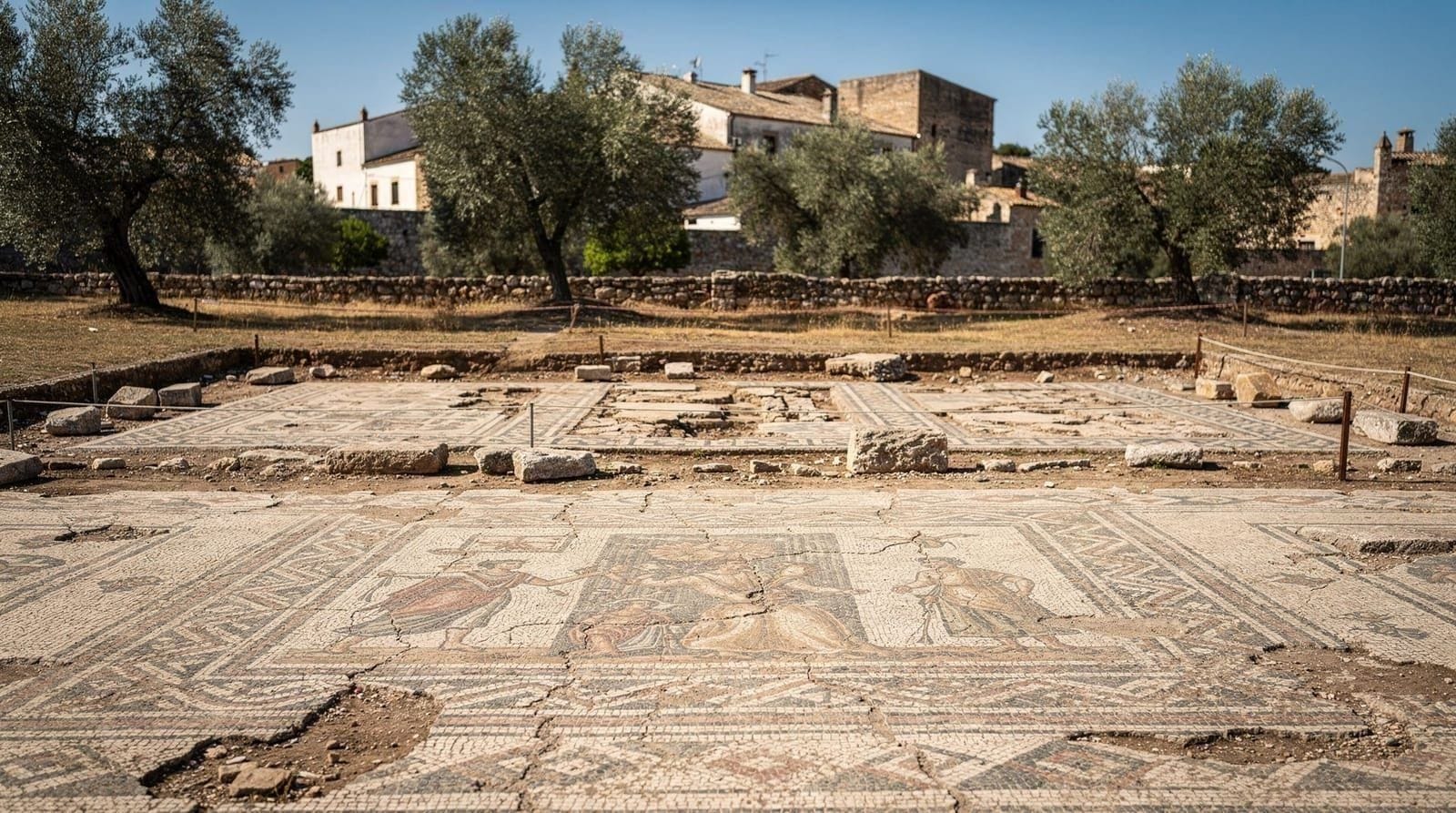
The Roman city (Nova Urbs): the 2nd-century expansion under Hadrian, now the main archaeological area. Street grids, mosaic floors, thermal baths, and the amphitheatre are here. The mosaics of the Neptuno, Planetario, and Birds houses are well preserved — some of the best in situ Roman mosaics in Spain.
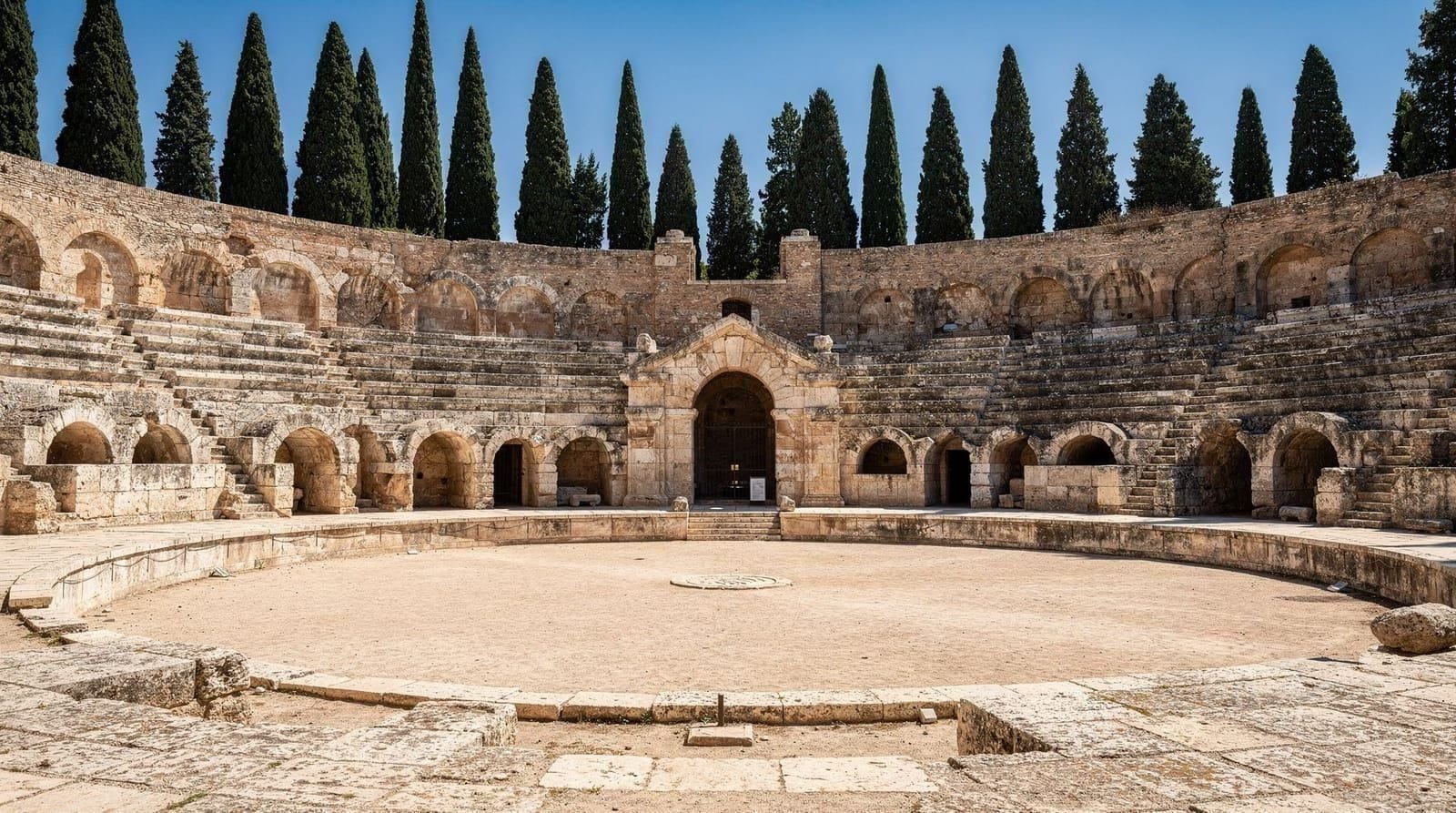
The amphitheatre: capacity estimated at 25,000 — third largest in the Roman Empire after the Colosseum and the Capua amphitheatre. The arena floor, underground passages (where animals and gladiators were held), and much of the seating structure are visible. Game of Thrones fans will recognise this as the “Dragonpit” location from Season 7.
The original Italica (Vetus Urbs, the old city) lies under the modern town of Santiponce — partially excavated but not publicly accessible.
Getting there from Seville
Bus M-170A from Seville’s Plaza de Armas bus station to Santiponce. The journey takes about 30 minutes. For the current fare, check the Seville transport consortium (Consorcio de Transportes). Buses run roughly every 30 minutes on weekdays, less frequently on weekends. The ruins entrance is a 5-minute walk from the bus stop in Santiponce.
By car: 20–25 minutes via the A-8082. Parking is available near the site entrance.
Guided tour from Seville: A guided Italica tour from Seville provides historical context for the Hadrianic expansion and the significance of the mosaic types — the symbolism of the Neptuno mosaic is non-obvious without explanation.
For Game of Thrones interest specifically, the Game of Thrones and Roman Empire Italica tour covers both the filming locations and the historical background.
Entry
Free for EU citizens (bring passport or ID). Non-EU adults: €1.50. The site is managed by the Junta de Andalucía. Opening hours vary by season: Tuesday–Saturday 9:00–18:00 from 21 September to 31 March; 9:00–15:00 from 21 June to 20 September; Tuesday–Thursday 9:00–18:00 and Friday–Saturday until 21:00 from 1 April to 20 June; Sunday 9:00–15:00 all year. Closed Mondays (except holiday eves).
The archaeological museum at the entrance has a small but good collection of Roman pieces from the site: sculpture, coins, architectural fragments.
Practical notes
The site is entirely outdoors and largely unshaded. Visiting in summer after 11:00 means walking on gravel paths under intense sun with little shade. Morning visits (9:00–11:00) are manageable. Bring water regardless of season.
The town of Santiponce has a few cafés and a decent restaurant (Restaurante Italica, Avenida de Extremadura) for a post-site lunch, though it is not remarkable.
Combining Italica with Carmona in a single day is possible with a car — Carmona is 35 km east. See Carmona. For a full planning walkthrough including timing and combining with other sights near Seville, see the Italica day-trip guide.
Game of Thrones connection
HBO used Italica’s amphitheatre as the location for the Dragonpit in Season 7 — the meeting between Daenerys’s faction and Cersei Lannister. The visual of the ruined stone cavities around the arena floor maps directly to the episode. Seville’s Alcázar gardens appeared as the Water Gardens of Dorne in Seasons 5 and 6.
The 3-hour Game of Thrones Italica tour from Seville covers the filming context in detail and also takes in the Alcázar filming locations in Seville before the drive to Italica.
Italica’s historical significance
The name Italica is not Spanish — it means “the Italian place,” reflecting the soldiers from the Italian peninsula who founded the settlement with Scipio. It was the first Roman colonia west of the Ebro and served as a model for subsequent Roman urban development in Hispania.
The city reached its peak under Emperor Hadrian (who was born here), who funded a massive expansion in the 2nd century AD. The grid of streets, the thermae (baths), and the amphitheatre were all part of Hadrian’s Nova Urbs expansion. The circular pattern of the amphitheatre, at 160 metres on the long axis, was designed to hold 25,000 spectators — proportionally enormous for a city of Italica’s size.
Trajan (born 53 AD, died 117 AD): first Roman emperor born outside Italy. Under his rule, the empire reached its maximum territorial extent — present-day Iraq in the east, Scotland in the north. A marble statue of Trajan from Italica is in the Seville Archaeological Museum.
Hadrian (born 76 AD, died 138 AD): builder of Hadrian’s Wall in Britain, the Pantheon in Rome, and the Villa Adriana near Rome. He visited Italica as a conscious act of ancestral piety and funded the Nova Urbs expansion himself.
The mosaics in detail
The mosaic floors at Italica are among the finest in situ Roman mosaics in Spain. Key examples:
Mosaico de Neptuno: in the Casas de los Pájaros thermae complex. Shows Neptune (Poseidon) surrounded by sea creatures. The tesserae (mosaic tiles) are predominantly white marble with black limestone outlines — typical of the Hadrianic period.
Mosaico Planetario: the seven planets of Roman cosmology (Sun, Moon, Mars, Mercury, Jupiter, Venus, Saturn) personified as deities, arranged around a central figure. Approximately 6 metres in diameter.
Mosaico de los Pájaros (Birds mosaic): over 30 bird species accurately depicted, including flamingo, hoopoe, and stork — species still visible in Andalusia.
La casa del Patio Rodio: residential house with garden courtyard and multiple intact floor mosaics, showing the domestic (non-public) mosaic tradition.
Visiting tips
The site has no shade, which matters significantly in summer. A hat and water are essential from May to September. Morning visits (9:00–11:00) are the only comfortable option in July–August.
The bus from Seville (M-170A from Plaza de Armas) runs approximately every 30 minutes on weekdays and every 60 minutes on weekends. The first bus departs around 7:00; the last return from Santiponce is around 22:00. The schedule shifts seasonally — check at the bus station or the Tussam/Damas website.
The town of Santiponce has several acceptable lunch options including Restaurante Italica (Avenida de Extremadura 2) with a solid menú del día around €12. The bar at the museum entrance serves coffee and basic snacks.
What Italica looked like at its peak
At its 2nd-century peak, Italica had a population of around 8,000 people — significant for a Roman provincial town. The Nova Urbs (Hadrian’s expansion) was planned as a showcase city: the streets were 12–18 metres wide (comparable to Rome’s best thoroughfares), the insulae (residential blocks) were large and well-appointed, and the public buildings were built with imported marble.
The amphitheatre — third largest in the empire at 170 × 137 metres — was grossly oversized for a city of this population. This was deliberate: Hadrian wanted to express imperial power through architecture that exceeded the city’s practical needs. The vaults beneath the arena floor (where animals were held in cages and gladiators waited) are still largely intact and can be walked today.
The site has never been fully excavated. Current estimates suggest that only 30–40% of the Roman city has been exposed. The remainder lies under Santiponce and surrounding agricultural land. The 2nd-century street plan is partially visible as crop marks from aerial photography.
How Italica declined
Roman Italica was gradually abandoned following the 3rd-century crisis of the Roman Empire. The population contracted, the aqueduct fell into disrepair (the city’s water supply was entirely dependent on a long aqueduct from the Sierra Norte mountains), and building stone was quarried from the ruins for use in Seville. The Visigoths used the amphitheatre as a quarry; the Moors did the same. Medieval Seville’s churches and walls contain Italica stone.
The site was first recognised as archaeologically significant in the 16th century. Systematic excavation began in the 19th century under Ferdinand VII and has continued intermittently since.
Italica and the Archivo de Indias
One of the Roman busts found at Italica — now in the Seville Archaeology Museum in María Luisa Park — is believed to be Hadrian. The museum also holds mosaics from Italica, including some not displayed at the site itself. If you are interested in the full scope of Italica’s finds, a visit to the museum (free for EU residents, €1.50 for others) completes the Italica picture. The museum is in Seville’s Parque de María Luisa, about 30 minutes from the old town on foot.
Where Italica fits in a Seville stay
Italica works best as the easy, low-effort day in a trip that is otherwise built around crowded monuments. After a morning queue at the Real Alcázar or the Cathedral and Giralda, a quiet walk among open-air ruins is a welcome change of pace. If you are still shaping your trip, the first-timers itinerary and the three-day plan both leave room for a half-day outside the centre, and the guide on how many days to spend in Seville helps you decide whether you can afford one.
Because the trip is short, it also slots into a day that has other plans. Many visitors go in the morning, when the light is good and the site is at its most comfortable, and return to the city for a long lunch and an evening of tapas or flamenco. If that is your plan, the best tapas in Seville and the flamenco 101 beginner’s guide are good places to start choosing what to do once you are back.
Choosing between a guided visit and going alone
Going independently is simple and cheap, and the ruins are laid out clearly enough that you will not get lost. What you lose is interpretation: much of what makes Italica interesting, from the reasons behind the mosaic subjects to the way the street grid reflects imperial planning, is not obvious from the stones alone. A guide fills that gap, and the guided options differ mainly in tone: some lean on the history, others on the filming locations.
If you like to move under your own power, a guided half-day bike trip out to the ruins is a different way to arrive, and it suits people who find buses and fixed timetables frustrating. For general cycling around the city itself, see the Seville by bike guide.
Whichever route you choose, read the opening hours before you set out, since the site is closed on Mondays. Arriving without checking is the most common way to lose the trip entirely.
Combining Italica with other day trips
Italica is the shortest of the excursions from Seville, which makes it a natural companion rather than a rival to the longer ones. Visitors weighing their options often ask whether it should replace a bigger trip. It should not: the Córdoba day trip and the Granada day trip offer very different experiences, and the comparison of Córdoba and Granada shows how to choose between them. Italica is what you add when you have a spare half-day, not what you swap in for the Alhambra or the Mezquita.
If your interest is Roman and ancient history in particular, the town of Carmona and its day-trip guide pair well with Italica, and the wider day trips itinerary shows how several excursions can be spread across a longer stay. For the broader picture of Andalusia beyond Seville, Córdoba and Granada are the two destinations most visitors add next.
Who will enjoy Italica most
Italica rewards curiosity more than stamina. It suits travellers who like to wander without a rigid schedule, photographers who enjoy stone and light, families with children who will happily run along the amphitheatre passages, and anyone who wants a taste of the ancient world without the queues of a major museum. It is less suited to visitors who need shade, seating and refreshments every few minutes, or who expect a reconstructed, polished site. The ruins are honest ruins: you see the foundations, the floors and the arena, and your imagination does the rest. Go with that expectation and the visit tends to be one of the memorable parts of a Seville trip.
Frequently asked questions about Italica
How much time do I need at Italica?
Half a day is right: 2–3 hours at the site itself, plus 30 minutes travel each way from Seville. The amphitheatre and the mosaic houses are the priority if you are short on time; the Nova Urbs street grid rewards a slower, more thorough visit.
Is Italica worth it if I am not especially interested in Roman history?
Yes, for two reasons: the amphitheatre is genuinely impressive purely as a structure, and Game of Thrones fans get a direct payoff recognising the Dragonpit location. For a first-hand account of the filming connection, see Italica’s Game of Thrones locations.
Can I visit Italica without a car?
Yes, easily — it is one of the more accessible day trips from Seville. Bus M-170A runs from Plaza de Armas roughly every 30 minutes on weekdays, taking about 30 minutes each way. See the best day trips from Seville overview for how it compares to the other short trips.
Top experiences
Bookable activities with verified prices and instant confirmation on GetYourGuide.