Carmona
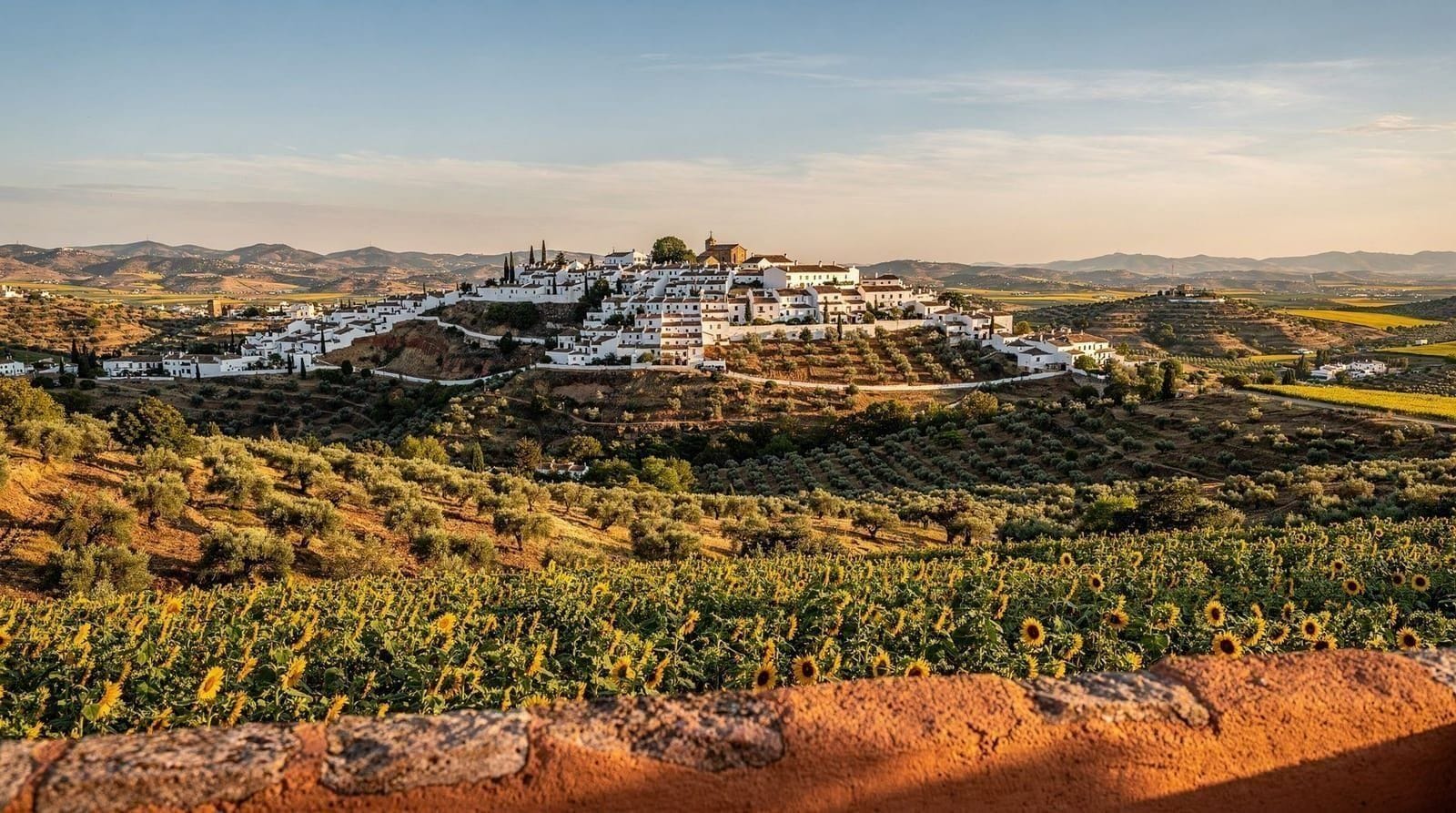
Carmona is a perfectly preserved hill town 35 km from Seville with a Roman necropolis, Moorish walls, and a parador inside a Moorish fortress.
From Seville: Carmona and necropolis tour
Quick facts
- Best for
- Roman necropolis, medieval walls, Parador views, quiet history
- Days needed
- Half day to 1 day
- Getting there
- Bus from Seville Plaza de Armas, about 45 min
- Peak crowds
- Spring weekends
- Currency
- EUR
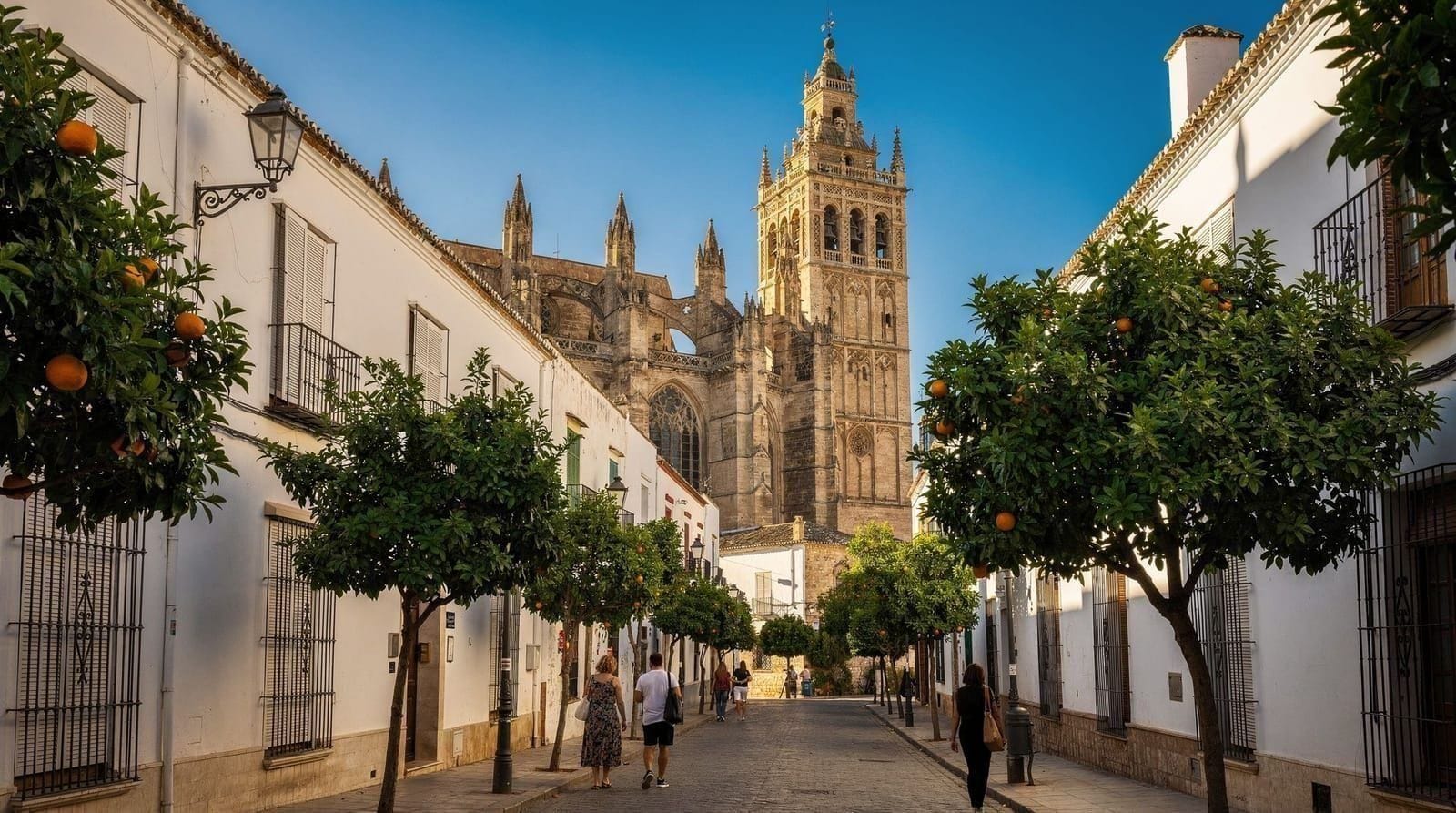
Carmona is a model of the small Andalusian hilltop town — white walls, Roman gateways, a Moorish alcázar converted to a parador, and a 1st-century Roman necropolis on its western edge. It sits 35 km east of Seville and receives a fraction of the visitors it deserves, largely because it lacks a single blockbuster monument to compete with the Alcázar or Alhambra.
| Where | 35 km east of Seville, in the Campiña Sevillana |
| Cost | Necropolis around €1.50 (free EU residents); old-town churches €2–4 |
| Time needed | Half day; a full day if combining with Italica or Córdoba |
| Getting there | Bus from Plaza de Armas (~45 min), or car (35 min) |
| Best time | Year-round; spring and autumn most comfortable for walking |
The Roman necropolis
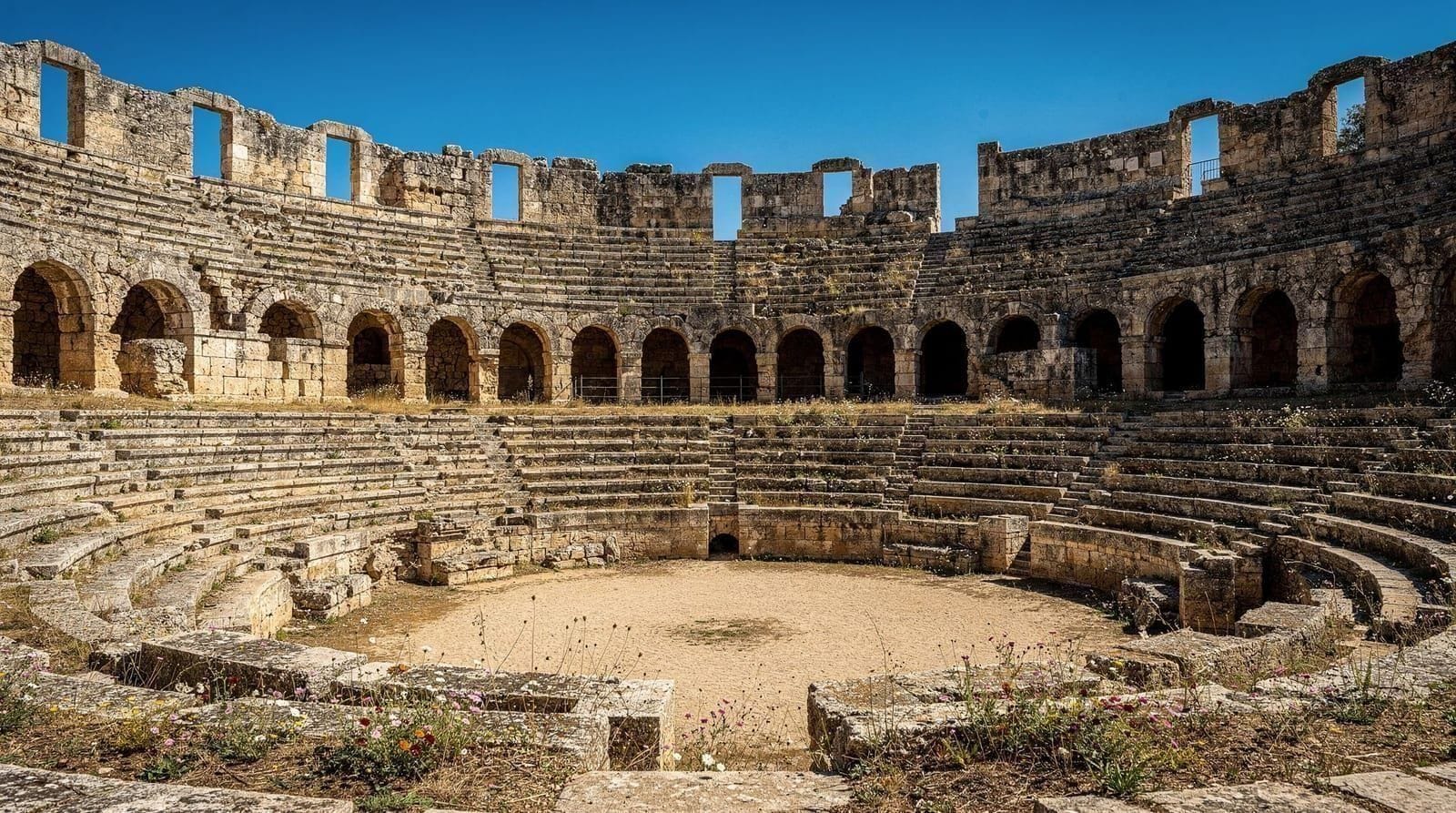
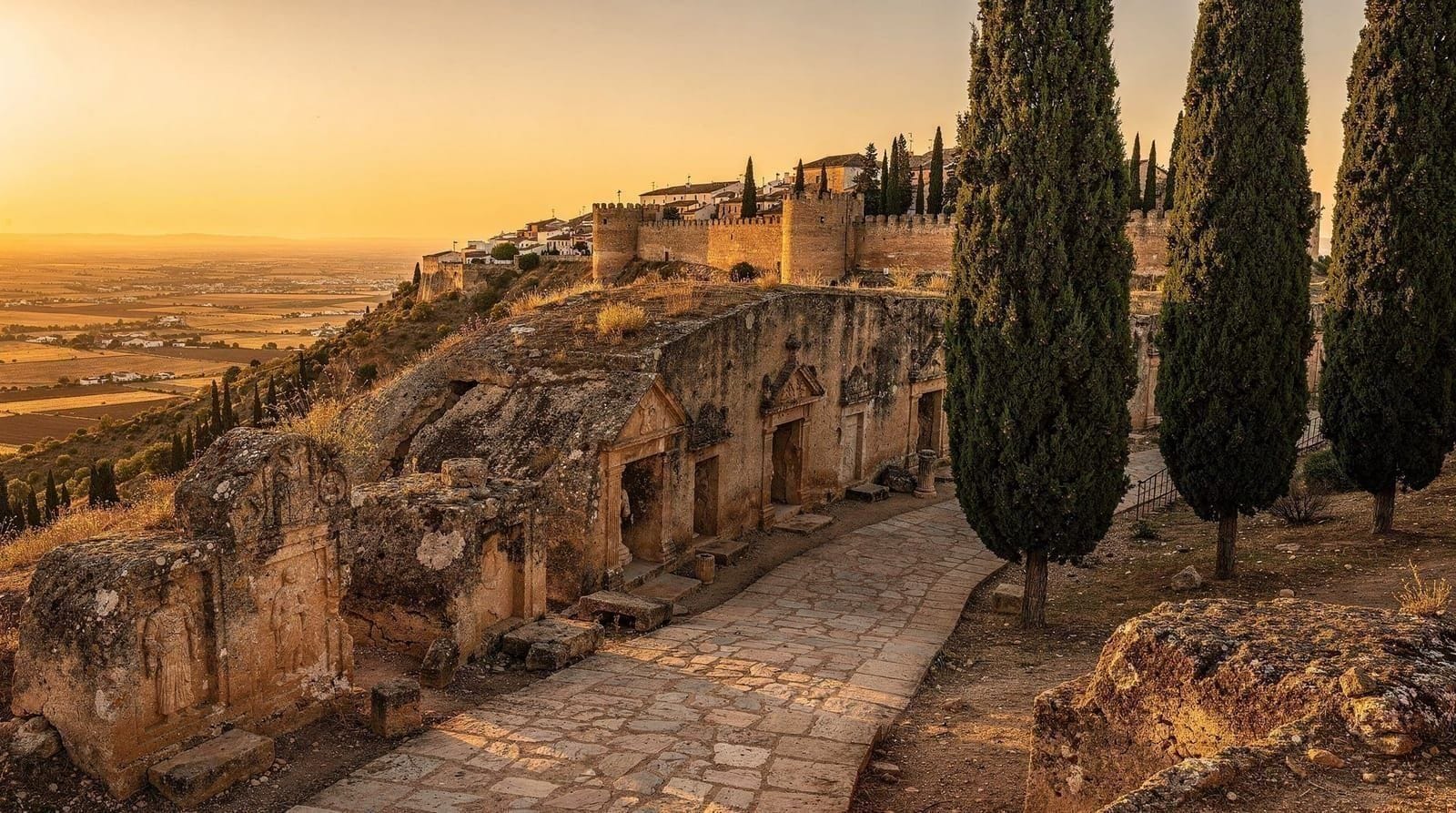
The Necrópolis Romana de Carmona is one of the largest and best-preserved Roman cemeteries in Spain. Over 900 tomb complexes have been identified, with around 250 excavated. The tombs range from simple shaft burials to elaborate rock-cut family chambers with painted walls, mosaic floors, and carved niches for cinerary urns.
The Tumba del Elefante (Tomb of the Elephant) is the most impressive: a triclinium (dining room) used for funerary banquets, with a stone elephant statue at the entrance. The Tumba de Servilia has a garden and columned entrance hall carved directly into the rock.
Entry: €1.50 (non-EU), free for EU residents. Tuesday–Saturday 9:00–18:00 (9:00–15:00 from 21 June to 20 September), Sunday 9:00–15:00. Located at the western edge of town, about 1 km from the centre on foot.
Book the Carmona and necropolis guided tour from Seville to get proper archaeological context — the necropolis is substantially richer with a guide who can explain the Roman burial customs and the different tomb types.
The old town
Puerta de Sevilla: the main Roman gateway into the ancient city. The Alcázar de la Puerta de Sevilla (the Carthaginian-era fortification that the Romans built upon, and the Moors subsequently modified) can be climbed for rooftop views. Entry €2.
Plaza de San Fernando: the central square, where the Baroque Ayuntamiento contains a large Roman mosaic floor visible through a glass panel in the entrance hall. Free.
Prioral de Santa María de la Asunción: the main church, built on the site of a mosque. The Patio de los Naranjos (orange tree courtyard) is from the Moorish period. Entry €4.
Alcázar del Rey don Pedro: the clifftop fortress, now the Parador de Carmona. Even if you are not staying, the terrace of the parador bar has extraordinary views across the Seville plain — the flatness of the Guadalquivir valley is striking from up here. Coffee and a view: €3–4.
Getting there from Seville
By bus: ALSA runs services from Seville’s Plaza de Armas station to Carmona. Journey about 45 minutes. Buses run frequently on weekdays.
By car: 35 km via the A-4, about 35 minutes. Parking in Carmona is straightforward near the Roman gate area.
Combined trip: The Córdoba, Mezquita and Carmona combined day-trip from Seville visits both Carmona and Córdoba in one guided day — a long but efficient combination if you want to cover both efficiently.
Where to eat in Carmona
El Molino de la Romera (Calle Sor Ángela de la Cruz 8, near the Puerta de Sevilla): an old olive mill converted into a restaurant. Andalusian classics — salmejo, game stews, presa ibérica. Menú del día around €14.
Bar Goya (Plaza de San Fernando 8): straightforward tapas bar on the central square. Excellent berenjenas con miel (fried aubergine with honey and sugar cane molasses) — a classic Andalusian tapa. Budget €10–15 for lunch.
Carmona’s Roman and Moorish history
Carmona (Roman: Carmo) was one of the most important Roman cities in Baetica province. It sat at the intersection of the roads from Gades (Cádiz) to Emerita Augusta (Mérida), and from Hispalis (Seville) to Cordoba. The Roman city’s forum is partially excavated under the Plaza de San Fernando. The Puerta de Sevilla gate (originally Roman, modified by the Moors) is one of the best-preserved Roman gateways in Spain, with Carthaginian foundations beneath.
The Moorish period (711–1247 AD) left the fortress complex that now forms the Parador. The Almohad walls and the alcázar were significant enough that Alfonso X of Castile used Carmona as a base for his campaigns in the region.
The view from the parador terrace: the old town sits on a sandstone ridge 248 metres above the plain. On a clear day, the view extends past Seville (35 km west) and toward the Sierra Morena in the north. The flat olive-and-wheat landscape of the Campiña Sevillana — unchanged in its essential character since Roman times — is visible in all directions.
Carmona’s strategic position in context
During the Peninsular War (1808–1814), Carmona served as a French administrative centre due to its commanding position over the Seville plain. The British forces under Wellington passed through in 1812. The fortifications that made the city militarily significant for 2,000 years are the same ones that make it architecturally interesting today.
Carmona for half-day or full-day visits
Half-day from Seville: take the 9:00–10:00 bus, visit the Roman necropolis (1.5 hours), walk to the town centre via the Puerta de Sevilla gate, lunch on the Plaza de San Fernando, return afternoon bus. This works as a self-contained half-day.
Full day including Italica: by car, combine Italica (morning, Santiponce) and Carmona (afternoon, 35 km from Italica). Two significant Roman sites in one day, arriving back in Seville by 19:00. The Italica guide has timing notes for coordination.
Combined with Córdoba: the organised Córdoba and Carmona tour manages both in one day, prioritising the Mezquita in the morning and Carmona on the return.
Where to stay in Carmona
Parador de Carmona (Alcázar del Rey don Pedro): the fortress parador is the only real luxury option. Rooms from €130–200/night. The views from the terrace are worth the premium.
Casa de Carmona (Plaza de Lasso 1): a 16th-century palace converted to a small hotel. 34 rooms, pool, atmospheric. From €110–160/night.
Both options are worth considering if you want to use Carmona as a quieter base than Seville for 1–2 nights.
The Roman necropolis in detail
The Necrópolis Romana is extraordinary in its preservation. Cremation was the standard Roman practice through most of the 1st–2nd centuries AD (inhumation — burial without cremation — became more common in the 3rd–4th centuries under Christian influence). The Carmona necropolis reflects the cremation era: cinerary urns in carved niches, elaborate stone sarcophagi for wealthier families, and complex multi-room chamber tombs designed to hold the extended family.
The Tumba del Elefante (Tomb of the Elephant): the largest and most architecturally elaborate complex. It includes a triclinium (three-sided dining room used for funerary banquets), a vestibule with a carved well, sleeping chambers cut into the rock, and the elephant statue at the entry — a symbol of long memory and death. The carving quality suggests a wealthy family of Julio-Claudian period (1st century AD).
The Tumba de Servilia: 900 square metres of excavated space. A monumental entrance with four columns (only the column stubs remain), a central garden court, and rooms arranged around it — essentially a columbarium designed to look like a luxury Roman house. The family’s social pretensions are explicit in the architecture.
The museum at the necropolis entrance has a modest but worthwhile collection: funerary ceramics, glass unguentaria (perfume bottles), coins, and personal objects found in the tombs.
Carmona’s modern identity
Beyond the monuments, Carmona is a working Andalusian town of about 30,000 people, with an economy based on olive oil production (the surrounding Campiña is one of Seville province’s main olive zones), agriculture, and some manufacturing. The historic centre is largely residential; the weekly market (mercadillo) takes place on Friday mornings at the edge of town and serves primarily local needs.
The contrast between Carmona’s historical weight and its ordinary contemporary life is part of its appeal. There are no queues at the Roman gate, no overpriced restaurants outside the tourist circuit, and no street sellers. It is a normal Andalusian town that happens to have exceptional Roman ruins at its western edge.
Practical details
Transport from Seville: ALSA Grupo runs buses approximately every 30–60 minutes on weekdays (less on weekends) from the Plaza de Armas station. Journey: 45–55 minutes. Last bus back from Carmona: check schedule, usually around 21:00–22:00.
Entry hours for the necropolis: Tuesday to Saturday 9:00–18:00 (9:00–15:00 from 21 June to 20 September, and Friday and Saturday until 21:00 from April to 20 June), Sunday 9:00–15:00, closed Monday except holiday eves. EU citizens free; non-EU €1.50.
Combination with Seville: Carmona makes a useful half-day addition to a Seville stay. The bus connection is reliable and frequent. An afternoon visit allows you to see the necropolis, walk the old town, eat at El Molino de la Romera, and return to Seville for the evening.
Carmona as a low-key alternative to bigger day trips
If Córdoba or Ronda feel like too much travel time for the day you have available, Carmona is the honest low-effort alternative — a genuine Roman site, a beautiful old town, and a parador view, all within 45 minutes of Seville’s Plaza de Armas. It won’t match Córdoba’s Mezquita for sheer scale, but it also won’t eat 3–4 hours of your day in transit. The best day trips from Seville guide ranks Carmona alongside the region’s bigger names for exactly this reason — it is the trip to pick when time, not ambition, is the constraint. For travellers planning several day trips from a Seville base, the Seville day trips itinerary shows how a Carmona half-day slots in alongside a full Seville day.
How Carmona fits around a Seville stay
Carmona works best as a counterweight to the busiest days in the capital. After a morning in the Real Alcázar or the Seville Cathedral, a quiet hill town where nobody is selling anything is a welcome change of pace. If you are still sketching out your trip, the Seville itinerary planning guide and the how many days in Seville guide help you decide where a half-day outing can realistically sit. Those with a longer stay can use the Andalusia week itinerary to see Carmona next to the larger names of the region.
If you prefer to see Seville’s own monuments with a guide before heading out, a guided visit of the Royal Alcázar pairs well with a Carmona afternoon on a separate day, because the two sites show very different layers of the same Moorish and Roman story.
What to look for as you walk
The pleasure of Carmona is cumulative, so it rewards slow walking rather than a checklist. Between the main sights, take the side streets inside the old walls and notice how the whitewashed houses, wrought-iron balconies and church towers crowd together on the ridge. Pause at each gateway and look at how the stonework changes from one period to the next: the Roman, Moorish and later Christian builders all left their mark on the same defensive line.
Allow time to sit down. A coffee on the Plaza de San Fernando or at the Parador terrace is part of the visit, not a break from it, and it gives you a chance to look out over the plain and understand why this spot was fortified for so long.
Who Carmona suits best
- History lovers who want real Roman remains without the crowds, and who may also enjoy the Italica day trip on another day.
- Travellers who dislike queues, since the town has none of the pressure of the big Seville sites; the skip-the-line decoded guide covers those instead.
- Slow travellers who would rather spend a few hours in one calm place than rush between three towns, a style that also suits the Seville first-timers itinerary once the main sights are done.
- Photographers, who will find the ridge, the walls and the open plain at their best in softer morning or late-afternoon light.
If your priority is a bigger name, compare the options in the Córdoba day trip guide before you decide; if you want a gentler outing, Carmona is the one to pick.
Frequently asked questions about Carmona
Is Carmona worth visiting from Seville?
Yes, particularly if you want genuine Roman history without a long journey — the necropolis is one of Spain’s best-preserved, and the old town and Parador views add up to a satisfying half day just 45 minutes from Seville.
Can I combine Carmona with Córdoba in one day?
Yes. Organised tours run a combined Córdoba and Carmona day, typically prioritising the Mezquita in the morning and Carmona on the return leg. Doing it independently by bus is also possible but requires careful timing given Carmona’s more limited service frequency on weekends.
Top experiences
Bookable activities with verified prices and instant confirmation on GetYourGuide.