Cádiz
Cádiz is Western Europe's oldest city, with ocean views and fried fish. Day-trip guide from Seville: trains, timing, and what to do.
From Seville: Cádiz full-day guided excursion
Quick facts
- Best for
- Ocean views, fried fish, old town peninsula, Roman ruins
- Days needed
- 1 day
- Getting there
- AVE + regional train from Seville, 1h40 total
- Peak crowds
- Summer (beach season) and February (Carnival)
- Currency
- EUR
Cádiz claims the title of Western Europe’s oldest continuously inhabited city — Phoenician traders established the settlement around 1100 BC. The modern city sits on a narrow peninsula jutting into the Atlantic, with the ocean visible from almost every street. It has a different character from Seville’s inland Moorish intensity: lighter, saltier, with a coastal working-class confidence that locals are proud of.
| Where | Atlantic peninsula, around 1h40 from Seville by train |
| Cost | Cathedral €12; Torre Tavira €8; Museo de Cádiz €1.50 (free for EU citizens); fried fish cones around €3–6 |
| Time needed | Full day; a full weekend during Carnival |
| Getting there | Renfe train (fastest), car via A-4/AP-4, or a guided day tour |
| Best time | October–November and April–May; February for Carnival (book well ahead) |
Getting from Seville to Cádiz
The quickest option is the Renfe service from Seville Santa Justa to Cádiz station: about 1h40, with services roughly every hour. A section of the journey uses high-speed track; check current fares on the Renfe website. Cádiz station is at the edge of the peninsula, about 15 minutes’ walk from the old town centre.
Book a guided Cádiz day-trip from Seville if you want a structured visit with expert commentary on the city’s layered history — Phoenician, Roman, Moorish, and colonial-era contexts are all present.
By car, the A-4/AP-4 motorway takes about 1h30 from central Seville. Parking in the old town is limited; the waterfront car parks near Playa de la Caleta are a practical option.
What to see in Cádiz
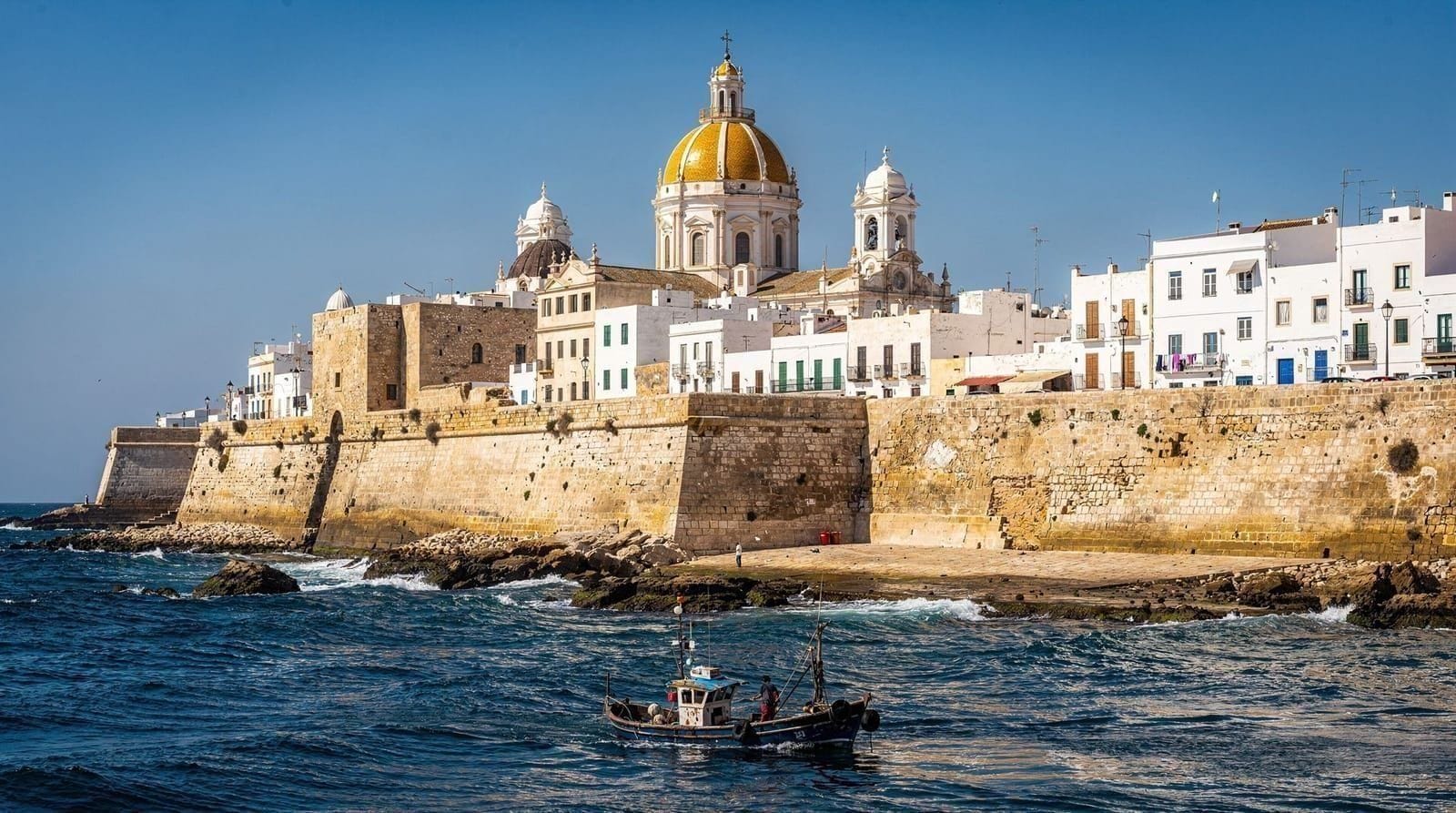
The old town and the sea walls: Cádiz’s historic centre is essentially a flat grid of 18th-century Baroque buildings, with sea walls on three sides. Walking the Paseo Marítimo and the seafront promenade from the Cathedral to La Caleta beach gives you the full peninsula sweep. La Caleta is the small city beach, flanked by two sea fortresses (Castillo de Santa Catalina and Castillo de San Sebastián on its small island).
Cádiz Cathedral (Catedral de Cádiz): the yellow dome visible from the sea. Neoclassical, constructed between 1722 and 1838. Entry €12 (includes the Clock Tower and the Casa de la Contaduría); open Monday to Saturday 10:00–20:00, Sunday 13:30–20:00. The crypt contains the tomb of composer Manuel de Falla.
Mercado Central de Abastos: the main covered market is excellent for fried fish and fresh seafood. Several bars inside serve chipirones (small fried squid) and tortillitas de camarones (crispy shrimp fritters, a Cádiz specialty) from early morning.
Torre Tavira: the tallest of the 160 watchtowers built by 18th-century merchants to monitor their ships. Entry €8 for the panoramic view and camera obscura (book ahead on the Torre Tavira website). The view across the flat roofscape of the old town is worth it.
Yacimiento Arqueológico del Teatro Romano: Roman theatre ruins visible through a glass floor in the Barrio del Pópulo. Free, outdoors.
The Cádiz Carnival
The Cádiz Carnival (Carnaval de Cádiz) in February is one of Spain’s best. It is dominated by chirigota — satirical musical groups who perform original songs mocking politicians and public figures. The street atmosphere is extraordinary. The city gets genuinely crowded and hotels book out months in advance. If you visit during Carnival week, book transport and accommodation 3–4 months ahead.
Where to eat in Cádiz
Freiduría Las Flores (Plaza Topete): a Cádiz institution for fried fish. Paper cones of boquerones (anchovies), salmonetes (red mullet), and pijotas (whiting) cost €3–6. Standing at the counter is the correct approach.
El Faro (Calle San Félix 15): the highest-rated restaurant in the city. Tuna (atún de almadraba) in season (April–June), langostinos from Sanlúcar de Barrameda. Budget €30–45 per person.
Bar Bahía (Calle Plocia 5): authentic old-town bar, good for the house-cured tuna (mojama) and a glass of manzanilla from Sanlúcar.
Mercado de Abastos bars (Calle Libertad): the cheapest and freshest fish in the city, inside the market. The tortillitas de camarones here are Cádiz at its best.
Combining Cádiz with Jerez de la Frontera
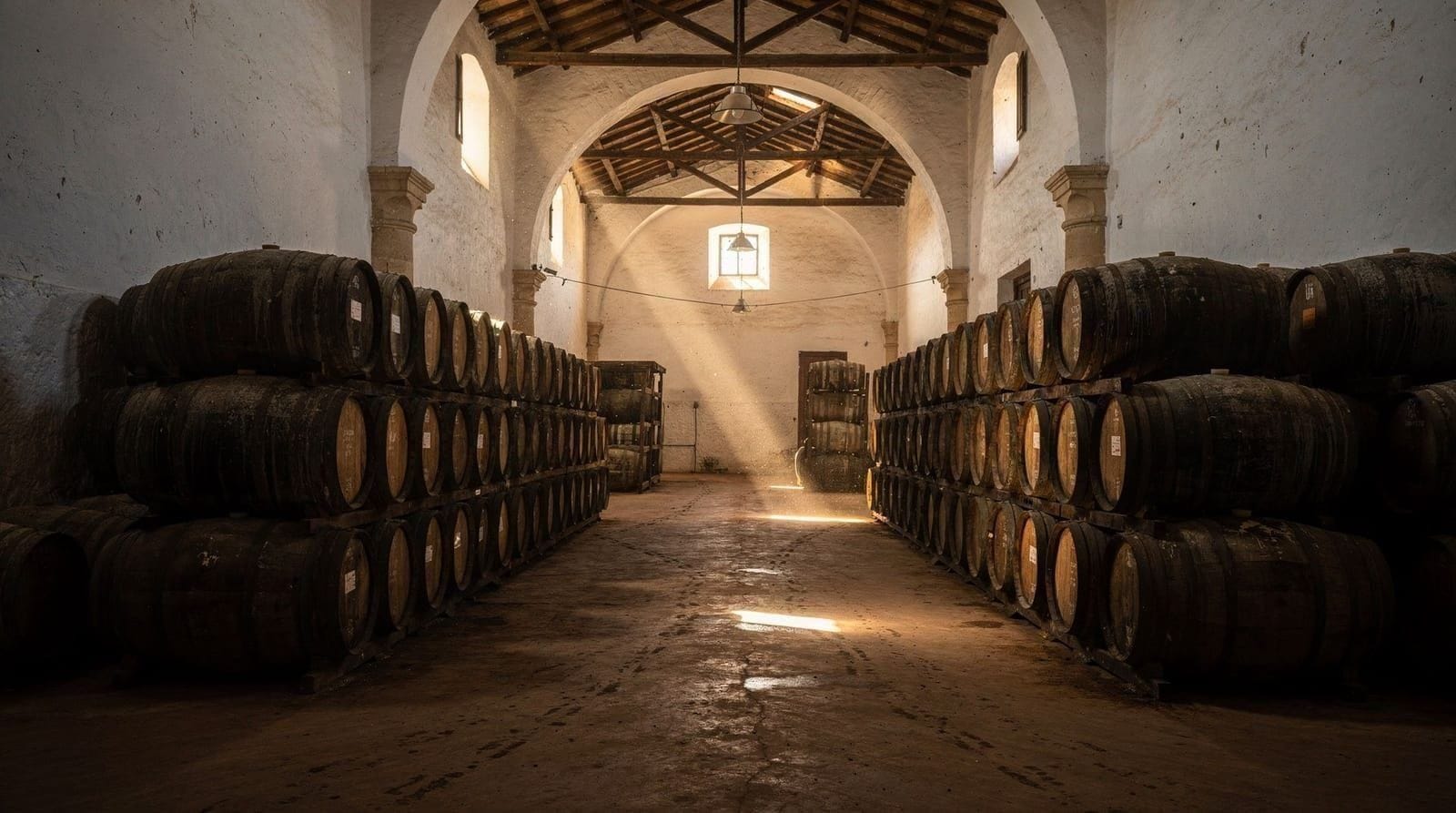
The train from Seville stops at Jerez before reaching Cádiz — making a combined Jerez and Cádiz day possible. Stop in Jerez on the way (alight, visit the sherry bodegas and the Real Escuela Andaluza de Arte Ecuestre), then take a later train to Cádiz. This requires a 9:00–10:00 start and good timing.
The combined Cádiz and Jerez day-trip from Seville handles the logistics of the combined route with transport and guides for both cities.
See the Jerez destination guide for what to do in Jerez.
Practical notes
Summer in Cádiz is hot but the ocean breeze modulates the heat compared to Seville. The beaches fill with Sevillanos in July–August — the city gets busy but not unpleasantly so. The water is genuinely Atlantic cold (18–22°C even in summer).
Cádiz’s ATM scarcity in the old town is a minor inconvenience; carry cash for the market and freidurías.
Cádiz in historical context
Cádiz (Gadir to the Phoenicians, Gades to the Romans) has been continuously inhabited since around 1100 BC — which makes it, by standard dating, the oldest city in Western Europe. The Phoenician founders used it as a staging post for Atlantic trade routes, bringing Tyrian purple dye, glass, and silver from the Iberian interior. The Romans developed the port substantially; Julius Caesar served as quaestor here in 69 BC.
The 16th–18th centuries brought enormous wealth as Cádiz replaced Seville as the port for trade with the Americas. The merchants built the watchtowers (miradores) to spot their ships returning from across the Atlantic. The Cathedral’s construction took 116 years (1722–1838) — funded by the American trade, interrupted when trade faltered, finished in a hybrid of Baroque and Neoclassical styles.
The city’s final moment of global significance came in 1812, when the Cortes of Cádiz assembled here during Napoleon’s occupation of Spain and drew up the first Spanish Constitution — one of the most liberal documents of the Napoleonic era.
The coastline and beaches
La Caleta: the small urban beach between the two sea castles, facing west into the bay. Historic bathing site, popular with locals. The water is cleaner than you would expect for a city beach. Sunset from the San Sebastián castle island is excellent.
Playa de la Victoria: the long Atlantic beach south of the city proper, 3 km of sand. The best swimming beach accessible from the historic centre. Reached by bus or a 40-minute walk from the old town.
Playa de Santa María del Mar: quieter alternative to La Victoria, east-facing.
The Atlantic coast south of Cádiz — the Costa de la Luz — includes some of the finest Atlantic beaches in Spain: Conil de la Frontera, Zahara de los Atunes, and Tarifa. These require a car or additional bus travel.
Cádiz neighborhoods to explore
Barrio del Pópulo: the oldest surviving neighbourhood, between the Cathedral and the Puerta de Tierra gate. Narrow streets, small plazas, the Roman theatre ruins visible at street level through glass.
El Mentidero: the name means “the gossip square.” Locals gather here in the evenings. The bars around Calle Sacramento and Calle Cobos are where locals eat rather than tourists.
La Viña: the neighbourhood adjacent to La Caleta beach. Working-class, traditional, source of the Carnival’s best chirigota groups. The streets around Calle San Felix have the most honest tapas bars in the city.
What to buy in Cádiz
Local tuna (atún de almadraba) is a genuine product. The bluefin tuna caught in the ancient almadraba nets in the Strait of Gibraltar during the April–June migration is salted, dried as mojama, or sold as fresh cuts. The canned mojama from El Ronqueo or Herpac is an excellent food souvenir (€8–15 for 100g tin). Available at Mercado Central and specialty food shops.
Flor de sal from the salt marshes (marismas) near San Fernando is another regional product — unprocessed Atlantic sea salt with mineral richness not found in table salt.
Cádiz as part of the Costa de la Luz
Cádiz is the natural anchor point for exploring Andalusia’s Atlantic coast. The Costa de la Luz guide covers the beach towns south of the city — Conil de la Frontera, El Palmar, and eventually Tarifa at the Strait of Gibraltar — all of which are more easily reached with Cádiz as a base or waypoint than direct from Seville. If a beach day matters as much as the city itself, consider whether a single day trip is really enough, or whether an overnight in Cádiz to combine the old town with a beach afternoon at Playa de la Victoria makes more sense.
For a full comparison of how a Cádiz day trip fits alongside Seville’s other classic excursions, see the best day trips from Seville guide and the dedicated Cádiz day trip guide for hour-by-hour timing. Travellers who found Cádiz’s layered history compelling often enjoy reading a first-person account in the Cádiz oldest city blog post.
Planning your day: train, tour or overnight
How you reach Cádiz shapes the whole day. The train gives you freedom: you choose when to arrive, when to eat and when to leave, and you can follow the sea walls at your own pace without watching a group schedule. A guided excursion trades that freedom for context and convenience, which suits travellers who prefer to hear the story of the Phoenician, Roman and Atlantic-trade layers as they walk through them. Neither is better in the abstract; it depends on whether you want to wander or to be told what you are looking at.
If you are still deciding between excursions, the Seville day trips itinerary shows how a Cádiz day sits next to the other classic outings, and the Andalusia week from Seville plan is useful if you have more days and want to link the coast with inland cities. Travellers weighing several destinations at once will find the guide to choosing an Andalusian city a helpful companion.
A sensible rhythm for a single day
Spend the morning in the old town while the light is soft: the Cathedral, the Barrio del Pópulo and the market, where the fried fish is at its freshest. Lunch comes naturally at a market bar or a freiduría counter, and it is worth taking your time over it, because eating well is half the reason to come. Use the afternoon for the seafront walk towards La Caleta, leaving room for a coffee or a glass of manzanilla somewhere with a view of the water. Staying for sunset by the sea castles is the best way to finish, as long as you have checked your return train in advance.
Why an overnight can be worth it
Cádiz changes in the evening. Once the day visitors leave, the old-town streets fill with locals, and the bars of El Mentidero and La Viña come into their own. Anyone who wants both the city and a beach afternoon, or who simply dislikes watching the clock, will enjoy the place more by sleeping here. If you stay, pick a base within walking distance of what you most want to see, and avoid spending your precious hours on transport. If you are building a longer trip around Seville, the how many days in Seville guide helps you decide how much time to leave for the coast.
Eating with the locals
The best meals in Cádiz are rarely the formal ones. Stand at the counter, order a paper cone of fried fish, and add a small plate or two as you go. If you are used to the way tapas work in Seville, the barra versus terrace pricing guide explains a principle that also holds here: the counter is where locals eat, and it is usually the better value. For a wider picture of regional cooking, the traditional Andalusian dishes guide places Cádiz specialities such as tortillitas de camarones within the larger food culture of the south, and the sherry guide for Andalusia is worth reading if the manzanilla and fino you taste here make you curious.
Getting the most from the history
The city rewards slow looking rather than ticking off sights. The grid of Baroque streets, the watchtowers rising above the roofs and the sea walls that wrap the peninsula all tell the same story of a port that lived off the Atlantic. Read a little about the Cortes of 1812 before you go and the old town reads differently: squares and façades become places where things actually happened. Bring comfortable shoes, since the best way to understand the peninsula is on foot, and keep a little cash for the market and the smaller bars.
Frequently asked questions about Cádiz
Is Cádiz worth visiting as a day trip from Seville?
Yes — the train makes it an easy round trip (1h40 each way), and the old town, cathedral, market, and seafront can be covered comfortably in a full day. Combining with Jerez on the same rail line is an efficient way to add a second destination.
What is the best time of year to visit Cádiz?
October–November and April–May offer the most comfortable temperatures with fewer crowds. February brings the spectacular but very busy Carnaval de Cádiz — book well ahead if that’s the draw. Summer is popular with Sevillanos escaping the inland heat, so beaches get busy without becoming unpleasant.
Top experiences
Bookable activities with verified prices and instant confirmation on GetYourGuide.