Seville
Skip-the-line tips, real day-trips, and no tourist-trap fluff for Seville, Andalusia's most intense city. Practical planning for 2026.
Seville: Royal Alcázar entry ticket
Quick facts
- Best for
- History, flamenco, tapas, day-trip base
- Days needed
- 3–4 days
- Getting there
- SVQ airport 10 km, AVE train from Madrid 2h40
- Peak crowds
- Semana Santa (Mar–Apr) and Feria de Abril
- Currency
- EUR
Seville is Spain’s fourth-largest city and one of its most demanding to visit well. The Alcázar, the Cathedral, and Triana are not tourist brochure abstractions — they are genuinely world-class, and genuinely crushed with visitors from March to June. This guide gives you the framework to see all of it without losing hours in queues or paying for overpriced meals across from the Cathedral.
| Where | Andalusia, southern Spain, on the Guadalquivir river |
| Cost | Around €120–195/person/day incl. accommodation, meals, entry tickets |
| Time needed | 3–4 days minimum; 5+ to add a day-trip and go deeper |
| Getting there | SVQ airport 10 km from centre; AVE train from Madrid ~2h40 |
| Best time | October–November and March, before Semana Santa; avoid July–August heat |
The honest case for booking the Alcázar in advance
The Real Alcázar is the top priority in Seville, full stop. It is a UNESCO-listed royal palace still used by the Spanish royal family, with Mudéjar interiors, azulejo-tiled courtyards, and gardens that routinely sell out. Walk-up queues in spring can exceed two hours. Walk-up in summer is essentially not viable.
Book timed-entry skip-the-line tickets at least 48 hours out — in peak season, book 2–3 weeks ahead. The ticket includes the gardens and the Almohad walls. Allow 2–3 hours inside.
Budget for entry: approximately €15.50 for the standard ticket. Guided tours cost €25–45 and add genuine context — the Mudéjar Hall of Ambassadors alone justifies the commentary.
Seville Cathedral and the Giralda
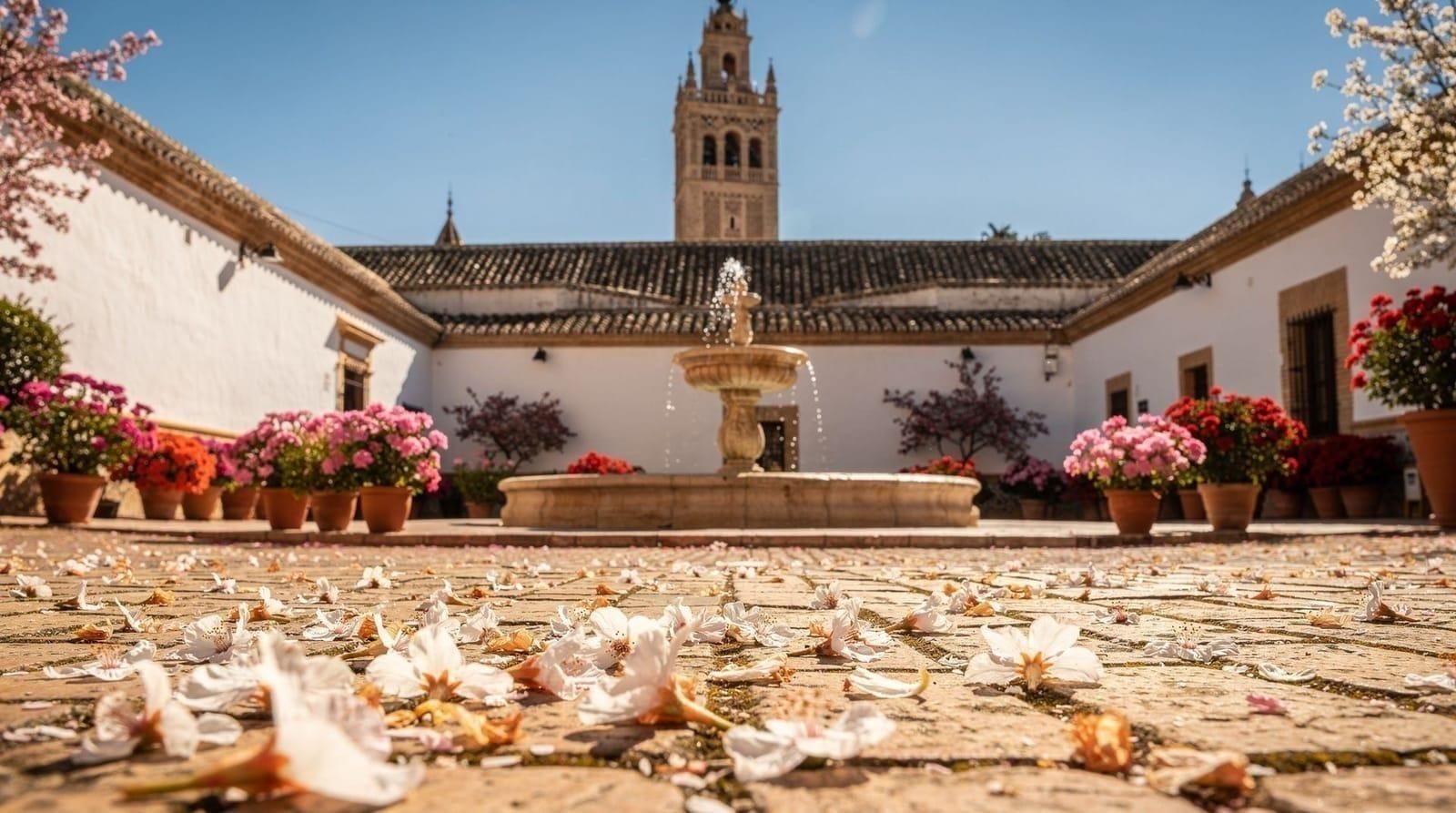
The Cathedral of Seville is the largest Gothic cathedral in the world, built partly on the foundations of a 12th-century Almohad mosque. The Giralda tower — the old minaret, converted into a bell tower — offers the best elevated view of the city and can be climbed via a ramp rather than stairs.
Book Cathedral and Giralda entry tickets online to avoid the queues at the west door. The tomb of Christopher Columbus is inside; whether the remains are actually his is a matter historians still debate.
Opening hours vary by season: generally 10:45–19:00 Monday–Saturday and 14:30–19:00 Sunday, with the ticket office closing at 18:00. The schedule changes during Semana Santa and Feria de Abril, sometimes closing entirely. Check the official website before visiting.
Key trap to avoid: the rosemary scam. Women near the Cathedral entrance offer sprigs of rosemary as a “gift” and then demand payment. Don’t take anything. Don’t make eye contact. Don’t apologize — just walk past.
Seville’s neighborhoods at a glance
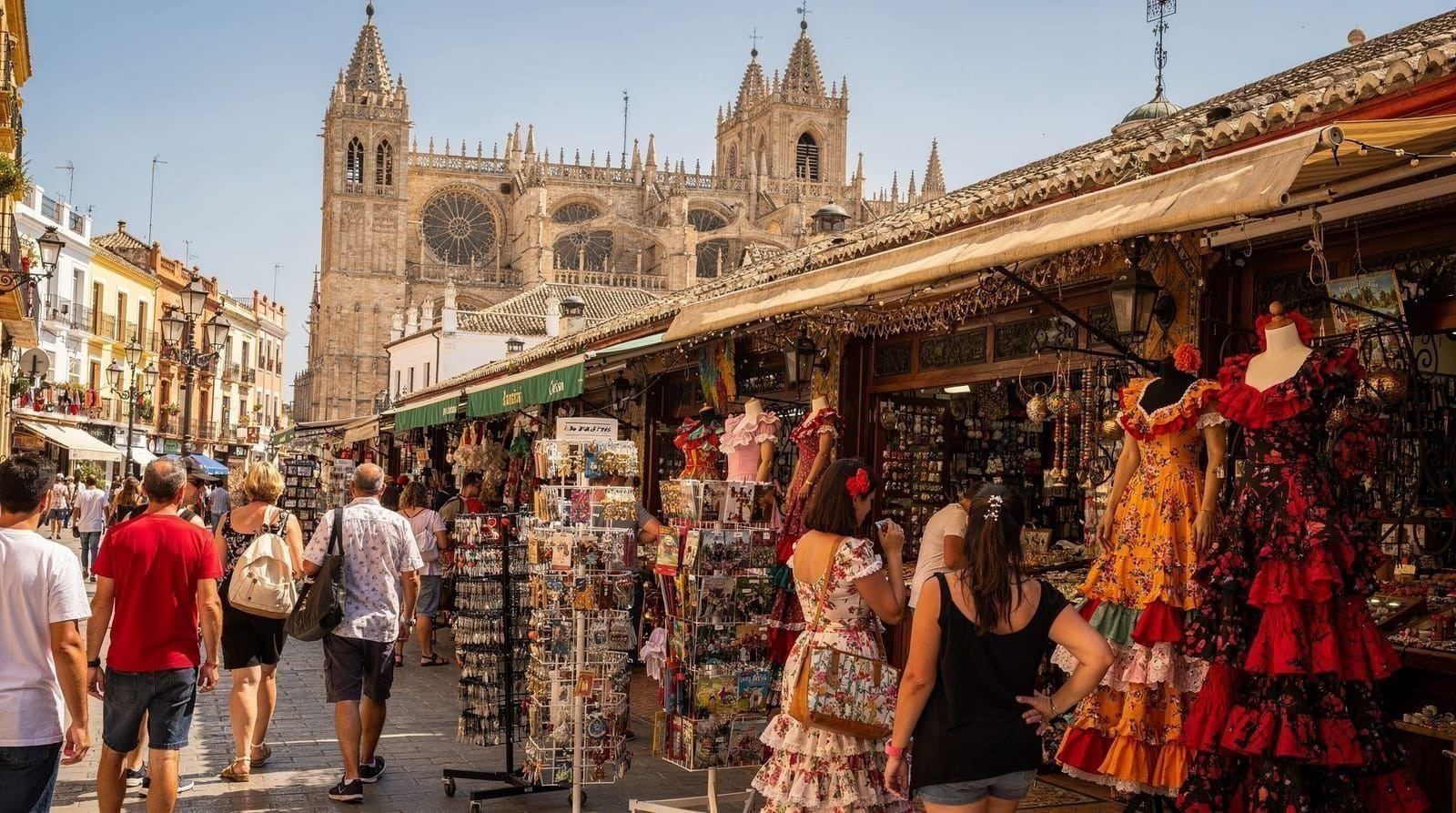
Santa Cruz is the old Jewish quarter and the most visited neighborhood. Narrow whitewashed lanes, orange trees, and every tourist restaurant on the continent. It is beautiful and worth walking, but eat elsewhere.
Triana is the barrio across the Guadalquivir river, historically the gypsy and flamenco quarter. Calle Betis along the river has cafés with views of the Torre del Oro. The Mercado de Triana is good for breakfast. Ceramics workshops line Calle San Jorge. Triana is where Seville locals actually spend time.
El Arenal runs along the riverbank between the Torre del Oro and the Maestranza bullring. The Maestranza is one of the oldest and most prestigious bullrings in Spain — the bullfighting season runs April to October.
Alameda de Hércules is a long tree-lined promenade in the north of the old town. More students, fewer tourists, better bar prices.
Macarena is the working-class northern barrio, home to the Basílica de la Macarena — its Baroque Virgin is carried through the streets during Semana Santa in one of Spain’s most emotional processions.
For a fuller neighbourhood-by-neighbourhood breakdown of what each barrio is actually like to walk, eat, and sleep in, see the best neighbourhoods in Seville guide. If your priority is Santa Cruz specifically — the tapas bars locals actually rate versus the tourist strip — the Santa Cruz tapas guide and the wider Santa Cruz neighbourhood guide go deeper than this overview can.
How the neighbourhoods compare
| Neighbourhood | Best for | Trade-off |
|---|---|---|
| Santa Cruz | Proximity to Alcázar/Cathedral, atmosphere | Highest prices, tourist-trap restaurants |
| Triana | Local life, flamenco roots, river views | 15–20 min walk from the main monuments |
| El Arenal | Quiet, central, riverside | Fewer restaurants of note |
| Alameda de Hércules | Bar prices, younger crowd | Less “postcard” Seville, more nightlife noise |
| Macarena | Authenticity, Semana Santa heartland | Furthest from the tourist centre |
Where to eat: honest recommendations
Avoid any restaurant with a photo menu facing the Cathedral or inside Santa Cruz. The price-to-quality ratio collapses the moment you sit on a terrace in the tourist triangle.
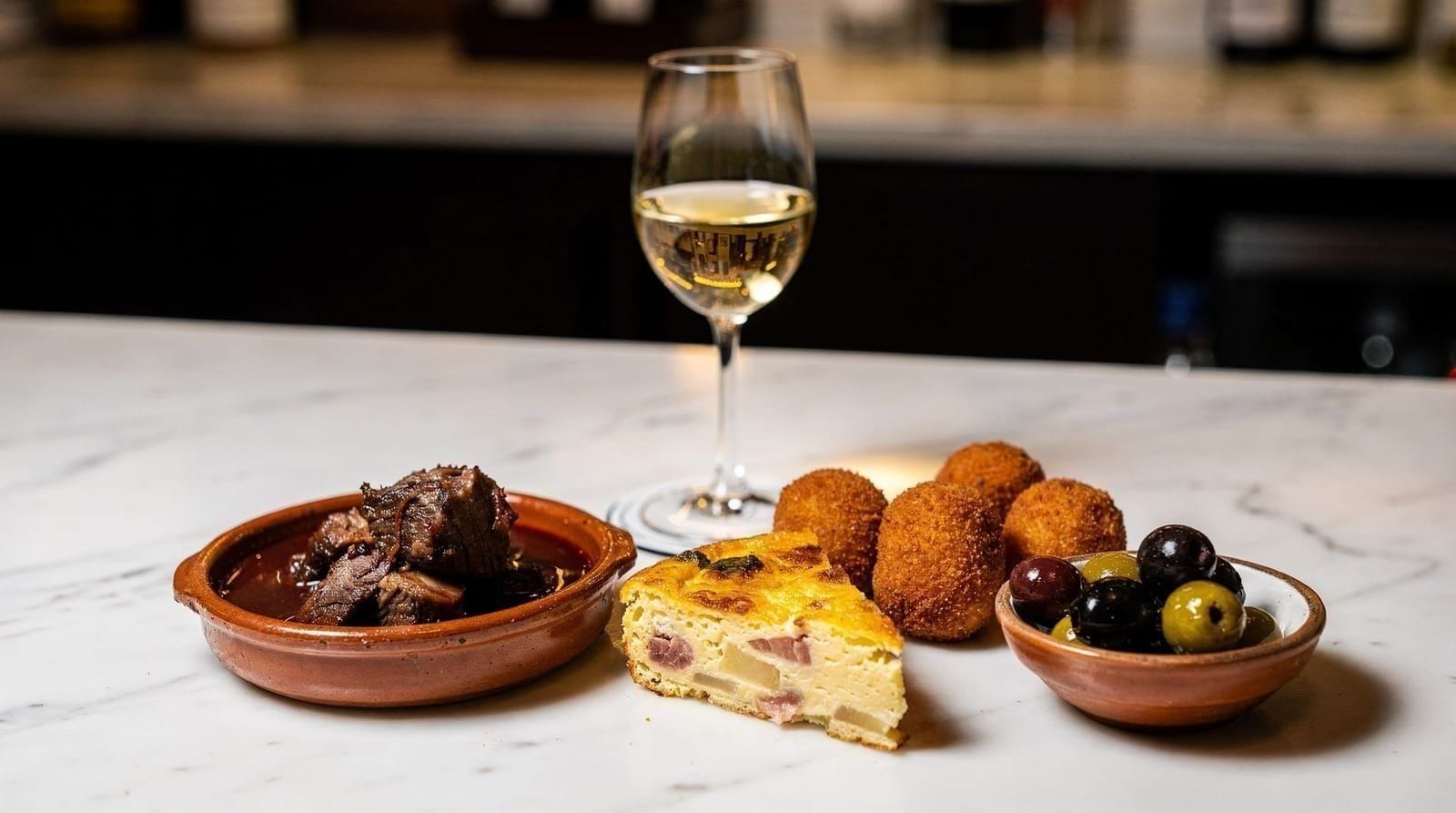
El Rinconcillo (Calle Gerona 40) claims to be Seville’s oldest bar, founded 1670. The azulejo tiles, the chalk-tallied bill system, and the jamón ibérico are the real thing. Budget around €5–8 per tapa at the barra. The terrace is pleasant but priced differently.
Bodega Santa Cruz (Calle Rodrigo Caro 1) is standing-room-only most evenings, a short walk from the Cathedral. Order at the bar: spinach with chickpeas, grilled mushrooms, and a cold manzanilla.
Bar-Restaurante Eslava (Calle Eslava 3) wins Seville’s annual tapas competition regularly. Their tortilla de patata crujiente (crispy potato omelette) alone is worth the detour to Macarena. Arrive before 13:30 or after 16:00 to avoid full queues.
Mercado de la Encarnación (the Setas building) has a market hall on the ground floor with fresh produce and several tapas bars. Good for a quick, honest lunch.
Barra vs terrace pricing: standard practice across Seville and all of Spain. Standing at the barra costs less than a table, which costs less than a terrace. The same beer may be €1.50 at the barra and €3.50 on a high-street terrace. Nobody will tell you this. The barra vs terrace pricing guide breaks down exactly how much this adds up to over a multi-day trip.
If you want the fuller citywide picture rather than a handful of picks, the best tapas in Seville guide ranks bars by neighbourhood, and the Triana tapas guide covers the river side specifically. For a more structured introduction, several companies run guided tapas crawls that hit 4–5 bars with a local guide explaining what you’re eating and why the barra system works the way it does — useful on a first visit if you don’t want to guess.
Book a small-group Seville tapas and food tourFlamenco in Seville: the honest filter
There are roughly 20 tablaos operating in Seville. Most are technically competent, tourist-oriented, and overpriced for what they deliver. A few are genuine.
Casa de la Memoria (Calle Cuna 6) is widely considered the most intimate and artistically credible venue in the city. Seats are tiered close to the performers. No dinner service — it’s pure flamenco, about 1 hour. The adult ticket is €24; session times vary by date and season, so check the booking calendar.
Book Casa de la Memoria flamenco tickets online — it sells out a week in advance in spring.
Tablao Los Gallos (Plaza de Santa Cruz 11) is the longest-running tablao in Seville, operating since 1966. More expensive (€38 for a 1 h 15 show), reliably good quality.
Avoid any tablao advertising dinner + show packages under €25 in the Santa Cruz tourist zone — the food is an afterthought and the show is cut to match. For a fuller rundown of what separates a genuine tablao from a tourist-trap version, see the authentic flamenco vs tourist show guide, and if you’re new to the art form entirely, the flamenco 101 beginner’s guide explains the terminology (cante, baile, toque) before you sit down. Triana itself has its own flamenco scene worth exploring separately — see the flamenco in Triana guide.
Day-trips from Seville: which one to choose
Seville is the best base in Andalusia for day-trips. The AVE high-speed train to Córdoba takes 45 minutes (fares on the Renfe website). Granada is 2h30 by bus or train. Cádiz is 1h40 by train. Ronda is about 2 hours by bus.
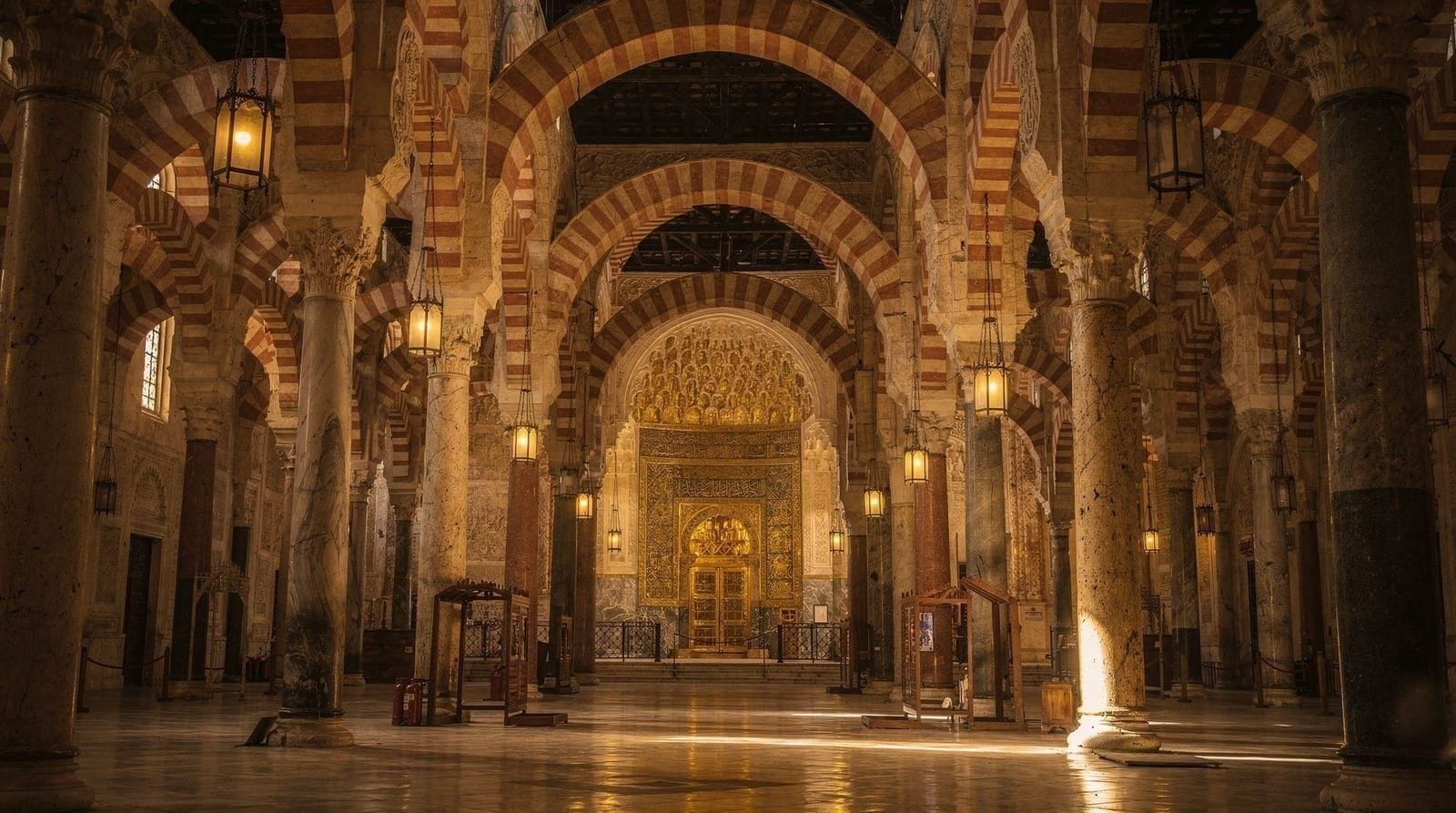
- Córdoba is the easiest and most time-efficient day-trip. The Mezquita-Catedral is a rival to the Alcázar in architectural impact. See the full guide at Córdoba.
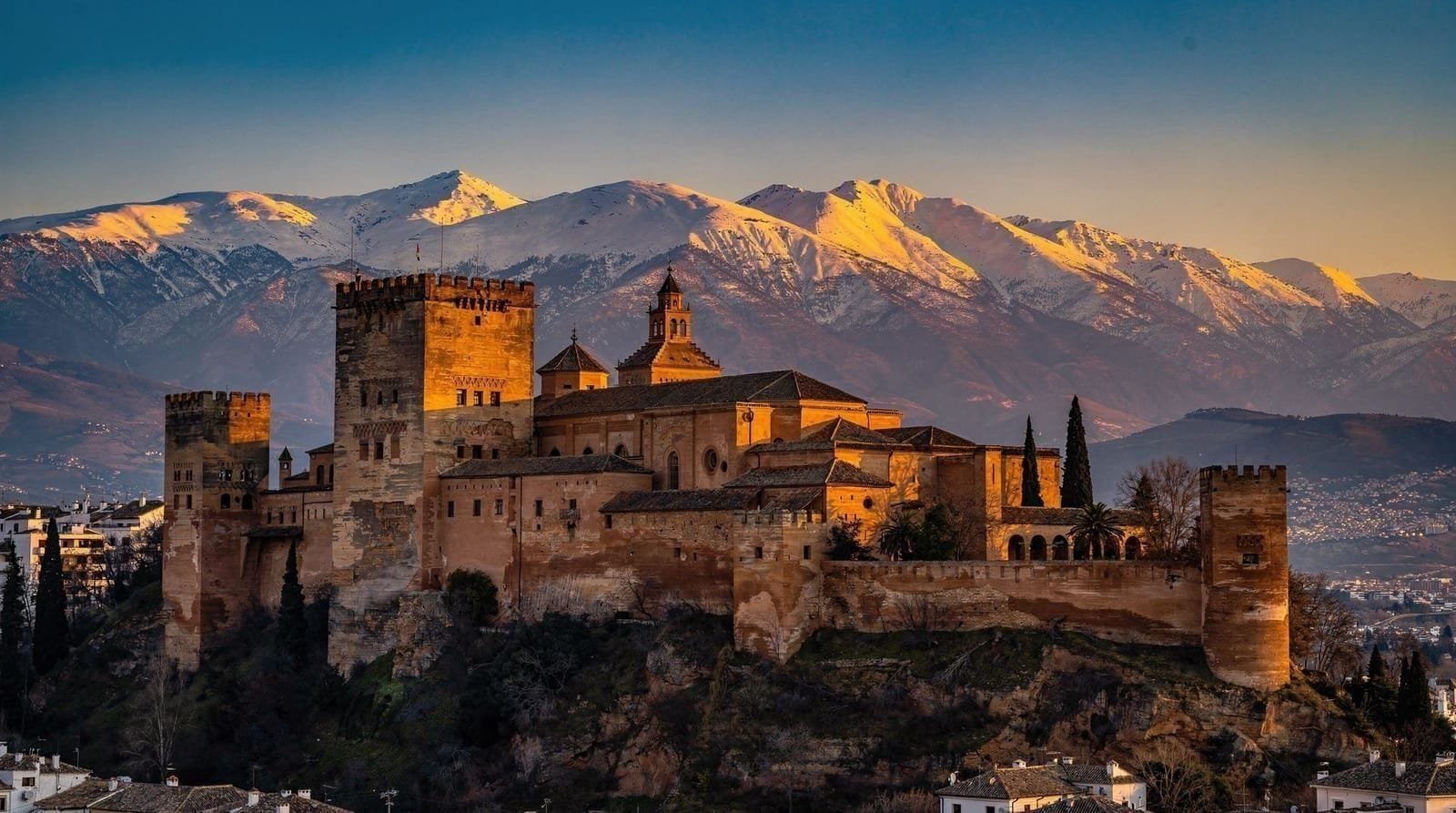
- Granada requires an early start — the Alhambra sells out weeks in advance. See Granada.
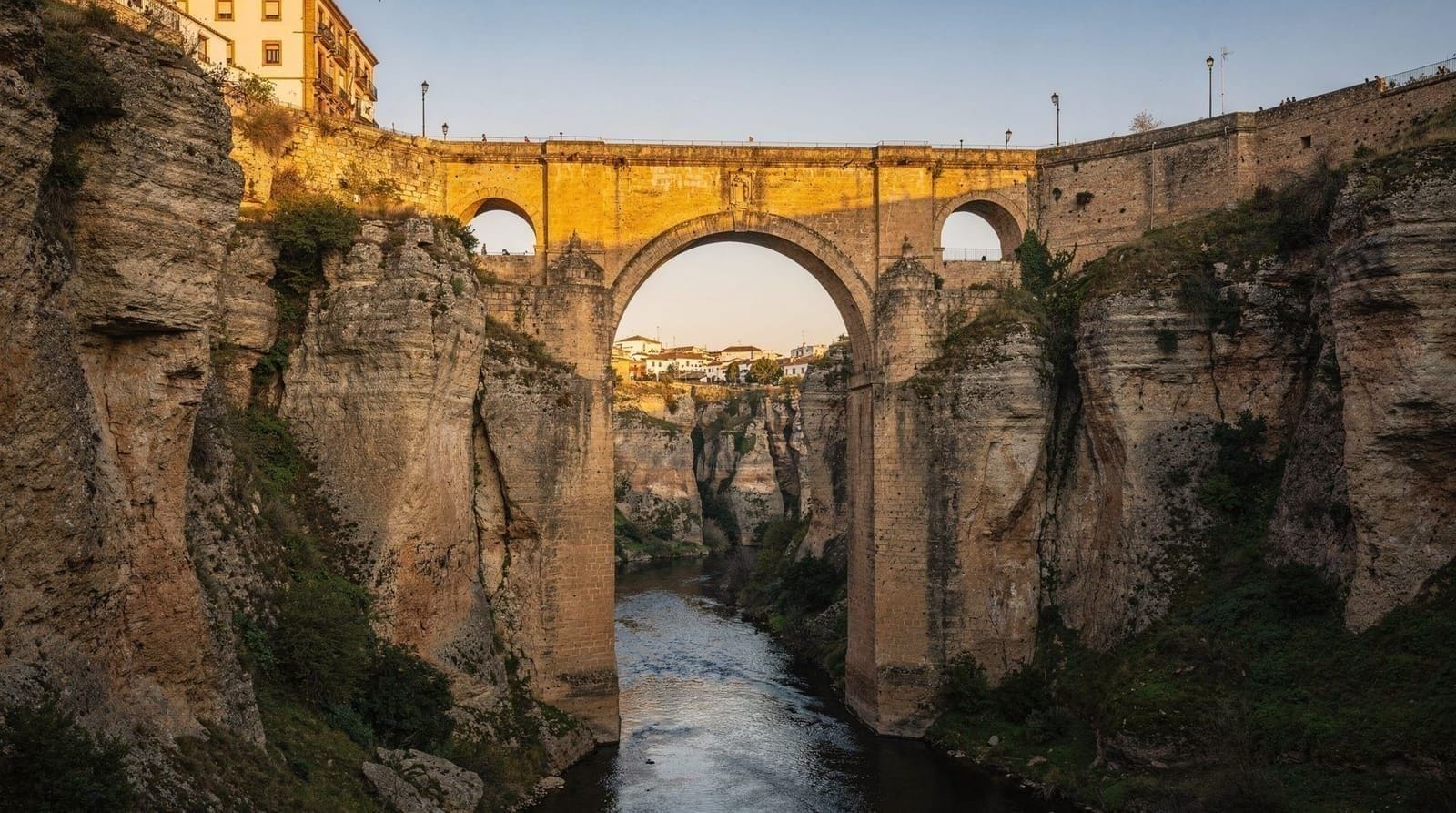
- Ronda is more about the landscape and the gorge than a single monument. See Ronda.
- Cádiz is the oldest continuously inhabited city in Western Europe, with an ocean front. See Cádiz.
The day-trip chooser tool at our tools page can help you decide which fits your schedule. If you want a structured comparison rather than picking blind, the Seville vs Granada vs Córdoba guide and the narrower Córdoba vs Granada day-trip guide weigh the trade-offs directly. For travellers with more than 3–4 days, the best day trips from Seville guide covers the full roster, including Italica, Carmona, Jerez, and the white villages beyond the four headline cities above.
Seville with children and families
Seville works well as a family destination, more so than its reputation for intense heat and Baroque religious processions might suggest. The Alcázar’s gardens give children room to run after the interior rooms, María Luisa Park has shaded paths and a pony/carriage circuit, and the Isla Mágica theme park north of the centre is a reasonable half-day if the kids need a break from monuments. Flat, walkable streets in the centre make prams manageable outside Santa Cruz’s cobblestones. The main planning adjustment is timing: avoid midday heat in June–August entirely with young children, and build in siesta-hour downtime. See the Seville with kids guide for a fuller family-specific itinerary.
Shopping in Seville
Calle Sierpes and Calle Tetuán, running north from Plaza Nueva, form the main shopping spine — a pedestrianised strip of mid-range Spanish chains, independent boutiques, and the odd fan or mantilla shop selling genuine Feria accessories rather than tourist tat. For ceramics, skip the mass-produced stalls near the Cathedral and head to Triana, where Calle Alfarería and Calle Antillano Campos still have working ceramic studios — some offer hands-on painting workshops if you want to make something rather than just buy it.
Mercado de Triana and Mercado de la Encarnación (under the Setas) are the best food markets for picking up olive oil, cured meats, and spices to take home — see the Triana market food guide for a stall-by-stall walkthrough. El Corte Inglés on Plaza del Duque is the reliable option for anything you forgot to pack. One traveller’s account of a hands-on Triana ceramics workshop is worth reading if you’re deciding whether the painting classes are worth the time.
Getting around Seville
The historic centre (Santa Cruz, Arenal, Triana, Macarena) is walkable. Most visitors spend 90% of their time within a 2.5 km radius of the Cathedral.
On foot is the default for the centre. Seville’s streets are narrow, often pedestrianised, and most attractions are within 20 minutes of each other.
Sevici is the municipal bike-share system. €13.33 for a week pass. Stations every few blocks in the centre. Good for the flat riverside paths.
Tussam buses cover the city. Single ticket: €1.40, or buy a 10-trip card (€6.87). The T1 Circular route is handy for getting around the periphery.
Metro has limited relevance for visitors — Line 1 runs from Olivar de Quinto to Mairena del Aljarafe and passes through the university area but not the historic centre.
Taxi / Cabify / Uber are all available. Typical airport to centre: €26–29 in 15–20 minutes. Avoid unlicensed taxis at the airport arrivals hall.
Getting to Seville
By air: Seville Airport (SVQ) is 10 km north of the city. There is no train to the airport: the EA airport bus (€6 one-way) takes about 35–40 minutes to the centre. Taxis cost €26–29 and take 15–20 minutes.
By AVE (high-speed train): Santa Justa station is the main rail hub, 1.5 km northeast of the Cathedral. Direct trains to Madrid (2h40), Barcelona (5h30), Málaga (2h approx.), Córdoba (45 min), Cádiz (1h40). Renfe bookings at renfe.com or at the station.
By car: Seville has a complex one-way system in the centre and very limited parking. The SEA (Sociedad de Estacionamiento de Aparcamientos) underground carparks are the practical option. Driving in is not recommended unless you are using a hotel with a garage or arriving/leaving immediately.
Where to stay
Santa Cruz and Cathedral area: highest prices, maximum convenience for sights, but the streets are noisy until late and the restaurants are mediocre. Good mid-range options include Hotel Amadeus (Calle Farnesio 6) and Hotel Casa 1800 (Calle Rodrigo Caro 6).
El Arenal: slightly quieter, still central, good for the Maestranza and the river. Hotel Alminar (Calle Álvarez Quintero 52) is a well-reviewed small hotel.
Triana: best choice for a local atmosphere. Crosses the Triana bridge quickly. Hotels here are often better value than equivalent rooms in Santa Cruz.
Budget: Hostel One Seville Centro (Calle Gravina) and various albergues around Macarena are solid budget options at €20–35 per bed.
Feria de Abril and Semana Santa: book at least 3–4 months in advance. Rooms in the centre triple in price and fill completely.
Practical information
Summer heat: June–August means 38–43°C regularly. Start sightseeing by 8:00, retreat between 13:00 and 17:00, then resume in the cooler evening. Carry water, wear a hat, and plan indoor midday activities (Alcázar, Cathedral, museums are air-conditioned).
Semana Santa 2026: March 29 – April 5. The processions are world-class cultural events. The city is also completely packed, hotel prices are 3–5x normal, and many businesses alter their hours.
Feria de Abril 2026: April 21–26. The fairground (Real de la Feria) is in Los Remedios. Most casetas (tents) are private — you need an invitation. Public casetas exist but get crowded. The best way to experience it independently is to arrive early evening.
Pickpockets: active around the Cathedral queue, La Campana shopping street, and on crowded buses. Use a front-pocket wallet or a money belt in crowded areas.
Tipping: not obligatory. Rounding up at the barra is normal. 5–10% at a restaurant is appreciated but not expected. Never tip for a coffee at a bar.
Frequently asked questions about Seville
How many days do you need in Seville?
Three days is the minimum to cover the main monuments (Alcázar, Cathedral, Plaza de España), explore at least two neighborhoods (Santa Cruz and Triana), eat well, and see a flamenco show. Four days gives you breathing room for a day-trip to Córdoba or a half-day at Italica. Five or more days lets you go deeper into flamenco culture, food markets, and smaller palaces.
Is Seville worth visiting in summer?
Yes, but it requires adjusting your schedule. July and August regularly hit 40–43°C. Sightseeing works best 8:00–13:00 and again after 18:30. The crowds are slightly thinner than spring because many Spanish tourists avoid the heat. The monuments are air-conditioned. The evenings are warm and lively. Read the Seville in summer heat guide for full strategies.
What is the rosemary scam in Seville?
Women positioned around the Cathedral and Giralda offer a sprig of rosemary as a “free gift” or “for luck,” then aggressively demand money when you accept it. Some are linked to pickpocketing teams who distract you while an accomplice works your bag. The rule: never take anything from anyone in the Cathedral square without asking the price first. A firm “no gracias” while walking is enough.
Is Seville expensive?
By Western European standards, Seville is moderate. A mid-range budget is around €120–195 per person per day including accommodation, meals, and entry tickets. Tapas at the barra are still good value (€2–4 each). Tourist-facing restaurants in Santa Cruz charge 2–3x the local price for the same dish. The Alcázar entry (€15.50), Cathedral entry (€13 online), and flamenco tablao (€20–45) are the main fixed costs.
What is the best way to get from Seville to Córdoba?
The AVE high-speed train is the obvious choice: 45 minutes, €15–28 one-way depending on how far in advance you book. Trains run frequently from Santa Justa station. Alternatively, guided day-trips from Seville include transport and a guided tour of the Mezquita. See the Córdoba destination guide and the Córdoba day-trip guide.
Can you see the Alcázar and Cathedral in one day?
Yes, but allow a full day and book both tickets in advance. A reasonable schedule: Alcázar opens at 9:30 (arrive at opening to beat crowds); allow 2–3 hours. Cathedral and Giralda: allow 2 hours. Have lunch in the Arenal or Macarena areas to avoid Santa Cruz restaurant markup. You will be tired but satisfied. See the combined ticket guide for sequencing advice.
What language do people speak in Seville?
Spanish (Castilian), with a strong Andalusian accent and cadence. English is widely spoken in hotels, major attractions, and tourist-facing restaurants. In local bars, bodega workers, and market stalls, Spanish is needed. A few phrases go a long way. Seville is not a challenging city for non-Spanish speakers.
Is the hop-on hop-off bus worth it in Seville?
Only if you are short on time or have limited mobility. The city centre is compact enough to walk, and the bus route misses some important streets and neighborhoods. The main value is the Guadalquivir riverside section and the María Luisa Park if you are not walking there anyway. The hop-on hop-off guide has the full breakdown.
Is Seville a good city for a first visit to Andalusia?
Yes — most first-time visitors to Andalusia should base themselves in Seville. It has the highest concentration of top-tier sights (Alcázar, Cathedral, Plaza de España), the best transport links for day-trips to Córdoba, Granada, Ronda, and Cádiz, and a food and flamenco scene deep enough to fill several days on its own. The which Andalusian city to visit guide compares Seville against Granada and Málaga if you’re weighing options with limited time.
How far in advance should I book the Alcázar and flamenco tickets?
Book the Alcázar at least 48 hours ahead outside peak season, 2–3 weeks ahead for spring (March–June) visits. Casa de la Memoria and other well-regarded tablaos sell out roughly a week in advance during the same peak months. If your trip falls in Semana Santa or Feria de Abril, book both as early as your dates are fixed — availability tightens fast.
Seville’s top sights: what to prioritise
For a 3-day visit, the standard order is: Day 1 Alcázar and Cathedral (morning, booked in advance), afternoon Santa Cruz and Triana. Day 2 Plaza de España, María Luisa Park, Metropol Parasol (sunset from the top), evening flamenco. Day 3 a day-trip to Córdoba, or deeper neighbourhood exploration plus the Maestranza bullring and Archivo de Indias.
Plaza de España: the enormous semi-circular palace complex built for the 1929 Ibero-American Exposition. The scale is genuinely extraordinary — the canal, the tiled alcoves representing each Spanish province, and the Baroque/Mudéjar architecture combined. Free to enter. Arrive before 10:00 to avoid the crowds and carriage tours. There are rowboats available to rent on the canal for €5–8 per half hour.
Metropol Parasol (Las Setas): the largest wooden structure in the world, a canopy of interlocking mushroom shapes over the Encarnación market. The roof walkway (Mirador) gives the best elevated view of the old town — tickets from €16, better than anything on the Giralda for the neighbourhood perspective. The archaeological museum in the basement (Antiquarium) has Roman-era Seville ruins found during construction. Evening visits are particularly good.
Torre del Oro: the 12th-century Moorish watchtower on the riverbank was part of the city’s defensive wall system. Small naval museum inside (see the official site for current prices and hours). The exterior and the riverside walk below it are free.
María Luisa Park: a formal 19th-century park donated to the city by the Infanta María Luisa. Shaded paths, fountains, ducks, and the Museo Arqueológico, which is closed for renovation (check the official museum site for the reopening date). The Fine Arts Museum (Museo de Bellas Artes, second only to the Prado) is free for EU residents, €1.50 for others. The park is free.
Casa de Pilatos: often overlooked next to the Alcázar, but arguably the finest Renaissance-Mudéjar private palace in Spain. The Duke of Medinaceli still owns and lives in part of the building. Ground floor entry €12; upper floor €6. The azulejo work and carved plasterwork are as good as the Alcázar’s and the queues are a fraction of the length.
Archivo de Indias: the archive that holds the original documents of the Spanish colonisation of the Americas — Columbus’s navigational logs, Magellan’s voyage records, letters from Hernán Cortés. The building is free to enter and holds rotating exhibitions. One of the most historically dense buildings in the world, largely visited by no one.
The hop-on hop-off bus: honest assessment
The 24-hour hop-on hop-off bus covers three circuits: the historic centre, the Expo area, and a longer southern route toward Triana. It is useful for the Plaza de España to Triana route and for visitors who cannot walk long distances. The coverage of Santa Cruz and the Cathedral area is poor (too narrow for buses). If your main goal is the top sights, walking is faster. If you want to get a visual overview of the city before focusing, one circuit on the first morning can orient you efficiently.
The Guadalquivir river
The Guadalquivir is the river of Seville and of Andalusia. It is the only navigable river in Spain. The Torre del Oro and the Triana bridge frame the central riverside. Walking from the Torre del Oro north to the Isla Mágica or south toward the old Expo site covers the full range of the riverscape.
River cruises depart from near the Torre del Oro. The 1-hour sightseeing cruise is pleasant but the river view of Seville is less dramatic than views from the city toward the river. Worth doing in the evening for the light quality.
Semana Santa: what to actually expect
Seville’s Semana Santa (Holy Week, 2026: March 29 – April 5) is not a religious festival you observe from outside — it is a civic procession through the city centre, with 57 brotherhoods (hermandades) processing their floats (pasos) through the streets over 7 days and nights. Each brotherhood has its own route, its own music, and its own aesthetic.
The pasos carry enormous carved and gilded religious figures — some dating to the 16th century — on the backs of up to 40 costaleros (porters) invisible beneath the float. The most prized viewpoint is the Cathedral’s official reviewing stand (palco de presidencia), but tickets are virtually impossible to obtain. The streets of La Campana, Calle Sierpes, and Calle Tetuán form the main thoroughfare and are jammed. Better: stand at a side street anywhere along a procession route and wait for the float to pass at eye level — the scale of the carved figures and the physical effort of the costaleros is clear from close range.
Practical Semana Santa notes: roads in the centre close unpredictably as processions pass. Taxis become unavailable. Hotels are full. The city centre is extremely crowded Thursday and Friday evening. Bars and restaurants are busy but many are closed Friday afternoon (Good Friday is a full religious day). Plan meals in advance.
Feria de Abril (2026: April 21–26) follows two weeks after Semana Santa. The energy switches completely — from solemn procession to all-night dancing, flamenco, sherry, and Andalusian horses.
How to plan 3 days in Seville
For a detailed day-by-day itinerary, see the Seville 3-day itinerary — the site’s flagship planning guide. The short version:
Day 1 — The monuments: Alcázar (9:30 opening, pre-booked), Cathedral and Giralda (pre-booked, 12:00), afternoon walk through Santa Cruz, aperitivo in El Arenal.
Day 2 — The city: Metropol Parasol (morning), Plaza de España (late morning), María Luisa Park and museums, Triana in the afternoon (Mercado de Triana, Calle Betis), flamenco show in the evening (Casa de la Memoria).
Day 3 — A day-trip or deeper Seville: Córdoba is the best day-trip (AVE 45 min). Alternatively, Casa de Pilatos, Archivo de Indias, and the Macarena area give more Seville with less travel stress.
The planning tool at /tools/ has an interactive itinerary builder that adjusts for your trip length and interests.
Top experiences
Bookable activities with verified prices and instant confirmation on GetYourGuide.