Hop-on hop-off bus in Seville: is it worth it? Honest assessment
Seville: City sightseeing hop-on hop-off 24h ticket
Is the hop-on hop-off bus worth it in Seville?
For most visitors, no. Seville's historic centre is extremely walkable, and the hop-on-hop-off routes skip the narrow Santa Cruz streets entirely — the areas where the most interesting architecture and atmosphere live. The bus works for visitors with limited mobility, families with young children who need rest breaks, or people wanting an overview before deciding where to explore on foot. For an able-bodied adult with 2+ days in Seville, walking (or cycling) is more efficient and more immersive.
The hop-on hop-off tourist bus is a ubiquitous product in major cities — in London, Paris, and Barcelona it has genuine utility, connecting attractions that would require long walks or tube journeys. In Seville, the utility calculation is different. The city is compact, walkable, and has significant areas the bus cannot physically enter. This guide is an honest assessment of when the hop-on hop-off is useful in Seville and when you are paying €25 for something that will frustrate you.
| Cost | €23–25 (24h), €29–32 (48h), children ~half price |
| Loop time | 75–90 minutes without hopping off |
| Best for | Mobility needs, families, summer heat breaks |
| Misses | Santa Cruz interior, Triana side streets |
| Departs from | Torre del Oro / Arenal, roughly every 20–30 min |
The fundamental problem: Seville’s best areas are inaccessible by bus
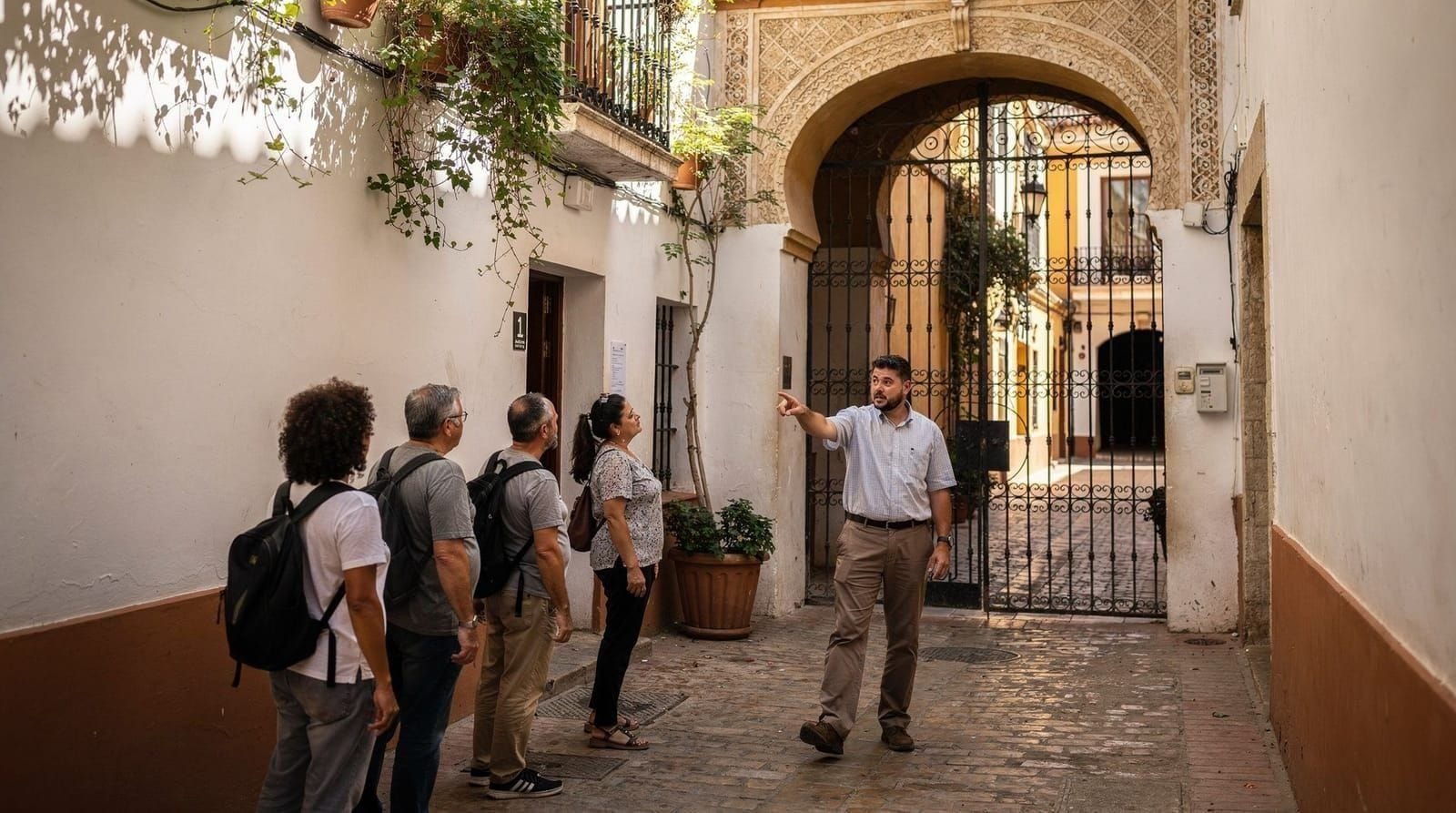
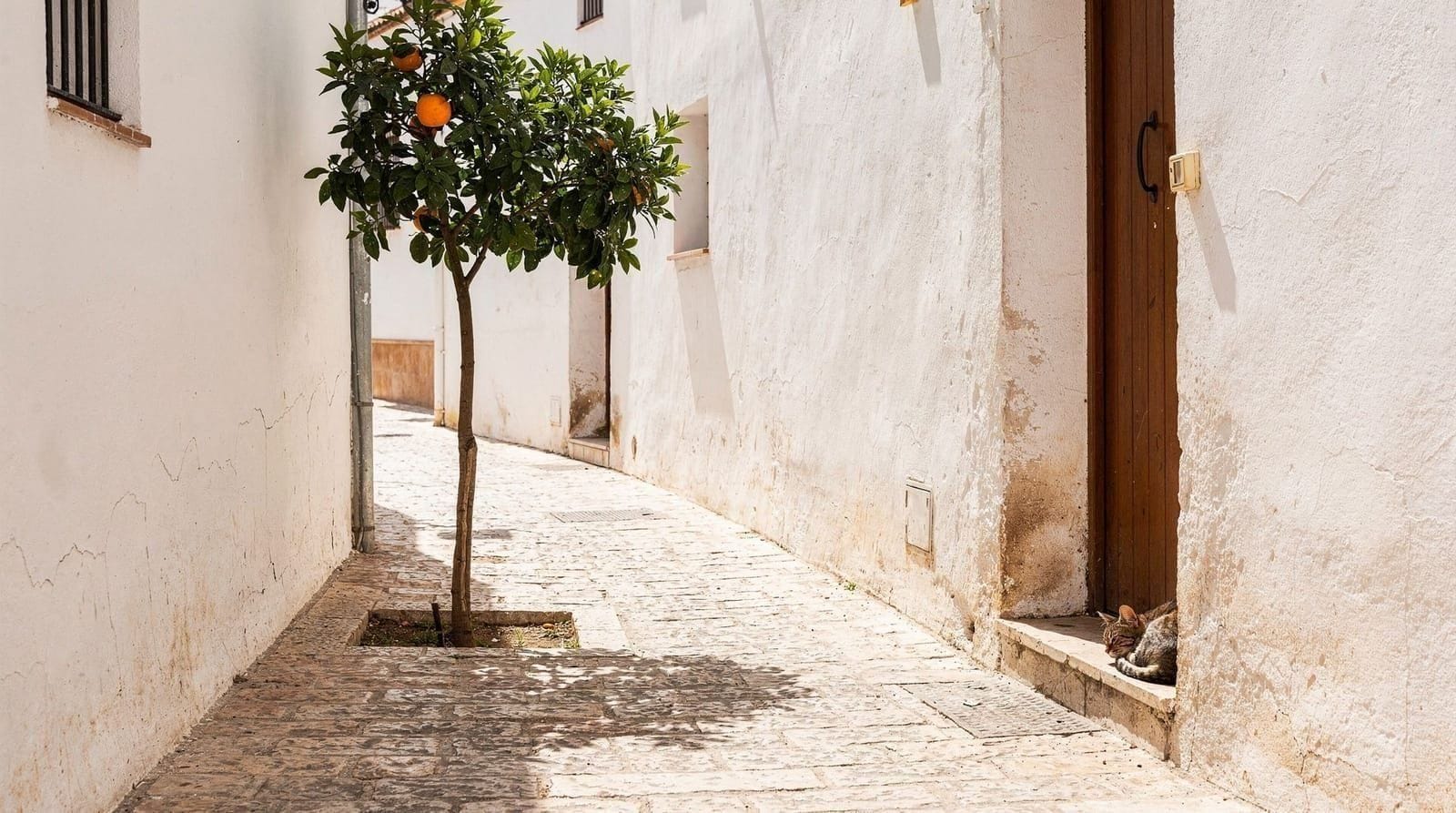
The historic core of Seville — the Barrio Santa Cruz — consists of narrow, mostly pedestrianised streets that no bus can enter. The labyrinthine alleys of Santa Cruz, the hidden garden plazas, the Moorish-derived street pattern with its irregular dimensions: these are what make Seville’s historic centre worth walking, and they are entirely absent from the hop-on hop-off route.
The bus drops you at a stop on the periphery of Santa Cruz and leaves you to walk in. This is the right way to see Santa Cruz — but it means the bus provided no access advantage over simply walking from your hotel.
The same issue applies to the Catedral area (stop is outside the pedestrian zone), to the interior of Triana (bus runs on the main road, not through the neighbourhood streets), and to the most atmospheric parts of the Alameda and Macarena.
What the bus actually covers well
There are two specific situations where the hop-on hop-off provides real value:
Plaza de España and Parque María Luisa: These are 25-30 minutes walk from the historic centre, slightly beyond comfortable walking distance if you are already tired from the morning monuments. The bus stops directly at the Plaza de España — a practical convenience for this specific site.
The Isla de la Cartuja and Expo 92 area: The former Expo site on the river island north of the city is difficult to reach on foot and rarely on a self-directed tourist route. The bus provides a practical way to see this area.
Orientation day: If you arrive in Seville with no prior knowledge and want a geographical overview before deciding how to spend your time, a single loop of the bus route (75-90 minutes without hopping off) provides that orientation. It is a reasonable way to spend the first hour or two.
The walkability of Seville: context
Seville’s historic centre — the area bounded roughly by the Guadalquivir to the west, the Santa Justa railway station to the east, the Macarena to the north, and the Parque María Luisa to the south — is approximately 3km north to south and 2km east to west. The distance from the Catedral to the Triana bridge is 15 minutes on foot. From the Catedral to the Plaza de España is 25 minutes. From the Catedral to the Metropol Parasol is 12 minutes.
This is an extremely compact historic centre by European standards. For reference, the distance from the Louvre to the Musée d’Orsay in Paris is 25 minutes; from the British Museum to the National Gallery in London is 20 minutes. Seville’s equivalent distances are shorter.
The practical implication: the hop-on hop-off is solving a problem (large distances between attractions) that Seville does not particularly have.
When it makes sense
- Limited mobility: For visitors who cannot walk significant distances, the bus provides transport between the proximity of major landmarks.
- Families with young children: Having a vehicle to rest in between attractions reduces the physical toll on both children and accompanying adults.
- Extreme summer heat: The air-conditioned lower deck on a 38°C July day has genuine comfort value between sightseeing sessions.
- Very short visit (half-day): If you have only 4-5 hours in Seville, the bus overview gives you a rapid if superficial sense of the city’s geography.
Better alternatives for most visitors
Walking tours: A 2-3 hour guided walking tour with a maximum of 12 participants takes you into Santa Cruz’s interior streets, explains the Mudéjar architecture, the Jewish quarter history, and the Alcázar’s significance in ways the recorded commentary of a tour bus cannot. Cost is similar (€15-25). See Best walking tours in Seville: guided, self-guided, and what’s worth the money.
Bike tour: Covers more ground than walking, can access more of the city than the bus route, and is more efficient for connecting the Triana riverfront, the Parque María Luisa, and the Alameda into a single route. See Seville by bike: guided tours, Sevici rentals, and the best cycling routes.
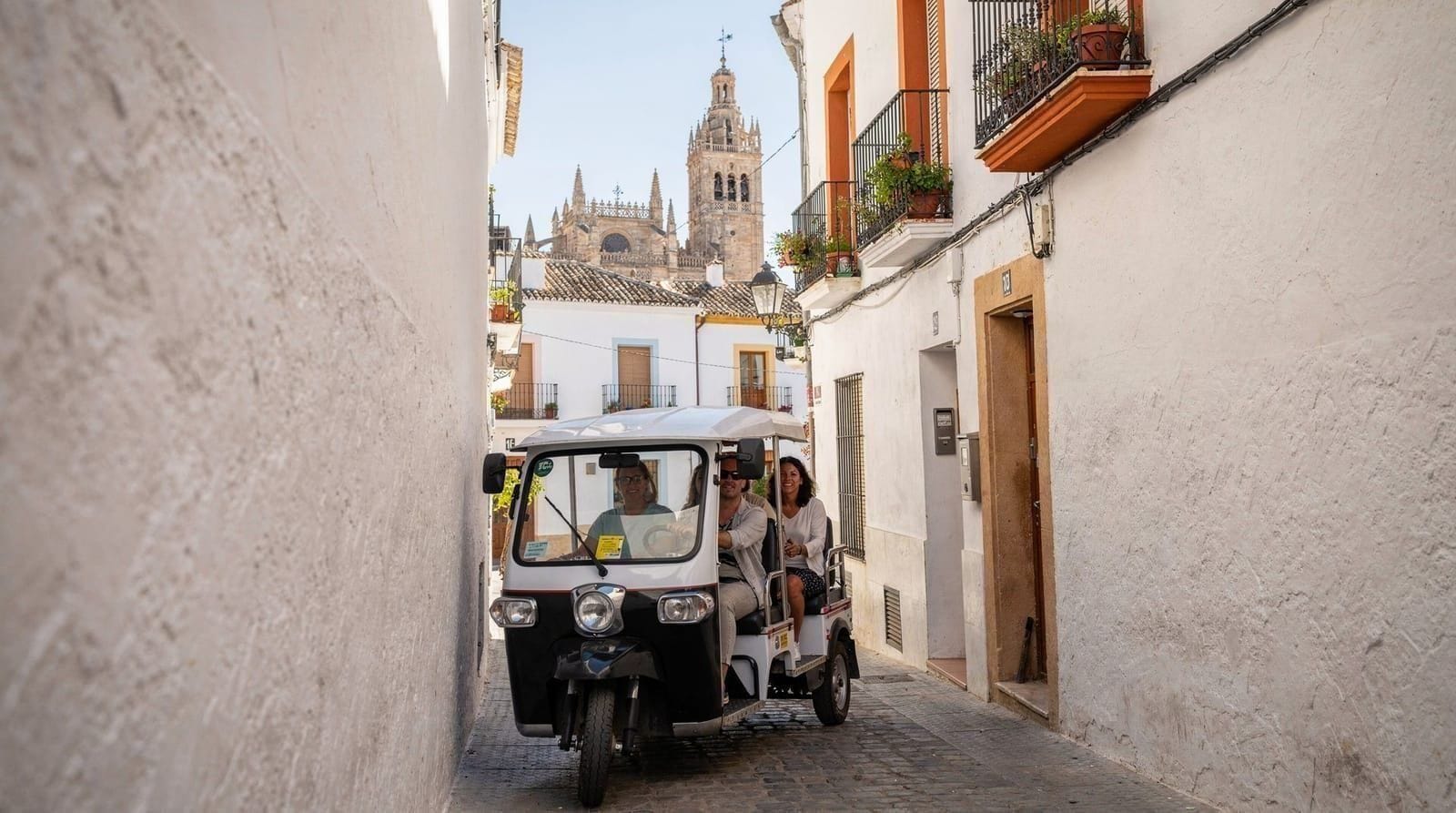
Tuk-tuk or segway tour: For visitors who want a vehicle-mediated experience without the bus scale, these small-vehicle tours can navigate streets the bus cannot and provide a more human-scale experience. See Segway and tuk-tuk tours in Seville: honest guide to small-vehicle city tours.
Walking independently with maps: For visitors comfortable with smartphones and pre-trip research, walking independently between the major sights using neighbourhood guides is free and fully effective. The getting around Seville guide covers the practical logistics.
The honest summary
The hop-on hop-off in Seville is a product that works better in other cities. In Seville specifically, it skips the areas worth seeing (Santa Cruz’s interiors, Triana’s side streets) while covering the areas you can walk between in 15-25 minutes. Unless you have specific mobility needs or are managing young children’s energy levels, there are better uses of €25 in Seville.
What the bus gets right: the audio commentary
One thing the hop-on hop-off does reasonably well is audio commentary during the full loop. The recordings at stops near the Plaza de España, the Torre del Oro, and the Isla de la Cartuja provide usable historical context in multiple languages without the cost of a live guide.
For visitors who have no prior knowledge of Seville and want a passive introduction to the city’s geography and major stories, the full loop (75-90 minutes without stopping) is a functional orientation. It works best as the first hour of a 3-day stay — giving you enough geographical context to plan where to walk in depth — rather than as a substitute for those walks.
The Spanish commentary is typically better than the English in these recordings. This is a consistent pattern across tourist audio in Andalusia — the historical complexity of the Moorish period, the Reconquista, and the Age of Discovery is harder to compress into a second-language summary than in the language in which the history was documented.
Understanding the Isla de la Cartuja stop
The hop-on hop-off route’s most genuinely useful stop is the Isla de la Cartuja — the river island that housed the 1992 World Exposition. This is difficult to reach independently, and the bus makes the crossing practical.
The island contains the Pabellón de la Navegación (a science museum focused on the Age of Exploration), the CAAC (Centro Andaluz de Arte Contemporáneo, housed in the former Monasterio de la Cartuja where Columbus is believed to have stayed before his voyages), the Isla Mágica theme park (appropriate for families with children aged 5-15), and the former national pavilions, some now converted to commercial use.
The Monasterio de la Cartuja is among the most historically significant buildings in Seville — Columbus’s connection, the ceramic tile production on the site in the 19th century under Charles Pickman, and the CAAC’s contemporary art collection make it an underrated half-day destination. The bus makes accessing it straightforward.
The route in detail
The standard hop-on hop-off route has approximately 14-16 stops. Starting from Stop 1 near the Torre del Oro:
- Torre del Oro / Arenal
- Catedral exterior (south facade)
- Alcázar (exterior approach)
- Plaza de España / Parque María Luisa
- Parque de los Principes
- Universidad (former tobacco factory)
- Santa Justa (train station area)
- Nervión
- Isla de la Cartuja (cross the river via the Puente del Alamillo)
- Expo 92 / Isla Mágica
- Triana (riverside approach)
- Back to Torre del Oro via the Triana bridge
The loop is one-directional. If you miss your stop, you complete the circuit rather than going back. In high season, buses run every 20-30 minutes, so missing a stop costs you half an hour.
Families: when the hop-on hop-off earns its price
For families with children under 10, the hop-on hop-off has better value than for adult visitors. The ability to board the bus when children tire, the air-conditioned lower deck for rest, and the Isla Mágica stop (a theme park option if you need 3-4 hours of child entertainment on a longer trip) make the €25 per adult more justifiable.
Children under 12 are typically free or half-price on hop-on hop-off buses in Seville. Exact terms vary by operator; check at time of booking.
The bus also provides a useful fall-back on hot days: if temperatures exceed 38°C in July or August and the planned walking tour becomes genuinely uncomfortable, boarding the bus with air-conditioned lower deck options gives children and adults a recovery window.
Getting the most from a 24-hour pass
If you decide to buy the 24-hour pass, the optimal strategy:
- Complete the full loop first without stopping to understand the geography (75-90 min)
- Identify 2-3 stops where you want to get off and explore (Plaza de España, Isla de la Cartuja, Triana riverfront)
- Use the bus to connect between these stops rather than walking the full distances
The 24-hour clock starts from first use, not from midnight. If you validate at 14:00, your pass runs until 14:00 the following day — covering both an afternoon and a morning session.
The 48-hour pass is only worth considering if you have very limited walking ability, are spending 4+ days in Seville and plan multiple bus sessions, or have specific access needs.
Buying tickets: online vs at the stop
Tickets can be bought online in advance or from staff at the main stops, typically starting at the Torre del Oro. Buying online sometimes carries a small discount and locks in the price without any need to negotiate on the day; buying at the stop is more flexible if your plans are not fixed. Either way, keep your ticket or QR code accessible — you’ll need to show it each time you reboard.
If you’re weighing it against a guided walk
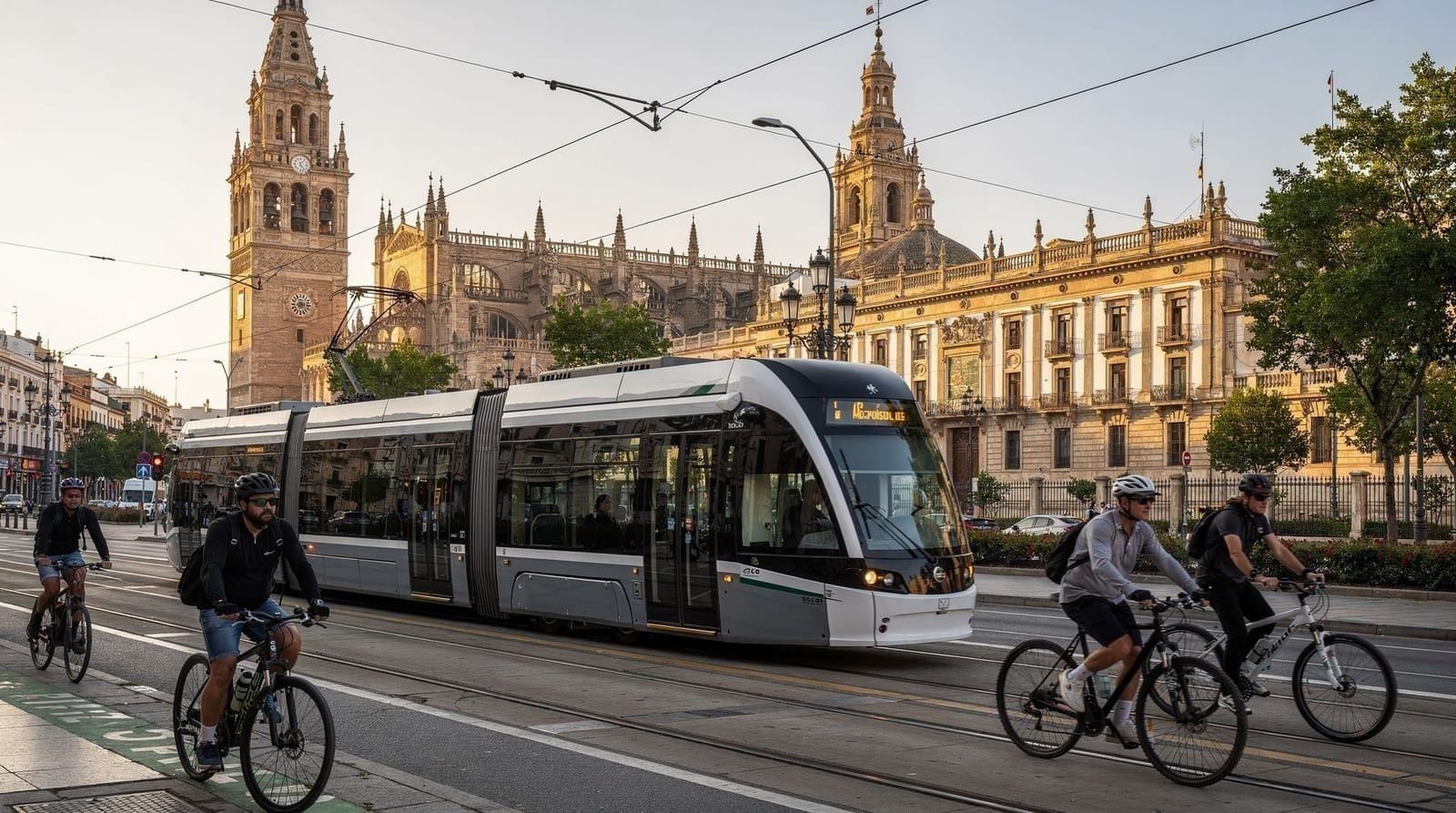
The comparison most visitors are actually making is hop-on hop-off versus a guided walking tour, and it is worth being explicit about the trade-off: the bus gives you a wide, shallow overview of the city’s geography from outside the interesting parts; a walking tour gives you a narrow, deep look inside them, with a human guide answering questions the recorded commentary cannot. For most itineraries longer than a single day, the walking tour is the better use of the same budget — see Best walking tours in Seville for options. The exception remains genuine mobility constraints, where the bus’s seated, air-conditioned format is simply more practical regardless of what it misses. For the wider public transport network beyond the tourist loop, the Seville public transport guide covers Tussam buses, the tram, and the metro in detail.
Fitting the bus into the rest of your plan
If you do take the bus, treat it as one piece of a larger plan rather than the plan itself. The sights it passes are better understood once you know what is inside them, so read the Real Alcázar complete guide and the Seville Cathedral complete guide before you ride past their exteriors. For the Alcázar in particular, the Alcázar tickets and skip-the-line guide explains how to get inside rather than just looking at the walls from the top deck.
The Plaza de España stop pairs naturally with a slow wander through the Parque María Luisa guide route and the Plaza de España guide, which is where the bus earns its keep on a tired afternoon. If you would rather cover those same areas on two wheels, a guided option such as a guided highlights ride with a local reaches streets the bus cannot enter.
For a first visit, the Seville first-timers itinerary and the Seville in 3 days plan show where a bus loop could slot in on an arrival afternoon, and the Seville in 1 day plan is the one to follow if your time is very short. If heat is the reason you are considering the bus, the Seville in summer heat guide covers how to structure the day around it, and the Seville with kids guide has more ideas for families. Finally, if you want to compare the bus against other ways to see the city at a glance, the Seville overview is a good starting point.
Frequently asked questions about Hop-on hop-off bus in Seville
What does the hop-on hop-off bus cover in Seville?
The standard route covers the major landmarks accessible by road: the Catedral exterior, the Alcázar exterior, the Plaza de España, the Metropol Parasol, the Isla de la Cartuja, the Triana waterfront, and the Parque María Luisa. It cannot enter the pedestrianised Santa Cruz area or the narrow streets of the historic centre. Bus stops are on the periphery of the most interesting zones.How much does the hop-on hop-off bus cost in Seville?
A 24-hour ticket costs approximately €23-25. A 48-hour pass is approximately €29-32. Children typically pay around half price. The complete loop takes around 75-90 minutes without hopping off. Compare: a two-hour walking tour with a guide costs a similar amount and covers a more interesting route through areas the bus cannot reach.What is the hop-on hop-off bus useful for in Seville?
Best uses: getting an orientation overview of the city's geography on arrival day; reaching the Plaza de España and Parque María Luisa from the historic centre without walking 25 minutes each way; providing seated rest for visitors with mobility issues or young children; the open top deck offers decent photography angles for the wider streets and plazas (but not the historic centre's narrow streets).When is the hop-on hop-off most useful?
On a very hot summer day (July-August, 35-40°C+), the air-conditioned lower deck of the hop-on hop-off provides relief from the heat between sights. This is the strongest practical argument for the pass in Seville specifically — as a mobile air-conditioned refuge rather than as a sightseeing vehicle. Equally, in heavy rain (rare but possible in winter), staying dry between attractions has value.Can I buy hop-on hop-off tickets on the bus itself?
Yes, tickets are usually available for cash or card purchase directly from staff at the main stops (Torre del Oro is the typical starting point), or in advance online. Buying online occasionally includes a small discount and guarantees the current price without needing to negotiate at the stop.Does the hop-on hop-off include a walking tour of Santa Cruz?
No. Because the bus cannot enter Santa Cruz's pedestrianised streets, some operators bundle a short optional walking segment with a guide at that stop, but this varies and is not standard. If exploring Santa Cruz properly matters to you, book a dedicated walking tour rather than relying on the bus package.
Top experiences
Bookable activities with verified prices and instant confirmation on GetYourGuide.