Best walking tours in Seville: guided, self-guided, and what's worth the money
Seville: 4-hour guided walking tour
Are walking tours worth it in Seville?
For first-time visitors, a 2-3 hour guided walking tour is one of the better investments — Seville's history is layered (Roman, Visigoth, Moorish, medieval Christian, Age of Discovery) and a good guide makes visible what you would walk past without context. Prices run €15-25 per person for small groups. Skip large group tours with more than 15 participants — the guide-to-crowd dynamic degrades quickly.
Seville is a walking city. Its historic core — Santa Cruz, the Catedral, El Arenal, Triana — is compact and navigable on foot, and most of what matters is within 30-40 minutes’ walk of any central accommodation. You do not need a walking tour to see Seville, in the sense that the city is physically accessible without one.
What a good walking tour adds is interpretation: the ability to look at a Mudéjar arch, a Renaissance portal, a street name, or an orange tree and understand what you are seeing within Seville’s 2,000-year history of occupation, conquest, commerce, and cultural fusion.
This guide covers what the different walking tour formats actually deliver, what they cost, and when each format is appropriate.
| Standard format | 2-3 hours, small group, around €15-25/person |
| Best for depth | Neighbourhood-specific (Santa Cruz or Triana) |
| Best for breadth | 4-hour city highlights tour |
| Avoid | Groups over 15-20 without a stated cap |
| Note | Interiors of Alcázar/Cathedral need separate tickets |
What Seville walking tours cover (and what they miss)
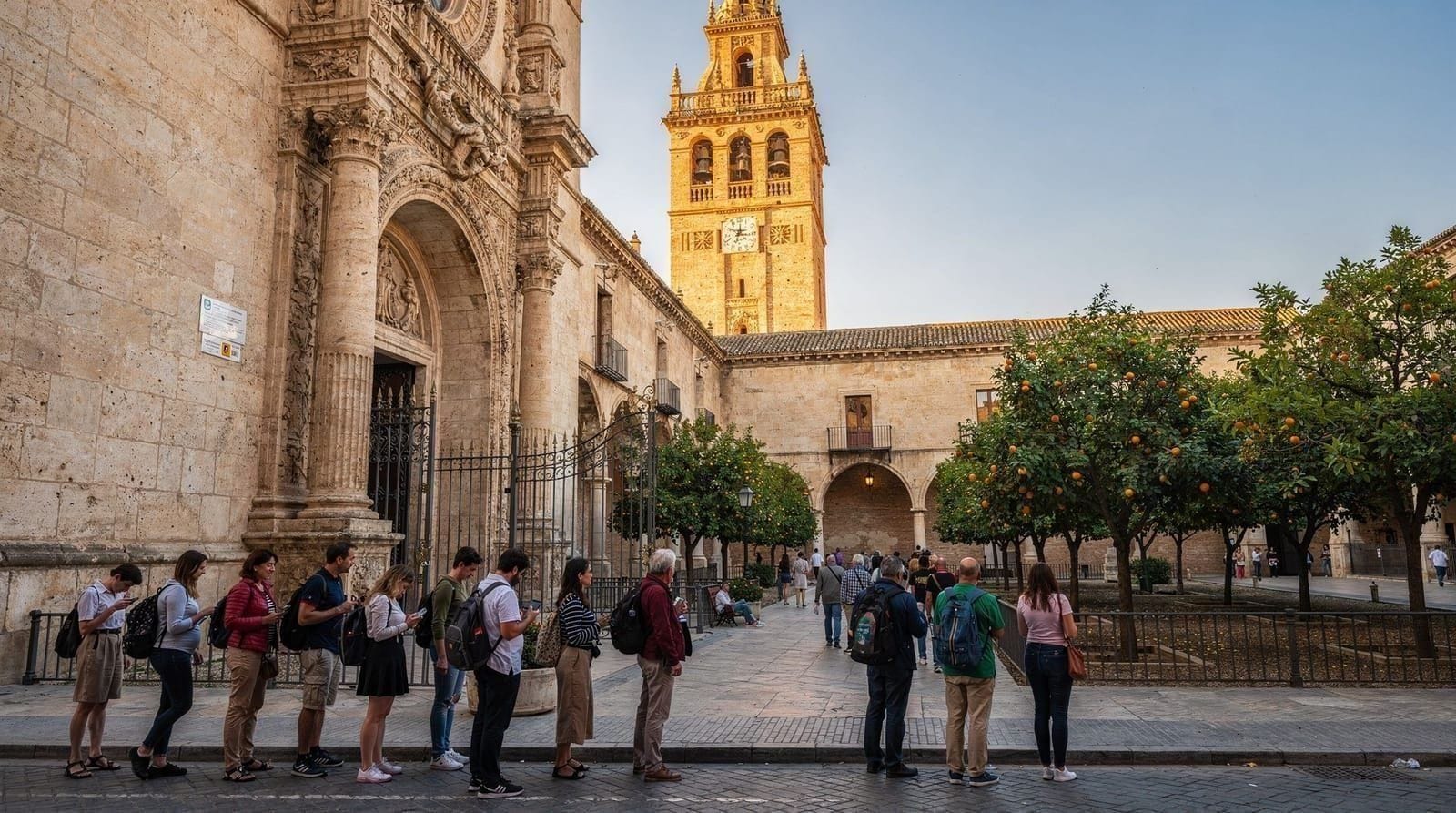
Standard 2-hour tours: These typically cover Santa Cruz (the Jewish quarter, garden plazas, the character street layout), the Catedral and Giralda exterior (history of the mosque-to-cathedral conversion, the minaret that became the Giralda bell tower), and the Alcázar exterior (palace exterior, history of Mudéjar construction). They do not usually include entry to the Catedral or Alcázar.
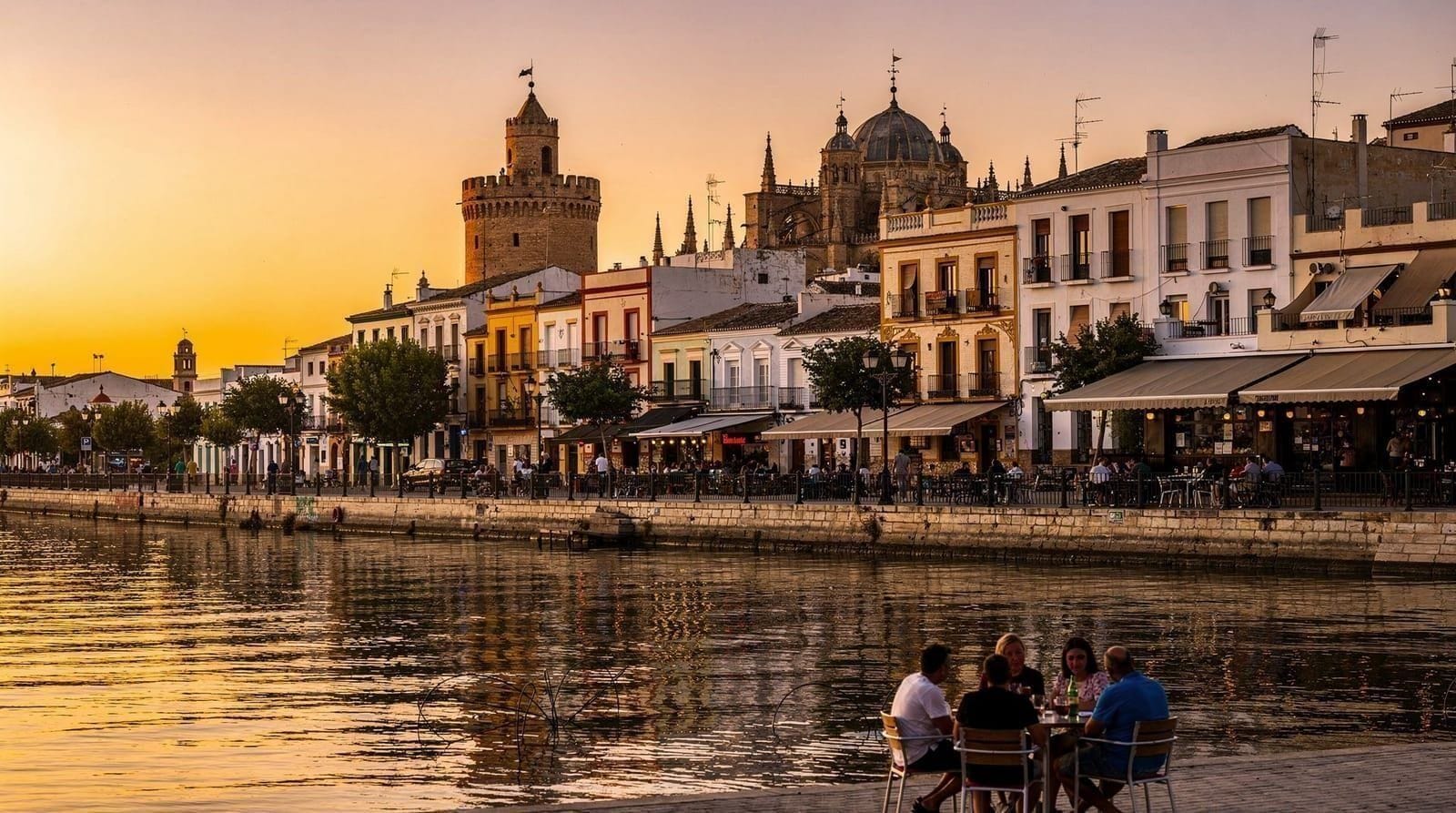
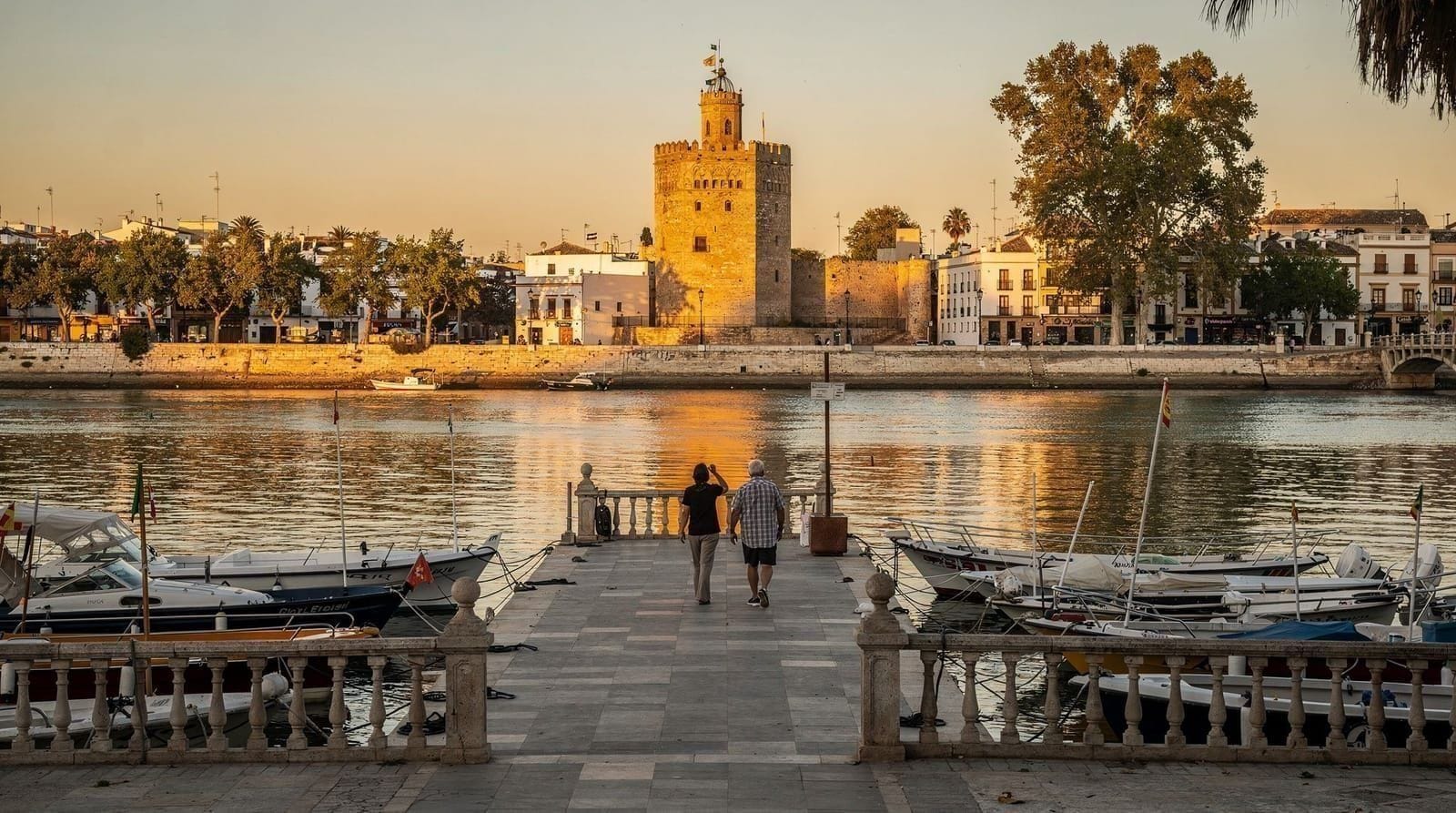
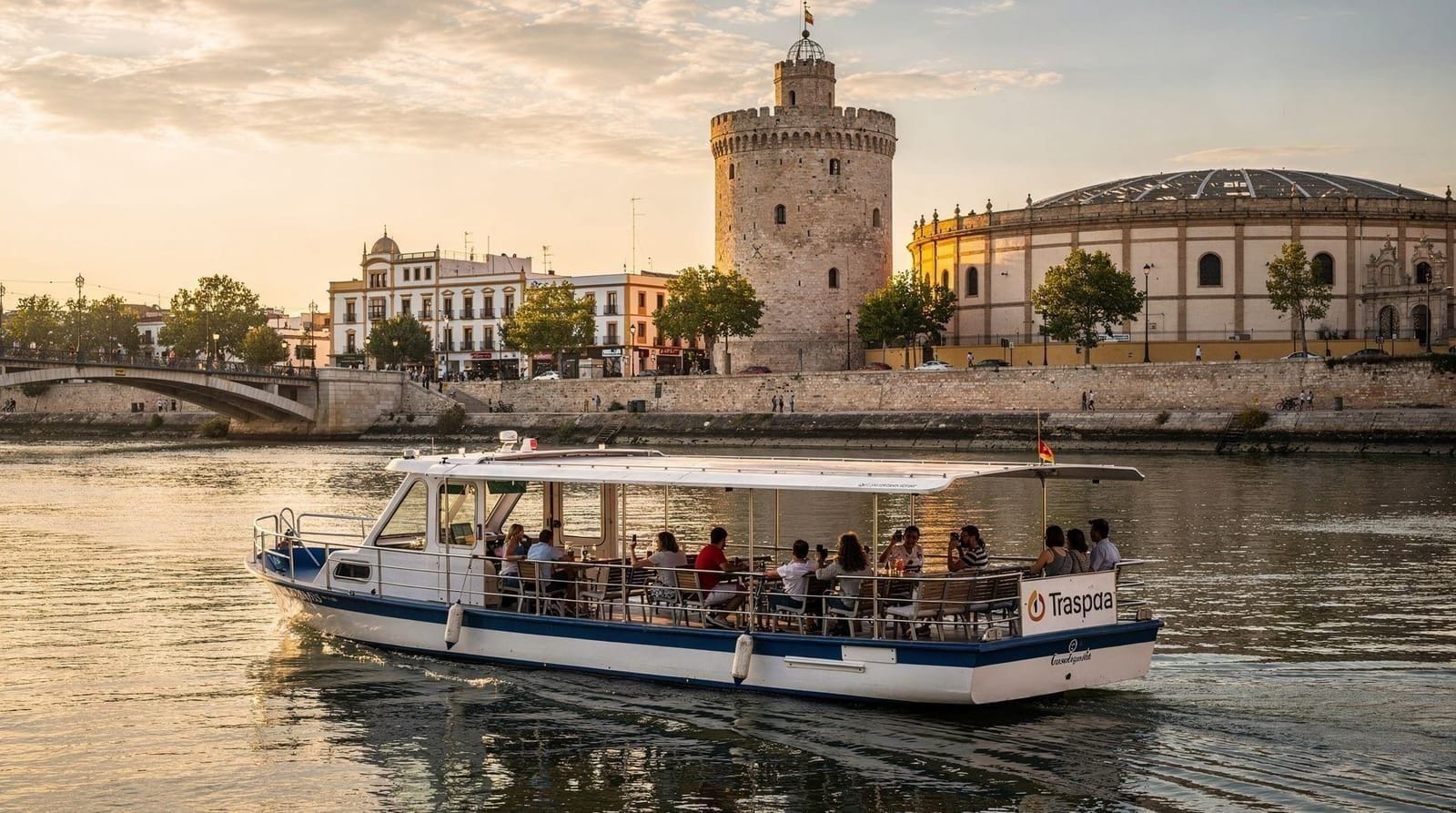
Extended 3-4 hour tours: Add the Arenal district (Torre del Oro, the Maestranza bullring, the Guadalquivir riverbank), the Plaza de España in Parque María Luisa, and/or the Metropol Parasol (Setas de Sevilla). Four-hour tours are physically demanding in warm weather — plan for early morning or late afternoon starts.
Neighbourhood-specific tours: Santa Cruz specifically, Triana specifically, or the Macarena — these go deeper into a single area rather than across the city. Best for visitors who have already done a city overview and want more depth.
What walking tours almost never cover: The interiors of the Alcázar and Catedral (these require separate tickets), practical travel logistics, and neighbourhood eating recommendations. This is fine — these are separate skills from historical narrative.
Santa Cruz walking tours
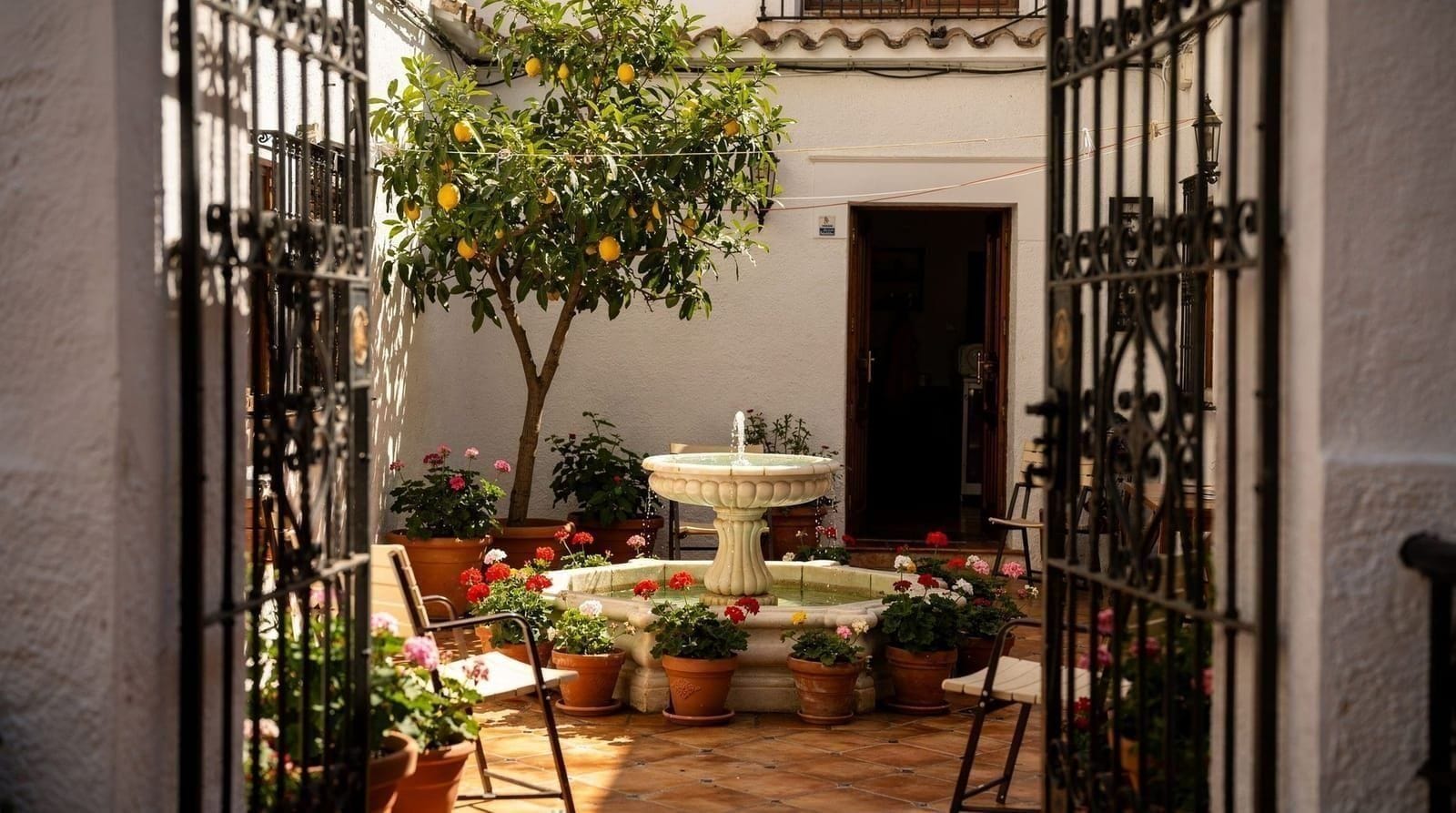
The Barrio Santa Cruz is the natural centre of Seville walking tours. It is the most historically layered area (Jewish quarter, then Moorish quarter, then Christian noble residences), the most photogenic (whitewashed walls, flower-hung patios, orange trees), and the densest concentration of historical significance per square metre.
A well-run Santa Cruz tour covers: the original Jewish quarter geography (the streets before 1391), the transition to Christian noble residences after the expulsions, the specific architecture of the casas-palacio (noble houses with interior patios), the Hospital de los Venerables and its Velázquez paintings, and the role of the quarter as both the city’s tourist centre and an increasingly lived-in neighbourhood.
Book Santa Cruz Jewish quarter walking tourSmall-group city highlights tours
For a comprehensive overview of the historic centre, the small-group city highlights format (typically 8-12 participants, 3 hours) is the most efficient introduction. A well-run tour of this type covers the essential narrative — Roman Hispalis, the Almohad capital, the Reconquista, the Casa de Contratación and the Americas trade — in a format manageable in an afternoon.
Book small-group city highlights walking tourThe four-hour tour: worth the length?
A four-hour guided walking tour adds significant content at the cost of physical comfort. In spring and autumn, a morning start (09:00) at this length is comfortable. In summer, a 09:00 four-hour walk reaches its endpoint at 13:00 — the hottest part of the day. Plan accordingly, carry water, and consider whether the extended format is necessary.
The additional content in four-hour versus two-hour tours (Plaza de España, Metropol Parasol, possibly the university buildings or the Archivo de Indias) is meaningful if you are genuinely interested in Seville’s breadth. If your primary interest is the Moorish and medieval periods, a focused two-hour tour plus independent exploration covers more ground with less physical strain.
Book 4-hour guided walking tour of SevilleTriana walking tour: the under-visited option
Triana rewards a dedicated walking tour more than Santa Cruz, paradoxically, because its history is less-known and less-signposted. A guided walk of Triana covers: the Gitano (Roma) community and its role in flamenco and ceramics, the Inquisition’s use of the Castillo de San Jorge, the ceramics tradition and the surviving workshops on Calle Alfarería, the Calle Betis riverside and its character, and the market.
Visitors who have done the standard Santa Cruz/Cathedral tour and want to understand a different dimension of Seville should prioritise Triana. The Triana neighbourhood guide provides the written equivalent, but a guided walk with a local brings it to life in a way text cannot.
Book tiny-group Triana walking tourSunset walking tour: a different experience
A rooftop-and-sunset-specific walking tour combines the walking narrative with the most photogenic time of day. The Metropol Parasol rooftop, the towers with western views, and the Guadalquivir at sunset light are genuinely more beautiful than the midday equivalent. These tours typically run 2-2.5 hours from about 18:00 and combine movement with fixed viewpoints at the best light windows.
Self-guided walking: when you don’t need a guide
If you are a thorough pre-trip researcher, the following combination of online resources covers the historic centre adequately for self-guided walking:
- Santa Cruz neighborhood guide — detailed and specific
- Triana neighborhood guide — full neighbourhood coverage
- El Arenal guide — river quarter and historic architecture
- Skip-the-line Seville decoded — managing the Alcázar and Catedral visits
The advantages of self-guiding are timing flexibility and pace control. The disadvantage is that the most interesting interpretive layer — the human context of what you are seeing — requires a good guide.
Practical advice for all walking tours
Temperature: Morning tours (09:00-11:00) are cooler and have better photography light. Midday walks (12:00-15:00) in summer (June-August) are genuinely uncomfortable — temperatures in Seville regularly exceed 40°C. Late afternoon (17:00-19:00) is the most comfortable time of year but has flat light for photography.
Shoes: Seville’s Santa Cruz streets are paved with uneven stone. Flat, supportive soles are essential. Sandals without ankle support will be painful after two hours on this terrain.
Water: Carry your own. The public fountains in Seville’s historic centre are potable. Do not buy water at tourist-zone kiosks (€3-4/bottle); refill from fountains or buy from supermarkets (€0.50/1.5L).
Group size: The practical maximum for meaningful guide-to-group communication on Seville’s narrow streets is about 12-15. Tours advertising “small group” but not specifying a maximum may have 20-25 participants — ask before booking.
What a good walking tour guide actually knows
The difference between an adequate guide and an excellent one is not factual coverage — both know the dates, names, and stylistic periods. It is interpretive depth and the ability to make historical abstractions concrete and present.
A guide explaining the Alcázar as Pedro I’s palace built in 1364 is accurate. A guide who explains why Pedro I deliberately brought craftsmen from Granada to build a Mudéjar palace — and what it meant politically for a Christian king to commission Islamic architectural aesthetics as a statement of Mediterranean cosmopolitanism against the Reconquista’s cultural narrowing — is making you understand something real.
Similarly with the Jewish quarter: a guide who notes that the Barrio Santa Cruz was the Jewish quarter is doing basic interpretation. A guide who walks you to a specific house on Calle Susona and explains the legend of La Susona (the daughter of a leading Jewish family who allegedly betrayed a plot against the Christians — her skull was supposedly displayed on the house facade as penance, and the ornamental skull you can still see there is the claimed relic of this story) is connecting architecture to specific human stories.
Before booking a walking tour, look for reviews that describe specific content — not “fantastic” and “amazing” but references to specific stories told, specific places visited, specific moments of genuine insight. These are the reliable signals of guide quality.
The Semana Santa walking dimension
If your visit coincides with Semana Santa (Holy Week — 29 March to 5 April 2026), the walking experience in Seville is transformed. The 57 cofradías (brotherhoods) of Seville carry their pasos (floats bearing religious images) through the streets of the historic centre in processions lasting 8-14 hours each.
The routes pass through Santa Cruz, the Catedral, and along the Carrera Oficial (the official route along the Avenida de la Constitución). During Semana Santa, no standard walking tour operates — the streets are occupied by processions, crowds, and the ceremonial infrastructure of what is arguably Europe’s most intensely felt religious event.
Special Semana Santa walking tours are available in the days before Holy Week that explain the brotherhood traditions, the paso iconography, and the processional routes. These are worth taking if you arrive a day or two before the processions begin. The Semana Santa guide covers the full context.
The Feria de Abril walking dimension
The Feria de Abril (21-26 April 2026) takes place in the Los Remedios fairground, 2km south of the historic centre. During Feria week, the city’s social and cultural centre of gravity shifts to the fairground — not to the monuments. Walking tours of the historic centre continue during Feria but with reduced visitor numbers and a different city atmosphere.
A Feria-specific walking or guided experience — the fairground and its casetas (marquees), the horse parade, the dress tradition — is a separate product from the monument-focused walking tours. If your visit overlaps with Feria, plan for both: a morning walking tour of the monuments before the heat builds, and an evening in the Feria area for the social dimension. See Feria de Abril Seville guide: how to experience it as a visitor.
Food-focused walking tours
A separate category from monument-focused walking tours, food walking tours cover Seville’s tapas culture, market history, and eating traditions. These typically visit 4-6 tapas bars with food and drink included, with guide commentary on the dishes, ingredients, and cultural context.
Food tours are generally more interactive and lower in historical content than monument tours. They cover different ground — the working-class bars of the Arenal, the Mercado de Triana, specific tapas stops with explanatory context — and are better suited to visitors whose primary interest is eating rather than architecture.
For food-focused visitors, the Seville food tour guide and seville tapas tours compared provide the detailed comparison.
The honest-planner’s notes on walking tour operators
Several dynamics in the walking tour market in Seville are worth being aware of:
Tip-only tours at scale: Some operations run “free” tours that are essentially tip-based services with minimal quality control on guides. The best-case outcome is a well-informed recent graduate who knows Seville deeply. The worst case is a guide who has memorised a script but cannot answer questions. The price premium of a paid small-group tour (€20-30 versus €0 + tip) buys you selection and accountability.
Hotel concierge referrals: Hotel concierges receive commissions from tour operators. The walking tour a concierge recommends most enthusiastically is not necessarily the best one — it is often the one that pays the highest referral fee. Booking independently through a platform that shows verified reviews is more reliable.
Self-guided apps: Several well-produced apps offer self-guided audio walking tours of Santa Cruz and the Catedral area (Rick Steves, GPSmyCity, and others). These are entirely acceptable for visitors who prefer their own pace and do not want to follow a group. The trade-off is that a live guide can respond to questions and adapt to what interests you specifically; an app cannot.
Comparing the main walking tour formats
| Format | Length | Group size | Best for |
|---|---|---|---|
| Standard city overview | 2-3 hours | 8-15 | First-time visitors wanting orientation |
| Santa Cruz-specific | 2 hours | 8-12 | Depth on the historic quarter |
| Triana-specific | 2 hours | 8-12 | Local character, less-known history |
| 4-hour extended | 4 hours | 8-15 | Visitors wanting breadth over depth |
| Sunset/rooftop | 2-2.5 hours | Varies | Photography and atmosphere |
| Food-focused | 2.5-3 hours | 6-10 | Tapas and eating culture over architecture |
Combining a walking tour with the rest of your trip
If your itinerary already includes a flamenco show or a tapas crawl, sequence the walking tour earlier in your stay rather than the same day — a 2-3 hour tour plus an evening of flamenco or bar-hopping is a full day, and stacking a fourth activity tends to produce diminishing returns on all of them. For visitors deciding which neighbourhood to base themselves in before booking anything, best neighborhoods in Seville is worth reading first, since it affects how far you’ll be walking to reach your tour’s meeting point each morning.
Walking tours versus paying for monument interiors
A walking tour covers the exterior story of the Alcázar and Cathedral well but never substitutes for going inside. If your time is limited, prioritise entry tickets for the Real Alcázar and the Cathedral and Giralda over a second walking tour — the interiors are where Seville’s architecture is most striking. A single well-chosen walking tour before your monument days, rather than multiple overlapping tours, tends to be the better use of a short trip; see how many days in Seville for how to sequence it all.
Beyond walking: other ways to see the historic core
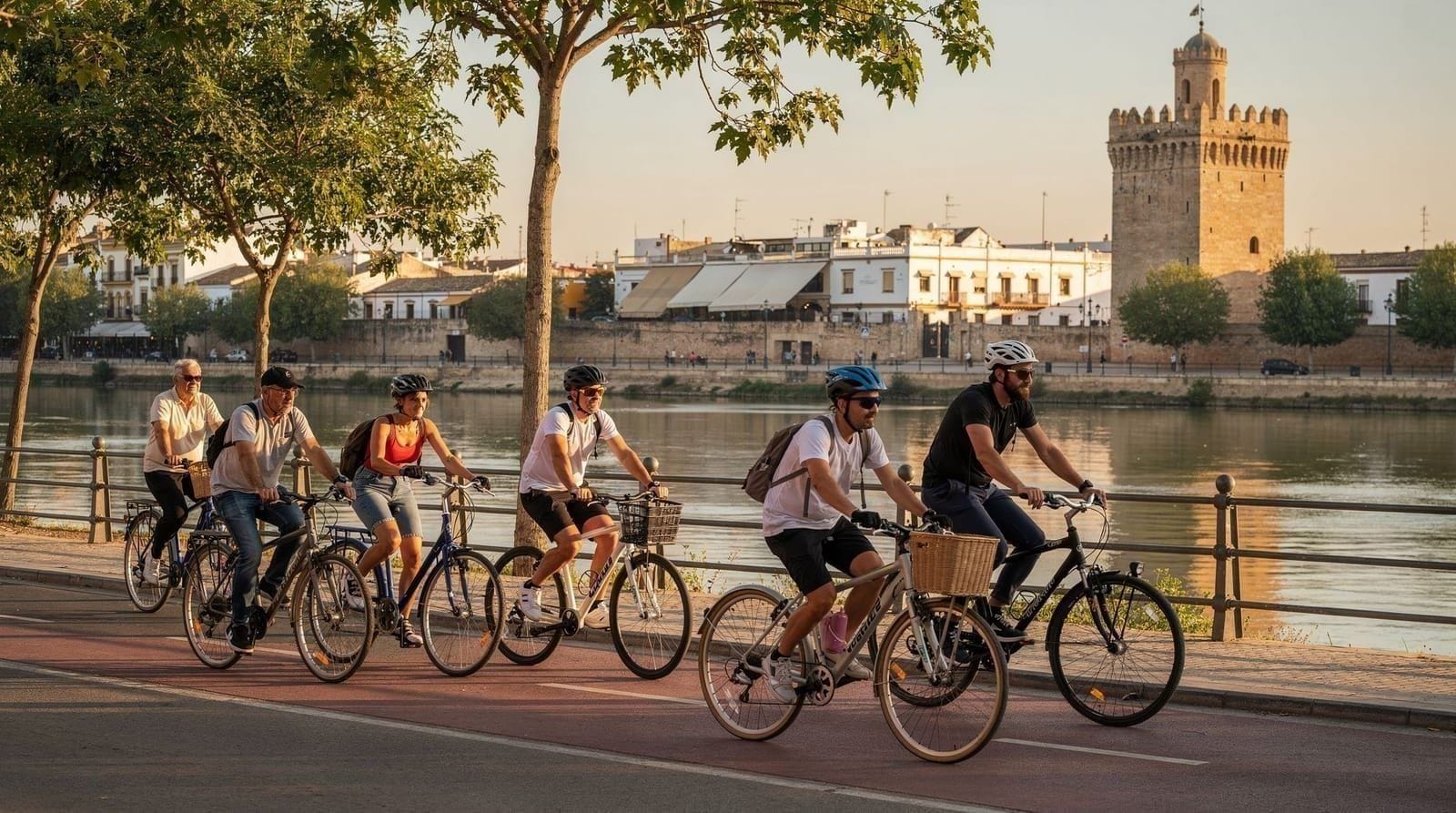
Not every visitor wants to cover ground on foot for hours. A bike tour covers more distance in less time and suits visitors who want to reach the Plaza de España and the Metropol Parasol alongside the historic centre without the full walking commitment. A Guadalquivir river cruise offers a genuinely different vantage point on the same skyline a walking tour covers from street level — worth combining rather than choosing between if you have more than two days.
Frequently asked questions about Best walking tours in Seville
What areas does a typical Seville walking tour cover?
Most standard tours cover the historic triangle: Barrio Santa Cruz (Jewish quarter, Mudéjar streets, gardens), the Catedral and Giralda exterior, and the Alcázar exterior. Some extend to El Arenal (Torre del Oro, riverside) or Triana (via the Puente de Triana). Four-hour tours add the Plaza de España or the Metropol Parasol. Very few walking tours include interior access to the Alcázar or Catedral — these require separate tickets.What is the difference between a free walking tour and a paid small-group tour?
Free walking tours (tip-based, running throughout Seville's tourist zones) are exactly what they describe: the guide earns through tips and has no filter on group size. Quality varies from excellent to mediocre depending on the individual guide. Paid small-group tours (typically 8-12 participants, €20-30 per person) select guides by quality, cap group size, and offer a more reliable experience. For a first visit, the predictability of a paid small-group tour is worth the price premium.How long should a Seville walking tour be?
Two to three hours is the practical sweet spot — long enough to cover the essential historic core with context, short enough to remain comfortable on Seville's frequently warm streets. Four-hour tours are available and cover more ground, but require either a mid-tour water and shade stop or an early start before the heat builds. Anything over four hours should be a paid private tour with a flexible pace.Is a walking tour necessary if I already have a Seville guidebook?
Not necessary, but often more efficient. A good local guide provides living context — local stories, current neighbourhood dynamics, practical tips on eating and avoiding tourist traps — that no guidebook replicates. If you are a strong self-researcher who does thorough pre-trip reading, a self-guided route using the neighbourhood guides on this site (Santa Cruz, Triana, El Arenal) may be sufficient. The Santa Cruz guide and Triana guide cover the ground in detail.Should I book a walking tour before or after visiting the Alcázar and Cathedral?
Before, ideally on your first full day. A good overview walking tour gives you context that makes the Alcázar's Mudéjar architecture and the Cathedral's mosque-to-church conversion more legible when you visit their interiors on a following day.Is a bike tour a reasonable substitute for a walking tour?
It's a genuinely different experience rather than a direct substitute — a bike tour covers more ground faster, reaching the Plaza de España and Metropol Parasol alongside the historic centre, but delivers less depth on any single street or building than a focused walking tour. Many visitors do both across a longer stay.
Top experiences
Bookable activities with verified prices and instant confirmation on GetYourGuide.