Santa Cruz neighborhood guide: Seville's historic Jewish quarter
Seville: Santa Cruz old Jewish quarter walking tour
What is the Santa Cruz neighborhood in Seville?
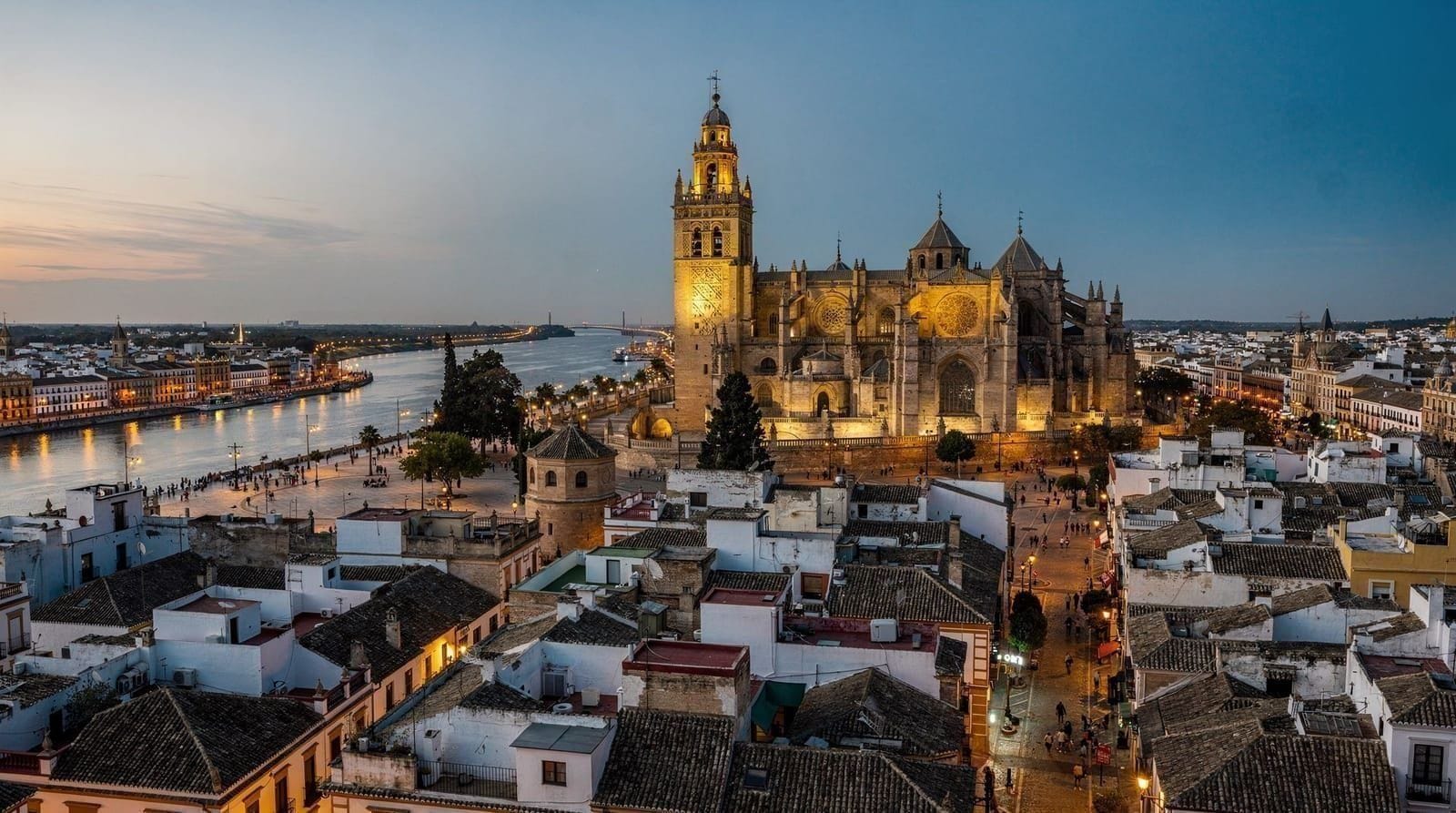
Santa Cruz is Seville's historic Jewish quarter (judería), immediately adjacent to the Alcázar and Cathedral. It is the most touristified neighborhood in the city — the majority of visitors stay here — but retains genuine character in its labyrinthine streets and historic mansions. The best tapas bars here are Bodega Santa Cruz and Casa Morales.
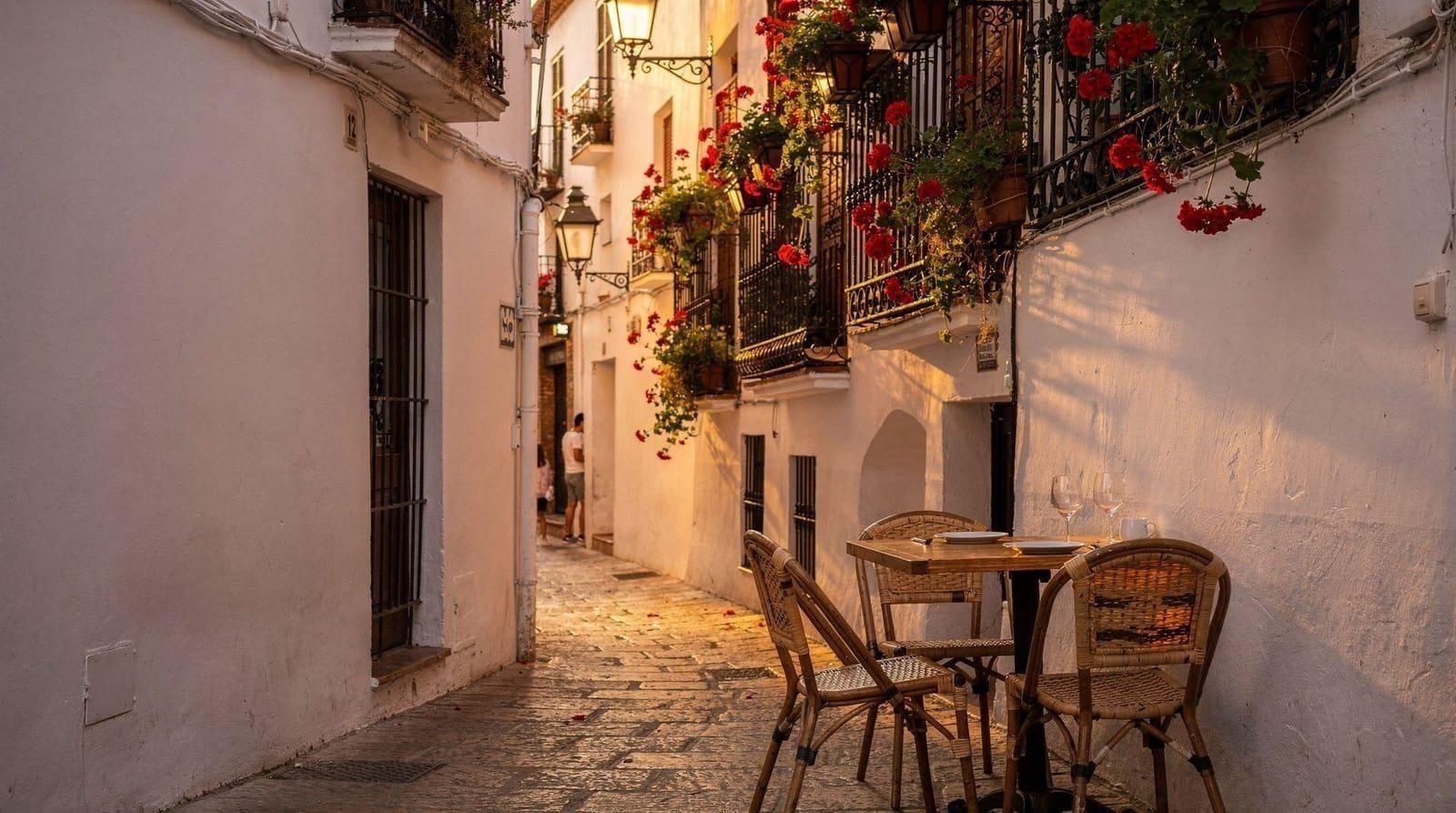
Santa Cruz is where most visitors to Seville begin, and where most of them stay. The Alcázar and Cathedral are on its edges; the labyrinthine white-walled streets with orange trees and hidden plazas are inside. The neighborhood’s visual identity — intimate lanes, pots of geraniums on walls, glimpses of Gothic arches through doorways — is genuine, not constructed for tourists, though tourism has saturated it to the point where the authentic and the commercial are now deeply intertwined.
This guide gives you the real character of Santa Cruz alongside the practical information for navigating it honestly.
| Where | Immediately east of the Alcázar and Cathedral, historic centre |
| Best for | First-time visitors, walkable access to monuments |
| Typical stay cost | Highest in the city — around €90–200/night for a mid-range hotel |
| Time needed | Half a day to explore properly; longer if staying |
| Quietest hours | Before 10 AM, after 5–7 PM depending on season |
The history: Jewish Seville
Santa Cruz was the judería (Jewish quarter) of medieval Seville. Jews had lived in the area since at least the 4th century AD, and the community flourished under both Moorish and early Castilian rule. The quarter was bounded by walls and had its own synagogues, market, and communal institutions.
In 1391, a pogrom — triggered by anti-Jewish preaching by the archdeacon Ferrand Martínez — destroyed much of the judería. Most of the Jewish population was killed, forced to convert, or fled. The two main synagogues were converted to churches: the Church of Santa María la Blanca (still standing and visitable) and the Church of the Conversion. The neighborhood was resettled by Christians and eventually renamed Santa Cruz (Holy Cross) — a deliberate renaming that erased the Jewish identity.
The physical layout of Santa Cruz still reflects the medieval Jewish quarter: the irregular street plan, the narrow lanes designed to reduce solar heat, the sudden small plazas that served as community gathering points. The walls are from later periods (most of the current building stock is 18th-19th century) but they follow the medieval street lines.
Understanding this history makes walking Santa Cruz more interesting than following a route guide. The neighborhood is a palimpsest: 4th-century Jewish origins, 8th-century Almohad city fabric, 14th-century pogrom, 18th-century rebuilding, 21st-century tourism.
What to see in Santa Cruz
The streets themselves
The primary experience of Santa Cruz is the streets. There is no single “main attraction” inside the neighborhood (the Alcázar and Cathedral are on its boundaries, not inside it). What Santa Cruz offers is the experience of walking through a surviving medieval urban fabric:
Calle Agua: One of the most atmospheric streets in the neighborhood, running along the base of the Alcázar walls. At certain points, the wall is right next to you.
Callejón del Agua: A narrow alley extending off Calle Agua, with whitewashed walls, hanging plants, and the peculiar acoustics of a very confined urban space.
Plaza de Doña Elvira: A small plaza with a central fountain and orange trees. The spatial composition — the scale of the square relative to its surrounding buildings — is a characteristic medieval urban form.
Plaza de Santa Cruz: The main plaza of the neighborhood, on the site of one of the former synagogues (now a garden). The iron cross (Cruz de la Cerrajería, 1692) in the center is a baroque landmark.
Plaza de los Venerables: The site of the Hospital de los Venerables (now the Centro Velázquez, with an important painting collection).
The Hospital de los Venerables and Centre Velázquez
The Hospital de los Venerables was founded in 1675 as a residence for elderly priests. The baroque church and courtyard (patio) are exceptional examples of 17th-century Sevillano architecture. The Centro Velázquez inside houses one of the best collections of Velázquez paintings in Spain outside the Prado — the Santa Rufina and Santa Justa portraits are on permanent display.
Tickets are sold by Fundación Focus; check current prices, opening hours and any closure on its official site. Worth the time and cost.
Church of Santa María la Blanca
Built on the site of a medieval synagogue (the naming — White Santa María — echoes the name of the original synagogue, La Blanca). The interior has an unusual history: the building retains the spatial structure of the synagogue in its proportions and column placement, despite being converted and decorated in the baroque style. A plaque inside acknowledges the Jewish origin of the structure.
Santa Cruz Jewish quarter walking tour — history of the judería with a guideEating in Santa Cruz: what to expect
See the full best tapas bars in Santa Cruz guide for specific recommendations. The short version:
Santa Cruz has the highest concentration of tourist-trap restaurants in Seville. The restaurants immediately around the Cathedral and Alcázar — particularly on Calle Mateos Gago — operate on a high-volume, low-repeat-customer model. Mediocre food at inflated prices, outdoor menus with photographs, aggressive terrace seating.
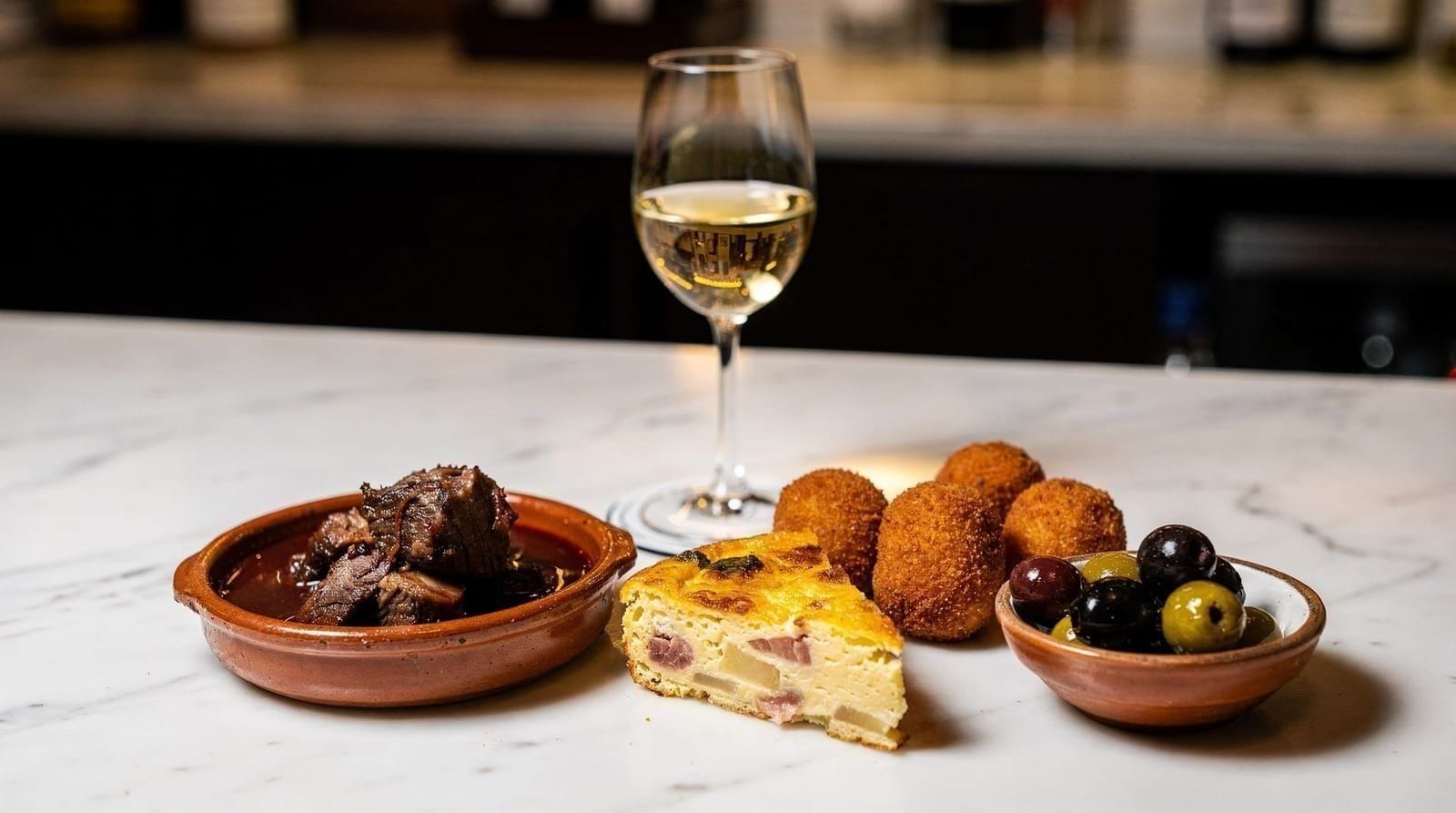
The good options are specific: Bodega Santa Cruz “Las Columnas” (Calle Rodrigo Caro 1, best barra tapas in the neighborhood), Casa Morales (Calle García de Vinuesa 11, 19th-century bodega, wine from the barrel), Bar El Comercio (Calle Lineros, churros and basic tapas).
The universal rule: eat at the barra (counter), not the terrace. The same dish costs 20-30% less at the counter in Santa Cruz’s tourist-area bars.
Staying in Santa Cruz: hotels and practicalities
Santa Cruz is the most convenient base for visiting the Alcázar and Cathedral — everything is walkable. The downside: it is the most expensive neighborhood for accommodation and it can be loud late at night in summer.
Genuine hotels in the neighborhood:
Hotel Amadeus (Calle Farnesio): A boutique hotel in a historic mansion with musical instruments throughout (the owners are musicians). Well-regarded for character and service.
Casa 1800 (Calle Rodrigo Caro): Luxury boutique hotel in an 18th-century palace. One of the highest-rated hotels in Seville for both quality and location.
Hotel Alcántara (Calle Ximénez de Enciso): Mid-range, reliable, excellent location. Less character than Casa 1800 but significantly less expensive.
For a full analysis of where to stay in Seville across all neighborhoods, see where to stay in Seville.
Practical navigation
Getting lost: Santa Cruz is genuinely labyrinthine. The street plan does not follow a grid; streets end unexpectedly, change names, and double back. Getting temporarily lost is normal and not a problem — the neighborhood is small enough that you will emerge onto a recognizable street within five minutes of any confusion.
Heat in summer: Santa Cruz’s narrow streets retain heat effectively in the Seville summer (40°C+). The small plazas are traps for hot air. In summer, visit Santa Cruz in the morning (before 11 AM) and again in the evening (after 7 PM). The midday hours are genuinely unpleasant in July and August.
The rosemary scam: Women approaching tourists near the Cathedral and Alcázar offering sprigs of rosemary “for good luck” and then aggressively demanding payment are a persistent presence. Do not accept anything. See the tourist traps guide.
Crowd management: The Alcázar and Cathedral queues extend into the streets of Santa Cruz during peak hours. The least crowded time for the neighborhood is early morning (before 10 AM) and late afternoon (after 5 PM in winter, after 7 PM in summer).
Santa Cruz small-group walking tour — covers the neighborhood with a knowledgeable guideA one-hour self-guided walk
If you only have an hour and want to see the neighborhood’s character without a formal tour, this loop covers the highlights: start at Plaza de Santa Cruz (the iron cross), walk northwest along Calle Santa Teresa to Plaza de Doña Elvira, then follow Calle Rodrigo Caro past Casa 1800 to Plaza de los Venerables. From there, Calle Ximénez de Enciso leads to the Church of Santa María la Blanca, and Calle Mateos Gago brings you back towards the Cathedral, passing several of the tapas bars covered in the best tapas bars in Santa Cruz guide. The whole loop is under 1.5km and takes about 45–60 minutes without stops — longer if you pause at any of the plazas, which you should.
Evening in Santa Cruz: flamenco and the Jardines de Murillo
As the day cools, Santa Cruz’s character shifts. The Jardines de Murillo, on the neighborhood’s southern edge (the former kitchen gardens of the Alcázar), are a pleasant place to sit before dinner, and several of the city’s more atmospheric flamenco tablaos operate in or near the quarter.
Flamenco show at El Jardín de Murillo, on the edge of Santa CruzFor the fuller picture of choosing a flamenco show anywhere in the city, see best flamenco shows in Seville.
Pairing Santa Cruz with the neighbouring sights
Because the quarter is so compact, it combines easily with the big monuments around it. A sensible rhythm is to take your monument visit first and use the streets of Santa Cruz as the unhurried part of the day. If you are still deciding which monument to see first, the Alcázar vs Cathedral comparison helps, and the skip-the-line decoder explains how to avoid spending your best morning hours in a queue. Ticket choices are laid out in the Alcázar tickets guide and the Cathedral and Giralda tickets guide.
Two other historic buildings sit within easy reach of the quarter and make good additions if you want more architecture without a long walk: the Casa de Pilatos guide and the Archivo de Indias guide cover what each offers and when it suits you.
Food beyond the barra: guided options
Most of this guide pushes you towards the counter, and that advice stands. Still, some travellers prefer a guide who chooses the stops, explains the dishes and keeps you away from the terraces on Mateos Gago. If that sounds like you, a guided walk that links old taverns with the history of the streets fits this neighbourhood particularly well, because the food and the story of the quarter overlap. For a wider comparison of formats, read Seville tapas tours compared and the Seville food tour guide.
If you would rather plan your own evening, where to eat in Seville and barra vs terrace pricing give you the logic for ordering well without a guide.
Reading the quarter as you walk
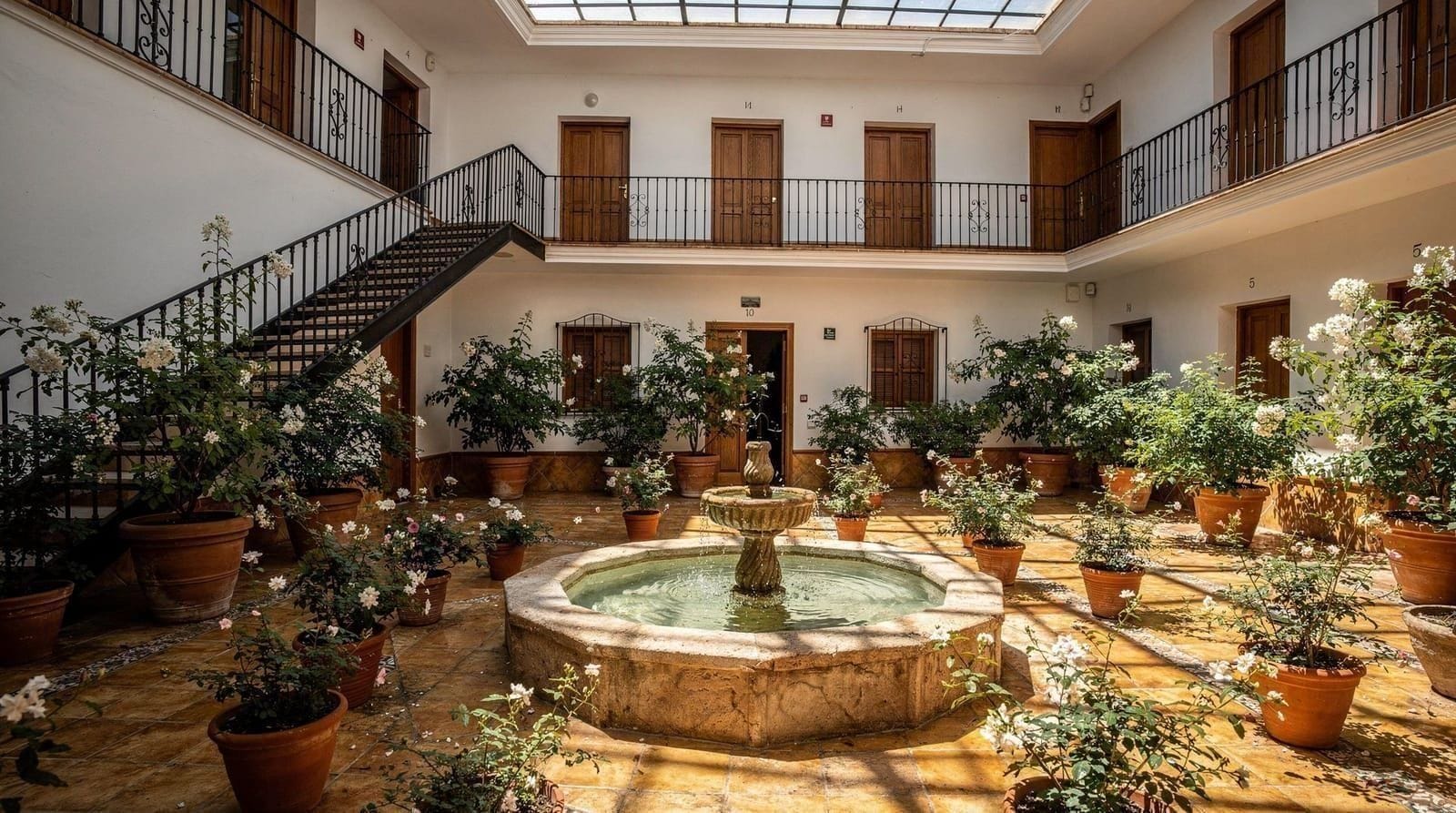
A few habits make the streets more rewarding. Look up: many of the buildings have wrought-iron balconies, tiled house numbers and patios glimpsed through gates, and the best details are often above eye level. Look through open doorways, where a tiled courtyard with a fountain often sits behind a plain white facade. Notice where the lane widens into a small plaza, because those spaces are where the old community gathered and where you will find the best shade and a bench. And do not follow the crowd: when a group of tourists funnels down one lane, the parallel lane is usually quieter and just as pretty.
Santa Cruz also rewards slowness. Stop for a coffee in a small plaza, let the groups pass, and then walk the same lane again. Because the streets bend and double back, the same corner looks different from each direction, which is part of why the neighbourhood photographs so well. If photography is a priority, the photography side of Seville is worth keeping in mind when you choose which hours to walk, since early light and quiet lanes make the biggest difference.
How much time Santa Cruz needs in a Seville itinerary
Because Santa Cruz sits directly against the Alcázar and Cathedral, most visitors experience it as a corridor rather than a destination — walking through on the way to or from the monuments. That undersells it. Give the neighborhood a dedicated hour or two beyond monument visits: an early-morning walk before the queues form, or a post-dinner wander when the day-trippers have left, reveals a different, quieter version of the same streets. For help fitting this into a broader schedule, see planning your Seville itinerary and how many days in Seville.
For ready-made routes that include the quarter, the Seville first-timer’s itinerary and the one-day Seville itinerary both put it in context. If safety on crowded streets is a worry, is Seville safe covers the practical side, and Seville common mistakes collects the errors first-time visitors repeat most often. Travellers who prefer a personal account can read the best neighbourhood to stay in Seville trip report.
Santa Cruz vs other neighborhoods for a Seville stay
Santa Cruz is convenient but heavily touristified. Triana and El Arenal offer better food and a more local atmosphere at slightly lower accommodation prices. For a comparison of all neighborhoods, see best neighborhoods in Seville and where to stay in Seville.
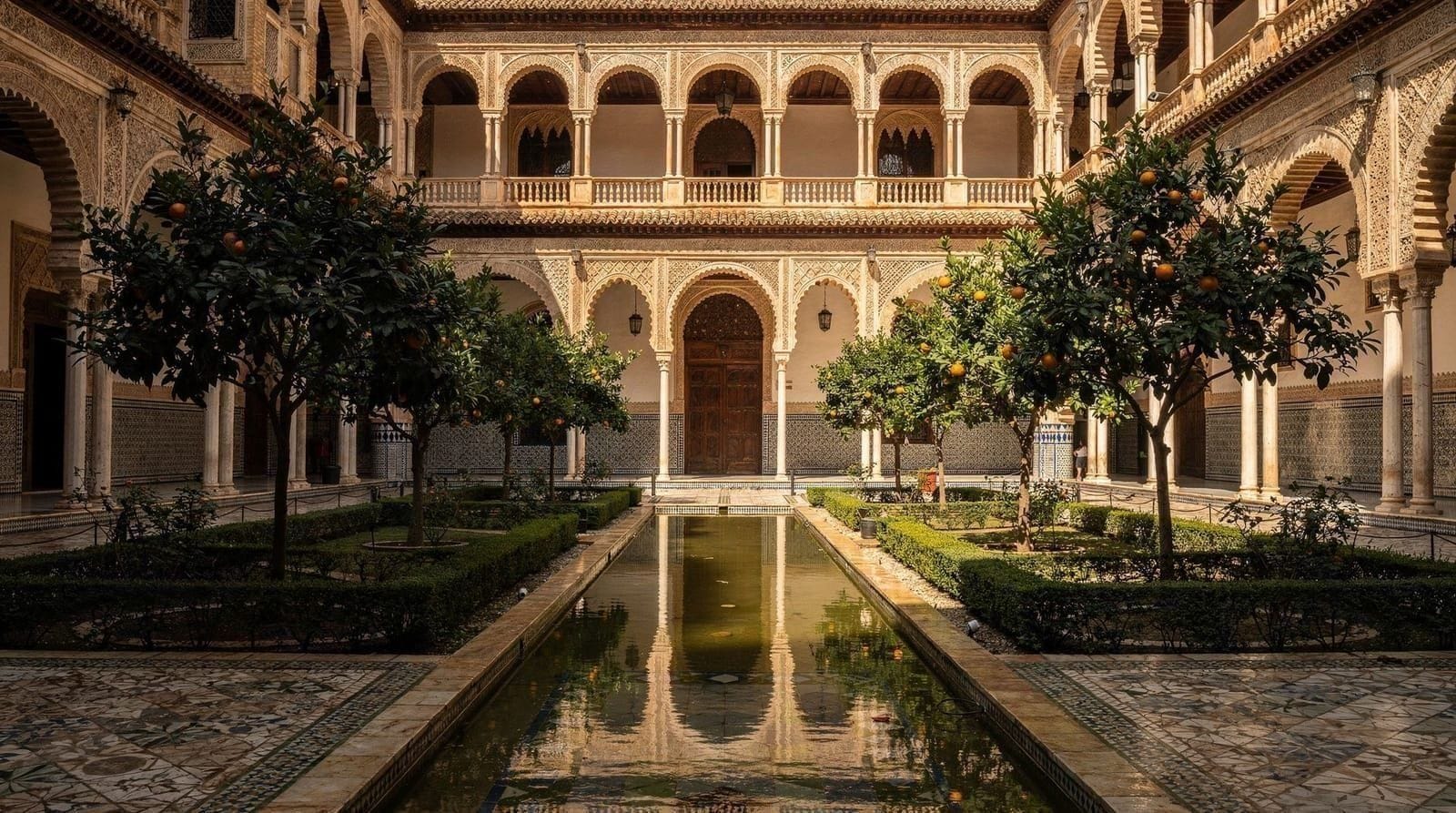
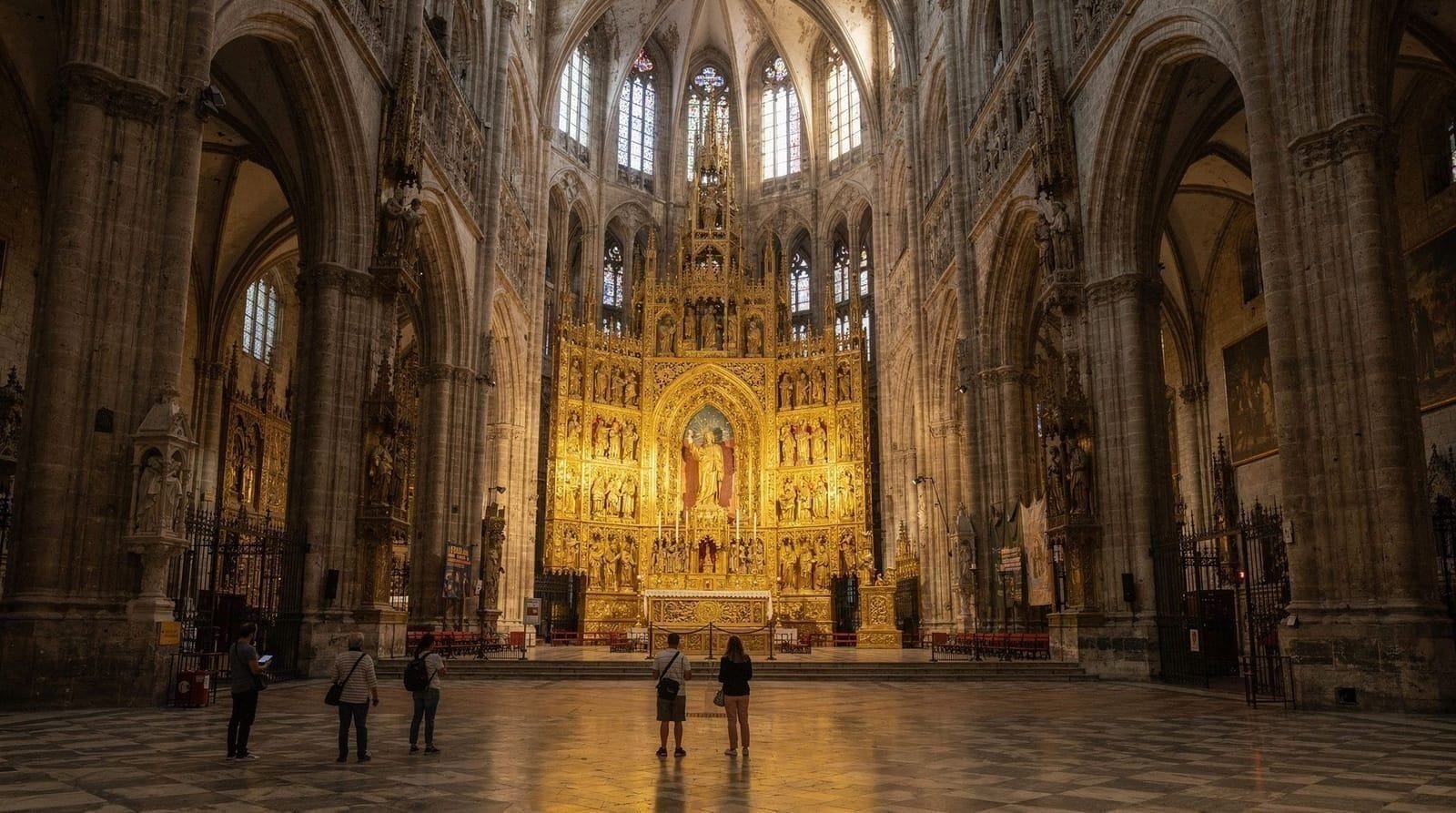
For the monuments adjacent to Santa Cruz — the Alcázar and Cathedral — see the Real Alcázar complete guide and the Seville Cathedral complete guide.
Top experiences
Bookable activities with verified prices and instant confirmation on GetYourGuide.