Best tapas in Seville: a guide to eating well without getting ripped off
Seville: Tastes, tapas and traditions food tour
Where are the best tapas bars in Seville?
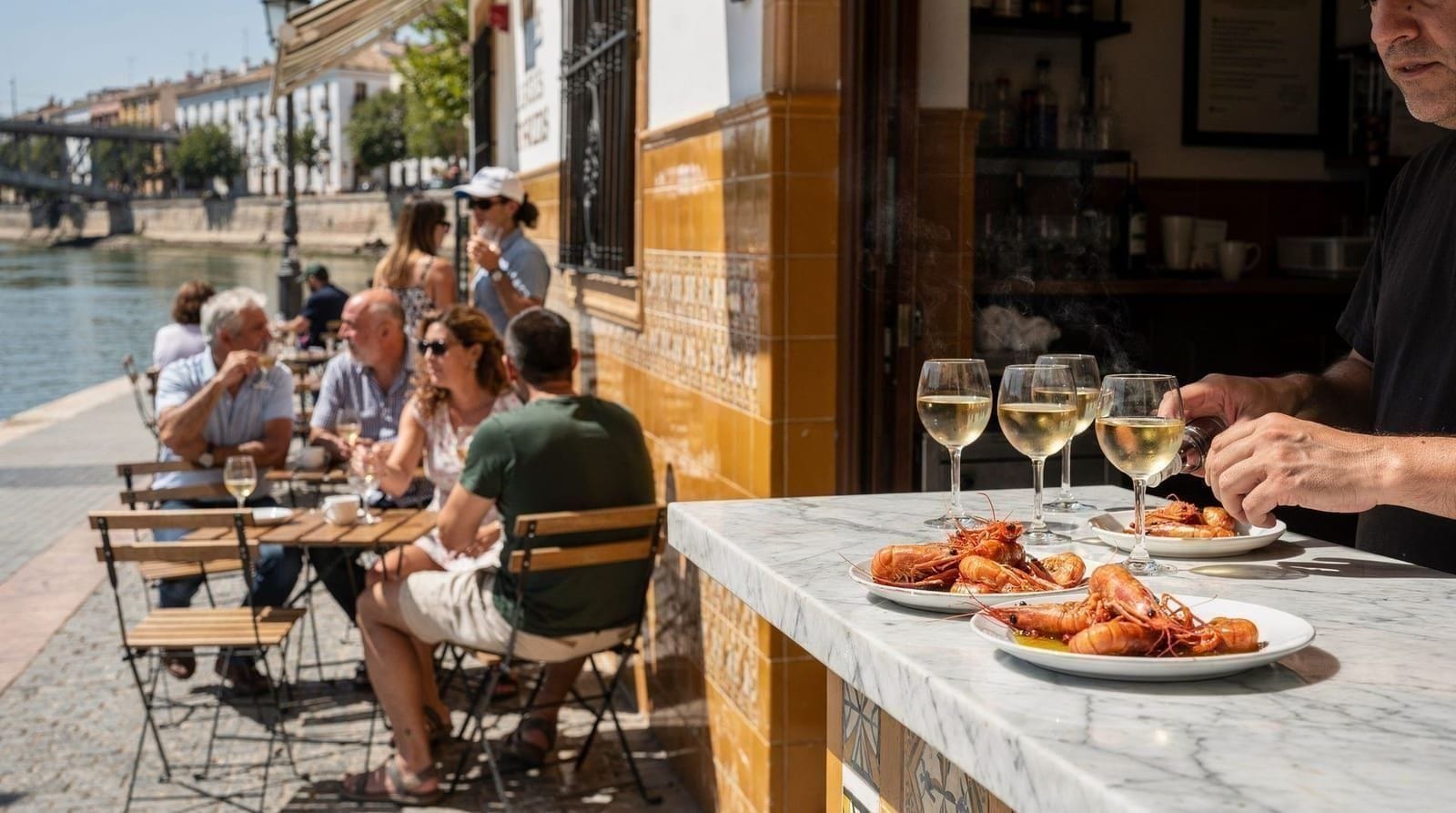
The best tapas in Seville are found at El Rinconcillo (founded 1670, Centro), Eslava (Alameda de Hércules, award-winning), La Brunilda (El Arenal), and Las Golondrinas (Triana). Always eat at the barra (bar counter) — the same dish costs 20-30% more on the terrace.
Seville has a stronger tapas culture than almost any other city in Spain, and it is also one of the easiest places in the country to eat badly if you make the wrong choices. The tourist restaurants around the Cathedral and the Alcázar serve mediocre food at inflated prices; the genuinely good bars are often unmarked, require knowing where to look, and operate on schedules that have nothing to do with when tourists want to eat.
This guide gives you specific bars, specific dishes, and specific strategies for eating well.
| Golden rule | Always eat at the barra (counter), not the terrace |
| Cost at the barra | Around €1.50-3/tapa, €18-22/person for a full evening |
| Top picks | El Rinconcillo, Eslava, La Brunilda, Las Golondrinas |
| Lunch tapas | Around 1-3:30pm |
| Evening tapas | Around 8:30-11pm |
| Avoid | Laminated photo menus, terrace paella, Calle Mateos Gago |
The barra rule: the most important thing to know
Before anything else: eat at the barra. The barra is the counter, the bar itself — the long stretch of wood or zinc where Sevillanos stand with a glass of fino sherry or cold beer and their tapas plates.
The terrace outside is for the view. The barra is for the price. In tourist areas, the same dish costs 20-30% more on the terrace table than at the counter. In old-school bodegas, the terrace premium can be even higher. The explanation is simple: tables require service, service requires labor, labor costs money. The barra is self-service in effect — you order from the barman directly, you stand with your drink, and the overhead is lower.
This is not a tip the tourist guides emphasize enough. It is the single most effective way to eat affordably in Seville’s Central and Santa Cruz neighborhoods.
There is also a social dimension: standing at the barra in a packed bar, ordering in rough Spanish, watching the staff chalk your order on the counter — this is how Sevillanos actually eat. The terrace is transactional; the barra is participatory.
The oldest tapas bar in Seville: El Rinconcillo
El Rinconcillo at Calle Gerona 40 (Centro, five minutes’ walk from the Cathedral) was founded in 1670. This is not marketing — the establishment genuinely traces its continuous operation to the 17th century, making it the oldest bar in Seville and one of the oldest in Spain.
The interior has been modified over three centuries but retains its essential character: dark wood, hand-written bills in chalk on the bar surface, barrels along the walls. The staff still tally your order on the wooden counter with chalk. The wine is poured from the barrel.
What to order here: the espinacas con garbanzos (spinach with chickpeas) is the standard recommendation and for good reason — the dish has Moorish origins (the combination of leafy greens with legumes and cumin is a North African template), and El Rinconcillo’s version has been refined over decades. The jamón ibérico montadito is reliable. The salmorejo is good.
What to expect: queues after 1:30 PM and after 9 PM. The bar fills quickly on weekends. Going at 1 PM or at 7:30 PM (before the local dinner rush) gives you a clear counter. Prices are fair but not cheap: this is a heritage establishment that knows its value.
Eslava: the award-winning bar near Alameda de Hércules
Eslava at Calle Eslava 3, in the neighborhood between La Macarena and Alameda de Hércules, has won the annual Seville tapas competition multiple times. This is not an exaggeration for marketing purposes — the bar’s recognition within Seville’s competitive tapas scene is genuine.
The food at Eslava is more creative than at El Rinconcillo or the old bodegas. Their signature tapa — a slow-cooked egg yolk with mushroom cream and jamón crisp on a small pastry base — recurs on the menu in various seasonal forms. The carrillada (pork cheek) and the croquetas (croquettes) are both consistently good.
The practical challenge: Eslava is small, it is well-known, and it does not take reservations for tapas (only for their adjacent restaurant, Eslava Restaurante). Queuing from 1:30 PM for the lunch service or arriving at 8:30 PM for dinner are the workable strategies. The neighborhood is 20 minutes’ walk from the Cathedral — most tourists do not make the trip, which is exactly why the crowd here is mostly Sevillanos.
Budget: €20-25 per person eating and drinking well.
La Brunilda: the El Arenal institution
La Brunilda at Calle Galera 5 in El Arenal has a queue outside most days between 1 PM and 3 PM. The bar is small, the reputation is large, and the tapas are creative without being pretentious. The anchoa (anchovy) on bread and the slow-cooked egg dishes are signature items.
El Arenal is the neighborhood between the Cathedral and the Guadalquivir river — more local than Santa Cruz, less off-the-tourist-track than Triana. La Brunilda occupies a useful middle position: accessible from the main sights, genuinely good food, mostly local clientele.
Arrive before 1 PM or after 3 PM to avoid the worst of the queue. The bar does not take reservations.
Bodega Santa Cruz “Las Columnas”: the Santa Cruz anchor
Bodega Santa Cruz at Calle Rodrigo Caro 1, in the heart of Santa Cruz, is the best tapas option in the immediate tourist area. It is perpetually busy, the staff move at high speed, and the barra pricing (versus the terrace) is meaningful here — this is exactly the kind of establishment where the pricing differential between standing and sitting is significant.
Reliable dishes: montaditos (particularly the anchovy and the pork), salmorejo, tortillita de camarones. The wine list is basic but appropriate — house wine by the glass or cold beer.
The honest assessment: Bodega Santa Cruz is good but not exceptional. It is, however, the least bad option in an area where most competitors are worse. If you are staying in Santa Cruz and want a quick tapas lunch without walking 20 minutes to Triana, this is the right call.
Casa Morales: 19th-century bodega near the Cathedral
Casa Morales at Calle García de Vinuesa 11 (a five-minute walk from the Cathedral, toward El Arenal) is a 19th-century wine bodega that still operates as one. The sherry barrels along the walls are not decorative — they hold the wine. The interior has barely changed in a century.
The food is traditional and adequate rather than remarkable. What makes Casa Morales worth a visit is the space itself: the combination of wine-from-the-barrel service, the antique shelves, and the atmosphere of an establishment that has been doing the same thing for 150 years. Order a glass of manzanilla or fino sherry and the house croquetas.
Las Golondrinas: the Triana reference
Las Golondrinas in Triana — on Calle Antillano Campos — is the bar that local food guides invariably cite as the quintessential Triana tapas experience. It is small, it fills quickly at lunch, and the food is reliably good without creative flourishes.
The prawns (gambas al ajillo — garlic shrimp) and the pescaíto frito (mixed fried fish) are the things to order here. The wine is priced for locals. The neighborhood — Triana, across the Guadalquivir from the city center — means the crowd is predominantly Sevillano rather than tourist.
Getting here: 15 minutes’ walk from the Cathedral across the Triana bridge (Puente de Isabel II), or a short bus ride on line 3.
Bodega Dos de Mayo: the Alameda locals’ choice
Near the Alameda de Hércules, Bodega Dos de Mayo is the kind of bar that locals recommend to each other rather than in guidebooks. The prices reflect this: a glass of wine runs €1.50-2, tapas are €1.80-2.50.
The food is traditional bodega fare — jamón, cheese, olives, montaditos — served without ceremony. The space is relaxed and the clientele is almost entirely Sevillano. It is ten minutes’ walk from El Rinconcillo and pairs well with it as a first stop on an evening tapas route through the Centro and Alameda neighborhoods.
What to order: the Seville tapas canon
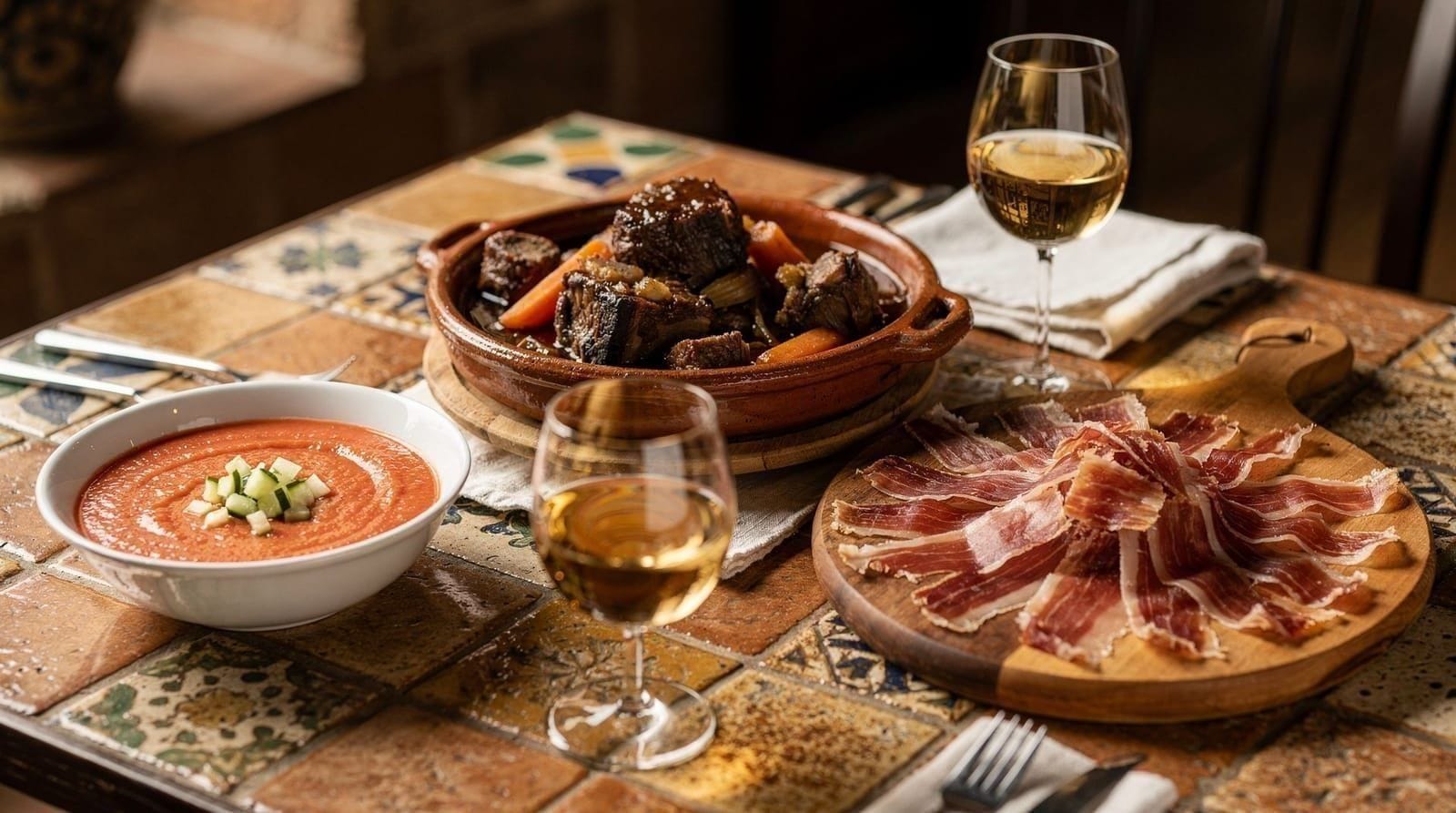
Salmorejo: Seville’s own cold tomato soup, thicker and richer than gazpacho (which is from Córdoba and Almería). Made with tomatoes, bread, garlic, olive oil, and vinegar, topped with hard-boiled egg and jamón. Essential.
Espinacas con garbanzos: Spinach with chickpeas, cumin, and paprika. A legacy of Moorish Seville that has never disappeared from the city’s menus. The best versions use genuinely fresh spinach and proper chickpeas; the worst are from a can.
Carrillada: Slow-braised pork cheek in wine sauce. Rich, yielding, better in autumn and winter when the slow-cooking tradition is at its peak.
Tortillita de camarones: A crispy shrimp fritter made with chickpea flour and tiny transparent shrimp from the Bay of Cádiz. Originated in Cádiz but ubiquitous in Seville’s better tapas bars. Order it at the barra — it tastes better fresh from the fryer.
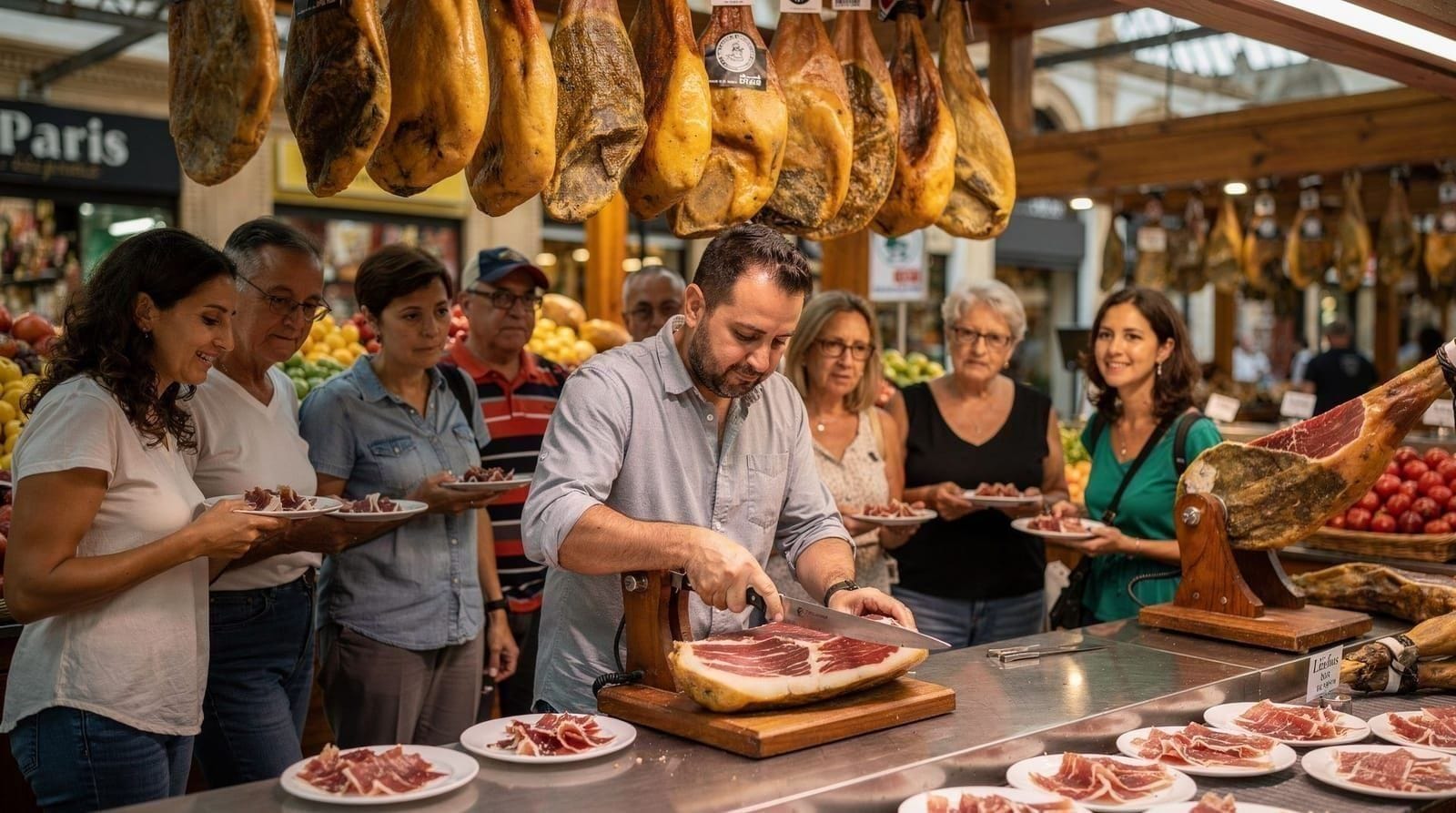
Jamón ibérico: Iberian ham from pigs raised on acorns in Extremadura and the Huelva hills. Not a Seville dish specifically but one of Spain’s best products, and Seville is among the best places in the country to eat it. The quality difference between jamón ibérico de bellota (acorn-fed) and standard jamón serrano is significant and worth paying for.
Croquetas: Fried béchamel croquettes with jamón or bacalao (salt cod). The texture test: good croquetas are crisp outside and molten inside. Mediocre ones are dense throughout or overbreaded.
Montadito: A small open-faced sandwich. Best versions at old bodegas: jamón, anchovy, cheese, or combinations. Cheap, filling, and genuinely good when the bread is fresh and the toppings are quality.
Seville ultimate food tour — 4-5 bars, food and drinks included, local guideWhat to avoid: the tourist trap restaurants
The restaurants immediately surrounding the Cathedral and the Alcázar operate on a simple model: high foot traffic, low repeat customers, inflated prices, mediocre food. The tells are reliable:
Laminated menus with photos. Any restaurant displaying a laminated menu with photographs of dishes is signaling that it does not expect customers to return or to know better. Genuine tapas bars have chalkboard menus or verbal offerings.
English menus only at the door. A bar with no Spanish menu at the entrance is not targeting Sevillanos.
Paella as a local specialty. Paella is Valencian. Any restaurant in Seville that promotes paella as a regional dish is either confused or exploiting tourist ignorance. A genuine Seville rice dish exists (arroz con camarones) but it is rarely seen in tourist restaurants.
Terrace pressure. A waiter who steers you firmly toward a terrace table rather than the barra is working for the restaurant’s margin, not your satisfaction.
The streets to approach with particular caution: Calle Mateos Gago (running from the Cathedral toward Santa Cruz), the immediate streets around Plaza del Triunfo, and the stretch of bars on Calle Alemanes.
Tapas food tours: when they make sense
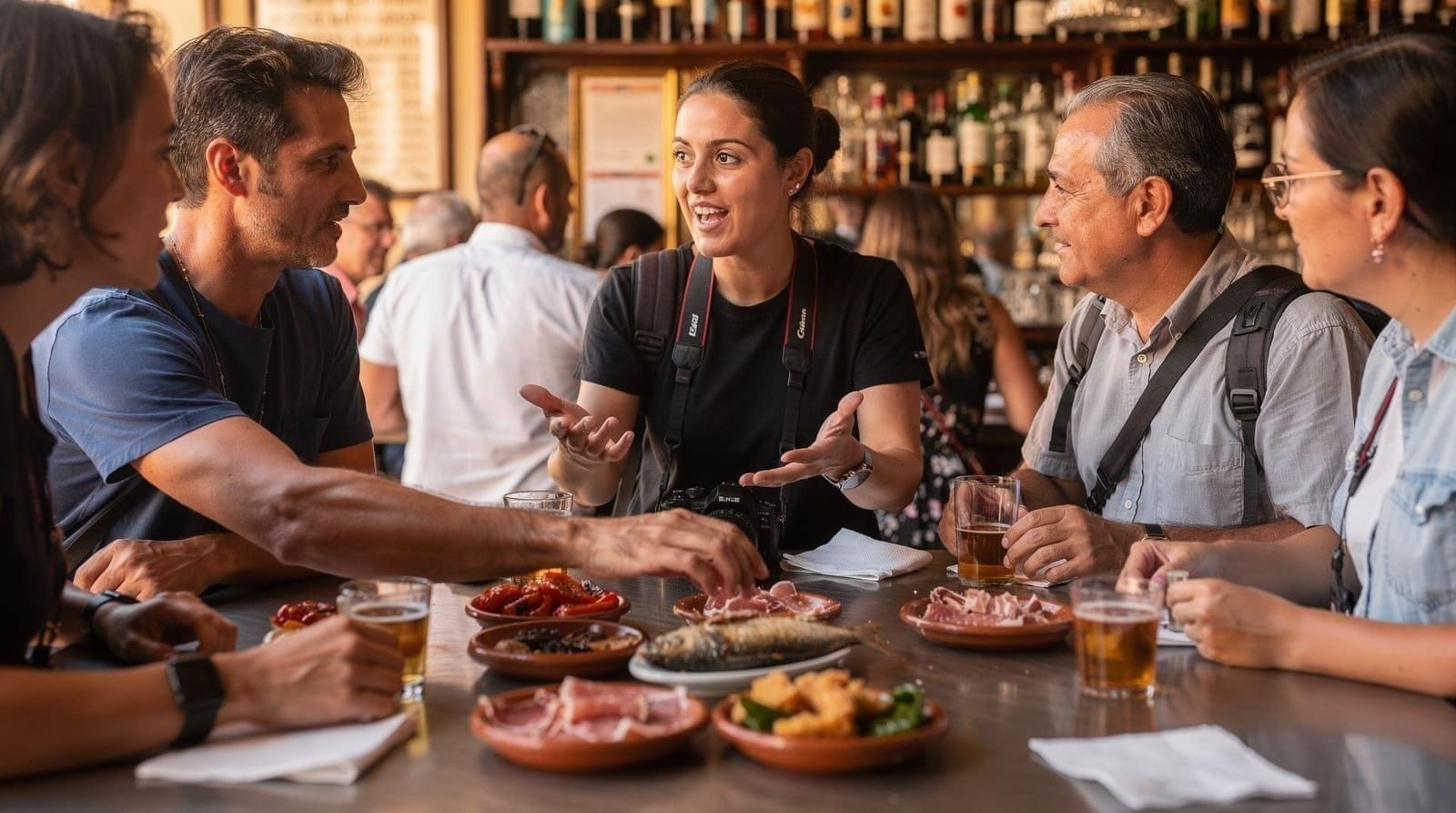
A guided tapas tour solves specific problems: navigation in unfamiliar streets, language barrier at the barra, and the social dynamic of walking alone into a packed Spanish bar. The best tours visit 4-5 establishments over 3 hours, include food and drinks, and go to bars that are not on the tourist circuit.
Tapas and taverns history walking tour — historical context with the eatingThe honest cost analysis: a good food tour costs €65-85 per person. Eating the same amount of food and drink independently at quality bars costs €30-40. You pay the premium for navigation, curation, and company. It is worth the premium on a first visit; probably not on a second.
For a detailed comparison of the available food tour options, see the Seville tapas tours compared guide.
Evening tapas route: a suggested sequence
A practical evening route from the Cathedral area to Triana takes approximately 3 hours and covers the range of tapas Seville:
Stop 1 (8 PM): Casa Morales — glass of sherry, jamón montadito. Historical interior, warm up with sherry culture.
Stop 2 (8:45 PM): La Brunilda — creative tapas, the egg dish or the anchovy. El Arenal neighborhood.
Stop 3 (9:30 PM): Cross the Triana bridge. Las Golondrinas — pescaíto frito and gambas. The bridge walk takes 10 minutes and the river at night is worth the detour.
Stop 4 (10:15 PM): El Mercado de Triana area — a glass of wine at one of the informal bars around the covered market before heading back.
Total food spend at the barra: €20-25 per person. Total distance: approximately 2.5 km.
For more on Triana’s tapas scene specifically, see best tapas bars in Triana and the Triana neighborhood guide.
Food tour with tapas, drinks, and local guide — evening formatThe essential bars at a glance
| Bar | Neighborhood | Signature dish | Budget/person |
|---|---|---|---|
| El Rinconcillo | Centro | Espinacas con garbanzos | €20-25 |
| Eslava | Alameda de Hércules | Slow-cooked egg yolk tapa | €20-25 |
| La Brunilda | El Arenal | Anchoa on bread | €20-25 |
| Las Golondrinas | Triana | Pescaíto frito, gambas al ajillo | €15-18 |
| Bodega Santa Cruz | Santa Cruz | Montaditos, salmorejo | €15-20 |
| Casa Morales | Near Cathedral | Sherry from the barrel, croquetas | €15-20 |
| Bodega Dos de Mayo | Alameda | Jamón, cheese, montaditos | €12-15 |
Tapa, media ración, or ración: how much to order
Deciding portion size trips up a lot of first-time visitors. A tapa is a small taste, usually a single bite or two, priced €1.50-3 — the format is built for ordering several different dishes across a meal. A media ración (half-ration) is roughly double a tapa and often the sweet spot for sharing between two people. A full ración is a proper plate, meant as a shared main rather than a taste, and runs €6-12. The common mistake is ordering full raciones as if at a restaurant and ending up with far more food than intended; start with tapas, and only step up to a media ración for something you clearly want more of.
Vegetarian and vegetarian-adjacent tapas in Seville
Seville’s tapas canon leans heavily on jamón and fried fish, but it is not a vegetarian dead end. Espinacas con garbanzos is naturally vegetarian and appears on nearly every traditional menu. Salmorejo is typically vegetarian unless topped with jamón (ask for it without). Patatas bravas, pimientos de padrón (fried green peppers, occasionally spicy), berenjenas con miel (fried aubergine with cane honey), and tortilla española (potato omelette) are all reliably available at old-school bodegas as well as newer bars. For a fuller rundown including vegan-specific options, see the vegetarian and vegan Seville guide.
Pairing tapas with wine and sherry
Seville sits close enough to Jerez de la Frontera that sherry (jerez) is a natural pairing rather than a novelty. Fino and manzanilla — both dry, pale sherries served chilled — are the traditional match for fried fish and jamón; Casa Morales and Casa Cuesta in Triana both pour from the barrel at correct, non-inflated prices. House red or white wine by the glass runs around €2-3 at the barra almost everywhere covered here. For a deeper dive into sherry styles and where to taste them properly, the sherry guide to Andalusia and sherry tasting in Seville cover the full range beyond what a tapas bar pours by the glass.
Where tapas fits into your Seville days
If you’re building a full itinerary rather than picking single bars, tapas naturally slots around monument visits: a barra lunch after the Real Alcázar or Cathedral, and an evening route through Centro, Alameda, or Triana once the museums close. See how many days in Seville for how much time this realistically needs, and where to eat in Seville for the fuller restaurant picture beyond tapas bars specifically.
Frequently asked questions about Best tapas in Seville
What are the most famous tapas bars in Seville?
El Rinconcillo (Calle Gerona 40, founded 1670) is the oldest bar in Seville and still worth visiting. Eslava (Calle Eslava 3, near Alameda de Hércules) won best tapas in Seville multiple times. La Brunilda (Calle Galera 5, El Arenal) draws long queues. Bodega Santa Cruz Las Columnas (Calle Rodrigo Caro 1, Santa Cruz) is perpetually packed. Casa Morales (Calle García de Vinuesa 11, near Cathedral) has a 19th-century interior worth seeing.What tapas dishes should I order in Seville?
Seville specialties to order: espinacas con garbanzos (spinach and chickpeas, a Moorish legacy), salmorejo (thick cold tomato soup richer than gazpacho), carrillada (slow-braised pork cheek), tortillita de camarones (shrimp fritter, Cádiz origin but everywhere in Seville), montadito de jamón ibérico (bread with Iberian ham), and pescaíto frito (fried fish from the Cádiz coast). Avoid ordering paella as a Seville dish — it is Valencian and tourist menus use it to inflate prices.How much should tapas cost in Seville?
At a bar counter (barra) in a non-tourist area: €1.50–3 per tapa. In Santa Cruz or near the Cathedral at a terrace table: the same dish runs €4–6. A full evening eating and drinking at the barra with 3-4 tapas and wine runs €18–22 per person. If a menu outside shows photos of food, walk away — that is a universal signal of a tourist trap in southern Spain.When do locals eat tapas in Seville?
Tapas culture in Seville divides into two sessions: lunch tapas from 1–3:30 PM (the main meal of the day) and evening tapas from 8:30–11 PM. Bars open around noon but the real crowds arrive at 1 PM for lunch and 9 PM for dinner. Eating at 7 PM is fine for tourists but will mean an empty room — which is not necessarily a problem, just unusual.Which Seville neighborhoods have the best tapas?
Triana (across the river) has the highest density of local tapas bars with the lowest tourist markup. The Alameda de Hércules area (Macarena) is where Sevillanos go for quality and creativity, including Eslava. El Arenal has mid-range options with La Brunilda as the star. Santa Cruz is convenient but heavily touristified — the good bars are there (Bodega Santa Cruz, Casa Morales) but you must pick carefully.Is there a free tapas with drinks tradition in Seville?
Seville does not have a systematic free-tapas-with-drinks tradition the way Granada does. Some old-school bars still bring a small free tapa with beer (El Rinconcillo sometimes does this) but it is not standard. What you do get in Seville is good value at the barra, where ordering at the counter rather than a table saves significantly on the total bill.What is the difference between a tapa, ración, and montadito?
A tapa is a small portion, traditionally a single serving or a few bites (€1.50–3). A ración (or media ración) is a full plate of the same dish, meant for sharing, at €6–12. A montadito is a small open sandwich on a bread slice — bread is used as a delivery vehicle for ham, cheese, anchovies, or other ingredients. In Seville's bodegas and old tapas bars, montaditos are a staple and excellent value.Are tapas food tours worth it in Seville?
A good tapas food tour solves three problems: finding the right bars in unfamiliar streets, knowing what to order, and getting access to local spots that are harder to walk into alone. The best tours go to 4-5 bars over 3 hours and include food and drinks. They cost €60-85 per person — more than eating alone, but you eat better and learn more. See the guide on tapas tours compared for specific options.Can vegetarians eat well at Seville's traditional tapas bars?
Yes, though it takes some navigating since the canon leans on jamón and fried fish. Espinacas con garbanzos, salmorejo (ask for no jamón topping), patatas bravas, pimientos de padrón, berenjenas con miel, and tortilla española are widely available at traditional bodegas, not just modern restaurants. Confirming ingredients at the barra is normal practice, not an imposition.What's the best sherry to pair with tapas in Seville?
Fino and manzanilla — both dry, pale, chilled sherries — are the classic pairing for jamón and fried fish, and are what old bodegas like Casa Morales and Casa Cuesta pour from the barrel. Sweeter styles like Pedro Ximénez are usually reserved for dessert rather than the main tapas course.
Top experiences
Bookable activities with verified prices and instant confirmation on GetYourGuide.