Triana neighborhood guide: Seville's most authentic quarter across the river
Seville: Tiny-group Triana neighborhood walking tour
What is the Triana neighborhood in Seville?
Triana is the neighborhood on the west bank of the Guadalquivir, connected to the old city by the Triana bridge. It is Seville's most characterful and least touristified central neighborhood — the home of flamenco, ceramics, and the Mercado de Triana. 15-20 minutes' walk from the Cathedral.
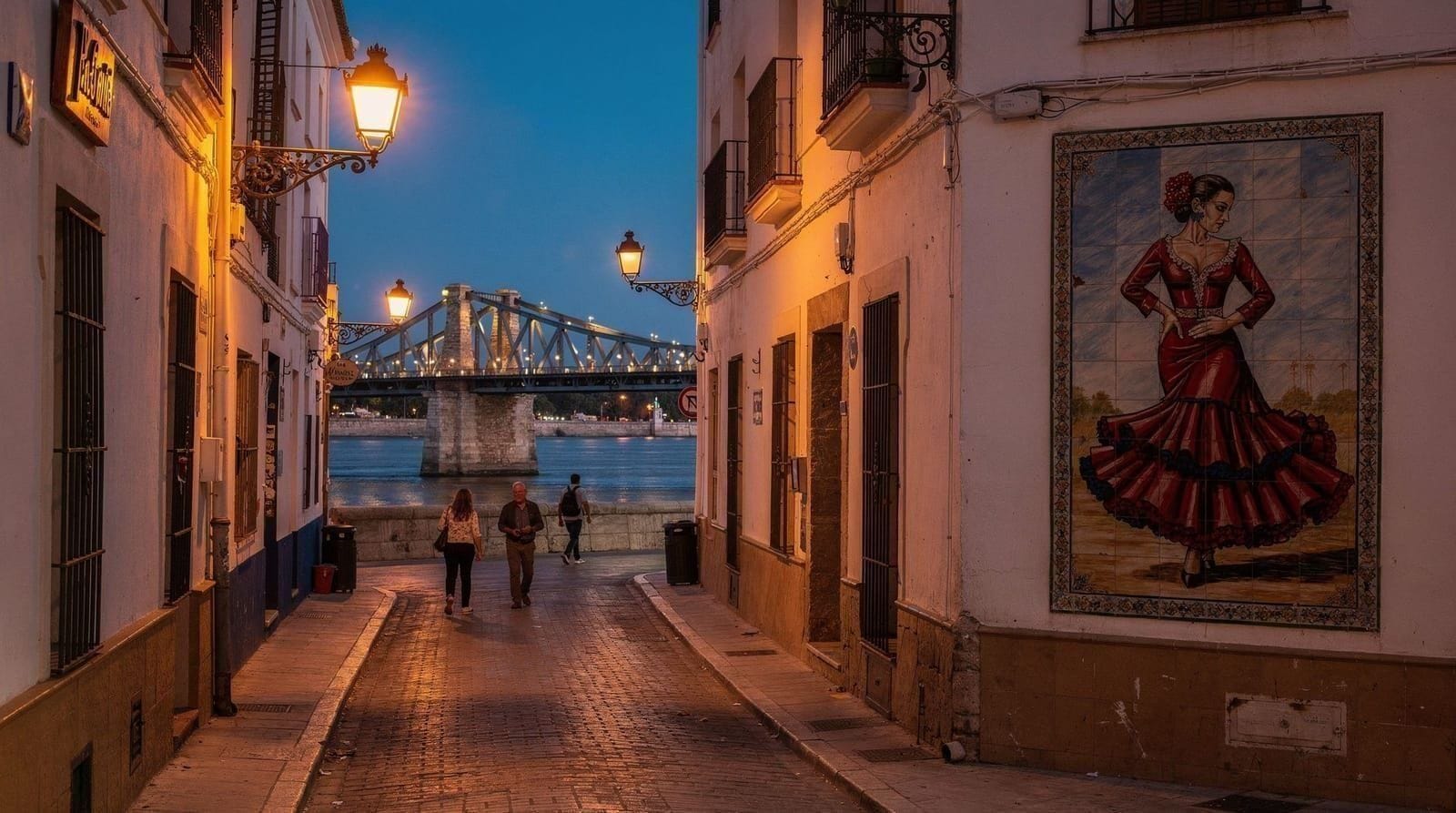
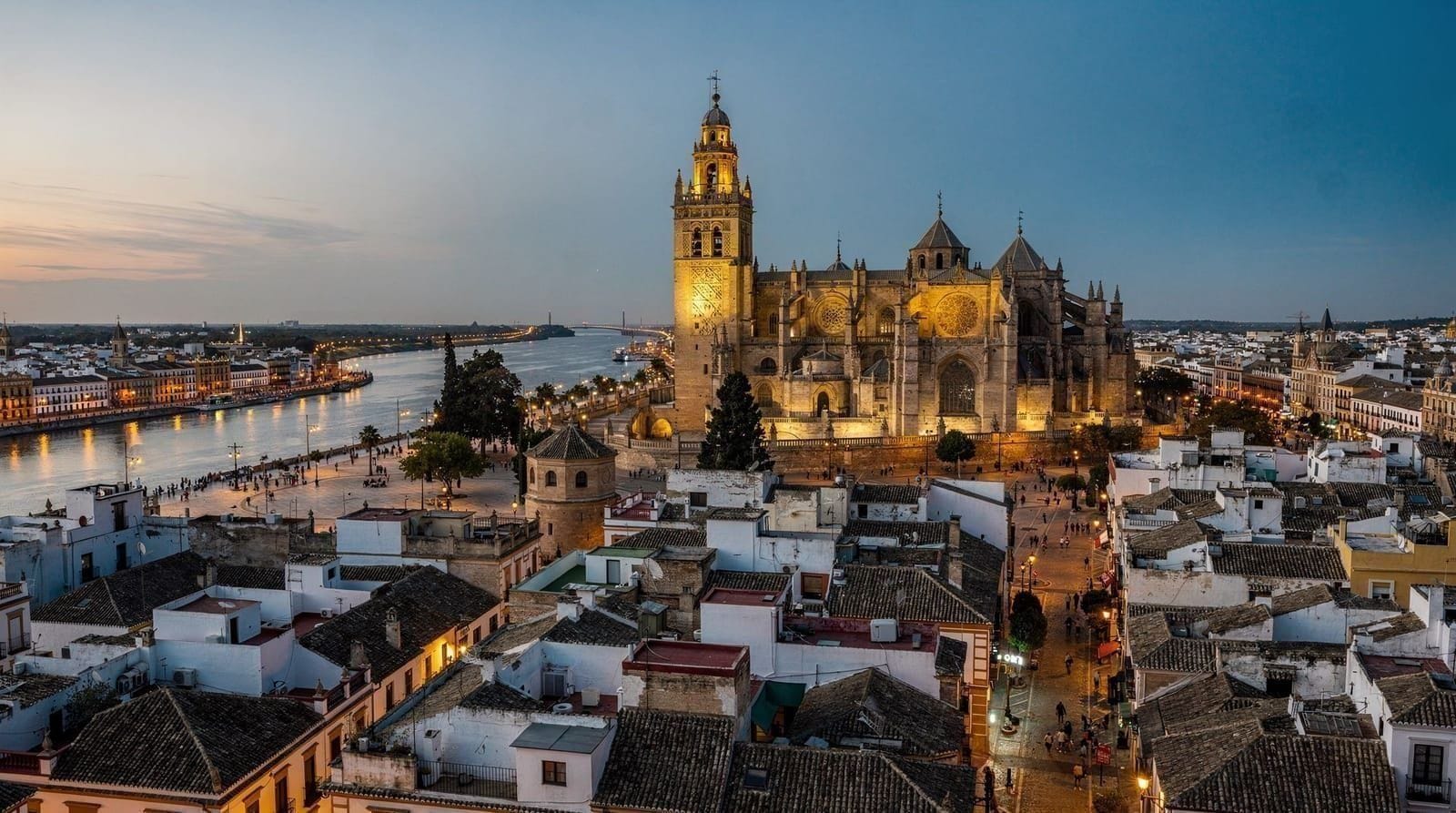
Triana sits on the west bank of the Guadalquivir, separated from the old city by the river and connected to it by the Puente de Isabel II. This geographical separation — the river as a boundary — has given Triana a distinct identity for centuries. It is simultaneously a part of Seville and its own thing: a neighborhood with a strong local identity, its own patron saints, its own flamenco tradition, and a social culture that looks inward (toward the neighborhood) rather than outward (toward the tourist city).
The result is the most authentic neighborhood experience available within easy walking distance of Seville’s main monuments.
| From the Cathedral | 15-20 minutes on foot |
| Known for | Ceramics, flamenco roots, the Mercado de Triana |
| Best time to explore | Morning through early afternoon |
| Quietest hours | Roughly 3-5pm, neighborhood siesta |
| Good for | A local base, cheaper eating, an evening flamenco show |
Why Triana is different from Santa Cruz
Santa Cruz is where the monuments are and where the tourists stay. Triana has no major monument — the Castillo de San Jorge, whose foundations form the base of the Mercado de Triana, was demolished in 1823. What Triana has is a working neighborhood: families who have lived here for generations, a covered market that serves the neighborhood rather than tourists, ceramics workshops that have operated on the same streets since the Moorish period, and a tapas bar culture where the prices reflect what a Sevillano is willing to pay.
The difference is visible immediately on arrival: the Triana side of the bridge has no obvious tourist infrastructure. There are no souvenir shops at the foot of the bridge, no restaurant barkers, no laminated menus with photographs. There are neighborhood residents going about their day, the market opening, the ceramic workshops with their workshop smells of clay and glaze.
The history: fishing village, pottery quarter, flamenco birthplace
Triana’s origin is as a working-class neighborhood across the river from the walled city. The Almohad rulers positioned potters (alfareros) on this side of the river because the kilns were a fire risk; the ceramics industry became the neighborhood’s economic foundation.
The fishing community (Triana’s residents were also fishermen on the Guadalquivir) and the ceramics workers created a social mix that later attracted Romani (Gitano) families in the 16th and 17th centuries. The Romani community brought their musical traditions; the interaction of Romani song with the religious and secular music of the neighborhood’s Catholic culture produced what is now recognized as Triana flamenco — one of the two major historical styles of flamenco (alongside the Jerez tradition).
The Castillo de San Jorge was the seat of the Seville Inquisition from 1481 to 1820. It stood at the foot of the Triana bridge, on the site now occupied by the Mercado de Triana. The castle’s presence — and its role in enforcing religious conformity — shaped the neighborhood’s relationship with authority for three centuries.
What to see in Triana
The Mercado de Triana
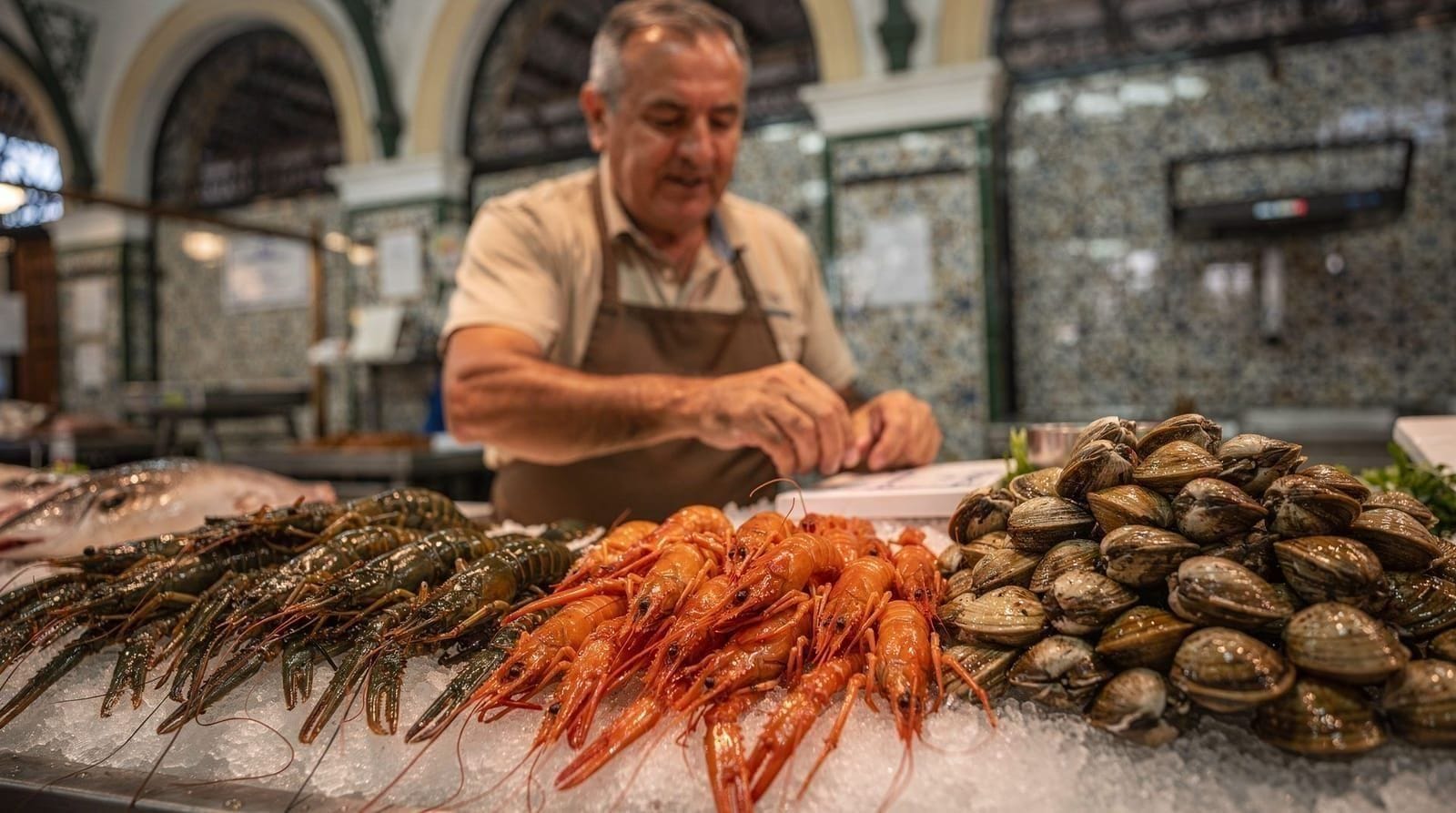
The covered market on Plaza del Altozano is simultaneously a working neighborhood food market, a ceramics shopping center, and one of the best places to eat breakfast or lunch in Seville. The lower level contains the excavated remains of the Castillo de San Jorge, with an archaeological exhibition whose opening varies; ask at the Visita Sevilla tourist information desk in the lobby.
Tuesday-Saturday mornings are the best time to visit. See the Triana market food guide for full coverage of the market’s food and shopping options.
Calle Alfarería and the ceramic workshops
Calle Alfarería (Pottery Street) runs through the heart of Triana and is still home to active ceramic workshops. The street name is several centuries old; the workshops on it continue the tradition of producing Triana’s distinctive azulejo tiles.
Walking this street and the adjacent ceramics quarter is the best way to understand Triana’s industrial history. Several workshops are visible from the street — the smell of clay and the sound of turning wheels are authentic, not staged.
Buying ceramics in Triana: the quality is generally higher and the prices more honest than the souvenir shops in Santa Cruz. Look for hand-painted pieces with visible brush variation; machine-printed tiles have uniform color and perfectly sharp lines. A hand-painted plate runs €10-25; small tiles for gifts run €3-8.
The Triana flamenco tradition
Triana produced some of the most significant flamenco artists in history, including the Ortega family (Cañero) in the 19th century. The neighborhood’s flamenco tradition is distinct from the tablao tourist experience: it emerged from domestic and barrio (neighborhood) music-making rather than from performance.
Flamenco show in Triana — traditional tablao with Triana-style performanceThe Centro Cultural Flamenco in Triana offers an introduction to the neighborhood’s specific flamenco heritage. A genuine Triana flamenco show differs from generic tourist tablaos in emphasis: the Triana style uses a particular rhythmic structure and the performers are typically connected to the neighborhood’s musical families.
For the full picture of flamenco options in Seville, see the flamenco in Triana guide.
The Triana bridge (Puente de Isabel II)
The bridge connecting Triana to El Arenal was built in 1852 — Seville’s first iron bridge and the first major iron bridge in Spain. Walking across it offers the best view of the Guadalquivir at the historic point where the river bends, with the Torre del Oro visible to the south and the city’s skyline to the east.
The bridge at sunset is one of Seville’s better free experiences.
Church of Santa Ana
Founded in 1276, the Church of Santa Ana (on Calle Pureza in Triana) is the oldest parish church in Seville. It predates most of the surviving buildings in the city center. The Gothic structure has been modified over centuries but retains significant original elements. Entrance is free; the interior is modest by Seville cathedral standards but historically significant.
Calle Betis: the riverside strip
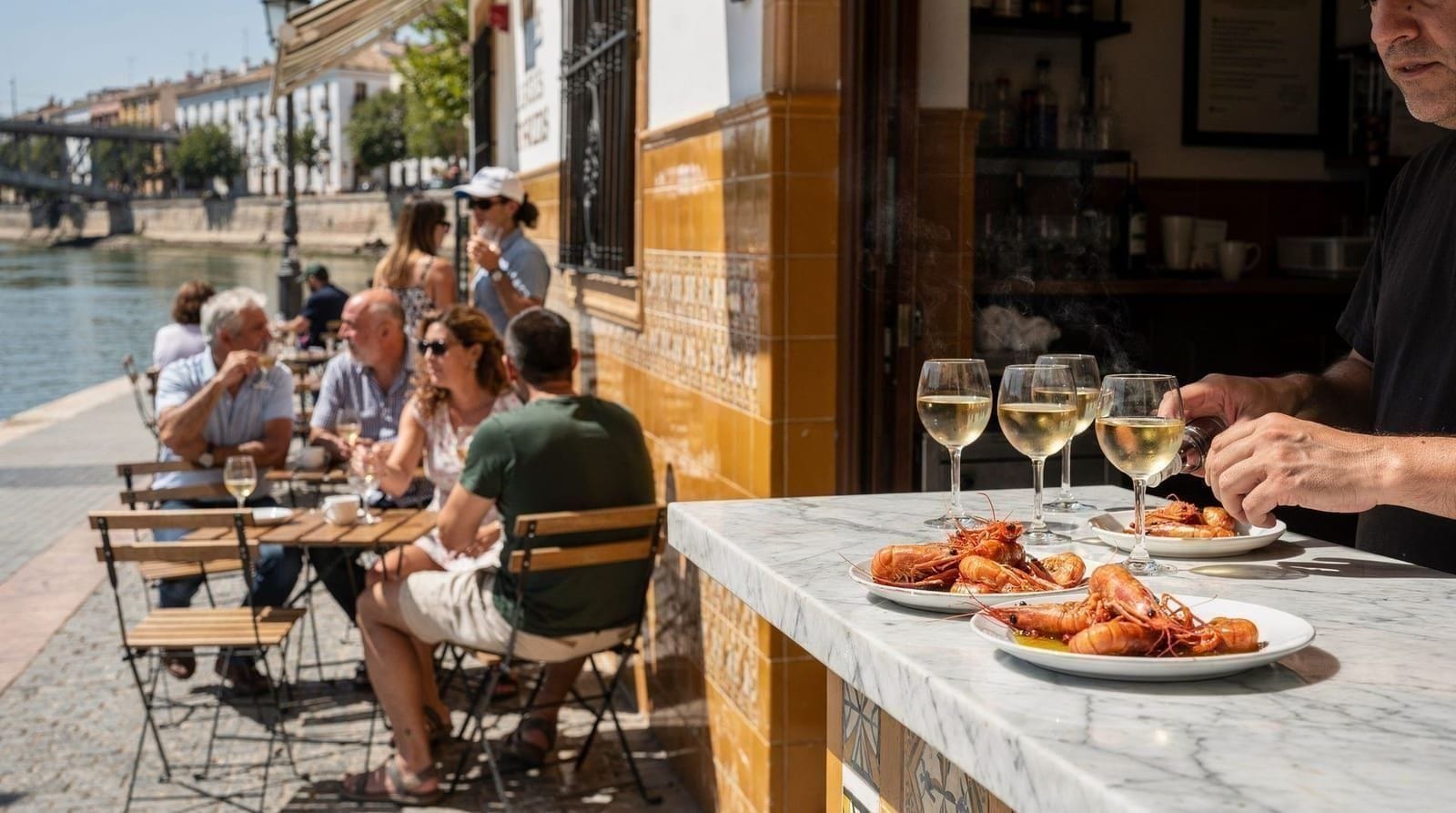
Calle Betis runs along the Triana riverbank facing the Seville city center. The bars here have outdoor terraces with direct views of the Torre del Oro and the Giralda. The food is mid-range and the atmosphere is scenic rather than gastronomically serious. Good for evening drinks and the view; not the best tapas in Triana.
Eating in Triana
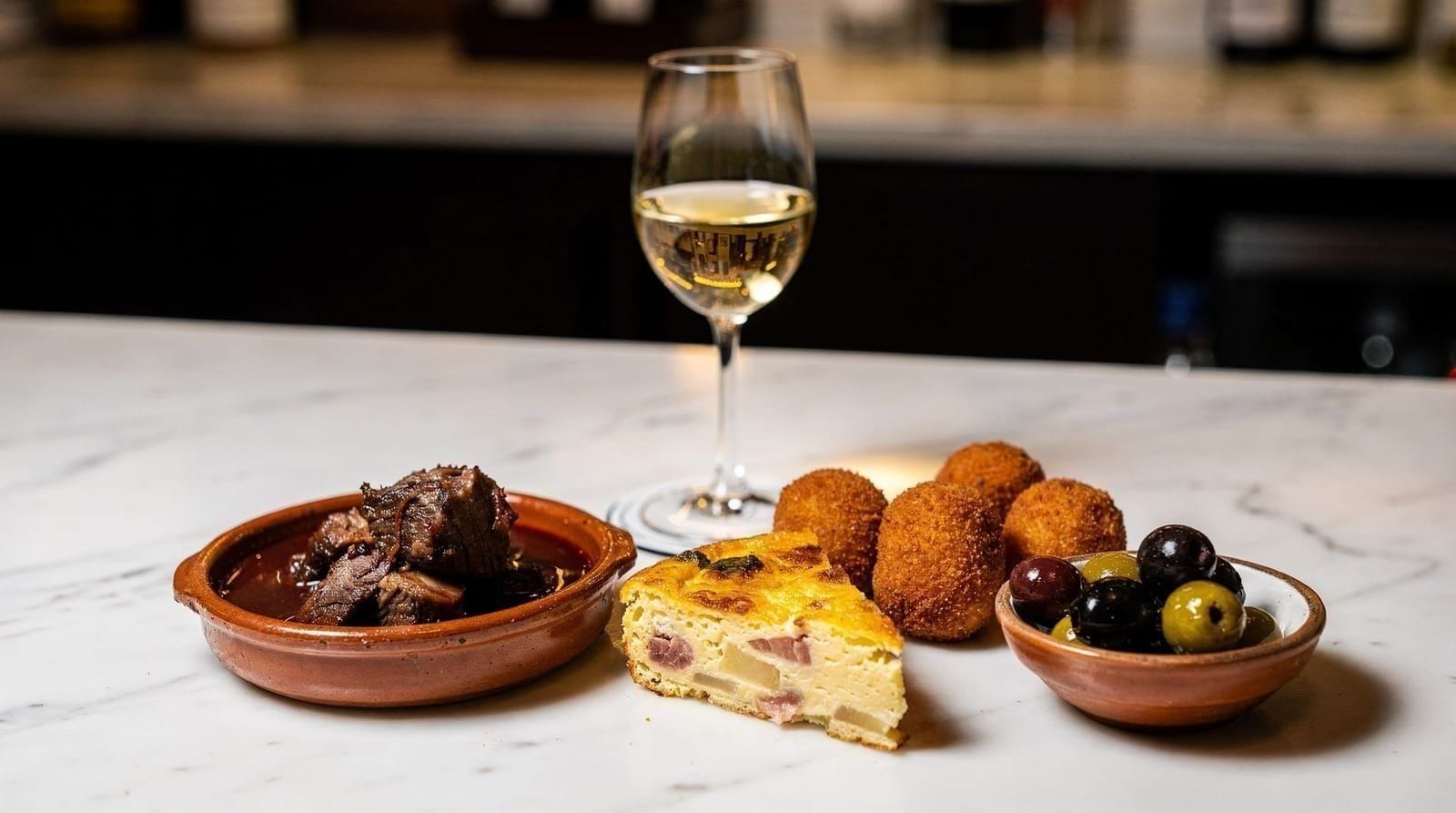
Triana has the best ratio of food quality to price in central Seville. The neighborhood’s distance from the main tourist areas means bars price for local customers rather than visiting ones.
Las Golondrinas (Calle Antillano Campos) is the reference tapas bar. Casa Cuesta (Calle Castilla) is the historic bodega. The Mercado de Triana bars serve market-fresh fish from Tuesday to Saturday mornings. See the best tapas bars in Triana guide for full coverage.
Triana market tour with tastings — guided walk combining market visit with foodStaying in Triana
Triana is an excellent base for visitors who want a more local experience and do not need to be steps from the Alcázar and Cathedral. The Puente de Isabel II takes 5 minutes to cross on foot; from the Triana side, the old city monuments are 20 minutes’ walk.
Accommodation options in Triana are more limited than in Santa Cruz or El Arenal, and tend toward apartments and small boutique hotels rather than large hotels. The price level is generally lower than Santa Cruz for equivalent quality.
The neighborhood is quieter at night than Santa Cruz (less tourist traffic) but has its own active bar scene around the Mercado de Triana and on Calle Betis.
For a comparison of Triana against other neighborhoods for a base, see where to stay in Seville and best neighborhoods in Seville.
A suggested day in Triana
Morning (9-11 AM): Cross the Triana bridge. Stop for breakfast at one of the Mercado de Triana bars — tostada con tomate, coffee, at the counter. Walk through the market stalls (produce, fish, ceramics).
Mid-morning (11 AM-1 PM): Walk Calle Alfarería and the ceramics quarter. Visit the Castillo de San Jorge archaeological museum in the market basement (30-40 minutes if open; check at the lobby tourist desk first).
Lunch (1-3 PM): Las Golondrinas for tapas at the barra, or Casa Cuesta for a longer lunch with wine.
Afternoon (3-6 PM): The afternoon siesta period in Triana is genuine — the neighborhood quiets significantly between 3 and 5 PM. Either rest or walk to the Church of Santa Ana and the surrounding streets.
Evening (7-10 PM): Drinks on Calle Betis for the view and light tapas. Then a flamenco show at one of the Triana venues (book in advance).
Tiny-group Triana walking tour — small group, covers neighborhood highlightsFor more context on how Triana fits into Seville as a whole, see the best neighborhoods in Seville guide.
Pairing Triana with the rest of your trip
Triana works best as a counterweight to the monument-heavy days. If you have spent a morning queuing at the Alcázar or the Cathedral, an afternoon across the river feels like a change of pace rather than another item on a checklist. The Real Alcázar complete guide and the Seville Cathedral complete guide cover the big sights; Triana is where you recover from them. If you are building a full plan, the 3-day Seville itinerary and the 2-day Seville itinerary both leave room for a Triana block, and the planning your Seville itinerary guide helps you decide where it fits.
Foodies can make Triana the centre of a whole day. The 3 days for foodies itinerary and the Seville food tour guide show how a market morning and a tapas lunch here sit alongside the rest of the city’s eating. If you would rather have someone else lead the way, a guided tapas route through the market and nearby bars is a relaxed way to taste several places without choosing between them.
How to read the neighborhood
Triana rewards slow walking. The streets behind the riverfront are where the neighborhood’s habits show: neighbors greeting each other from doorways, bars with a handful of regulars at the counter, tiled house fronts and small chapels tucked into corners. Do not expect a list of attractions to tick off. The pleasure is in noticing how the place works, and in letting a coffee or a glass of wine at the barra stretch a little longer than planned.
A few habits help. Eat and drink standing at the bar when you can, since that is how locals do it and it keeps the experience unhurried and honest. Ask the person behind the counter what is good that day rather than pointing at a menu. Keep an eye out for the small ceramic plaques and tiled shrines on building walls, which tell you more about the neighborhood’s devotion and pride than any sign. And leave an hour or two unplanned: the best moments in Triana tend to be the ones nobody scheduled.
If flamenco is the reason you came, read the authentic flamenco versus tourist show guide before booking, and the flamenco 101 beginner’s guide if you want to follow what the performers are doing. Our best flamenco shows in Seville roundup compares the options across the city.
Getting to and from Triana
Crossing on foot via the Puente de Isabel II from El Arenal is by far the simplest option — it takes about five minutes and gives you a proper introduction to the neighborhood as you approach. Buses 6, 40, and 41 cross from the city centre if you’d rather not walk, and the C1/C2 circular routes also connect Triana to the wider city, useful if you’re staying elsewhere and want to combine a Triana morning with other stops. Taxis and rideshare are straightforward but largely unnecessary given how central and walkable the neighborhood is relative to the historic core.
Triana versus staying in Santa Cruz
The choice between basing yourself in Triana or in Santa Cruz comes down to what kind of trip you want. Santa Cruz puts you inside the postcard version of Seville — steps from the Alcázar and Cathedral, but paying a premium for it and dealing with more tourist density, especially in peak season. Triana trades a short bridge crossing for lower prices, better everyday food, and a neighborhood that still functions as a neighborhood rather than a backdrop. Families and longer-stay visitors often do well in Triana; first-time visitors who want to maximise time inside the monuments without any commute may still prefer Santa Cruz. Either way, spend at least half a day in Triana even if you don’t stay there — it’s not optional colour, it’s a genuinely different side of the city.
Top experiences
Bookable activities with verified prices and instant confirmation on GetYourGuide.