Seville food tour guide: how to choose the right tour for your trip
Seville: Tastes, tapas and traditions food tour
Are food tours worth it in Seville?
Yes, on a first visit. A good Seville food tour takes you to bars you would not find independently, solves the timing problem (locals eat at 1 PM and 9 PM, not tourist hours), and provides context on what you are eating. Cost: €65-85 per person for a 3-hour tour with food and drinks included.
Seville’s food tour market has expanded significantly over the past decade, producing a range of options from basic tapas crawls to comprehensive culinary experiences that combine history, cooking context, and market visits. Choosing between them requires understanding what each type offers and what you are actually paying for.
This guide covers the landscape of Seville food tours: formats, content, honest value assessment, and practical booking advice.
| Typical cost | around €65-85 per person, 3 hours, food and drinks included |
| Group size | 6-12 people |
| Best time to book | Evening (7-8:30 PM start) for atmosphere |
| High season | March-May and September-October — book ahead |
| Cancellation | Usually free 24-48 hours before, via GetYourGuide |
Which format suits which traveller
| Format | Best for | Pace | Typical length |
|---|---|---|---|
| Tapas walking tour | First-time visitors wanting an introduction | Moderate, 4-5 bars | 3 hours |
| Evening tapas and wine tasting | Wine-curious visitors, those planning a Jerez trip | Moderate, wine-focused | 3 hours |
| Tapas tour with rooftop drinks | Visitors who want food plus a skyline view | Moderate | 3 hours |
| Tapas crawl | Repeat visitors wanting a social night out | Fast, more stops | 3-3.5 hours |
| Market tour (Triana) | Visitors curious about local food culture, not just eating | Slow, browsing | 2-2.5 hours |
Why food tours work in Seville
Three specific barriers make Seville’s tapas scene harder to navigate independently than it appears from the outside:
The language barrier at the barra. Most of Seville’s genuinely good tapas bars operate in Spanish only. Menus are in Spanish (often on a chalkboard), staff speak Spanish at Andalusian pace, and the social dynamic at the counter assumes Spanish comprehension. A guide handles this automatically.
The timing problem. Seville’s eating schedule is not accommodating of tourist rhythm. Lunch service runs 1-3:30 PM; dinner starts at 9 PM and runs to midnight. If you arrive at a good bar at 7 PM, you will find it empty or closed. A tour that runs on local schedule means you eat when the food is freshest and the atmosphere is right.
The navigation problem. The best tapas bars in Seville are often on residential side streets with no signage, no online presence, and no physical marker that distinguishes them from a closed doorway. A guide who has been to these bars weekly for years covers this without effort.
Food tour formats
Tapas walking tour (the standard format)
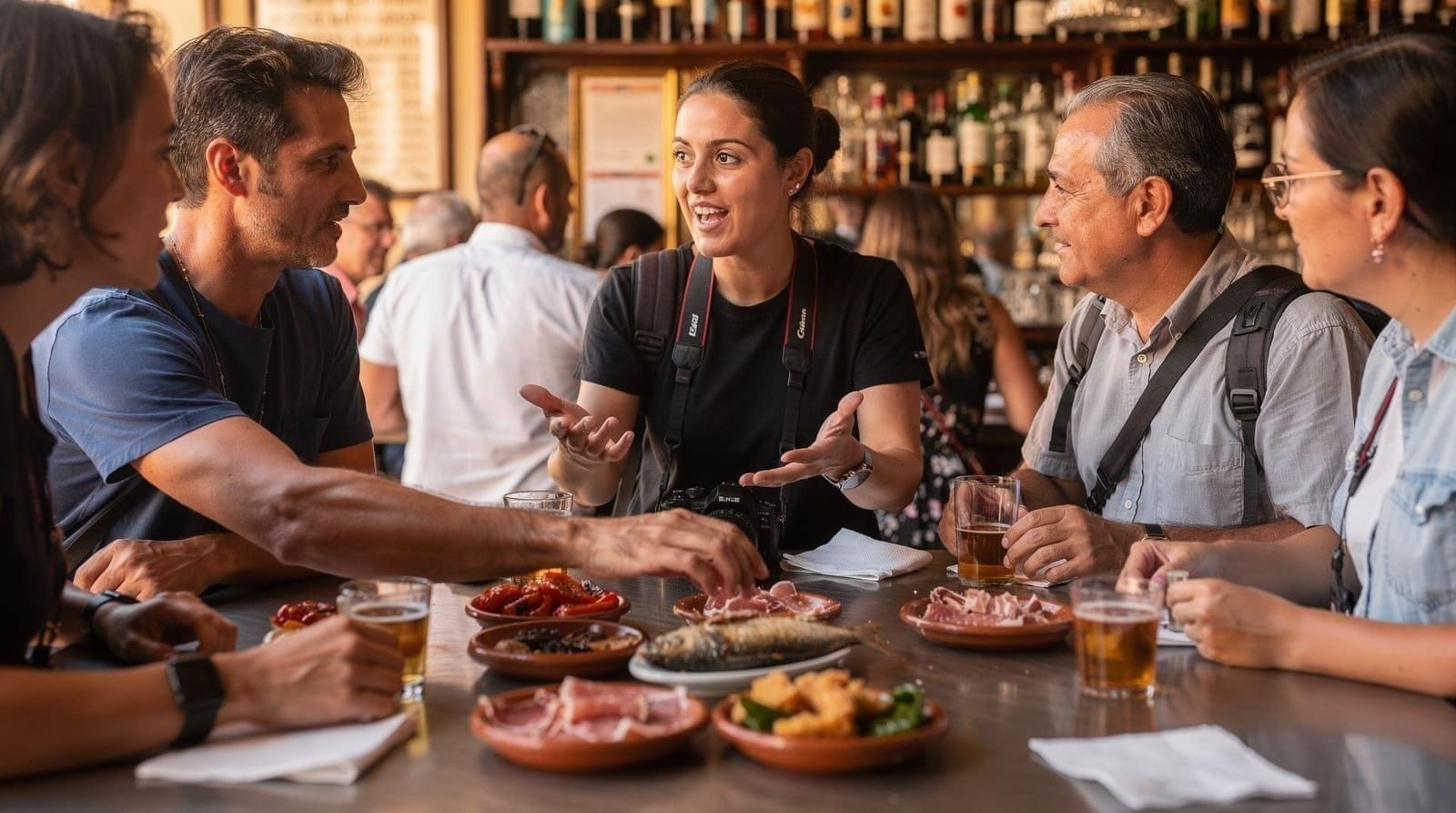
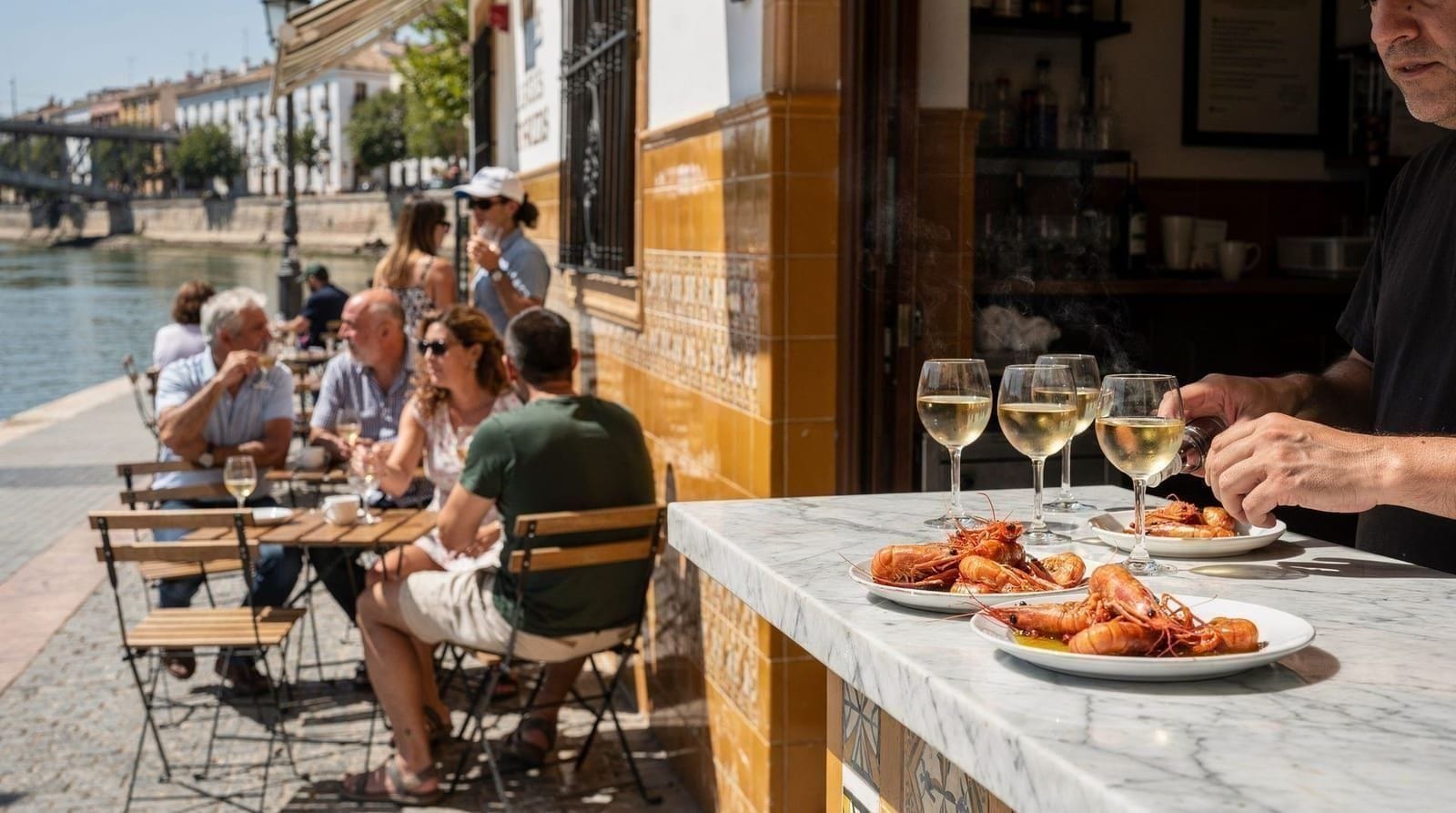
The most common format: 3-hour evening or afternoon tour visiting 4-5 tapas bars, with food and drinks included. The guide provides context on each dish, brief history on the bars and the neighborhood, and manages the logistics of a group through small, busy spaces.
Seville ultimate food tour — 3 hours, 4-5 bars, food and drinks includedThis is the right choice for first-time visitors who want an introduction to the tapas landscape without spending hours on independent research. The cost — typically €70-85 per person — is more than eating the same food independently (€30-40) but buys navigation, curation, and context.
Evening tapas and wine tasting
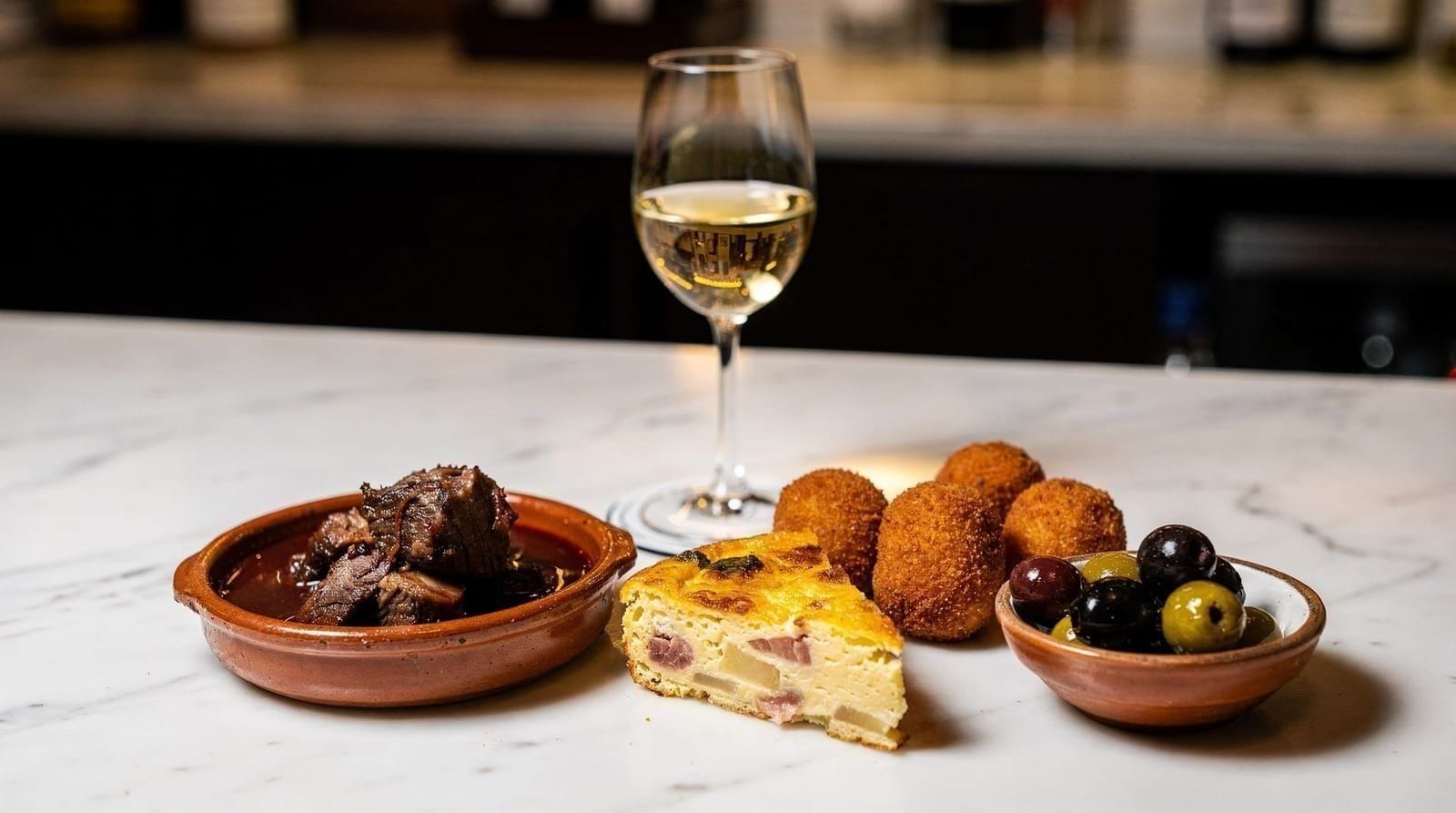
Evening tapas and wine tasting — food paired with regional winesA variant of the walking tour format that gives more emphasis to the wine component. Seville sits at the center of three wine regions — Jerez (sherry), Montilla-Moriles (similar style, different terroir), and Huelva — and a wine-focused tour can cover this geography in the context of the food pairing.
The wine education component: good sherry culture is poorly understood by most visitors. Understanding the difference between fino (dry, pale, served cold), manzanilla (dry, coastal, slightly saline), amontillado (amber, nutty, slightly aged), and Pedro Ximénez (sweet, dark, syrupy) makes the food pairings meaningful rather than arbitrary. A tour that covers these distinctions adds value beyond the food itself.
Best for: visitors with some wine background, or anyone planning a day trip to Jerez (see Jerez day trip from Seville).
Tapas tour with rooftop drinks
Tapas tour with wine and rooftop drinks — combines food circuit with rooftop experienceSome tours finish with a drink on a rooftop bar or terrace with views of the Giralda or the city. This format works well for the combination of food experience and Seville’s skyline, particularly in the evening when the light is warm and the Cathedral is illuminated.
The limitation: rooftop bars in Seville are busiest in the evening, which means the outdoor section of the tour may be crowded regardless of tour group size. The view is genuine and worth experiencing; manage expectations about having the rooftop to yourself.
Tapas crawl (evening, multiple stops)
Seville tapas crawl — evening format, social, multiple stopsThe crawl format prioritizes the social experience of bar-hopping over depth at any individual stop. More stops in the same timeframe, smaller portions at each, faster pace. The guide is more facilitator than educator.
This format works best for visitors who have already eaten independently in Seville and want the social experience of a proper tapas night out rather than an educational tour. The bars visited tend to be busier and louder than the afternoon tour circuit — which is a feature, not a bug, if that is what you are after.
Market tours: Triana as a food destination
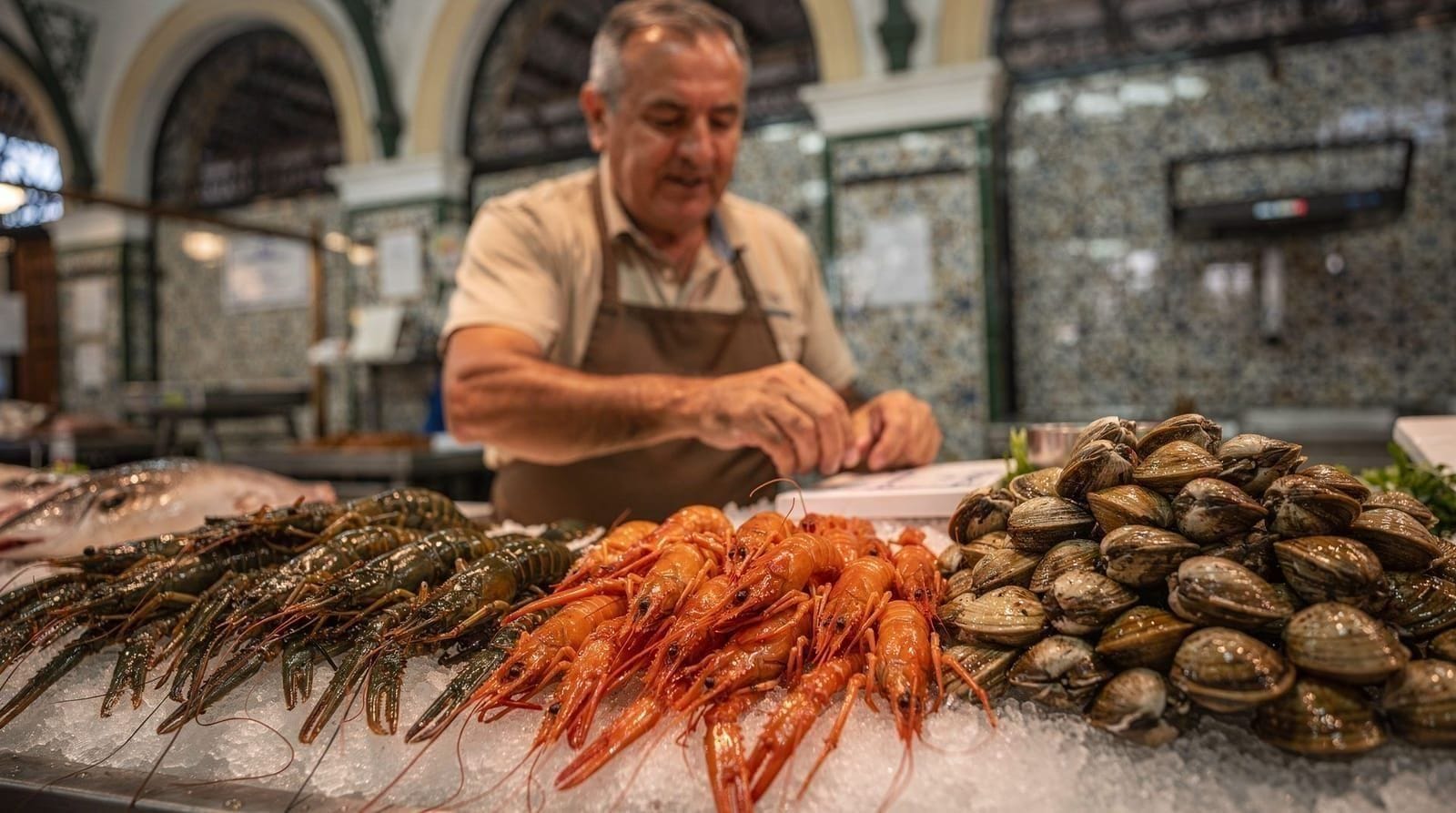
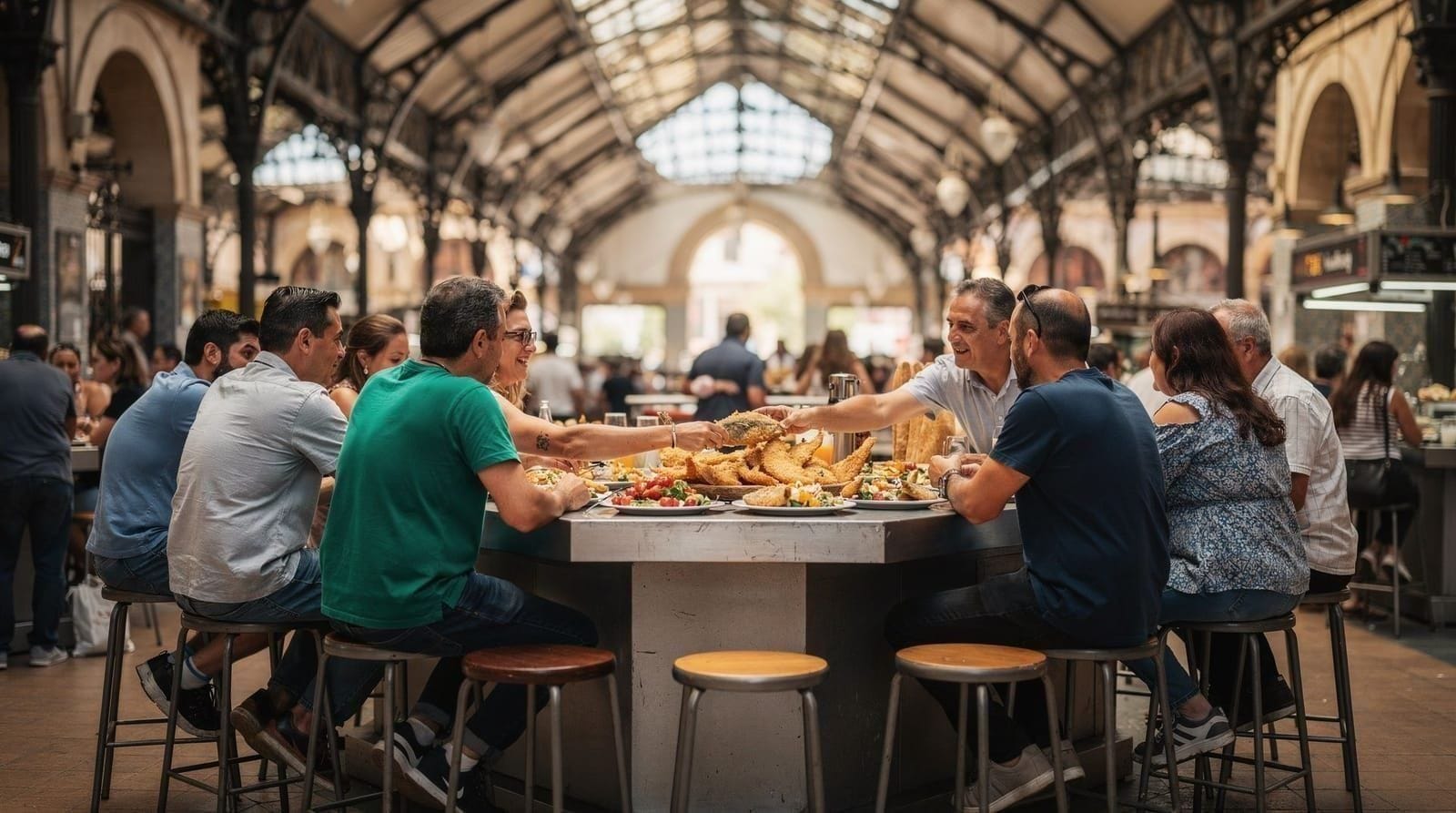
Seville’s covered markets — the Mercado de Triana in particular — offer a different food tour format: a visit to the market itself, with tastings from vendors, followed by tapas at the market bars.
The Mercado de Triana is on the west bank of the Guadalquivir in the Triana neighborhood. The market is a working neighborhood market (fish, meat, produce, ceramics) rather than a tourist food hall. The bar-restaurants around the market’s interior perimeter serve food made with market-sourced ingredients at counter prices.
See the Triana market food guide for specific stalls and recommendations.
How to book: practical advice
Advance booking: Food tours in Seville operate in small groups (6-12 people). In high season — March through May and September through October — tours sell out days or weeks in advance. Book through GetYourGuide with a credit card; cancellation is typically free up to 24-48 hours before the tour.
Timing: Afternoon tours (starting 12:30-1 PM) catch the lunch service and operate in good light for photos. Evening tours (starting 7-8:30 PM) have better atmosphere — bars are busier, the temperature drops, the social energy is higher. For first-time visitors, the evening format is generally more memorable.
Season: Food tours run year-round. Summer tours (June-August) start later to avoid peak heat. The spring period (March-May) and autumn (September-October) are ideal: comfortable temperatures, full bar atmosphere, good produce.
What to eat before: Arrive slightly hungry but not starving — 4-5 bars with food and drinks over 3 hours produces a substantial volume of food. Most tours serve enough to constitute a full meal.
The alternative: eating independently with the right information
Food tours are useful but not mandatory. If you read this site’s food guides carefully — best tapas in Seville, best tapas bars in Triana, and where to eat in Seville — and follow the barra rule (always eat at the counter), you can eat as well independently as on most tours and spend €30-40 rather than €70-85.
The honest comparison: the tour is better for first-time visitors who want guided introduction and social context. Independent eating is better for visitors on a second trip, those comfortable with navigating unfamiliar neighborhoods, and anyone who wants to linger at a single bar without being moved along on a schedule.
How to get the most out of the tour
Go in with a little curiosity and the evening improves noticeably. Ask the guide why a bar serves a dish the way it does, which items are seasonal, and where they would eat on their own night off. Guides tend to open up when the questions are specific, and those answers are exactly the kind of local knowledge that a menu or a review site never gives you.
Pace yourself on the drinks. Small glasses of wine, sherry or beer arrive at every stop, and they add up over the evening. Drink water between bars, and do not feel obliged to finish every glass if you want to enjoy the last stops properly. If you are curious about the sherry side of things, the sherry guide for Andalusia and the sherry tasting in Seville guide explain the styles before you meet them in a glass.
Take notes, or photos of the chalkboards. The best use of a tour is the shortlist it leaves you with: bars you liked, dishes you want to order again, and phrases that worked at the counter. Next to the tour, the traditional Andalusian dishes guide is a good companion for matching the names you heard with what ended up on your plate.
Reading the bar like a local
Part of what a guide teaches is etiquette. Seville bars are lively, and the unwritten rules are easy to miss: find a space at the counter rather than waiting to be seated, catch the eye of the staff instead of waving, and expect the bill to be tallied at the end rather than dish by dish. Once you have watched a guide do this a few times, you can repeat it alone with confidence.
It also helps to understand why the counter and the terrace can feel like two different restaurants. The barra versus terrace pricing guide explains the difference, and it is one of the main reasons a tour that stays inside the bars gives a truer picture of local eating than a table on a busy square. For the other side of the coin, the guide to avoiding tourist-trap restaurants shows what to steer clear of when you are choosing alone.
Choosing between neighborhoods
Different tours cover different parts of the city, so check the starting point before you book. A route through the old centre has a different feel from one that crosses the river. If you want a sense of what each area offers before deciding, the Santa Cruz neighborhood guide and the Triana neighborhood guide describe the character of two of the most popular food areas, and the best tapas bars in Santa Cruz is a useful reference if your tour starts there.
If you cannot decide between formats, the Seville tapas tours compared page sets the options side by side, and the best walking tours in Seville guide is worth a look if you would like to pair a food evening with a daytime sightseeing tour.
Cooking classes: the third food experience option
Seville has a range of cooking classes that teach Andalusian recipes in a kitchen context rather than a bar context. See the cooking classes Seville guide for this option — it is a different kind of food experience that complements rather than replaces a tapas tour.
If you like the idea of learning a dish and then eating it, the paella cooking class in Seville and the learn Spanish cuisine guide cover the hands-on route in more detail.
Dietary needs and allergies
Most tour operators can accommodate vegetarian diets with advance notice — Seville’s tapas repertoire includes plenty of non-meat dishes such as espinacas con garbanzos and pisto — but true vegan options are more limited, since jamón and other cured meats appear even in dishes that look plant-based at a glance. If you have a dietary restriction or allergy, message the operator before booking rather than on arrival; a small-group tour cannot easily improvise a substitute mid-route. See the vegetarian and vegan Seville guide for a fuller picture of what to expect, including on tours.
Who should think twice
A food tour is a social format, and it suits some travellers better than others. If you prefer to eat slowly, order only what you fancy and stay as long as you like at a bar you enjoy, the moving schedule may feel rushed. If you are travelling with young children, the late evening hours and the crowded counters can be tiring, and a daytime format or a family-friendly plan from the Seville with kids guide may fit better. Travellers on a tight budget can lean on the Seville on a budget guide and treat the tour as a single splurge rather than a nightly habit.
None of this makes a tour a poor choice. It simply means the best experience comes from matching the format to the way you like to travel, rather than booking the first option you see. Read the description of each tour carefully, look at what is included, and pick the one whose pace sounds like yours.
Combining a food tour with the rest of your trip
A food tour works well early in a stay of 3 days or more, since it establishes bars and dishes you can return to on your own for the rest of the visit. If food is the main reason for your trip, the 3-day foodie itinerary builds a full visit around exactly this kind of tour plus a market visit and a cooking class. For a single tight day in the city, a shorter tapas crawl fits more easily into a 1-day itinerary than a longer market-and-cooking format.
Frequently asked questions about Seville food tour guide
How far in advance should I book a Seville food tour?
In high season (March-May and September-October), book at least a few days to a week ahead, since groups are small (6-12 people) and sell out. In quieter months (July-August, December-February) a day or two ahead is usually enough, though popular evening slots can still fill.Should I book a food tour on my first or second night in Seville?
Booking it early in the trip is generally better. A food tour on night one or two gives you bars, dishes and ordering vocabulary you can return to independently for the rest of the stay, rather than discovering the good spots on your last evening.
Top experiences
Bookable activities with verified prices and instant confirmation on GetYourGuide.