Traditional Andalusian dishes: what to eat in Seville and why
Seville: Flavors of Andalucía guided food tour with tastings
What are the traditional dishes of Seville and Andalusia?
Seville's essential dishes are salmorejo (cold tomato-bread soup), espinacas con garbanzos (spinach with chickpeas, Moorish origin), carrillada (braised pork cheek), tortillita de camarones (shrimp fritter), and jamón ibérico. Pescaíto frito (fried fish) comes from Cádiz but is everywhere in Seville.
Andalusian cuisine is the product of eight centuries of Moorish rule, the subsequent Castilian Catholic culture, proximity to the Atlantic and the Strait of Gibraltar, and a geography that produces excellent olive oil, citrus, almonds, and pork. Seville sits at the intersection of these influences in the most literal sense: the city was the capital of Almohad Al-Andalus and then the gateway for the Spanish colonial empire. Its food reflects both histories simultaneously.
Understanding what you are eating in Seville makes the experience significantly richer. This guide covers the essential dishes, their origins, and where to find the best versions.
| Must-try | Salmorejo, espinacas con garbanzos, jamón ibérico |
| Best season for cold soups | July-October, when tomatoes are ripe |
| Typical tapa price | Around €3-8 |
| Best value | Montaditos, around €1.50-2.50 |
| Where | Old bodegas over tourist-zone restaurants |
Cold soups: the Andalusian summer tradition
Salmorejo
Salmorejo is a cold thick soup made from ripe tomatoes, stale bread, garlic, extra-virgin olive oil, and sherry vinegar. It is blended until completely smooth, then served in a wide shallow bowl with diced jamón ibérico and chopped hard-boiled egg on top. The texture is much thicker than gazpacho — closer to a smooth purée than a soup.
The dish is from Córdoba, not Seville, but it is ubiquitous in Seville’s tapas bars and considered part of the regional repertoire. The quality varies enormously: good salmorejo uses ripe in-season tomatoes and good olive oil, creating a dish of genuine complexity. Bad salmorejo — made from out-of-season tomatoes with neutral oil — tastes flat and industrial.
The tomato season in Seville runs roughly July through October. Salmorejo made in this period is significantly better than winter versions. If you are visiting in high summer and the tomatoes are red and ripe, salmorejo at a quality bar is one of the best things you will eat in Andalusia.
Order it at: El Rinconcillo (Calle Gerona 40), Bodega Santa Cruz (Calle Rodrigo Caro 1), or any bar that makes it in-house rather than from cartons.
Gazpacho
Gazpacho is technically from Córdoba and Almería but is consumed everywhere in Andalusia. It is lighter and more liquid than salmorejo — a pourable cold soup of tomato, cucumber, peppers, garlic, olive oil, and vinegar. Served in a glass or small bowl, sometimes with small bowls of diced cucumber, croutons, and hard-boiled egg as garnish.
Gazpacho is at its best in summer. In winter, many bars make it from canned tomatoes and it tastes accordingly. A well-made summer gazpacho is refreshing and appropriate after walking through Seville at 38°C; a mediocre winter version is not worth ordering.
Vegetable dishes with Moorish roots
Espinacas con garbanzos
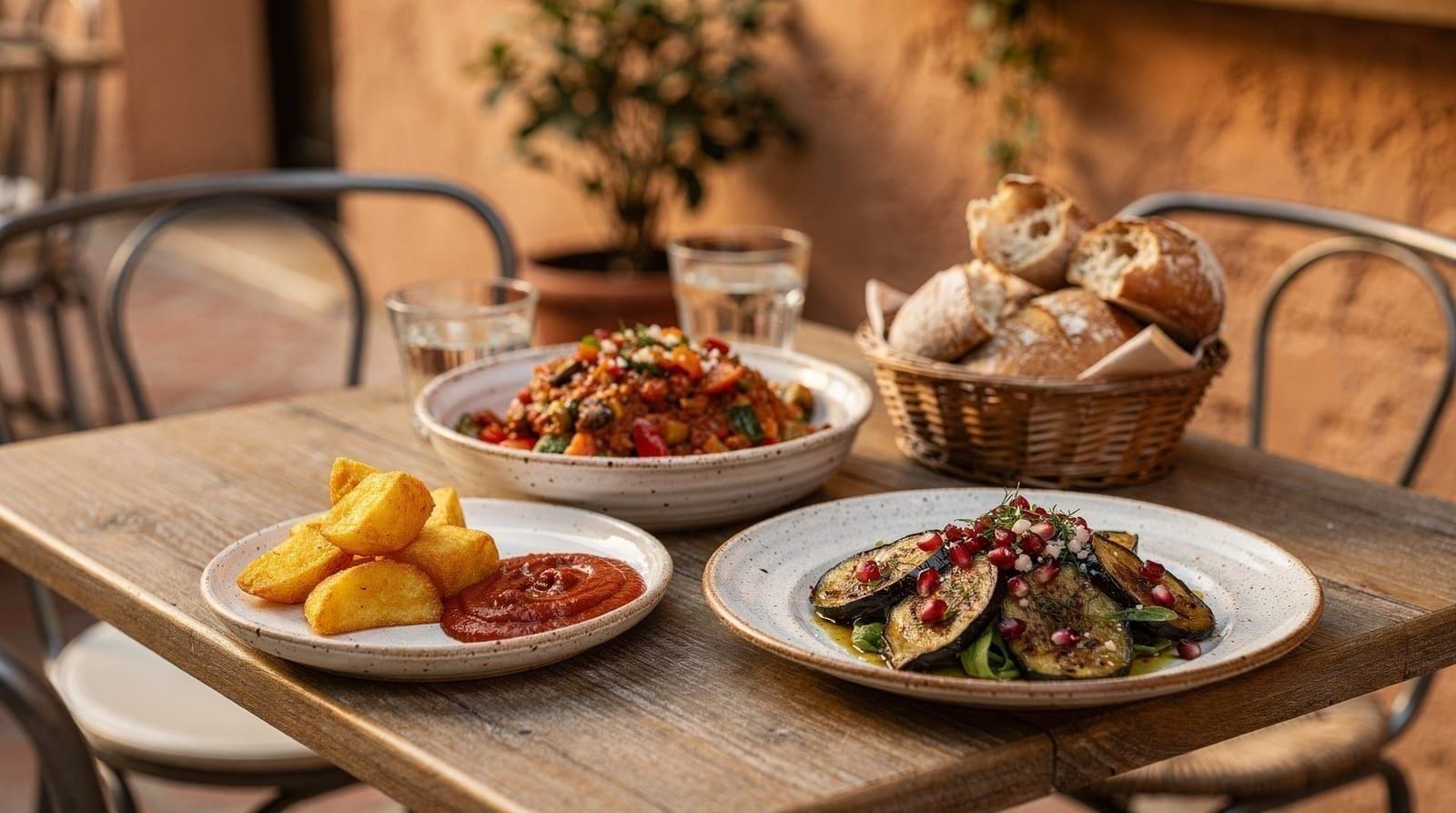
Spinach with chickpeas in a spiced sauce — this dish is one of the clearest culinary inheritances from the Moorish period in Seville. The combination of leafy greens with legumes, cumin, coriander, paprika, and bread thickener (picada) is directly traceable to Almohad and earlier Arab culinary traditions.
The dish remains genuinely embedded in Seville’s everyday food culture, not as a historical novelty but as a staple that appears on menus from old bodegas to modern tapas bars. The base recipe uses olive oil, garlic, cumin, sweet paprika, a bread slice fried in olive oil (which thickens the sauce when added), and sherry vinegar. The result is earthy, slightly rich, and satisfying.
It is vegetarian in its base form, though some bars add a small amount of jamón stock to the sauce. Ask if you are strict — a polite “sin carne” (without meat) usually resolves the question.
Order it at: El Rinconcillo, which has one of the most consistently good versions in the city. Eslava (Calle Eslava 3) does a more refined interpretation.
Patatas aliñás
Boiled potatoes dressed with olive oil, sherry vinegar, white onion, parsley, and occasionally tuna or hard-boiled egg. A simple dish that appears everywhere at low cost, particularly at market bars and old bodegas. Not exciting but a reliable indicator of kitchen quality — bad potato salad uses cheap oil and too much vinegar; good potato salad is balanced and uses proper Andalusian olive oil.
Fish and seafood: the Atlantic coast connection
Pescaíto frito
Fried fish — the classic Andalusian preparation of small whole fish or fillets dredged in seasoned chickpea flour and deep-fried. The standard mix includes boquerones (fresh anchovies), chipirones (small squid), cazón en adobo (marinated shark, a Cádiz specialty), and occasionally shrimp.
The dish originated on the Cádiz coast (freidurías — dedicated fried fish shops — are a Cádiz institution) but is fundamental to Seville’s tapas culture as well. The quality depends on: the freshness of the fish, the quality of the frying oil, and the oil temperature. Good pescaíto frito is shatteringly crisp outside, tender inside, and barely greasy. Bad versions are soggy, oversalted, and oily.
The chickpea flour coating (harina de garbanzo) rather than wheat flour is the Andalusian characteristic — it produces a finer, crisper crust and a slightly nutty flavor.
Gambas al ajillo
Shrimp cooked in olive oil with garlic and dried chilli. A standard in every tapas bar in Seville, which means quality varies enormously. The dish requires high heat, good shrimp, generous garlic, and a small amount of dry sherry added to the pan at the end.
The key quality indicator: the oil in the dish should be bright orange-red (from the shrimp shells releasing color) and fragrant with garlic. If it is pale, the shrimp were added to cold oil and cooked slowly — technically a different dish and a lesser one.
The bread that comes with gambas al ajillo is not decoration — the olive oil sauce is worth eating directly.
Boquerones en vinagre and anchovies
Boquerones en vinagre are fresh anchovies cured in vinegar and dressed with olive oil, garlic, and parsley. Not cooked but chemically “cooked” by the acid — the texture is firm and white, the flavor clean and bright.
Anchovies (boquerones fritos) fried fresh are also common: small, crisp, eaten whole. Both preparations require fresh fish; frozen boquerones produce a very different result.
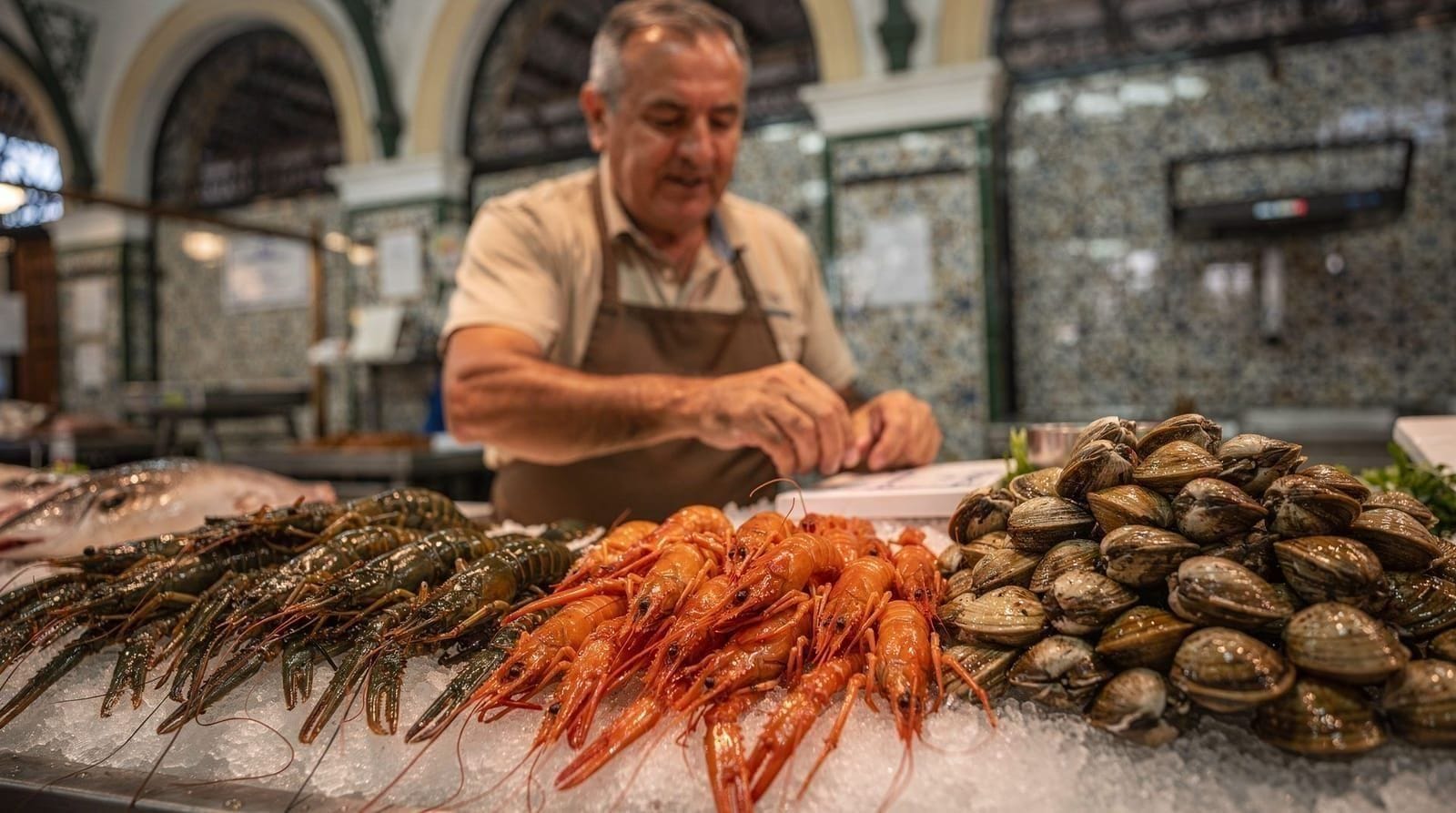
Flavors of Andalusia food tour — covers the full regional repertoireMuch of the best fried fish and seafood sits close to the water, so a day out to the coast pays off for anyone who loves this section of the menu. The Cádiz day trip from Seville and the Cádiz destination page explain how to combine the old town with a seafood lunch, and the Sanlúcar de Barrameda page covers another coastal town where fried fish and local wine go hand in hand.
Pork: the post-Reconquista protein
Jamón ibérico
Iberian ham is Spain’s most distinguished food product and Seville is one of the best places in the country to eat it. The pigs are raised in the dehesa (cork oak forest) of Extremadura and the Huelva Sierra (near Seville) and fed on acorns in their final months — this is the bellota (acorn) grade, the top category.
The difference between jamón ibérico de bellota and standard jamón serrano: the ibérico pig’s diet of acorns produces a fat that is unusually high in oleic acid, giving the ham a smooth, almost buttery quality. The legs are cured for 24-36 months. The flavor is complex — nutty, slightly sweet, with a long finish.
At a quality bar, jamón ibérico is served at room temperature in thin hand-cut slices, with bread and sometimes with a glass of fino sherry as the classic pairing. The sherry cuts through the fat and amplifies the ham’s savory quality.
What to pay: at a tapas bar, a serving of jamón ibérico de bellota runs €6-12 depending on portion size and venue. In a fringe-of-tourist-zone bar, a similar quantity of lower-grade jamón might be labeled simply “jamón” at €3-4 — the labeling matters.
Carrillada ibérica
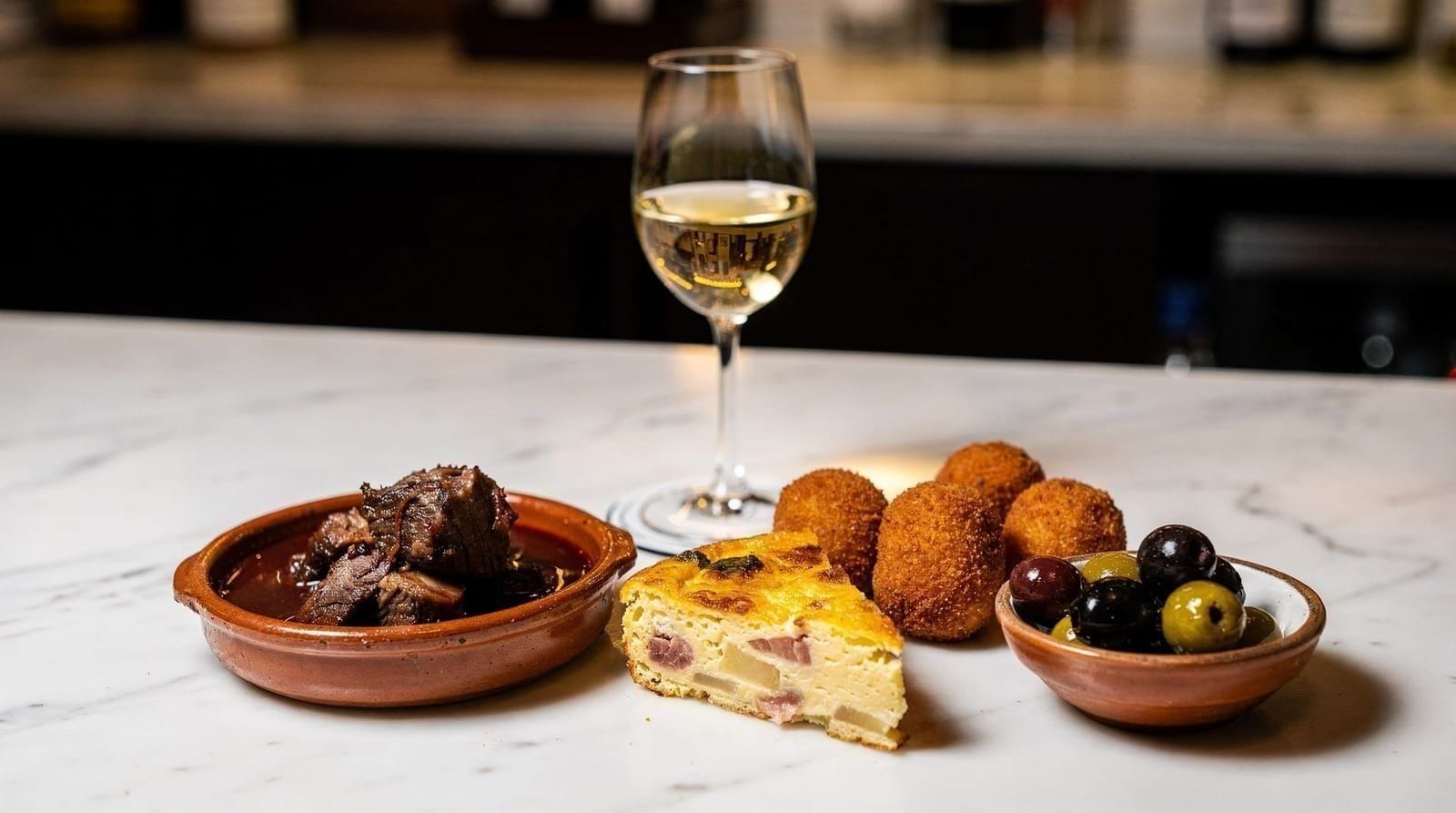
Pork cheek braised in wine — usually Pedro Ximénez sherry, which gives the sauce a deep brown-black color and a gentle sweetness. The meat is collagen-rich and becomes extraordinarily tender after 3-4 hours of slow cooking. The sauce reduces to a sticky glaze.
Carrillada appears at both traditional bodegas (simpler, more rustic) and creative tapas bars (plated with care, served with mashed potato or polenta). It is typically a winter and autumn dish — the slow cooking is less appealing in August heat, and the stew improves with the season’s produce.
Order it at Eslava or at any bar advertising it as a daily special (menú del día) between October and April.
Iberian pork secret cut (secreto ibérico)
Secreto ibérico is a cut from the shoulder area of the Iberian pig, highly marbled with fat, usually grilled over charcoal. Less common as a tapa (it is more of a restaurant main course), but some quality bars offer it as a ración. The name — “secret” — refers to the cut being undervalued and overlooked for many years before becoming fashionable.
The Cádiz connections: fried and salted
Tortillita de camarones
A thin, crispy fritter made from a batter of chickpea flour, water, and tiny transparent camarones (shrimp from the Bay of Cádiz). The batter is sparse — the fritter is mostly shrimp held together by a minimal amount of fried batter, like a lace of fried shrimp.
The dish is a Cádiz invention but deeply embedded in Seville’s tapas culture. Good versions are served immediately from the fryer — they lose their crispness within minutes. If you are at a tapas bar and the tortillitas are sitting under a heat lamp, ask when the next batch comes up.
Cazón en adobo
Marinated shark (often dogfish, a small sustainable shark species) in a spiced vinegar marinade, then fried. The marinade — vinegar, garlic, cumin, paprika, oregano — both preserves and flavors the fish. It is a Cádiz coast tradition but widely available in Seville.
The proper name on menus is cazón en adobo or bienmesabe (literally “it tastes good to me”). Despite being shark, the flavor is mild and the texture firm.
Bread and egg dishes
Montadito
A small open-faced sandwich on a slice of baguette-style bread, topped with any combination of jamón, cheese, anchovy, roasted peppers, lomo (cured pork loin), or combinations. The bread quality matters: fresh, with a soft interior and a slight crust, cut thick enough to support the toppings without collapsing.
Montaditos are the working-lunch food of Seville’s bodegas. At El Rinconcillo or Bodega Dos de Mayo near the Alameda, a montadito costs €1.50-2.50 and represents genuine value.
Tortilla española
Potato omelette — not a uniquely Sevillano dish but present on every menu and quality-variable in important ways. Good tortilla española is slightly runny in the center (jugosa — juicy), sweet from slowly caramelized onion, and served at room temperature. A dry, fully-set tortilla española is overcooked; it is a common tourist-bar shortcut.
Breakfast: tostada con tomate
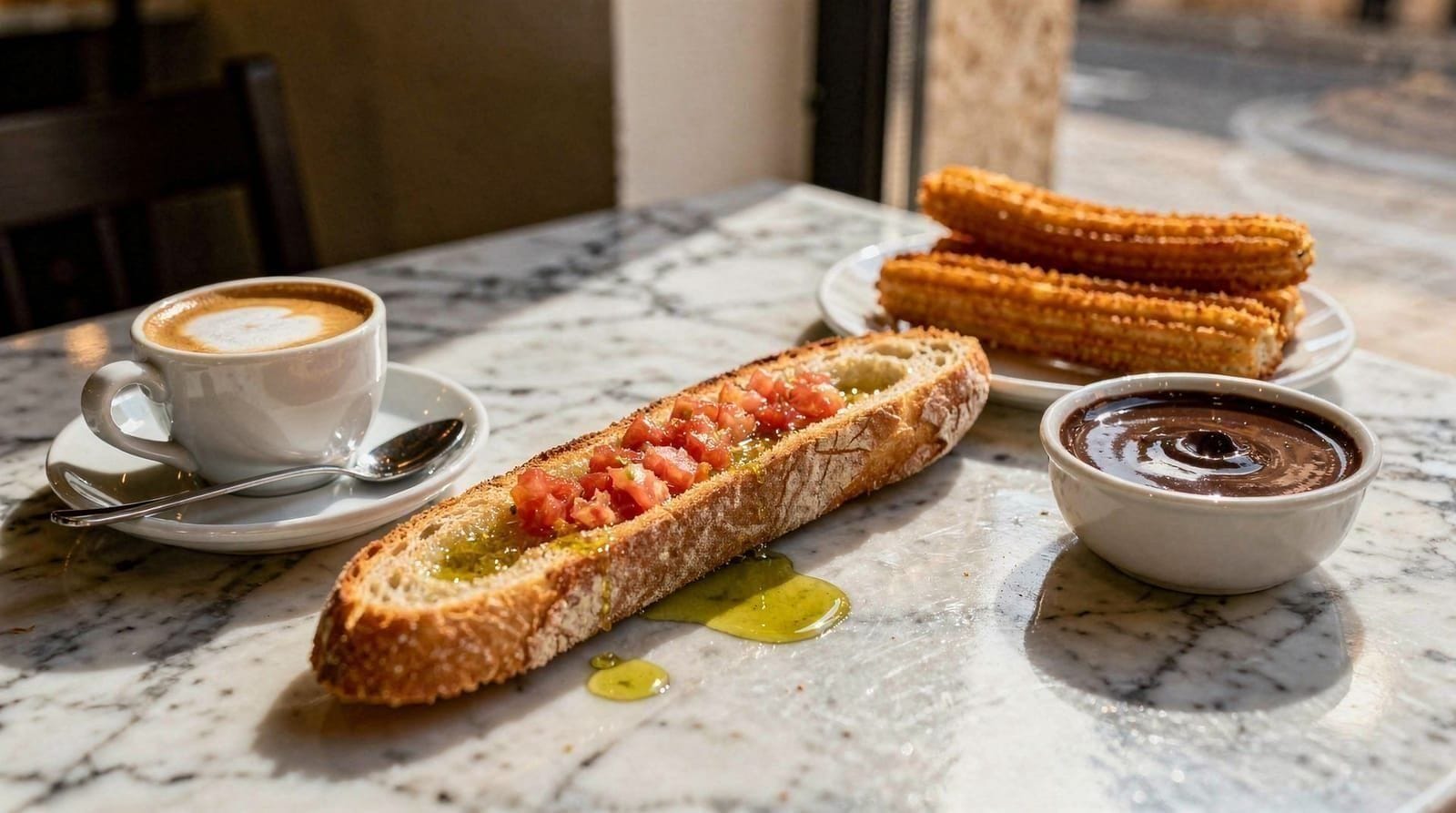
The definitive Andalusian breakfast — toasted bread rubbed with garlic (optional) and topped with fresh grated tomato, olive oil, and salt — deserves its own section. See the breakfast in Seville guide for full coverage of this morning ritual.
Tapas and taverns history tour — second format with different bar circuitHow to order like a local
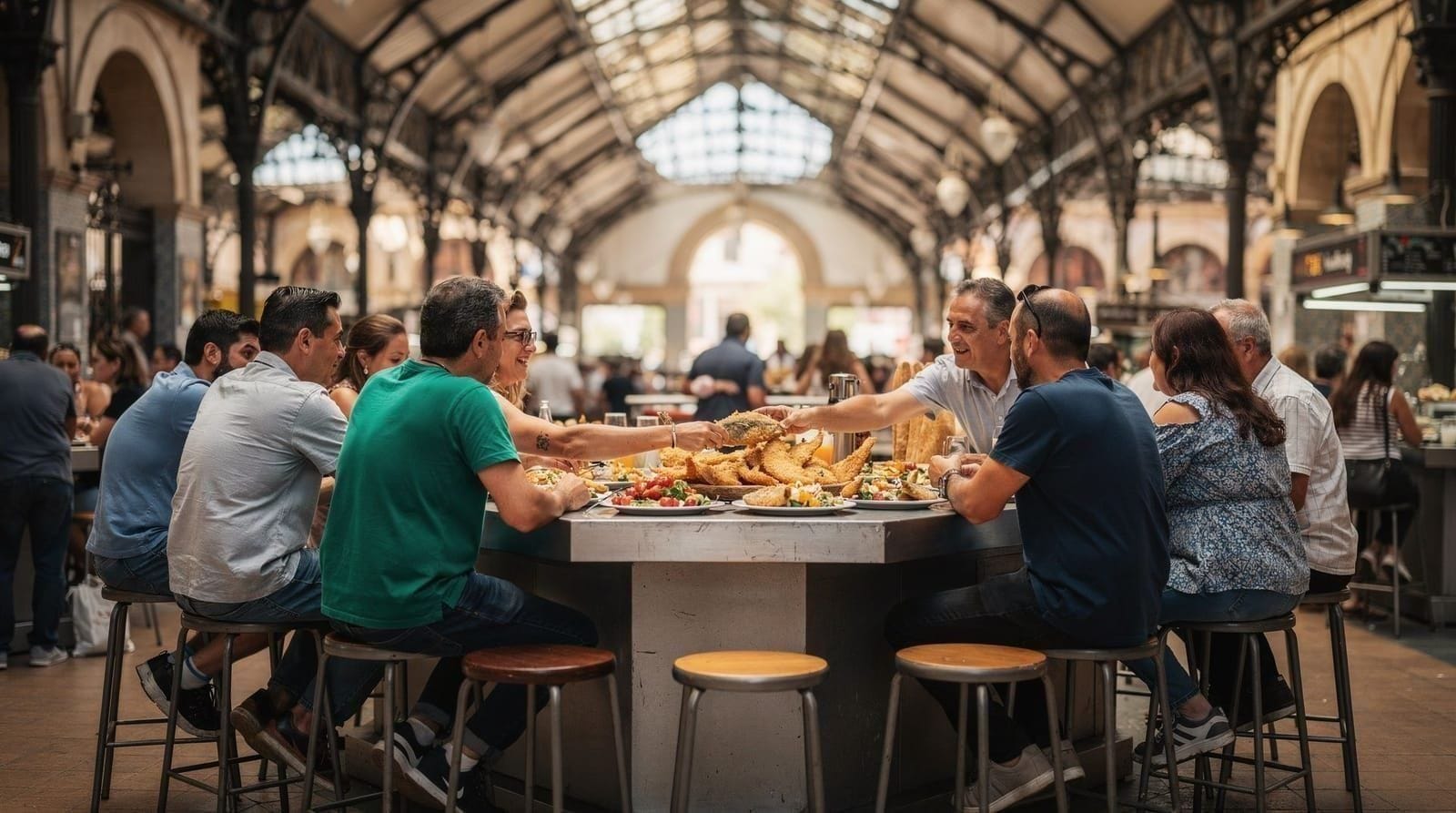
Ordering well matters as much as knowing the dishes. Standing at the bar and ordering a few small plates, rather than sitting down for a full meal, is the traditional way to eat tapas, and it is also where the better value tends to sit; the barra vs terrace pricing guide explains the difference in detail. If a menu is long, laminated and full of photos, the guide to avoiding tourist-trap restaurants shows what to look for instead. Share several plates between the table, start with the cold or vegetable dishes, and move on to fried and braised dishes as the meal goes on.
If you would rather learn the dishes by cooking them, the cooking classes guide and the Spanish cuisine learning guide cover hands-on options, and the Seville food tour guide and tapas tours compared help you pick a guided route through the dishes above.
Olive oil: the ingredient that defines everything
Andalusia produces more olive oil than any other region in the world, and the quality available in local markets and good restaurants is exceptional. The oils of Jaén province (the densest olive cultivation area on Earth) and Córdoba tend toward fruitier, greener profiles; those from Seville province tend toward more golden, slightly buttery expressions.
When you eat tostada con tomate in the morning, the oil makes the dish. When you eat gambas al ajillo, the oil is the sauce. When you eat salmorejo, the oil provides the richness and the finish. Distinguishing between the bottled olive oil at a tourist restaurant (usually a generic blend from who-knows-where) and the proper Andalusian olive oil that a quality bar uses for everything is one of the significant quality dividers in Seville’s eating scene.
For a full picture of the Seville food scene, see best tapas in Seville, where to eat in Seville, and the Triana market food guide.
How dishes change with the seasons
Seville’s kitchens follow the calendar more closely than many visitors expect. Cold soups (salmorejo, gazpacho) belong to the hot months, roughly July through October, when tomatoes are at their ripest; ordering them in January often means a version made from lower-quality out-of-season or tinned tomatoes. Braised, slow-cooked dishes like carrillada move the other way — they’re autumn and winter food, when a rich stew feels appropriate and kitchens have the time and appetite demand to run them as a daily special. Jamón, montaditos, and fried fish are available year-round and don’t follow this pattern, which makes them a safer order regardless of season if you’re unsure what’s currently at its best.
Sweets and desserts worth trying
Andalusian sweets lean heavily on almonds, honey, and a legacy of convent baking that dates back centuries — many of Seville’s best pastries are still made by cloistered nuns and sold through a small revolving hatch (torno) rather than a shop counter. Yemas (candied egg-yolk sweets, rich and intensely sweet), polvorones and mantecados (crumbly almond shortbread, especially around Christmas), and tocino de cielo (a dense caramel custard, literally “heaven’s bacon”) are the dishes to look for. They pair naturally with a glass of Pedro Ximénez sherry at the end of a meal — the wine’s dried-fruit sweetness echoes the pastries rather than competing with them. For more on sherry styles and how to taste them, see the sherry guide for Andalusia and sherry tasting in Seville.
Eating for dietary restrictions
Andalusian cooking leans heavily on pork and shellfish, which makes vegetarian and vegan travel genuinely trickier here than in many parts of Spain — espinacas con garbanzos is one of the few classic dishes that’s naturally meat-free, and even that sometimes gets a splash of jamón stock. If you’re travelling with dietary restrictions, the vegetarian and vegan Seville guide covers which traditional dishes are safe as-is, which need a modified order, and where kitchens are genuinely accommodating rather than just offering a token salad.
Top experiences
Bookable activities with verified prices and instant confirmation on GetYourGuide.