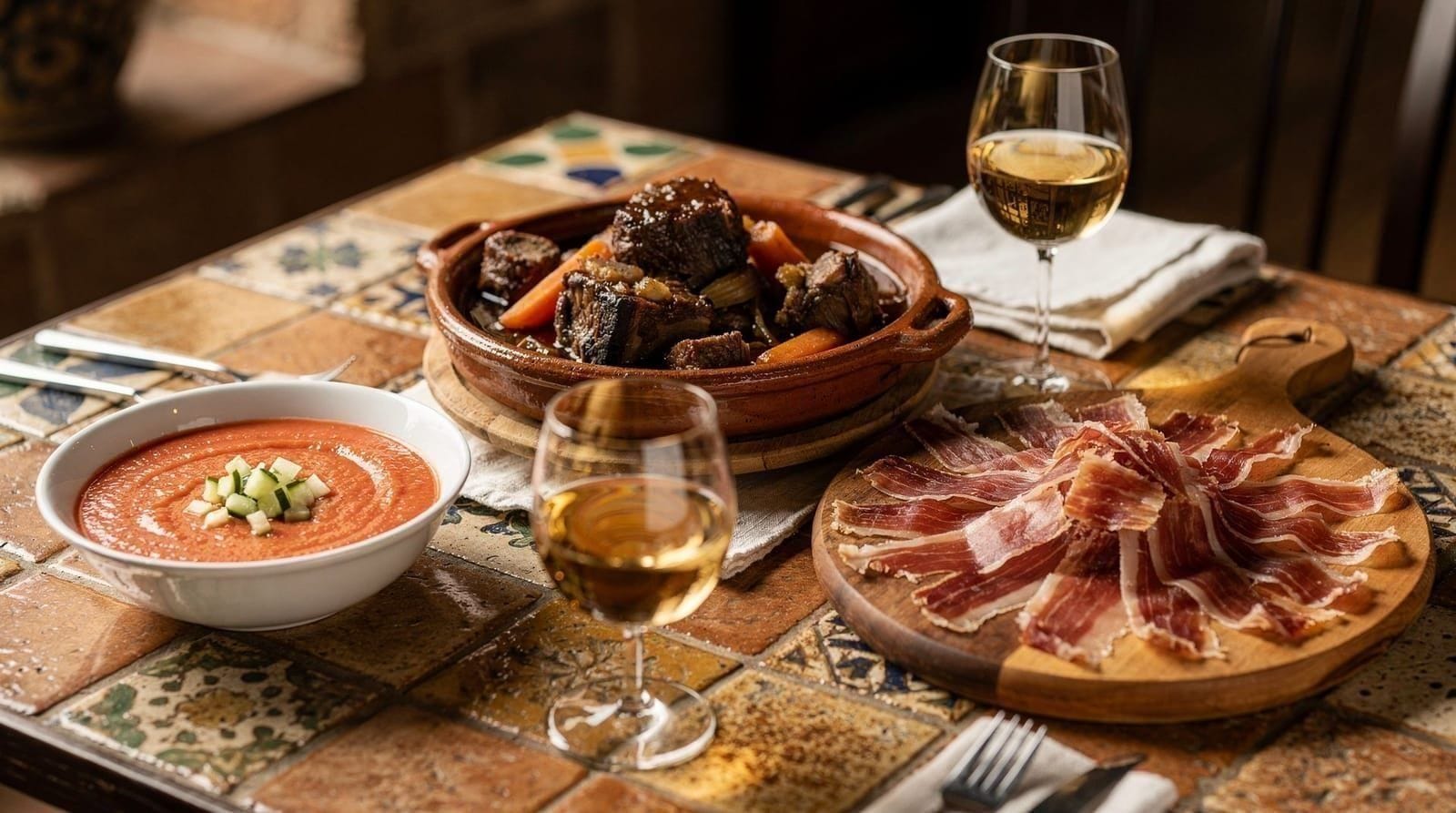
Where to eat in Seville: restaurants, bars, and markets by neighborhood
Seville: Gourmet 3.5-hour tapas tour
Where should I eat in Seville?
For tapas at local prices, eat in Triana or near the Alameda de Hércules. For convenience near the monuments, Bodega Santa Cruz and Casa Morales are the reliable Santa Cruz options. The best individual bars are El Rinconcillo (Centro), Eslava (Alameda), and La Brunilda (El Arenal). Always eat at the barra — terrace tables cost 20-30% more.
Seville has excellent food at low prices in the right places and inflated mediocrity in the wrong ones. The distance between the two can be as little as two streets. This guide maps the eating landscape by neighborhood so you can plan accordingly.
| Best value area | Triana or around Alameda de Hércules |
| Typical tapas price | around €2-3.50 at the barra, non-tourist bars |
| Peak lunch hours | 1:30 PM-3 PM (arrive by 1 PM for a seat) |
| Cash or card | Most bars now take cards, but small change helps at the barra |
| Reservations | Rarely possible for tapas bars; walk-in and queue |
The fundamental rules for eating in Seville
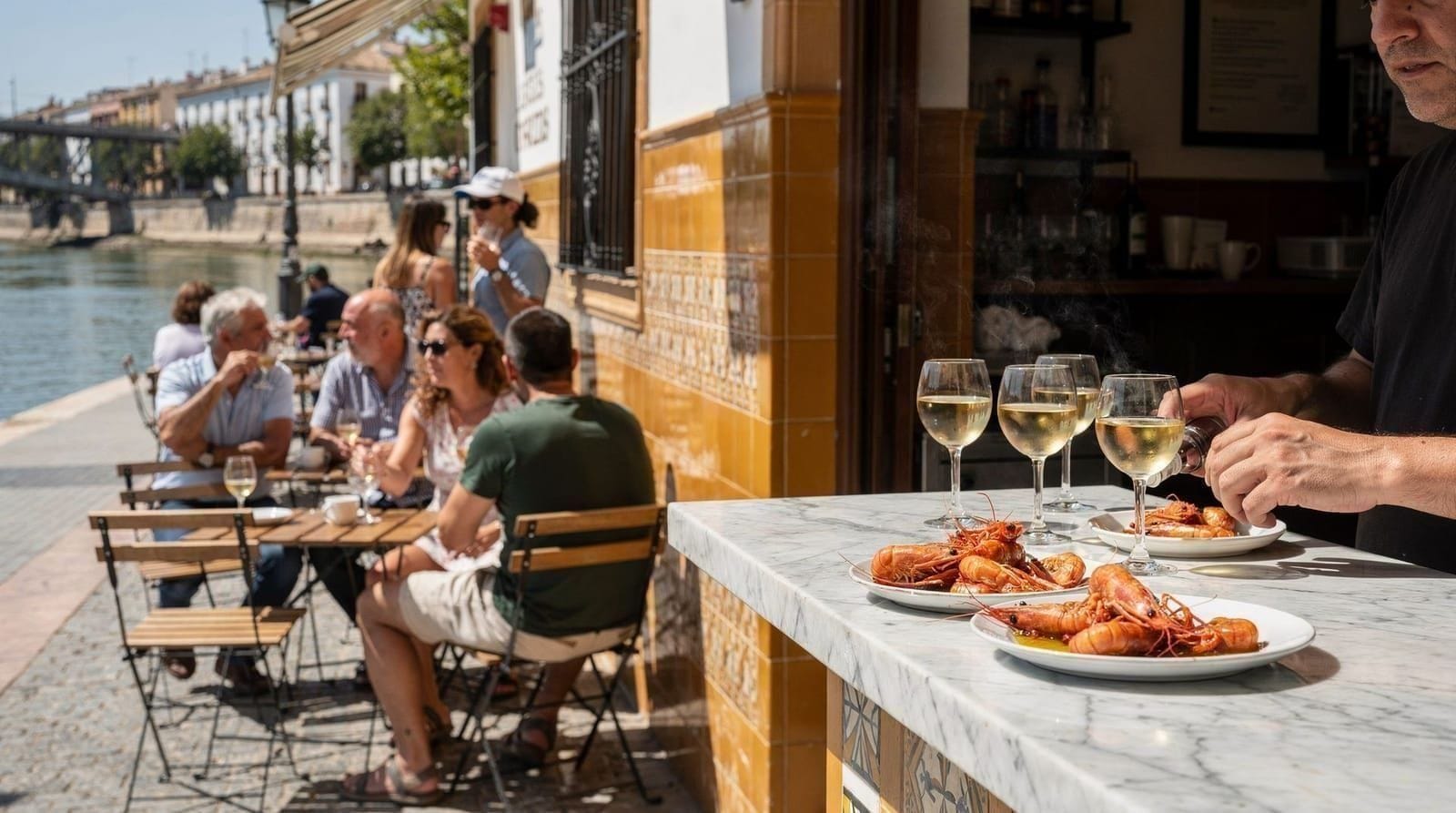
Eat at the barra. The bar counter (barra) in any tapas bar offers the same food as the terrace at 20-30% lower prices. In tourist-heavy areas, this differential is even larger. Standing at the counter is not only cheaper; it is also how Sevillanos eat.
Eat on local time. Lunch runs from 1 PM to 3:30 PM. Dinner from 8:30 PM to midnight. Any “restaurant” in Seville that is busy at 6 PM and empty at 9 PM is catering to tourists, not locals — that alone is a quality signal.
Avoid laminated photo menus. In southern Spain, a restaurant displaying photographs of its dishes on a laminated menu outside is signaling that it does not expect its customers to know what they are ordering. Combine this with outdoor seating pressure and you have the standard tourist trap profile.
Walk away from paella presented as a Seville specialty. Paella is from Valencia. Any restaurant selling paella as a traditional Seville dish is trading on tourist ignorance.
How to order at a Seville bar without feeling lost
Many first-time visitors hesitate at the door of a busy bar because nobody hands over a menu and nobody seems to be taking orders. The system is simpler than it looks. Find a gap at the counter, catch the eye of the waiter, and ask for a drink first. Food follows once you have something in your hand. Tapas are small by design, so order two or three at a time rather than a whole meal at once; you can always call for more, and the plates arrive faster when the kitchen is not buried under one giant order.
At the older bodegas, the bill is often still tallied in chalk on the wooden counter in front of you. That is not a gimmick for visitors; it is how the bar has always kept count. Ask for “la cuenta” when you are done and the waiter reads the total straight off the bar. If you are unsure what something is, point at a neighbor’s plate or ask what the kitchen is proud of that day. Sevillanos love to recommend, and a little curiosity is repaid with better food than any menu translation will give you.
Be ready to stand, to share elbow room, and to move on after a drink or two. The rhythm of the city is a loop of short stops, not a long sit-down meal. That is exactly why the barra versus terrace pricing guide is worth a read before your first night, and why the tourist-trap restaurants guide pairs well with this one.
By neighborhood: where to eat
Santa Cruz
The most convenient area for visitors staying near the monuments and the most heavily touristified. Good options exist but require specific knowledge.
Reliable choices: Bodega Santa Cruz “Las Columnas” (Calle Rodrigo Caro 1) — perpetually busy, fast service, good barra tapas. Casa Morales (Calle García de Vinuesa 11) — 19th-century bodega, wine from the barrel, traditional food. Bar El Comercio (Calle Lineros) — churros in the morning, basic tapas through the day.
Streets to avoid: Calle Mateos Gago and the immediate ring around Plaza del Triunfo are lined with tourist-priced restaurants of inconsistent quality. See the best tapas bars in Santa Cruz guide for a complete breakdown.
Price level: At Bodega Santa Cruz barra, tapas €2-3.50, wine €2-2.50. At a tourist terrace table in the same area, expect €5-8 per tapas plate and €4-5 for a similar wine.
El Arenal
The neighborhood between the Cathedral and the river — more local than Santa Cruz, accessible from the main sights. La Brunilda (Calle Galera 5) is the area’s star: a small, inventive tapas bar with a queue outside most lunchtimes. Casa Morales is technically on the El Arenal edge. The riverside bars on Paseo de Cristóbal Colón (facing the Torre del Oro) are fine for drinks and light snacks; serious eating is better done on the interior streets.
La Brunilda specifically: Small space, creative tapas (the slow-cooked egg dishes, the anchovy preparations), no reservations for tapas, queue from 1 PM. Worth the wait. Go before 1 PM or after 3 PM for counter space.
Centro (around Alameda de Hércules)
The area around the Alameda de Hércules has Seville’s highest concentration of quality tapas bars relative to tourist density. This is the neighborhood where Sevillanos eat well.
Eslava (Calle Eslava 3): Award-winning tapas bar, small, no reservations for bar seating, queues from 1:30 PM. Creative food at fair prices. The signature slow-cooked egg tapa and the croquetas are consistent reference points.
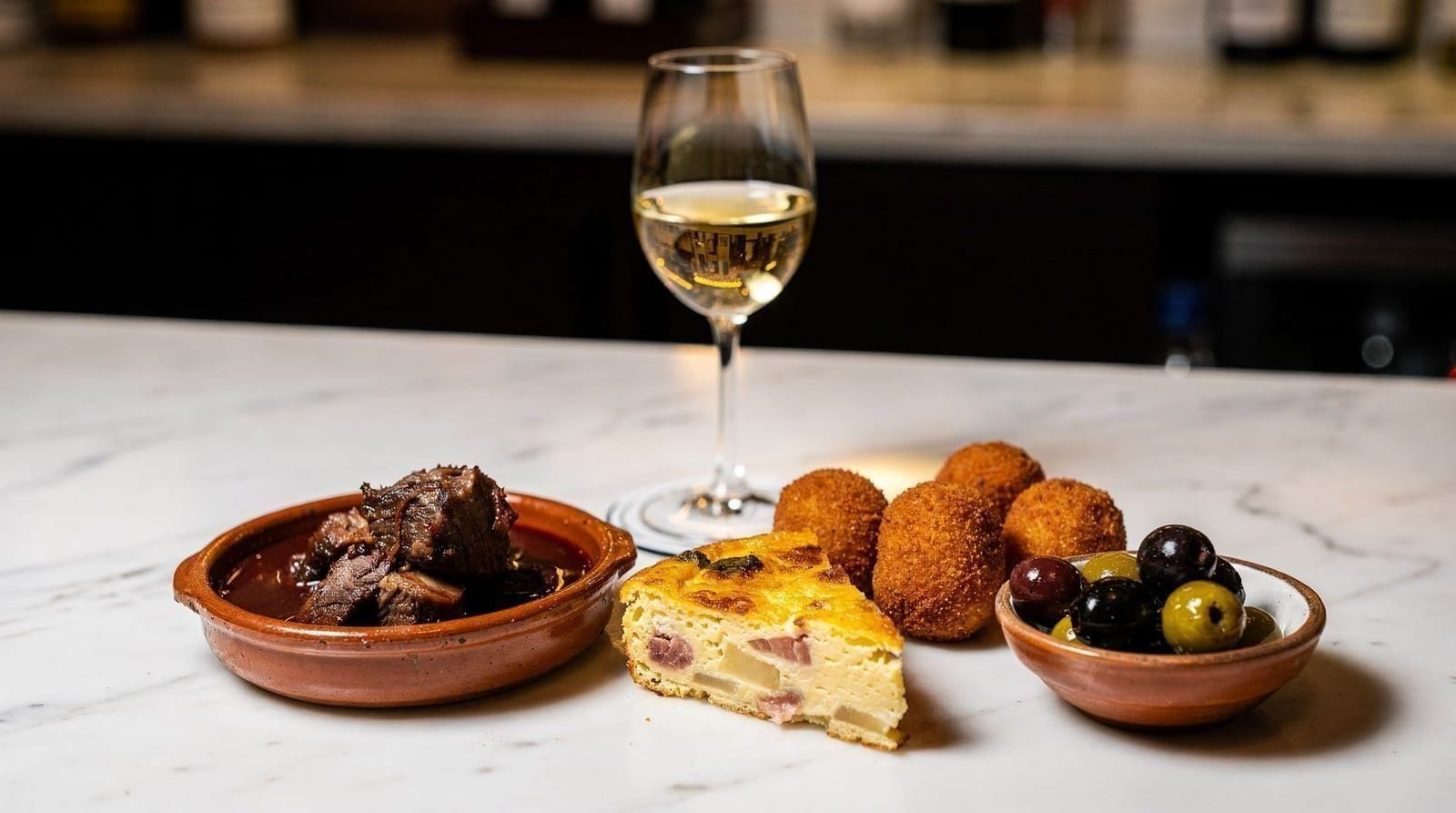
El Rinconcillo (Calle Gerona 40): Oldest bar in Seville (founded 1670), chalk-on-bar ordering, wine from the barrel. Order: espinacas con garbanzos, jamón montadito, salmorejo. Prices are fair for the heritage; expect €20-25 per person for a proper tapas lunch with wine.
Bodega Dos de Mayo (near Alameda): Neighborhood bar, cheap, traditional, no tourist accommodation. Wine at €1.50, tapas at €2. The authentic version of what most visitors are looking for.
Food tour with local guide — covers Alameda and Centro bar circuitTriana
The highest value neighborhood for eating in Seville. Across the Guadalquivir, 15-20 minutes’ walk from the Cathedral.
Las Golondrinas (Calle Antillano Campos): The Triana reference bar. Fish dishes, montaditos, beer. Filled with local families at lunch and neighborhood regulars at dinner. Eat at the barra. See the best tapas bars in Triana guide.
Casa Cuesta (Calle Castilla): Historic bodega, good wine list, reliable traditional food. More space than Las Golondrinas; reservations possible for the restaurant section.
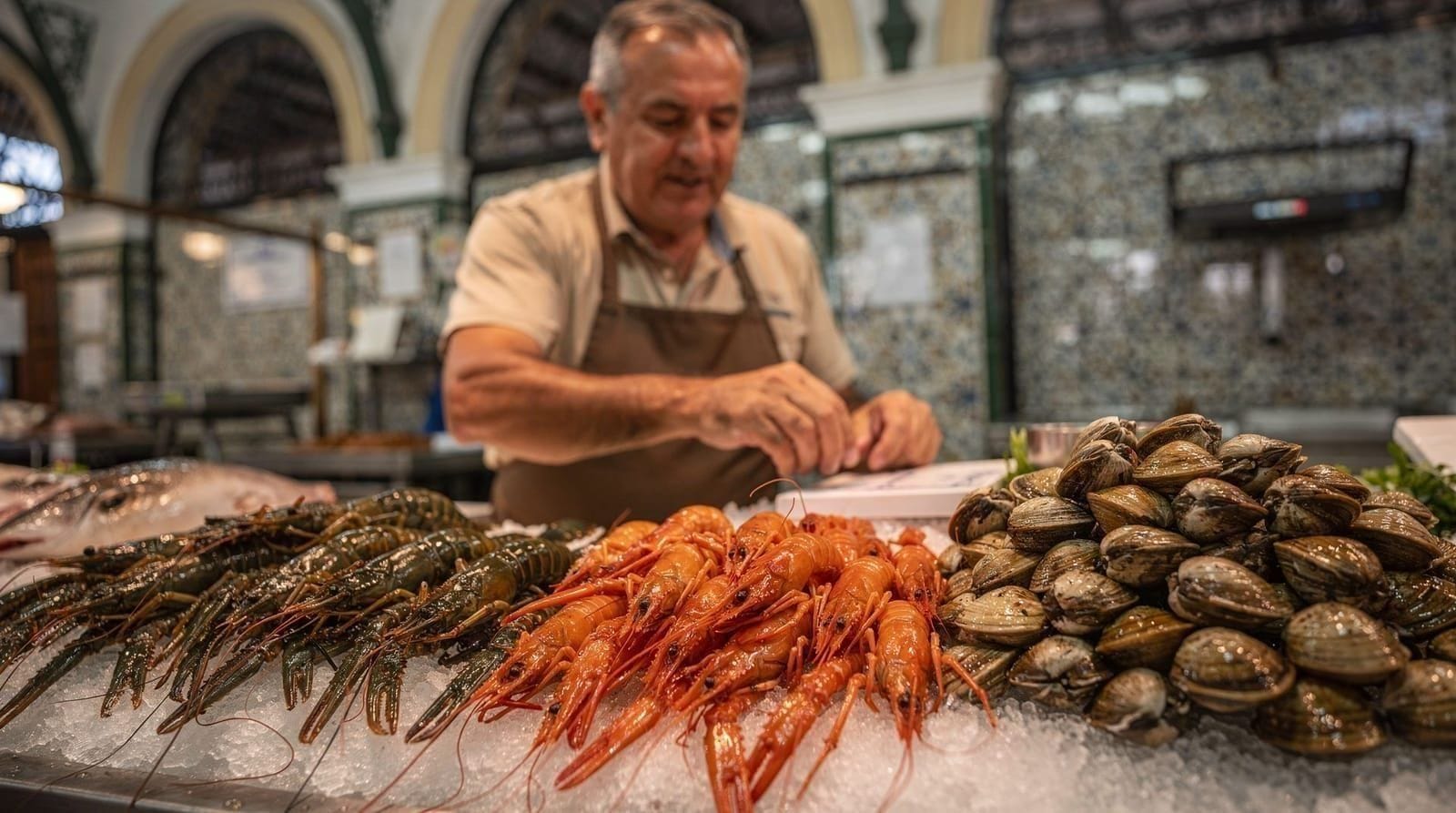
Mercado de Triana bars (Plaza del Altozano): Market-fresh fish at counter prices, Monday-Saturday mornings. The most direct expression of Triana’s food culture.
Price level: Materially lower than Santa Cruz. Wine at €1.80-2.20, tapas at €1.80-2.80 at the barra. A full tapas lunch with two drinks runs €15-20 per person.
La Macarena
The neighborhood north of Centro, less visited by tourists and excellent for food. The area around Calle Feria (the street market on Thursdays) has a concentration of good neighborhood bars. Slightly further from the main monuments but worth the trip for visitors staying multiple days.
Nervión
Primarily a business and residential neighborhood with less food culture aimed at visitors. Better for local restaurants serving the office lunch crowd than for tapas tourism.
Choosing a base for the food you want
Where you sleep shapes how you eat. Staying in Santa Cruz puts the monuments on your doorstep but asks for a short walk whenever you want a meal at local prices. Staying in Triana or near the Alameda puts good bars within a few minutes of your door, at the cost of a longer stroll to the Cathedral and the Alcázar. Neither choice is wrong; just plan your meals around it. Our where to stay in Seville guide and the best neighborhoods overview compare the areas in more detail, and the Triana neighborhood guide and La Macarena guide show what each quarter feels like beyond its tables.
Markets for picnic food and fresh produce
Seville’s covered markets are worth a visit even if you are not cooking. Mercado de Triana (Plaza del Altozano) combines produce stalls with counter bars serving fresh fish and seafood tapas — go mid-morning, Monday to Saturday, for the liveliest atmosphere. See the Triana market food guide for a stall-by-stall breakdown. Mercado Feria on Calle Feria is smaller and more local, good for cheese, olives, and cured meats to assemble a picnic in the nearby Alameda. Both markets close by early afternoon, so this is a morning activity, not a lunch option.
Vegetarian and vegan options
Traditional Andalusian tapas lean heavily on jamón, fish, and pork, but Seville has improved substantially for vegetarian and vegan travelers. Espinacas con garbanzos (spinach with chickpeas, at El Rinconcillo among others) is a genuinely traditional vegetarian tapa, not an adaptation. Salmorejo and gazpacho are naturally vegetarian (confirm no ham garnish if vegan). Dedicated vegetarian and plant-based restaurants cluster around Alameda de Hércules and Centro. For a full list of vegetarian-friendly kitchens and how to order safely at traditional bars, see the vegetarian and vegan Seville guide.
Plant-based tapas and market tour — vegetarian-friendly food experienceHow Seville compares to other Andalusian cities
If you are also visiting Córdoba, Granada, or Cádiz, expect food prices to shift: Córdoba and Granada run slightly cheaper than Seville’s tourist zones but similar to Triana or Alameda prices, while Cádiz’s seafood-focused bars are excellent value given the coastal setting. See the traditional Andalusian dishes guide for what to order regardless of city, and which Andalusian city to visit if you are still deciding how to split your time.
By meal: specific recommendations
Breakfast (8-10 AM)
Tostada con tomate — the Andalusian breakfast standard — is available everywhere. The difference is in the olive oil quality. Good options: Bar El Comercio (Santa Cruz, also does churros), any bar around the Mercado de Triana (Triana side), neighborhood bars in El Arenal and Alameda. Budget: €1.80-2.80 for tostada, €1-1.50 for coffee. See the breakfast in Seville guide.
Lunch (1-3:30 PM)
The main meal of the day in Seville. Options:
Menú del día: Many restaurants and bars offer a fixed lunch menu — typically two courses plus bread and wine — for €10-14. This is the standard working-lunch format and represents excellent value. Look for chalkboards announcing “menú” rather than printed menus.
Tapas lunch at the barra: The Seville approach — 3-4 tapas and a drink at the counter of a good bar. El Rinconcillo, Eslava (if you arrive at 1 PM sharp), or any Triana bar.
Dinner (8:30-11 PM)
Seville eats late. A restaurant that is full at 10 PM is a good sign; a restaurant full at 7 PM in summer is either catching tourists or is genuinely excellent and needs no marketing. The evening tapas route (bar-hopping, several stops, late finish) is the most authentic dinner format.
Evening tapas walking tour with flamenco show — combines dinner and entertainmentFitting meals around sightseeing
The classic mistake is to plan a day of monuments and treat food as an afterthought, then end up at the nearest terrace because everyone is hungry and tired. A better approach is to anchor the day to one good meal. Decide where you want to eat lunch, then build the morning around being nearby at the right time. If you are visiting the Alcázar or the Cathedral, the Santa Cruz neighborhood guide and the El Arenal guide help you find a sensible stop close by without falling into the ring of overpriced tables.
On a hot day, the pacing matters even more. Heavy lunches and midday sun do not mix, and the Seville in summer heat guide explains how locals shift their day around the temperature. In spring, when the city fills, the Seville in spring guide is a useful companion because popular bars fill quickly and patience becomes part of the plan. If you want a food-first schedule from start to finish, the three days for foodies itinerary strings the best stops together, and the Seville food tour guide explains what a guided route adds.
Going with a guide
Some travelers prefer to be handed the shortcut. A guided route removes the guesswork about which bars are worth the queue, what to order, and how the counter system works. It suits solo visitors, short stays, and anyone nervous about navigating a menu in another language. If that sounds like you, a food tour through the old quarters is a practical way to taste a lot in one outing. To compare formats before you commit, the tapas tours compared guide lays out the differences, and the sherry tasting guide is a good add-on for anyone who wants to understand what is in the glass beside the tapas.
Budget reference
| Eating context | Expected cost per person |
|---|---|
| Barra tapas + 2 drinks (non-tourist area) | €15-22 |
| Terrace tapas + 2 drinks (Santa Cruz) | €28-40 |
| Menú del día (2 courses + wine) | €10-14 |
| Guided food tour (food + drinks) | €65-85 |
| Mid-range restaurant dinner | €35-55 |
For specific tapas bars and food strategies, see best tapas in Seville, best tapas bars in Triana, and traditional Andalusian dishes.
Frequently asked questions about Where to eat in Seville
Do I need to tip in Seville restaurants? Tipping is not obligatory and rarely expected at tapas bars — rounding up or leaving small change is common. At a sit-down restaurant, 5-10% for good service is generous and appreciated but not required.
Is tap water safe and is it normal to order it free? Tap water is safe to drink, but asking for “agua del grifo” at a bar can occasionally draw a raised eyebrow in touristy areas; it is completely normal in local neighborhood bars and always free.
Top experiences
Bookable activities with verified prices and instant confirmation on GetYourGuide.