Vegetarian and vegan Seville: eating well without meat or fish
Seville: Traditional plant-based tapas and market tour
Is Seville good for vegetarians and vegans?
Seville has improved significantly for plant-based eating in recent years. Traditional tapas culture is meat-and-fish heavy, but espinacas con garbanzos, salmorejo, tortilla española, and patatas bravas are reliably meat-free. Dedicated vegan restaurants exist in the Alameda and Macarena areas.
Seville’s food culture is deeply rooted in meat and fish — jamón ibérico is a regional icon, pescaíto frito is on every menu, and traditional tapas bars stock pork in multiple preparations. Visiting as a vegetarian or vegan requires some planning but is entirely manageable, and Seville’s food scene has expanded considerably in the plant-based direction over the past five years.
This guide covers what you can eat at traditional bars, what requires research, and where the dedicated plant-based options are.
| Easiest area for options | Alameda de Hércules, Macarena |
| Reliable meat-free tapas | Espinacas con garbanzos, salmorejo (sin jamón), patatas bravas |
| Dedicated restaurant meal | Around €15-25 per person |
| Key phrase | ”Sin carne, sin pescado, sin jamón” |
| Best resource | A plant-based food tour or the Mercado de Triana |
The vegetarian-friendly tapas that are actually meat-free
Several of Seville’s most traditional dishes are vegetarian in their base form:
Espinacas con garbanzos (spinach with chickpeas): This is the dish with the clearest Moorish ancestry in Seville’s tapas repertoire. The base recipe uses olive oil, garlic, cumin, paprika, fried bread as a thickener, and sherry vinegar — no meat. The problem: some bars add a small amount of jamón stock to the sauce. Ask specifically: “¿Tiene carne o jamón?” (Does it contain meat or ham?). The majority of versions are genuinely vegetarian; asking is worthwhile.
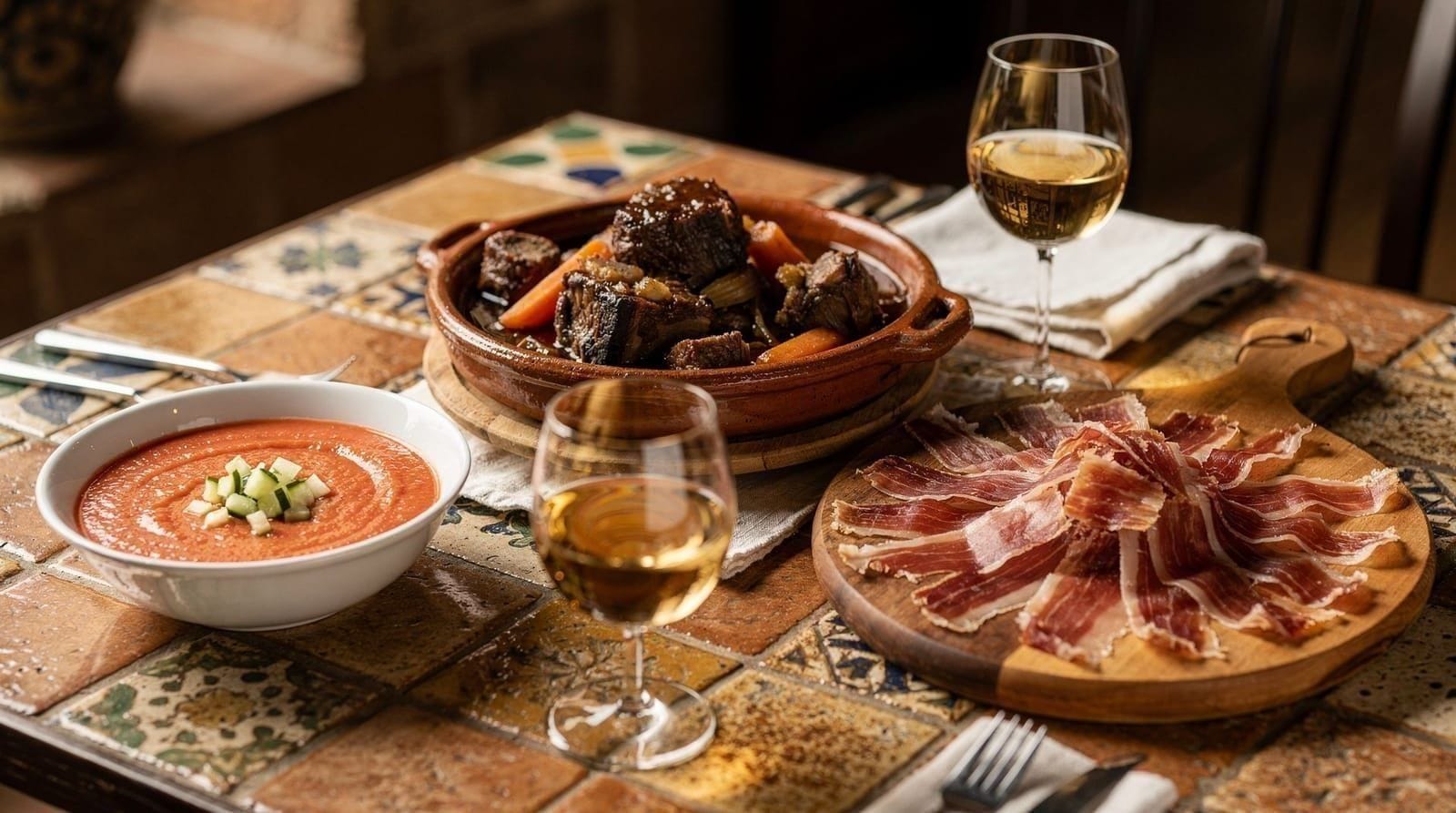
Salmorejo: Cold tomato-bread soup, blended smooth, served with toppings. The traditional toppings are diced jamón and hard-boiled egg — ask for it “sin jamón” (without ham) and you have a completely plant-based dish. The soup itself contains only tomato, bread, garlic, olive oil, and vinegar.
Patatas bravas: Fried potato chunks with a spiced tomato sauce and alioli. Vegetarian and usually vegan (check if the alioli uses egg — standard alioli does, some versions are egg-free).
Tortilla española: Potato omelette. Vegetarian (contains egg). The quality varies enormously — the benchmark is slightly runny in the center (jugosa) with sweet caramelized onion. A dry, dense tortilla is overcooked.
Pan con tomate / tostada con tomate: Bread with grated tomato and olive oil. Definitively vegan. The standard Andalusian breakfast.
Gazpacho / salmorejo (without toppings): Both cold soups are vegan in base form. Ask to hold the jamón and egg garnishes.
Olives, nuts, chips: Universal bar snacks, reliably vegan, usually free with drinks at traditional bars.
Fried peppers (pimientos de padrón or pimientos fritos): Small green peppers flash-fried in olive oil and salted. Vegan, excellent, and available at most tapas bars.
Cheese (queso): Manchego and other Spanish cheeses are vegetarian. They appear on montaditos (small sandwiches) at most bodegas.
Dishes to navigate carefully
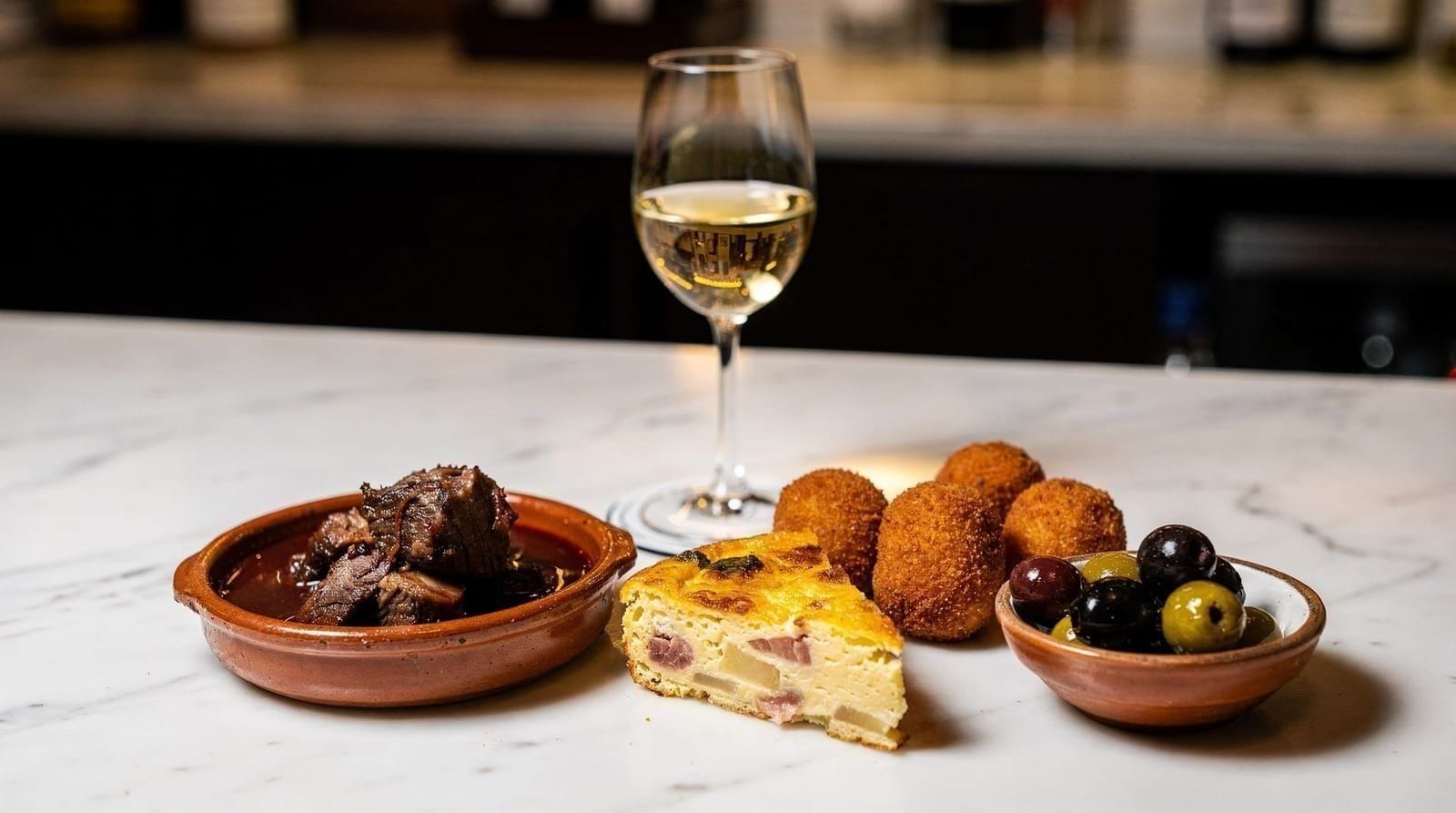
Croquetas: The classic jamón or bacalao croquette is not vegetarian. Some bars make spinach or vegetable croquetas — ask before ordering.
Gazpacho and salmorejo: The soups themselves are vegan; the garnishes (jamón, hard-boiled egg) may not match your diet. Always specify.
Bread dips and starters: Sometimes served with jamón on the side automatically. Ask for it without.
Paella and rice dishes: Often contain seafood or chicken stock even when the visible ingredients appear vegetarian.
The plant-based food tour option
Seville plant-based tapas and market tour — vegetarian and vegan focusedA plant-based food tour solves the navigation problem that makes vegetarian tapas harder to find than meat-based ones: the guide knows which bars have good vegetarian options, can order confidently, and takes you to the Mercado de Triana and natural food shops that are harder to find without local knowledge.
This format is useful not only for vegetarians — omnivores interested in Andalusian plant-based food traditions (which are genuinely deep and interesting, rooted in Moorish and post-Reconquista cooking) will also find the context valuable.
Dedicated vegetarian and vegan restaurants
Seville has developed a cluster of plant-based restaurants, concentrated in the Alameda de Hércules and Macarena areas:
Around Alameda de Hércules: The Alameda neighborhood has the highest density of vegetarian and vegan options, reflecting the area’s younger, more progressive demographic. Several restaurants specialize in creative plant-based dishes inspired by Andalusian flavors.
Macarena neighborhood: A handful of dedicated vegetarian restaurants with full menus rather than adapted tapas. The price level is mid-range (€15-25 per person for a full meal).
The honest assessment: Seville’s dedicated vegetarian restaurants are good but not spectacular. The better eating experiences for vegetarians often come from traditional bars where the existing vegetarian dishes (espinacas, salmorejo, fried vegetables) are excellent, rather than restaurants that have built a menu around replacing meat.
Shopping for plant-based food: the markets
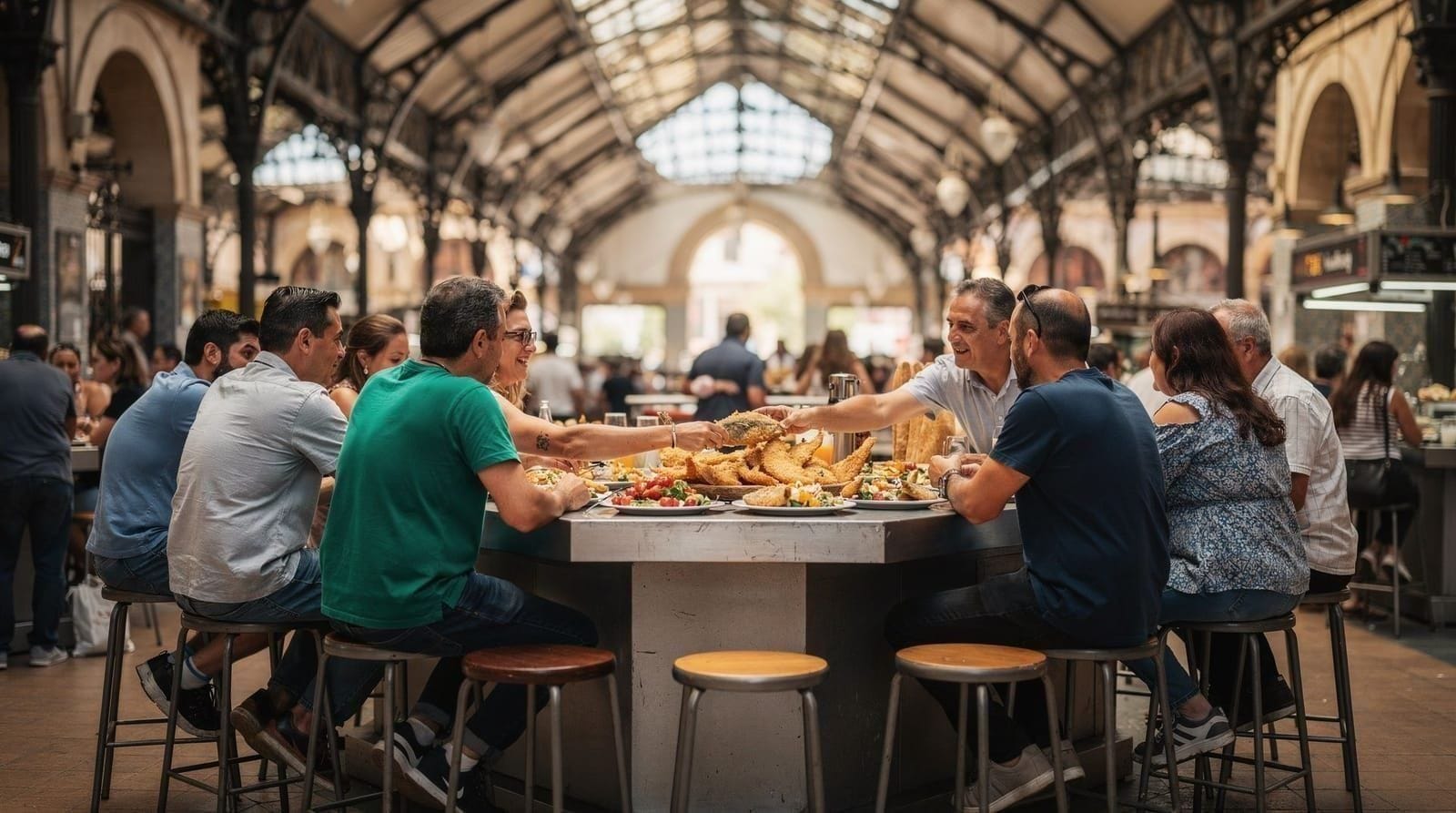
The Mercado de Triana is an excellent source of produce, olives, nuts, fresh vegetables, and fruit. For visitors with accommodation that includes a kitchen, buying directly from the market vendors is the most affordable and highest-quality option.
The covered markets — Mercado de Triana (Triana), Mercado de la Encarnación (Centro) — have fruit and vegetable sections, artisanal olive oil, fresh-milled spices, and jams that are entirely plant-based. See the Triana market food guide for the market specifically.
Navigating traditional bars: practical phrases
In Spanish, at a traditional tapas bar:
- “Soy vegetariano/a” (I am vegetarian)
- “Sin carne, sin pescado, sin jamón” (Without meat, without fish, without ham)
- “¿Tiene opciones vegetarianas?” (Do you have vegetarian options?)
- “¿Este plato lleva jamón?” (Does this dish contain ham?)
- “Sin jamón, por favor” (Without ham, please)
The response in a traditional bar may be limited — not every bar can accommodate vegetarianism easily. The bars most likely to have good vegetarian options: Eslava (Calle Eslava 3, creative tapas with vegetable-focused dishes), the Triana market bars (strong produce sourcing), and any bar with a seasonal menu featuring local vegetables.
Summer vegetables: Seville’s overlooked strength
In summer, when Seville reaches 40°C and the cold soups are at their best, the vegetable and cold dish options are also at their peak. Ripe August tomatoes in a salmorejo are a fundamentally different dish from February versions. Escalivada (roasted aubergine, peppers, and onion) is a summer staple at quality bars. Grilled artichokes, when in season, are excellent.
The irony of vegetarian eating in Seville: the city has genuinely excellent vegetables and produce (the climate, the proximity of the Guadalquivir agricultural lands, the Andalusian tradition of olive oil-based cooking), but the public face of the food culture emphasizes jamón and fish. Looking past the surface reveals a lot to eat.
For where to eat across all dietary requirements, see where to eat in Seville. For the tapas that are worth ordering regardless of dietary preference, see traditional Andalusian dishes and best tapas in Seville.
Vegan-specific considerations beyond vegetarian
Strict vegans face a slightly harder path than vegetarians in Seville, since dairy and egg turn up in dishes that otherwise look plant-based. Tortilla española contains egg by definition. Alioli is traditionally egg-based, though egg-free versions exist and are worth asking about specifically. Bread is usually fine, but pastries and some bar snacks use butter or lard (manteca) in ways that aren’t obvious from the name — the word “manteca” on a menu is worth watching for.
Cheese turns up on montaditos and in tapas that otherwise read as vegetarian, so a blanket “sin queso” alongside “sin carne, sin pescado” is worth adding if you’re strictly avoiding dairy. The good news: the cold soups, roasted vegetable dishes like escalivada, and the fried pepper tapas are naturally vegan without modification, and form a reliable core to build a meal around even at a traditional bar with no dedicated vegan menu.
Santa Cruz specifically: harder, not impossible
The Santa Cruz quarter, dense with tourist-facing restaurants around the Cathedral, is generally the hardest area in central Seville for confident vegetarian or vegan ordering — menus lean heavily on set tourist-tapas combos built around jamón and fried fish. It’s not impossible, and the best tapas bars in Santa Cruz guide flags which spots handle dietary requests well, but if plant-based eating is a priority, it’s worth treating a Santa Cruz meal as one you’ll need to navigate more carefully than one in Triana or the Alameda, where menus and kitchen attitudes are generally more accommodating.
Building a meat-free day around Seville’s rhythm
Meals in Seville follow a local rhythm, and working with it makes plant-based eating easier. Breakfast is the simplest meal of all: a tostada with grated tomato and olive oil is vegan before you ask for anything, and our breakfast in Seville guide covers where to find a good one. Lunch is the natural moment for a sit-down meal in a neighborhood restaurant, while the evening is for moving between bars, ordering one or two small plates at each. Treating tapas as a progression rather than a single meal means a bar with only two vegetarian options is no problem: you eat those two things and move on.
If you are travelling in a group with mixed diets, the barra-style bar is your friend. Everyone orders what they want, plates are shared or not, and nobody has to agree on a single restaurant. The barra vs terrace pricing guide explains why standing at the bar is also the more local way to eat.
Eating plant-based on a guided food tour
If you would rather not negotiate every order yourself, a general food tour can work too, provided you tell the operator about your diet when you book rather than on the day. Some itineraries, such as a guided walk through tastes, tapas and traditions, are built around traditional meat and fish dishes, so check with the organizer whether the stops can be adapted before you commit. The plant-based tour described earlier avoids that question entirely. For a broader comparison of formats, see Seville food tour guide and Seville tapas tours compared.
Where to base yourself for easier eating
Where you sleep shapes how easy the food is. Staying near the Alameda or in Triana puts you within a short walk of the neighborhoods with the most accommodating kitchens, and you will not be tempted into the nearest tourist menu after a long day of sightseeing. Our where to stay in Seville guide and the Alameda de Hércules guide will help you choose, and the Triana neighborhood guide is worth reading if you prefer the river side of the city.
Avoiding the tourist-menu trap
Restaurants with photo menus and fixed tourist combinations are the least likely to adapt a dish thoughtfully. A kitchen cooking from a short, seasonal list can usually leave out ham or swap an ingredient without fuss, while a kitchen churning through set combos often cannot. Our guide to avoiding tourist-trap restaurants in Seville lists the warning signs, and they apply doubly when you have dietary needs. A short menu written in Spanish, a busy room of locals and a chalkboard of the day’s dishes are all good signs.
Planning a foodie trip with a plant-based diet
If food is the point of your trip, the three days for foodies itinerary gives a useful framework for pacing meals, and you can adapt each stop using the dishes and phrases above. A few small habits help throughout your stay:
- Say your dietary needs at the start of the order, not after the plate arrives.
- Ask what the kitchen recommends without meat; staff often steer you toward something better than the obvious option.
- Learn the name of the vegetable dish in season, since the best plates change with the market.
- Be generous with thanks. A friendly, patient approach goes much further in a small bar than a list of demands.
- Keep a fallback in mind, such as olives, bread, peppers and cheese, for the occasional bar that has little else.
Being flexible about the format of a meal also helps. A plate of several small vegetable tapas, a salad and a soup can add up to a fuller dinner than a single main course, and many bars are happy to bring dishes out as they are ready rather than all at once. Come hungry, go slowly, and let the day’s market produce decide what you eat.
Top experiences
Bookable activities with verified prices and instant confirmation on GetYourGuide.