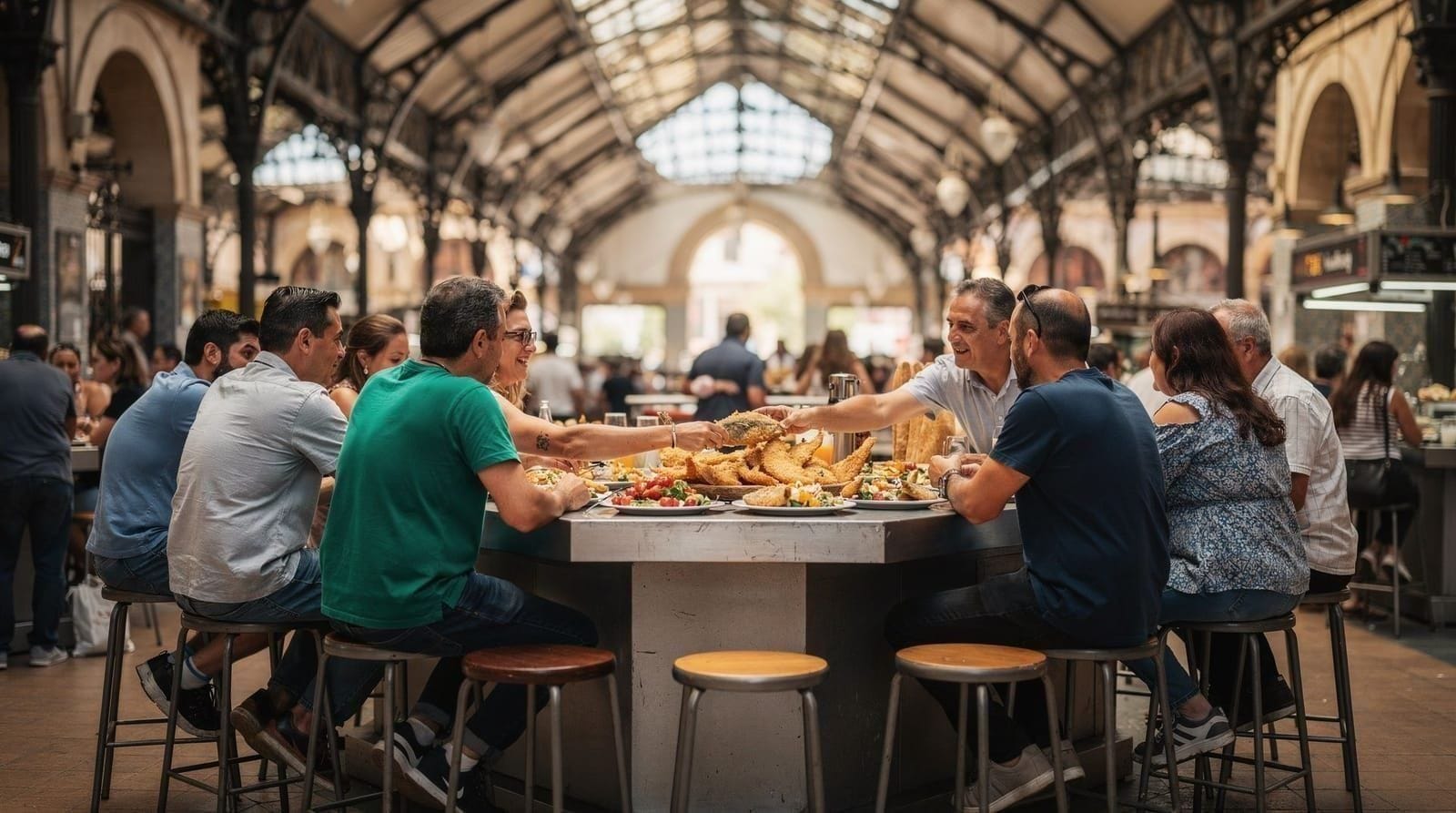
Seville tapas tours compared: which food tour is actually worth booking
Seville: Tastes, tapas and traditions food tour
Which tapas food tour is best in Seville?
For first-time visitors, the Seville ultimate food tour (4-5 bars, 3 hours, food and drinks included) offers the best balance of coverage and value. Evening formats work better for the social atmosphere; afternoon tours suit early risers. All tours run €60-85 per person.
Seville has more tapas food tours on offer than almost any other Spanish city, which makes choosing one harder than it should be. This page cuts through the listing text to compare what each tour actually covers: group size, number of stops, what you eat and drink, and what the guide adds beyond the food itself.
| Typical cost | around €55-85 per person |
| Duration | 3 hours for most formats |
| Group size | 4-12 depending on tour |
| Best for first visit | the ultimate food tour |
| Best for repeat visitors | the secret food tour |
The honest baseline: any decent food tour in Seville gets you to good tapas bars and prevents you from landing in a tourist-trap restaurant by mistake. That alone has value on a first visit. The differences between tours are in depth, style, and whether the historical and cultural context adds anything to the eating.
Why food tours make sense in Seville
Seville’s tapas scene is genuinely difficult to navigate without help. The best bars are often unmarked, on residential side streets, with Spanish-only menus and staff who do not speak English. A guide who has these relationships already — who can walk you into a packed bar and order for the table in Andalusian Spanish — removes a barrier that matters.
The second function of a food tour: timing. Sevillanos eat at 1-2 PM for lunch and 9-10 PM for dinner. Tourists who show up at 6 PM find empty bars and confused staff. A tour that runs on the local schedule is noticeably better than eating alone on tourist time.
What a food tour cannot do: replace independent exploration. The bars you visit on a tour are curated to be accessible to foreigners and representative of local cuisine. They are good but not necessarily the best available for every category. Use the tour as an orientation, then use the best tapas in Seville guide for independent follow-up.
The tours: what each covers
The ultimate food tour
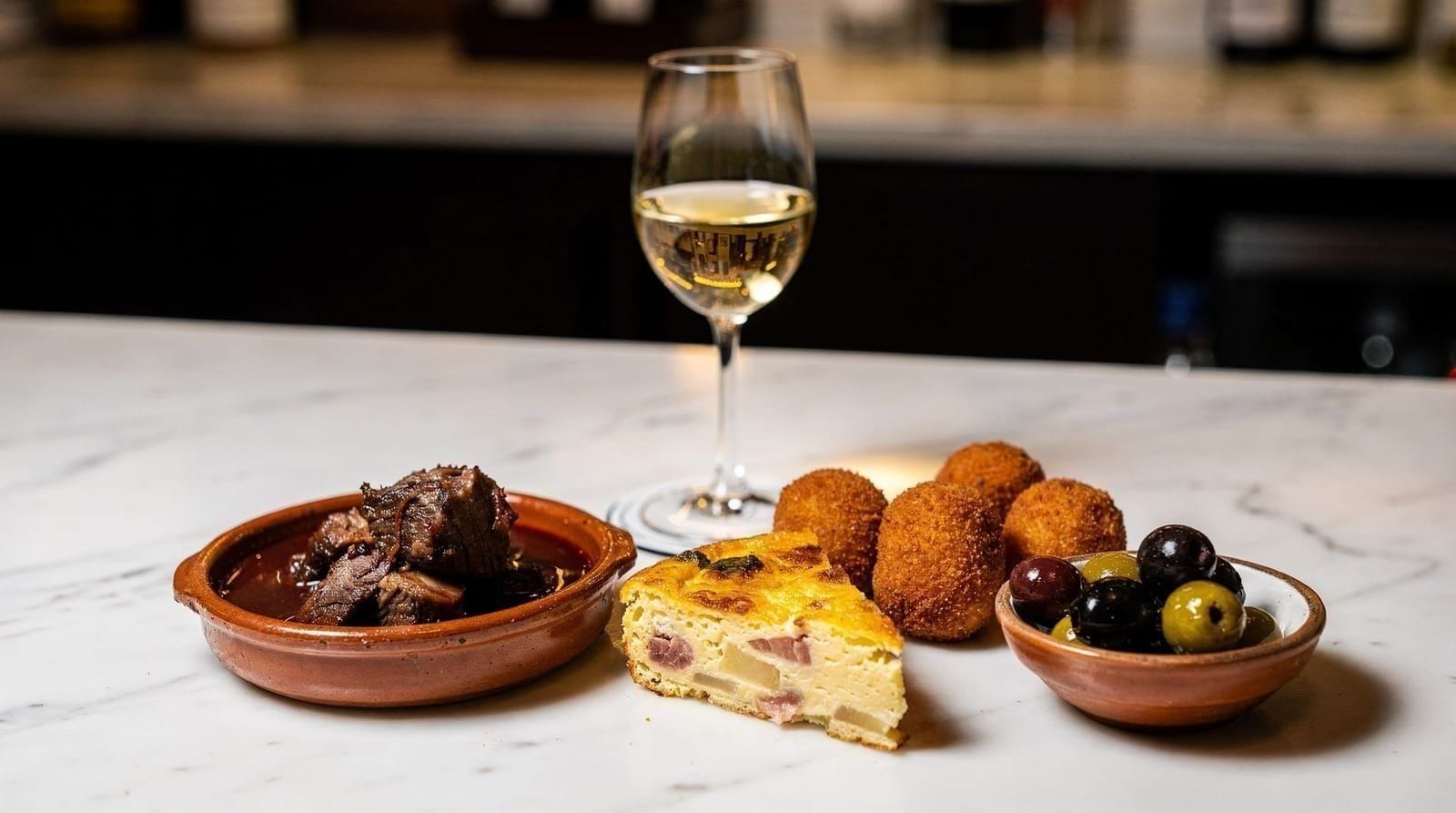
Seville ultimate food tour — 4-5 bars, food and drinks, 3 hoursThe most comprehensive option for a first visit. The tour visits 4-5 tapas bars over 3 hours, covering a selection of dishes that maps onto the Seville tapas canon: espinacas con garbanzos, salmorejo, montaditos, croquetas, and seasonal specials. Food and drinks are included in the price.
The guide component on the ultimate food tour is strong on food history — how the dishes evolved, which ingredients reflect Moorish culinary influence, why certain bars have survived for generations. Less focused on architecture or broader neighborhood history.
Group size: typically 8-12 people. Small enough to manage bar dynamics without overwhelming a small space. Duration: 3 hours. Meeting point: usually near the Cathedral or Plaza Nueva.
Best for: first-time visitors who want to understand the tapas landscape before eating independently.
Tapas and taverns history walking tour
Tapas and taverns history walking tour — combines food with historical narrativeThis tour integrates the tapas stops with a walking tour of the Centro and El Arenal neighborhoods. The food is good and similar in range to the ultimate food tour, but the guide spends more time on the history of the bars themselves: tavern culture in Seville from the 17th century onward, the role of the bodega in neighborhood life, and the evolution of tapas from the famous cork-and-plate legend to the current form.
The tradeoff: more walking and talking, less standing at bars. If you want the food and the context in roughly equal measure, this format works well. If you primarily want to eat and be led to good places, the ultimate food tour is more efficient.
Seville’s tavern history is genuinely interesting — El Rinconcillo at Calle Gerona 40 has operated since 1670, which puts its founding before the American Revolution. Several of the bodegas in this tour’s circuit have similarly deep roots.
Group size: 8-12. Duration: 3 hours.
The tapas crawl
Seville tapas crawl — evening format, more stops, local crowdThe tapas crawl runs in the evening (starting 8-8:30 PM) and covers more stops in the same timeframe, with slightly smaller portions at each. The evening timing means the bars are at their most atmospheric — full, loud, characteristically Sevillano. This is closer to how locals actually do a tapas night than the afternoon tours.
The crawl format has a different energy from a structured tour: it is faster-moving, less pedagogical, more focused on the experience of bar-hopping. The guide is more facilitator than lecturer. If you already understand the tapas basics and want the social experience, the crawl format is better.
The limitations: more stops means less time at each, so if a bar turns out to be exceptional, you will be moving on before you want to. The evening format also assumes a higher noise tolerance — Seville tapas bars at 9 PM are loud.
The secret food tour
Seville secret food tour — off-tourist-circuit bars, smaller groupThe “secret” designation is marketing language but has a legitimate meaning: this tour deliberately avoids the well-known tapas bars that appear on every other tour and focuses on neighborhood spots that do not have an online presence or tourist clientele. The bars visited are genuinely less-known, the guide relationship with the owners is more personal, and the food is less predictably curated.
The risk of this format: you might visit a bar that is excellent but serves only one dish category well, or where the guide’s personal relationship with the owner has made the bar selection idiosyncratic. The upside: you will eat in places you would not find independently and that will not appear on other tourists’ Instagram accounts.
Group size: smaller (6-8 people). Duration: 3 hours. Best for: repeat visitors to Seville or experienced travelers who find the standard tour circuit predictable.
Tapas and drinks with a local guide
Food tour with tapas and drinks — local guide formatA more informal version of the food tour format, typically run by local residents rather than professional tour guide companies. The quality depends heavily on the individual guide. When it works, it provides genuine insight into local eating patterns, personal bar recommendations, and a less packaged experience. The guide-to-group ratio is usually better.
The variability is higher: this format’s best version is excellent; the worst version is a walking Google Maps tour with food stops. Check recent reviews carefully before booking.
Comparing the options: decision framework
| Best for | Group size | Timing | Price range | |
|---|---|---|---|---|
| Ultimate food tour | First visit, comprehensive coverage | 8-12 | Afternoon or evening | €70-85 |
| Tapas and taverns history | History + food combined | 8-12 | Afternoon | €65-75 |
| Tapas crawl | Evening atmosphere, social experience | 8-12 | Evening only | €60-70 |
| Secret food tour | Repeat visitors, off-circuit | 6-8 | Varies | €75-85 |
| Local guide tour | Informal, personal | 4-8 | Varies | €55-70 |
What to eat on any tour: the key dishes
Regardless of which tour you book, certain dishes should appear on any decent Seville food tour. If they are not on the tour menu, the operator is substituting tourist-friendly options for authentic ones.
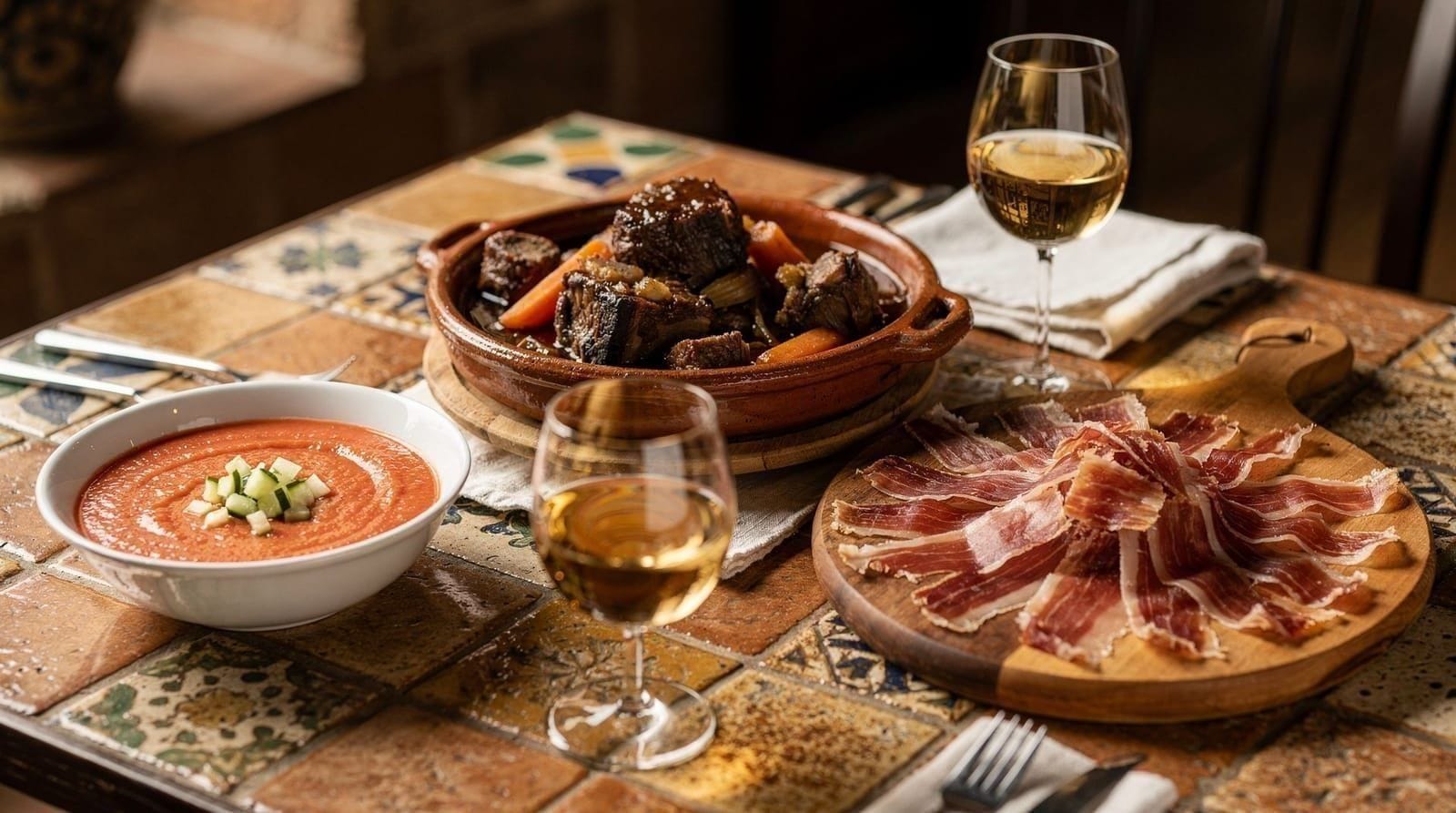
Salmorejo — the cold tomato and bread soup from Córdoba but ubiquitous in Seville. Thicker than gazpacho, served with jamón and hard-boiled egg.
Espinacas con garbanzos — spinach with chickpeas in Moorish spice. A uniquely Sevillano dish with a clear Arabic culinary ancestry.
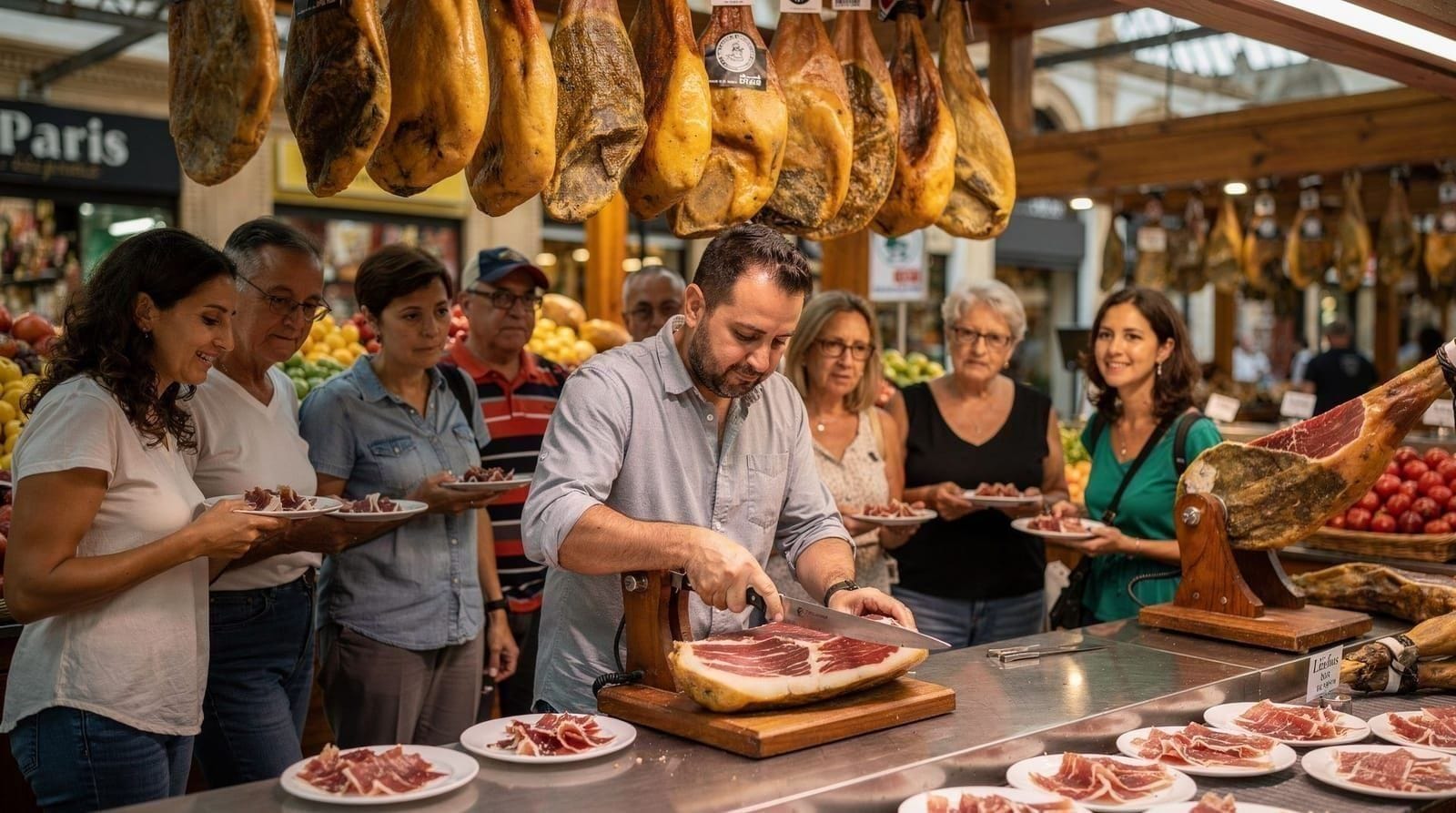
Jamón ibérico — Iberian ham, ideally bellota grade (acorn-fed pigs). A quality guide will explain the difference between ibérico and serrano rather than just serving ham.
Local wine — fino sherry or manzanilla (from the nearby coast) rather than generic house wine. Good guides match the drink to the food and explain the wine culture of the Jerez region.
For more on the dishes themselves, see traditional Andalusian dishes. For independent tapas bar recommendations before and after your tour, see best tapas in Seville.
The Triana market alternative
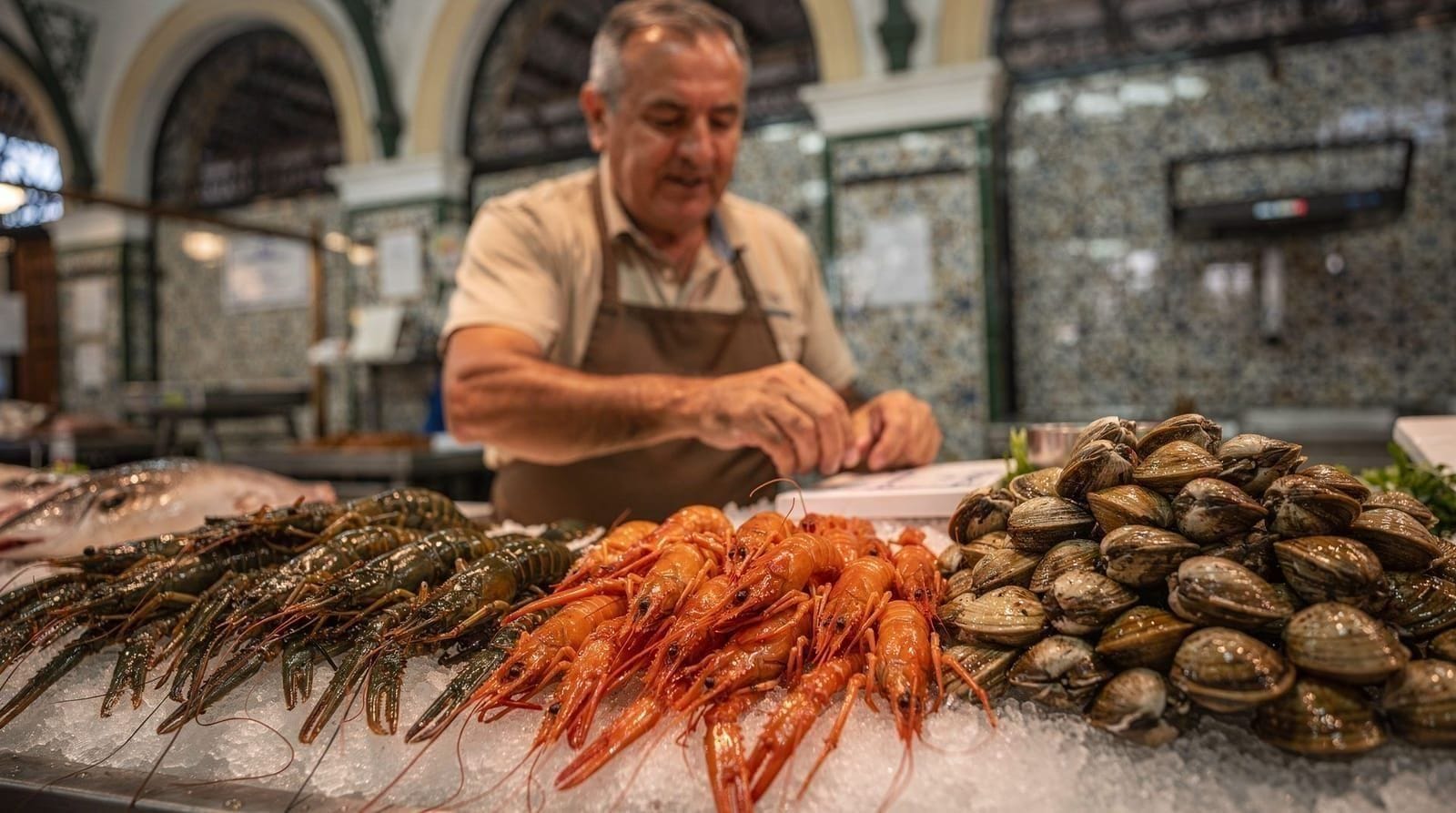
Several food tours include the Mercado de Triana — the covered market on the Triana side of the river — as a stop. The market is worth visiting independently as well: it has a section of small bar-restaurants around the interior perimeter where you can eat extremely well at counter prices.
The market stalls are open Monday to Saturday, 9 AM to 3 PM, with some bars operating later into the evening. See the Triana market food guide for specific recommendations.
Practical booking notes
All of the tours listed here are available on GetYourGuide with a cancellation policy of typically 24-48 hours before the tour. Booking in advance during high season (March-May and September-October) is necessary — the small group sizes fill up quickly.
The tours operate year-round. Summer (June-August) tours start later in the evening to avoid the heat. The evening timing in summer is actually better for the tapas experience — the bars are busier and the temperature is manageable by 8 PM.
For a complete picture of Seville’s food scene beyond tours, the where to eat in Seville guide covers restaurant options across all price points.
How to get the most out of a tapas tour
A few habits make any of these formats better. Arrive hungry but not starving: the first bar sets the pace, and a group that rushes the first plate tends to flag by the fourth stop. Tell the guide about allergies or dietary limits when you book or at the meeting point rather than halfway through, because the stops are planned around what each bar does well. Travellers who avoid pork or shellfish should read the vegetarian and vegan Seville guide before choosing, since the classic tapas canon leans heavily on ham and fried fish.
Ask questions. The guides who do this work know the bar owners, and a curious guest often gets a story or an extra plate that the standard script does not include. Pace your drinking too: sherry and manzanilla are served in small glasses, but they add up over three hours.
Wear comfortable shoes. Even the formats that stand at bars involve walking between stops on old cobbled streets, and the walking-heavy history format involves more of it. If the heat is a worry in summer, the Seville in summer heat guide explains how locals structure their day around it.
Tipping, bills and etiquette at the bar
Food and drinks are included in the tour price for the formats described above, but anything you order on top of the planned menu is yours to pay for. Bars on a tour are working bars, so be ready for crowds, noise and standing room. The barra versus terrace pricing guide explains why eating at the counter is the local way and why it usually costs less than a table outside.
A tour is also a good moment to learn how a tapas bar runs: you catch the barman’s eye, order, and settle up at the end rather than dish by dish. Seeing this once makes independent evenings much easier. Pair that confidence with the guide to avoiding tourist-trap restaurants and the Santa Cruz tapas bar list or the Triana tapas bar list and you have a plan for every other night of your stay.
Which neighbourhoods the tours tend to cover
Most circuits stay in the historic centre, around the Cathedral, Santa Cruz and El Arenal, because the bar density there makes a three-hour walk possible without transport. If you would rather eat somewhere with a more residential feel, the Triana neighbourhood guide and the El Arenal guide describe what each area is like after dark. For a longer food-focused stay, the 3 days for foodies itinerary shows how a tour can anchor a trip built around eating, and the broader Seville food tour guide covers the wider range of food experiences.
Cooking classes as an alternative to a tour
If eating a lot of food while standing at bars for three hours doesn’t appeal, a cooking class is a different way to engage with Seville’s food culture — you learn to make dishes like salmorejo or tortilla española rather than only tasting them, and you eat sitting down at the end. See the cooking classes Seville guide for options, and the paella cooking class guide if you’d rather learn a dish that, while not Sevillano in origin, is widely taught in the city.
Fitting a food tour into your itinerary
A food tour works best booked early in a stay of 3 days or longer, so the bars and dishes it introduces you to can inform independent eating for the rest of the trip. For a shorter 1-day visit, a food tour is a reasonable way to guarantee a good meal without research, though it does take up a substantial block of a single tight day.
Frequently asked questions about Seville tapas tours compared
Which Seville tapas tour is best for a solo traveller?
The ultimate food tour or the local guide format both work well solo, since the small group setting (8-12 or fewer people) naturally creates conversation, and you avoid the awkwardness of eating alone at multiple bars in one evening. The tapas crawl's louder, more social evening atmosphere also suits solo travellers who want company for the night.Can I do more than one tapas tour on the same trip?
Yes, and it can work well if you space them out. Doing the ultimate food tour early in your trip for orientation, then a more specialised option like the secret food tour or a market tour later, avoids overlap and builds on what you learned in the first session rather than repeating it.
Top experiences
Bookable activities with verified prices and instant confirmation on GetYourGuide.