Seville by bike: guided tours, Sevici rentals, and the best cycling routes
Seville: 2-hour highlights bike tour
Is Seville good for cycling?
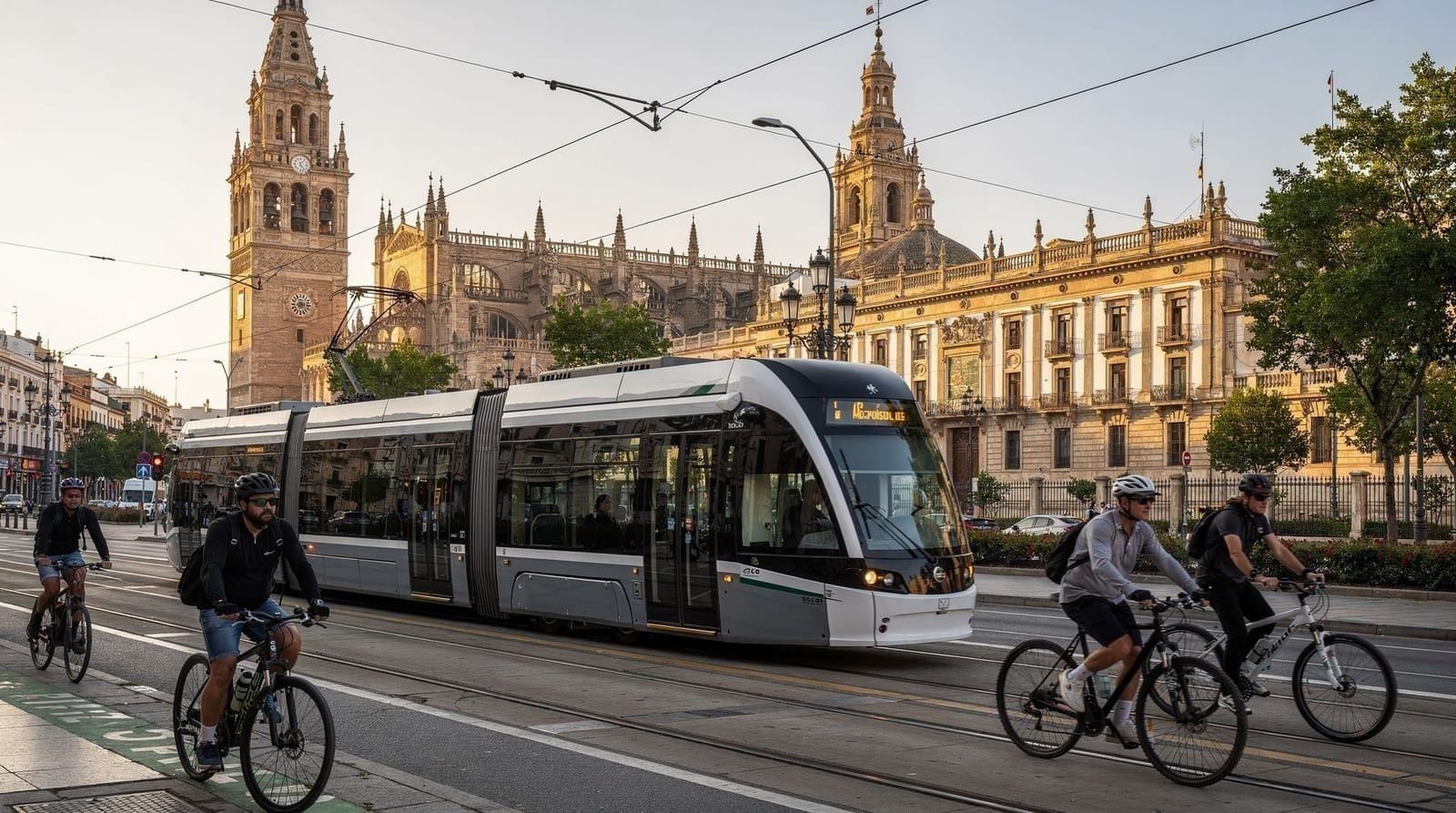
Yes — Seville has one of the best cycling infrastructures of any Spanish city, with over 180km of dedicated bike lanes (carriles bici). The historic centre has some cycling-restricted zones, but the riverside routes, the Parque María Luisa circuit, and the paths through the Nervión district are excellent. Guided bike tours offer a practical way to cover more of the city than walking allows, especially for day visitors.
Seville built its first dedicated cycling infrastructure in the mid-2000s and expanded aggressively through the following decade. The result is one of the most cyclist-friendly environments in Spain — over 180km of marked bike lanes connecting the city’s major neighbourhoods, a functioning public bike share (Sevici), and a culture of cycling that has become genuinely embedded in daily Sevillano life.
For visitors, this translates into a practical option for covering the city more efficiently than walking while maintaining the human-pace engagement that makes Seville’s streets interesting.
| Sevici day pass | unlimited 30-min trips; price on the official Sevici website |
| Rental shop | around €4–6/hour, €15–20/day |
| Guided tour | around €20–30/person, 2–3 hours |
| Electric bike rental | around €20–30 for a half-day |
| Best time | 07:00–10:00 or 17:30–20:00 in summer |
The cycling infrastructure: what Seville actually has
The carril bici (bike lane) network in Seville is mostly separated from motor traffic — physical curbs, not just paint on the road — making it comfortable to use even for urban cyclists without experience on busy streets. The main arteries include:
Paseo de Cristóbal Colón: The riverside route running north-south from the Puente de Triana to the San Telmo bridge and beyond. Wide, flat, scenic, and popular with both cyclists and pedestrians. This is the central axis of any Seville cycling exploration.
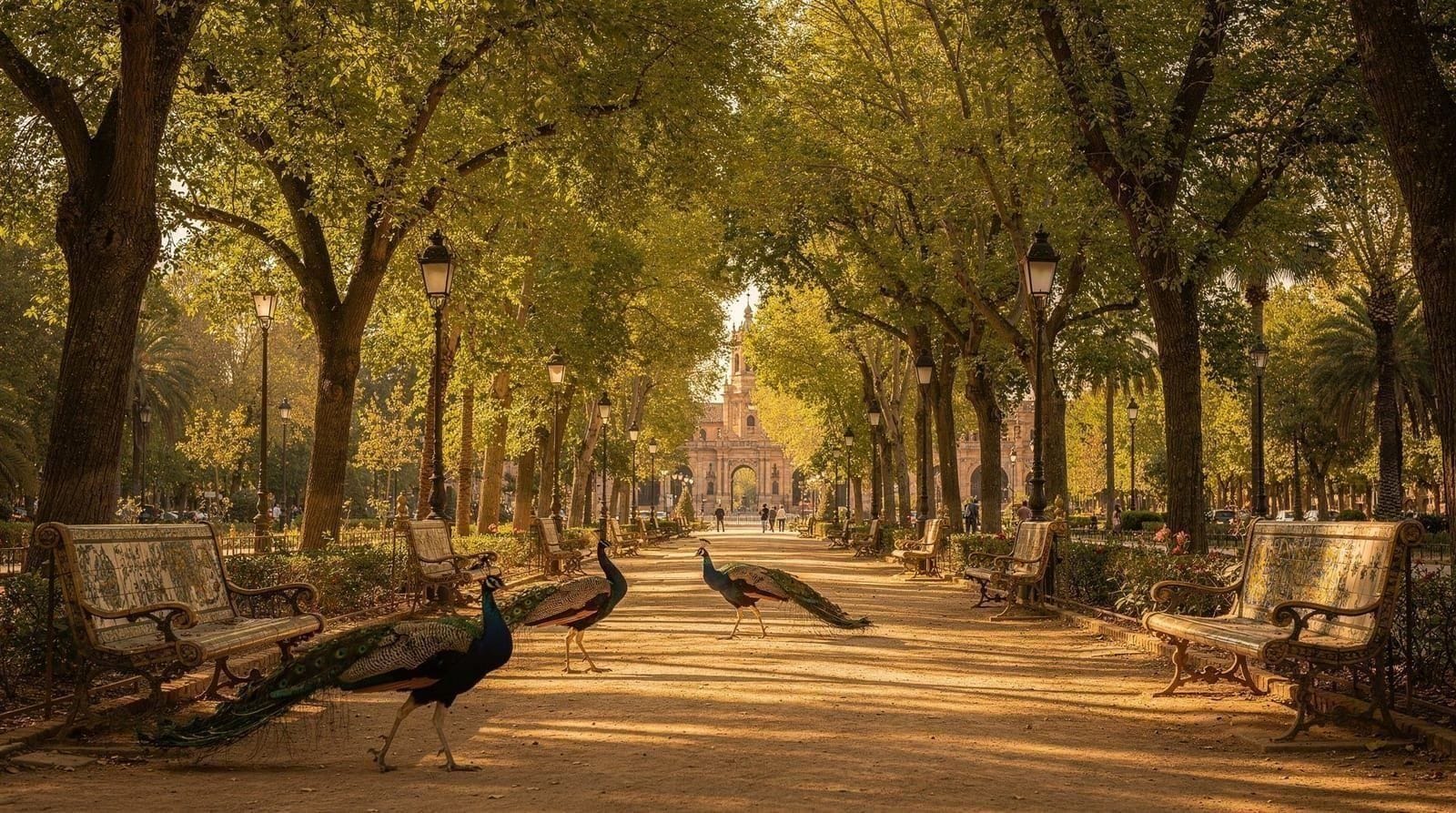
Parque María Luisa circuit: The park in the south of the city has cycling paths through its grounds, including the approaches to the Plaza de España. Largely car-free and shaded by mature trees — the most pleasant cycling in the city in summer.
Alameda de Hércules axis: The long promenade running north from the Arenal district through the Macarena neighbourhood has a cycle lane and connects otherwise-walking-distance areas more efficiently.
Triana riverfront (Calle Betis): The Triana side of the river has cycling access along the waterfront, with the bridge crossings at Puente de Triana and Puente del Cachorro providing circuit possibilities.
Guided bike tours: who they suit
A guided bike tour of Seville is most useful for visitors who want to cover significant distances (10-15km) in 2-3 hours, have limited cycling experience on urban roads, or want the guide narrative combined with movement efficiency.
The standard guided tour format covers the major landmarks (Catedral, Alcázar, Plaza de España, Torre del Oro, Triana) in approximately 3 hours with a pace that allows photography stops and guide commentary. This covers roughly twice the ground of an equivalent walking tour.
Book highlights bike tour with local guideElectric bike tours are a sensible choice in summer (June-August) when the combination of heat and cycling effort becomes uncomfortable. The assisted pedalling means arriving at each stop without significant sweating, which is not unimportant on a city tour where you are also trying to absorb information and take photographs.
Book landmarks electric bike tour of SevilleSunset bike tour: the evening option
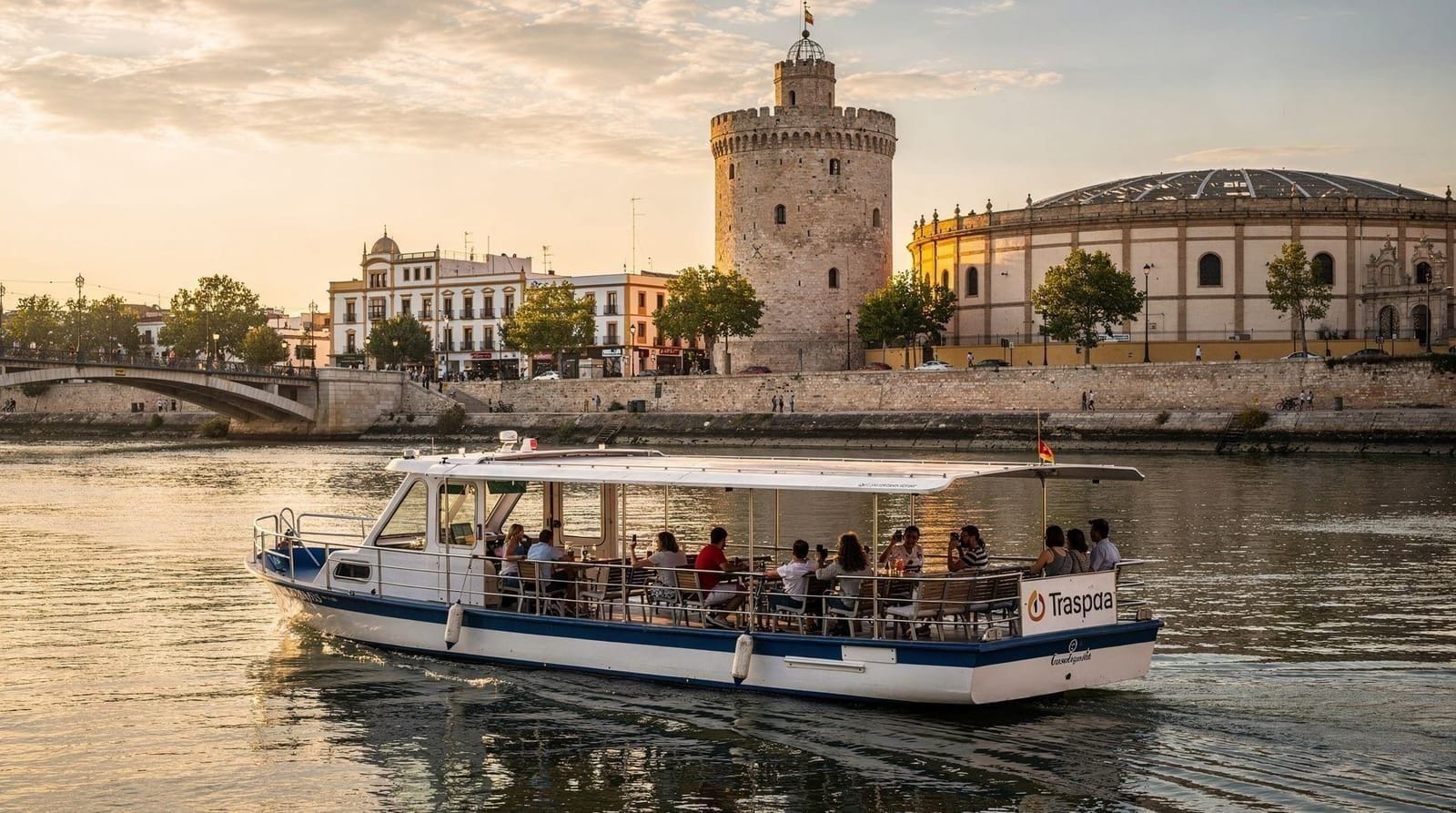
A sunset-specific bike tour operates from around 17:30-18:00 and combines the golden light on Seville’s buildings with the cooler late-afternoon temperature. The Guadalquivir river views are particularly good at this hour — the Torre del Oro from the Triana bank at sunset is one of the city’s most photographed views.
Book sunset bike tour in SevilleSelf-guided cycling with Sevici
For visitors comfortable with urban cycling and able to navigate independently, Sevici (the public bike share) is the cheapest option.
How it works: Register via the Sevici website or kiosks (credit card required). A single-day tourist subscription provides unlimited 30-minute rentals (current price on the official Sevici website). Take a bike, ride to the next station, dock it, take another bike — the system is designed for short urban hops rather than multi-hour rides.
Stations: 260+ stations across the city, generally well-distributed in the tourist areas. The app shows station locations and real-time bike/dock availability.
Limitations: 30-minute windows mean you need to plan your route around station locations. The bikes are single-speed and heavy — fine for flat city streets, uncomfortable for the few hilly areas (not many in Seville). Helmets are not provided, though helmets are increasingly available at tourist rental shops.
Cost comparison: For a tourist doing 4-6 trips across a day, the Sevici day pass comfortably undercuts rental shop prices (€15-20/day). For longer continuous rides, a private rental makes more sense.
The practical cycling routes for visitors
Riverside circuit (8km, 60 min): Puente de Triana → Calle Betis (Triana) → Puente de San Telmo → Paseo de Cristóbal Colón → Torre del Oro → north along river → Puente de Triana. Entirely flat, mostly separated cycling paths, passes every major riverside attraction.
City highlights (12km, 90 min): Add Parque María Luisa and Plaza de España to the riverside circuit. Exit the river circuit at the San Telmo bridge, continue south along the Paseo de las Delicias to the park entrance.
Extended exploration (15-18km, 2+ hours): Add the Alameda de Hércules, the Macarena quarter, and the route through Nervión. Good for visitors on a second cycling day who want to explore less-tourist-visited districts.
Cycling in Seville in summer
Cycling at midday in July or August in Seville with temperatures regularly exceeding 40°C is not comfortable. The practical windows are 07:00-10:00 (before the heat builds) and 17:30-20:00 (after it peaks). Sunset tours at 18:00 make logistical sense for this reason — they fit the most comfortable cycling window.
The guided tour operators are aware of this and time their summer tours accordingly. Self-guided morning starts with a 07:00 departure cover significant distance in comfortable conditions.
Water is essential. The cycling routes pass multiple public fountains (potable). Carry a bottle; refill frequently.
Cycling to less-visited districts
Most visitor cycling in Seville concentrates on the riverside and the monuments. Several under-visited neighbourhoods are best appreciated on a bike, where the pace is faster than walking but slower than driving:
Macarena: North of the historic centre, the Macarena neighbourhood (named for its famous Baroque basilica housing the statue of the Virgen de la Macarena) has a distinctly local character. The covered Mercado de la Feria operates Tuesday through Saturday mornings. The Macarena’s walls — Roman-era defensive walls that have survived to 2m height in places along the Calle Macarena — are one of the more understated archaeological sites in Seville.
Triana ceramics district: Cycling through Triana allows the ceramics workshops and shops on Calle Alfarería to be visited at pace — stopping, looking, moving on — in a way that walking makes slower and buses make impossible. The neighbourhood’s flat terrain and quiet streets make it one of the best cycling districts.
Nervión commercial district: The modern face of Seville, east of the historic centre and north of Santa Justa station. Less photogenic but useful context — the contrast between the medieval streets of Santa Cruz and the contemporary commercial architecture of Nervión is one of the more interesting urban juxtapositions in the city.
If you want to read more about these districts before you ride through them, the La Macarena guide, the Triana neighbourhood guide and the Nervión guide each explain what is worth stopping for. The Alameda de Hércules guide and the El Arenal guide cover the two areas that the cycle lanes connect on the way north and along the river.
The cycling culture of Seville
Seville’s cycling infrastructure development since 2006 has transformed the city’s relationship with bicycles. In 2006, cycling modal share was around 0.5% of trips; by 2010 it had risen to over 6%, making Seville one of the fastest-growing cycling cities in Europe during that period.
The reasons are structural: the city is almost entirely flat (the historic centre has no significant gradients), the climate is sunny for most of the year (though summer heat is a constraint), and the street layout provides many routes that separate cycling from both pedestrians and motor traffic.
The Sevici bike share contributed significantly to this. At its introduction in 2007, Sevici was one of the largest bike-share schemes in Spain. The current network of 260+ stations and 2,500+ bikes covers the tourist and residential areas adequately for short urban trips.
For visitors, this cultural context matters: cycling in Seville is not a novelty or a tourist product — it is a normal way for Sevillanos to commute and run errands. Using a bike in Seville puts you in the same mode as locals, which changes the texture of how you experience the city.
Combining cycling with other experiences
A bike as transit tool — rather than as the primary experience — unlocks efficient combinations:
Cycling to a cooking class: If your cooking class is in Triana (starting at the Mercado de Triana), cycling from a central hotel to Triana takes 10-12 minutes versus 20-25 on foot. Sevici stations are 200m from the market entrance.
Cycling to the Bienal de Flamenco venues: During the September-October Bienal, cycling to the Teatro de la Maestranza or the Teatro Lope de Vega from Santa Cruz is 10 minutes. The alternative — walking or navigating the limited Metro — is less efficient.
Cycling for food market visits: The Mercado de Triana, the Mercado de la Feria, and the Mercado de la Encarnación (Setas) form a triangle through the city. Visiting all three in a morning on a bike is feasible in 2-3 hours including browsing time. On foot, covering the same ground would take the full morning.
Safety and rules on Seville’s bike lanes
Spanish cycling traffic law requires:
- Helmets are mandatory for children under 16 and recommended for adults (Seville operators generally provide them)
- Cycling on designated cycle paths where available is required
- Pedestrian zones cannot be cycled through
- Maximum speed in urban areas is 25 km/h for bikes (25 km/h is the practical maximum anyway on Seville’s streets)
Practically, Seville’s cycling infrastructure is well-marked and the separation from pedestrians and cars is clear. The main hazard is inattentive pedestrians stepping into cycle lanes at crossings — slow approaching intersections and be prepared for this.
Night cycling is safe on main routes but requires front and rear lights (legally mandatory and practically important on the less-illuminated secondary streets). Rental bikes typically do not include lights — carry your own if cycling after dark.
Bike tours vs other small-vehicle options
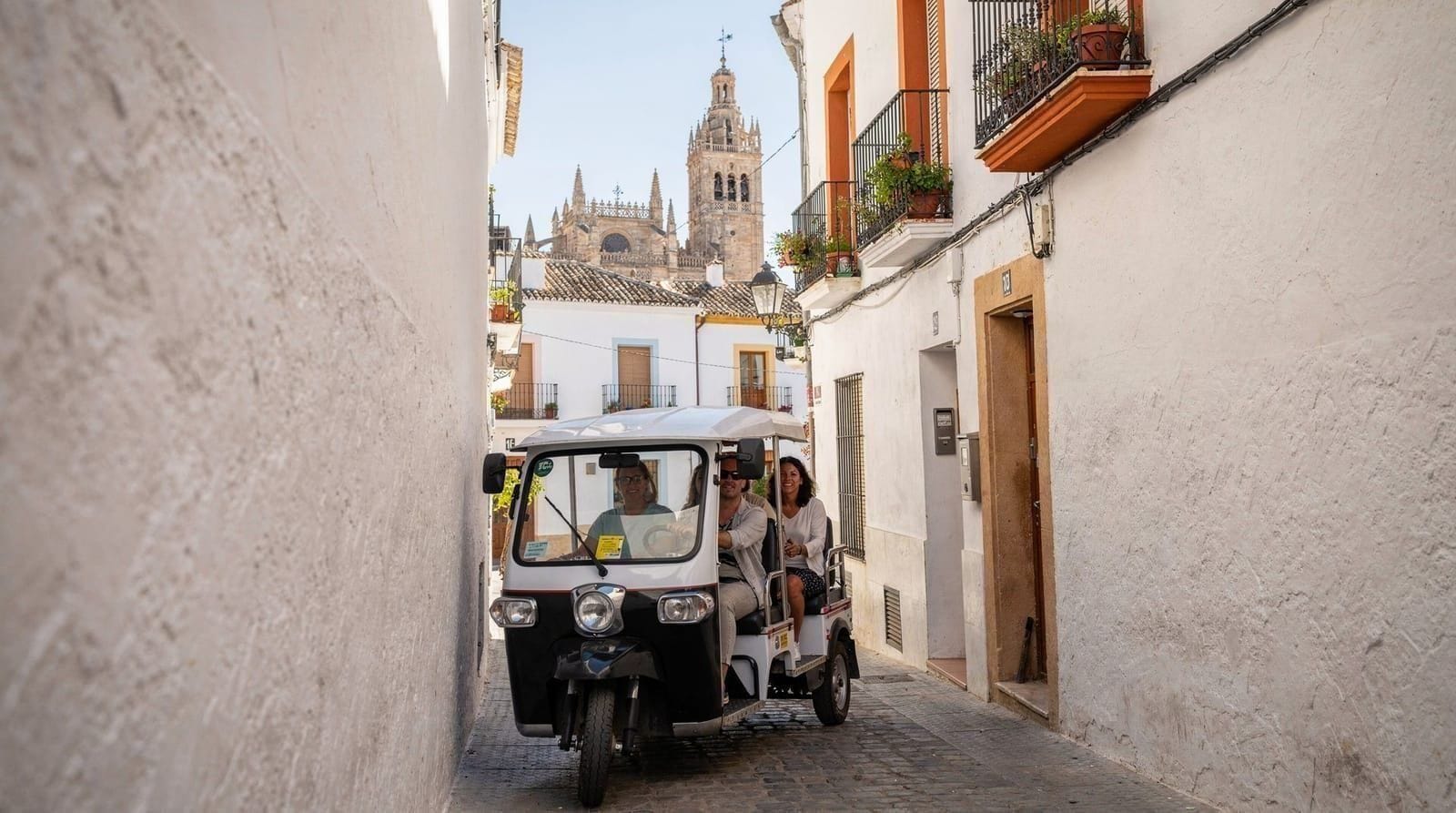
Cycling is one of several ways to cover Seville’s distances faster than on foot. Compared to the segway and tuk-tuk tours, a bike tour typically covers more ground and gives more flexibility over pace, at the cost of more physical effort — a reasonable trade for visitors who cycle regularly. For visitors who want the calm of the water instead, the Guadalquivir river cruise covers a similar stretch of riverside scenery sitting down. And for anyone weighing up transport modes across the whole trip, getting around Seville gives the full comparison of walking, buses, taxis and bikes.
Combining a bike route with Seville’s parks
The Parque María Luisa is the natural centrepiece of any cycling route through southern Seville — its shaded paths are among the most pleasant cycling anywhere in the city, especially in summer. For a longer green-space route, pair María Luisa with the wider parks and gardens of Seville, several of which connect via cycle-friendly streets. If you’d rather explore on foot with a guide instead, the best walking tours in Seville cover much of the same historic-centre ground at a slower pace.
Fitting a bike ride into your itinerary
A bike works best as one block of a longer plan rather than as the whole plan. If you are still deciding how to organise your days, planning your Seville itinerary helps you place a ride where it saves the most walking, and the Seville in 2 days and Seville in 3 days itineraries show how the riverside, the park and the historic centre can be sequenced. A guided bike tour is a good first-morning activity: it gives you the layout of the city and helps you decide what deserves a longer visit later.
Pairing a ride with the big monuments needs a little thought. The Plaza de España guide is worth reading before you cycle past, since the square rewards a slow walk once you have locked the bike or docked it at a station. The same applies to the Real Alcázar and the cathedral and Giralda: ride to them, then go in on foot.
Heat, families and other transport
Riding in the hottest months takes planning, and the Seville in summer heat guide explains how to structure a day around the temperature. If you are travelling with children, Seville with kids covers what suits younger travellers, and it is worth confirming the age policy of any bike tour before you book. For the days when you would rather not cycle at all, the Seville public transport guide lays out the alternatives, and the trip report on kayaking the Guadalquivir shows another way to see the river from the water.
Frequently asked questions about Seville by bike
Can I rent a bike in Seville?
Yes. Sevici is Seville's public bike share scheme — similar to the Vélib in Paris or Santander Cycles in London. Sevici day passes provide unlimited 30-minute trips (extra charge for longer); check current prices on the official Sevici website. Tourist-oriented rental shops near the Santa Cruz and El Arenal districts offer hourly (€4-6) or daily (€15-20) rentals including helmets and locks. Electric bikes are available from private operators.Is the historic centre cyclable?
Partially. The narrow pedestrian streets of Santa Cruz are closed to cyclists. The wider streets around the Catedral, the Arenal, and the Alameda de Hércules have dedicated cycle lanes or are officially shared spaces. Riding into Santa Cruz's interior maze is not possible and not necessary — the area is too compact to gain anything over walking. Use bikes for the distances between neighbourhoods.What is the best cycling route in Seville?
The most consistently recommended route for visitors: start near the Puente de Triana, cross into Triana, follow Calle Betis south along the river, cross back at the Puente de San Telmo, continue along the Paseo de Cristóbal Colón past the Torre del Oro, south to Parque María Luisa and the Plaza de España, then back through the park to the city centre. Around 10-12km, 60-90 minutes at a comfortable pace, covering the most scenic sections of the city.Are electric bikes available in Seville?
Yes. Several operators offer electric bike tours and rentals, which are particularly useful in summer when the heat makes sustained cycling effort uncomfortable. Electric bikes are also better suited to riders who want to cover longer distances (into the Nervión district, towards Italica, or along the river south) without arriving overheated. Expect to pay €20-30 for a half-day electric bike rental.Do I need a helmet to cycle in Seville?
Helmets are legally mandatory only for children under 16; adults are not required to wear one but it is recommended, especially for visitors unfamiliar with urban cycling. Most guided tour operators provide helmets as standard; Sevici and independent rental shops often do not, so bring your own or ask specifically if you want one.Can children join a Seville bike tour?
Yes, many operators welcome children, though minimum age and bike-size requirements vary — some offer tandem or child-seat options for younger children, while older children can ride their own bike on the guided route. Confirm the specific tour's age policy when booking, since the pace and distance (10-15km on some tours) may be demanding for very young riders.
Top experiences
Bookable activities with verified prices and instant confirmation on GetYourGuide.