Getting around Seville: transport guide for visitors
Seville: Small-group city highlights walking tour
What is the best way to get around Seville?
Walking. The historic centre — from the Alcázar to Triana — is comfortably covered on foot in 30 minutes. For longer distances, the Tussam bus network covers the whole city for €1.40 per journey. The MetroCentro tram links the railway station area to the centre. Sevici bikes are a good option for exploring at speed.
Seville is one of the most manageable cities in Spain for a visitor without a car. The historic core is compact and flat, public transport is cheap and well-organised, and the Sevici bike-share network is excellent. This guide explains each option with real costs.
| Best default | Walking (historic centre is flat and compact) |
| Cost | €1.40/journey bus or tram; Sevici prices on the official Sevici website |
| Day trips hub | Santa Justa (train) or Plaza de Armas (bus) |
| Car needed? | No — historic centre has restricted traffic zones |
| Night option | Taxi or Cabify (Búho night buses are limited) |
Walking — the default mode of transport
The first thing to understand about Seville: if you’re staying in or near the historic centre, you will spend most of your time on foot. The distances are genuinely small.
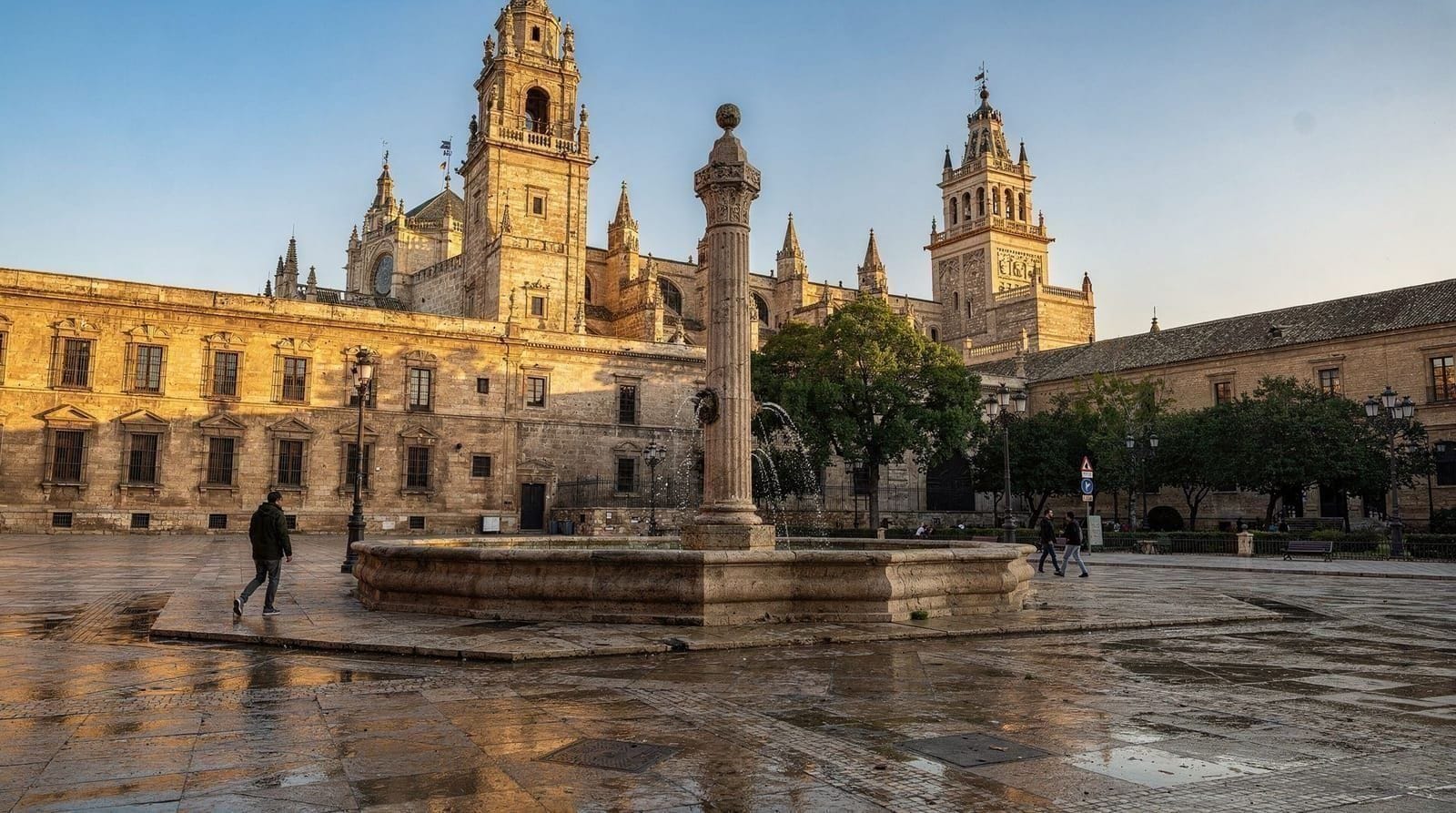
- Alcázar to Cathedral: 5 minutes’ walk
- Cathedral to Plaza de España: 20 minutes’ walk (through the Jardines de Murillo)
- Cathedral to Triana (via Puente de Isabel II): 15 minutes’ walk
- Cathedral to Metropol Parasol (Las Setas): 15 minutes’ walk
- Triana to La Macarena: 30 minutes’ walk
The city centre is largely flat. The only significant slope is the Giralda bell tower (35 ramps, no stairs — accessible for most people). Santa Cruz has narrow cobblestone streets, but they are short rather than steep.
In summer (June–September), walking long distances between 11:00 and 17:00 is genuinely uncomfortable at 38–42°C. Adapt your sightseeing to morning and evening blocks. See the Seville in summer for specific strategies.
Walking also lets you read the city. The best moments in Seville tend to happen between the monuments: a courtyard glimpsed through an open gate, a tiny bar you would never have found from a bus window. If you are choosing where to sleep with this in mind, the where to stay in Seville guide and the best neighborhoods overview explain which areas let you walk to almost everything. Comfortable shoes matter more than any transport card, because the old streets are paved in stone and you will cover a lot of ground without noticing.
If you would rather have someone lead the way through the maze of lanes, a guided walk is a relaxed way to learn the layout of the centre on your first morning, and it makes every later solo stroll easier. a small-group walking tour of the city highlights is one option; our best walking tours in Seville guide compares others. The Santa Cruz neighborhood guide and the Triana neighborhood guide are also worth reading before you set off on foot, since both districts reward wandering with no fixed plan.
Tussam buses — city-wide coverage for €1.40
Tussam is Seville’s municipal bus network with over 40 lines covering the whole city. For visitors, the most useful lines include those connecting the outlying areas (Nervión, San Bernardo, Heliópolis) with the centre.
Cost: €1.40 per journey paying with cash on the bus.
Tarjeta Multiviaje: A rechargeable card that reduces the cost per journey significantly. Available at bus kiosks and some tobacconists. Each loaded journey costs approximately €0.69. Worth getting if you plan to use buses more than 4–5 times.
How to pay: On boarding, tap your card at the reader or pay the driver. Keep your ticket — inspectors do check.
Key lines for visitors:
- C4 circular: Connects Santa Justa station, Prado de San Sebastián, and the centre
- 03: Runs from Triana across the centre to Nervión
- Routes to Plaza de Armas: Useful for the bus station connections
Google Maps works reliably for Tussam route planning. The Tussam app is also functional.
MetroCentro tram — the central link
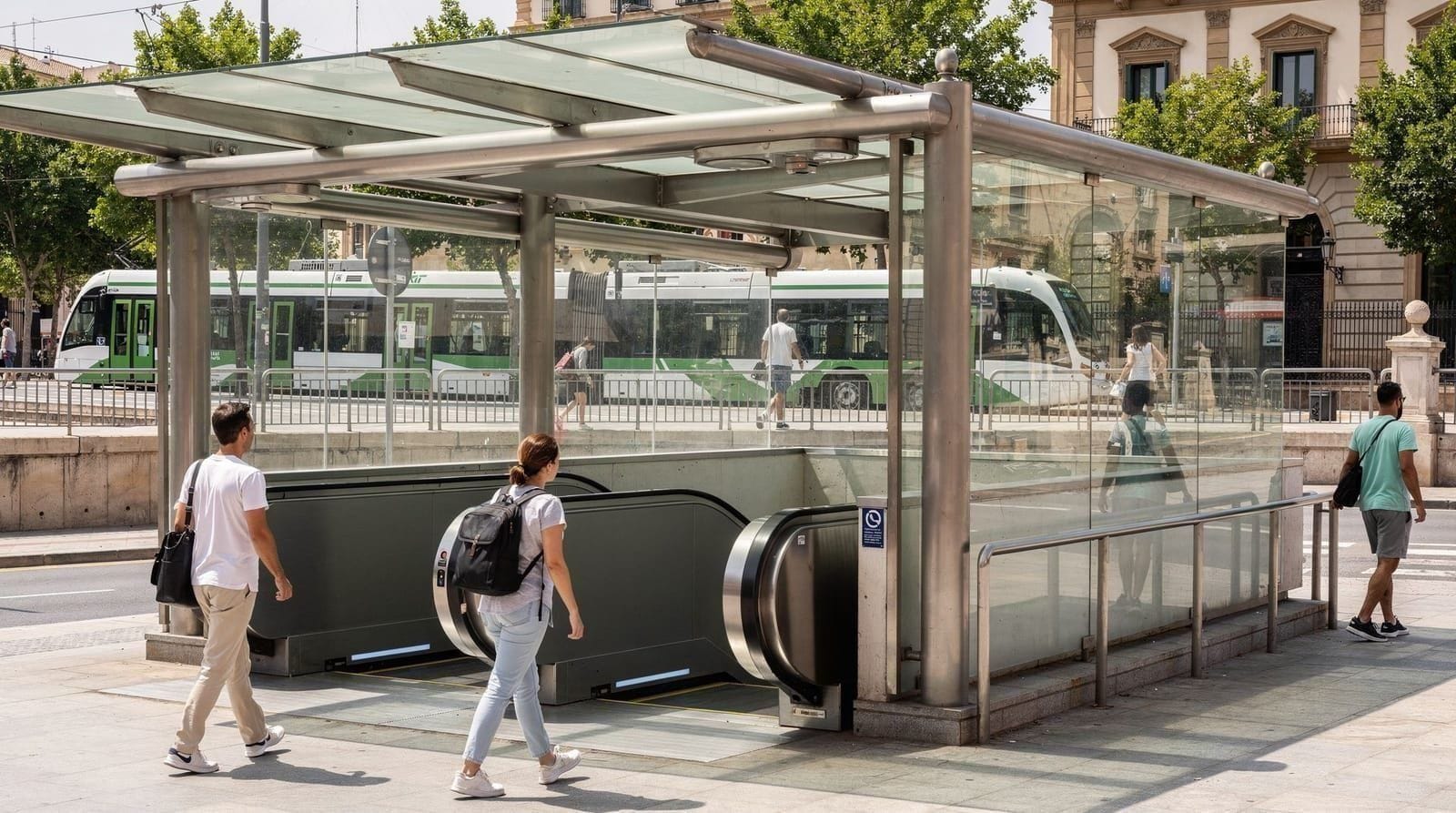
The MetroCentro is a single tram line running from San Bernardo (near Santa Justa AVE station) through the city centre to the Puerta de Jerez and on to Prado de San Sebastián bus station. It is short (1.4 km) but useful for the specific journey between the train station area and the historic centre.
Cost: €1.40, same as the bus.
Useful for: Arriving at Santa Justa by AVE and getting to the Alcázar/Cathedral area without a taxi. The tram stop at Puerta de Jerez is a 5-minute walk from the Alcázar.
Not useful for: Getting around the wider city. The tram covers one axis only.
Seville Metro — Line 1
Metro Line 1 runs from Olivar de Quintos in the south to Mairena del Aljarafe in the northwest, passing under the city. For visitors in the historic centre, it is rarely the right transport choice.
Where the Metro is useful for visitors:
- Getting to the Parque Alcosa or Nervión areas
- Reaching the feria grounds (Los Remedios area) during Feria de Abril
- Going to shopping centres on the southern outskirts
Where the Metro does not go: The historic centre (Alcázar, Cathedral, Triana, Plaza de España). The Metro stations closest to the centre are Puerta Jerez and San Bernardo — both useful for specific journeys but not the main tourist circuit.
Cost: see the official Metro de Sevilla website for current fares.
Sevici bike share — the fastest way around the old town
Sevici is Seville’s well-run bike-share system, with approximately 260 docking stations and 2,500 bicycles across the city. Seville has extensive dedicated cycling infrastructure — around 175 km of bike lanes — and is genuinely bike-friendly compared to most Spanish cities.
Tourist subscription: Short-term passes include unlimited journeys of up to 30 minutes, with extra charges beyond that; check current prices on the official Sevici website. For typical tourist use — moving between sights, crossing the Guadalquivir to Triana, cycling along the river — 30-minute slots are usually sufficient.
How to sign up: At any Sevici docking station via the terminal (English language available), or at the city’s main tourist offices, or via the Sevici app.
Helmets: Not provided with Sevici. Helmet rental is available from some bike hire shops near the river if you want one.
Best routes for visitors:
- The Guadalquivir riverside cycle path (both banks) is flat, pleasant, and runs for several kilometres
- Seville’s central cycle network connects the historic monuments without fighting traffic
- Cycling from the centre to María Luisa Park and Plaza de España is particularly easy
The Seville by bike has detailed cycling itineraries and tips on the best bike routes around the city. If you’d rather skip the docking-station logistics, a guided e-bike route covers the same riverside and monument circuit with someone else worrying about navigation.
Seville: guided electric bike city tourTaxis and rideshare
Official taxis in Seville are white with a yellow stripe. They operate on metered fare for city journeys.
Taxis are plentiful in the city. Main ranks are outside Santa Justa station, at Puerta de Jerez, near Plaza Nueva, and outside the main hotels. You can also hail them on the street if their green light is illuminated.
Cabify has a strong presence in Seville and is the most-used rideshare app. Uber operates but with more limited driver availability than in Madrid or Barcelona. Both apps work for booking from your phone.
Fixed fares: The airport has a fixed fare to the city (see Getting to Seville from the airport). Other journeys use the meter.
Night buses and late arrivals
Tussam’s Búho (“owl”) network runs a handful of night routes after the regular daytime lines stop. Coverage is thin and frequency is low, so it works for a specific late-night journey home from the centre but is not something to plan around. If you’re out past 01:00 on a weeknight or heading somewhere the Búho network doesn’t reach, a taxi or Cabify is the practical option; ranks stay active outside the main nightlife areas (Alameda de Hércules, Triana, El Arenal) until late.
Multi-day transport passes: are they worth it?
Seville does not have a single combined tourist transport pass covering bus, tram, metro, and Sevici the way some European capitals do. The Tarjeta Multiviaje is Tussam’s rechargeable bus card (the Metro uses the separate Consorcio de Transportes card) and pays for itself after 4–5 journeys, but it requires a small deposit and is really aimed at longer stays. For a 3–4 day visit spent mostly walking with occasional bus or tram hops, paying cash per journey (€1.40) is simpler and the total cost difference is small. The Seville city pass guide covers whether a combined sightseeing-and-transport pass makes sense for your trip.
Electric tuk-tuks: a middle ground
Between a taxi and a bike, Seville also has electric tuk-tuks that run short guided circuits through the centre — useful if you want a narrated overview without committing to a full walking or bike tour, or if walking distances are a genuine problem for someone in your group.
Seville: private electric tuk-tuk city tourHorse-drawn carriages (coches de caballos)
You will see horse-drawn carriages throughout the historic centre, particularly around the Cathedral and Plaza de España. These are a legitimate tourist activity — a 45-minute circuit costs approximately €40–50 per carriage (not per person). They are pleasant but not a practical means of getting around. See the Horse carriage rides in Seville guide if this appeals.
Day trips: getting out of Seville
For day trips to Córdoba, Cádiz, or Granada, the relevant transport hubs are:
Santa Justa AVE station: High-speed trains to Córdoba (45 min), Madrid (2h40), Málaga (~2h), Cádiz (1h40). The AVANT regional service also serves Jerez (1h) and Utrera. Book at renfe.com.
Plaza de Armas bus station: Long-distance buses run by ALSA (Granada, 2.5–3h) and Damas (Italica, Aracena, Huelva). Casal buses serve Carmona.
Prado de San Sebastián bus station: Some regional services depart from here. Check which operator serves your destination when booking.
See the Best day trips from Seville guide for a full comparison of day trip options and transport methods.
Sample days: how the options combine
Most visitors end up mixing modes rather than committing to one. A typical first day might be entirely on foot: the Cathedral and Alcázar side by side in the morning, lunch in Santa Cruz, then a slow walk across the river to Triana for the evening. Nothing in that plan needs a ticket of any kind. Our Seville 1-day itinerary and Seville 3-day itinerary are built around exactly this walkable core.
A second day might add a single transport hop: a bus or a bike to reach María Luisa Park and Plaza de España, which sit a little further out. The Plaza de España guide and María Luisa Park guide help you decide how long to stay. Day trips are the other moment when transport planning matters; the Córdoba day trip is the easiest to organise by train.
If you are weighing up how much time to give the city overall, the how many days in Seville guide helps, and the Seville first-timer travel tips page covers the practical basics beyond transport.
Accessibility notes
Seville’s historic centre has some accessibility challenges — cobblestone streets in Santa Cruz, the Alcázar’s uneven garden paths. The Tussam buses are modern and wheelchair accessible. The Metro is fully accessible. The MetroCentro tram is accessible. For specific accessibility information at monuments, check the official Alcázar and Cathedral websites directly.
Summary: which transport for which journey
| Journey | Best option |
|---|---|
| Between historic sights | Walk |
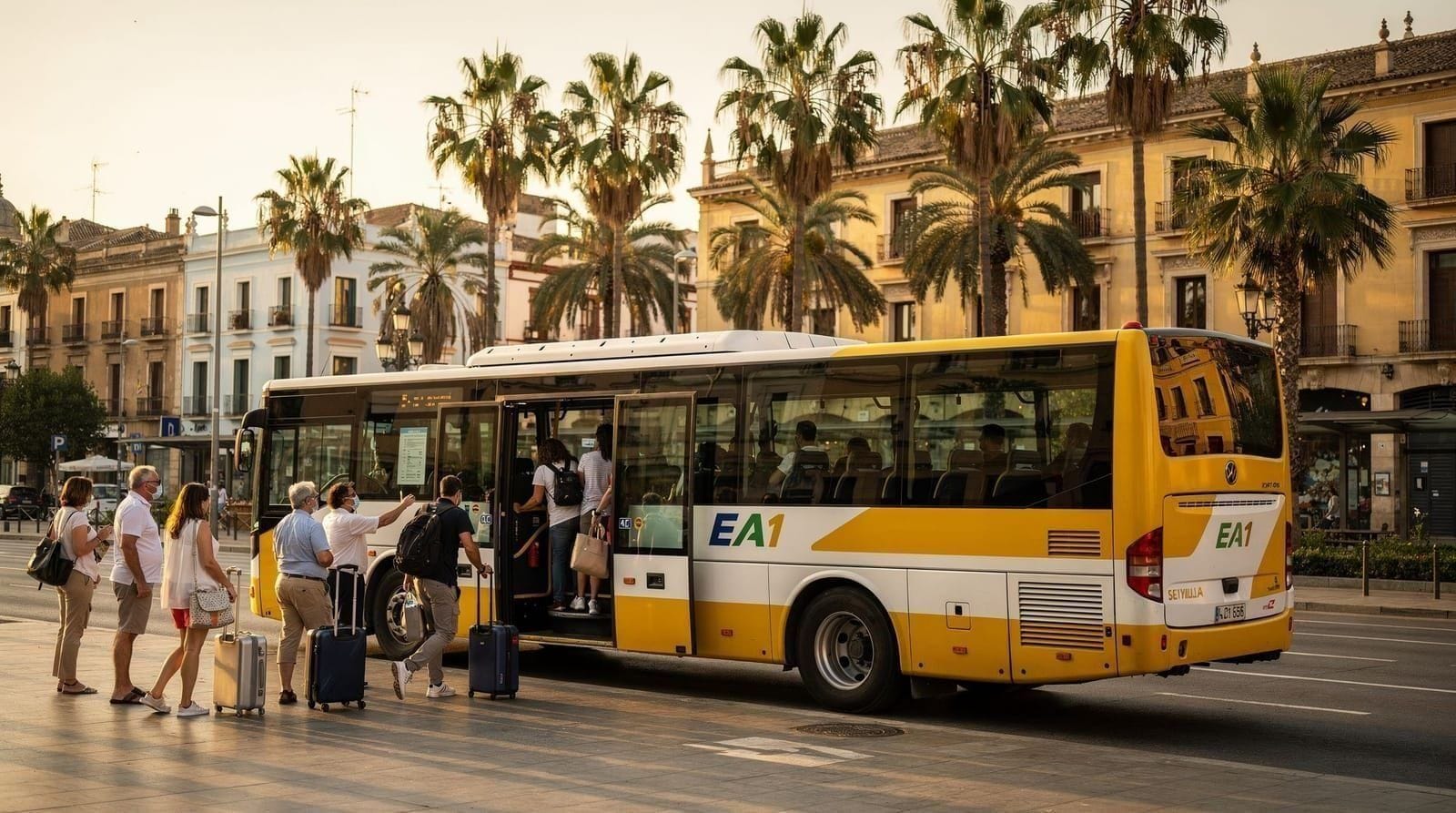
| Airport to centre | EA bus (€6) |
| Santa Justa to Alcázar area | MetroCentro tram (€1.40) |
| City centre to Triana | Walk (15 min) or bike |
| Wide city exploration | Sevici bike or Tussam bus |
| Late night or with luggage | Taxi or Cabify |
| Day trips | AVE (Córdoba/Cádiz/Málaga) or bus (Granada/Italica/Carmona) |
For a full breakdown of the public transport network, passes, and money-saving tips, see the dedicated Seville public transport guide.
Frequently asked questions about Getting around Seville
Is Seville easy to walk around?
Yes — the historic core is extremely walkable. Most major sights (Alcázar, Cathedral, Plaza de España, Triana) are within a 20–30 minute walk of each other. The city centre is largely flat, though cobblestone streets in Santa Cruz can be uneven.Does Seville have a metro?
Yes, Metro Line 1, but it does not serve the historic centre. The Metro is useful for getting to outlying areas (shopping centres, hospital, suburbs) but not for tourist sightseeing in the old city.How much does the Seville bus cost?
A single Tussam bus journey costs €1.40 with cash. With a rechargeable Tarjeta Multiviaje (multi-journey card), the cost drops to around €0.69 per journey. Cards are available at kiosks, some tobacconists, and online.Are Sevici bikes worth renting?
Yes, for the right use case. Sevici is Seville's bike-share network with around 260 docking stations. Short-term passes include unlimited journeys of up to 30 minutes; check current prices on the official Sevici website. Seville is notably flat and has extensive cycling infrastructure. Ideal for exploring beyond the historic centre.Can I drive in Seville historic centre?
Effectively no — the historic centre has restricted traffic zones (Zona de Bajas Emisiones). Rental cars are not practical for sightseeing. Most visitors arrive by train or plane and manage entirely without a car inside the city.Is there a night bus in Seville?
Yes. Tussam runs a limited night network (Búho — 'owl' buses) on a handful of routes after the daytime lines stop. Frequency is low and coverage is far more limited than the daytime network. For most late-night journeys, a taxi or Cabify is more reliable than waiting for a Búho bus.Is Uber available in Seville?
Uber operates in Seville but with fewer drivers than Cabify, so wait times and surge pricing are more common. Cabify is the more consistently reliable rideshare app in the city. Both work the same way — book from your phone and pay in-app.