Horse carriage rides in Seville: what to expect, prices, and honest assessment
Seville: Horse-drawn carriage ride through Seville
Are horse carriage rides in Seville worth it?
Carriage rides are atmospheric but expensive for what they deliver — a 30-45 minute loop around the historic centre costs €40-80 depending on operator and length, compared to the same route on foot for free. The Parque María Luisa / Plaza de España circuit is the most scenic. Be aware: carriage operators in Seville are largely unregulated for animal welfare. In summer (June-August), horses working in 40°C heat is a genuine welfare concern.
Horse-drawn carriages have been part of Seville’s street life for centuries. The coches de caballo (horse carriages) that cluster outside the Catedral and near the Plaza de España are a recognisable symbol of the city. They are also a product that rewards careful consideration before booking — the price-to-experience ratio is variable, the animal welfare picture is complicated, and the narrow streets of Santa Cruz that are the most interesting parts of the historic centre cannot be reached by carriage.
This guide gives you the information to make an informed decision.
| Where | Catedral stand (Plaza del Triunfo) or Plaza de España |
| Cost | Around €40–80 per carriage (4–6 people), not per person |
| Time needed | 30–90 minutes depending on circuit |
| Best circuit | Parque María Luisa / Plaza de España |
| Welfare note | Avoid midday rides in summer heat |
What a horse carriage ride actually delivers
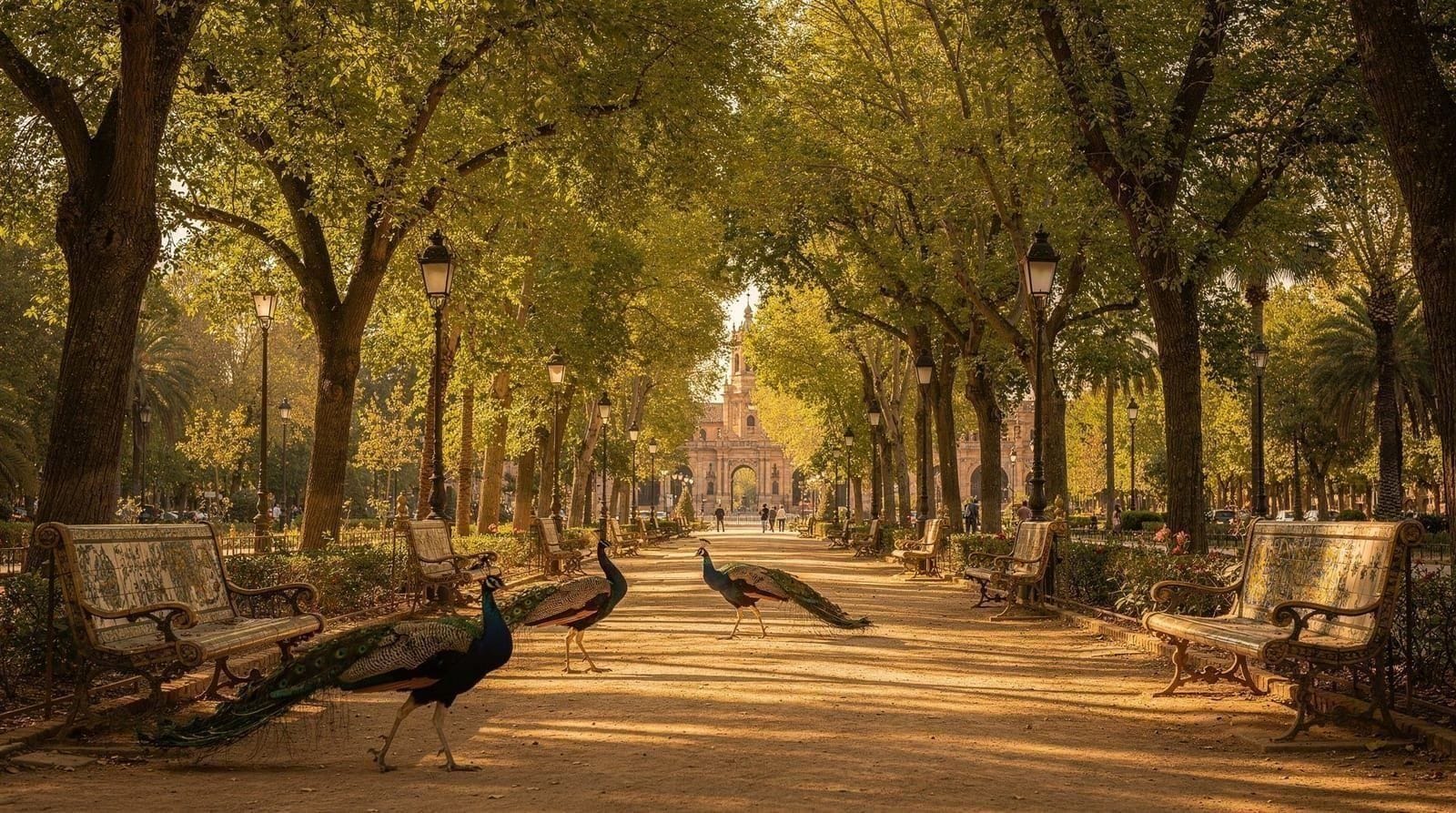
The carriage circuit around Seville’s monuments is a pleasant, atmospheric way to move through the city at an unhurried pace. The Parque María Luisa route — through tree-lined avenues to the Plaza de España — is genuinely attractive; the park’s scale and green depth do not translate in photographs, and experiencing it from a moving carriage provides a different perspective from walking.
The historic centre circuit passes the Catedral exterior, the Alcázar walls, the Parque de Murillo gardens, and the perimeter of Santa Cruz. As with the hop-on hop-off bus, the carriages cannot enter Santa Cruz’s interior streets — the atmosphere that makes the neighbourhood interesting is accessible only on foot.
What the carriage provides: a different pace, the visual and sensory experience of horse-drawn movement in a historic setting, and — for couples specifically — an atmospheric framework for an evening that does not require walking.
What it does not provide: access to the most interesting streets, meaningful historical narrative (some operators provide commentary; much of it is superficial), or a more efficient way of seeing the city.
The Parque María Luisa circuit: the best option
If you are going to take a carriage ride, the Parque María Luisa and Plaza de España circuit is the most scenic option available. The route passes through the park’s formal gardens and tree-lined avenues, around the semicircular colonnade of the Plaza de España, and back via the Paseo de las Delicias along the riverfront.
The Plaza de España itself — a massive semicircular architectural complex built for the 1929 Ibero-American Exposition — is best seen from multiple angles. Approaching it by carriage through the park gives a different perspective than walking directly in from the main street entrance.
Book horse-drawn carriage ride in SevilleEvening and romantic carriage rides
Evening rides — departing around 20:00-21:00 in spring and autumn, later in summer — work particularly well for the atmospheric dimension. The cooler temperature, the evening light on the Catedral’s facade, and the lower pedestrian traffic make the experience qualitatively different from midday.
Book romantic evening carriage ride in SevilleThe animal welfare question
Seville’s carriage horses work in a climate that can be challenging. Summer temperatures regularly reach 38-42°C, and horses on hot pavement absorbing reflected heat work in genuinely stressful conditions. Spanish animal welfare organisations have documented concerns about working hours and heat exposure historically.
The picture is not uniform. Some operators maintain their animals well and restrict summer working hours to early morning and evening. Others do not apply the same standards. Booking through a platform that enforces operator standards provides some accountability.
Practical guidance: If you visit in June-August and want to take a carriage ride, book an evening ride after 19:00 when temperatures have dropped. Avoid midday rides in summer. Observe the animal’s condition when you see the carriage — a healthy, well-maintained horse has bright eyes, good coat condition, and moves without stiffness. Horses showing obvious distress signals (excessive sweating, stumbling, ribs visible) should not be boarded.
Price and what to pay
Walk-up carriages outside the Catedral will typically quote €45-70 for a standard 30-minute tour. This is a per-carriage price (capacity 4-6 people). Negotiating to €40 is generally possible outside peak times.
Platform-booked rides provide price transparency and confirmation but typically run at list prices. They are useful if you want a specific route or time confirmed in advance.
If you see a very low price (€10-15 per person) advertised at roadside stands, read the fine print — these are often minimum charges per person with additional costs for longer routes or specific circuits.
Alternatives that cover similar ground
For the same budget as a carriage ride, the following alternatives cover as much of the city with more flexibility:
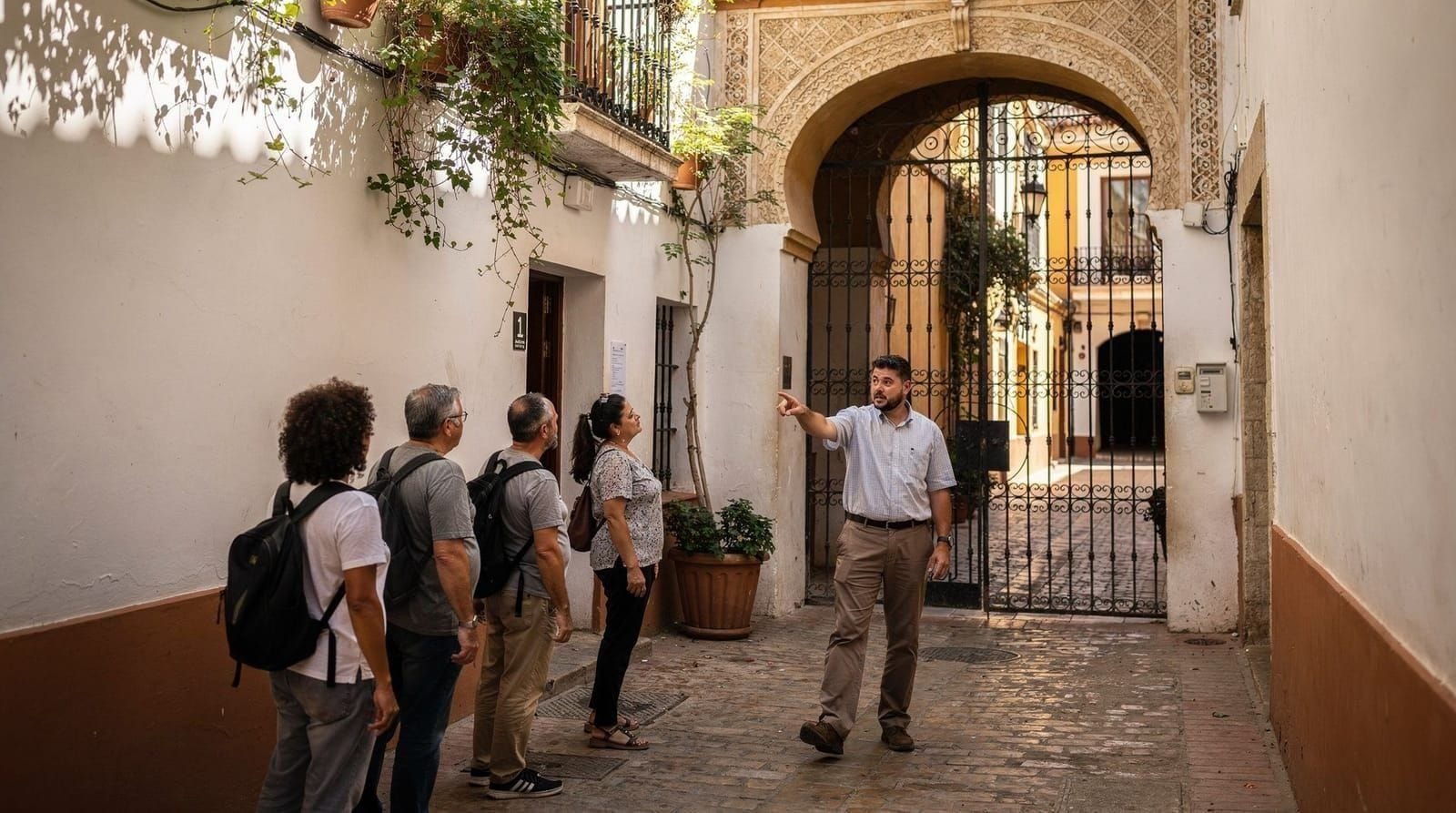
- A 2-hour guided walking tour of Santa Cruz (€15-20/person) goes where carriages cannot
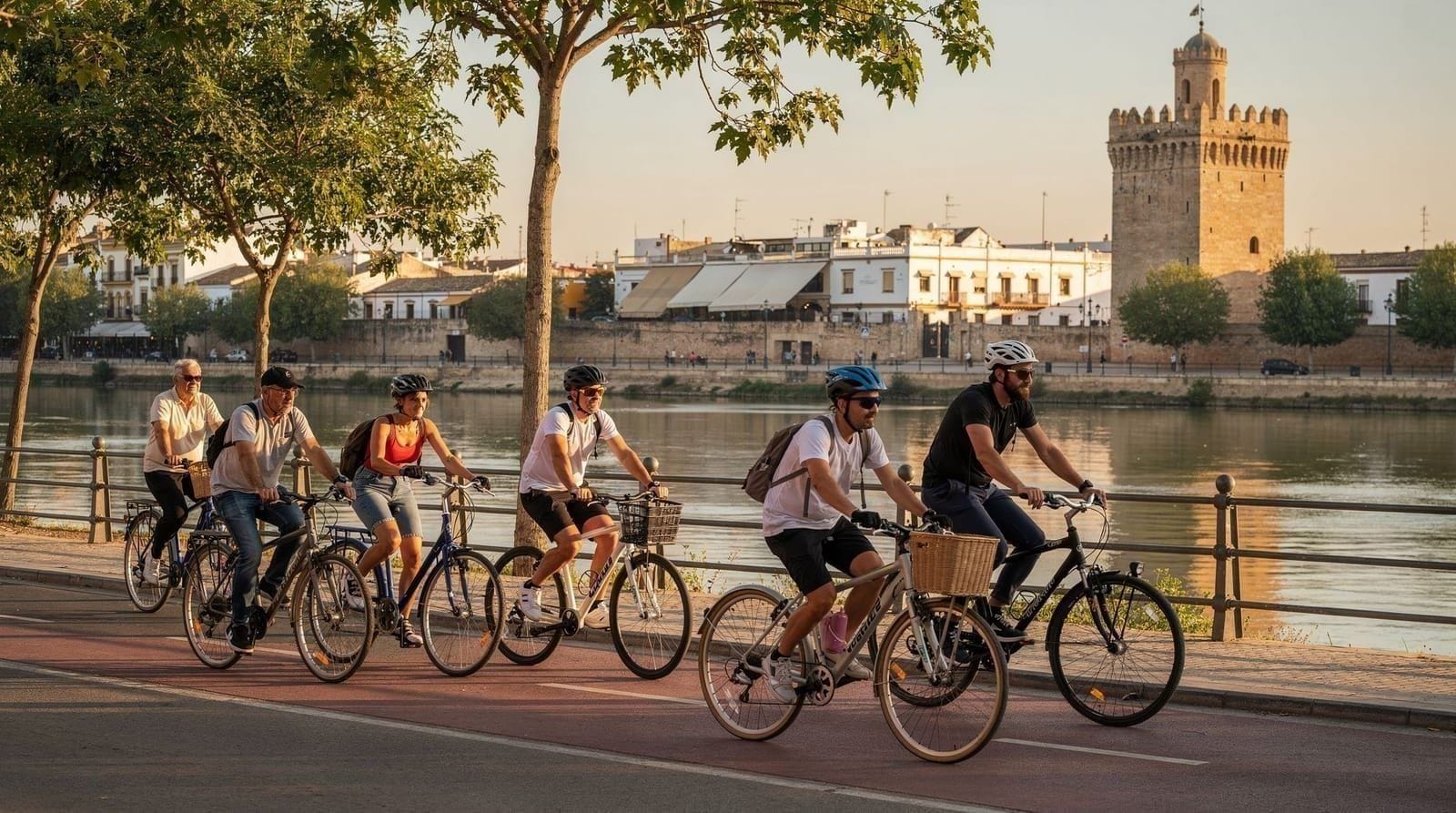
- A bike tour covers the city perimeter and parks more efficiently
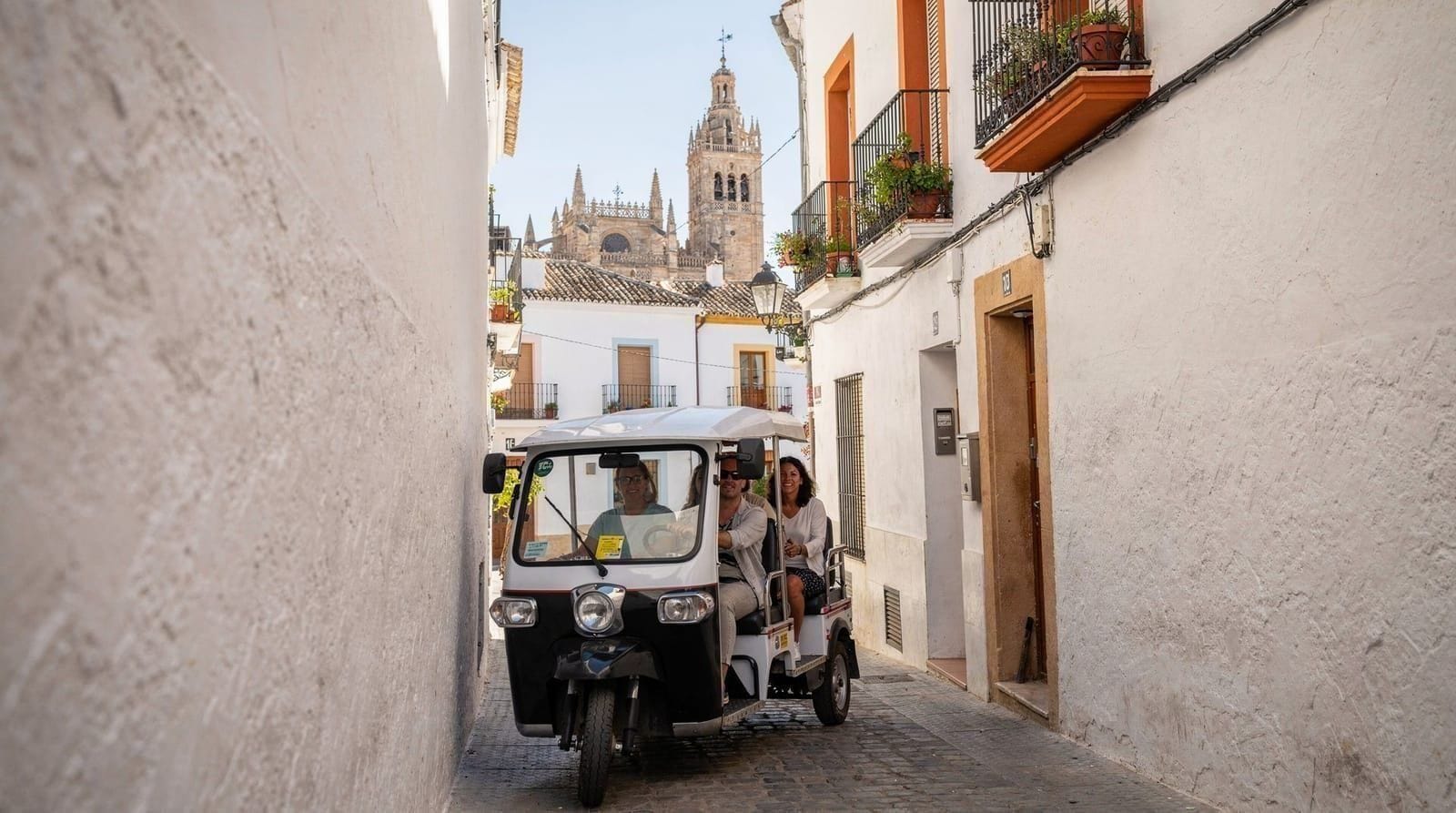
- A tuk-tuk tour navigates streets the carriage cannot reach
The segway-tuktuk-tours-seville guide covers the small-vehicle options in detail.
The history of horse carriages in Seville
The coche de caballos has a long history in Seville. The city’s role as the monopoly port for Americas trade from 1503 onward created a wealthy merchant and noble class that used horse-drawn carriages as status symbols as much as transport. The wide Paseo de Cristóbal Colón along the Guadalquivir was built in part as a promenade for carriages — the Spanish equivalent of Hyde Park’s Rotten Row or the Bois de Boulogne.
The style of carriage now associated with Seville — the landau, with its folding top and open seating — became associated with the Feria de Abril, where wealthy families would parade their carriages through the fairgrounds. The Feria carriage parade continues today; during the last week of April, the Paseo de las Delicias and the fairground approaches fill with horses and elaborately decorated carriages driven by families in traditional Andalusian dress.
This Feria context is the most culturally significant moment for horse carriages in Seville. The tourist carriage rides available year-round are a commercial extension of this tradition — commercially oriented, variable in quality, but rooted in a genuine Sevillano practice.
What to see on each circuit
Historic centre circuit (30-45 min): The standard tour covers the Catedral exterior, the Giralda, the walls of the Real Alcázar, the Parque de Murillo (a formal garden bordering Santa Cruz), and the Archivo de Indias. The carriage moves along the Avenida de la Constitución, one of Seville’s widest central streets, which allows the full visual sweep of the Catedral’s south facade. This is architecturally impressive — the Gothic nave with its buttresses and the Giralda behind represent 14th-century ambition at the largest scale.
Parque María Luisa / Plaza de España circuit (45-60 min): This is the better of the two routes aesthetically. The approach to the Plaza de España through the park’s tree-lined avenues — planted with Mediterranean pines, magnolias, and orange trees — provides shade and a genuinely pleasant slow movement. The Plaza de España itself, a semicircular neoclassical complex built for the 1929 Ibero-American Exposition, is most impressive from a moving vehicle — the scale (200m diameter) becomes apparent as you move along it rather than standing in one place.
Combined circuit (60-90 min): Some operators combine both routes. The price is higher (€80-120 for the carriage), but for a first visit with limited mobility or time, the combined overview is practical.
Photographing a carriage ride
The Parque María Luisa circuit gives the most photogenic backdrop — the tree-lined avenues and the Plaza de España’s tiled bridges and towers work well whether you’re photographing from inside the moving carriage or capturing carriages passing as a subject from outside. Morning light (before 11:00) is softer through the park’s canopy; evening rides catch warm golden-hour light on the Plaza de España’s brickwork. If you specifically want a photo of a carriage as a scene rather than the ride itself, the stand outside the Catedral is the most reliable spot, with carriages typically waiting for fares throughout the day.
Booking through a platform vs walk-up
Walk-up carriages standing outside the Catedral are convenient but involve price negotiation in a context where you are at an information disadvantage — the driver knows the market, you may not. Common tactics include inflating the initial price, adding supplements for the return route, or proposing a longer circuit than agreed when the meter is implied.
Booking through a platform provides price transparency: you know what you are paying before you arrive, the route is specified, and there is a complaint mechanism if the experience diverges significantly from what was advertised.
For a standard city circuit, booking in advance is not necessary outside high season. For romantic evening rides (Feria period, spring weekends), booking 1-2 days ahead avoids arriving to find all evening slots filled.
The Feria de Abril connection
If your visit coincides with the Feria de Abril (21-26 April 2026), the carriage tradition reaches its peak expression. On the Paseo de Delicias and around the fairground access routes, hundreds of private carriages carry families in traje corto (the distinctive short-jacketed equestrian Andalusian dress for men) and traje de flamenca (the long polka-dot dress associated with Feria) to and from the casetas.
This is not a tourist product — it is a genuine communal expression of Sevillano identity. Watching the carriage parade from a bar on the Paseo de Delicias on Feria afternoons (12:00-20:00) is free, culturally significant, and significantly more interesting than taking a tourist carriage ride. The Feria de Abril guide covers this in detail.
Seasonal considerations
Spring (March-May): Ideal conditions for carriage rides — temperatures 18-25°C, orange blossom fragrance in the streets, and the city at its most beautiful. The Feria period (late April) brings carriage culture to its peak. Book evening rides during the Feria itself well in advance.
Summer (June-August): The welfare and comfort considerations discussed above apply most strongly. Evening rides after 19:00 are feasible; midday rides should be avoided entirely.
Autumn (September-October): Comfortable temperatures and smaller crowds make this an underrated time for carriage rides. The September-October Bienal de Flamenco period brings cultural activity throughout the city.
Winter (November-February): Mild and quiet. The lack of crowds makes the historic centre more peaceful; carriage rides are available and comfortable in the daytime.
Where the routes actually take you
The Parque María Luisa circuit passes directly beside the Plaza de España and through María Luisa Park’s formal avenues — see the María Luisa Park guide for what else is worth seeing on foot in the same area before or after your ride. The historic centre circuit skirts the edge of the Santa Cruz neighbourhood without entering its interior streets, so pairing the carriage ride with a walk into Santa Cruz afterwards gives you both perspectives on the same district. In summer, timing either circuit for the cooler parts of the day matters as much for your own comfort as for the horse’s.
Pairing a carriage ride with the rest of your day
A carriage ride works best as one gentle element in a day, not the centrepiece. Because the historic centre circuit runs past the Catedral and the Alcázar walls, it makes a useful preview before you go inside: the Seville Cathedral complete guide and the Real Alcázar complete guide explain what you are looking at from the street, and the Archivo de Indias guide covers the building you pass along the way. If you decide to go inside the palace afterwards, skip-the-line options for the Alcázar are worth comparing before you queue.
For a first visit, a carriage ride slots naturally into the first-timer’s itinerary, and it suits the slower rhythm of the Seville for couples itinerary particularly well. If you are travelling with children, the Seville with kids guide puts the carriage in context alongside other activities that suit younger travellers.
Evening is the natural time to combine a ride with dinner. After the ride, the best tapas bars in Santa Cruz are a short walk from the Catedral stand, and the barra vs terrace pricing guide helps you avoid paying a terrace surcharge on the same evening. If you are still choosing a base, the where to stay in Seville guide shows which areas keep the stands and the park within easy reach.
Those who want a different way of covering the city can compare the carriage with the Seville by bike guide or the best walking tours in Seville.
Frequently asked questions about Horse carriage rides in Seville
How much do horse carriage rides cost in Seville?
Standard carriage rides of approximately 30-45 minutes cost €40-70 for the carriage (carrying 4-6 people). Longer romantic evening rides (1 hour) cost €60-100. The price is per carriage, not per person — making it more economical for groups. Negotiate in advance; some operators inflate prices for obvious tourists. Booking through a platform provides price transparency.Where do horse carriage rides depart from in Seville?
The main stand is in front of the Catedral (Plaza del Triunfo and Plaza de la Virgen de los Reyes). A second cluster is near the Plaza de España. Carriages also appear near the Torre del Oro. Walk-up availability is typical, though in high season (March-May) specific operators or 'romantic' packages can sell out evenings in advance.What routes do horse carriage rides cover?
Two main routes: the historic centre circuit (Catedral, Alcázar, Parque de Murillo, Santa Cruz perimeter) and the Parque María Luisa / Plaza de España circuit (the most scenic, passing through the park's tree-lined avenues and around the semicircular plaza). Some operators offer combined routes. The carriages cannot enter the narrow interior streets of Santa Cruz.Are there animal welfare concerns with Seville carriage horses?
Yes. In summer months (June-August), when Seville temperatures regularly exceed 38-40°C, horses working pulling carriages on hot pavement is a welfare concern. The Spanish animal welfare organisation PACMA has raised concerns about Seville carriage horses historically. If you are concerned about this, afternoon and evening rides (after 18:00) in summer, when temperatures have dropped somewhat, are preferable to midday rides. Spring and autumn rides at comfortable temperatures raise fewer concerns.Can children ride in a horse carriage in Seville?
Yes, carriages are a popular family activity — children generally enjoy the novelty and the unhurried pace. There is no formal minimum age; use normal judgement about a young child's comfort sitting still for 30-45 minutes. Ask the driver about strollers or car seats if travelling with a baby, as space in the carriage is limited.Is tipping expected for a horse carriage ride?
It is not obligatory but is appreciated for a good driver, particularly on platform-booked rides where the price is fixed and doesn't include a service charge. A small amount (a few euros) is standard practice, similar to tipping a taxi driver in Spain.
Top experiences
Bookable activities with verified prices and instant confirmation on GetYourGuide.