Parque de María Luisa guide: Seville's great city park
Seville: Plaza de España private tour and María Luisa park
What is Parque de María Luisa in Seville?
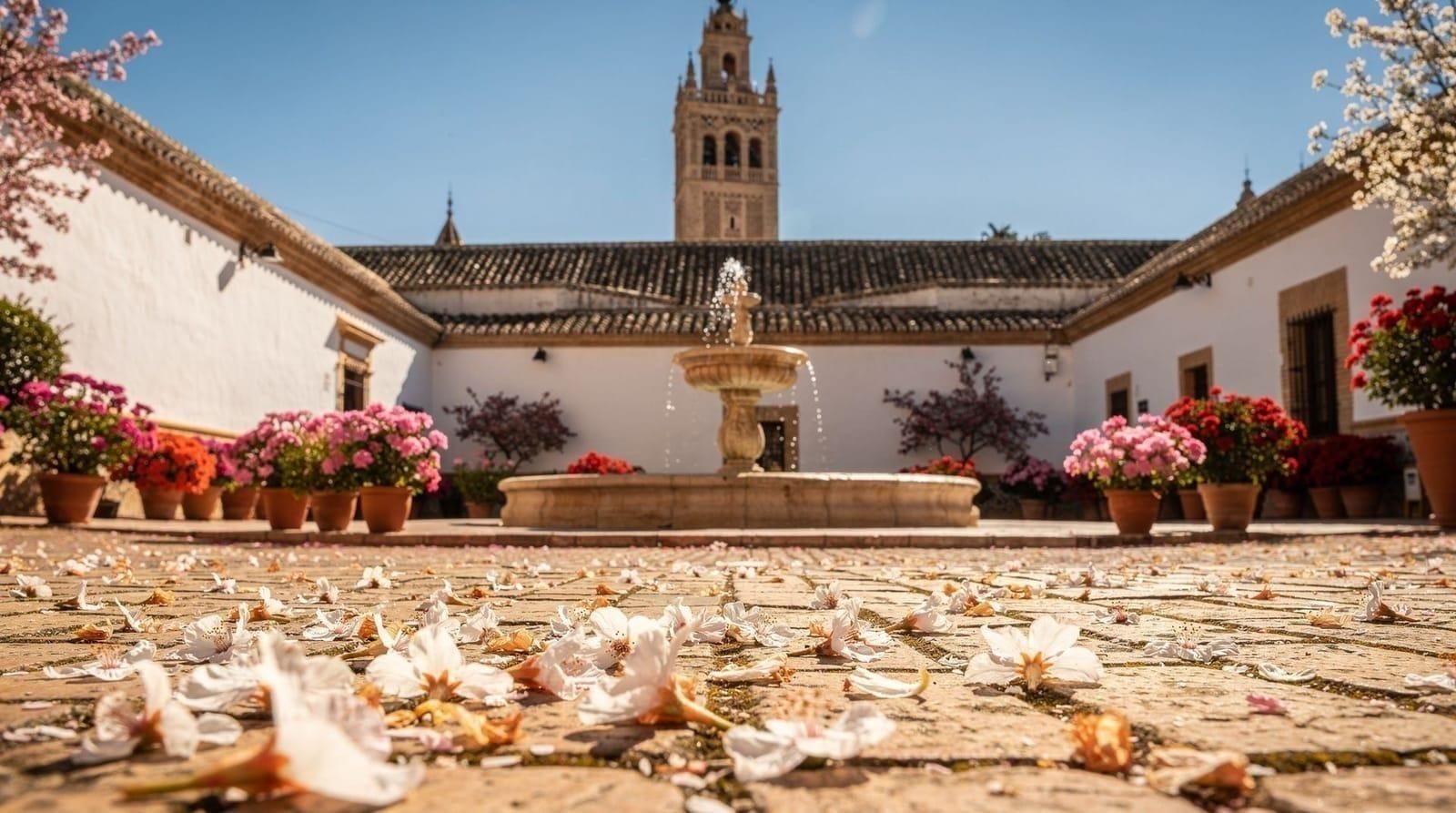
Parque de María Luisa is Seville's main city park — 34 hectares of shaded paths, fountains, ponds, and formal gardens adjacent to the Plaza de España. Entry is free. It contains two museums, several playgrounds, and peacocks that roam freely. The park is at its most beautiful in spring when the orange trees and jasmine are in bloom.
In a city full of extraordinary monuments, Parque de María Luisa is easy to underrate — it is, after all, just a park. But Seville without María Luisa Park is like Paris without the Tuileries: you can visit the main attractions, but you’re missing something essential about how the city breathes.
| Where | South of the historic centre, bordering Plaza de España |
| Cost | Free; museums €0-1.50; rowboats €6 |
| Time needed | 2-3 hours for park and Plaza de España together |
| Getting there | 15-minute walk from the Cathedral; bus lines 1, C2, 34, 37 |
| Best time | Early morning, or April for orange blossom |
The park occupies a large swathe of southern Seville between the historic centre and the Guadalquivir, bordered by the Paseo de las Delicias to the west and the Avenida de Isabel la Católica to the south. It is entirely free, beautifully maintained, and genuinely pleasant to sit in — a quality that cannot be taken for granted in a city with summer temperatures above 40°C.
History and context
The park’s name honours Infanta María Luisa of Bourbon-Orléans (1832-1897), who in 1893 donated the southern half of the San Telmo Palace gardens to the city of Seville. The donation was remarkable: the palace gardens had been the private grounds of the Ducal family for two centuries.
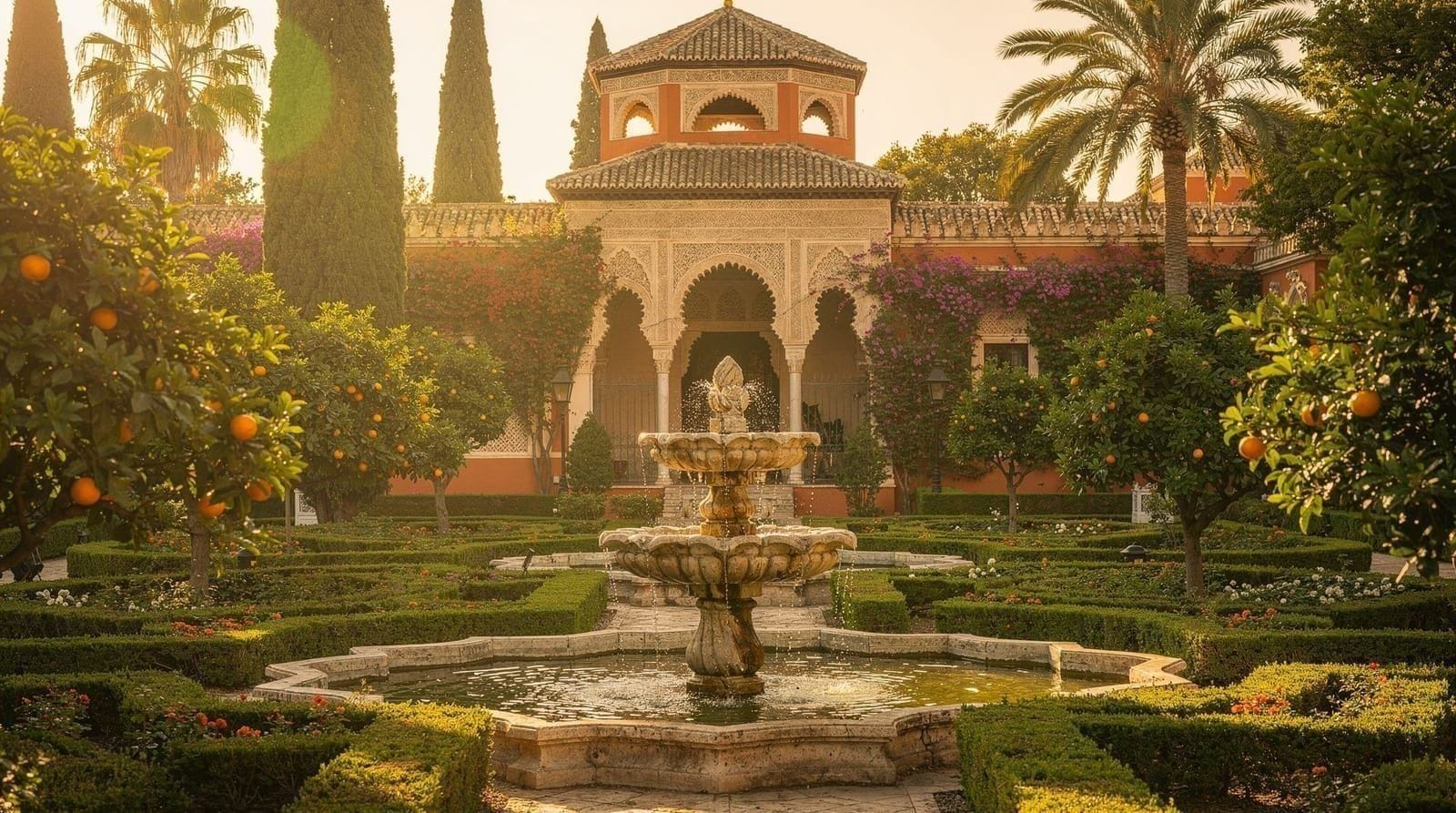
In 1911, the city commissioned French landscape architect Jean-Claude Nicolas Forestier (who also designed the Buen Retiro additions in Madrid and the Montjuïc gardens in Barcelona) to redesign the park for the 1929 Ibero-American Exposition. Forestier created the formal gardens, fountains, ceramic tilework pavilions, and the specific character — a hybrid of French formal design and Andalusian vernacular (azulejo tiles, orange trees, fragrant herbs) — that the park retains today.
The Plaza de España was built immediately adjacent for the 1929 Exposition, and the two spaces function as a unit: the formal geometry of the Plaza de España’s semicircular colonnades followed by the more naturalistic walk through the park.
What to see
The formal gardens (southern section)
Entering from the Avenida de María Luisa, the formal gardens are the first zone you encounter: axial paths lined with terracotta tile benches, orange and lemon trees, rose gardens (best April-May), and ceramic water fountains. The Glorieta de Bécquer — a romantic clearing with a memorial to the Sevillian poet Gustavo Adolfo Bécquer — is here, surrounded by cypress trees.
Prado de San Sebastián ponds (northern section)
The northern section, closer to the Prado de San Sebastián bus station and the city centre, is more informal and greener. Multiple ponds with ducks, coots, and occasionally herons are the main family draw. Peacocks wander between the ponds and the central pathways — they are a genuine wildlife highlight that surprises first-time visitors.
The museums (central and southern)
Two significant museums sit inside the park on opposite sides of the central promenade:
Museo Arqueológico de Sevilla (closed for renovation; check the official museum site for the reopening date) The best archaeological museum in Andalusia, when open. Ground floor: prehistoric, Phoenician, and Greek material from the excavations around Huelva and the Guadalquivir Valley. Upper floor: the Roman rooms — the most important section for visitors who have been to (or plan to visit) Italica. The Trajano room contains a magnificent bronze portrait of Emperor Trajan (born in Italica) and architectural fragments from Itálica’s forum.
Museo de Artes y Costumbres Populares (closed Monday) An ethnographic collection covering traditional Andalusian crafts, costumes, ceramics, and folk culture. The building itself (a Renaissance-style pavilion designed for the 1929 Exposition) is notable. The flamenco dress collection and the traditional tile and metalwork rooms are the highlights. Admission: free for EU citizens, approximately €1.50 otherwise (confirm at the door).
The Museo de Artes y Costumbres Populares is undervisited — you can usually walk in without queuing.
The playground zone
Several playgrounds are distributed through the park, with the largest concentration in the northern section near the Prado de San Sebastián ponds. Well-maintained, shaded by mature trees, and less crowded than the Plaza de España area. Good for families with children 3-10.
Plaza de España: the adjacent showpiece
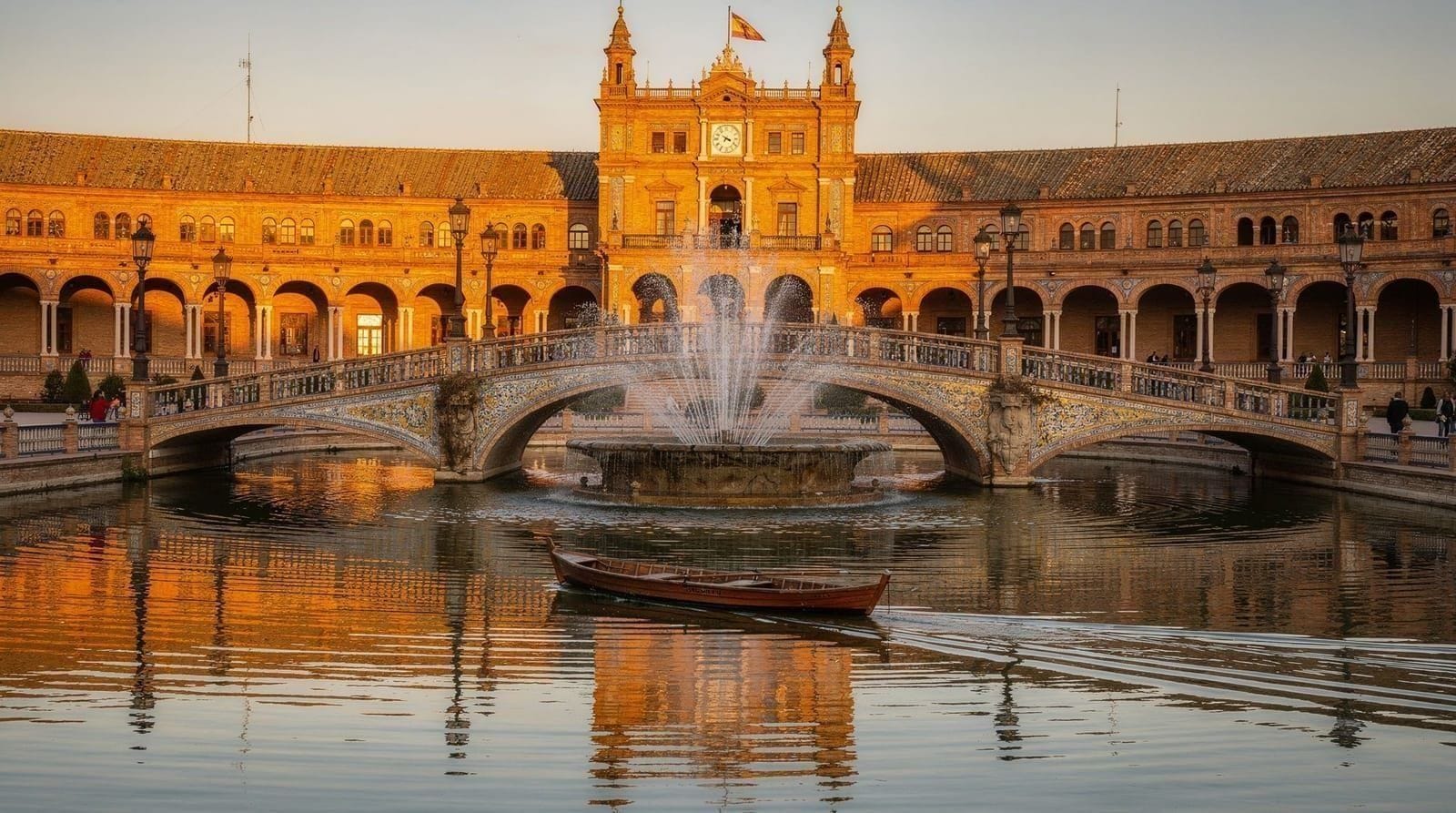
Technically adjacent to but inseparable from the park experience, the Plaza de España is one of the most theatrical public spaces in Spain. Built for the 1929 Exposition by architect Aníbal González, it is a massive semicircular brick-and-tile complex with a central fountain, twin towers at each end, and 58 ceramic-tiled alcoves around the curved outer wall — one for each Spanish province, each decorated with a map and a historical mosaic.
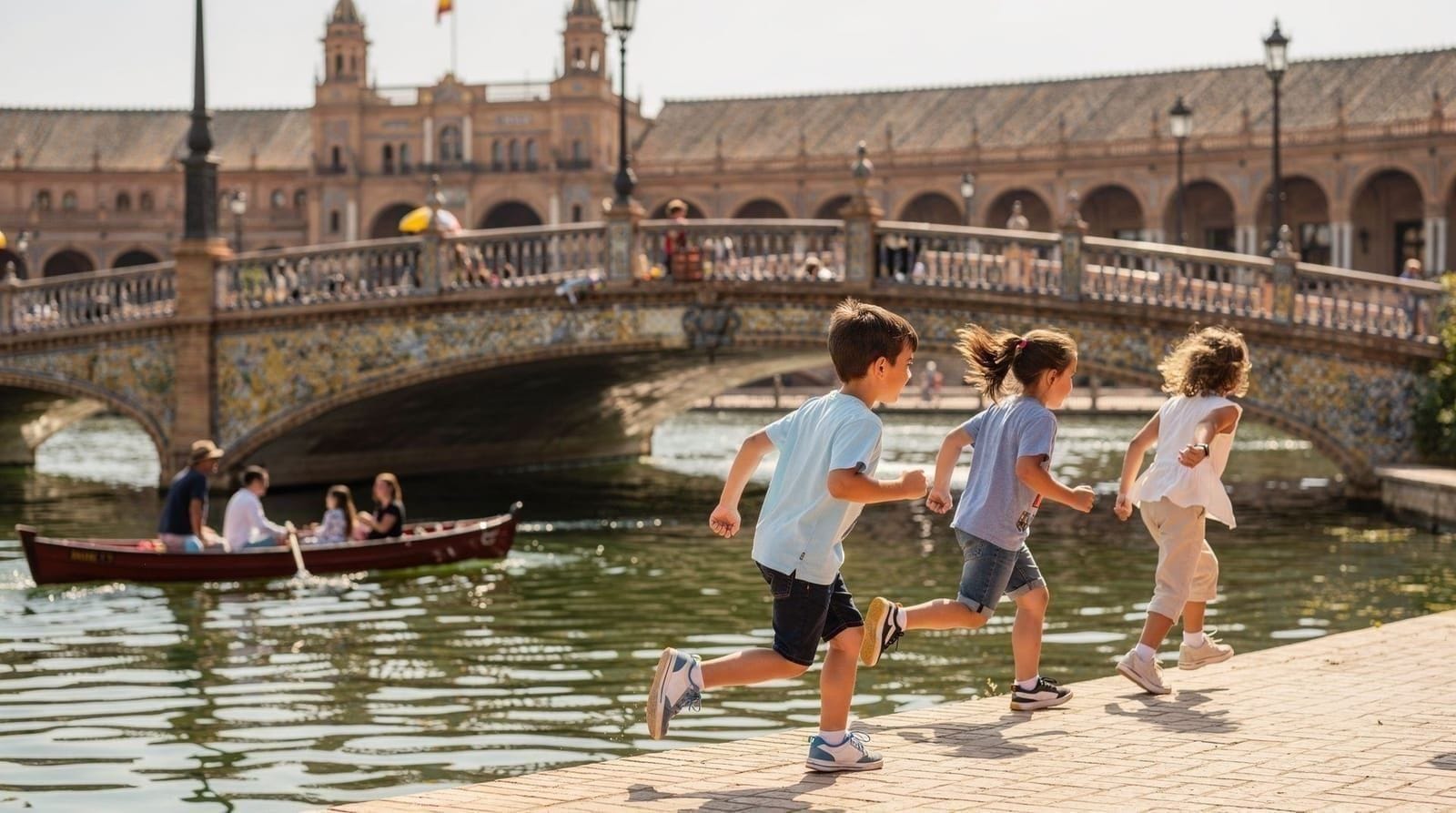
The canal running through the base of the semicircle is rowboat hire territory: €6 for approximately 35 minutes, available every day. This is the best €6 in Seville for families — children who are bored by monuments are never bored by rowing.
The Plaza de España appeared in several films (Lawrence of Arabia, 1962; The Kingdom of Heaven, 2005; various Star Wars prequel scenes) and is instantly recognisable from the tile alcoves, which have been extensively photographed.
Entry: Free, always open. Rowboats available daily (hours vary seasonally; typically 10am-sunset).
Seville: Plaza de España private guided tour with park walkPractical information
Opening hours: The park has no formal closing time, though the museums have standard hours. Most cafés and kiosks operate 9am-8pm in summer, shorter hours in winter.
Getting there: 15-minute walk from the Cathedral (south on Paseo de las Delicias). Bus lines 1, C2, 34, 37 stop at Prado de San Sebastián (northern entrance). The Guadalquivir river path runs past the park’s western boundary and connects to the Torres del Oro — navigable on foot or by bike.
Best time to visit: Early morning (8-10am) before day-trippers fill the Plaza de España. April is exceptional — the orange trees are in blossom and the scent throughout the park is extraordinary. Avoid noon-4pm in June-August.
What to bring: Water (kiosks sell drinks but at tourist prices). Camera (the Plaza de España’s tile alcoves are genuinely photogenic; the peacocks require patience). Coins for the rowboats and museum entry.
Combining with other attractions: María Luisa Park + Plaza de España form a natural half-day circuit. Pair with the Alcázar gardens for a full outdoor day. The Parque de los Príncipes in Nervión and the Jardines de Murillo in the Santa Cruz neighbourhood are within walking distance for those wanting to extend further. For a fuller comparison of Seville’s green spaces, see the parks and gardens guide, and for families specifically, the Seville with kids guide covers the playground zone and rowboats in more depth.
Seville: 2-hour highlights bike tour — park, monuments, and neighbourhood overviewA suggested walking route through the park
The park rewards a loose plan rather than a strict one. A simple way to approach it is to treat it as three moods taken in order: the grand, the green, and the quiet.
Start at the Plaza de España while the light is soft and the crowds are thin. Walk the full curve of the colonnade, look at a few of the provincial alcoves up close, and cross one of the bridges over the canal. This is the part of the visit that most people photograph, so it makes sense to do it first, before the day gets busy. If you want the story behind the buildings and the tilework, the dedicated Plaza de España guide goes into the architecture in detail.
From there, drift into the formal gardens. Follow the axial paths without worrying about which one you are on; the layout is forgiving and every route eventually brings you back to a fountain or a bench. Stop at the Glorieta de Bécquer, sit for a while, and let the pace of the morning slow down. This is also where the park feels most like a garden in the French tradition, with its clipped lines softened by orange trees and climbing plants.
Finish in the more informal northern section, where the ponds, the peacocks and the playgrounds are. By this point you will probably want shade, a drink and somewhere to sit. The ponds are a good place to do nothing for twenty minutes, which is exactly what the park was designed for. If you still have energy afterwards, the walk back towards the centre passes through areas covered in the Seville first-timer itinerary, and the park slots easily into a longer plan such as the one day in Seville itinerary or the two day itinerary.
Who the park suits best
Families. Few places in the city are as easy with children. There is space to run, water to look at, animals to chase gently, and a canal to row on. Parents who have spent a morning managing queues at monuments often find the park is where the trip relaxes. The Seville with family in 3 days itinerary builds a park afternoon into its plan for exactly this reason.
Couples. The park is quietly romantic, particularly in the early evening when the heat drops and the paths empty out. It works well as a slow, unscripted stretch between a lunch and a dinner, and the Seville for couples itinerary suggests similar unhurried pauses.
Budget travellers. Because entry is free and the setting is so good, the park is one of the best-value ways to spend time in the city. Pair it with a picnic from a local shop and you have a full afternoon without spending much. More ideas along these lines are in the Seville on a budget guide.
Photographers. The tile alcoves, the fountains and the shaded avenues all reward patience. Soft morning light and the low sun late in the day are kinder than the harsh middle of the day, and the peacocks will happily test your patience.
Visitors who need a break. Seville can be intense, and the park is the easiest place to step out of it. If you have been through the Cathedral and the Alcázar and your head is full, this is where the trip can breathe. See the Alcázar and Cathedral comparison for how to order the big monuments so that the park becomes a reward rather than an afterthought.
Getting the most from a visit
A few habits make the difference between a pleasant stroll and a memorable half-day.
Go slowly. The most common regret among visitors is rushing. The park is not a checklist; its appeal is in the details, such as the pattern on a bench, the sound of a fountain, or a peacock appearing around a hedge. Leave room for wandering.
Mix movement and stillness. Walk for a while, then sit. Walk again, then find a café or a bench. The park is built for this rhythm, and the shaded benches are among its best features.
Use the museums deliberately. Rather than treating the museums as an optional extra, choose one and give it proper attention. Once the archaeological museum reopens, it will be a natural companion to a trip to Italica or to the Italica day trip guide, since it holds material that gives the Roman site context. For a wider look at what else the city offers indoors, see the museums in Seville guide.
Respect the animals. The peacocks are used to people, but they are still wild enough to be unpredictable. Keep a respectful distance, do not feed them, and keep children from chasing them.
Think about how you arrive. Walking from the centre lets you see how the city changes as you move south, while the bus or a bike saves energy on a hot day. The getting around Seville guide and the Seville by bike guide explain the options, and the park is an easy place to combine cycling and walking.
Plan around the heat. In the hottest months the park is a refuge only if you visit at the right hour. The Seville in summer heat guide has more on structuring a day around the temperature.
Reading the park as a piece of history
It helps to remember that much of what you see was made for a single great event. The 1929 Exposition left the city a set of buildings, avenues and gardens that were meant to be temporary showpieces and instead became part of everyday life. That is why the park feels both grand and domestic: the pavilions are monumental, but the paths are used by locals walking, jogging, and sitting with a newspaper.
Looking at the park this way changes how you see it. The ceramic benches, the bridges and the pavilions are not incidental decoration; they are the legacy of a moment when the city set out to show itself to the world. The same period gave Seville other landmarks, and if the history interests you, the complete Real Alcázar guide and the Seville Cathedral guide show how much older layers of the city sit alongside the twentieth-century additions. For the broader picture of the city itself, the Seville destination page is a good starting point.
The park through the seasons
| Season | Conditions | Highlight |
|---|---|---|
| March-April | Warm afternoons (22-25°C) | Orange blossom (azahar) in the formal gardens |
| May | Moderate, busier weekends | Rose garden in bloom |
| June-August | Oppressively hot midday | Early morning or evening only; museums as midday refuge |
| September-October | 25-30°C, quieter | Best light for Plaza de España photography |
| November-February | Mild (11-16°C) | Orange trees heavy with fruit; quiet and pleasant |
March-April: Orange blossom in the formal gardens (late March-April is peak). The air in the park at this time is fragrant with azahar (orange blossom) — one of Seville’s defining sensory experiences. The peacocks are particularly active. Afternoons warm (22-25°C), evenings comfortable. See the best time to visit Seville guide for how this compares to the rest of the city’s calendar.
May: Roses in the formal rose garden. Moderate temperatures. The park fills on weekends but is never overcrowded on weekday mornings.
June-August: Oppressively hot midday. The park’s shaded central allées are more bearable than the exposed streets, but early morning (before 9am) or evening (after 7pm) are the only genuinely comfortable times. The museums are air-conditioned and worth using as midday refuges.
September-October: Ideal. Temperatures 25-30°C, the park is quieter, and the afternoon light is beautiful for photography in the Plaza de España’s tile alcoves.
November-February: The park is quiet and pleasant. Mild temperatures (11-16°C). The orange trees are heavy with fruit by December — the same bitter Seville oranges (naranja amarga) that go into marmalade.
Top experiences
Bookable activities with verified prices and instant confirmation on GetYourGuide.