Parks and gardens in Seville: the complete outdoor guide
Seville: 1-hour Guadalquivir river sightseeing eco cruise
What are the best parks and gardens in Seville?
Parque de María Luisa (free, 34 hectares, adjacent to Plaza de España) is the main city park. The Alcázar gardens are the most beautiful formal gardens in Seville (included with palace ticket). Parque del Alamillo (north, across the river) is the largest and least crowded.
Seville’s identity is often reduced to monuments — Alcázar, Cathedral, Giralda. But the city has an extraordinary number of green spaces, from formal Moorish gardens to sprawling urban parks, and understanding them changes how you spend your days, especially in the heat of spring and summer.
| Best free park | Parque de María Luisa (34 hectares) |
| Best formal gardens | Real Alcázar gardens (ticketed) |
| Best for solitude | Parque del Alamillo (100 hectares, across the river) |
| Best time to visit | Before 10am or after 6pm |
| Getting around | Sevici bike scheme, ~€1/hour, links most parks |
How to use this guide
Think of Seville’s green spaces as a set of tools rather than a checklist. Some are for a slow morning, some for escaping the midday sun, some for a picnic, and one is effectively a ticketed monument that happens to be a garden. Matching the space to the moment is what makes the difference between a pleasant detour and a hot, crowded walk. If you are still shaping your trip, the Seville itinerary planner shows where a green break fits naturally, and the how many days in Seville guide helps you decide whether you have room for more than one park.
A useful rule of thumb: pair every busy monument visit with a quiet green space within walking distance. After the Cathedral or the palace, a shaded bench is worth more than another queue.
Parque de María Luisa: the main city park
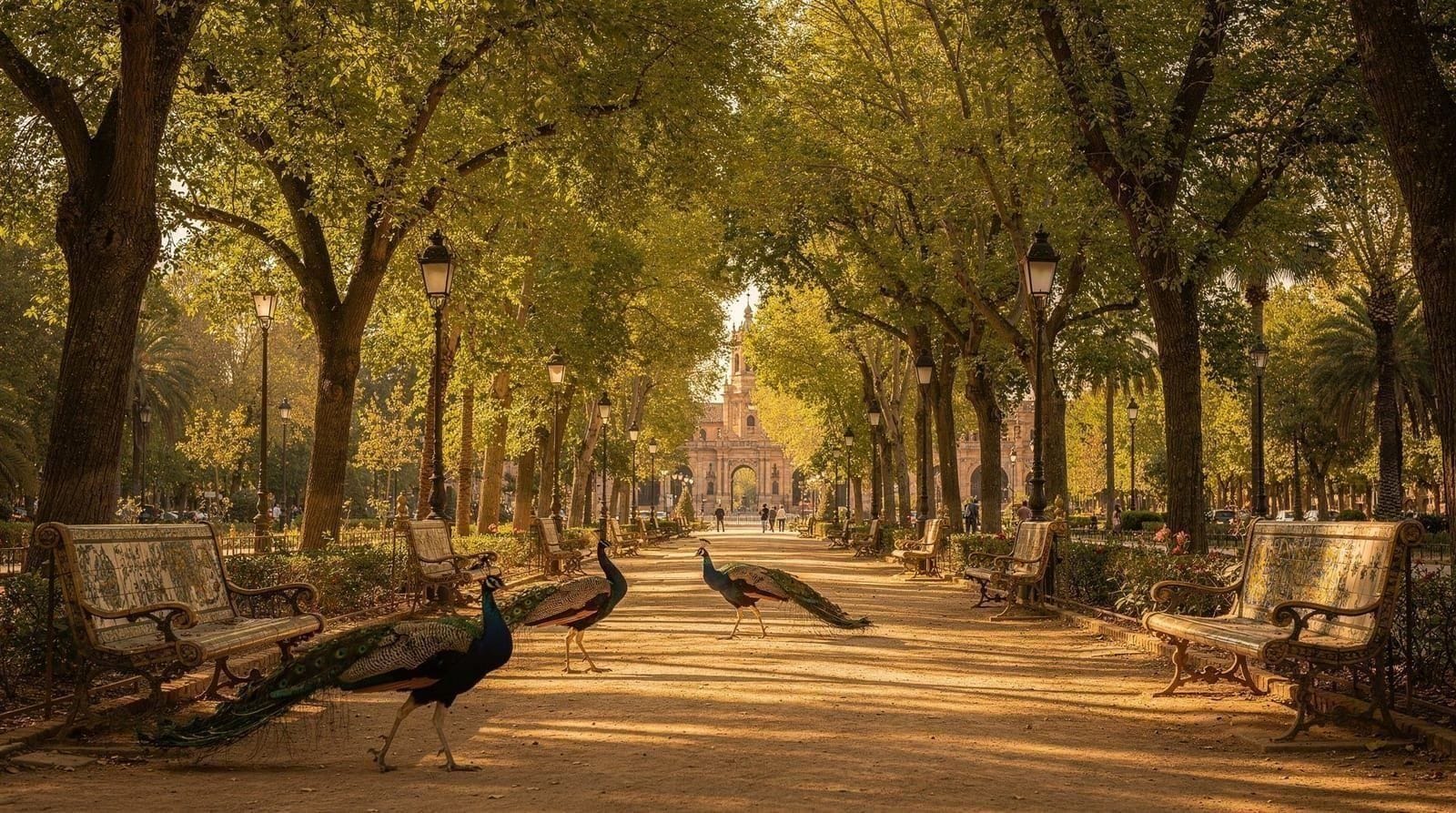
Parque de María Luisa is Seville’s central urban park: 34 hectares of paths, fountains, formal gardens, and shaded walks between the Paseo de las Delicias and the Plaza de España. It was donated to the city in 1893 by Princess María Luisa of Bourbon and redesigned for the 1929 Ibero-American Exposition by French landscape architect Jean-Claude Nicolas Forestier.
What’s inside:
- Glorieta de Bécquer: a romantic tree-shaded clearing with a ceramic fountain memorial to the Sevillian poet Gustavo Adolfo Bécquer
- Prado de San Sebastián pond: popular for duck and swan feeding, particularly with children
- Peacocks and deer: wander freely through parts of the park
- Two museums: Museo Arqueológico de Sevilla (closed for renovation; check the official museum site for the reopening date) and Museo de Artes y Costumbres Populares (ethnographic collection, closed Monday)
- Several playgrounds for young children
- Café/kiosk in the centre of the park
Hours: The park never formally closes, though the museums have standard hours (9am-8pm Tuesday-Saturday, 9am-3pm Sunday).
Cost: Free. Museums have separate admission (€1.50 EU citizens, €3 non-EU for Andalusian museums).
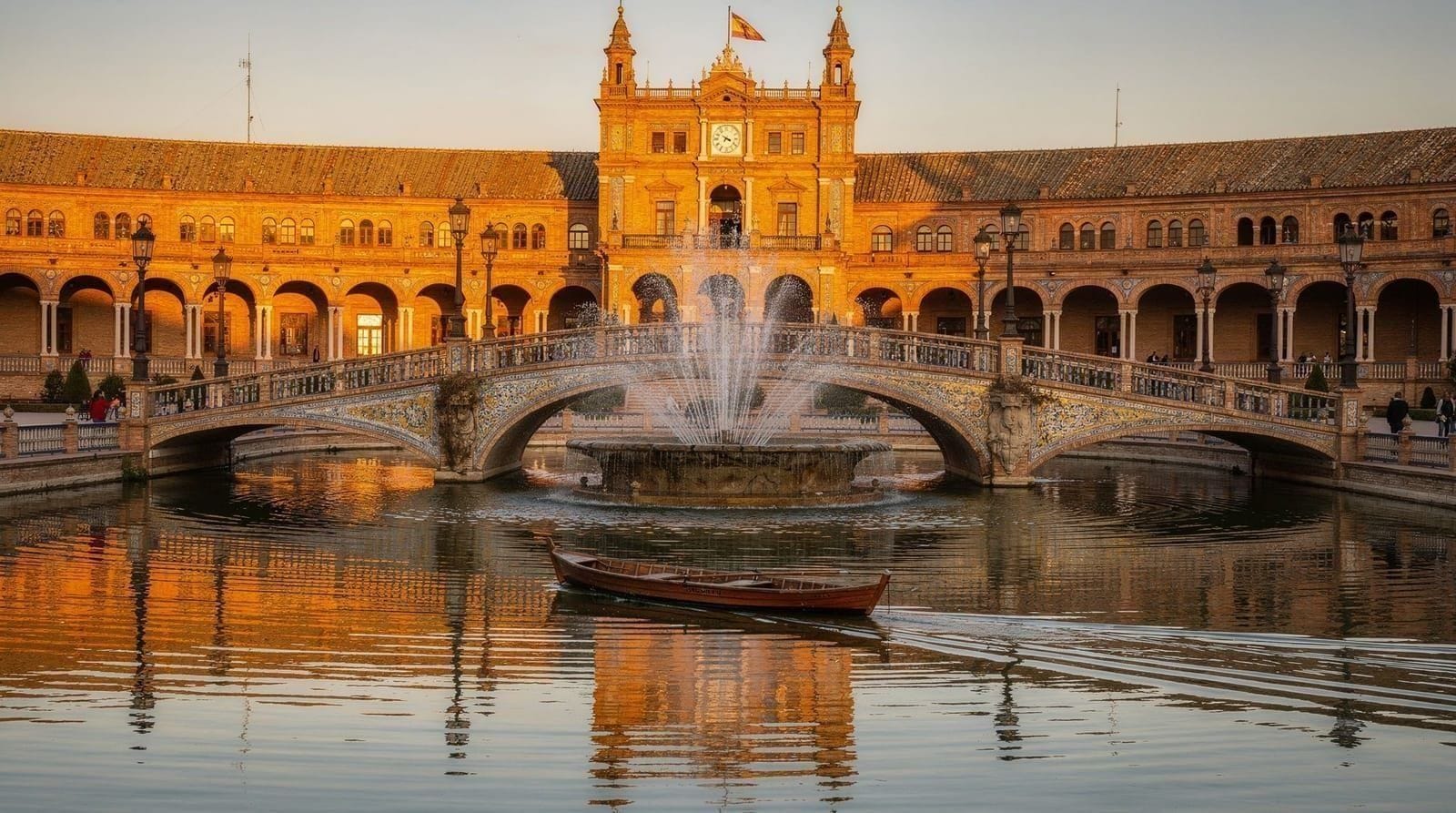
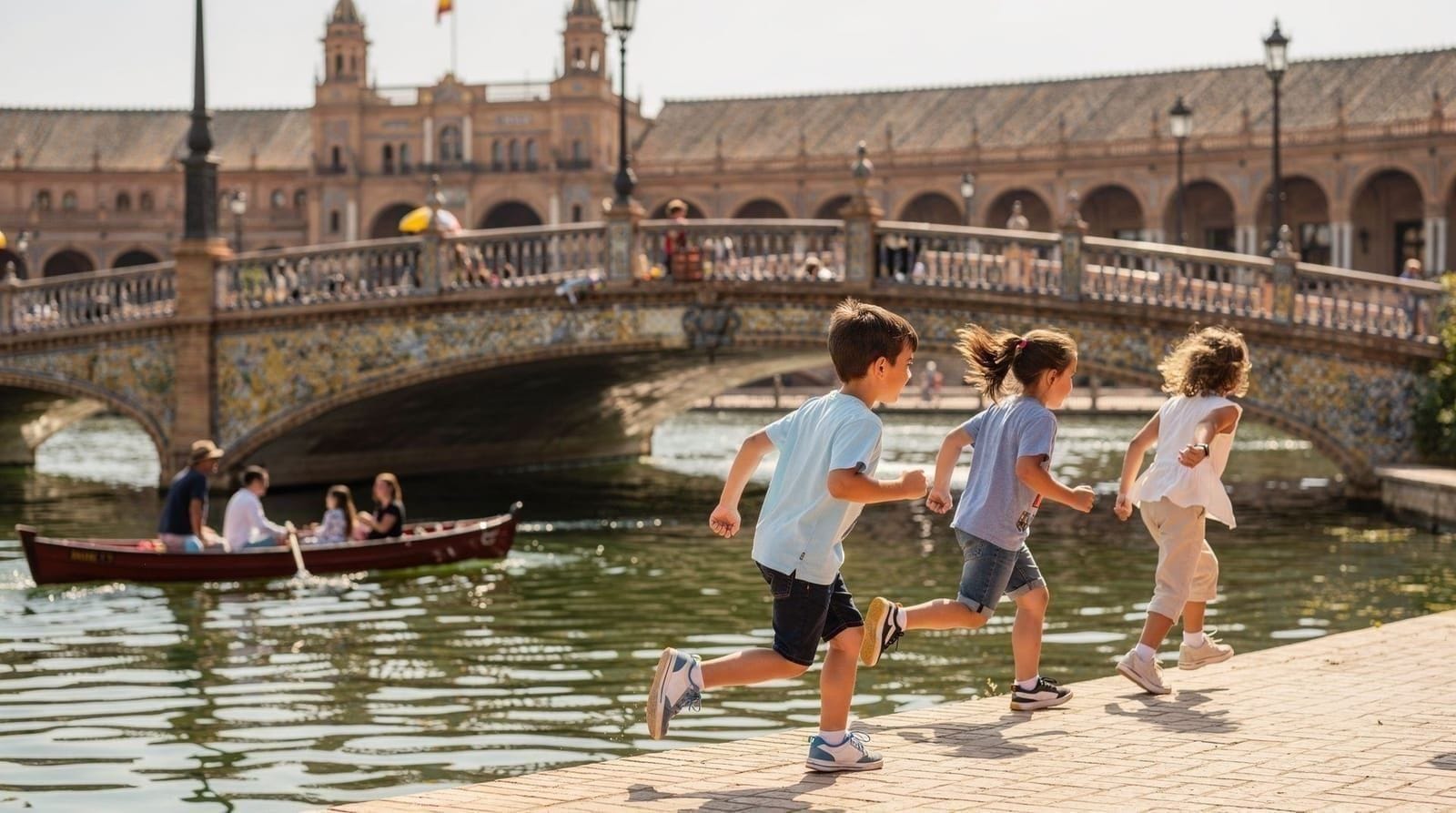
The most strategic use of María Luisa Park: arrive in early morning before the heat builds, walk to the Plaza de España for the rowboats, continue into the park for 1-2 hours, and finish at the Museo de Artes y Costumbres Populares (the Archaeological Museum is closed for renovation). Full guide at María Luisa Park guide. Families travelling with children will also find the playgrounds and duck pond covered in the Seville with kids guide.
Seville: 1-hour Guadalquivir river eco cruise — see the city from the waterAlcázar gardens: the finest formal gardens in Seville
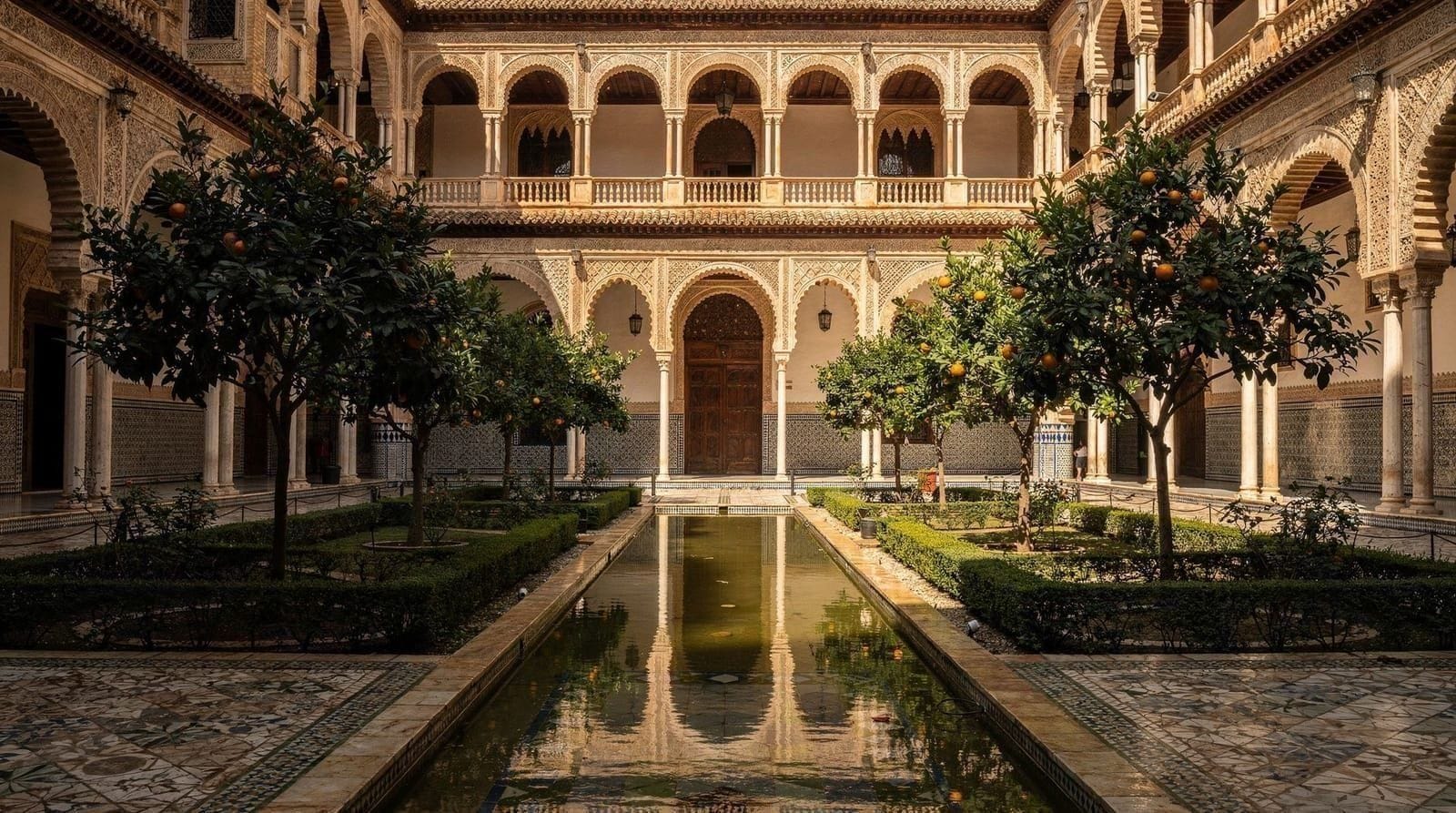
The Real Alcázar gardens are one of the great surprises of Seville for visitors who go expecting just a palace. The garden complex covers approximately 7 hectares and contains multiple distinct spaces: the Mercury Garden (a large rectangular pool originally built as a water reservoir, now with a statue of the Roman god), the English Garden (a more natural, romantic space), the Garden of the Grotesque Gallery, and the Dance Garden with its orange trees and jasmine.
Highlights:
- Mercury Pool: the oldest surviving garden element (16th century), peaceful in early morning
- Garden of the Dance: aromatic with orange blossom in March-April
- Grotesque Gallery: a long gallery of niches with shells, pebbles, and ceramic decoration
- The maze (historic hedge labyrinth near the Lions Gate)
- Peacocks and ducks at multiple points
Cost and hours: Included with the Alcázar entry ticket (€15.50 adults, children up to 13 free when accompanied by an adult). Evening in the Alcázar gardens in April, with jasmine and orange blossom in the air, is genuinely exceptional.
See the complete Real Alcázar guide for ticket logistics and palace highlights.
Making the most of the gardens. Most visitors treat the gardens as an afterthought at the end of the palace tour, when their energy is already low. Do the opposite if you can: walk through the palace rooms efficiently, then give the gardens real time, sitting by the water and following the paths away from the main flow. The further you go from the palace doors, the quieter it gets. If you want to understand what you are seeing, a guided visit adds context on the history of the spaces, and the Alcázar tickets and skip-the-line guide explains the different ways to get in. Anyone choosing between the palace and the Granada monument can compare them in Alcázar vs Alhambra, and the best time to visit the Alcázar covers when the grounds feel calmest.
Parque del Alamillo: the biggest and least visited
Parque del Alamillo is a 100-hectare park on Isla de la Cartuja, north of the city centre, connected to Seville proper by the Puente del Alamillo. It was created for the 1992 Expo and is now the city’s largest park — and one of its quietest, with far fewer tourists than María Luisa.
Highlights:
- Pine and eucalyptus forest: the most substantial woodland in the city
- Extensive picnic areas: genuinely usable, with tables and shade
- Children’s play areas and sports facilities (football pitches, tennis courts)
- Guadalquivir riverside walking path on the western edge
- Quiet in August when Sevillanos have left for the coast — the tourist crowd never discovers this park
Logistics: Best reached by bike (follow the Guadalquivir river path north from the city) or by bus (C1 bus from Prado de San Sebastián or Puerta de Jerez). About 3 km from the Alameda de Hércules. Combined well with a visit to the Cartuja district (Monastery of Santa María de las Cuevas, now housing a ceramics museum).
Who it suits. Alamillo rewards people who like space and do not mind a little effort getting there. It is a good choice for a picnic, a long walk, or a slow ride on the river path, and a poor choice if you only have a short window and want something to look at every few minutes. Pair it with a ride along the river and the Seville by bike guide will help you plan the route, while the getting around Seville guide covers the bus options if you would rather not cycle.
Jardines de Murillo: the Santa Cruz gardens
The Jardines de Murillo sit on the eastern wall of the Alcázar, separating the palace from the Barrio de Santa Cruz. Named after the Baroque painter Bartolomé Esteban Murillo (born in Seville 1617), they are a modest but pleasant space: long walkways of orange trees, benches, a central fountain, and memorial statues. Good for a rest on a hot afternoon, particularly popular with locals in the evenings.
Free, always open. One of the better shaded walking routes through Santa Cruz — from the Jardines de Murillo you can access the heart of the barrio via Calle Mateos Gago without fighting through the main Cathedral tourist stream.
The gardens work well as a pause between sights. Sit with a drink from a nearby bar, watch the locals pass through, and then continue into the lanes of the old Jewish quarter. The Santa Cruz neighbourhood guide maps out what to see on the other side of the wall, and the Cathedral and Giralda guide is the natural next stop if you have not yet been inside.
Jardines de la Buhaira: the Almohad pleasure gardens
The Jardines de la Buhaira are the least-known significant garden in Seville. They occupy the site of a 12th-century Almohad pleasure garden (buhaira means “small lake” in Arabic) built for the Almohad caliph. The original features — terraced garden, reflecting pool, ornamental channels — have been partially reconstructed based on archaeological evidence.
Location: Nervión neighbourhood, east of the historic centre (about 20 minutes’ walk from the Cathedral). Less convenient but worth combining with a visit to the Nervión area.
Hours: Generally open 8am to dusk. Free.
Because it sits outside the main tourist circuit, Buhaira is a place where you see Seville going about its day: people reading, walking, and meeting friends. It will not take long to see, so treat it as part of a wider afternoon in the east of the city rather than a destination on its own. The Nervión guide lists what else is nearby, and the best neighbourhoods in Seville guide puts the area in context if you are choosing where to stay.
Practical notes for park visits
Best time of day: Early morning (before 10am) and late afternoon/evening (after 6pm) are the best times to visit any Seville outdoor space. Midday in summer (noon-4pm) is uncomfortably hot in any park with limited shade — the María Luisa Park’s shaded central alleys are the exception.
Cycling: The Guadalquivir river path runs through or adjacent to most parks listed above, connecting the city from the Parque de los Príncipes in the south to the Parque del Alamillo in the north. A bike (Sevici city bike scheme, approximately €1/hour, or rental shops throughout the city) is the best way to connect multiple parks in a single day.
Seville: 2-hour highlights bike tour — see the city’s parks and monuments by bikeFacilities: Most parks have public toilets (often requires a small coin), cafés/kiosks, and playgrounds. María Luisa Park has the most complete facilities. Parque del Alamillo has picnic infrastructure but limited food options — bring your own.
Dogs: All Seville parks are dog-friendly; most have designated off-lead areas. The parks are busiest on weekday evenings (local dog-walking hours, 6-8pm) and weekend mornings.
Sample days that put the parks to work
A slow first morning. Start in the Jardines de Murillo while the lanes of Santa Cruz are still quiet, then walk on to the Alcázar gardens and take your time. In the afternoon, when the heat peaks, move to the shaded alleys of María Luisa Park and finish at the Plaza de España as the light softens. This pairs well with the day plans in Seville in 2 days.
A family day outdoors. Keep the pace gentle: the playgrounds and duck pond in María Luisa Park, a picnic at Alamillo, and plenty of breaks in the shade. The Seville with family itinerary shows how to balance green time with sights children enjoy.
A relaxed first-timer plan. If this is your first visit, use one park as the quiet anchor of each day rather than trying to see them all. The first-timers itinerary already leaves room for breaks, and the first-time travel tips are worth a read before you go.
Seasonality: when Seville’s green spaces are at their best
| Season | Conditions | What to prioritise |
|---|---|---|
| Spring (Mar–May) | Mild, orange blossom in full bloom | Alcázar gardens, María Luisa Park — the single best window of the year |
| Early summer (Jun) | Warm, still comfortable mornings/evenings | Early starts, Alamillo’s shade, river path by bike |
| High summer (Jul–Aug) | Very hot, 35°C+ middays | Avoid midday entirely; early morning or after 8pm only |
| Autumn (Sep–Nov) | Mild, second-best season | Same strategy as spring, fewer crowds |
| Winter (Dec–Feb) | Cool, occasional rain, mostly sunny | Midday visits are comfortable; gardens quieter still |
Weather decides more than any other factor in how enjoyable a park is. In the hot months the gardens are a lifeline rather than a luxury, and the Seville in summer heat guide explains how to structure your day around the temperature. In spring, when the blossom is out, the Seville in spring guide shows what else is happening in the city, and the Seville in winter guide is a good companion for the quieter, cooler months when gardens are at their most peaceful.
Beyond the city: green spaces as day trips
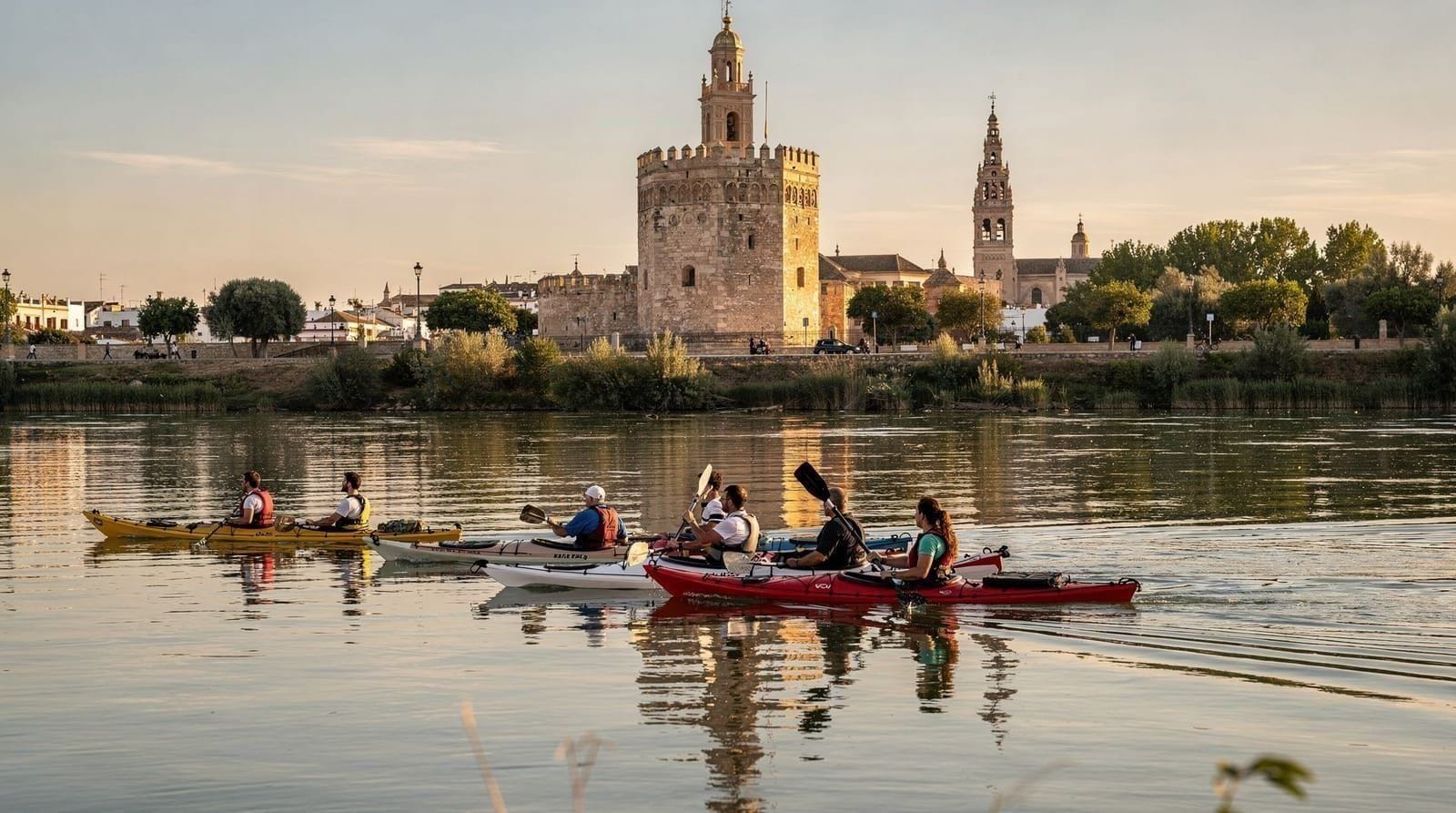
For visitors who want nature beyond Seville’s city parks, Doñana National Park is Spain’s most important wetland reserve, roughly 1–1.5 hours from the city, with genuinely wild landscapes and birdlife that no urban park can match. Closer to home, the kayaking and paddleboarding guide covers getting onto the Guadalquivir itself rather than just walking beside it — a different, quieter way to see the same riverside greenery that borders several of the parks above.
Doñana National Park 4WD day trip from SevilleFrequently asked questions about Parks and gardens in Seville
Which Seville park is best for a hot afternoon?
Parque de María Luisa has the most shaded alleys of any central park and is the easiest to reach, making it the most reliable escape from the heat between roughly noon and 4pm. The Alcázar gardens are shadier still and beautiful, but only accessible with a palace ticket.Are Seville's parks free to enter?
Most are free and always open: Parque de María Luisa, Parque del Alamillo, Jardines de Murillo, and Jardines de la Buhaira. The exception is the Alcázar gardens, included with the palace entry ticket (around €15.50).
Top experiences
Bookable activities with verified prices and instant confirmation on GetYourGuide.