Seville first-time travel tips: what to know before you go
Seville: Alcázar skip-the-line tickets and guided tour
What do I need to know before visiting Seville for the first time?
Book the Alcázar before anything else — it sells out. Eat lunch, not breakfast, as your big meal. Avoid restaurants directly facing the Cathedral. Expect dinner at 21:00. In summer, stop sightseeing at noon and restart at 18:00. Tap water is safe.
First time in Seville? Here are the things that actually matter — not a generic list of “be respectful” reminders, but specific, practical knowledge that changes how well your trip goes.
| Where to base yourself | Historic centre (Santa Cruz, El Arenal) or Triana for a more local feel |
| Book first | Real Alcázar timed entry — do this before anything else |
| Big meal | Lunch, 14:00–16:00, not dinner |
| Dinner time | Locals eat around 21:00 |
| Heat strategy (Jun–Sep) | Sightsee 09:00–12:00 and 18:00–22:00, rest midday |
| Tap water | Safe to drink |
The one thing to do before anything else: book the Alcázar
This is not a “nice to have.” If you do one thing before arriving in Seville, book timed-entry tickets to the Real Alcázar. The Alcázar uses timed-entry ticketing available at realesalcazares.es. In spring (March–May) and October, morning slots routinely sell out 1–2 weeks in advance. If you arrive hoping to buy a ticket at the gate, you may be turned away or face a 2–3 hour wait.
Book it now. The process takes 10 minutes online.
If the official slots are gone for your dates, or you simply want the visit to come with some context, a skip-the-line ticket combined with a guided visit of the palace is the usual fallback. The palace rooms, the Mudéjar decoration and the gardens make far more sense when someone explains who built what and why. For the full comparison of ticket types, read the Alcázar skip-the-line tickets guide, the complete Real Alcázar guide and skip-the-line tickets decoded. If you can’t decide what to see first, Alcázar or Cathedral first settles the order.
Understand the meal schedule before you eat
Seville runs on Andalusian time, and food is the most visible example:
Breakfast (desayuno): 08:00–10:00. Typically a café con leche and a tostada con tomate (toast with crushed tomato and olive oil) or a tostada con jamón. Served at the bar counter. Cost: €2.50–4.
Lunch (almuerzo or comida): 14:00–16:00. This is the main meal of the day. The menú del día — a set lunch of two or three courses plus bread and a drink — costs €10–13 at a local bar. Restaurants start filling up at 14:30 and are full by 15:00.
Dinner (cena): 21:00–23:00 is when locals eat. If you sit down in a Seville restaurant at 19:30, you’ll be the only table occupied and the kitchen may not be fully ready. Tapas bars are the earlier option — they start filling from around 19:30 for pre-dinner grazing.
Practical implication: If you’re hungry at 18:00, eat tapas at a bar. Don’t try to have a sit-down dinner — you’ll be eating tourist-timing and the restaurants catering to that schedule are not the ones worth eating at.
Eat at the barra, not the terraza
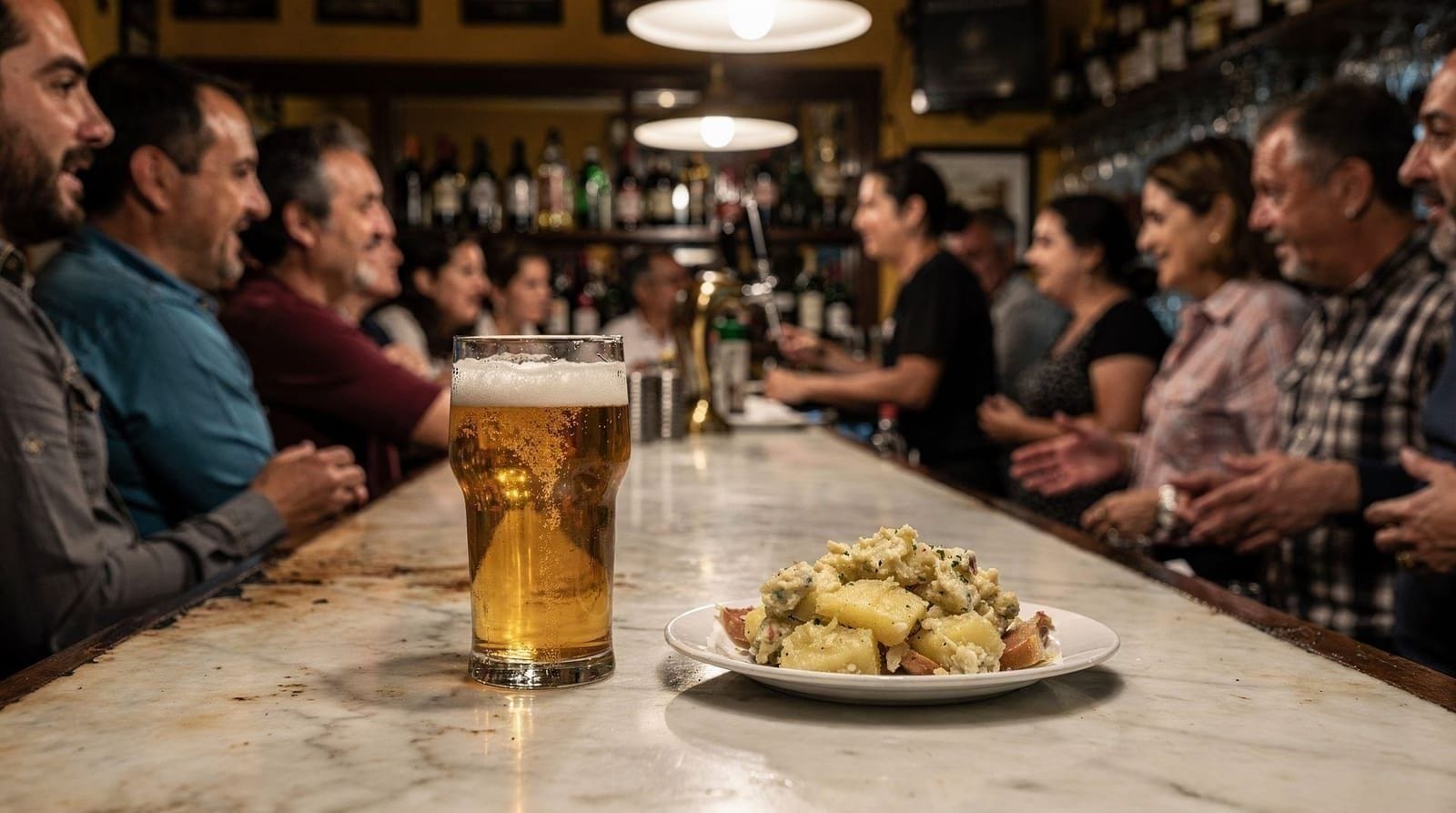
Seville’s bars have a formal two-tier pricing structure: bar counter (barra) prices and terraza (outdoor terrace) prices, with the terraza typically 20–30% higher. This is legal and published on the tariff card. But if you sit outside without checking, you will consistently pay more.
The rule of thumb: if the street is adjacent to a major tourist sight, the terraza surcharge is significant. If you’re in a local neighbourhood bar (Triana, Macarena, Alameda), the difference is smaller.
More detail in Barra vs terrace pricing in Seville.
Know what Seville actually eats
Tourists near the Cathedral are often sold paella as a traditional Sevillano dish. It isn’t — paella is Valencian, from the Valencia region on the Mediterranean coast. A Sevillano would not order paella as their first choice in their own city. Restaurants selling it to tourists near the Cathedral are serving a geographical confusion for profit.
What Seville actually eats:
- Jamón ibérico: Cured ham, best from the nearby Sierra de Aracena pigs (jamón de Jabugo)
- Boquerones en vinagre: Fresh anchovies marinated in vinegar, excellent
- Espinacas con garbanzos: Spinach with chickpeas — a Moorish-influenced classic specific to Seville
- Gambas: Prawns, often simply grilled with olive oil and sea salt
- Caracoles: Snails in a spiced broth (available in spring and summer)
- Flor de alcachofa: Fried artichoke hearts in season
- Montaditos: Small baguette rolls with various toppings — a tapas staple
For a full guide to traditional Andalusian food, see Traditional Andalusian dishes.
The heat: what first-timers don’t expect
If you’re visiting June through September, the temperature will be 35–42°C in the afternoon. This is not uncomfortable-beach-heat. This is serious sun in a city of reflective marble plazas and minimal shade.
What this means practically:
- The window 12:00–17:00 is effectively non-functional for outdoor sightseeing
- Museums, the Alcázar interior, the Cathedral interior, and air-conditioned restaurants absorb the midday block
- Mornings (09:00–12:00) and evenings (18:00–22:00) are when the city moves
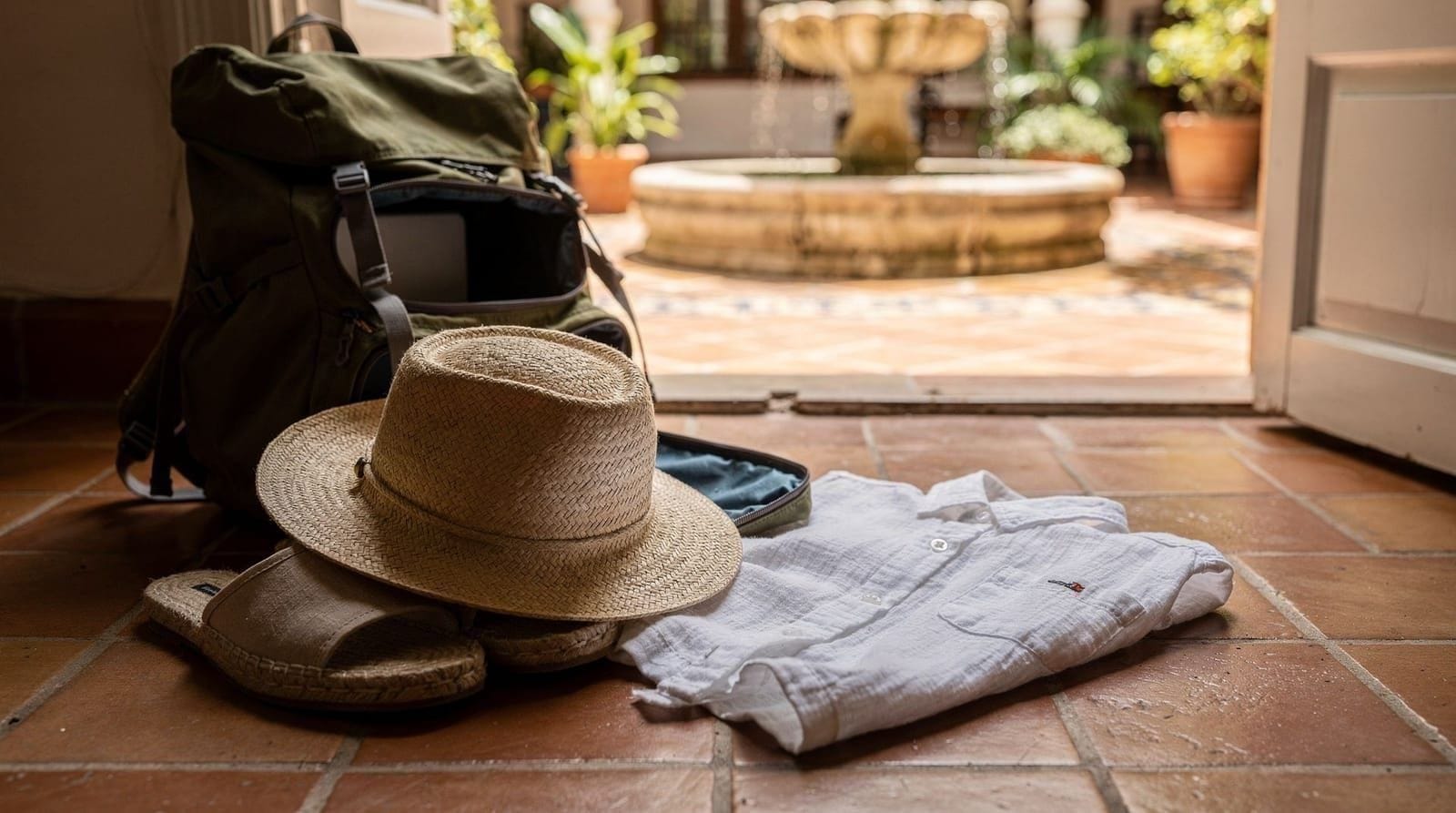
- A hat, factor 50 sunscreen, and 1.5 litres of water are not optional
First-time summer visitors who try to sightsee through the afternoon heat will feel unwell. Locals disappear indoors from noon — this is not laziness, it is rational heat management that has evolved over centuries.
The rosemary scam: know it and ignore it
Near the Cathedral, women offer sprigs of rosemary as a “free gift”. Taking the rosemary initiates a money demand. The correct response: don’t stop, don’t take it, say “no gracias” and keep walking. They don’t follow. See The rosemary scam in Seville: what it is and how to avoid it for the full picture.
What to skip and what to prioritise
Prioritise:
- Alcázar (non-negotiable, one of the great buildings of Europe)
- The Cathedral and Giralda climb (spectacular interior, panoramic tower view)
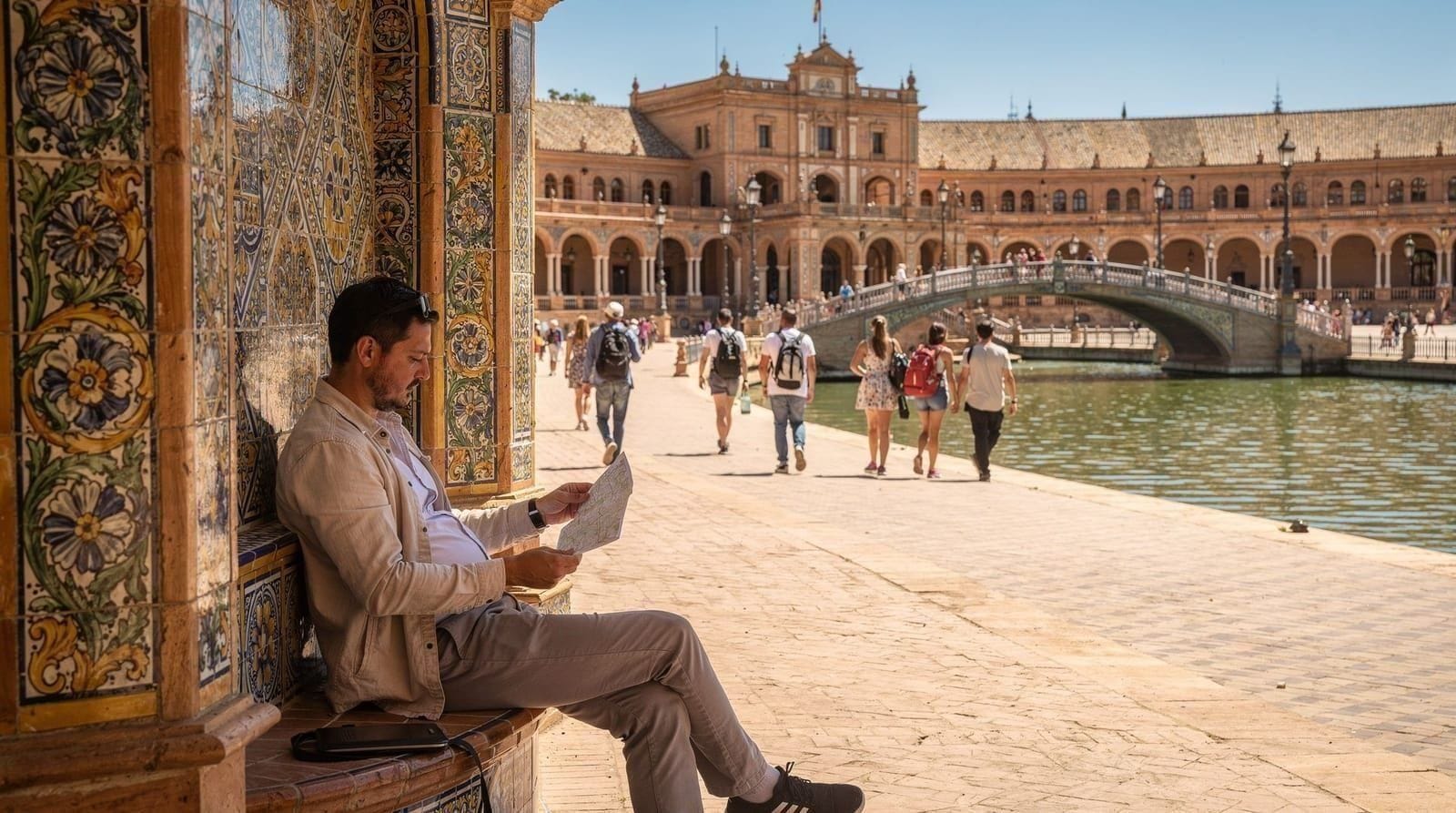
- Plaza de España (free, extraordinary, worth an hour at least)
- Triana neighbourhood (where Seville lives — less touristy, better tapas)
- One evening of authentic flamenco (not a stadium show — a genuine tablao)
Lower priority than advertised:
- Seville City Pass: only worth it if you’re visiting multiple museums in a single day (see Seville city pass)
- Horse-drawn carriage rides: pleasant but expensive for what they are (€40–50 per carriage for 45 minutes)
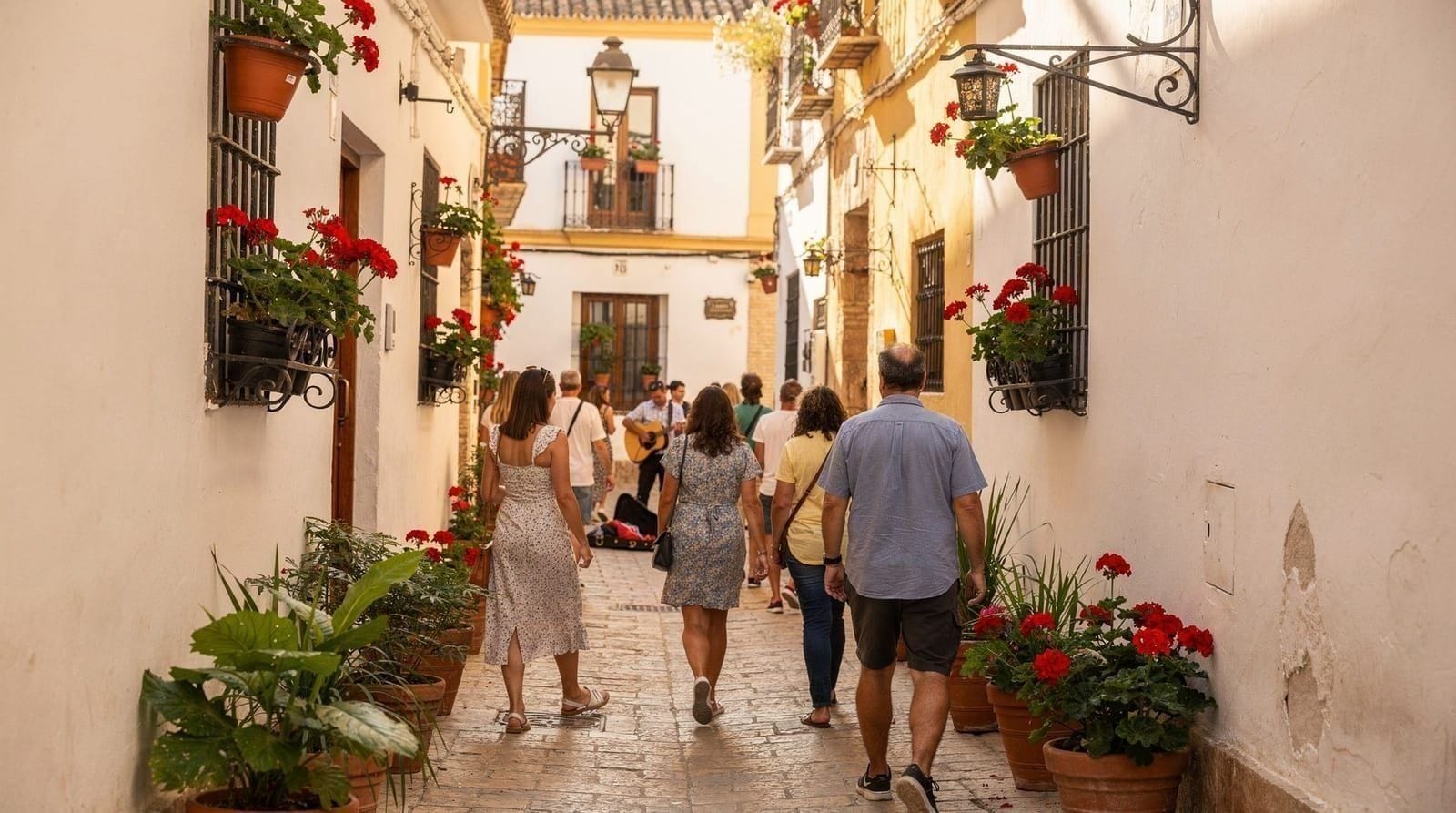
- Guided walking tours of Santa Cruz: the barrio is best explored alone without a schedule
Skip entirely:
- Restaurants on Avenida de la Constitución or facing the Cathedral with photo menus
- Any flamenco show sold outside your hotel by a tout
- “Tapas tours” that are really a queue of tourist bars
Thinking about a day trip from Seville
Seville works well as a base, and many first-timers wonder whether to leave the city at all. If you have several days, one excursion is a good idea, and the simplest to organise is Córdoba, which is easy to reach from Seville. Some travellers prefer to go by themselves on the train, others like a full day with a guide who handles the logistics for you. The Córdoba day trip guide and Córdoba by train vs tour lay out both options honestly.
Other excursions are covered in best day trips from Seville, and if you are torn between destinations, which Andalusian city to visit and Seville vs Granada vs Córdoba help you choose. Don’t try to squeeze a day trip into a short stay: the city itself deserves your first days, and how many days in Seville helps you judge how much time you really need.
Getting around once you’re here
The historic centre is small enough that you will mostly walk, and the shaded, narrow streets of Santa Cruz are part of the pleasure. For longer distances, getting around Seville and the public transport guide explain the options, and Seville by bike is a pleasant alternative in the cooler hours. Plan your route so that you are walking in the shade or indoors during the hottest part of the day, and keep a bottle of water with you at all times.
Staying safe and sensible
Seville is generally a relaxed city, but the usual city habits apply in crowded places such as queues, transport and busy squares: keep your phone and wallet out of easy reach and stay aware of your bag. Is Seville safe? goes through what to watch for without exaggerating it, while common mistakes in Seville and Seville tourist traps to avoid cover the avoidable annoyances. Once you have the basics right, the rest of the trip is mostly a matter of slowing down and following the local rhythm.
Language basics that help
The minimal useful Spanish for Seville:
| Phrase | Use |
|---|---|
| Por favor / Gracias | Please / Thank you |
| Una cerveza, por favor | A beer, please |
| La cuenta, por favor | The bill, please |
| Dónde está…? | Where is…? |
| Una tostada con tomate | Breakfast staple (toast + tomato) |
| En el mostrador | At the bar counter (for barra pricing) |
| No, gracias | The correct response to the rosemary scam |
Seville is a tourist city and English is widely understood in the historic centre. Outside the tourist areas, Spanish is needed — which is part of the reason Triana and Macarena are worthwhile.
Practical logistics for day one
-
Transport from airport: EA bus (€6) to Puerta de Jerez, or fixed-fare taxi (~€26). See Getting to Seville from the airport.
-
Check in, then walk: Most hotels in the historic centre have a walking distance advantage to everything. After check-in, walk to the nearest local bar for lunch (not breakfast if arriving late morning — it’s lunch time).
-
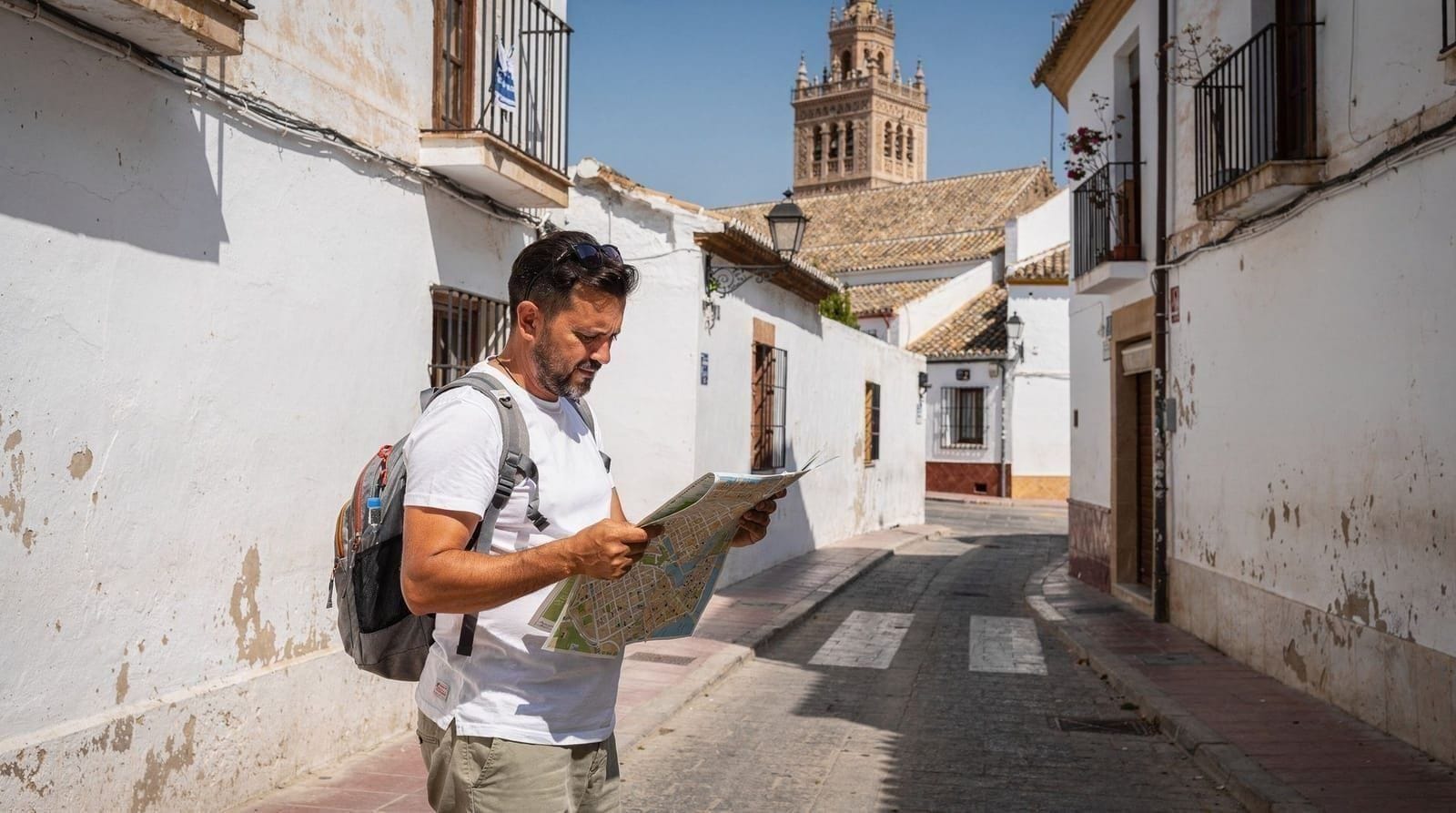
Get your bearings: The historic centre is compact. A 30-minute walk establishes the key spatial relationship: Alcázar and Cathedral (south), Metropol Parasol (north), Plaza de España (southeast), Triana (across the river to the west).
-
Evening plan: Have dinner late. Either do tapas at Triana bars around 20:00–21:00, or book a flamenco show for the 21:00 slot if you have one scheduled.
For a fully worked-out day-by-day plan, see Planning a Seville itinerary, or start from the first-timer’s itinerary if you’d rather follow a ready-made plan.
Money, tipping and payments
Cards are accepted almost everywhere in the historic centre, including small tapas bars, but carry some cash (€20–40 a day is usually enough) for smaller neighbourhood bars, markets, and the rare place that’s card-only above a minimum spend. Tipping is not obligatory the way it is in the US — locals round up or leave small change, perhaps €1–2 at a casual bar or 5–10% at a sit-down restaurant if the service was good. Nobody will chase you for a tip, and over-tipping is not expected or needed. ATMs (cajeros) are widespread; avoid the standalone tourist-area ATMs advertising “no fees” in English, as they usually apply a poor conversion rate — a bank-branded ATM is cheaper.
Where to stay for a first visit
Most first-time visitors base themselves in the historic centre — Santa Cruz for maximum walkability to the Alcázar and Cathedral, or El Arenal for proximity to the river and the bullring, both at a price premium. Triana, just across the Guadalquivir, offers a more local, lived-in feel with excellent tapas bars and a short walk back into the centre, usually at a lower cost. See the best neighborhoods guide for a full breakdown and the where to stay guide for specific recommendations by budget. Wherever you stay, check that the walk to the Alcázar and Cathedral is genuinely under 20 minutes — the historic centre’s narrow streets can make distances feel longer than they look on a map.
SIM cards and staying connected
An EU or UK SIM will usually roam in Spain at no extra cost; check your plan before you travel. If you need a local option, prepaid SIM cards from Vodafone, Orange or Movistar are available at the airport and in city-centre phone shops, typically €10–20 for a data package that covers a week or two. Wifi is widely available in cafés, hotels and most tapas bars, so connectivity is rarely an issue even without a local SIM.
Weather and crowds by season, at a glance
| Season | Weather | Crowds | Best for |
|---|---|---|---|
| Spring (Mar–May) | Mild, 18–26°C, occasional rain | High, especially around Semana Santa and Feria de Abril | Ideal all-round visit — see Seville in spring |
| Summer (Jun–Sep) | Hot, 35–42°C afternoons | Moderate — many locals leave in August | Early mornings and evenings — see Seville in summer |
| Autumn (Oct–Nov) | Mild, 20–28°C | Moderate | Good value, comfortable sightseeing |
| Winter (Dec–Feb) | Cool, 8–17°C, mostly dry | Low, except Christmas week | Fewer queues, shorter Alcázar waits — see Seville in winter |
For a deeper month-by-month breakdown, see best time to visit Seville. If crowds worry you more than weather, the best time to avoid crowds and the packing list will help you prepare, and a first look at Seville on a budget is worthwhile before you fix your dates.
Frequently asked questions about Seville first-time travel tips
What is the most common mistake first-time visitors make in Seville?
Not booking Alcázar tickets in advance. It is the most visited monument and uses timed entry — you cannot walk up and buy a ticket in peak season. Book online at realesalcazares.es at least a week before your visit.When do people eat in Seville?
Breakfast: 08:00–10:00 (coffee + tostada at a bar). Lunch: 14:00–16:00 (the main meal). Dinner: 21:00–23:00. Eating in a restaurant before 21:00 marks you immediately as a tourist and means you'll be the only ones in the room. Tapas bars open around 19:00–19:30 for pre-dinner drinks and snacks.Is paella a traditional Seville dish?
No — paella is Valencian. Any restaurant near the Cathedral advertising paella as a local dish is targeting tourists. Traditional sevillano food is tapas-based: jamón ibérico, boquerones en vinagre (anchovies in vinegar), espinacas con garbanzos (spinach and chickpeas), and caracoles (snails in summer). See traditional-andalusian-dishes for a full guide.Do I need to speak Spanish in Seville?
No — English is widely spoken in the tourist areas of the historic centre. However, learning basic Spanish phrases (gracias, por favor, una cerveza por favor, la cuenta) is both effective and appreciated. Many local tapas bars in outer neighbourhoods have less English, which is part of the appeal.How do I avoid paying tourist prices in Seville?
Eat at the barra (bar counter) rather than seated at a terraza. Avoid any restaurant with a photo menu in four languages directly facing a major monument. Drink Cruzcampo (local lager) or house wine rather than imported brands. Use the EA bus instead of taxis where practical.Do I need to tip in Seville?
No, tipping is not obligatory in Spain. Rounding up or leaving a euro or two at a casual bar is appreciated but not expected, and around 5-10 percent at a sit-down restaurant is generous rather than standard. Nobody will chase you for a tip if you leave none.Should I stay in the historic centre or Triana for a first visit?
The historic centre (Santa Cruz or El Arenal) puts the Alcazar, Cathedral and Plaza de Espana within easy walking distance, at a price premium. Triana, just across the river, is more local and usually cheaper, with a short walk back into the centre. Either works well for a first visit; see the best neighborhoods guide for a fuller comparison.