Is Seville safe? Honest safety guide for visitors
Seville: Royal Alcázar entry ticket
Is Seville safe for tourists?
Yes — Seville is generally safe. The main risk is petty theft (pickpocketing), primarily in the Cathedral queue, La Campana shopping street, and on crowded public transport. Violent crime affecting tourists is rare. The rosemary scam near the Cathedral is annoying but harmless if you decline and walk on.
Seville is safe. That is the accurate, evidence-based assessment, and it should be stated clearly before adding nuance. Violent crime targeting tourists is rare. The city is lively and well-policed in the historic centre. The main realistic risk for tourists is petty theft — primarily pickpocketing in predictable locations.
| Overall risk | Low — mainly petty theft, not violent crime |
| Main risk | Pickpocketing near Cathedral/Alcázar queues |
| Common scam | Rosemary “gift” near the Cathedral (harmless) |
| Emergency number | 112 |
| Areas to avoid | Tres Mil Viviendas, Polígono Sur (off tourist circuit) |
Overall safety rating
For context: Seville consistently ranks among the safer large Spanish cities. Seville’s violent crime rate is lower than Madrid, Barcelona, and significantly lower than many northern European capitals. The Numbeo crime index for Seville as of recent surveys: low-medium, similar to cities like Prague or Vienna.
The safety concerns that actually apply to tourists:
- Pickpocketing in specific high-density tourist areas
- The rosemary scam near the Cathedral
- Tourist-trap restaurants (not a safety concern but a financial one — covered in How to avoid tourist-trap restaurants in Seville)
Where pickpocketing occurs
Pickpocketing in Seville concentrates in a small number of locations:
Cathedral and Alcázar entrances: The queues outside both monuments involve standing still in a crowd — ideal conditions for pickpockets. Keep phones in front pockets and bags in front of your body.
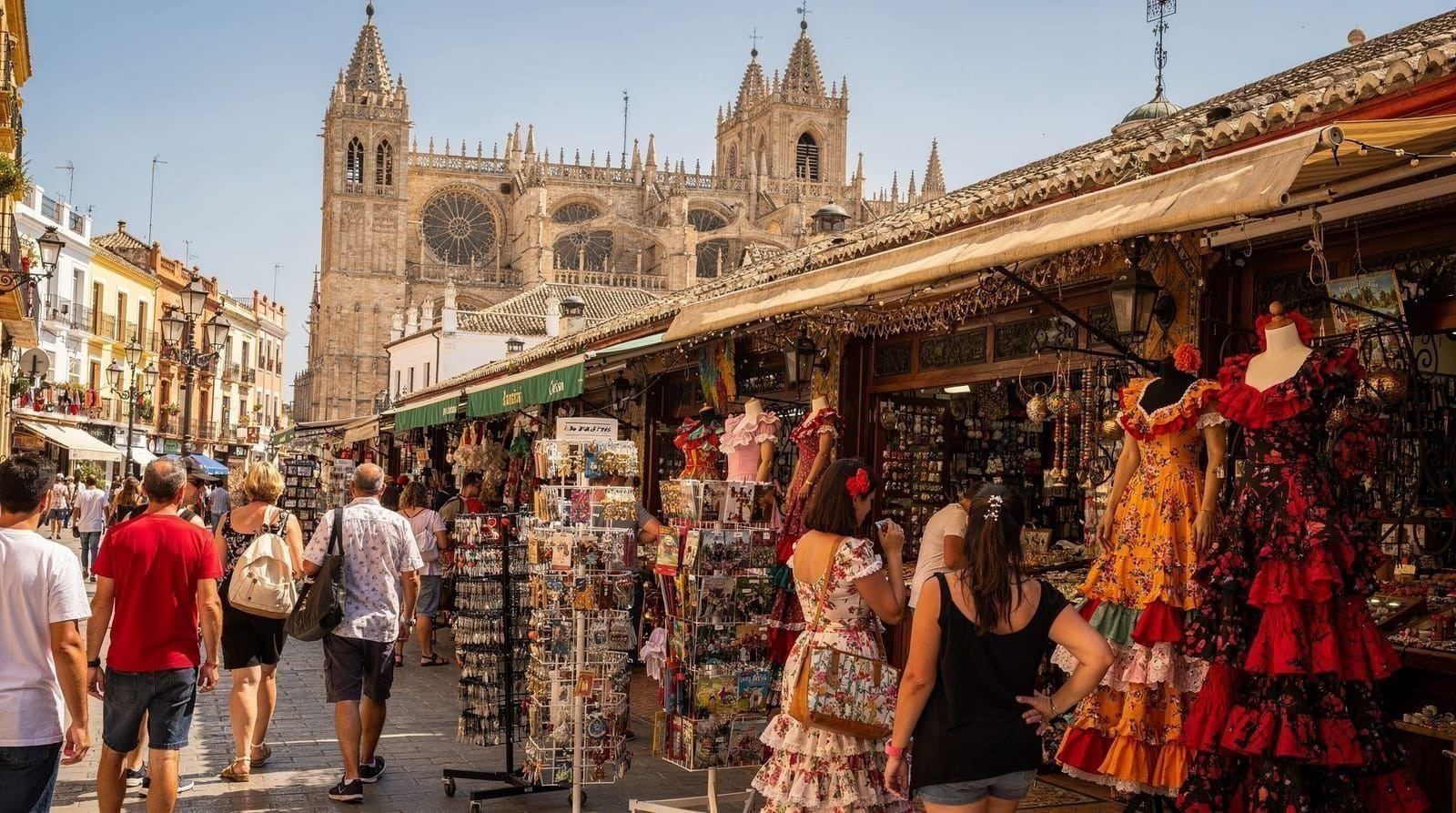
La Campana and Sierpes: The main pedestrian shopping street running north of the Cathedral area. Busy and crowded, particularly at weekends and during shopping hours.
Public transport, particularly the EA airport bus: When the airport bus is crowded — arriving flights from northern Europe at peak summer times — distraction theft is possible. Keep your bag on your lap or in front.
Festival crowds: Semana Santa procession routes and the Feria grounds at peak times create the densest crowds, and with them the highest pickpocket risk. Extra caution at these events is warranted.
What works: Keep your phone in a front trouser pocket rather than a rear pocket or external bag pocket. Use a crossbody bag worn in front. Leave credit cards and passport (carry a photocopy) at the hotel safe. Keep a small amount of cash accessible and the rest separate.
Shortening the time you spend in the riskiest spots: Since the danger comes from standing still in a dense crowd, the simplest fix is to stand in the crowd less. Booking ahead means you spend far less time in the entrance queue, which is the moment pickpockets rely on. For the palace, a skip-the-line Alcázar entry ticket keeps you out of the longest wait, and for the other big monument, a pre-booked Cathedral and Giralda ticket does the same job. The Alcázar skip-the-line tickets guide and the Cathedral and Giralda tickets guide explain how the options differ, so you can choose with a clear head instead of haggling at the gate.
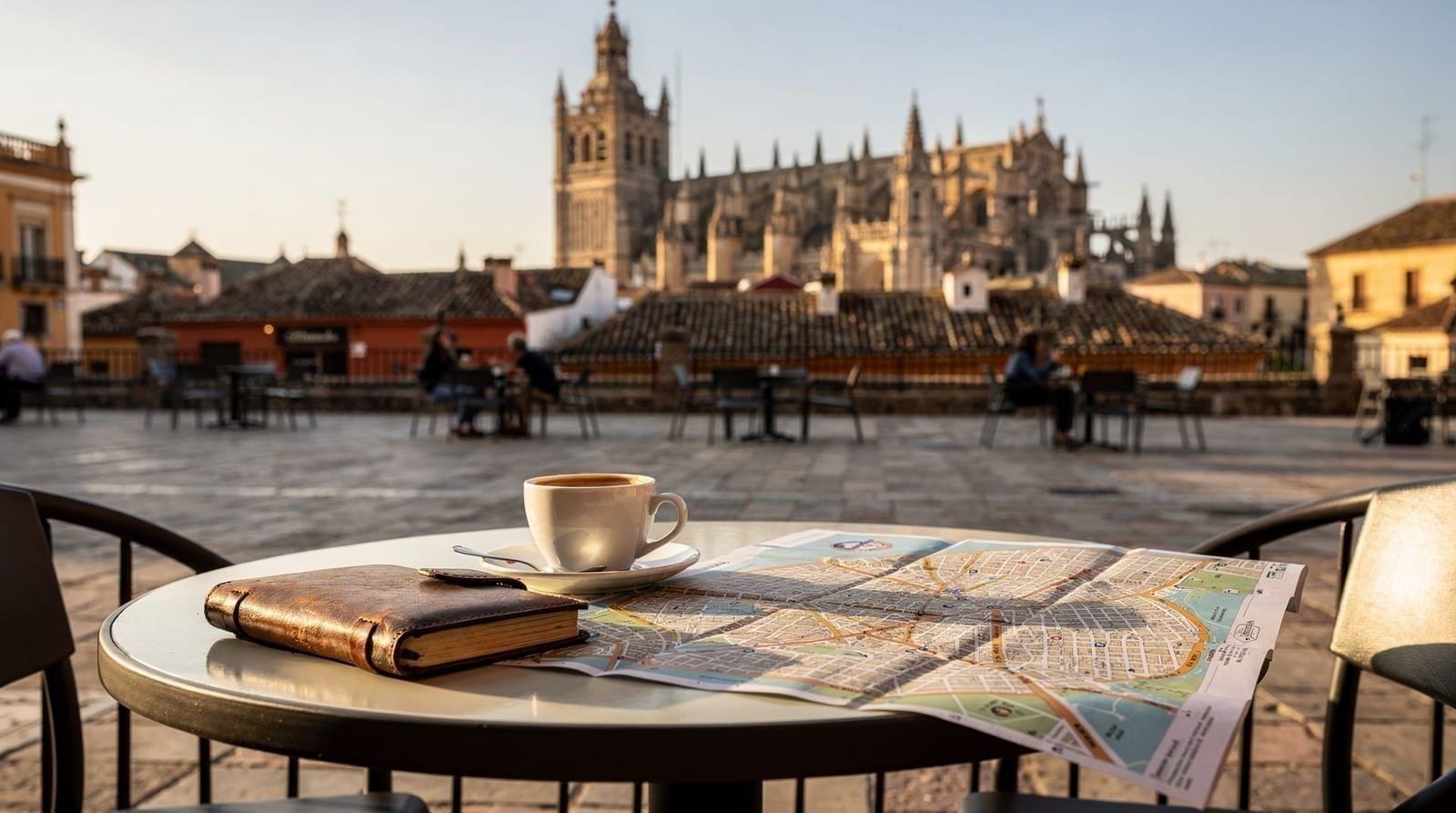
Habits that cost nothing: Pickpockets look for the person who is distracted, not the person who is rich. Take photos with a hand on your bag, step out of the flow of people before you check a map, and avoid putting your phone on café tables at the edge of a busy pedestrian street. If someone bumps into you or stages a small commotion, check your pockets before you react to it. None of this needs paranoia — it is the same rhythm of awareness most travellers already use at home.
The rosemary scam — and why it isn’t a danger
This scam gets attention online because it is distinctive and irritating, but it is not dangerous and costs nothing if handled correctly.
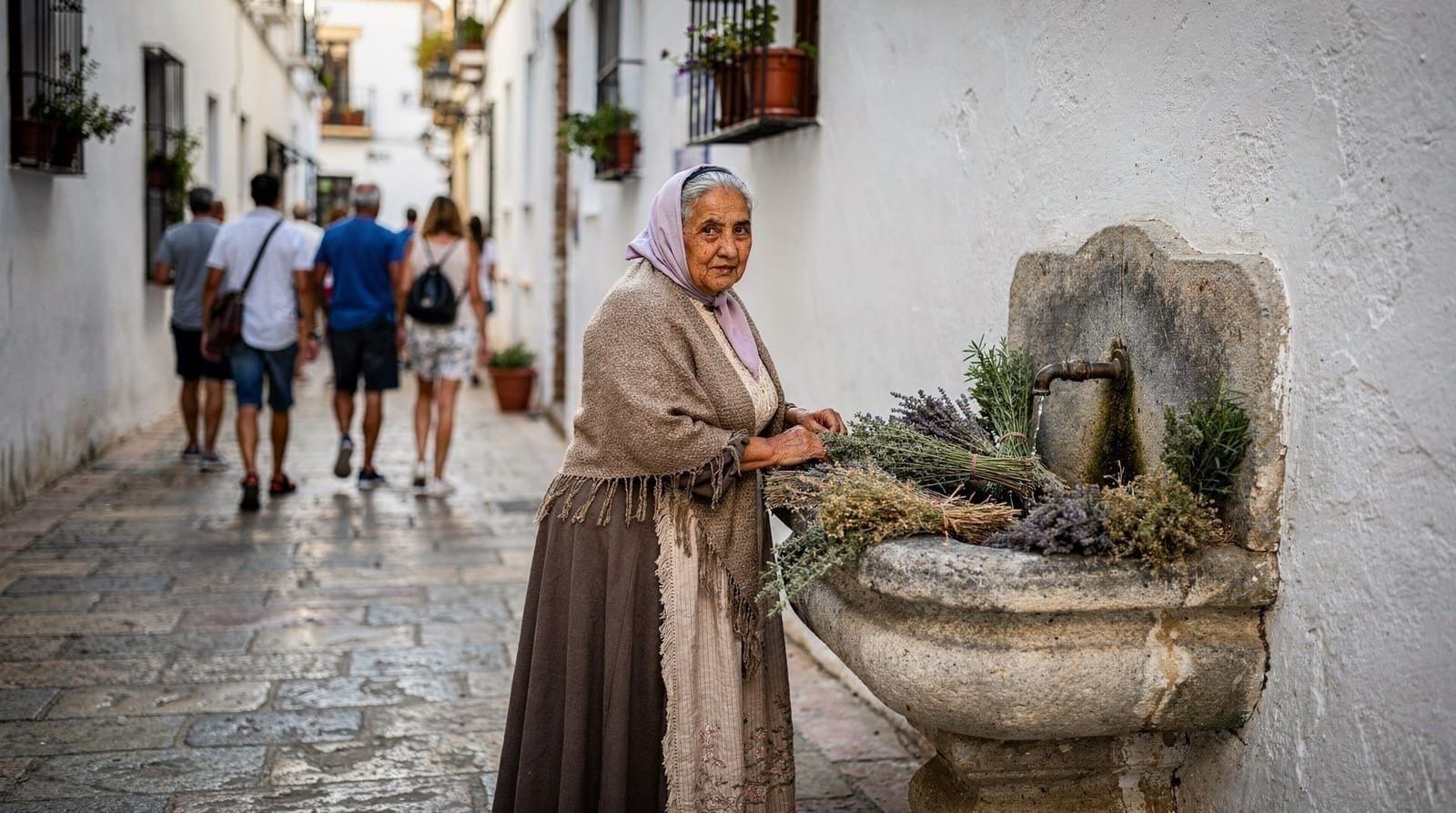
How it works: Women — often dressed traditionally — stand outside the Cathedral, occasionally near the Alcázar and Plaza de España. They approach tourists and offer a sprig of fresh rosemary (romero). If you take it, they immediately declare it a “gift from God” and expect money. If you hesitate, the demands can become persistent.
The correct response: Look them in the eye and say “No, gracias” firmly while keeping walking. Do not slow down. Do not take the rosemary. Do not engage with explanations. They will not follow you more than a few steps.
There is zero physical danger. The women are persistent and occasionally confrontational in words, but they will not touch you or block your path if you keep moving. Many visitors who understand the scam describe it as more comedy than annoyance.
Full detail in The rosemary scam in Seville: what it is and how to avoid it.
Neighbourhoods at night
Safe for evening activity (populated, well-lit, active until late):
- Santa Cruz — lively restaurant district, busy from 18:00 onwards
- El Arenal — river-adjacent, chic, flamenco venues
- Triana — Calle Betis (river-facing) is busy most evenings; side streets are quieter but not unsafe
- Alameda de Hércules — the nightlife centre of Seville, LGBTQ+ friendly area, active until very late
- La Macarena — quieter than the others but populated with local residents
Areas to avoid late at night if unfamiliar with the city:
- Areas south of the SE-30 ring road (Polígono Sur, Tres Mil Viviendas) — well outside the tourist circuit and not a location any tourist would naturally be
- Industrial areas west of Triana after midnight
Honest assessment: the tourist circuit in Seville is consistently safe. The “dangerous” areas that occasionally appear on general safety lists are not near anything a visitor to Seville would ordinarily visit.
Specific situations: solo travel, female travel, LGBTQ+
Solo travellers: Seville is very manageable solo. The city’s tapas culture — sitting or standing at a bar counter — is particularly conducive to solo travel. You are never expected to have company to enter a bar.
Solo female travellers: Spain has a culture of catcalling (piropos) that is less prevalent than a generation ago but still present, particularly from older men. It is overwhelmingly verbal rather than physical. The Alameda de Hércules area late at night has a strong enough social scene that solo women rarely feel isolated. Standard precautions apply: stay in lit areas, have a taxi or Cabify app ready if returning late.
LGBTQ+ travellers: Spain legalised same-sex marriage in 2005 and has strong anti-discrimination protections. Seville’s Alameda de Hércules is explicitly LGBTQ+-friendly. Public displays of affection are accepted in the vast majority of the city without incident.
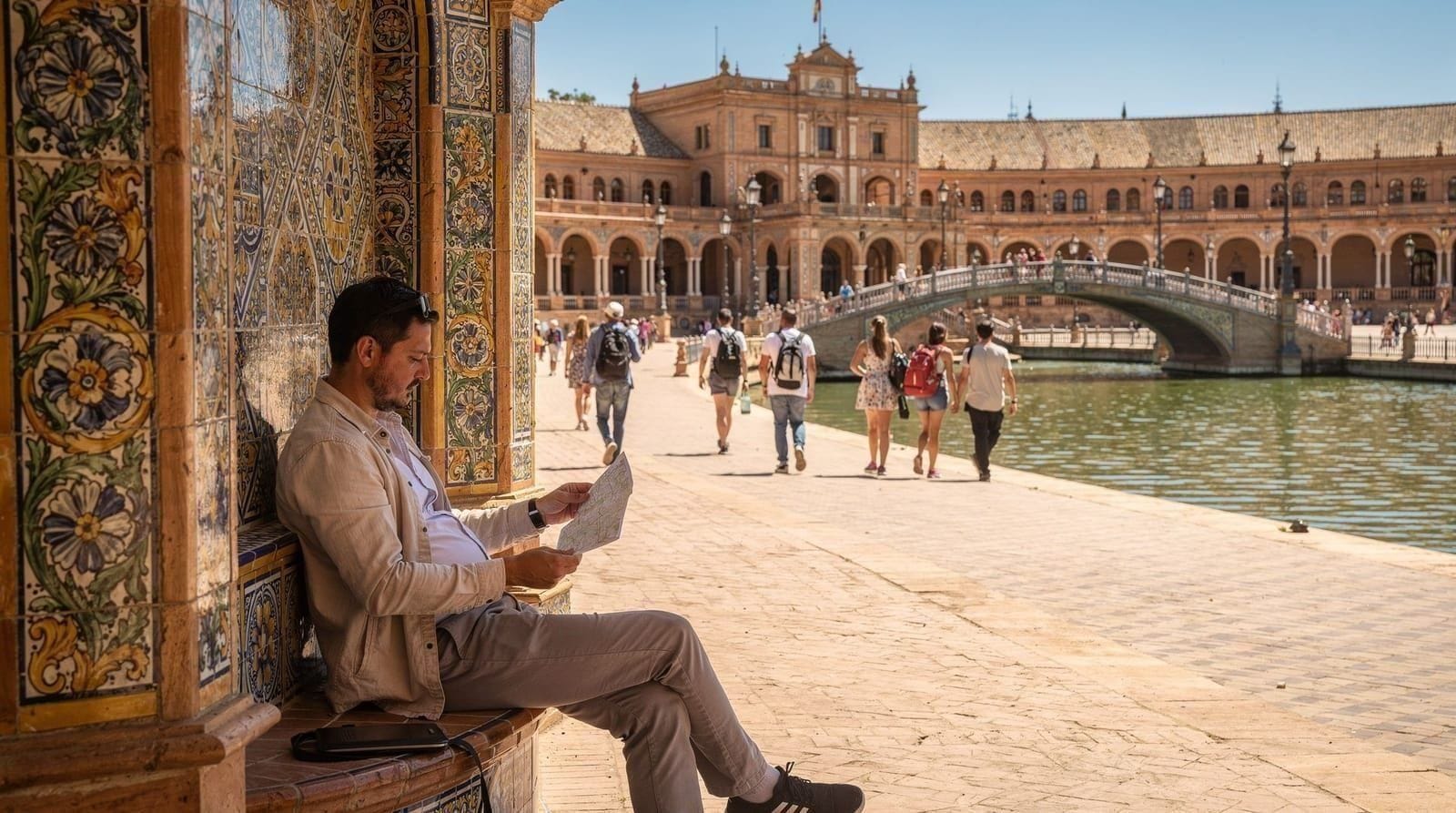
Travelling with children: Seville is excellent for families. Spanish culture is very child-friendly — children are welcome in restaurants at any hour, and the city’s parks, the Alcázar gardens, and the Plaza de España (with its boats on the moat) are genuinely child-appealing. See Seville with kids for family-specific advice.
Getting in from the airport and moving around safely
Your first contact with the city is usually the airport transfer, and it is worth knowing what to expect. The bus and train options are covered in Getting to Seville from the airport, and the practical advice from a safety angle is simple: keep your luggage within sight, keep your bag on your lap or in front of you on a crowded bus, and do not let anyone who offers to “help” with your suitcase handle it unprompted. If you prefer a taxi, use the official rank rather than accepting an offer from someone approaching you in the arrivals hall.
Once you are in the centre, almost everything is reachable on foot, which is both the most pleasant and the most secure way to see the city. For longer hops, the Seville public transport guide lays out the bus, tram and metro options, and the Seville by bike guide is useful if you would rather cycle. If you cycle, lock the bike properly every time you stop, even for a short coffee, and avoid leaving bags in the basket.
Where you sleep matters more than you might think
Your choice of neighbourhood shapes how safe and comfortable the trip feels day to day. The central districts are lively into the evening, which means more people on the street and a more reassuring walk back after dinner. If you are nervous about late returns, pick a base where the walk from the nearest busy restaurant street is short and well lit. Our where to stay in Seville and best neighbourhoods in Seville guides compare the districts honestly. Whatever you book, use the room safe for your passport and spare cards, and check how the front door and lift entry work before you arrive late at night.
Common-sense scam awareness beyond the rosemary
The rosemary sprig is the best-known trick, but the same principle covers the rest: anything offered to you unasked in a tourist hotspot usually comes with an expectation of payment. Be polite but unhurried in declining. Be wary of strangers who offer to take a photo of you and then hand your phone back with a request, of unlicensed “guides” who approach you near the monuments, and of restaurant touts who steer you toward a table. For the money side of this — overpriced menus and inflated terrace charges — see Overpriced things in Seville and Seville common mistakes. None of these are dangerous; they are simply avoidable.
Emergency information
Emergency number: 112 (police, ambulance, fire — multilingual operators available)
National Police: 091
Police help for tourists: the Policía Nacional runs a tourist assistance service (SATE) that takes reports in several languages; check the Policía Nacional website for its current address and opening hours.
Making a denuncia (crime report): Required for insurance claims after theft. Can be done at any police station or online at policia.es for non-violent theft. Bring your passport or a copy.
Nearest hospital: Hospital Virgen del Rocío and Hospital Virgen de la Macarena are the main public hospitals. UCIAS (urgent care centres) are distributed across the city for non-emergency medical needs. EU citizens with an EHIC receive free public healthcare. Non-EU visitors need travel insurance.
Health and safety notes
Drinking water: Tap water in Seville is safe to drink throughout the city. It meets EU drinking water standards. Some visitors find the slight chlorine taste noticeable but it is harmless.
Summer heat: The most significant health risk for summer visitors is heat exhaustion and dehydration. At 40°C, walking in full sun between 12:00 and 16:00 without water, a hat, and sun protection causes rapid dehydration. Seville residents stay indoors during the midday heat — visitors should do the same. See Seville in summer for practical strategies.
Driving: Seville’s historic centre has restricted traffic zones. Rental cars are impractical for city sightseeing. If you have a rental car, park at a peripheral car park and use public transport or walk.
Summary
Seville is safe for the standard range of tourist activities — sightseeing, evening restaurant dining, tapas bar-hopping, late-night flamenco. The risk is primarily petty theft in a small number of predictable locations, manageable through basic precautions. The rosemary scam is more theatre than threat.
ATM and payment safety
Card fraud and ATM skimming are not widespread problems in central Seville, but ordinary precautions apply: use ATMs attached to bank branches rather than freestanding kiosks in touristy areas, cover the keypad when entering your PIN, and avoid withdrawing large amounts of cash late at night in quiet streets. Most restaurants, bars, and shops in the historic centre accept cards, so there is rarely a need to carry large sums. Contactless payment is standard for small transactions.
Public transport safety
Tussam buses, the MetroCentro tram, and the Metro are all safe at normal hours — the realistic risk on crowded transport is pickpocketing rather than any threat to personal safety, and it concentrates on the busiest routes such as the EA airport bus when full of arriving flight passengers. See Getting around Seville for the full transport picture. Late at night, when bus frequency drops, a taxi or Cabify is simply the more practical choice — independent of any specific safety concern — and ranks stay active in the main nightlife areas until late.
Planning around Seville’s festivals
Semana Santa and Feria de Abril bring Seville’s biggest crowds of the year, and with them the city’s highest (still modest) pickpocket risk, concentrated along the official procession routes and around the fairground. If your visit coincides with either event, standard precautions — bag in front, valuables secured, extra awareness in the densest crowds — cover the added risk. Neither festival introduces any risk beyond crowding; see How many days in Seville? An honest planning guide for how these dates affect trip planning more broadly.
For specific scam details, see Seville tourist traps to avoid. For general first-time visitor tips, see Seville first-time travel tips.
Frequently asked questions about Is Seville safe? Honest safety guide for visitors
Is Seville safe at night?
Yes, the main tourist areas (Santa Cruz, Triana, El Arenal, Alameda de Hércules) are lively and safe at night. Sevillanos eat dinner at 21:00–23:00 and the streets are busy until midnight on weekends. Exercise the same awareness you would in any major city.Is Seville safe for solo female travellers?
Generally yes. Seville is a lively city with active street life at night, which provides natural safety in numbers. The precautions are the same as any southern European city: stay in well-lit areas, avoid desolate streets late at night, and trust your instincts. Harassment is possible but not at a level unusual for Spain.What is the rosemary scam in Seville?
Women near the Cathedral approach tourists offering a sprig of rosemary (romero) as a 'gift'. If you take it, they demand money aggressively — €5–10. The correct response: a firm 'no thank you' (no gracias) without stopping, without taking anything. They will not follow you.Which areas of Seville should I avoid?
The three Cs of Seville precaution: Tres Mil Viviendas (SE-30 area, far from tourist centre), Polígono Sur, and late-night Alameda if you're alone and unfamiliar with the city. None of these areas are on the tourist circuit. The historic centre, Santa Cruz, Triana, Macarena, and El Arenal are all safe for standard tourist activity.Is pickpocketing common in Seville?
Pickpocketing exists — particularly in the Cathedral queue, the Alcázar entrance, the La Campana shopping street, and on the EA airport bus when crowded. It is not at the level of Barcelona or Rome but it is present. The standard mitigation (valuables in front pockets, bag in front, awareness in crowds) is effective.Is Seville safe for LGBTQ+ travellers?
Yes. Spain is one of the most LGBTQ+-friendly countries in Europe. Seville has an active LGBTQ+ community centred around the Alameda de Hércules area. Public displays of affection are accepted in most of the city.Are there areas to be careful in during Semana Santa?
During Semana Santa processions, the crush of crowds along the official procession route (Carrera Oficial) creates pickpocket opportunities. Use extra precaution in these situations. Also: dark streets adjacent to procession routes can be completely empty — stay on the main illuminated route.What should I do if something is stolen in Seville?
File a report (denuncia) at any police station — this is required for insurance claims. You can also make a denuncia online at policia.es for non-violent crimes. Emergency number: 112.Is it safe to use ATMs in Seville?
Yes, generally. Use ATMs attached to bank branches rather than standalone kiosks where possible, cover the keypad when entering your PIN, and avoid withdrawing large amounts of cash at once late at night in quiet areas. Card skimming exists but is not a widespread problem in the historic centre.Is public transport safe in Seville, including late at night?
Yes. Tussam buses, the tram, and the metro are safe at normal hours. The main risk on crowded transport is pickpocketing rather than any threat to personal safety — keep bags in front of you on busy routes like the EA airport bus. Late at night, a taxi or Cabify is more practical than waiting for infrequent buses, independent of any safety concern.