The rosemary scam in Seville: what it is and how to avoid it
Seville: Cathedral and La Giralda entry ticket
What is the rosemary scam in Seville?
Women near the Cathedral offer visitors a sprig of rosemary as a free gift. If you take it, they pivot to fortune-telling or blessings and demand €5–10. The correct response is to say 'no, gracias' firmly without stopping and walk on. Zero danger — just say no.
The rosemary scam is Seville’s most distinctive tourist trap — distinctive enough that it has its own Wikipedia entry and is discussed on every travel forum about the city. It is also the one that most reliably catches first-time visitors off guard, simply because the mechanics are social rather than transactional.
| What | Unsolicited “free” rosemary sprig, then a demand for €5–10 |
| Where | Cathedral entrances (heaviest), Alcázar entrance, Plaza de España, Triana bridge |
| Danger level | None — social pressure only, no physical threat |
| Correct response | ”No, gracias” while walking, no eye contact |
| Cost if ignored | €0 if you decline; €5–10+ if you engage |
How the scam works
The setup: A woman — often middle-aged or older, occasionally in traditional Andalusian dress — approaches a tourist near the Cathedral, usually as they queue or pause to take a photograph. She extends her hand with a small sprig of fresh rosemary (romero in Spanish) and says something to the effect of “a gift, for luck” or “un regalo” (a gift).
The pivot: Once you take the rosemary — or even look at it for more than a second without declining — the woman immediately moves to phase two. She takes your hand, may begin reciting what sounds like a blessing or fortune, and asks for your name. She tells you she’s “from the Gypsy community” and that the blessing comes with a price. The demand is typically €5–10, occasionally more if you appear uncertain.
The social mechanics: The reason this works is not that people are naive. It works because it exploits deeply embedded social conditioning about gift-giving. If you accept a gift, social norms say you owe the giver something. The women are practiced at creating a sense of social obligation quickly — they maintain close physical proximity, maintain eye contact, speak authoritatively, and move fast before you can process what’s happening.
The pressure escalation: If you refuse to pay after taking the rosemary, some women become confrontational — raised voices, following you a few steps, grabbing your arm briefly (not a genuine physical threat, but startling). This is also social pressure, not danger.
The correct response
The right response is the same regardless of which point in the sequence you’re at:
Before the rosemary reaches your hand: “No, gracias” while walking past. Do not make eye contact if possible. Do not slow down. The woman will not move to block your path.
If you accidentally take it: Immediately hand it back. “No quiero, gracias” — I don’t want it, thank you. Don’t wait and don’t engage with the fortune-telling phase.
If you’re already in the palm-reading phase: Walk away. Say nothing or say “no tengo dinero” (I don’t have money). Walk at a normal pace. She will not follow you more than a few steps.
What not to do: Don’t engage in a conversation about why you’re not paying. Don’t show your wallet to demonstrate you have no cash. Don’t apologise. Don’t argue. The more words you use, the longer the interaction continues.
Who does the rosemary scam target
Tourists. Specifically:
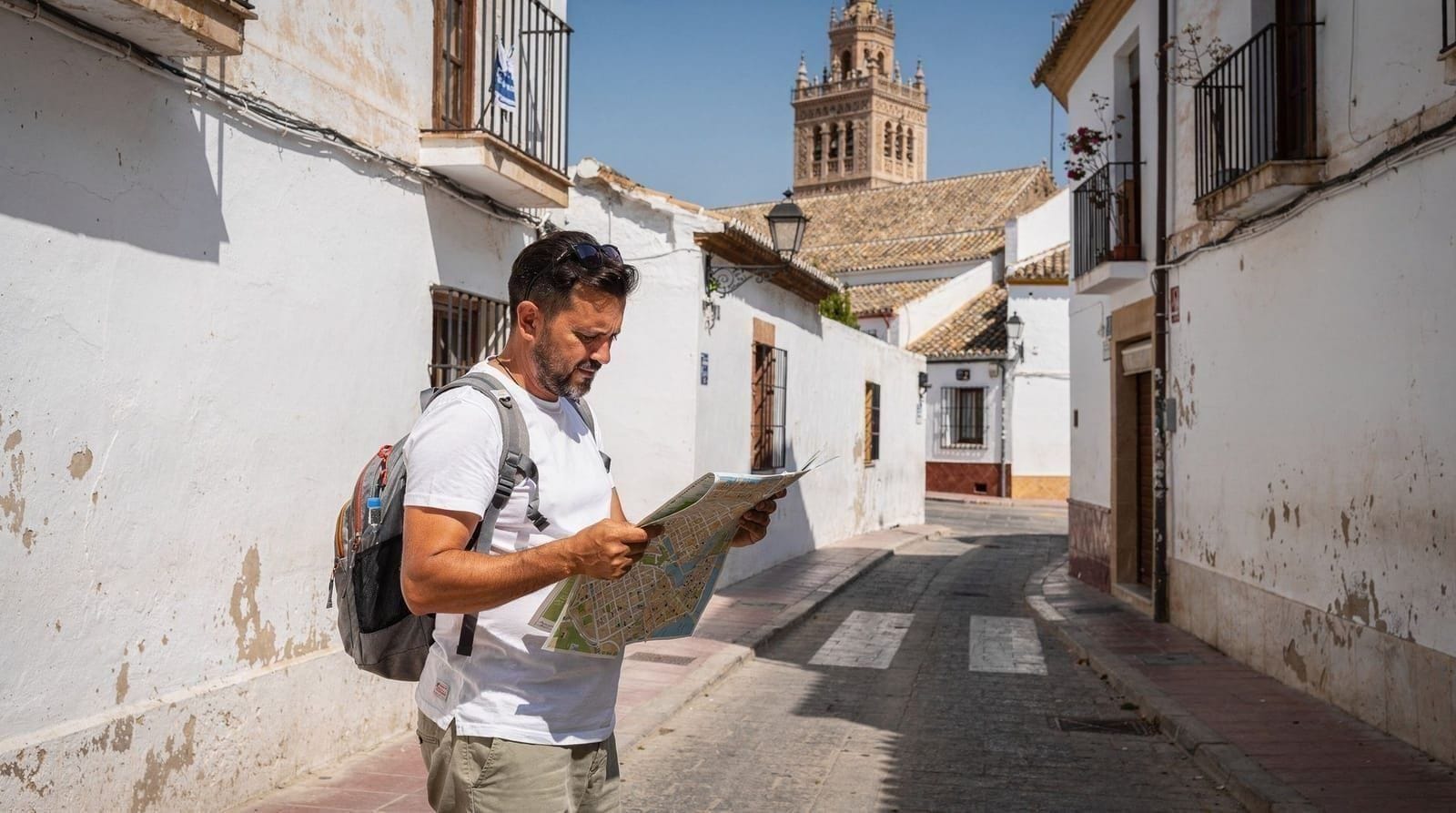
- Visitors who look uncertain about where they’re going (maps out, pausing)
- Solo travellers (no social buffer)
- People queuing (stationary, good opportunity for approach)
- People photographing (attention elsewhere)
The women scan for hesitation — if you’re walking purposefully with the air of someone who knows exactly where they’re going, you’re a lower-priority target. This is not always achievable on a first visit, but it’s a useful observation.
Where to expect it
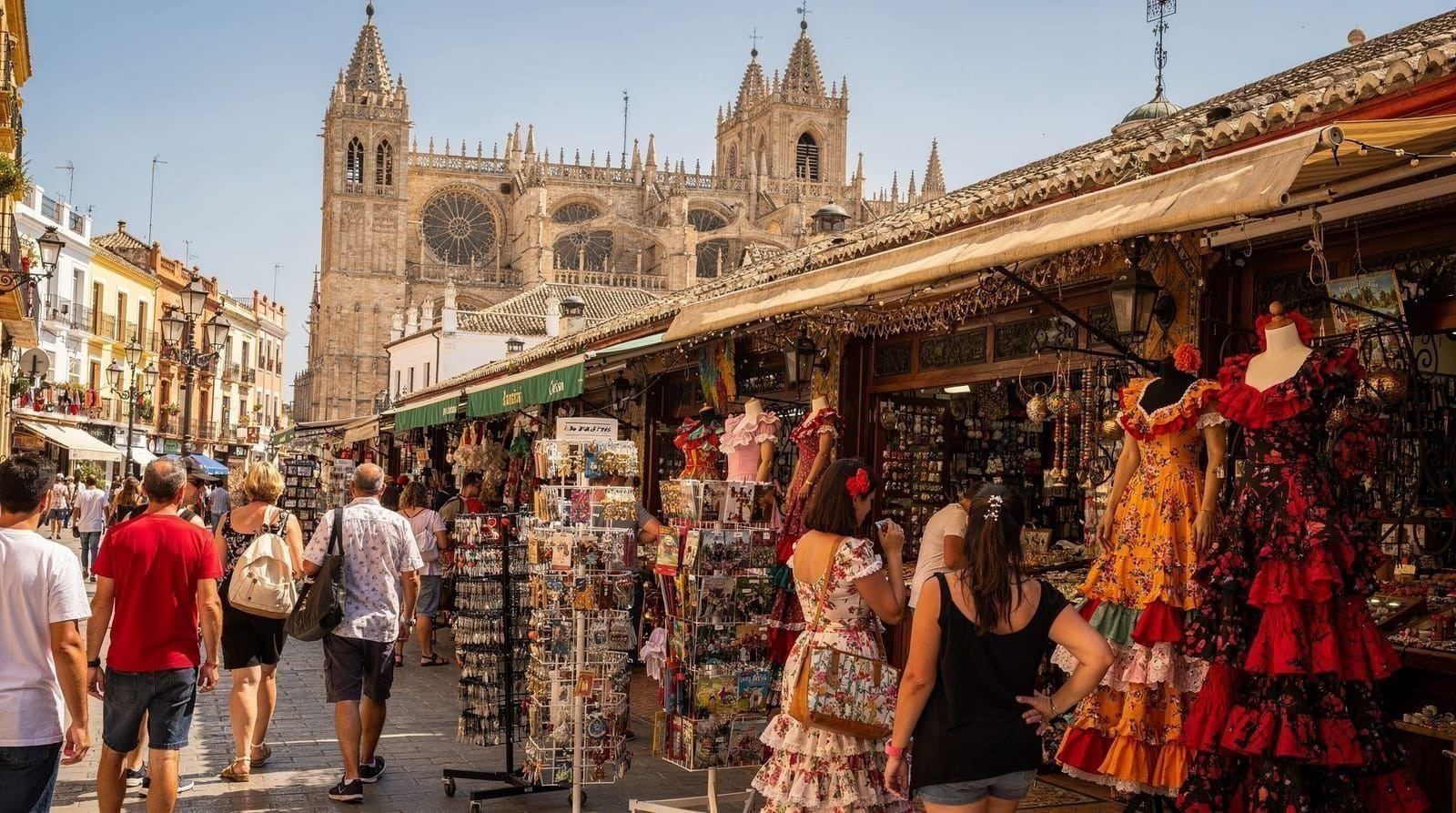
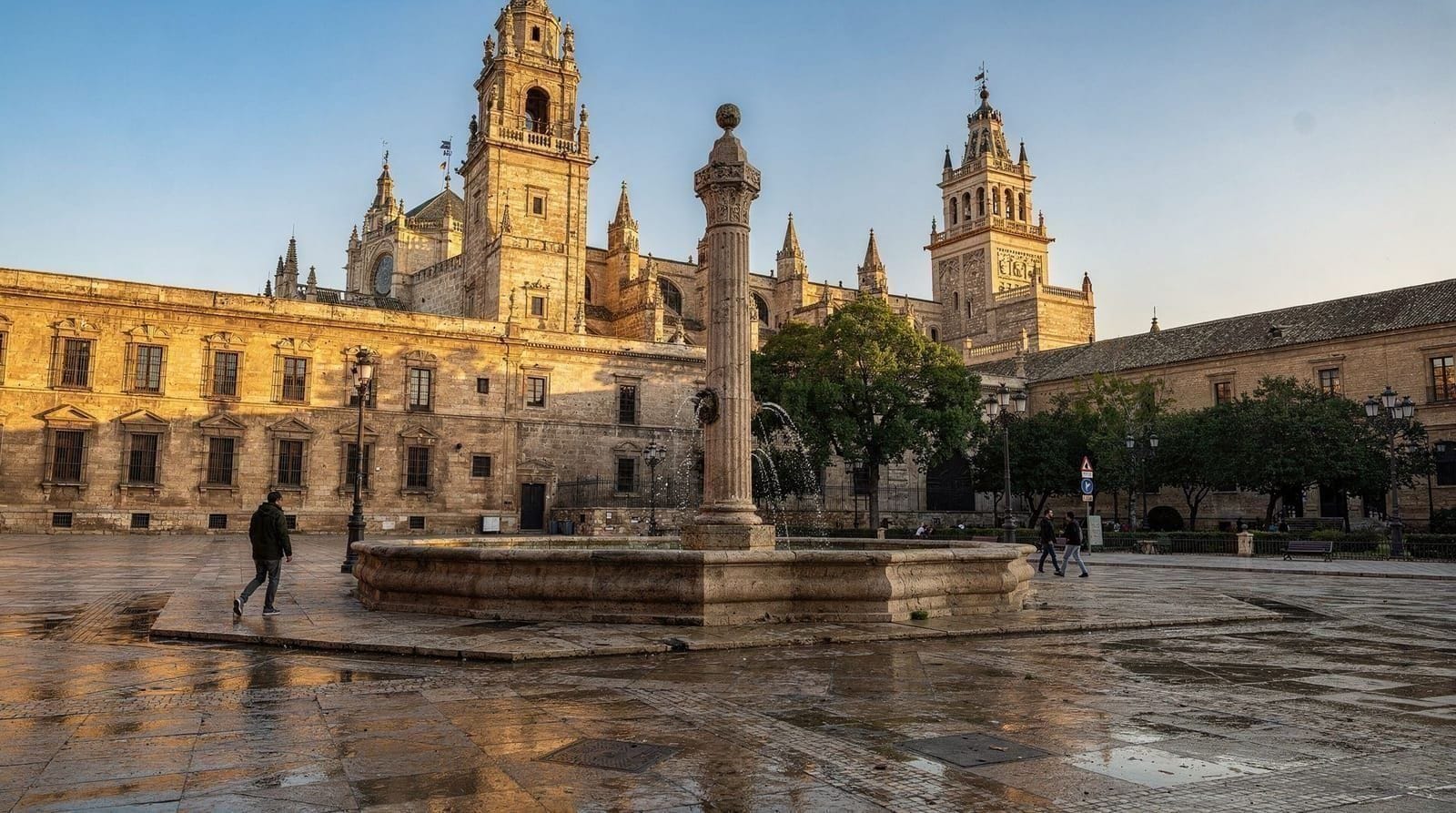
The primary location: outside the Cathedral, specifically on the east and south sides where the tourist queues form. The Giralda entrance and the ticket queue areas are the highest-density locations.
Secondary locations:
- Outside the Alcázar main entrance (Puerta del León)
- Near the Puente de Isabel II (Triana bridge)
- Around Plaza de España, particularly near the canal boats
- Along the tourist pedestrian routes between monuments
The rosemary women are not present everywhere in the city — primarily at the densest tourist concentrations.
Why the demand is never worth paying
Some visitors reason that €5–10 is a small price to avoid an awkward scene, and pay simply to end the interaction. This is understandable but counterproductive on two levels. First, it is not actually a transaction — you received nothing of value, so there is no obligation, real or moral, to pay for an unwanted item pressed into your hand. Second, and more practically, paying confirms to the individual that the approach works, which means the next tourist behind you gets the same treatment. Declining costs you nothing beyond a few seconds of mild social friction, and it is the response every experienced Seville visitor and every local recommends. If you are weighing up other places where the “convenient but overpriced” instinct kicks in, the same logic applies to eating at the first restaurant you see near a monument — covered in the common mistakes guide.
How this fits into a first Seville visit
For a first-time visitor, the rosemary scam is rarely dangerous but it is often the single most jarring moment of an otherwise smooth trip, precisely because it happens in the first hour or two near the Cathedral, before you’ve calibrated to the rhythm of the city. Knowing about it in advance — reading this page before you land, rather than after an awkward encounter — removes almost all of its power. The first-time travel tips guide covers this and the handful of other things worth knowing before you arrive, and is Seville safe puts the rosemary scam in context against Seville’s genuinely low crime rate.
What it means for your itinerary near the Cathedral
Because the rosemary sellers cluster so tightly around the Cathedral’s east and south sides, the practical implication is simple: approach the Cathedral queue with your bag zipped, your phone away, and your attention on where you are walking rather than on your surroundings — exactly the moments the sellers look for. If you are also visiting the Real Alcázar or spending time in the adjoining Santa Cruz neighbourhood, expect the same low-level presence at the Alcázar’s Puerta del León entrance. None of this should change your plans; it is simply worth expecting rather than being surprised by.
Cutting the queue, and the exposure that comes with it
The approach works best on people who are standing still, which is why the Cathedral ticket line is the natural stage for it. The less time you spend waiting outside, the fewer chances anyone has to approach you. Many visitors solve this by arriving with a ticket already in hand, for instance a Cathedral and Giralda entry ticket booked in advance, such as an entry ticket for the Cathedral and the Giralda tower, so that you walk to the door rather than loiter beside it. The skip-the-line decoder explains which ticket types actually save waiting time and which only sound as if they do.
If you would rather have someone else handle the logistics, a guided visit changes the dynamic as well. A group moving together behind a guide with a flag or a clear meeting point looks like a group that knows where it is going, and the sellers tend to look for individuals who seem unsure. a guided visit of the Cathedral and the Giralda is one option; the Cathedral complete guide lays out what you will see inside, and the Alcázar versus Cathedral comparison helps you decide which to visit first so you are not queuing at both on the same morning.
Timing also matters. The best time to avoid crowds is worth reading before you plan your first morning, because shorter lines mean fewer people standing around outside the monuments. A visit planned around the quieter hours will rarely involve more than a single polite refusal.
What the encounter feels like in practice
Most people describe the moment as brief and slightly surreal. The woman appears at your elbow, speaks in a warm and fast voice, and the sprig is in front of your hand before you have decided anything. That speed is the whole technique. The only counter is to have your answer ready before you arrive, so that it comes out as a reflex rather than a decision.
It helps to rehearse the sentence once. Say “no, gracias” aloud on the walk from your hotel, and it will feel natural when you need it. Travellers who have a reply prepared almost always report that the interaction ended in a second or two, while those who hesitated and tried to be courteous were the ones who ended up with a story to tell.
Group travel changes the picture. If you are with a partner, friends or children, agree beforehand that whoever notices an approach simply says the phrase for everyone and keeps walking. Families visiting with children can read more in the Seville with kids guide, which covers the practical side of moving through busy areas with younger travellers. Younger children should simply be told to keep their hands in their pockets or holding yours when someone approaches.
Using the same instincts elsewhere in the city
The habits that deal with the rosemary sellers apply to the rest of the old centre. Walk with purpose, decline unsolicited offers briefly, and keep your attention on the route rather than on the person speaking. The getting around Seville guide is useful for planning walking routes that spend less time in the densest tourist corridors, and the overpriced things in Seville page covers the commercial traps that are legal but still worth skipping.
If you would like a visitor’s account instead of a guide, the blog has a first-person view in the truth about Seville’s tourist traps, and a full trip report in 3 days in Seville shows how an ordinary itinerary passes these spots without drama. To see how the Cathedral fits into a longer stay, the one-day Seville itinerary and the first-timers itinerary both route you past the monuments, and the Seville destination page gives the wider overview.
Context and background
The rosemary scam as practiced in Seville is associated with (though not representative of) the gitano (Roma) community. It’s worth noting two things: first, the vast majority of Seville’s gitano community has no connection to this scam. Second, the characterisation of the scam as a “gypsy scam” in many travel guides reflects a generalisation that doesn’t give an accurate picture of a complex community with deep historical roots in Seville’s flamenco and cultural life.
The scam is a small tourist-area hustle operated by specific individuals, not a cultural practice. Knowing this doesn’t change the response (still “no gracias”) but it’s useful context for the experience.
Keeping perspective after an encounter
If you do end up in an awkward exchange, give yourself a minute afterwards rather than carrying the irritation into the rest of the day. Step into a café, check your belongings, and remind yourself that nothing was taken beyond a few seconds of your attention. The city is far bigger than this one corner, and the quieter streets beyond the monuments are exactly where Seville feels most like itself.
It is also worth telling your travelling companions what happened, calmly and without drama, so that everyone knows what to expect on the next approach. Shared awareness is the most effective protection there is, and it turns an unpleasant surprise into something you can all recognise and wave away together. Many visitors find that after the first refusal, later approaches feel almost routine, and the sellers themselves move on quickly once they see a clear answer.
Finally, if a friend or family member is arriving on a later day, pass the advice along before they land. A single sentence, “if someone offers you rosemary, say no, gracias and keep walking”, is all it takes, and it spares them the same moment of confusion.
Post-scam: what to do
If someone takes money from you through this method (which requires you to voluntarily hand it over — there is no physical theft), you can report it to the police (policía nacional, 091, or in person at the CAT tourist assistance centre at Plaza Nueva). The practical impact of such a report is minimal, but it contributes to monitoring of the problem.
If you feel threatened (which should not happen), 112 is the emergency number.
Related scams in Seville
The rosemary scam is the most distinctive, but Seville also has the standard complement of European tourist-city hustles:
Pickpocketing: Not a scam but a physical theft. Higher risk in the Cathedral queue and on crowded transport. Standard prevention: valuables in front pockets.
Overpriced restaurants with photo menus: Not a scam in the illegal sense but a trap for the uninformed. Covered in detail at How to avoid tourist-trap restaurants in Seville.
Unofficial taxi touts: Men in the arrivals hall at SVQ airport offering “taxi service.” Use only the official taxi rank outside.
For the full picture of Seville’s tourist traps, see Seville tourist traps to avoid.
Frequently asked questions about The rosemary scam in Seville
Where does the rosemary scam happen in Seville?
Primarily near the Cathedral's east and south entrances, and at the Alcázar main entrance. Also occasionally near Plaza de España and at the Triana bridge. The heaviest concentration is outside the Cathedral, particularly when queues form.What do I say to the rosemary women?
'No, gracias.' Said firmly while walking past, without eye contact if possible. You do not need to explain yourself, engage in conversation, or look angry. A clear, firm 'no gracias' while continuing to walk is sufficient.What happens if I accidentally take the rosemary?
Hand it back immediately and say 'no quiero, gracias' (I don't want it, thank you). If the demand escalates, simply walk away. They will not physically restrain you. Some tourists who take the sprig and then refuse to pay report being shouted at briefly — this is unpleasant but harmless.Is the rosemary scam dangerous?
No. This is a social manipulation, not a physical threat. The women rely on social pressure (guilt about accepting a gift) rather than any physical element. Walking away always ends the interaction.Are there other similar scams in Seville?
The friendship bracelet scam operates on similar mechanics — someone ties a bracelet to your wrist without permission and then demands money. In Seville this is less common than in Barcelona but exists. Same response applies: don't let them start the process.Will refusing the rosemary make me look rude?
No. Refusing an unsolicited street approach is completely normal in Seville and locals do it constantly. The women offering rosemary approach dozens of visitors a day and expect most to decline. A firm, polite 'no, gracias' is standard local behaviour, not an unusual snub.Do the rosemary sellers ever target locals or only tourists?
Almost exclusively tourists. Locals are recognised on sight — by pace, dress, and the absence of a camera or map — and are rarely approached. This is one of the clearest tells that the interaction is a targeted commercial hustle rather than a genuine cultural gift.