How to avoid tourist-trap restaurants in Seville
Seville: Gourmet 3.5-hour tapas tour
How do I avoid tourist-trap restaurants in Seville?
Walk two streets away from any major monument. Avoid restaurants with photo menus in four languages, staff who call out to you from doorways, or 'traditional Sevillano paella' on the menu. Eat at the bar counter (barra) of a local bar — a menú del día costs €10–13 and is consistently better quality than tourist restaurants charging €20+ per dish.
The tourist-restaurant problem in Seville is not unique to the city — it exists in every major European tourist destination. But it’s worth addressing specifically because the gap between a tourist-trap restaurant near the Cathedral and a local bar two streets away is so stark — in price, quality, and experience — that the difference can define your memory of eating in Seville.
| Rule of thumb | Walk 2+ streets away from any major monument |
| Tourist-trap price | Around €12-22 per dish, no drink included |
| Local bar menú del día | Around €10-13 for two courses, bread and a drink |
| Worst zones | Avenida de la Constitución, upper Calle Mateos Gago, Alcázar-facing streets |
| Better zones | Triana, Alameda de Hércules, side streets of Santa Cruz |
The anatomy of a tourist-trap restaurant in Seville
Tourist-trap restaurants in Seville have a recognisable profile. They typically:
Use photo menus in multiple languages: A laminated or illustrated menu with photographs of the food, translated into English, German, French, and sometimes Portuguese or Italian. This is a reliable signal — local bars rarely print photo menus.
Position staff outside to attract customers: Waiters or hosts who stand at the door and call to passing tourists with lines like “the best tapas in Seville!” or who hold out a menu to read. Local bars never do this.
Claim paella is a traditional Sevillano specialty: Paella is from Valencia. Its presence on a “traditional Sevillano menu” is geographic misinformation designed for visitors who haven’t been told the truth.
Charge terraza prices by default: The outdoor seats — typically the first ones visible and the ones tourists instinctively gravitate towards — are always more expensive than the indoor or counter prices.
Occupy prime monument-facing real estate: The restaurants directly visible from the Cathedral, the Alcázar gate, and the Plaza de España colonnade are paying premium commercial rent, which is passed directly to customers.
Where the worst concentrations are
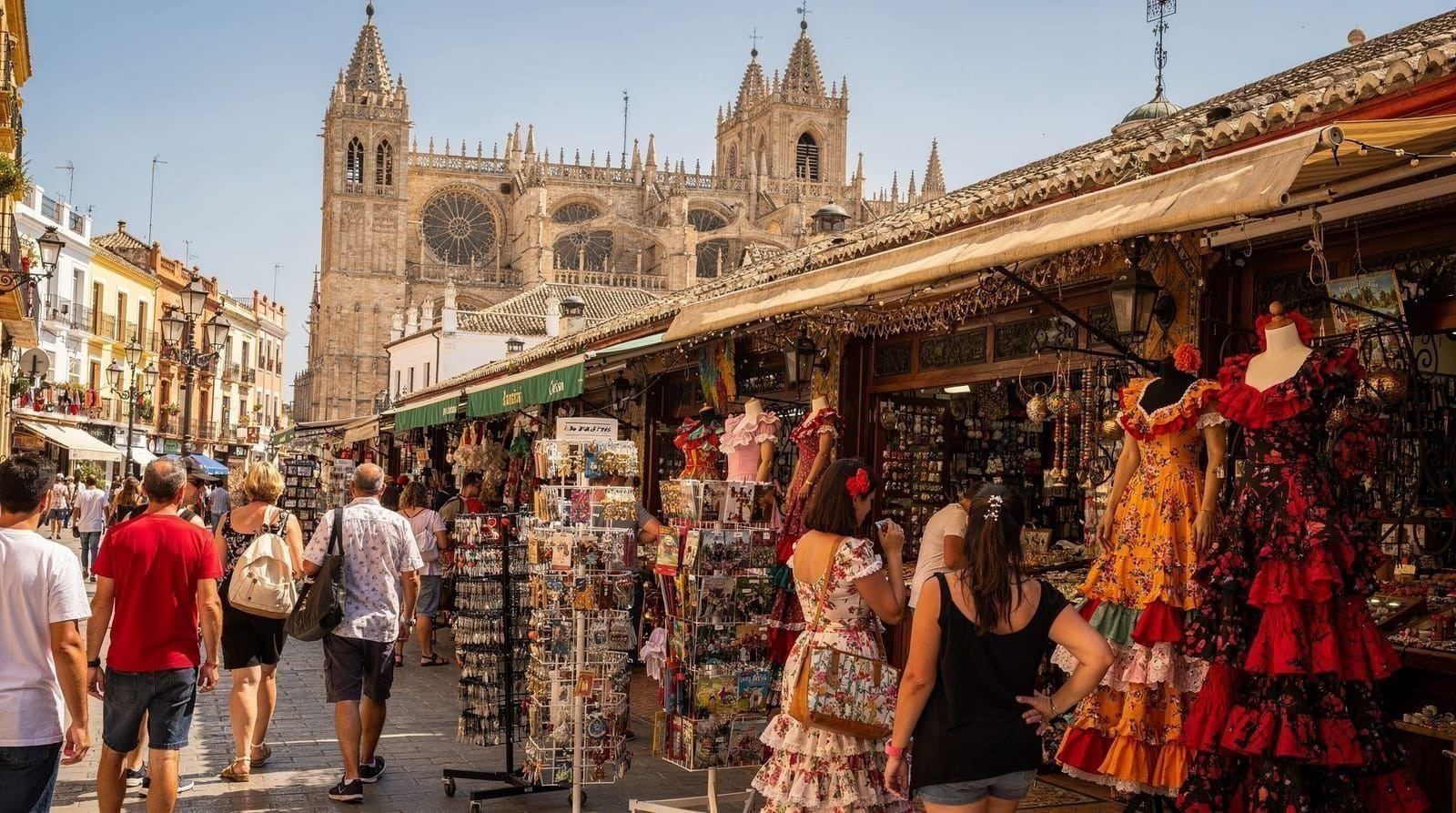
Avenida de la Constitución: The broad avenue running alongside the Cathedral has a series of restaurants and cafés with Cathedral views. The prices reflect the view, not the food quality.
Calle Mateos Gago (upper section near the Cathedral): This street has a mixed population of tourist-facing and genuinely local bars. The ones near the Cathedral end are tourist-facing; the ones further from it are better value.
Calles adjacent to the Alcázar (Calle Miguel de Mañara, Calle San Fernando): High tourist density means high tourist pricing.
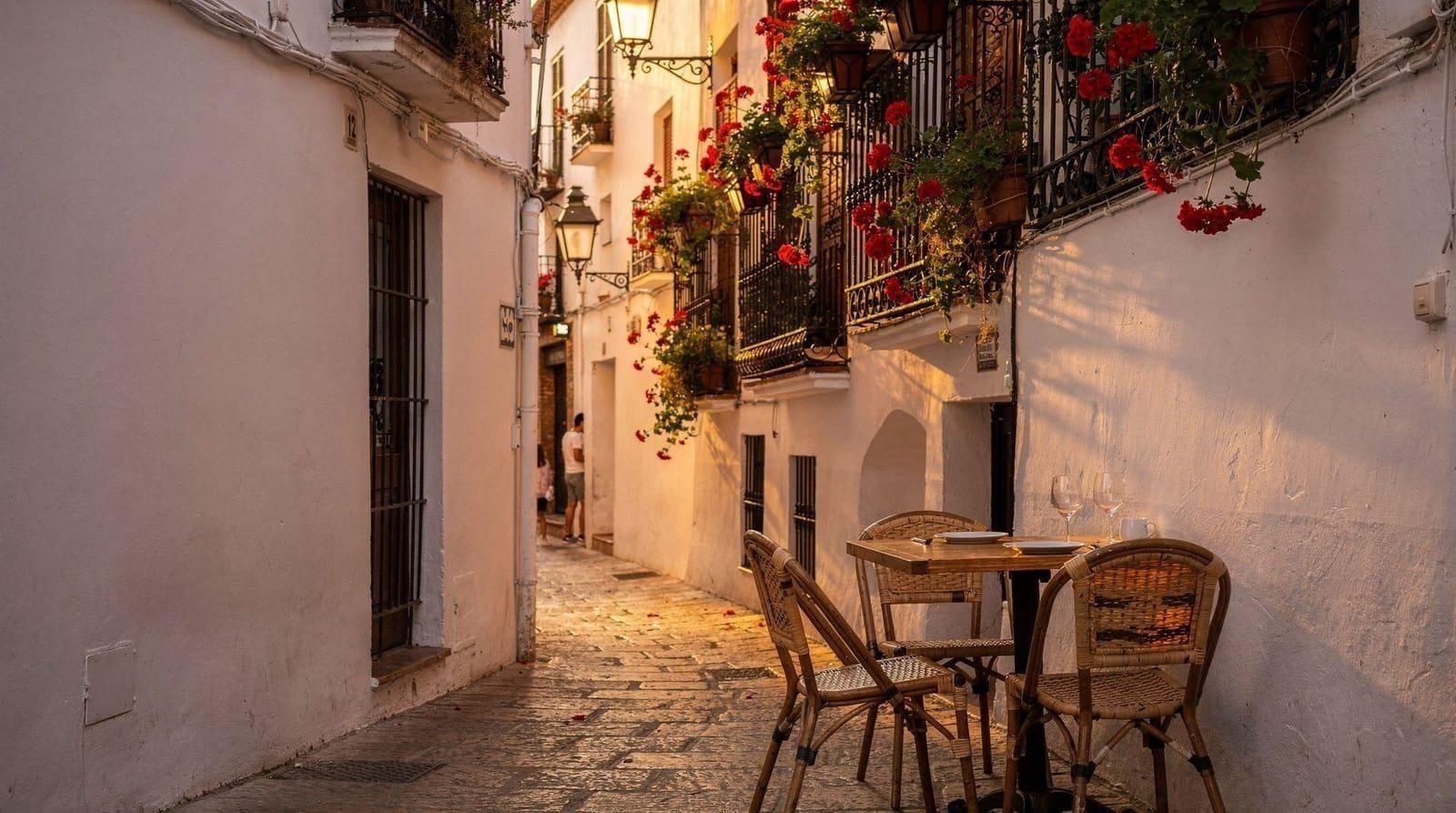
Santa Cruz most-photographed alleys: The most Instagrammable corners of the Barrio Santa Cruz have developed a cluster of tourist-facing restaurants. Beautiful settings, mediocre food, premium prices.
Reading the room before you sit down
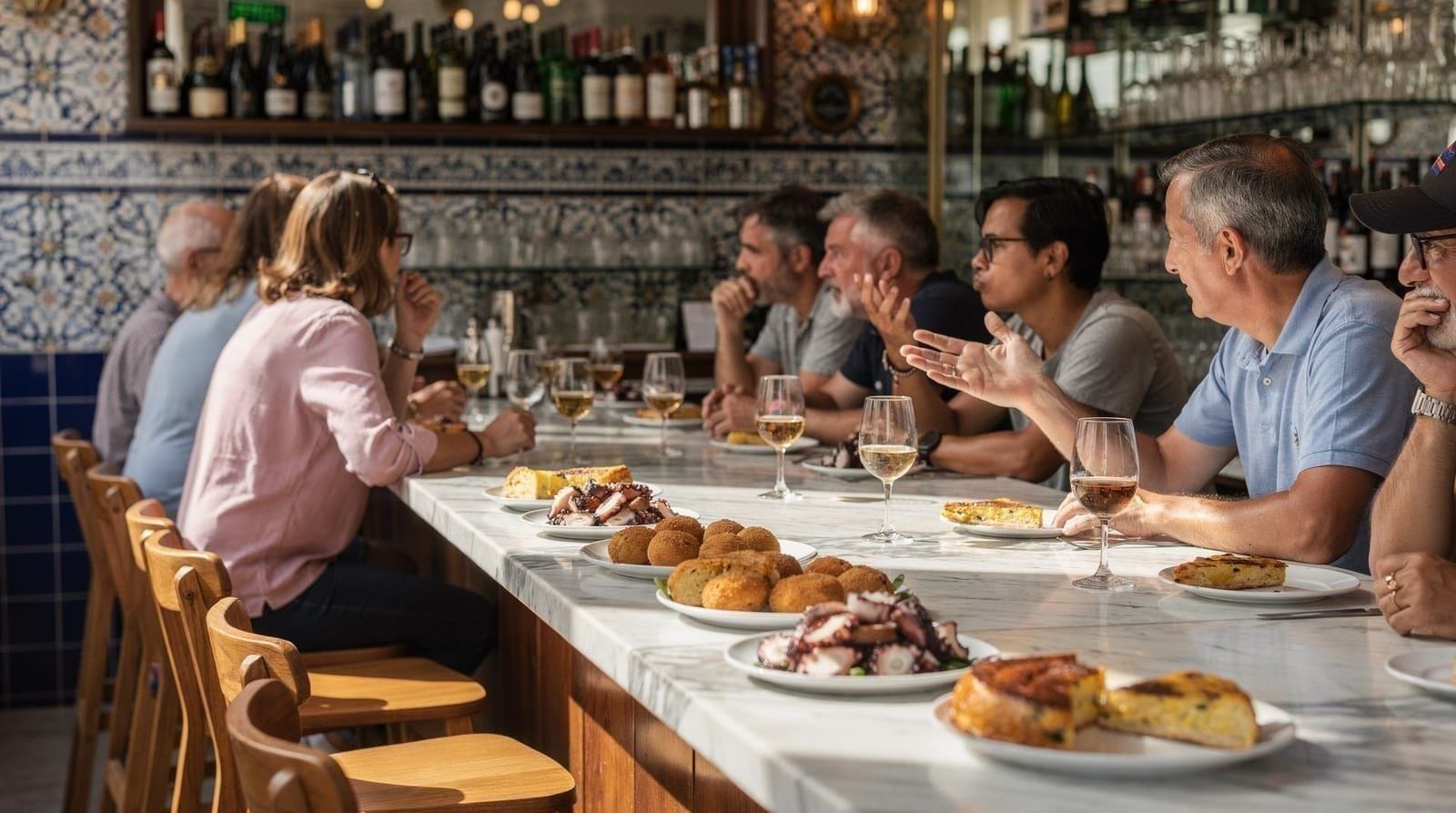
A few seconds of observation at the door tells you more than any review. Look at who is already inside: if the tables are full of locals talking loudly over plates they clearly ordered without a menu, you are in the right place. If every table holds a visitor holding a phone up to a plate, keep walking. Listen as well. A bar where the staff call orders to the kitchen in rapid Spanish, and where the television is showing a football match or a news bulletin, is running for its neighbours, not for passing foot traffic.
The bar counter is another tell. Look for tapas displayed under the glass or written on the wall behind the barra, small plates stacked by the till, and napkins on the floor. In Seville the floor of a good bar is sometimes littered with paper napkins and olive stones, which is a sign of turnover rather than neglect. A spotless, empty room next to a major monument is usually the opposite signal.
Finally, check how the bill is handled. In a real local bar the waiter often tallies what you ate by memory or chalks it on the counter; in a trap, a printed receipt arrives with a cover charge, bread you did not ask for, or a service line added. Ask before accepting bread or olives that arrive unrequested, since they are sometimes charged. If you are unsure, ask for the price of a tapa before you order. It is a normal question and nobody will mind. For the wider picture of what to watch for across the city, the Seville tourist traps to avoid guide and the list of overpriced things in Seville cover restaurants and beyond.
What you should eat in Seville
Before going to a specific recommendation, it helps to know what Sevillano cuisine actually looks like, so you can recognise when you’re getting the real thing:
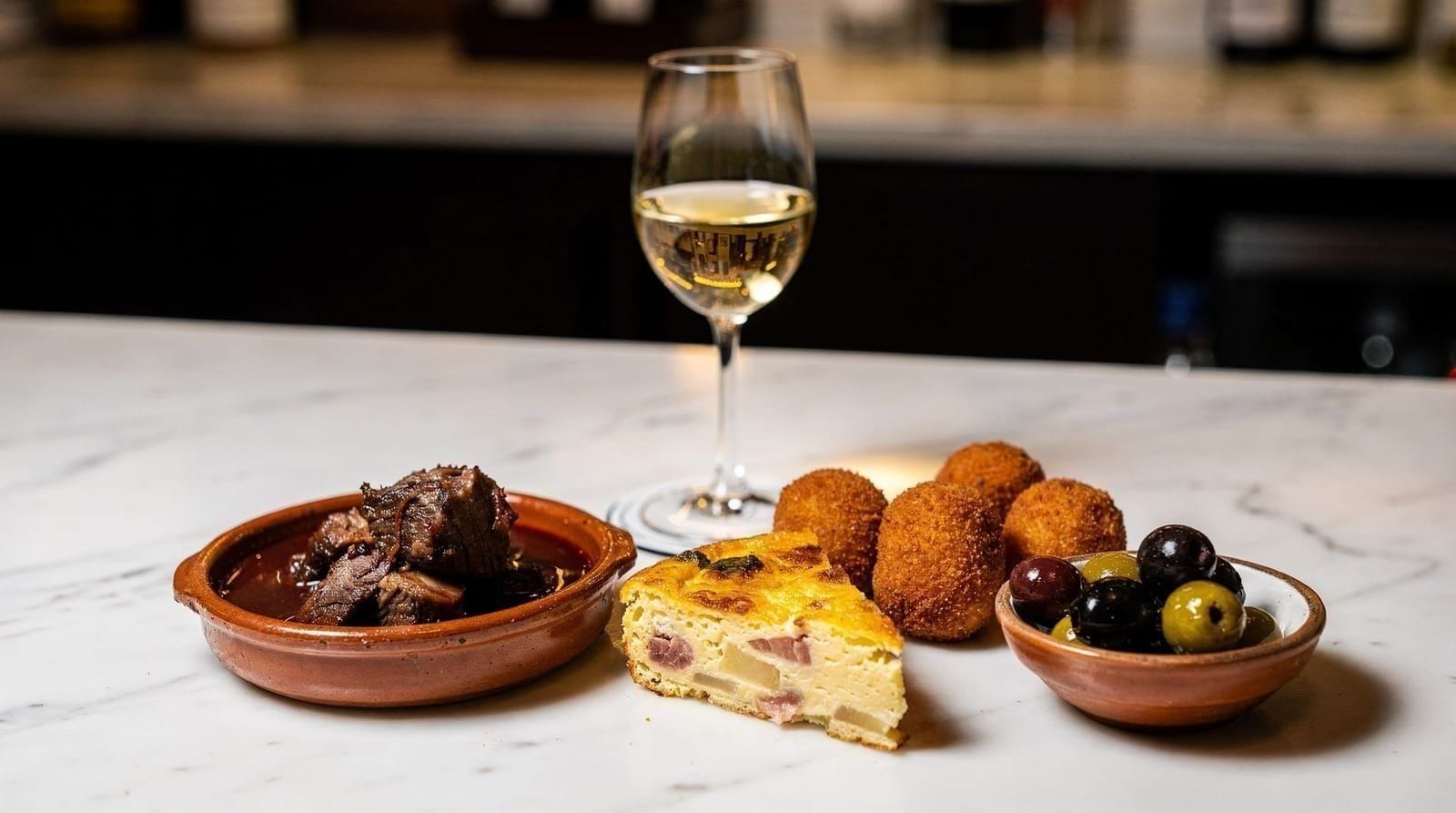
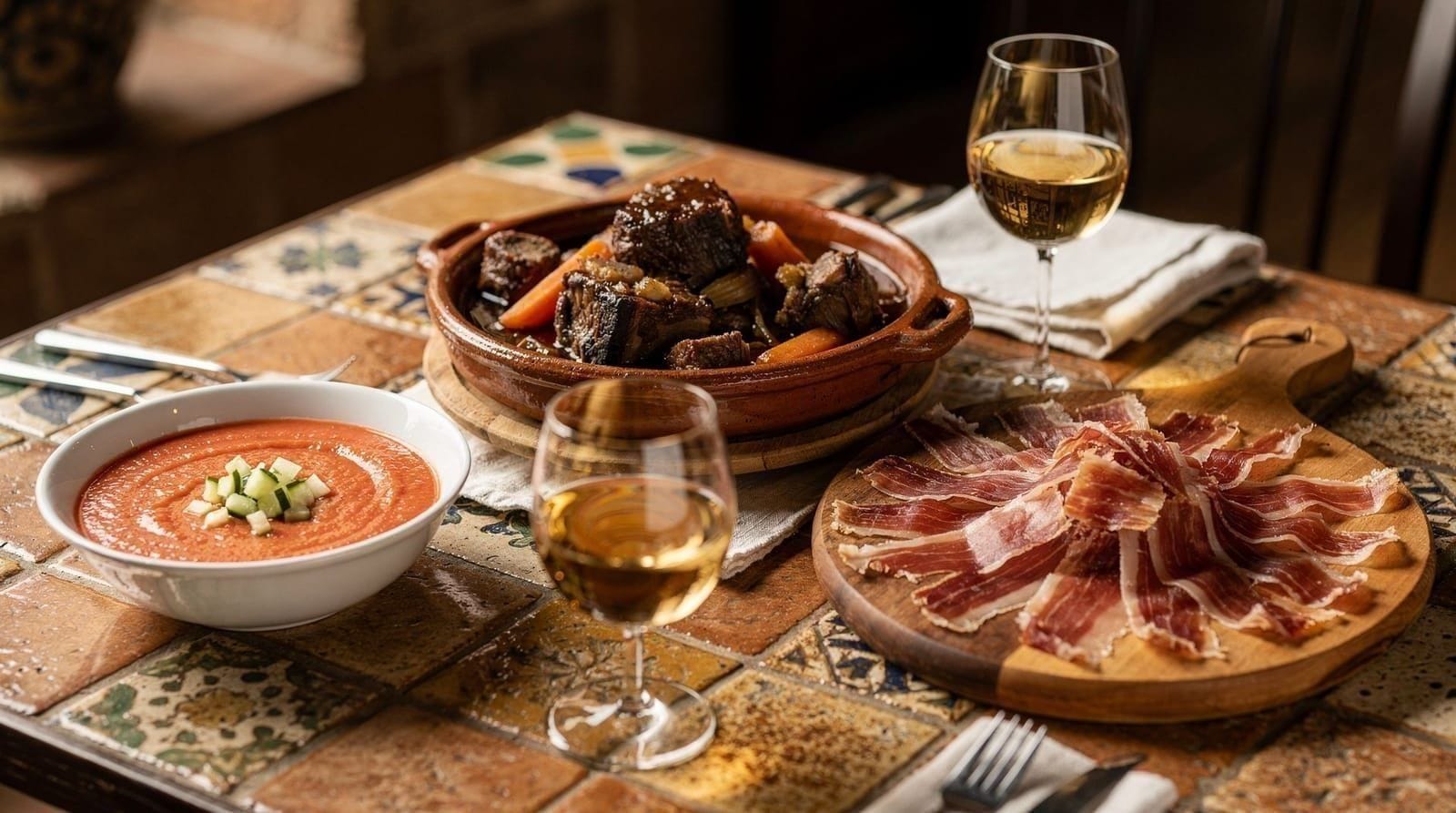
Jamón ibérico: Cured ham from free-range black pigs (pata negra). The finest comes from Jabugo in the nearby Sierra de Aracena. A good jamón ibérico tapa costs €4–8 and should arrive in thin slices at room temperature with visible fat marbling.
Espinacas con garbanzos: Spinach with chickpeas in a spiced tomato sauce. A distinctly sevillano dish with clear Moorish culinary roots. Costs €3–5 as a tapa.
Boquerones en vinagre: Fresh anchovies marinated in vinegar, garlic, and parsley. Not the fried boquerones (those are fine too) but the white, vinegar-cured version. Costs €3–5.
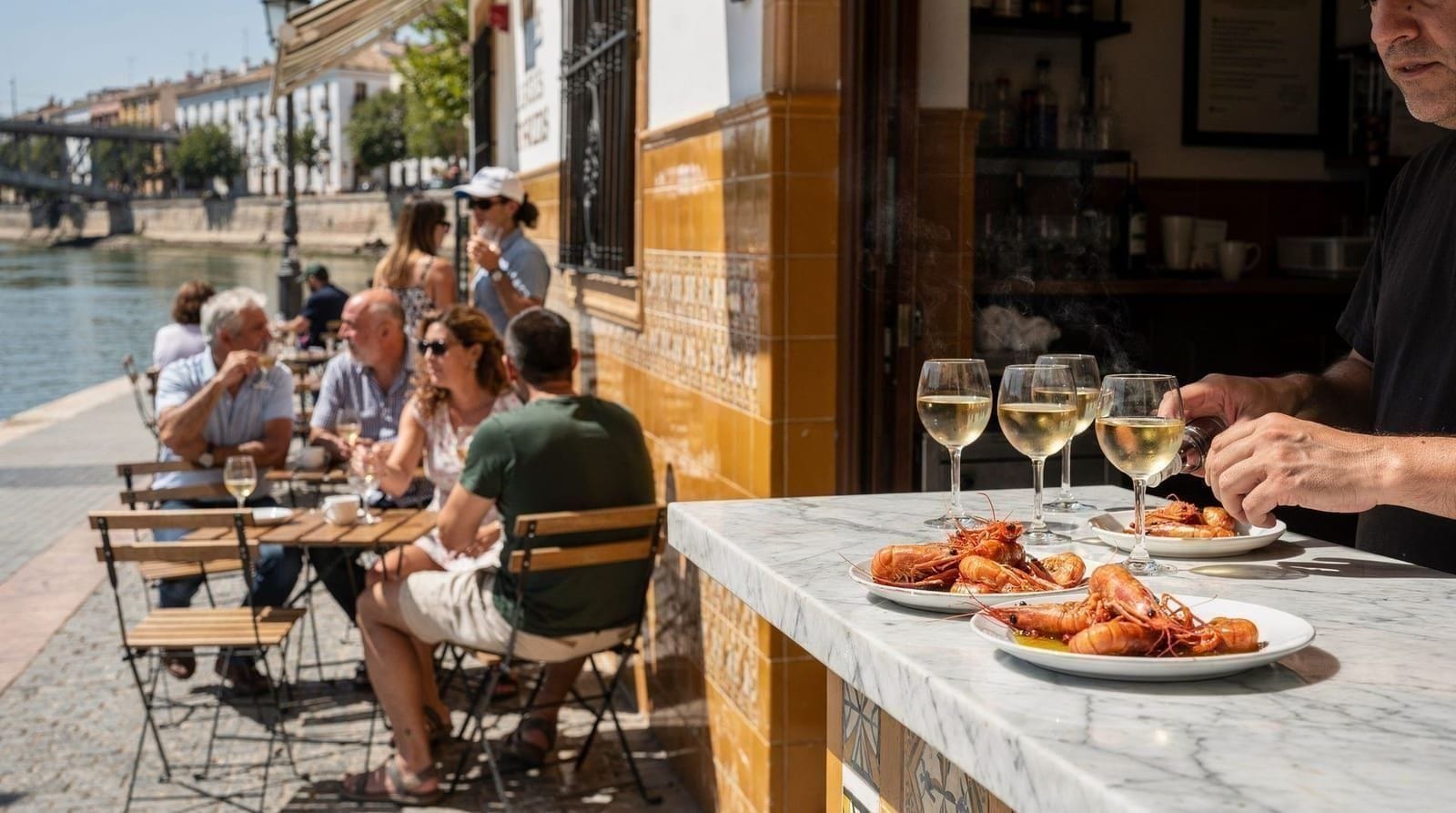
Gambas al pil-pil or al ajillo: Prawns cooked in olive oil with garlic, sometimes with chilli. A Seville staple. Costs €6–10 depending on size and portion.
Puntillitas: Small deep-fried squid rings, dusted in flour and fried light. A Seville and Cádiz speciality. €4–7.
Coquinas: Small clams from the nearby Atlantic coast, steamed with white wine and garlic. Seasonal. €5–8.
Caracoles: Snails cooked in a spiced broth (cazuela de caracoles). Strongly seasonal — available March through June. €4–6.
None of these dishes require a specialist restaurant. They’re the standard fare of any decent local tapas bar. For the full context on regional Andalusian cooking beyond these tapas staples, see traditional Andalusian dishes.
Barra vs terrace: the pricing gap explained
The single biggest lever on your bill in Seville isn’t which restaurant you choose — it’s where you sit within it. Standing or sitting at the bar counter (barra) is consistently cheaper than a table, and a table on an outdoor terrace is more expensive again for the identical dish. The full breakdown, including why this pricing structure is legal and standard across Spain, is in barra vs terrace pricing.
| Seating | Typical markup vs barra | Best for |
|---|---|---|
| Barra (bar counter) | Baseline price | Solo travellers, quick tapas, best value |
| Interior table (sala) | Often the same, sometimes slightly more | Groups wanting to sit |
| Terraza (outdoor table) | Around 15-30% more | People-watching and monument views, not value |
Where to eat instead: specific alternatives
Near the Cathedral: The worst restaurant zone in Seville is the immediate Cathedral surround — but good options exist within a 5-minute walk.
- Bar Europa (Calle Siete Revueltas): A genuine local bar, small and unpretentious, excellent jamón and montaditos, low prices. No tourist overlay.
- El Burladero (Calle Canalejas): An old-school Seville bar associated with bullfighting culture — authentic décor, good local food, reasonable prices.
- Bodega Santa Cruz (aka Las Columnas, Calle Rodrigo Caro): The most-recommended local bar in the Santa Cruz area for good reason — always crowded, always good tapas at the barra.
In Triana (15 minutes from the Cathedral on foot): Triana is the neighbourhood where Seville’s restaurant quality-to-price ratio is consistently better. The bars along Calle San Jacinto, Calle Betis (river-facing), and in and around the Triana market serve local clientele at local prices.
- Bar Bistec (Calle Pelay Correa): A Triana institution. Counter seating, enormous tapas, zero tourist atmosphere.
- La Taberna del Alabardero area (Calle Zaragoza): A strip of local bars near the old bullfighting school.
In Alameda de Hércules (15–20 minutes from Cathedral): The Alameda is Seville’s bohemian centre and has the best concentration of genuinely local bars. El Mentidero, Bar Eslava, and the surrounding establishments represent what Seville eating looks like without tourist inflation.
The menú del día as your budget shield
The most reliable way to eat well and cheaply in Seville is to treat lunch (14:00–16:00) as your main meal and order the menú del día at a local bar. The formula:
- Two courses (typically a starter — salad, soup, or a cold dish — and a main)
- Bread
- A drink (house wine by the glass, beer, or water)
- Sometimes a dessert or coffee
- Price: €10–13 at a genuine local bar; €15–17 at a slightly fancier local restaurant
A tourist restaurant near the Cathedral will charge €12–18 for a single dish without the drink. The local bar’s menú del día is objectively better value and, more often than not, better food.
How to find a genuine menú del día: Look for bars where the menu is written on a chalkboard (not a laminated photo menu). The chalkboard changes daily, indicating a kitchen that cooks fresh rather than reheating pre-made dishes.
Fitting good meals around the sights
Most bad meals in Seville happen because of logistics, not ignorance. You come out of the Cathedral or the Alcázar tired and hungry, the nearest terrace is right there, and the decision makes itself. The fix is to plan the meal as part of the day. If you are visiting the Alcázar in the morning, decide beforehand which local bar you will walk to afterwards, and treat the short walk as part of the visit. Our Real Alcázar complete guide and the Seville Cathedral complete guide help you plan the sightseeing side so that lunch is not an afterthought.
Spanish meal times also work in your favour. Local kitchens are busiest at the hours when locals eat, and that is when the food is freshest. Arriving very early or very late tends to leave you with the leftovers and the tourist-oriented menu that some places switch to between services. If you are building a longer stay, where to eat in Seville gives a broader map, and the Seville 3 days for foodies itinerary shows how to sequence tapas, lunch and sightseeing without ever landing in a trap by default.
A final habit worth building is sharing. Tapas are designed to be ordered a plate or two at a time, eaten standing or perched at the barra, then followed by a move to the next bar. Ordering everything at once at a single table is how a light snack turns into an expensive sit-down meal.
The tourist-facing “paella” problem
A note on paella specifically, because it appears so prominently near Seville’s monuments:
Paella is from Valencia. It is cooked in a large, flat paella pan over wood fire; the distinguishing quality is the socarrat — the slightly caramelised rice that forms on the bottom of the pan. A proper paella takes 20–25 minutes to cook per order and cannot be prepared in advance.
The “paella” served in tourist-trap restaurants near Seville’s Cathedral is typically:
- Cooked in large batches hours earlier
- Not genuine paella (often arroz con pollo — rice with chicken — under a different name)
- Served for €14–22 per portion
The fact that this dish is being sold in Seville as “traditional” amplifies the misrepresentation. If you want paella, go to Valencia. If you want traditional Seville food, order espinacas con garbanzos or jamón ibérico at a local bar.
If you’d rather not navigate this alone
For visitors who want the food-hunting done for them, a guided tapas walk with a local guide sidesteps the whole tourist-trap question — you’re taken directly to bars that pass the tests above.
Seville tapas, drinks and local food walking tourIf you would rather start with the neighbourhood itself, a walk through its old lanes with a local guide also teaches you which corners are staged for photographs and which are lived in, so you can eat well afterwards on your own. Compare the tapas tours before choosing, or consider a small-group walk through the Santa Cruz quarter early in your stay to get your bearings.
The practical summary
The simplest rule: if you can see a major monument from where you’re sitting, you’re probably paying a premium for the view that’s not reflected in the food quality. Walk one or two streets away, look for a bar where the menu is in Spanish only or Spanish first, order the menú del día at lunch, and eat at the barra. For the neighbourhood that consistently delivers the best price-to-quality ratio, see the Triana neighborhood guide, and for how restaurant costs fit into an overall daily budget, see Seville on a budget.
For specific bar recommendations in different parts of the city, see Best tapas bars in Santa Cruz and Best tapas bars in Triana.
Frequently asked questions about How to avoid tourist-trap restaurants in Seville
Which street in Seville has the worst tourist-trap restaurants?
Avenida de la Constitución (the main avenue along the Cathedral) and the most-photographed alleys of Santa Cruz (Callejón del Agua, Calle Mateos Gago's upper stretch) have the highest concentration. The streets around the Alcázar gate also have tourist-facing restaurants that charge premium prices.How do I know if a restaurant in Seville is a tourist trap?
Four warning signs: a photo menu with four or more languages; staff actively calling to pedestrians from the door; 'paella' described as a local specialty; location directly facing a major monument with a terrace that takes priority over the interior.Is paella a traditional Seville dish?
No. Paella is Valencian — from Valencia on the Mediterranean coast. Seville is 600 km from Valencia. Any restaurant near the Cathedral advertising paella as a traditional Sevillano dish is misinforming tourists. Genuine Sevillano food includes jamón, espinacas con garbanzos, boquerones en vinagre, and fresh seafood tapas.Where should I eat near the Cathedral in Seville?
Turn away from Avenida de la Constitución. Try: Bar Europa (Calle Siete Revueltas), El Burladero (Calle Canalejas — old-school, proper Sevillano food), and the bars along Calle Arfe near the Archivo de Indias. Or walk to Triana (15 minutes) for genuinely local bars and restaurants.What is a menú del día and is it good?
The menú del día is a set lunch menu (typically two or three courses + bread + drink) offered at most Spanish bars and restaurants on weekdays. At a local non-tourist bar, it costs €10–13 and represents genuinely good value. The food quality at a local bar menú del día consistently exceeds the food quality at tourist restaurants charging 3x the price.