Planning a Seville itinerary: practical guide 2026
Seville: Royal Alcázar entry ticket
How do I plan a Seville itinerary?
Book Alcázar timed-entry tickets first (they sell out). Then schedule the Cathedral. Everything else can be added around these anchors. Three days covers Seville properly; four days adds a day trip to Córdoba or Cádiz.
Planning a Seville trip has one non-negotiable rule: book the Alcázar first. Everything else can be decided once that is locked in. This guide walks through the full planning process, from booking order to seasonal decisions to day-trip logistics.
| Minimum trip length | 3 days for the core city |
| Book first | Alcázar timed entry (sells out) |
| Best season | March–May or September–October |
| Add a day for | Córdoba, Cádiz, Granada or Ronda |
| Budget per day | Around €60–100/person, mid-range |
Step 1: Fix your dates and understand the season
Seville’s character changes dramatically by season, and the season changes what’s possible in your planning:
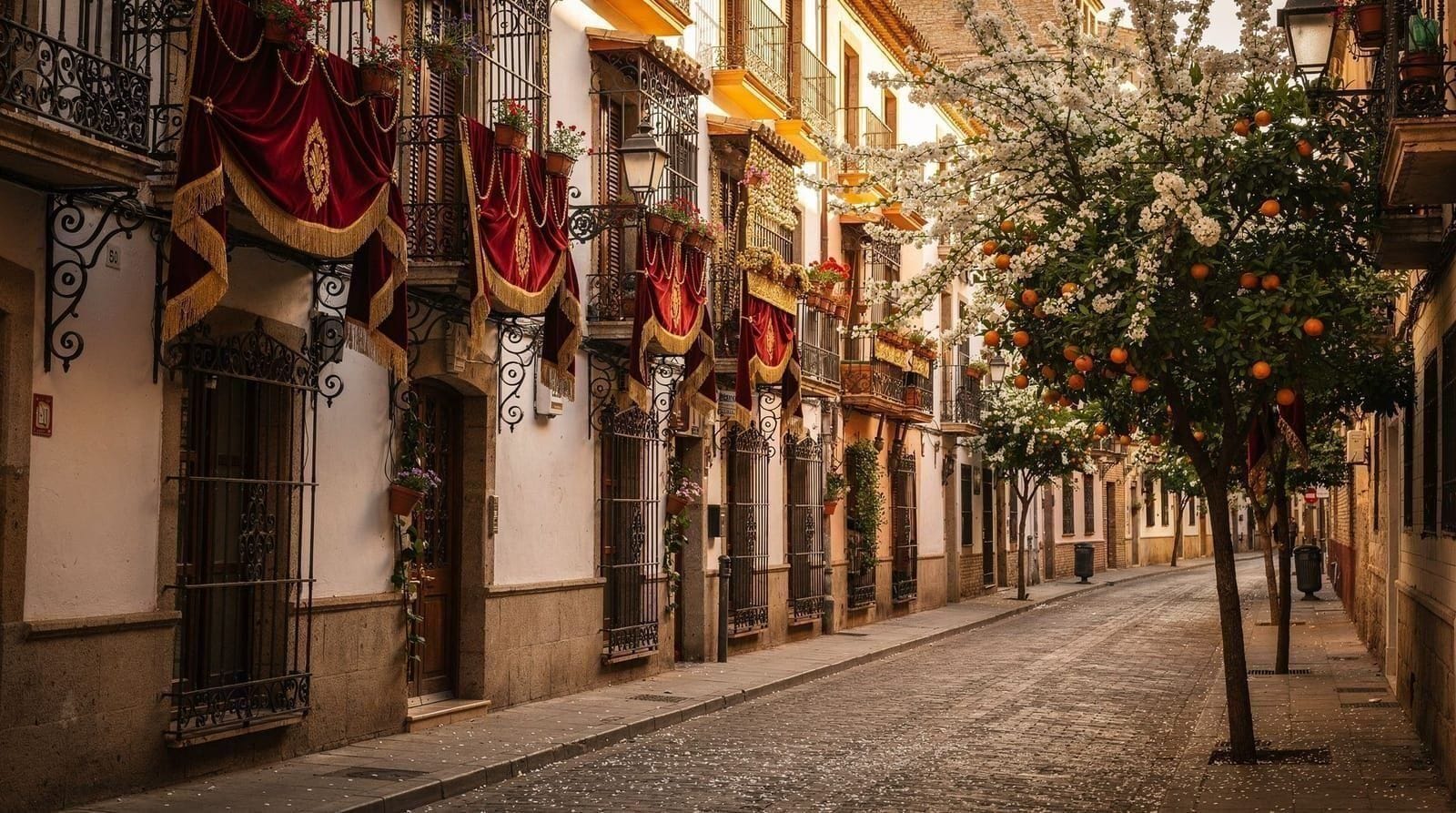
March–May (spring): The most popular season. Orange blossom, long evenings, 18–25°C. Semana Santa (Holy Week, 29 March–5 April 2026) and Feria de Abril (21–26 April 2026) are extraordinary cultural events that also mean packed streets, closed roads, and triple the normal accommodation prices. Booking 3–6 months ahead is not excessive.
June–August (summer): 38–42°C. Sightseeing in midday is genuinely difficult. However, monuments are open, crowds are less than spring, and prices drop slightly. Adapt your schedule: sightsee 08:00–12:00 and 18:00–21:00, rest in the middle.
September–October (autumn): The local favourite season. Cooling temperatures (22–28°C in October), fewer tourists than spring, still warm enough for terrace evenings. Bienal de Flamenco runs 9 September–3 October 2026 (held in even years) — exceptional programming at the Teatro de la Maestranza and outdoor venues.
November–February (winter): Quiet, 11–18°C, occasional rain. Minimal queues at monuments. Christmas markets in the city and their dates change every year; check the official tourist office site (visitasevilla.es).
Step 2: Book the Alcázar (this cannot wait)
The Royal Alcázar is Seville’s most visited monument and has strict timed-entry ticketing. In spring (March–May), timed slots sell out days or weeks in advance. The morning slots (first entry at 09:30) sell out first.
Where to book: realesalcazares.es — this is the official website and the cheapest option (no booking fee vs some third-party platforms). You select a specific date and time slot.
What to book: Decide between entry ticket only (€15.50) or guided tour ticket. The Alcázar without a guide is navigable — audio guides are available on arrival — but a guide adds significant context to the Mudéjar architecture and royal history. A small-group guided tour books a slot and provides the guide.
Seville: Royal Alcázar skip-the-line entry ticketHow long to allow: 2–3 hours minimum. The upper royal apartments take 45 minutes; the main garden (Jardín de la Danza, Jardín del Crucero, and the long Jardín del Laberinto) is best explored slowly. Rushing through in 90 minutes is a mistake.
Step 3: Book the Cathedral
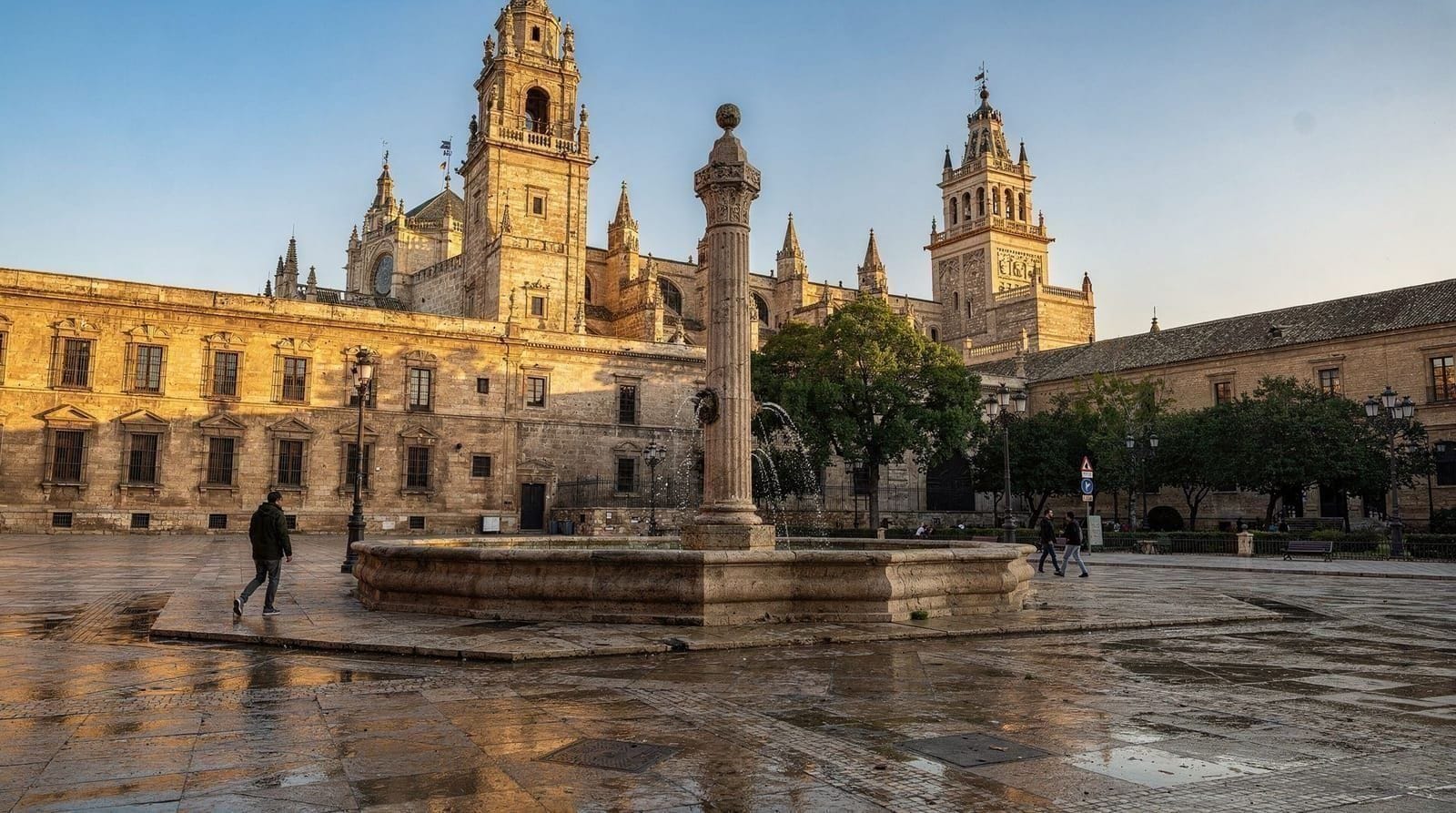
The Cathedral can usually be booked 1–3 days ahead in most of the year, but booking online eliminates the queue for same-day ticket buyers (which can be 30–45 minutes in peak season). The online ticket queue moves to a different entrance with minimal wait.
Combination ticket: If you want both the Cathedral and the Alcázar, check the combined ticket options — they can save money vs buying separately, and some include skip-the-line access to both. See the combined Alcázar and Cathedral tickets guide and the Alcázar skip-the-line guide for booking mechanics.
Free entry: The Cathedral is free on Sundays only, with tickets collected on site at the Puerta del Príncipe from 17:00, limited places. This is worth planning around if you’re on a budget.
Time needed: 1.5–2 hours for Cathedral and Giralda bell tower. The climb up the Giralda (35 ramps, no stairs) is included in the entry ticket.
Step 4: Plan your day structure
A practical three-day structure for first-time visitors:
Day 1: The historic core
- 09:30: Alcázar opens. Enter first slot booked (morning is best).
- 12:30: Cathedral. Walk from Alcázar to Cathedral in 5 minutes.
- 14:30: Lunch in a non-tourist bar near the Cathedral (turn away from Avenida de la Constitución — try Calle Mateos Gago or Calle Mesón del Moro for less tourist-facing options)
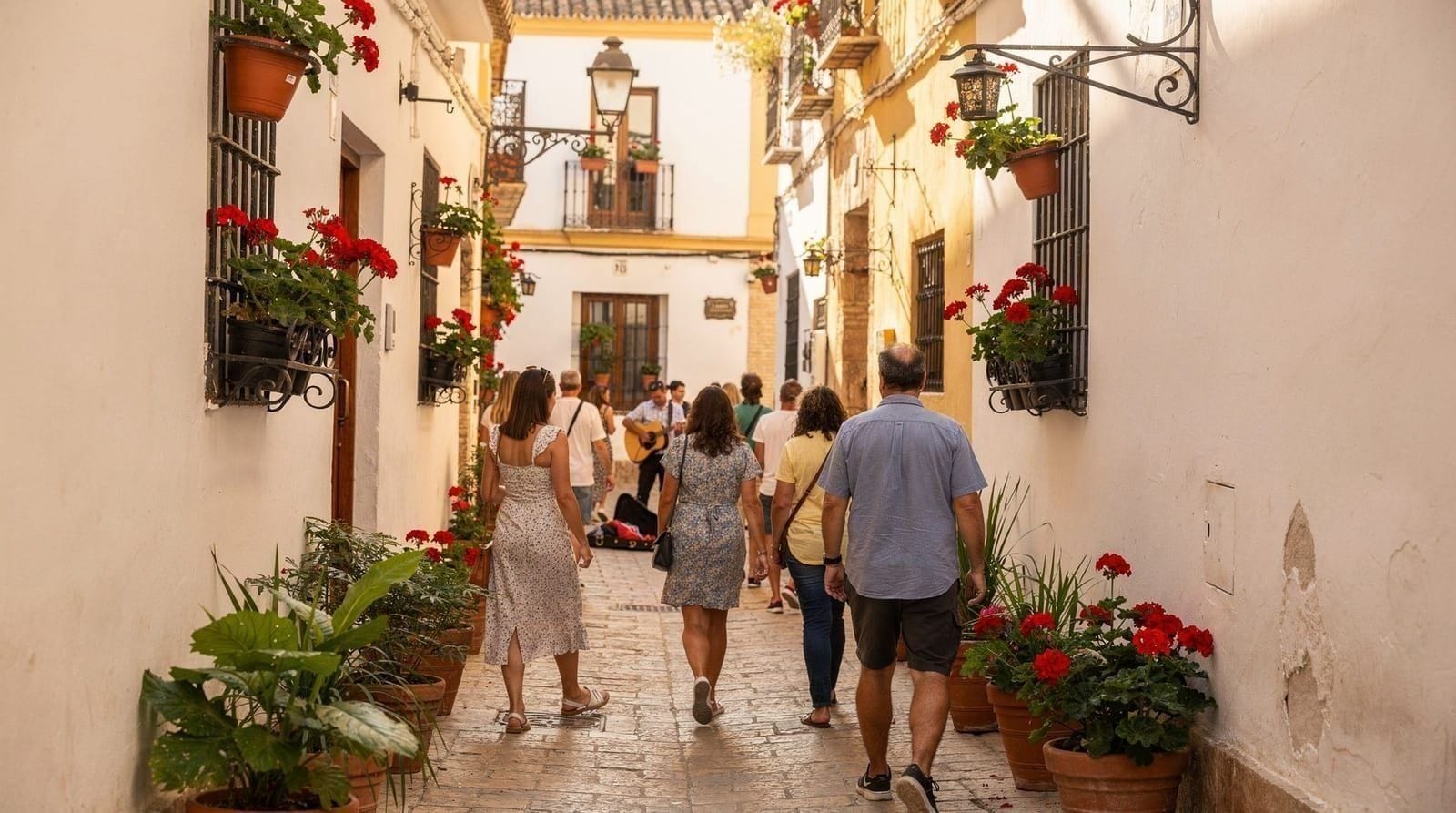
- 16:30: Santa Cruz neighbourhood wandering — the maze of streets east of the Cathedral wall
- 19:00: Drink at a rooftop bar in the centre, or walk to El Arenal
Day 2: River and neighbourhood immersion
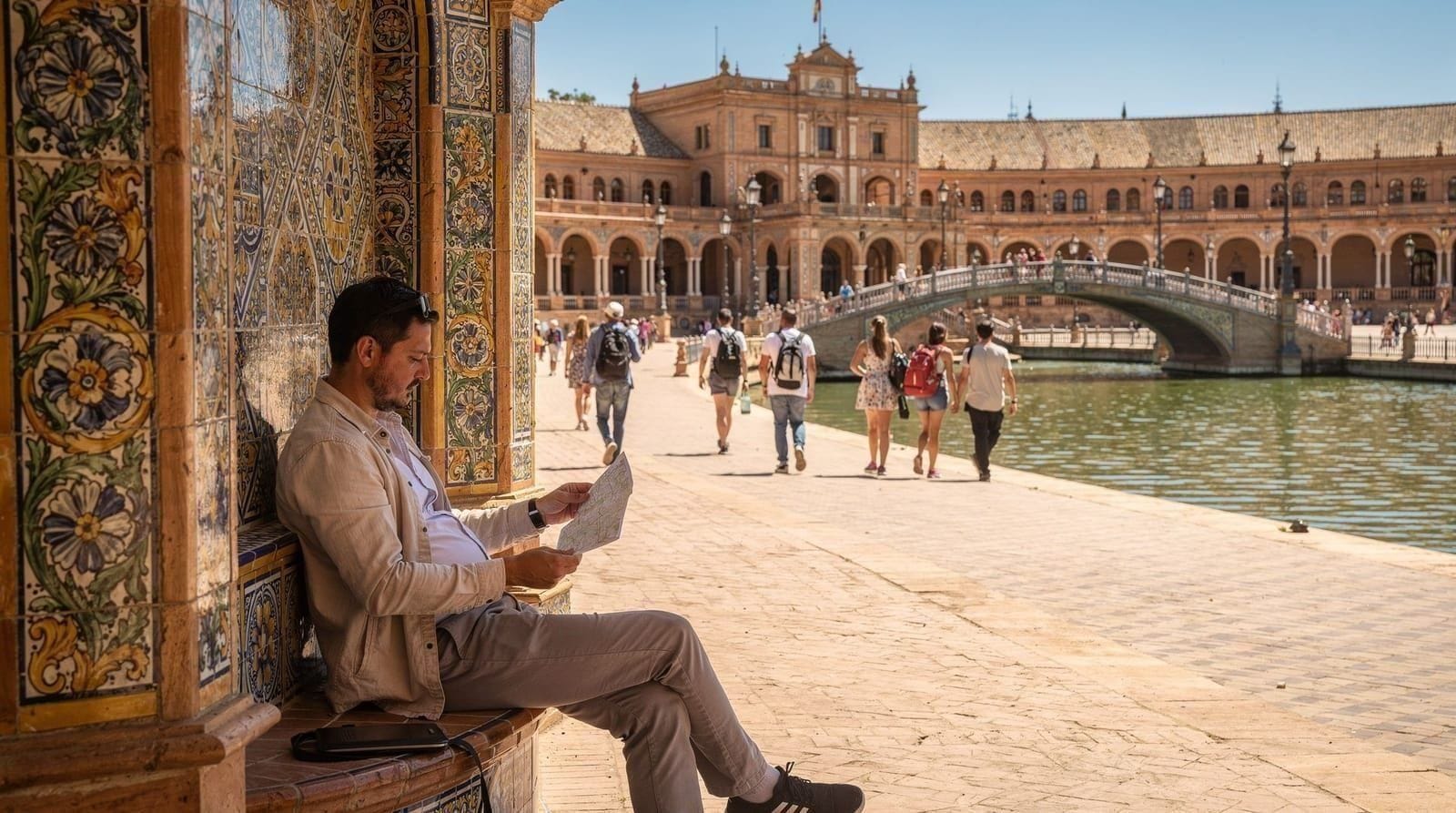
- 09:30: Plaza de España (arrive early — tour groups swarm from 10:00 onwards)
- 11:00: María Luisa Park walking
- 13:00: Cross to Triana via Puente de Isabel II
- 13:30: Lunch at or near the Triana market (Mercado de Triana) — excellent fish bars inside
- 15:00–18:00: Explore Calle Betis (river-facing bar street), Calle Alfarería (ceramics), Calle San Jacinto
- Evening: Dinner and optional flamenco. Triana has authentic tablao options.
Day 3: Northern Seville
- 09:30: Metropol Parasol (Las Setas) rooftop (from €16, worth it for the city panorama; go early for best light)
- 10:30: Alameda de Hércules — coffee and people-watching in the liveliest square of the north city
- 12:00: Casa de Pilatos (guided tour €12, one of Seville’s best palaces after the Alcázar)
- 14:30: Lunch in the Macarena area
- 16:00: Basílica de la Macarena (visit the Virgin of Macarena — the most revered icon of Semana Santa)
- Evening: Flamenco show if you haven’t been yet; or a sherry tasting in El Arenal
This structure is a framework, not a schedule. Seville rewards slow exploration — if you end up sitting at a bar at 17:00 watching the city go by instead of visiting the third attraction, that is also a successful afternoon.
Step 5: Decide on day trips
The day trip decision is the main variable in trip length planning. Key questions:
Do you want Córdoba? If yes, add one day. Córdoba is 45 minutes by AVE from Santa Justa station and requires a full day. Book AVE tickets at renfe.com. The Mezquita-Catedral requires separate entry (€15, available at the gate or online). Best day: Tuesday–Thursday (weekdays), avoiding weekend crowds.
Do you want Granada? If yes, add one full day and book Alhambra Nasrid Palace tickets 4–6 weeks ahead. Granada is 2.5 hours by ALSA coach from Plaza de Armas bus station. Many visitors opt for a guided tour that includes guaranteed Alhambra entry rather than booking independently.
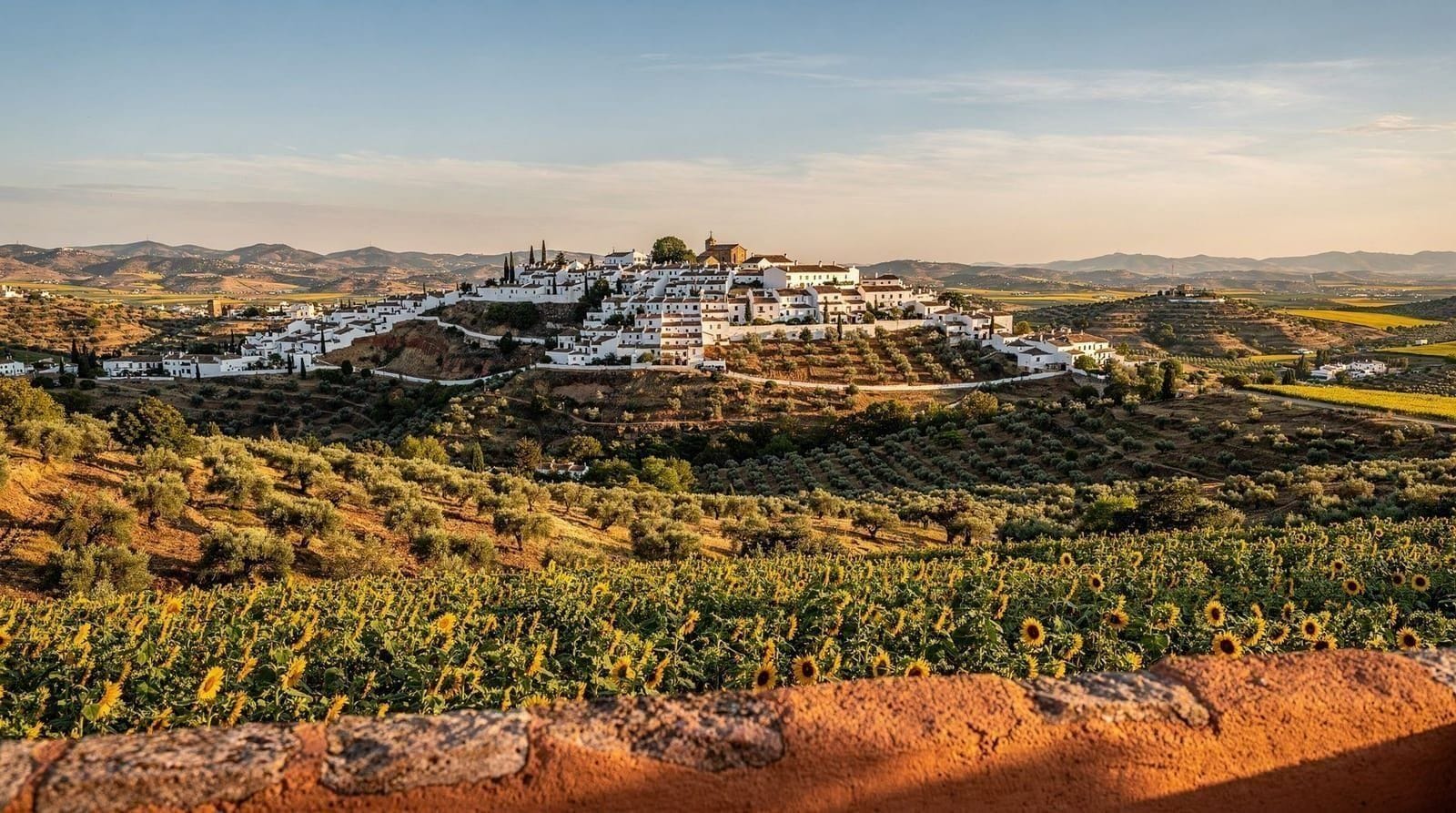
Do you want Ronda or the white villages? Add one full day. Bus from Plaza de Armas, 2 hours. Without a car, an organized group tour is the most practical option for the white villages.
See the Best day trips from Seville guide for a full comparison.
Step 6: Plan evenings deliberately
Seville’s evening culture is one of the city’s defining qualities. The dinner hour is late (21:00–23:00 is normal for restaurants), tapas bars fill from 19:30, and flamenco shows run at 19:00 and 21:00 in most venues.
Flamenco: Book one evening of flamenco in advance. The best-regarded venues (Casa de la Memoria, Tablao Los Gallos) sell out in peak season. For an honest assessment of which venues are worth the money, see Best flamenco shows in Seville 2026.
Tapas evening: A self-directed tapas evening in Triana or Alameda de Hércules — moving between two or three bars, eating at the barra, spending €15–20 per person — is one of Seville’s great pleasures and costs nothing to plan.
River evening: The Guadalquivir riverside (both the Arenal bank and the Triana bank on Calle Betis) is particularly beautiful between 19:00 and 21:30 in good weather.
Planning for festivals
Semana Santa (29 March–5 April 2026): Plan around procession routes, not against them. The official route (Carrera Oficial) goes past the Cathedral and down Avenida de la Constitución. Processions run approximately 18:00–midnight daily. Morning sightseeing at the Alcázar and Cathedral is fine. Bring patience — streets close without warning and crowds around procession routes are dense. Book accommodation six months ahead at minimum.
Feria de Abril (21–26 April 2026): The main fairground (Real de la Feria) is in the Los Remedios neighbourhood, about 2 km from the historic centre. Most casetas (the green-and-white striped tents where flamenco, food and sherry happen) are private — you need an invitation from a member. Public casetas do exist. The best way to experience it without connections is an organised tour. See Feria de Abril Seville guide for details.
A useful food-focused addition
For first-time visitors, a food tour in the first evening provides both orientation and genuine eating. A guided tapas walk with a local guide covers four or five bars in different neighbourhoods over 2–3 hours and gives you the template to replicate independently for the rest of the trip.
Seville: Tastes, tapas and traditions food tourQuick reference: what to book, when
| Booking | How far ahead | Where |
|---|---|---|
| Alcázar entry | 1 week (low season), 3+ weeks (spring) | realesalcazares.es |
| Cathedral | 1–3 days | catedraldesevilla.es |
| Alhambra (if visiting Granada) | 4–6 weeks | alhambra-patronato.es |
| AVE to Córdoba | Same day to 1 week | renfe.com |
| Flamenco shows | 3–7 days | venue websites or GetYourGuide |
| Accommodation (Semana Santa / Feria) | 3–6 months | Standard booking platforms |
| Accommodation (normal season) | 2–6 weeks | Standard booking platforms |
For more detail on each itinerary option by duration, see the Seville in one day, 2 days in Seville: complete itinerary, 3 days in Seville: the perfect itinerary, 5 days in Seville: complete itinerary with Córdoba and Ronda itineraries. If you know your total trip length already, how many days in Seville walks through the trade-offs directly.
Adapting the plan to your trip length
| Days in Seville | What to prioritise | What to skip |
|---|---|---|
| 1 day | Alcázar, Cathedral/Giralda, Santa Cruz wander | Day trips, second flamenco night, minor palaces |
| 2 days | Add Plaza de España, Triana, one flamenco show | Córdoba/Granada day trips |
| 3 days | Add Metropol Parasol, Casa de Pilatos, Macarena | Multiple day trips (pick one at most) |
| 4–5 days | Add one day trip (Córdoba or Cádiz) | Nothing major — this is a comfortable pace |
| 7+ days | Full Andalusian circuit: Córdoba + Granada, or Ronda + Cádiz | — |
Budgeting the trip
A realistic mid-range daily budget per person, once flights or trains to Seville are already covered: accommodation €50–90 (double room, split), food €30–45 (one sit-down meal, tapas evenings, breakfast at a local bar), monuments and activities €15–25 amortised across the trip, local transport €5–10. That lands around €100–170 per person per day, higher on Semana Santa or Feria de Abril dates and lower if you eat at local bars rather than tourist-facing restaurants throughout — see the overpriced-things-in-seville guide for where the biggest savings are.
First-time practical notes
Seville is a safe, walkable city for planning purposes — most of the itinerary above is reachable on foot from a historic-centre hotel, and public transport (buses, the single metro line, and Sevici bikes) covers the rest. For general safety context before you go, see the is Seville safe guide, and for a broader first-time orientation beyond just the day-by-day plan, the Seville first-time travel tips guide and Seville packing list round out this planning guide with what to bring and what to expect on arrival.
Frequently asked questions about Planning a Seville itinerary
How far in advance should I book Seville tickets?
Alcázar: 3–7 days ahead in low season, 2–4 weeks in spring (March–May) and October. Cathedral: 1–3 days ahead usually sufficient, but book it anyway to avoid queues. During Semana Santa and Feria de Abril, book everything 1–3 months ahead.Should I visit Alcázar or Cathedral first?
Alcázar first. It opens at 09:30 and is best early before tour groups. The Cathedral is nearby and manageable in the afternoon. Both are in the same quarter — plan them on the same day.What is the best order to see Seville's sights?
Day 1: Alcázar morning, Cathedral afternoon, Santa Cruz evening. Day 2: Plaza de España morning, Triana afternoon and evening. Day 3: Metropol Parasol morning, Macarena neighbourhood, Casa de Pilatos afternoon, flamenco evening.How do I plan Seville around Semana Santa?
Semana Santa (29 March–5 April 2026) transforms the city. Processions use the official route through the centre, closing many streets to traffic 18:00–midnight. Plan sightseeing in the morning. Book accommodation 6+ months ahead — prices triple and availability is near zero. The processions themselves are the main event.Is it worth planning a circuit of multiple Andalusian cities?
Yes, if you have 7+ days. The classic circuit: Seville (3 days) + Córdoba (1 day, day trip or overnight) + Granada (2 days). Add Cádiz or Ronda with extra days. See the seville-cordoba-granada-trip itinerary for a structured plan.Is Seville safe for planning a self-guided itinerary?
Yes — Seville is one of Spain's safer major cities for tourists. Standard precautions (watching belongings in crowded areas like the Cathedral queue or Triana market, avoiding empty streets late at night) are sufficient. See the is-seville-safe guide for specifics.What should I pack for a Seville itinerary?
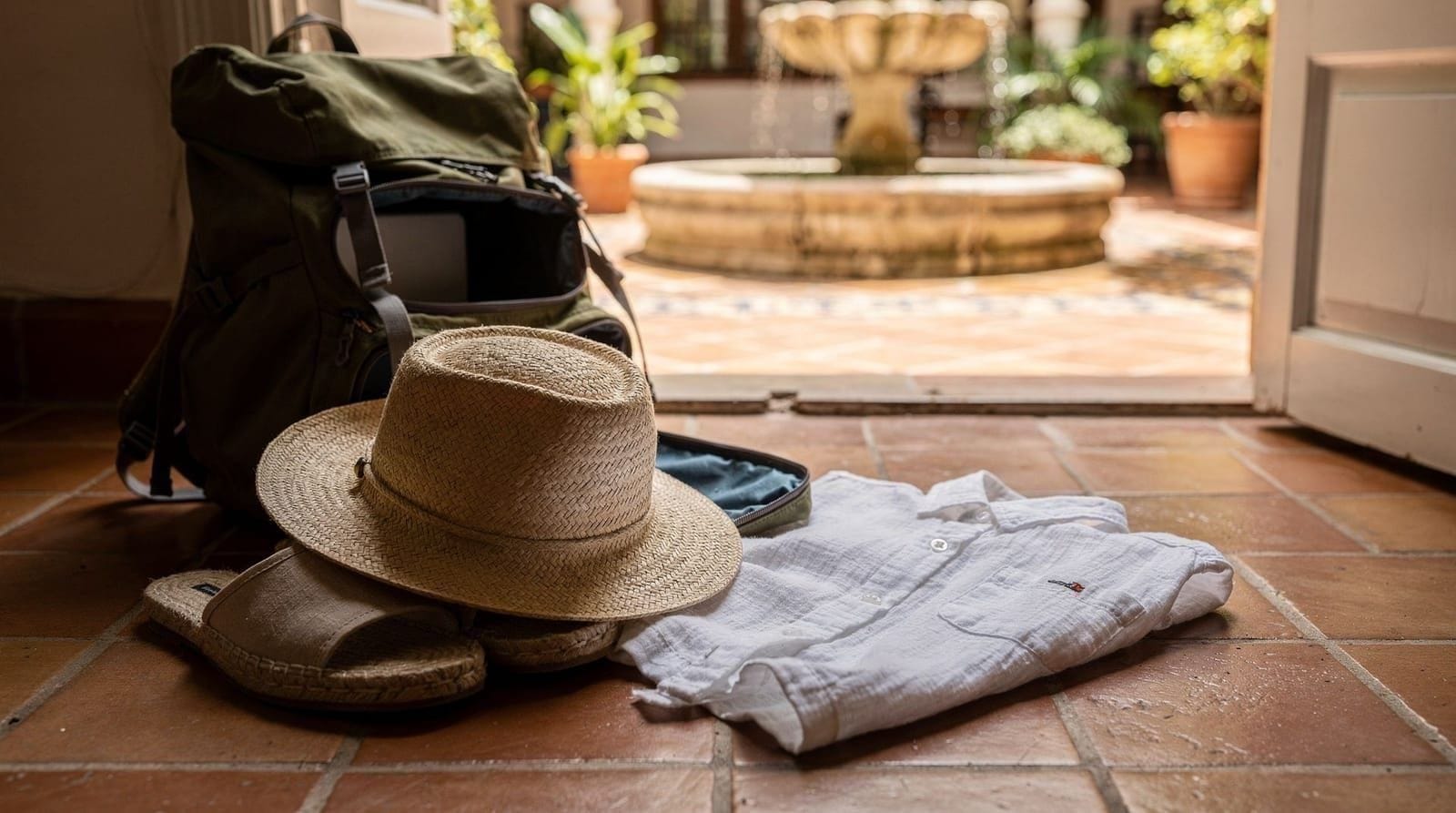
Comfortable walking shoes are essential given how much of the itinerary above is on foot, plus layers for the temperature swing between spring/autumn days and evenings, sun protection year-round, and a light jacket for winter. See the seville-packing-list guide for a full season-by-season list.
Top experiences
Bookable activities with verified prices and instant confirmation on GetYourGuide.