2 days in Seville: complete itinerary
Seville: Royal Alcázar entry ticket
Making the most of 48 hours
Two days gives you enough time to breathe in Seville rather than just tick boxes. You can see the big three (Alcázar, Cathedral, Plaza de España), cross into Triana, take a river cruise, and still have evenings for proper tapas without rushing. The key is keeping Day 1 in the historic core and Day 2 in the neighbourhoods.
| Where | Historic centre Day 1, Triana + river + Setas Day 2 |
| Cost | around €75–100/person/day mid-range |
| Time needed | 2 full days, 8:30–23:00 each |
| Getting around | on foot, plus MetroCentro tram for longer stretches |
| Best time | book Alcázar 3–5 days ahead, more in spring |
Before you arrive: the booking list
For a two-day visit, book the following in advance:
- Alcázar (real-alcazar.es): 3–5 days ahead, or earlier in peak season. Walk-up queues at spring and summer weekends consistently exceed 90 minutes.
- Cathedral (saintacatedral.es): 2–3 days ahead.
- Flamenco at Casa de la Memoria (casadelamemoria.es): 3–5 days ahead. The venue sells out regularly in peak season.
- River cruise: Book online 1–2 days ahead in high season. Walk-ups are usually fine outside of summer.
Accommodation in the historic centre (Santa Cruz, El Arenal) keeps you within 15 minutes on foot of everything on this itinerary. Mid-range hotels in these neighbourhoods: €80–120/night. Budget hostels with private rooms: €50–70.
Getting around on two days
Seville is one of the most walkable cities in Spain. On this itinerary, you will cover approximately 12–15 km per day. The main distances:
- Alcázar to Cathedral: 5 minutes on foot
- Cathedral to Plaza de España: 25 minutes on foot (or 5 minutes by MetroCentro tram)
- Santa Cruz to Triana: 15 minutes on foot via the bridge
- Triana to Metropol Parasol: 20 minutes on foot
Taxis within the historic centre are inexpensive (€5–8 per short trip) but rarely necessary except when you’re tired or carrying bags. The MetroCentro tram runs along Avenida de la Constitución — useful for the stretch between the Cathedral and Prado de San Sebastián.
Day 1: Historic core
Morning (8:30–13:00)
8:30 — Alcázar
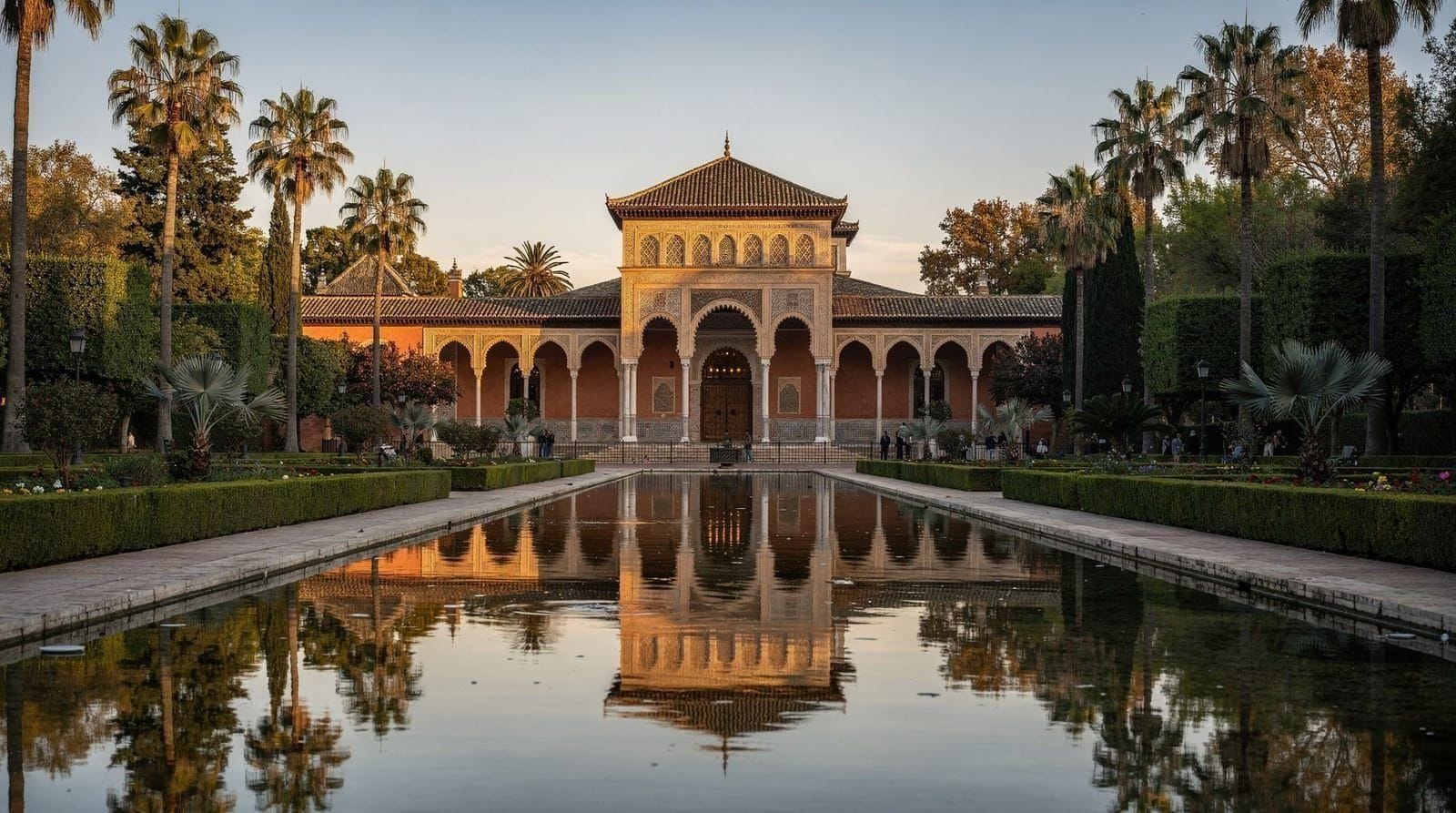
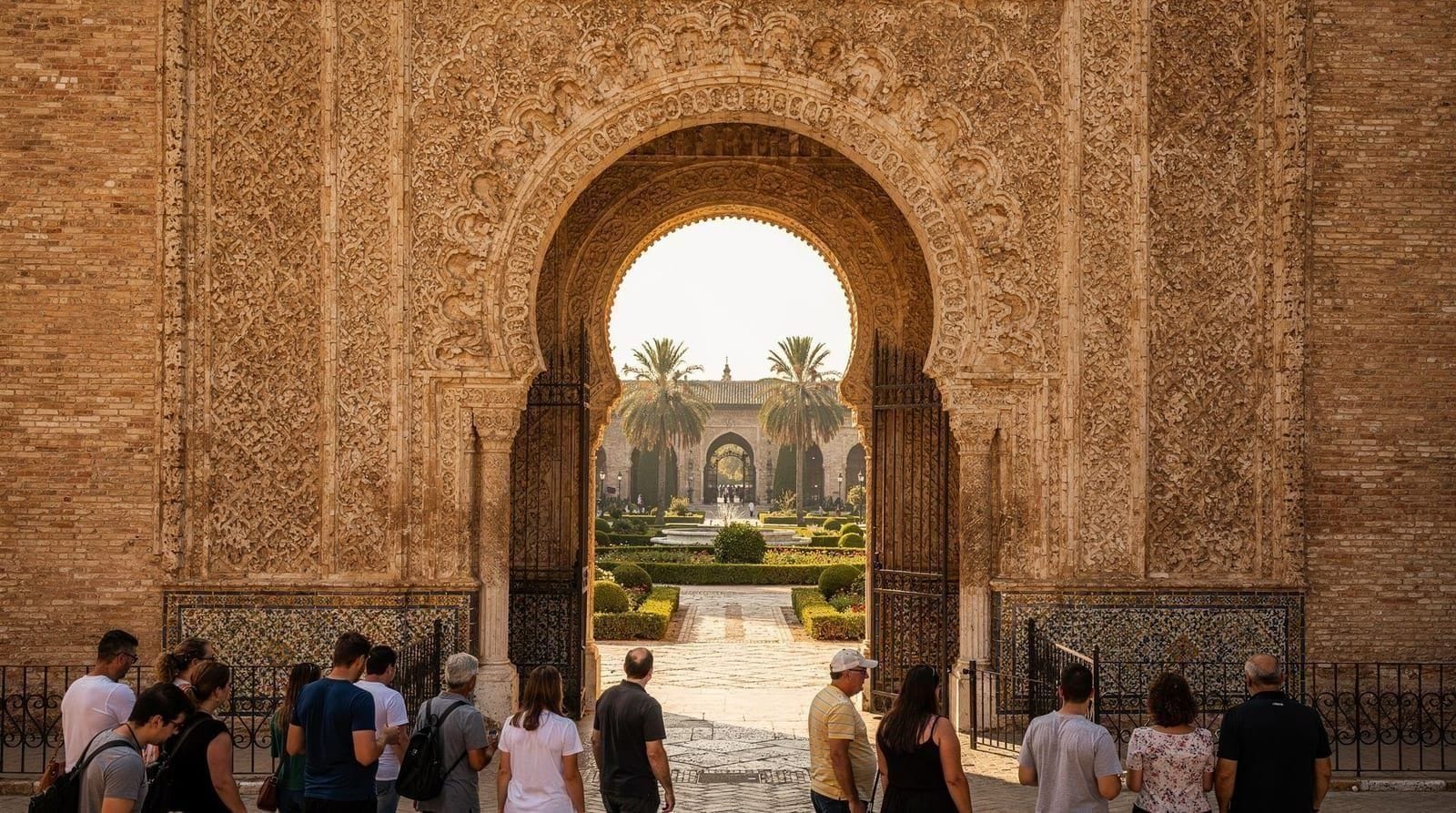
The Royal Alcázar is the centrepiece of any Seville visit and deserves your freshest two to three hours. Pre-book a timed entry ticket to skip the walk-up queue, which at peak times (spring and summer weekends) regularly stretches to 90 minutes.
Royal Alcázar skip-the-line entry ticketTicket price: €15.50 adults, €8 reduced. Children up to 13 free when accompanied by an adult. Enter from Patio de Banderas. Don’t rush the upper royal apartments — the painted ceilings are extraordinary. The gardens are worth 20 minutes if you have them.
11:00 — Seville Cathedral and Giralda
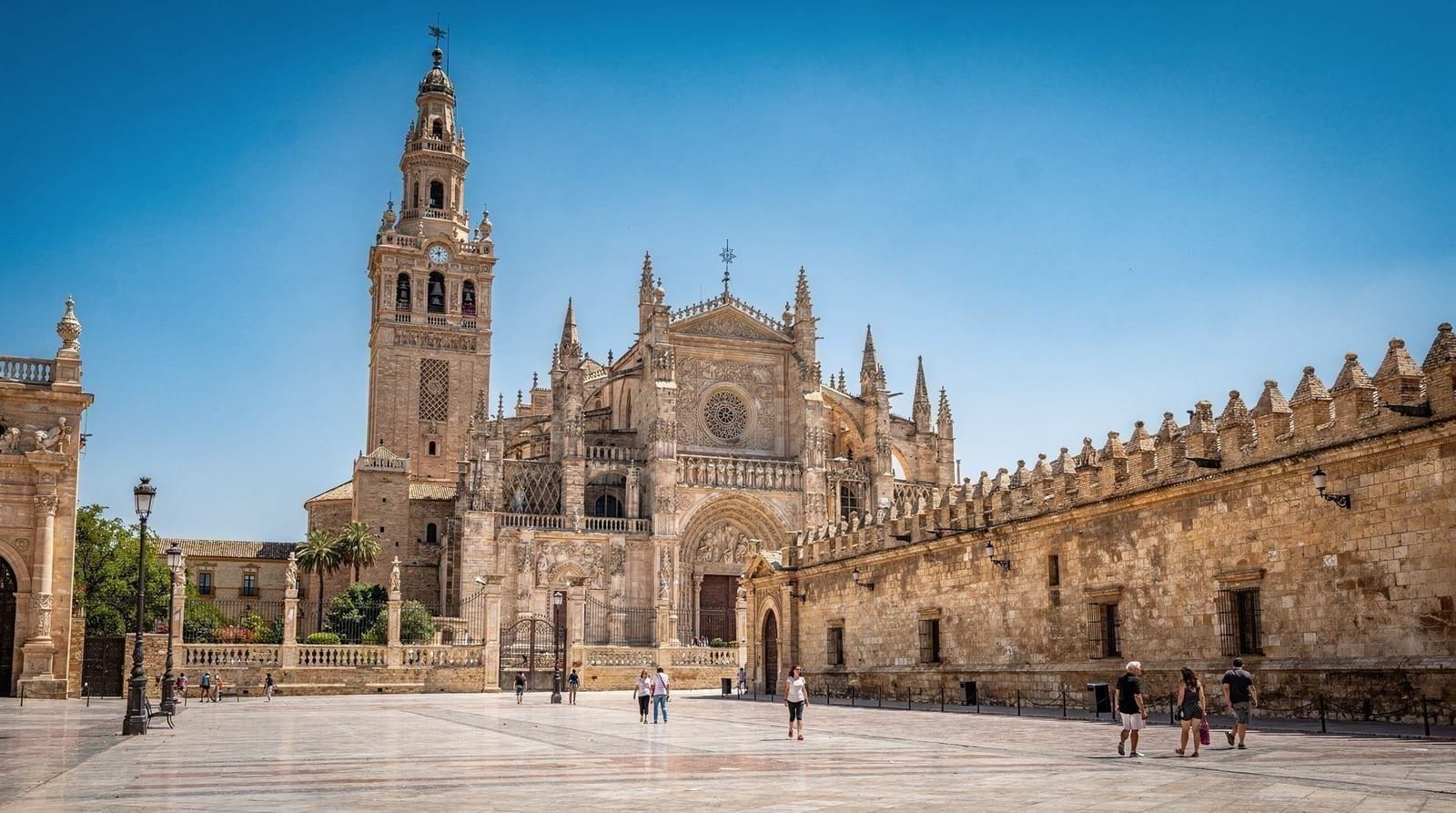
Walk five minutes east to the Cathedral. The building is the largest Gothic cathedral in the world and took over a century to build. The Giralda tower — climbed by ramp, not stairs — delivers the best elevated view over the historic centre.
Cathedral and Giralda entry ticketAllow 90 minutes. Cathedral ticket: €13 online (€14 at the ticket office), Giralda included. Don’t miss Columbus’s tomb (south entrance), the sacristy treasury, and the view from the tower roof.
12:30 — Tapas at Bodega Santa Cruz
Skip the tourist restaurants on Mateos Gago. Instead, walk two minutes to Bodega Santa Cruz (Calle Rodrigo Caro 1): a standing bar with excellent montaditos, jamón, and cold beer. Eat at the barra for local prices. The terrace costs more.
Afternoon (15:00–19:00)
15:00 — Santa Cruz neighbourhood
After a siesta or a slower lunch, explore the Barrio de Santa Cruz. The white alleyways, orange trees, and hidden plazas of Callejón del Agua, Plaza de Doña Elvira, and Plaza de los Venerables make for good wandering. Allow 45–60 minutes.
Watch out for the rosemary scam near the Cathedral: street vendors offer rosemary sprigs “for luck” then demand payment. Decline firmly and keep walking.
16:00 — Archivo de Indias and Giralda exterior
The Archivo de Indias (entry free) is in a Renaissance building between the Cathedral and the Alcázar. It houses original documents from Spain’s colonial period, including Columbus’s journals. Worth 30 minutes.
16:45 — Plaza de España
Take the number 1 tram or walk 25 minutes south through María Luisa Park to Plaza de España. This 1929 semicircular plaza is one of the most photographed spaces in Spain — and justifiably so. Walk the colonnades, find the azulejo tile panel for your region, hire a rowing boat on the canal (€6 for 35 minutes), and watch the light change in the afternoon.
Evening (19:30–23:00)
19:30 — Tapas route
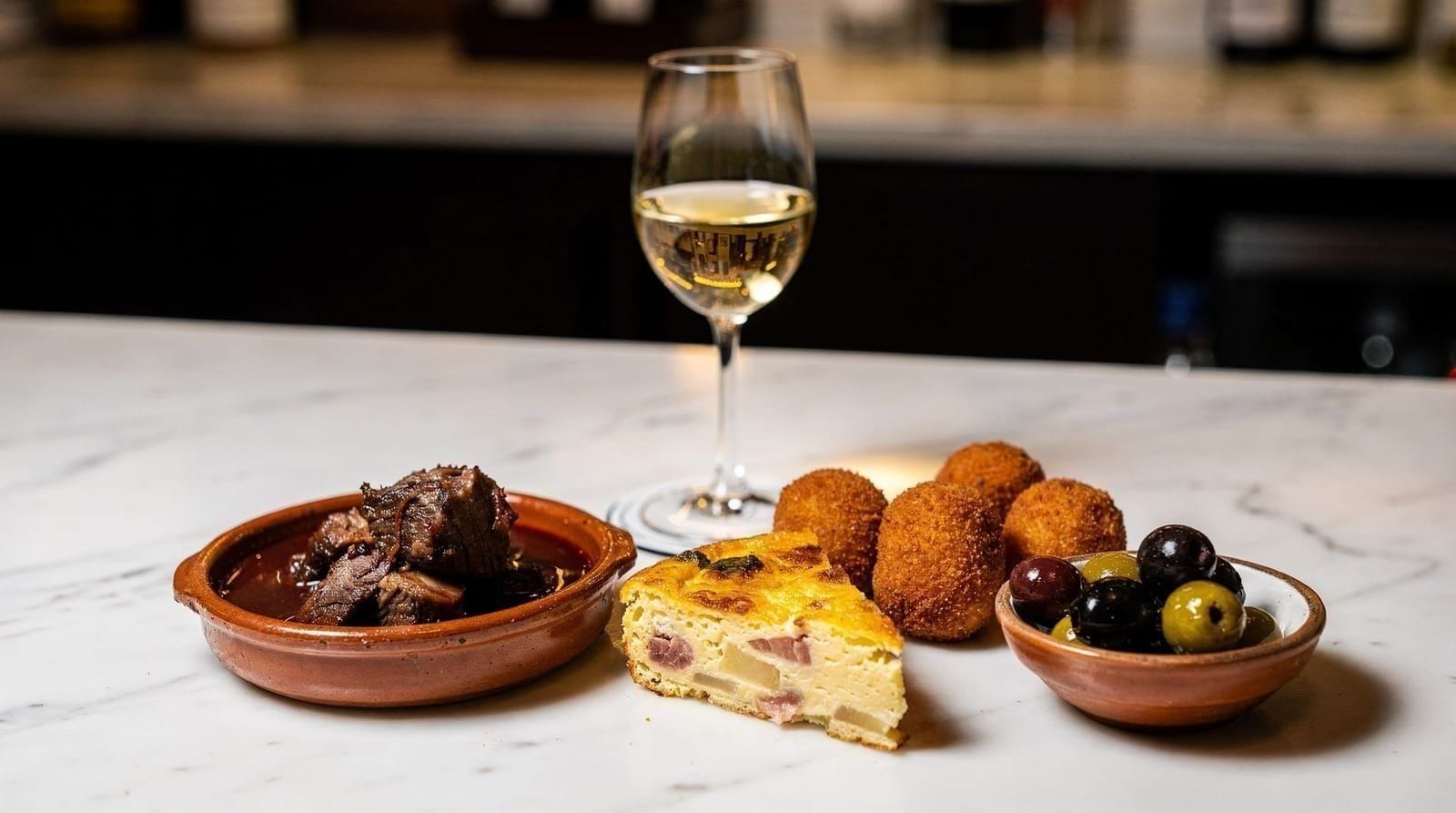
El Rinconcillo (Calle Gerona 40) is Spain’s oldest bar, dating to 1670. Order jamón, espinacas con garbanzos (spinach with chickpeas — an Andalusian classic), and a glass of fino or manzanilla sherry.
For a second round, walk to Bar Las Golondrinas (Antillano Campos 26, El Arenal) — excellent tortilla and fresh pescaíto frito (fried fish). Local crowd, honest prices.
Evening — Flamenco
Casa de la Memoria on Calle Cuna is the most reliable option for visitors: intimate venue, strong artists, and no dinner-show commercial formula. Book in advance.
Casa de la Memoria flamenco showSession times vary by date and season. Tickets are €24 for adults.
Day 2: Triana, the river, and the Setas
Morning (9:00–13:30)
9:00 — Triana market
Cross the Puente de Isabel II into the Triana neighbourhood and head directly to the covered Mercado de Triana (Plaza del Altozano). This is a working market, not a tourist spectacle. Stalls sell fresh fish, jamón, cheese, and vegetables. Have a coffee and a tostada with aceite y tomate at the market bar — excellent value at around €2.50.
If you’d like a guided tour with tastings of local products:
Triana market tour with tastings10:30 — Triana ceramics and streets
Triana is historically the flamenco and ceramics heart of Seville. Walk Calle Alfarería and Calle San Jorge to see working ceramic workshops (azulejo tiles). The Centro Cerámica Triana (Calle Antillano Campos 14) explains the neighbourhood’s tile-making tradition with original kilns.
Stop at Las Golondrinas bar if you missed it on Day 1 — it is in this neighbourhood.
11:30 — Macarena and Las Setas (Metropol Parasol)
Head back across the river and north toward the Macarena neighbourhood. The Basílica de la Macarena (free entry) houses the city’s most venerated Virgin — the cult following is genuine and fascinating. The gold crown and jewelled robes are extraordinary.
Continue east to the Metropol Parasol (Las Setas de Sevilla) on Plaza de la Encarnación. This enormous wooden mushroom-shaped structure has a rooftop walkway with 360-degree views over the city. Entry to the roof: tickets from €16. The archaeological museum in the basement — Antiquarium — contains Roman mosaics found during construction.
Afternoon (13:30–18:00)
13:30 — Lunch in Macarena
The streets around Alameda de Hércules have good value restaurants well away from the tourist circuit. Try Bar Caro (Alameda de Hércules 48) or any of the small bars on Calle Feria for a menú del día around €11–13.
15:30 — Guadalquivir river cruise
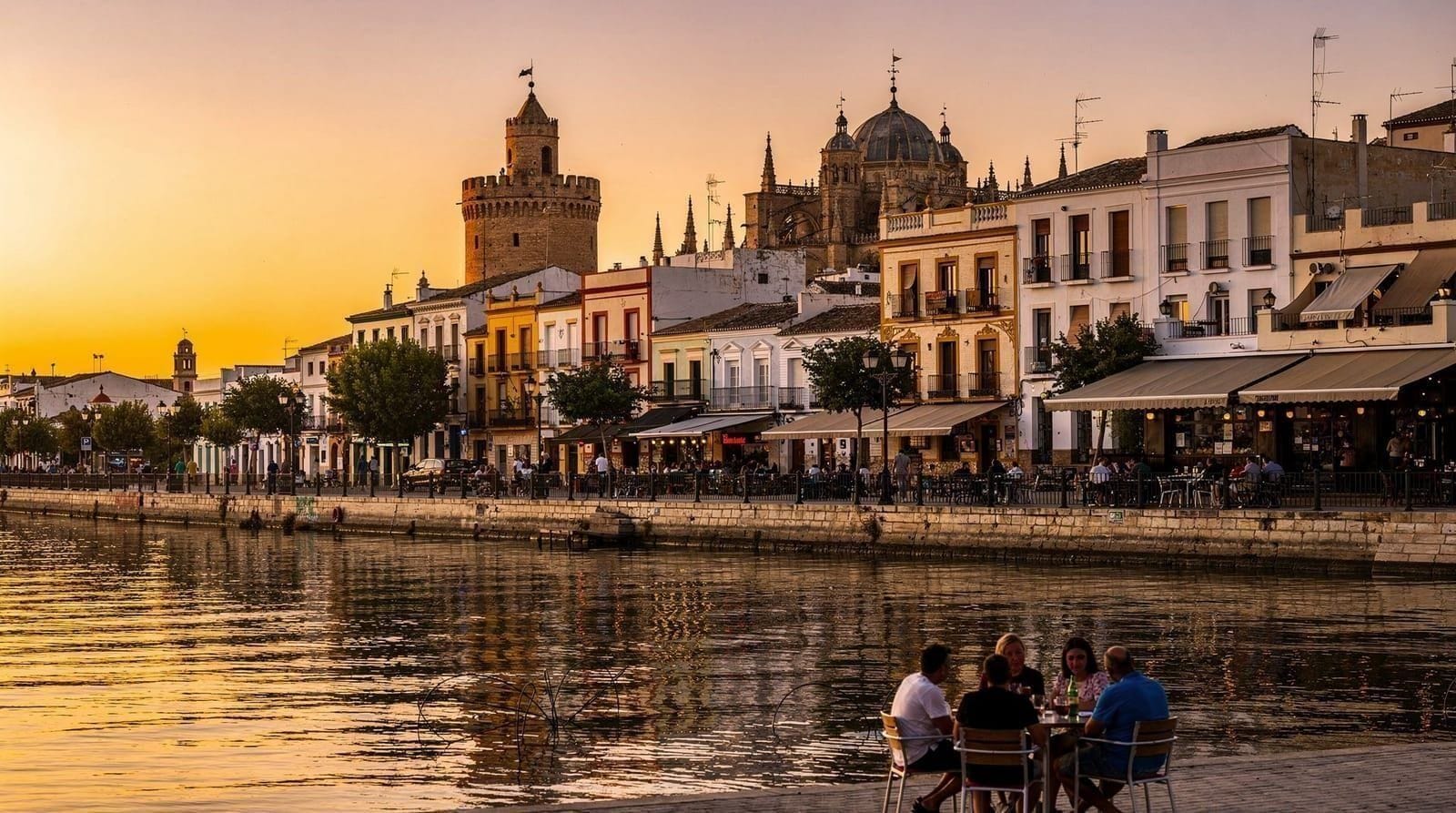
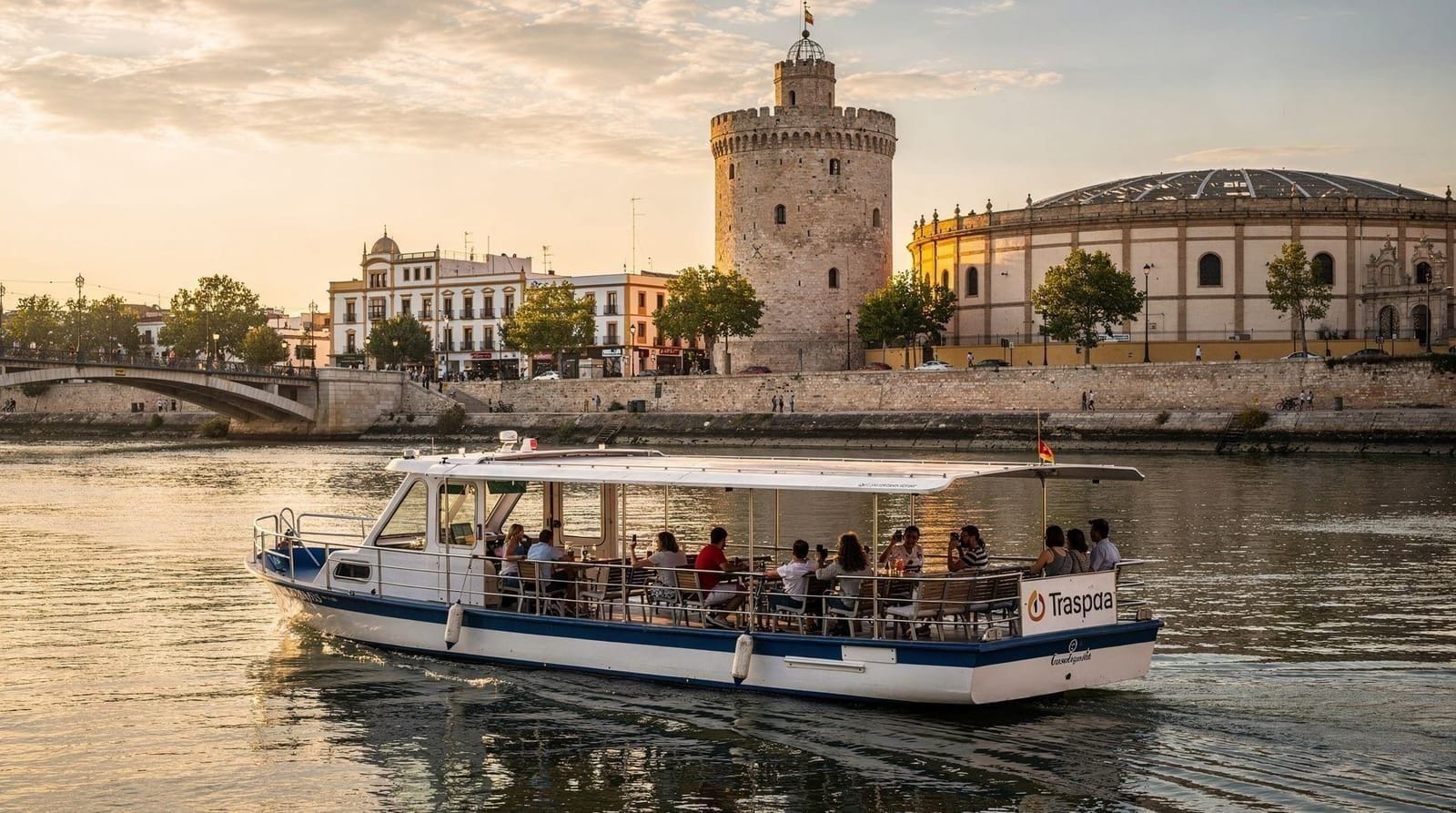
Return to the riverbank near the Torre del Oro for a one-hour eco cruise on the Guadalquivir. These electric boats are quiet, non-intrusive, and give a completely different perspective on the city’s skyline. Departure from Muelle de la Sal (near Torre del Oro). Book in advance in high season.
Guadalquivir 1-hour eco cruiseTickets: around €18 adults. Duration: 60 minutes.
17:00 — Torre del Oro and El Arenal
The Torre del Oro (see the official museum website for current prices and hours) is a 13th-century Moorish tower with a small maritime museum. Worth 20 minutes. Walk north along the riverbank through El Arenal — the most elegant riverside promenade in Seville.
Evening (19:30–23:00)
19:30 — Vermut hour
Casa Morales (Calle García de Vinuesa 11) is one of the city’s best preserved traditional taberna environments. Their house vermouth and cured olives are exceptional. The bar dates from 1850.
21:00 — Dinner or final tapas
Eslava (Calle Eslava 3, near Alameda de Hércules) has some of the most creative tapas in the city. The slow-cooked presa ibérica and the egg with truffle foam are frequently cited as highlights. Arrive early or expect a queue; they don’t take reservations.
Alternatively, for traditional Andalusian food in a comfortable setting, Taberna del Alabardero (Calle Zaragoza 20) is excellent for a longer dinner — booking recommended.
Practical notes for two days
Alcázar closure: Closed only on 1 and 6 January, Good Friday and 25 December; open every other day, Mondays included.
Budget per day: Mid-range plan runs about €80–100 per person per day including entry fees, lunch, and dinner. The cruise and flamenco add approximately €38.
Shoes: The cobblestones around Santa Cruz and Triana are uneven. Do not wear shoes with thin soles.
Night transport: Taxis are available throughout the night. The official taxi app is mySevici. Avoid unlicensed cars that approach you near clubs.
If you can extend your stay, the 3-day Seville itinerary adds Casa de Pilatos, a bike tour, and proper time in Alameda, or lets you take the AVE to Córdoba. Planning to explore beyond the city? See the Seville day-trips itinerary.
Practical notes for two days in Seville
Budget for two days (mid-range): Approximately €75–100 per person per day.
Day 1 costs: Alcázar €15.50 + Cathedral €13 = €28.50 entry fees. Lunch at Bodega Santa Cruz: €15–18. Evening tapas: €20. Flamenco: €24. Total Day 1: €84–94.
Day 2 costs: Triana market breakfast (€3). Guadalquivir cruise (€18). Lunch (€15–20). Afternoon drinks (€8). Dinner (€25–35). Total Day 2: €70–85.
Summer planning: July and August are extremely hot — temperatures regularly reach 40–42°C between 14:00 and 17:00. Plan all outdoor activities for 9:00–13:00 and 18:00 onwards. Use museums and air-conditioned spaces in the early afternoon. The river cruise in the afternoon heat is still pleasant because of the breeze off the water. The siesta is not optional in summer; even if you don’t sleep, retreating to a cool room for 90 minutes midday preserves energy for the evening.
Spring planning (March–May): Peak season. Temperatures are perfect (20–28°C), flowers are blooming, and the orange trees are in blossom. The trade-off is that this is the busiest time of year. Book everything as far in advance as possible. If your visit overlaps with Semana Santa (Holy Week, dates vary — 29 March to 5 April 2026) or Feria de Abril (21–26 April 2026), accommodation prices double and the city is extraordinarily atmospheric but also very crowded.
Autumn planning (October–November): The best combination of good weather and manageable crowds. September has the Bienal de Flamenco in even-numbered years (9 September to 3 October 2026) — the most important flamenco festival in the world.
Alcázar closing days: The Alcázar is open every day, Mondays included, and closes only on 1 and 6 January, Good Friday and 25 December. Check the official site for the latest hours.
Shoes and bags: Seville’s cobblestones are hardest on thin-soled shoes. Bring one pair of comfortable walking shoes with adequate cushioning. Spinner-wheel suitcases do not roll well on the cobblestone streets of Santa Cruz — if you’re staying in the barrio, a bag with handles or a rolling duffel works better.
Language: Spanish is the language in Seville, and Andalusian Spanish has distinctive pronunciations (the ‘s’ sound is often dropped, ‘c’ and ‘z’ are pronounced as ‘s’). Restaurant and museum staff in the tourist zones speak varying levels of English. In traditional tapas bars away from the tourist circuit, English is less common — pointing, basic Spanish vocabulary, and good humour are all you need.
Tipping: Tipping in Spain is not obligatory. In traditional tapas bars, rounding up is common and appreciated. In restaurants, a tip of €1–3 per person for a good meal is standard. Large automatic tip prompts on payment terminals are not universal in Seville; the smaller traditional establishments usually just take the bill total.
For a deeper dive into each day’s individual sights, see the relevant guides: Real Alcázar complete guide, Seville Cathedral complete guide, Triana neighbourhood guide, and Guadalquivir river cruise guide.
Two days in Seville: what you gain and what you miss
What two days covers
After two days on this itinerary, you will have seen:
- The Royal Alcázar interior (Patio de las Doncellas, Salón de Embajadores, royal apartments, gardens)
- The Cathedral and Giralda tower (including the panoramic view over the city)
- The Barrio de Santa Cruz (the labyrinthine Jewish quarter with its hidden plazas)
- The Archivo de Indias (original Columbus documents, Renaissance architecture — free)
- Plaza de España (the 1929 Expo plaza with 58 province azulejo panels)
- The Triana neighbourhood (market, ceramics shops, riverfront)
- The Metropol Parasol / Las Setas (rooftop views, Roman archaeology in the basement)
- The Basílica de la Macarena (the city’s most venerated Virgin)
- The Guadalquivir river by boat (one-hour eco cruise with skyline views)
- Two evenings of tapas across different neighbourhoods
- One flamenco show at Casa de la Memoria
This is a genuinely substantive experience of the city. Most European cities would require four to five days to cover an equivalent range.
What two days doesn’t cover
The following significant sights are not on the two-day plan:
- Casa de Pilatos: The most impressive private palace in Seville, with the city’s best collection of Roman sculpture and extraordinary azulejo courts. It takes 90 minutes and costs €12. Worth doing on a third day.
- Palacio de las Dueñas: The private palace of the Duke and Duchess of Alba, with a remarkable art collection. 60 minutes, €15.
- Maestranza bullring (interior tour): The 1761 bullring is architecturally beautiful and culturally revealing, regardless of your view on bullfighting. 45 minutes, current prices on the official site.
- Carmona: A hilltop Roman town 33 km east of Seville with remarkable archaeological remains. A half-day trip.
- Italica: The Roman city 9 km north of Seville where Trajan and Hadrian were born. One of Spain’s most important archaeological sites, consistently undervisited. Half-day trip, €1.50.
- Sherry tasting: A structured session covering all styles of sherry. Genuinely transforms every glass you drink for the rest of the trip. Best done on a third day or evening.
Day-by-day comparison: 2 days vs 3 days
For a first-time visitor deciding between two and three days:
Two days gives you the core monuments, the main neighbourhoods, a river experience, one evening of tapas, and flamenco. It is a complete first visit that leaves you wanting to return.
Three days adds: another neighbourhood (Macarena in more depth), a palace that rivals the Alcázar (Casa de Pilatos), a day trip option (Córdoba, 45 minutes by AVE), and the food and sherry culture that requires unhurried time to appreciate. See the 3-day Seville itinerary.
If you can only have two days: use this plan, book everything in advance, and prioritise evenings. The best of Seville happens after 19:00.
Understanding the Alcázar in context
The Royal Alcázar often surprises visitors who arrive expecting a simple Moorish palace. It is instead a layered complex spanning more than 1,000 years of architecture, each period visible alongside the others:
- Almohad remains (12th century): The Patio del Yeso is one of the few surviving Almohad courtyard spaces in Seville.
- Mudéjar palace (1364): The main Palacio del Rey Don Pedro, built by Pedro I of Castile using craftsmen from Granada and Toledo. This is the centrepiece of any visit.
- Gothic palace: Built simultaneously with the Mudéjar palace by the same patron. The contrast between the two styles is intentional and jarring in an interesting way.
- Renaissance additions (16th century): Carlos V added a palace after his marriage here in 1526. The tapestry room contains original 16th-century Flemish tapestries.
- 20th-century restoration: The upper royal apartments were restored in the 20th century for current royal use. They look different from the historic sections because they are different.
The Alcázar is not a preserved relic — it is a living palace that has been continuously occupied and modified. Understanding this makes the visit much more interesting than simply admiring pretty tiles.
Triana: why it matters
Triana is the neighbourhood most likely to be cut from a two-day visit that runs short on time. This would be a mistake.
Triana developed separately from the historic centre (it is on the opposite bank of the Guadalquivir) and has a distinct cultural identity. It is historically associated with:
- Flamenco: Many of the 20th century’s most influential flamenco artists were born in Triana, including Camarón de la Isla’s wife La Chata and the Triana dynasty of guitarists. The barrio’s flamenco tradition is specifically linked to the Roma communities that settled here.
- Ceramics: The azulejo tiles that cover the buildings of Seville — including the extraordinary tile panels in the Alcázar and Plaza de España — were largely made in Triana’s workshops. The ceramic tradition goes back to the Moorish period; the kilns on Calle Alfarería operated from the 15th century to the 1950s.
- Bullfighting: The brotherhood of the Maestranza bullring has historical ties to Triana, and several of the most famous 20th-century matadors came from the neighbourhood.
None of this requires deep engagement to make Triana rewarding — walking through the neighbourhood, stopping for coffee at a bar on Calle Betis looking at the skyline, browsing the ceramics shops, gives you an authentic experience of a genuinely different Seville from the tourist circuit.
For the complete neighbourhood guide: Triana neighbourhood guide.
Making 48 hours work: what to prioritise if you’re behind schedule
Two days is a tight but complete plan, and delays happen — a slow Alcázar queue, a long lunch, an unexpected siesta. If you fall behind on Day 1, protect the Cathedral and Santa Cruz over Plaza de España; you can see the plaza’s exterior from a taxi or bus window on the way to dinner and still get the gist. If Day 2 runs long, the Metropol Parasol rooftop is the easiest single item to cut — it’s a good 20-minute view, not an essential sight, unlike the Triana market and the river cruise.
If you decide midway through Day 2 that you’d rather have more unhurried time than see everything, the 3-day Seville itinerary shows what an extra day buys you: Casa de Pilatos, a slower pace through Santa Cruz, and either a Córdoba day trip or a genuinely relaxed final day.
Should you add a half-day trip instead of a full second Seville day?
Some visitors with exactly two days consider swapping Day 2’s city plan for a half-day out to Italica (Roman ruins 9 km away) or Carmona (hilltop Roman town 33 km east). This is a reasonable trade if you’ve already spent time in a similar Andalusian city and want something different, but for a first Seville visit, the Triana–river–Setas day in this plan gives a more complete picture of the city than either half-day trip alone. Save Italica and Carmona for a longer stay — the best day trips from Seville guide covers both alongside the AVE and bus destinations.
Frequently asked questions about 2 days in Seville
Is 2 days enough to see Seville properly?
Two days covers the Alcázar, Cathedral, Santa Cruz, Plaza de España, Triana, a river cruise, and one flamenco show — genuinely the core of the city. You will miss Casa de Pilatos and any day trip, but you won’t feel like you rushed through the essentials if you follow this schedule closely.
What’s the single easiest thing to cut if I’m short on time?
The Metropol Parasol rooftop on Day 2. It’s a pleasant 20-minute view but the least essential stop on this itinerary — unlike the Alcázar, Cathedral, or Triana market, nothing else on the two-day plan depends on seeing it.
Can I do a river cruise and the Triana market on the same morning?
Not comfortably — the market visit runs 9:00–11:30 and the recommended cruise slot is mid-afternoon (15:30), by design. Doing both in the same morning means rushing the market and arriving at the cruise dock without a proper lunch. This itinerary deliberately separates them so each gets unhurried time.
Is the Alcázar or the Cathedral more important if I have to choose?
The Alcázar, without much debate. It’s the more architecturally significant and more universally praised sight in Seville, and the Cathedral, while genuinely impressive, is a more familiar building type (a large Gothic church) than the Alcázar’s layered Islamic-Christian palace complex. If you truly must choose one for a shortened visit, keep the Alcázar and see the Cathedral from the outside only.
Two-day trip cost breakdown by category
Beyond the day-by-day totals already covered, it helps to see where the money for a two-day Seville visit actually goes: roughly a third on entry fees and paid experiences (Alcázar, Cathedral, river cruise, flamenco), a third on food across both days, and a third on accommodation. Travellers on a tighter budget can cut the flamenco show and one paid tour without meaningfully damaging the experience — the Alcázar and Cathedral are the two expenses genuinely worth protecting.
Travelling as a couple versus solo on two days
The per-person cost changes little between solo and couple travel on this itinerary, since almost every expense — entry tickets, tapas, the river cruise, flamenco seats — is priced per person rather than per room. The one meaningful saving for couples is accommodation, roughly halving the nightly cost per person compared to solo travel. Groups of three or four gain further efficiency on private tours and taxis, though this two-day plan is built around walking and public transport rather than private transfers.
Top experiences
Bookable activities with verified prices and instant confirmation on GetYourGuide.