3 days in Seville: the perfect itinerary
Seville: Royal Alcázar entry ticket
Three days is the right amount of time for Seville
Most travel writers say three days in a European city is either too short or just enough. For Seville, three days is the sweet spot: long enough to see every major sight without rushing, to eat well across several neighbourhoods, and to take one half-day or day trip if you want. Short enough that you don’t exhaust yourself in the summer heat.
This itinerary is written for first-time visitors who want to understand the city, not just photograph it. It is honest about what takes time, what is overhyped, and where locals actually eat. Day 3 has two versions — a full city day and a day trip to Córdoba — so you can choose based on your interests.
| Where | Historic centre, Triana, river, plus Córdoba or a slower Day 3 |
| Cost | around €120–150/person/day mid-range |
| Time needed | 3 full days, 9:00–23:00 |
| Getting around | on foot, MetroCentro tram, AVE for Córdoba option |
| Best time | October–November or mid-March, before Semana Santa |
Day 1: The monumental core
Morning (9:00–13:30): Alcázar and Cathedral
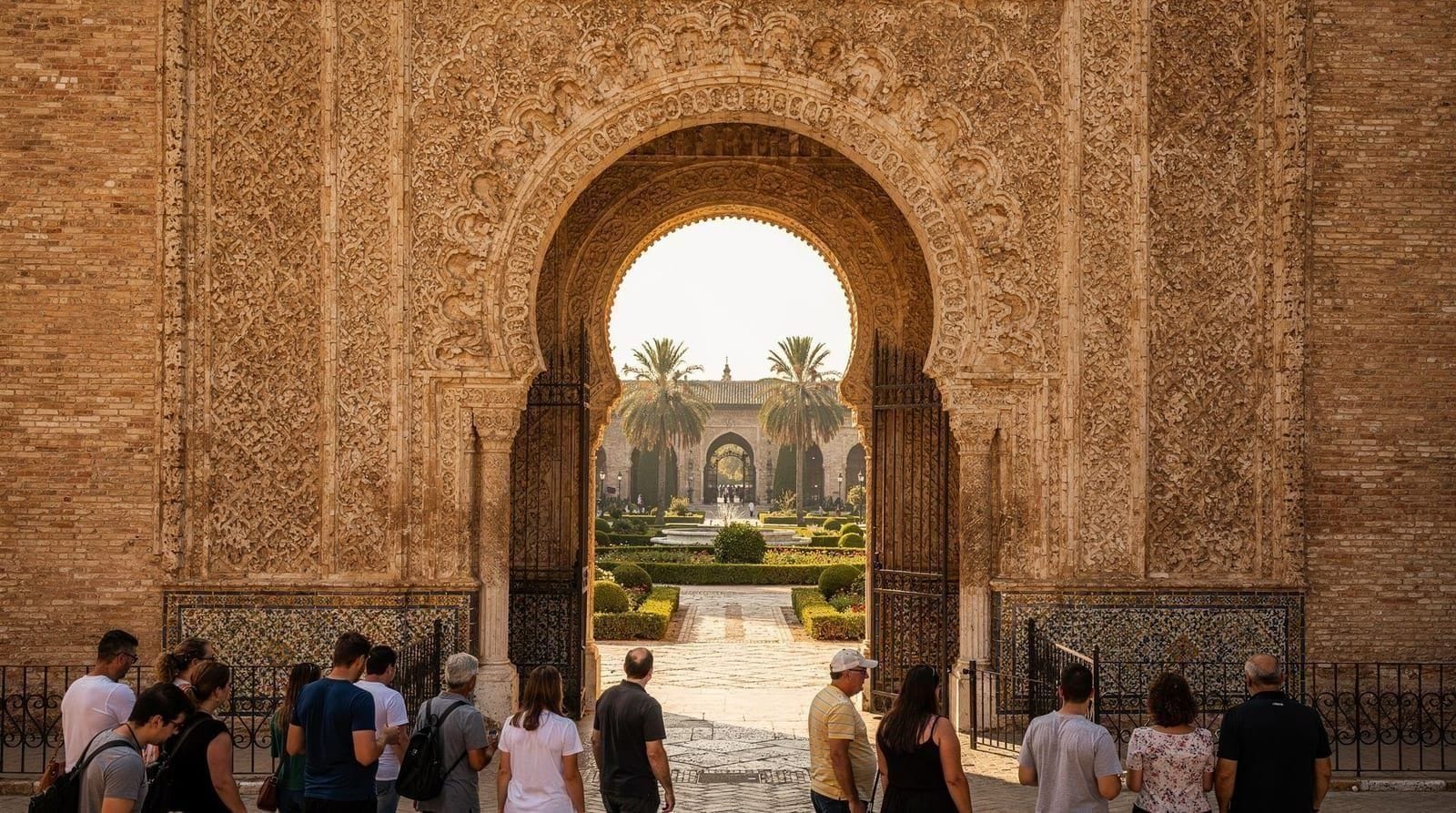
The Alcázar and Cathedral are adjacent, both in the historic centre, and between them they represent one of the densest concentrations of exceptional architecture in Europe. Visit them in order: Alcázar first (more complex, more popular), Cathedral second.
Alcázar (9:00–11:30)
Book a timed skip-the-line entry ticket before you travel. Walk-up queues at peak season (spring and summer weekends) regularly exceed 90 minutes. The Alcázar opens at 9:30 in low season, 9:00 in July and August.
Royal Alcázar skip-the-line entry ticket — €14.50The Alcázar is a layered palace complex spanning Moorish, Gothic, Renaissance, and Baroque periods. Do not rush the Patio de las Doncellas, the Salón de Embajadores (golden dome room), and the upper royal apartments, which are still used by the Spanish royal family during official visits. The gardens are extensive — the morning light is best.
Honest note: the audio guide is adequate but a guided tour adds context that’s hard to get independently. For guides, see our full Alcázar guide.
Cathedral and Giralda (11:30–13:00)
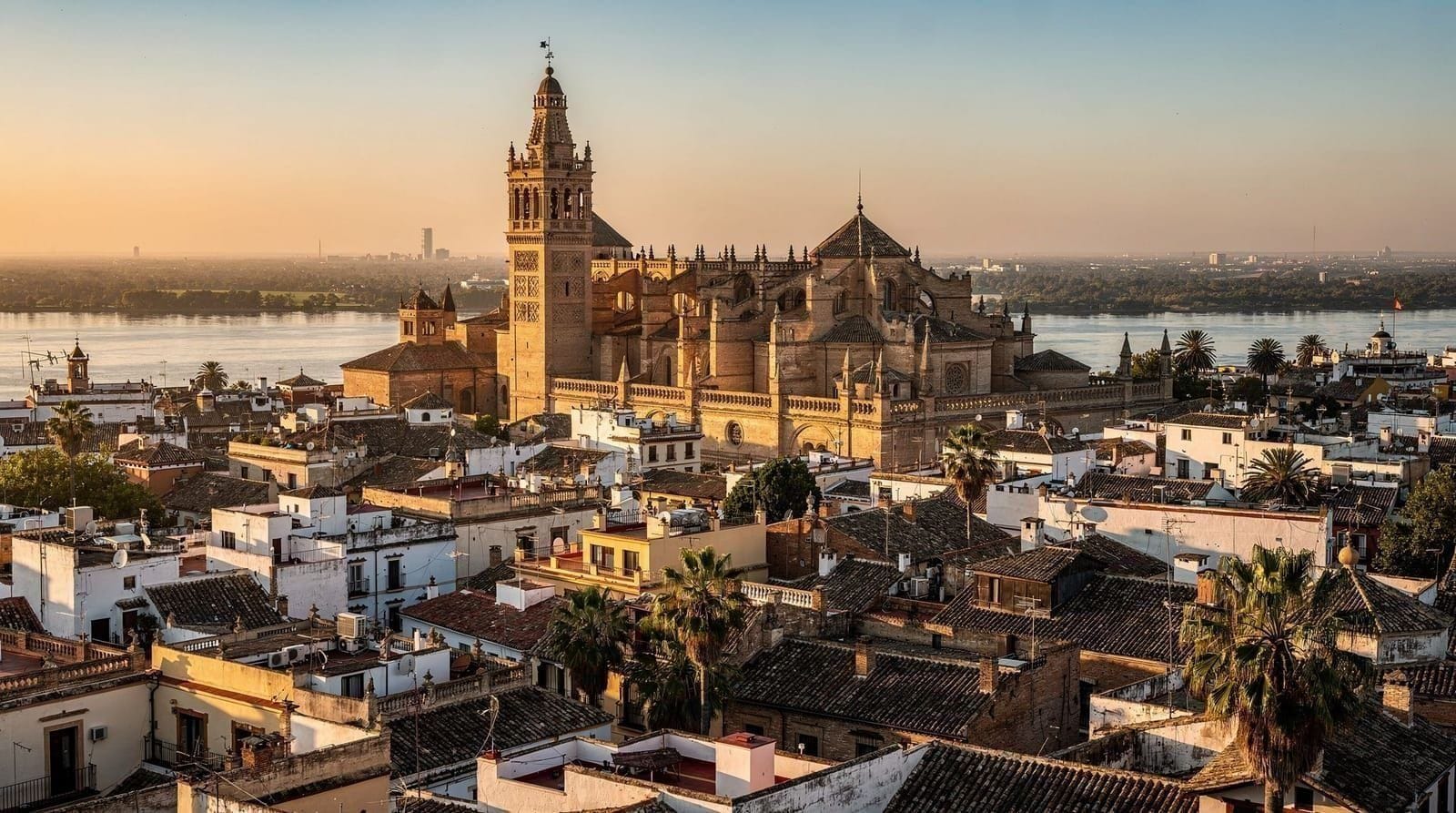
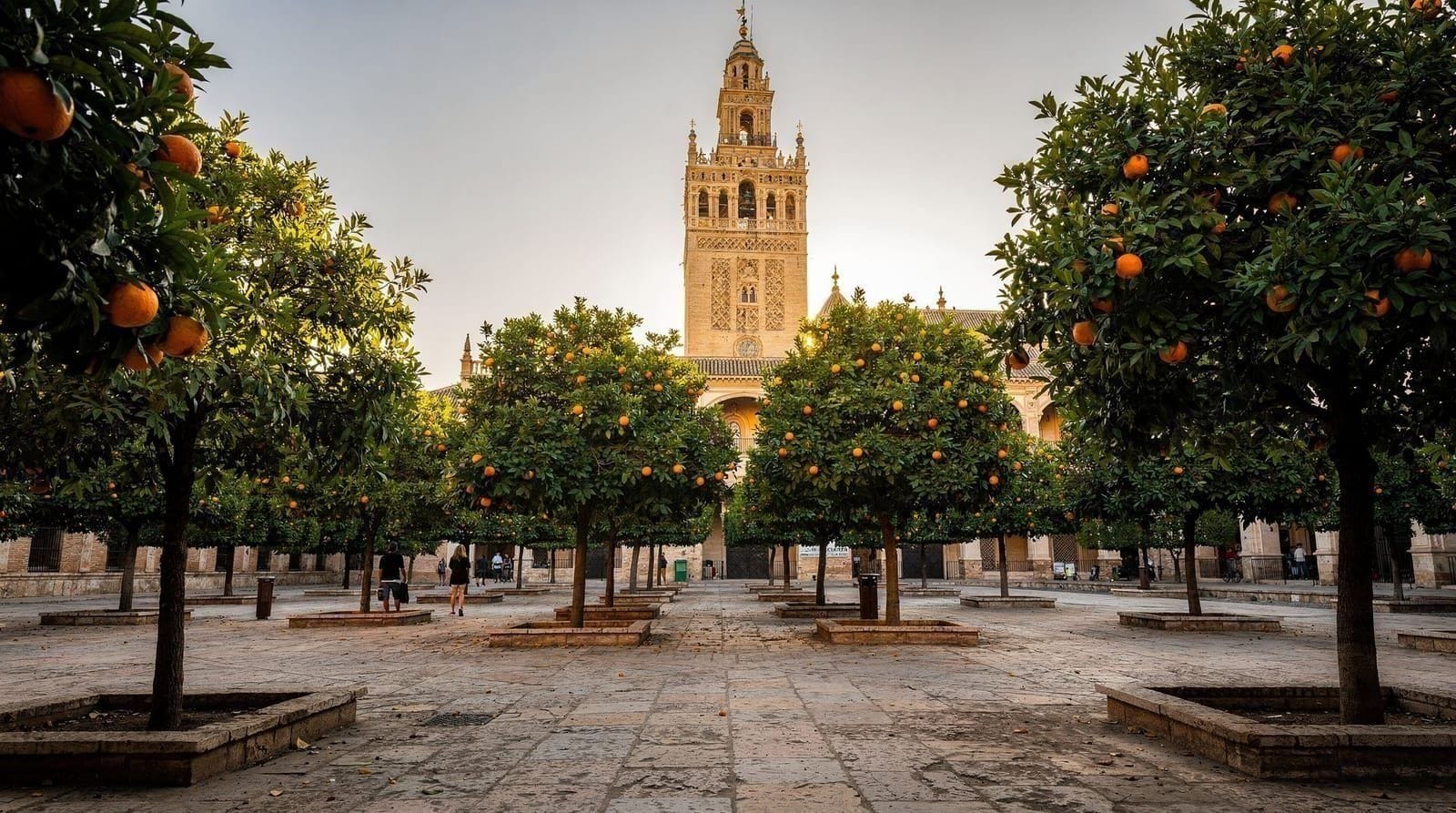
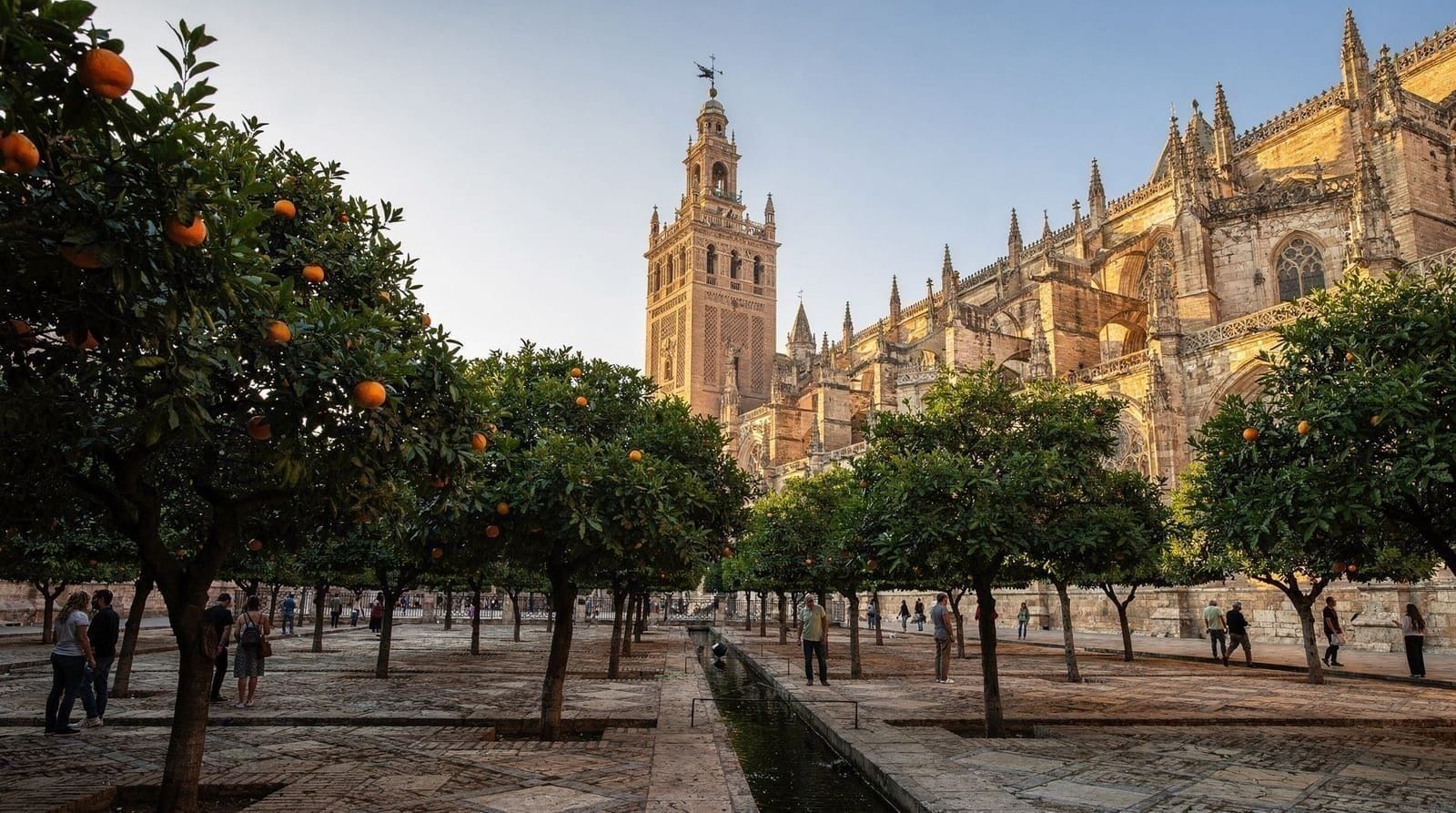
Five minutes on foot from the Alcázar. The Cathedral is the largest Gothic church in the world — staggering in scale. Key sights: Columbus’s tomb (south entrance), the main retable (the biggest altarpiece in the world), the Capilla Real, and the sacristy treasury. Then climb the Giralda tower: no stairs, a spiral ramp, and panoramic views over the city.
Cathedral and Giralda entry ticket — €12The Giralda was originally a minaret; the bell tower section was added by the Christians after the Reconquista. The view from the top at 98 metres is the best free (included with entry) elevated viewpoint in the city.
Afternoon (14:00–18:30): Santa Cruz and Archivo
14:00 — Lunch near Santa Cruz
Bodega Santa Cruz (Calle Rodrigo Caro 1): excellent standing bar with chalked tabs and local prices at the barra. Order espinacas con garbanzos, a croqueta, and a glass of manzanilla. Quick, good, cheap.
15:00 — Santa Cruz barrio
The historic Jewish quarter is best explored slowly. The key spaces: Callejón del Agua, Plaza de Doña Elvira, Plaza de los Refinadores, and the hidden garden of Hospital de los Venerables. It is smaller than it looks on maps — 45 minutes of leisurely walking covers the core.
Avoid the rosemary scam: women near the Cathedral offer rosemary sprigs and then demand payment. Do not engage; decline immediately.
16:00 — Archivo de Indias
Free entry. In the same building that once housed the Casa de Contratación (the body that controlled trade with the Americas), it now holds original documents from Spain’s colonial history, including Columbus’s journals and letters from Hernán Cortés. The architecture alone is worth the visit — a Renaissance palace by Juan de Herrera, the same architect as El Escorial.
17:00 — Plaza de España
Walk 25 minutes south through the María Luisa Park or take the number 1 tram to the Prado de San Sebastián stop. The Plaza de España — built for the 1929 Ibero-American Exposition — is one of the most theatrical public spaces in Spain. Free entry. Walk the semicircular colonnade, look at all 58 provincial azulejo panels, and rent a rowboat on the moat (€6 for 35 minutes). The afternoon light here is excellent.
For a structured guided walk: Plaza de España guide.
Evening (19:30–23:00): Tapas circuit
19:30 — El Rinconcillo
Calle Gerona 40. Founded 1670. Spain’s oldest continuously operating bar. The tile walls, tobacco-yellowed ceiling, and chalk tally marks are original. Order jamón serrano, espinacas con garbanzos, and a glass of fino or a small beer. Prices are fair; terrace is tourist-facing.
20:30 — Second stop: Bodega Santa Cruz or Eslava
For affordable classics, return to Bodega Santa Cruz. For more ambitious tapas (presa ibérica, egg with truffle, rabo de toro croqueta), go to Eslava (Calle Eslava 3) — arrive before 20:30 to avoid a queue. No reservations.
Evening — Flamenco at Casa de la Memoria
The evening show at Casa de la Memoria (Calle Cuna 6, in the historic centre) is the most reliable evening option. Intimate, authentic, no dinner-show gimmick. Book in advance — it regularly sells out.
Casa de la Memoria flamenco show — book aheadTickets: €24 for adults. Duration: about 1 hour. If you missed this on Day 1, book it for Day 2 or 3 instead.
Day 2: Triana, the river, and the rooftops
Morning (9:00–13:00): Triana
9:00 — Mercado de Triana
Cross the Puente de Isabel II into Triana and head to the covered market. Have a coffee and tostada at the market bar (€2.50–3). Browse the stalls — fresh fish, jamón, local cheese, seasonal vegetables. This is a working market, not a tourist destination.
Triana market guided tour with tastings10:00 — Triana neighbourhood walk
Walk Calle San Jorge, Calle Alfarería, and the riverside Calle Betis. Triana is historically Seville’s flamenco district and the centre of azulejo tile production. The Centro Cerámica Triana (Calle Antillano Campos 14) has original 18th-century kilns and excellent explanatory panels. The Capilla del Carmen bridge chapel (free, small) is easy to miss but worth five minutes.
For a structured neighbourhood overview: Triana neighbourhood guide.
11:30 — Return to the city and head north: Macarena
Walk or take bus number 2 toward the Macarena neighbourhood. The Basílica de la Macarena (free entry) is the religious heart of Seville: the venerated Virgen de la Esperanza Macarena wears a gold crown and has a cult following that transcends religion. During Semana Santa (Holy Week), the float carrying her takes over 12 hours to process through the streets.
Nearby: Murallas de la Macarena, a section of the original 12th-century Almohad walls. Free to walk alongside.
12:30 — Metropol Parasol (Las Setas)
Ten minutes’ walk south from the Macarena, on Plaza de la Encarnación. The Metropol Parasol is a vast wooden lattice canopy designed by Jürgen Mayer H. The rooftop walkway (tickets from €16) offers panoramic views over the city. The basement Antiquarium holds Roman mosaic floors and archaeological finds from the 1st century AD, discovered during construction.
Afternoon (14:00–18:00): River and El Arenal
14:00 — Lunch in El Arenal
Las Golondrinas (Antillano Campos 26) is a traditional Triana bar with excellent pescaíto frito, jamón, and a short list of honest tapas. Local crowd. Alternatively, for a sit-down meal with a view, the restaurants on Calle Betis (Triana riverbank) are reasonable — check the menú del día board before sitting down.
16:00 — Guadalquivir river cruise
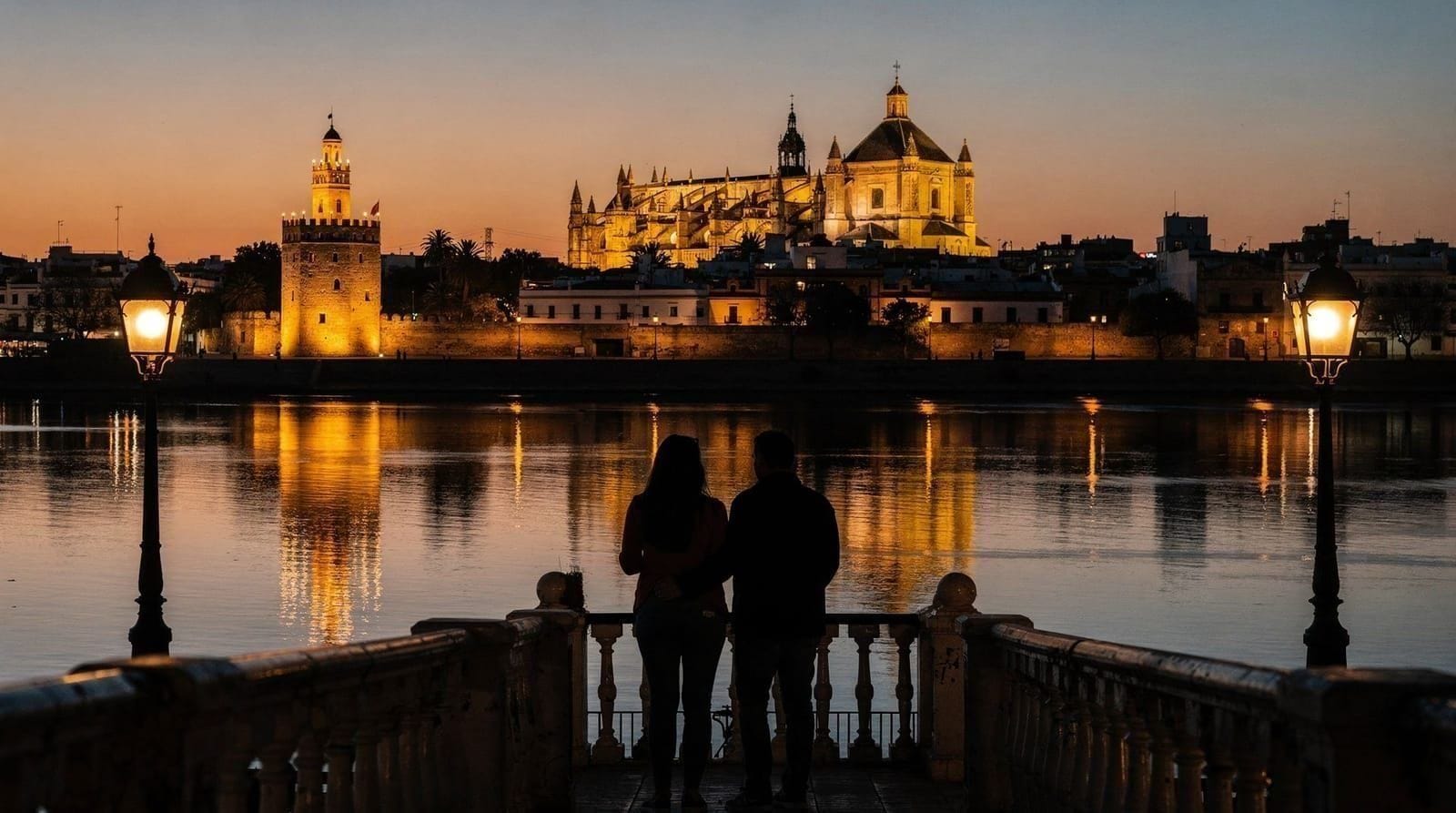
The Torre del Oro is the departure point for the one-hour eco cruise on the Guadalquivir. These electric boats are genuinely pleasant: quiet, low-impact, good views of the historic skyline from the water. Book in advance in spring and summer.
Guadalquivir 1-hour eco cruise — €1817:00 — Torre del Oro
€3 entry. The 13th-century Almohad tower now houses a small maritime museum. The view from the top is good. Allow 25 minutes.
Walk north along the Paseo de Cristóbal Colón — the main riverfront promenade — to the Maestranza bullring. Whether you’re interested in bullfighting or not, the building (1761–1881) is architecturally remarkable. The guided tour runs independently of the bullfighting calendar.
Evening (19:30–23:00): Neighbourhoods
19:30 — Aperitivo hour
Casa Morales (Calle García de Vinuesa 11) is one of Seville’s most atmospheric old tabernas: wooden barrels, terracotta tiles, house vermouth with olives. Order the house draught manzanilla.
21:00 — Dinner
Taberna del Alabardero (Calle Zaragoza 20) is the best mid-range restaurant in the city for traditional Andalusian cooking. Tasting menu available (€48). For a more casual option, Bar Pepe Hillo (Adriano 24) does excellent rabo de toro and jamón ibérico.
Day 3: Two options
Option A: Córdoba day trip by AVE
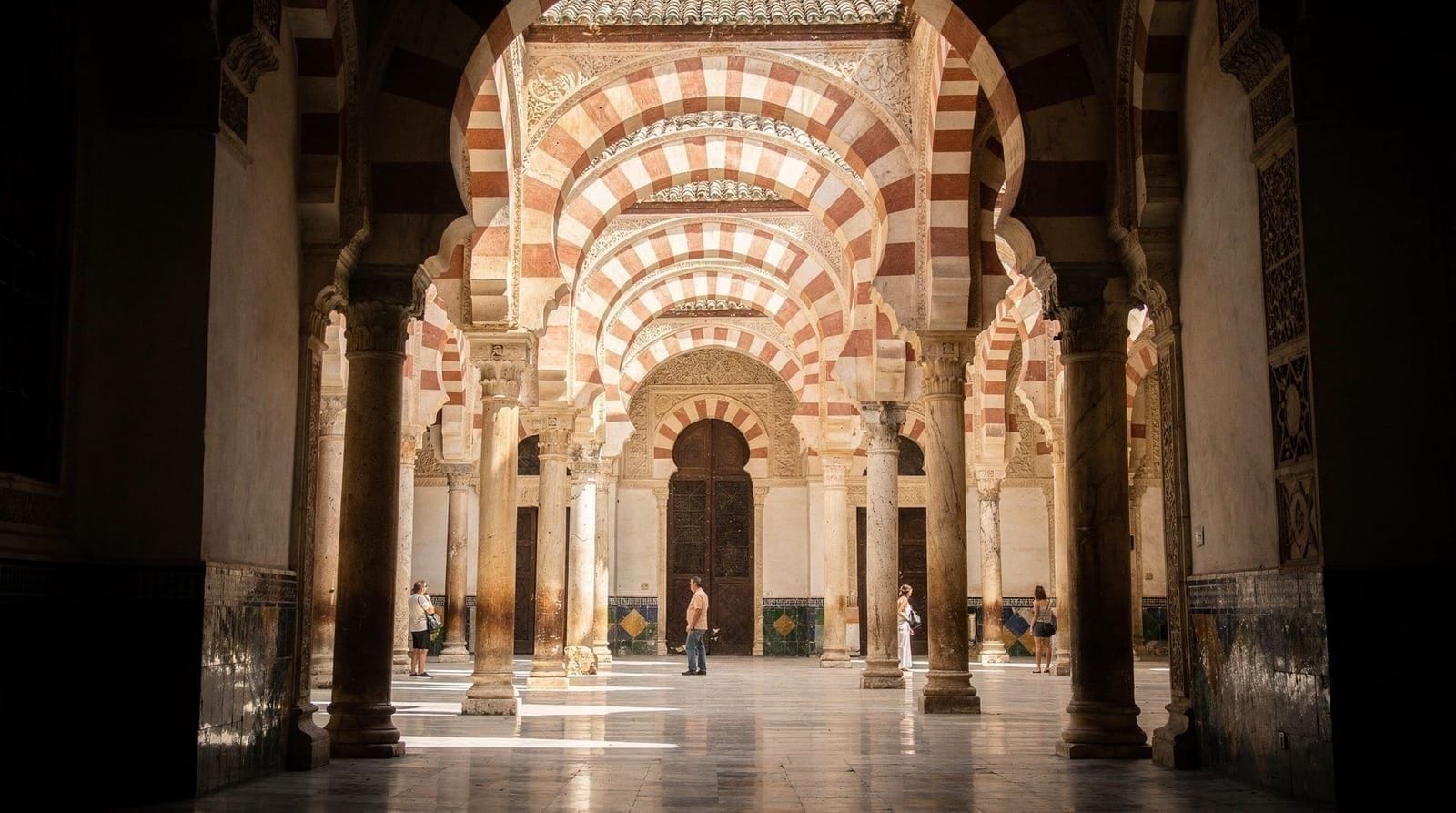
If you want to see more of Andalusia, Day 3 is the natural day trip day. Córdoba is 45 minutes by AVE high-speed train from Santa Justa station. The Mezquita-Catedral is one of the most extraordinary religious buildings in the world.
Córdoba day trip with Mezquita by high-speed trainArrive Córdoba by 10:00, visit the Mezquita (€15, book online), walk the Jewish Quarter and Alcázar de los Reyes Cristianos, lunch at Casa Mazal or Sociedad de Plateros, and return to Seville by 17:00. This is realistic without rushing. See the full Córdoba day trip guide.
Option B: Slower city day — Casa de Pilatos, bike tour, and sherry
Morning: Casa de Pilatos
Often bypassed by visitors who spend all their time at the Alcázar, Casa de Pilatos (Plaza de Pilatos 1, €12 ground floor / €6 upper floor) is a 16th-century palace blending Gothic, Renaissance, and Mudéjar styles. The azulejo tile work rivals the Alcázar. It is also much less crowded.
See our Casa de Pilatos guide.
Afternoon: Bike tour or Palacio de las Dueñas
A guided bike tour covers the full city efficiently: the historic centre, Triana, the riverbank, and the parks. Most tours run two to three hours. A good option for people who prefer seeing more with less walking.
Alternatively, the Palacio de las Dueñas (Calle Dueñas 5, €15) is the private palace of the Duchess of Alba — one of the wealthiest families in Spanish history. The collection of paintings, tiles, and gardens is excellent.
Evening: Sherry tasting
A guided sherry tasting with food pairings is one of the more distinctive evening activities in Seville. Fino, manzanilla, amontillado, palo cortado, oloroso, and PX are all made within 90 km of the city. A proper tasting distinguishes them in context.
Sherry wine tasting with light snacksThree days at a glance
| Day | Option | Focus |
|---|---|---|
| 1 | — | Alcázar, Cathedral, Santa Cruz, Plaza de España, flamenco |
| 2 | — | Triana, Macarena, Metropol Parasol, river cruise |
| 3A | Córdoba | Mezquita-Catedral, Jewish Quarter, day trip by AVE |
| 3B | Slower city day | Casa de Pilatos, bike tour or Palacio de las Dueñas, sherry |
Choosing between Option A and Option B for Day 3
Neither version of Day 3 is objectively better — they suit different travellers. Choose the Córdoba day trip (Option A) if seeing more of Andalusia matters to you, if you’re combining this with a longer Spain trip, or if you’re the kind of traveller who regrets skipping a nearby UNESCO-level sight. Choose the slower city day (Option B) if you’d rather deepen your understanding of Seville itself, if you’re travelling with young children or prefer a lower-key pace, or if train and bus travel adds stress rather than excitement to your trip. Both options fit comfortably within the three-day budget and timing in this itinerary.
If you’re still undecided, the how many days in Seville guide has a broader framework for balancing city time against day trips that applies beyond just Day 3.
Frequently asked questions about 3 days in Seville
How many days should I spend in Seville?
Three days is the standard recommendation for first-time visitors and covers all major sights comfortably. Two days is enough for the highlights but feels rushed. Four or five days makes sense if you want to combine Seville with day trips to Córdoba, Granada, or Ronda. See the how many days in Seville guide.
What is the best time of year for 3 days in Seville?
October–November and mid-March (before Semana Santa) are ideal: mild temperatures, lower crowds, and the city at its most functional. Spring (April–May) is peak season — beautiful but crowded and expensive. Summer (June–August) is genuinely hot, with temperatures regularly reaching 40°C. Sightseeing in summer requires starting early and taking a long midday break. See the best time to visit Seville guide.
Is the Alcázar worth the money and the queue?
Yes, without question. The Alcázar is the single most impressive sight in Seville and one of the finest examples of Mudéjar architecture in Europe. The €15.50 entry fee is justified. The queue is not — book your timed ticket in advance.
Which flamenco show is best for first-timers?
Casa de la Memoria is the most consistently recommended option for visitors: an intimate venue, genuinely serious artists, and a format that focuses on the music and dance rather than dinner service. Los Gallos (Plaza de Santa Cruz 11) is the historic alternative — professional quality, slightly more theatrical. Avoid large venues that advertise a “full dinner and show” as the primary offer; the artistic quality is usually lower.
For a full comparison, see our best flamenco shows in Seville guide.
Can I do both Córdoba and Granada in 3 days from Seville?
Not comfortably if you also want to see Seville itself. Granada is 2.5 hours away by bus or train, which makes it a very long day trip. If you want to see all three cities seriously, plan a 5–7 day itinerary. See the Seville–Córdoba–Granada trip itinerary.
What is the honest budget for 3 days in Seville?
Mid-range: €120–150 per person per day, covering accommodation (€70–100 per night in a three-star hotel in the historic centre), entry fees (€15.50 Alcázar + €13 Cathedral + €16 Setas = €44.50 over three days), meals (€35–45/day for proper tapas and one restaurant dinner), drinks, and a flamenco show (€24).
Budget version: €65–75/day if you stay in a hostel, eat at market stalls and standing bars, and choose free sights (Archivo de Indias, Macarena basilica, María Luisa Park) on at least one day. The Alcázar’s official site lists any free public visits (check before visiting).
Is Seville safe for tourists?
Seville is a safe city. The standard precautions apply: keep valuables in a front pocket, be alert in busy tourist areas (Cathedral entrance, La Campana shopping street, Triana market), and don’t leave bags on the back of chairs in restaurants. Pickpocketing occurs in crowded spaces; petty crime against tourists is the main risk. For more detail, see the is Seville safe guide.
Is Seville walkable with luggage?
The historic centre cobblestones are rough. Spinner-wheel suitcases do not roll well on them — a bag with four large wheels will suffer. A rolling duffel or backpack works better. Most hotels and apartments in Santa Cruz are accessible only on foot (no car access to the narrowest streets).
Should I choose the Córdoba day trip or the slower city day for Day 3?
It depends on your priorities. Choose Córdoba if seeing more of Andalusia matters and you have the energy for a train day; choose the slower city day (Casa de Pilatos, a bike tour, sherry) if you’d rather deepen your understanding of Seville itself without more travel. Neither is the “correct” choice — see the comparison above for a fuller breakdown.
What if three days still feels rushed?
It’s not unusual, especially for visitors who like to linger over meals or wander without a schedule. The 4-day Seville itinerary uses the same three-day structure but spreads it out, adding time for Casa de Pilatos and the Macarena neighbourhood without cutting anything from this plan.
Can I do a half-day trip instead of a full Day 3 option?
Not easily within this itinerary’s timing. Both Option A (Córdoba) and Option B (Casa de Pilatos plus a palace and sherry tasting) are built around a full day. A genuine half-day alternative — Italica’s Roman ruins, for instance — leaves the afternoon open but doesn’t fit the pacing of either version described here without restructuring the day from scratch.
How does this itinerary handle Semana Santa or Feria de Abril if my dates overlap?
If your three days fall during Semana Santa (Holy Week) or Feria de Abril, expect longer queues at the Alcázar and Cathedral, higher accommodation prices, and some street closures around the processions or fairground. The core itinerary still works, but book everything — hotel, flamenco, Alcázar — as far in advance as possible, and build in extra transit time between stops.
Top experiences
Bookable activities with verified prices and instant confirmation on GetYourGuide.