Seville, Córdoba and Granada: 5-day Andalusia itinerary
Seville: Royal Alcázar entry ticket
The Andalusia triangle: three cities, five days
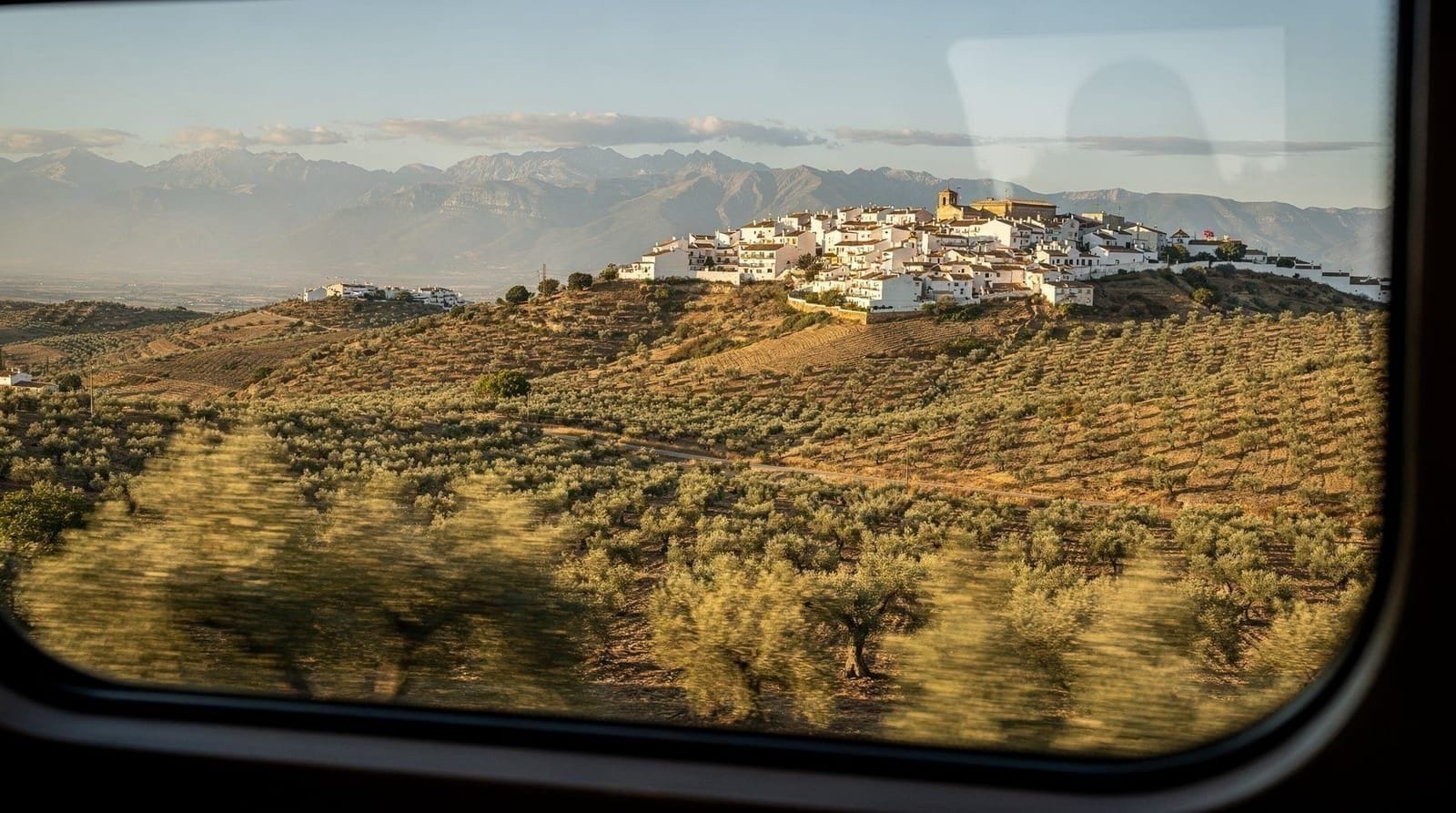
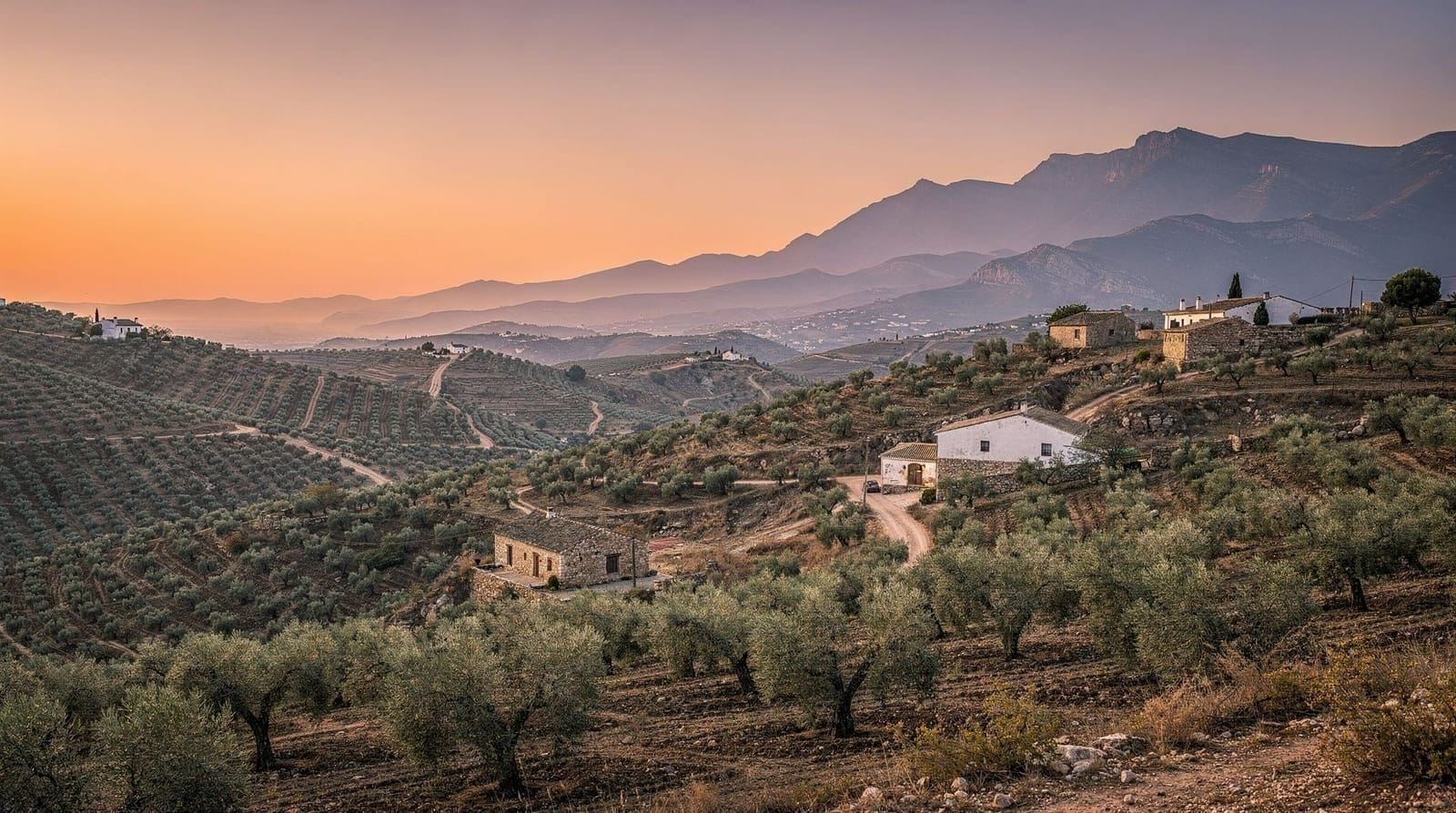
Seville, Córdoba, and Granada form the cultural triangle of inland Andalusia. Each city has a distinct character shaped by a different phase of Moorish rule and Christian Reconquista. Together, they tell the story of Islamic Spain more completely than any single city can. Five days covers all three without rushing, and this itinerary uses trains and buses so you need no car.
The question most people ask is whether to do Córdoba and Granada as day trips from Seville, or to stay a night in each. The honest answer: for Granada specifically, an overnight is strongly recommended. The Alhambra at dusk and in the morning light is incomparably better than arriving at 11:00 on a day trip. Córdoba can genuinely be done as a half-day from Seville (45 minutes by AVE), but a half-night adds a great deal.
This itinerary plans two nights in Seville, one night in Córdoba, and one night in Granada, returning to Seville on Day 5. Alternatively, it works entirely as day trips from a Seville base — see the day-trip note at the end.
| Route | Seville → Córdoba (1 night) → Granada (1 night) → Seville |
| Duration | 5 days, 4 nights total |
| Getting around | Train (AVE) + regional bus — no car needed |
| Cost per person | around €400–500 budget, €750–1,000 mid-range |
| Book well ahead | Alhambra Nasrid Palaces (2–3 months); Seville Alcázar and Córdoba Mezquita a few days out |
For where to base yourself on the Seville nights, see the where to stay in Seville guide.
Day 1: Seville — monuments
Morning: Alcázar (9:30–12:00)
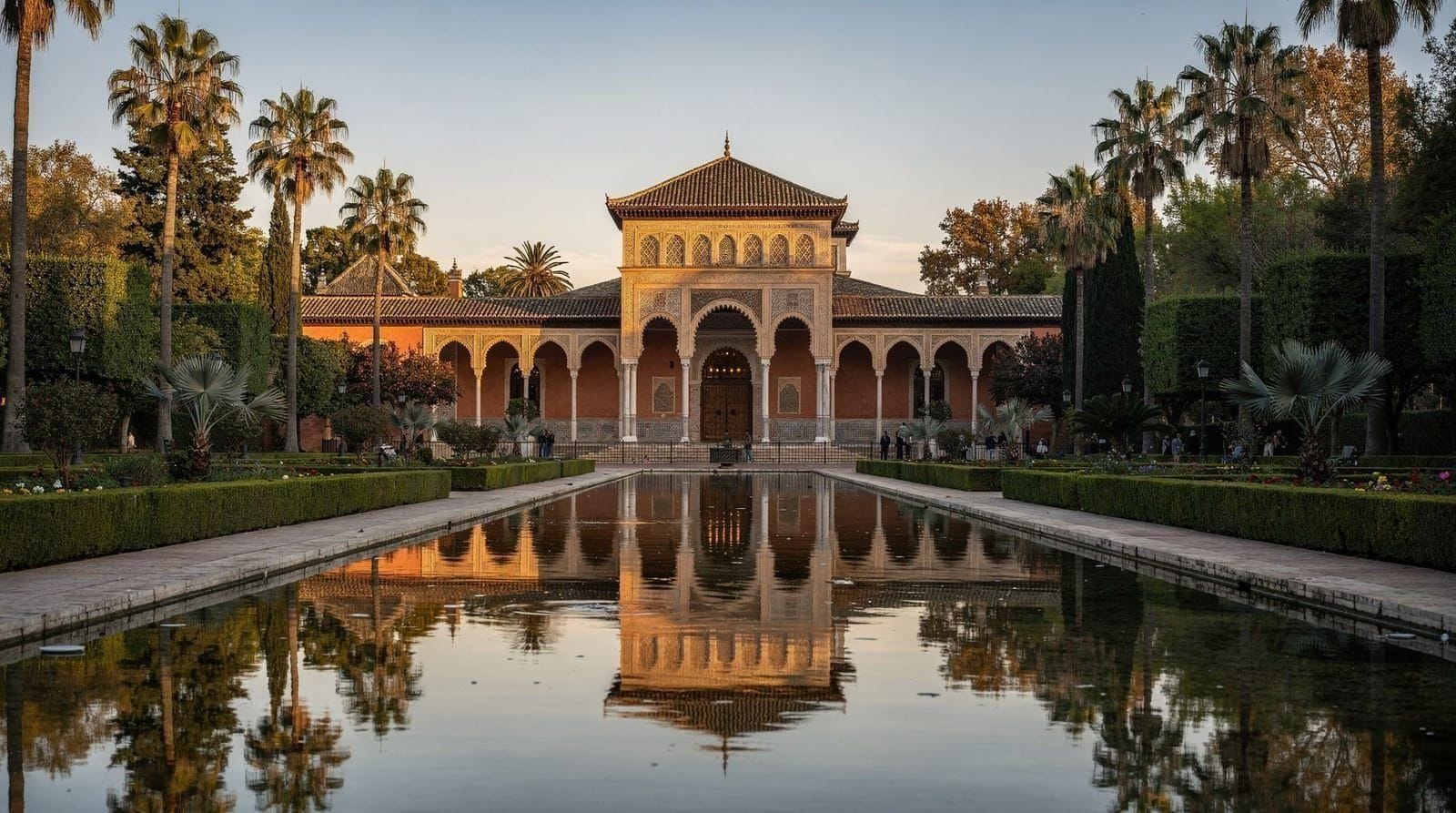
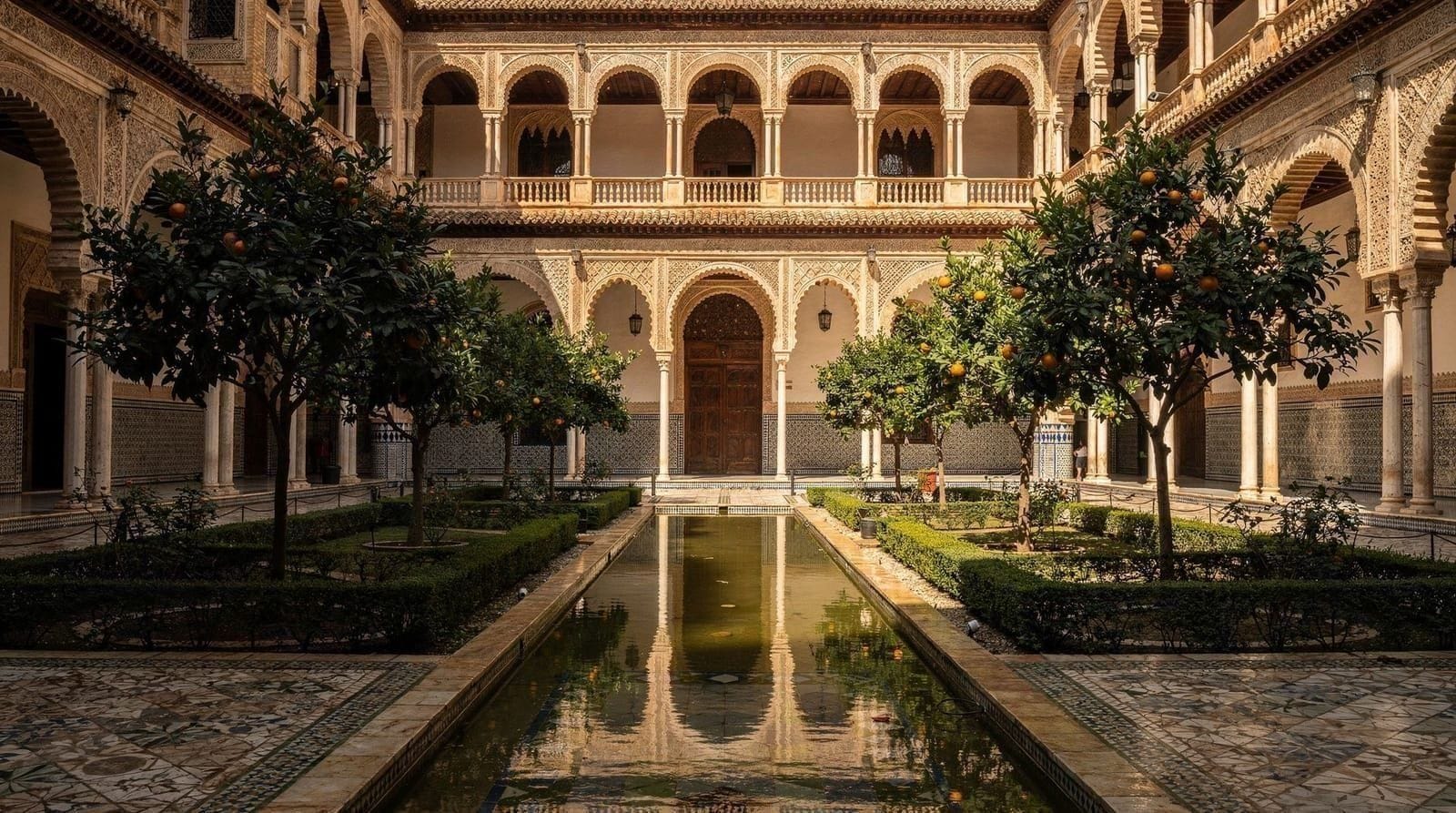
Royal Alcázar skip-the-line entry ticket — €14.50Book in advance. The Alcázar takes two to three hours at a proper pace. Key rooms: Patio de las Doncellas, Salón de Embajadores, upper royal apartments. The gardens add 20–30 minutes.
Midday: Cathedral and Giralda (12:30–14:00)
Cathedral and Giralda entry ticket — €12Climb the Giralda ramp for the city panorama. Allow 90 minutes.
Afternoon and evening
Lunch at Bodega Santa Cruz (Rodrigo Caro 1). Walk Santa Cruz. Flamenco at Casa de la Memoria (evening show).
Casa de la Memoria flamenco showThe flamenco show on Day 1 makes sense if you’re continuing to other cities and won’t have another evening in Seville. Alternatively move it to Day 2 evening.
Day 2: Seville — Triana, Plaza de España, and departure to Córdoba
Morning: Triana and city highlights
Triana market for breakfast (09:00). Walk the ceramics streets, cross back and spend the late morning at Plaza de España — the 25-minute walk south from Santa Cruz through María Luisa Park is excellent.
Afternoon: Travel to Córdoba
15:00 — Check out and travel to Córdoba
AVE from Santa Justa station to Córdoba: 45 minutes. Trains run every hour. Book tickets at renfe.com in advance. A standard fare is €15–30 depending on time and booking window.
Check into your accommodation in Córdoba. The historic centre (near the Mezquita) is the obvious choice. Mid-range hotels: €70–90/night.
Evening in Córdoba
19:30 — Walk to the Mezquita area at dusk
The exterior of the Mezquita is most dramatic at dusk when the towers are lit. The surrounding streets — Calle Cardenal Herrero, Plaza de la Corredera — are beautiful in the evening light.
Dinner: Bar Santos (Magistral González Francés 3) is famous for its tortilla — a single monumental slab that’s been the signature dish for decades. For a sit-down dinner with Córdoba specialties, El Churrasco (Calle Romero 16) is excellent for grilled pork, flamenquín (breaded pork roll), and salmorejo.
Day 3: Córdoba
Morning (9:00–13:00): Mezquita-Catedral
Book online in advance: €15, under-10 free. The Mezquita opens at 10:00 for paid visits; there is also free entry Monday to Saturday from 8:30 to 9:30 (no groups).
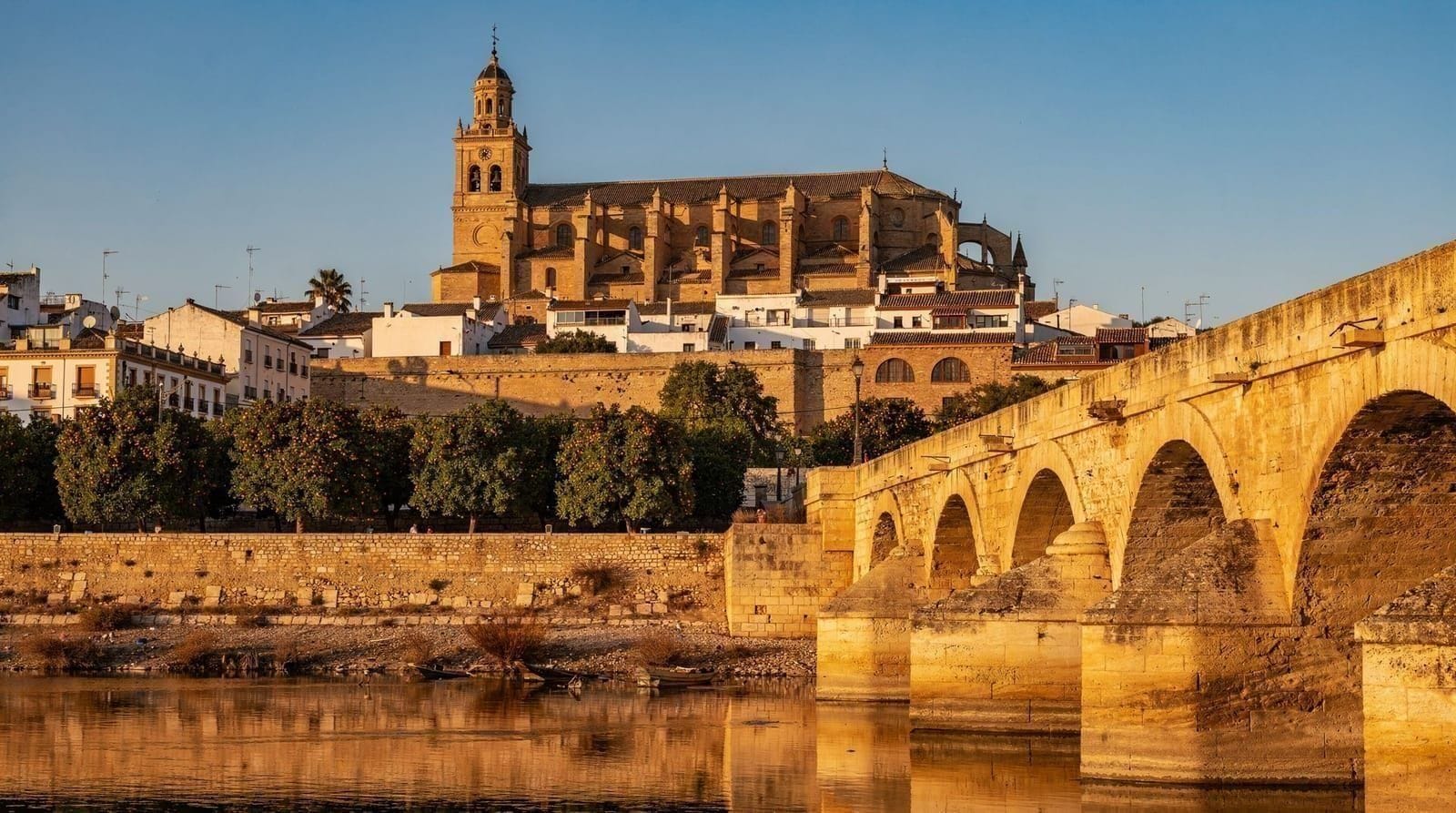
The hypostyle prayer hall — 856 columns in alternating red and white striped arches — is the central experience. Stand in the middle and look in every direction. The Christian cathedral imposed into the centre in the 16th century is disorienting and fascinating: two entirely different architectural vocabularies occupying the same space.
Walk to the top of the tower (Minarete) for views over the old city and toward the Sierra Morena.
11:30 — Jewish Quarter
The medieval Judería lies immediately north and west of the Mezquita. The Synagogue (Calle Judíos 20, free entry) dates from 1315 and is one of three surviving medieval synagogues in Spain. Walk the Calleja de las Flores — the most photogenic alley in Córdoba.
12:30 — Alcázar de los Reyes Cristianos
Check current prices and opening hours on the official website. The Christian palace built on the site of an earlier Moorish fortification. The gardens are excellent; the Roman mosaics collected from the region and displayed indoors are the museum highlight.
Afternoon (14:00–18:00)
Lunch at Casa Mazal (Calle Tomás Conde 3) — Sephardic-Andalusian cooking, one of the most distinctive cuisines in the city. Or Taberna Salinas (Tundidores 3) for traditional Córdoban food: rabo de toro, berenjenas con miel (aubergine with honey), and local montilla wine.
Medina Azahara (optional, 10 km west): Bus from Paseo de la Victoria runs a few times daily. The ruined 10th-century palace city of Abd al-Rahman III was the seat of the Umayyad Caliphate of Córdoba. The scale of the original structure is staggering even in ruins. Allow 90 minutes.
Evening: Train to Granada
18:00 — Depart Córdoba for Granada
There is no direct AVE between Córdoba and Granada. Take the Avant or MD regional train (2 hours, €15–25, book at renfe.com) or take a bus (2.5 hours, from Estación de Autobuses). Alternatively, return to Seville first by AVE (45 min) and take the Granada bus from Plaza de Armas (2.5 hours) — less efficient but more comfortable.
Check into Granada. The Realejo or Albaicín neighbourhoods are the most atmospheric; the city centre near Gran Vía is more practical.
Day 4: Granada — Alhambra and Albaicín
Book Alhambra tickets months in advance. The Nasrid Palaces are on a timed entry system; if you miss your slot, you cannot enter regardless of having a ticket.
Granada day trip with Alhambra and AlbaicínNote: this GYG tour departs from Seville and includes transport. If you’re already staying in Granada, book the Alhambra directly at alhambra-patronato.es.
Morning (9:00–14:00): Alhambra complex
The full complex covers: Nasrid Palaces (timed ticket, the centrepiece), Alcazaba fortress, and Generalife gardens. Allow four to five hours.
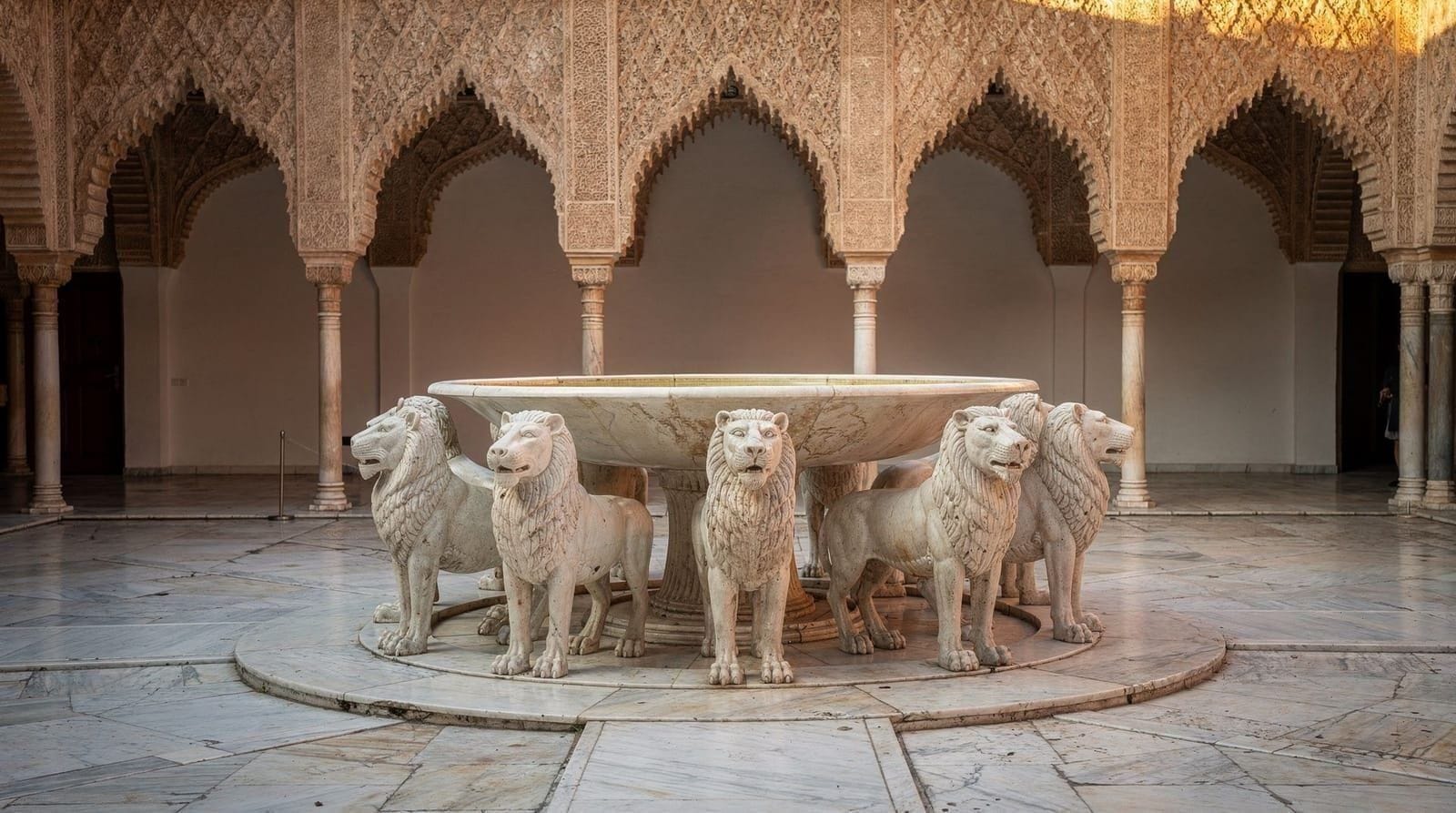
Key spaces in the Nasrid Palaces: the Mexuar entry hall, the Comares Tower throne room, and above all the Palacio de los Leones (Palace of the Lions) — the 14th-century courtyard with the famous 12-lion fountain representing the 12 months, the 12 zodiac signs, and the 12 tribes of Israel simultaneously. The carved stucco work in the surrounding halls is among the finest decorative art anywhere in the world.
From the Alcazaba tower, the view over Granada and toward the Sierra Nevada is extraordinary.
Afternoon (14:30–18:00): Albaicín
Walk or take a minibus up to the Albaicín — the Moorish hilltop neighbourhood across the gorge from the Alhambra. The Mirador de San Nicolás is the famous viewpoint: the Alhambra palace complex in the foreground, Sierra Nevada with snow behind. Worth a visit, but extremely crowded in peak season — go to the quieter Mirador de San Cristóbal 200 metres north for the same view with fewer people.
Walk the Albaicín streets: the Carrera del Darro river path at the base of the hill, the Bañuelo Arab Baths (Carrera del Darro 31, well-preserved 11th-century hammam), and the small churches on converted mosque sites.
Lunch/dinner in the Albaicín
Arrayanes (Cuesta Marañas 4) serves excellent Moroccan-Andalusian food in a converted house — lamb tagine, couscous, and excellent almond pastries. The restaurant is small and popular; arrive early or book ahead.
Alternatively, the Carmen de San Miguel (Plaza de Torres Bermejas 3) has an excellent terrace view and good traditional Granada food.
Evening in Granada
The tapas culture in Granada is distinctive: bars serve a free tapa with every drink. It is one of the few cities in Spain where this tradition survives. Walk through the Realejo neighbourhood (south of the city centre) and the streets around Plaza Nueva for several rounds of free tapas.
Day 5: Return to Seville
Morning: A final walk in Granada — the Capilla Real (the Catholic Monarchs’ mausoleum, extraordinary bronze grille) and the old cathedral, or simply a slow breakfast in the Realejo.
Transport: Granada to Seville — bus (2.5 hours from Granada bus station, €20, ALSA), or bus to Málaga then AVE Málaga–Seville (1h50 total by train but with a connection). Bus is simpler. Departure times: roughly hourly from 7:30. Book in advance at alsa.es.
Arrive Seville by midday. If you have a late afternoon departure (flight from SVQ), there is time for a final lunch and a last walk through the city.
Day-trip version (from Seville only)
If you prefer to base yourself in Seville throughout and do both Córdoba and Granada as day trips:
- Córdoba: Comfortably done as a day trip (45 min AVE each way). See the Córdoba day trip guide.
- Granada: A very long day (2.5 hours each way by bus). The Alhambra alone justifies it, but you’ll arrive tired. Book a guided tour for ease.
For the decision between them as day trips, see the Córdoba vs Granada day trip comparison.
Booking checklist
| What | Book when |
|---|---|
| Alhambra (Nasrid Palaces) | 2–3 months ahead minimum |
| Seville Alcázar | 3–7 days ahead |
| Seville Cathedral | 2–3 days ahead |
| AVE Seville–Córdoba | 2–4 weeks for best prices |
| Bus Seville–Granada | 1 week ahead |
| Accommodation all cities | 4–6 weeks ahead in peak season |
For a seven-day version adding Ronda and Cádiz, see the week in Andalusia from Seville itinerary.
Understanding the Andalusia triangle
Why these three cities?
Seville, Córdoba, and Granada are the three cities of Islamic Andalusia’s fullest historical arc. They are not just adjacent tourist destinations — they represent chronologically distinct phases of one of the most sophisticated civilisations in medieval Europe.
The Umayyad Caliphate in Córdoba (756–1031) was the most powerful state in Western Europe for two centuries. Under Abd al-Rahman III in the 10th century, the Córdoba caliphate had a population of 500,000 — larger than any city in Christian Europe. The Great Mosque (Mezquita) began by Abd al-Rahman I in 785 was expanded four times by successive rulers. The 10th-century palace city of Medina Azahara, 10 km from Córdoba, covered 112 hectares and had running water, 400 houses, and decorative marble from North Africa and Constantinople.
The Almohad dynasty in Seville (1147–1248) made Seville the capital of Al-Andalus after the Caliphate fragmented. The Almohads built the Giralda (then a minaret), the Torre del Oro, and the original Alcázar palace. Their rule ended with Ferdinand III of Castile’s conquest in 1248.
The Nasrid Kingdom of Granada (1232–1492) was the last Islamic state in Iberia. It survived for 260 years after Córdoba and Seville fell, maintained partly by tribute payments to Castile and partly by the extraordinary defensive geography of Granada. The Alhambra was built progressively by successive Nasrid rulers; the Nasrid Palaces date from the 14th century and represent the peak of Andalusian Islamic architecture.
Understanding this sequence — Córdoba first, Seville second, Granada last — makes visiting them in historical order significantly more coherent.
Day-by-day summary
| Day | Base | Focus |
|---|---|---|
| 1 | Seville | Alcázar, Cathedral and Giralda, Santa Cruz, flamenco |
| 2 | Seville → Córdoba | Triana, Plaza de España, AVE to Córdoba, Mezquita area at dusk |
| 3 | Córdoba → Granada | Mezquita-Catedral, Jewish Quarter, Alcázar de los Reyes Cristianos, train/bus to Granada |
| 4 | Granada | Alhambra complex, Albaicín, Mirador de San Nicolás, free tapas |
| 5 | Granada → Seville | Capilla Real or slow morning, bus back to Seville |
Luggage and moving between three cities
Because this itinerary changes accommodation twice, pack light. A single carry-on-sized bag per person is genuinely enough for five days in a warm climate, and it makes the Córdoba and Granada legs far less stressful — both the AVE and the regional trains have limited overhead space, and neither Córdoba’s nor Granada’s historic centres are kind to wheeled suitcases on cobblestones. If you’re staying in Santa Cruz or Triana for the Seville nights, ask your accommodation about luggage storage for the two nights you’re away — most will hold a bag for no charge. For a broader sense of how much time each destination deserves before committing to this route, see the how many days in Seville guide and the best time to visit Seville guide, since spring and autumn both make the train and bus legs considerably more comfortable than the summer heat.
Travelling without a car
This itinerary is entirely car-free, using Spain’s excellent public transport network:
- Seville–Córdoba: AVE (high-speed), 45 minutes, hourly departures
- Córdoba–Granada: Regional train or bus, approximately 2 hours. There is no direct AVE; the route goes via Antequera.
- Granada–Seville: Bus (ALSA), 2.5 hours, from Granada bus station to Seville Plaza de Armas
The Renfe app handles all train bookings. ALSA.es handles bus bookings. Both require account creation but work straightforwardly.
Food across the three cities
Each city has a distinct food tradition worth knowing:
Seville: Tapas culture at its most evolved. Fino and manzanilla sherry. Espinacas con garbanzos (spinach with chickpeas). Pescaíto frito (fried fish). Salmorejo.
Córdoba: Salmorejo is the home dish — thicker and richer than Seville versions. Rabo de toro (oxtail stew) is the slow-cooked classic. Flamenquín (breaded pork roll) is a Córdoban invention. Montilla-Moriles wine (similar to sherry, made inland) is the local drink.
Granada: Famous for serving free tapas with every drink — one of the few surviving cities with this tradition. Olla de San Antón (bean and pork stew, eaten on 17 January). Piononos (small cylindrical pastries from Santa Fe). The influence of Moorish food culture (North African herbs, lamb, honey, almonds) is stronger here than in Seville or Córdoba.
Photography and light
For photography, the best light times are:
- Alcázar Seville: 9:30–11:00 (the reflecting pool in Patio de las Doncellas catches morning light directly)
- Mezquita Córdoba: 10:30–12:00 (light enters through the main portal arch)
- Alhambra: Dawn and dusk are both exceptional; the Generalife gardens are best from 8:30, when the complex opens and most visitors are still in the Nasrid Palaces
- Granada’s Albaicín: The Mirador de San Nicolás at 18:30–19:30 for golden hour on the Alhambra façade
Budget for the Andalusia triangle (5 days)
| Category | Budget version | Mid-range |
|---|---|---|
| Accommodation (4 nights Seville, 1 Córdoba, 1 Granada) | €40–60/night | €80–120/night |
| Seville Alcázar + Cathedral | €28.50 | €28.50 |
| Córdoba Mezquita | €15 | €15 |
| Granada Alhambra full complex | €22.27 | €22.27 |
| Transport (trains + buses) | €70–90 | €90–120 |
| Food (all meals, 5 days) | €20–25/day | €40–60/day |
| Flamenco (Seville) | €24 | €24 |
| Total (per person, 5 days) | €400–500 | €750–1000 |
Excluding flights. The Alhambra ticket price is for the general entry. Book the full complex.
For detailed guides on each city: real Alcázar complete guide, Córdoba day trip from Seville, Granada day trip from Seville.
Frequently asked questions about Seville, Córdoba and Granada
Can I do this itinerary in four days instead of five?
It’s tight but possible: compress Seville to one night (Day 1 only, skipping Triana), keep one night in Córdoba, and keep the Granada overnight — that’s the piece worth protecting. You’ll see the essentials of each city, but the pace is noticeably more rushed and Seville gets shortchanged. Five days genuinely works better if your schedule allows it.
Do I need to book Córdoba and Granada trains separately from Seville tickets?
Yes — Renfe sells the Seville–Córdoba AVE and the Córdoba–Granada regional service as separate tickets, and there’s no single through-fare covering the whole triangle. Book each leg once your overnight stays are confirmed; the AVE segment benefits most from booking a few weeks ahead for the lowest fares.
Top experiences
Bookable activities with verified prices and instant confirmation on GetYourGuide.