Casa de Pilatos guide: Seville's forgotten palace
Seville: Guided tour of the Casa de Pilatos with admission
What is Casa de Pilatos and is it worth visiting?
Casa de Pilatos is a 16th-century palace in the Santa Cruz quarter combining Mudéjar, Gothic and Renaissance architecture with an exceptional collection of Roman sculptures and antiques. Ground floor entry costs €12; the upper floor costs €6. It is consistently underrated relative to the Alcázar and well worth 90 minutes of your time.
If the Alcázar is Seville’s signature palace — the one on every postcard, with its UNESCO listing and timed-entry slots that sell out weeks in advance — then Casa de Pilatos is the one that serious visitors to the city consistently rate as the more personally rewarding experience. It is smaller, quieter, more curated, and contains something the Alcázar does not: a substantial private collection of Roman antiquities assembled by a single aristocratic family over five centuries.
| Where | Plaza de Pilatos, Santa Cruz quarter |
| Cost | €12 ground floor, €6 upper floor |
| Time needed | 1.5-2 hours |
| Booking | Walk-up tickets usually available |
| Pairs well with | The Alcázar, 12 minutes’ walk away |
This is not to say it is better than the Alcázar. It is different, and different in ways that appeal to a specific kind of visitor.
History: the Medinaceli family and their palace
Casa de Pilatos was built over a century and a half, beginning in the late 15th century under Don Fadrique Enríquez de Ribera, the first Marquis of Tarifa, and extended by Don Per Afán de Ribera, the first Duke of Alcalá, who added the upper floor and brought back Roman sculptures from his time as viceroy in Naples.
The Medinaceli family — one of the grandest houses of the Spanish nobility — acquired the palace through marriage in the 17th century and has held it since. The current Duke of Segorbe, head of the Medinaceli line, is the technical owner. The Fundación Casa Ducal de Medinaceli manages the public access programme.
The palace was not built according to a single architectural plan. It accumulated over generations: the main patio is Mudéjar (late 15th century), the chapel is Gothic, the staircase hall is Renaissance, and the upper floor apartments were refurbished in multiple periods. The resulting building is architecturally diverse in a way that is either confusing or fascinating, depending on your approach.
The main patio: Mudéjar at its best
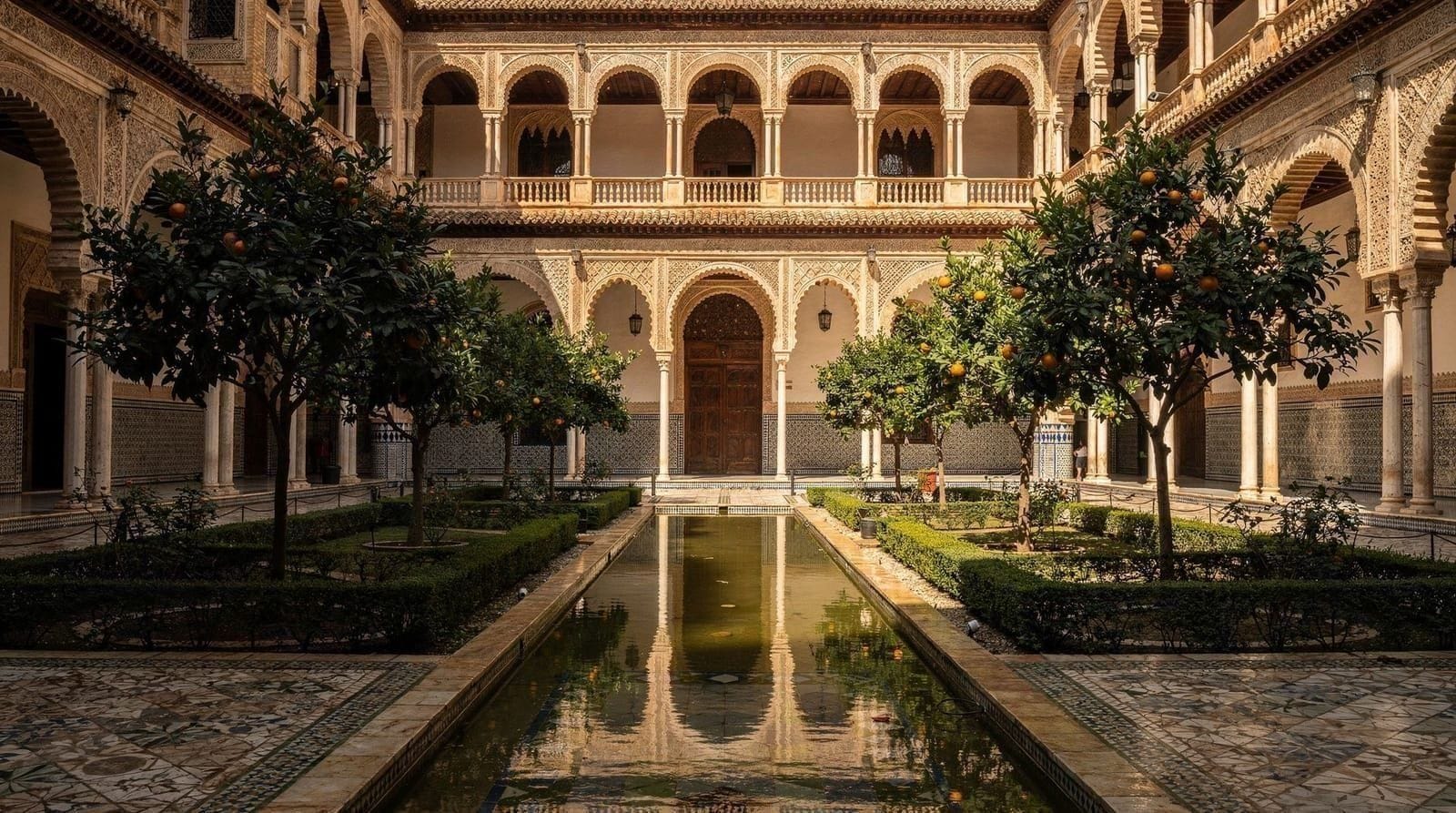
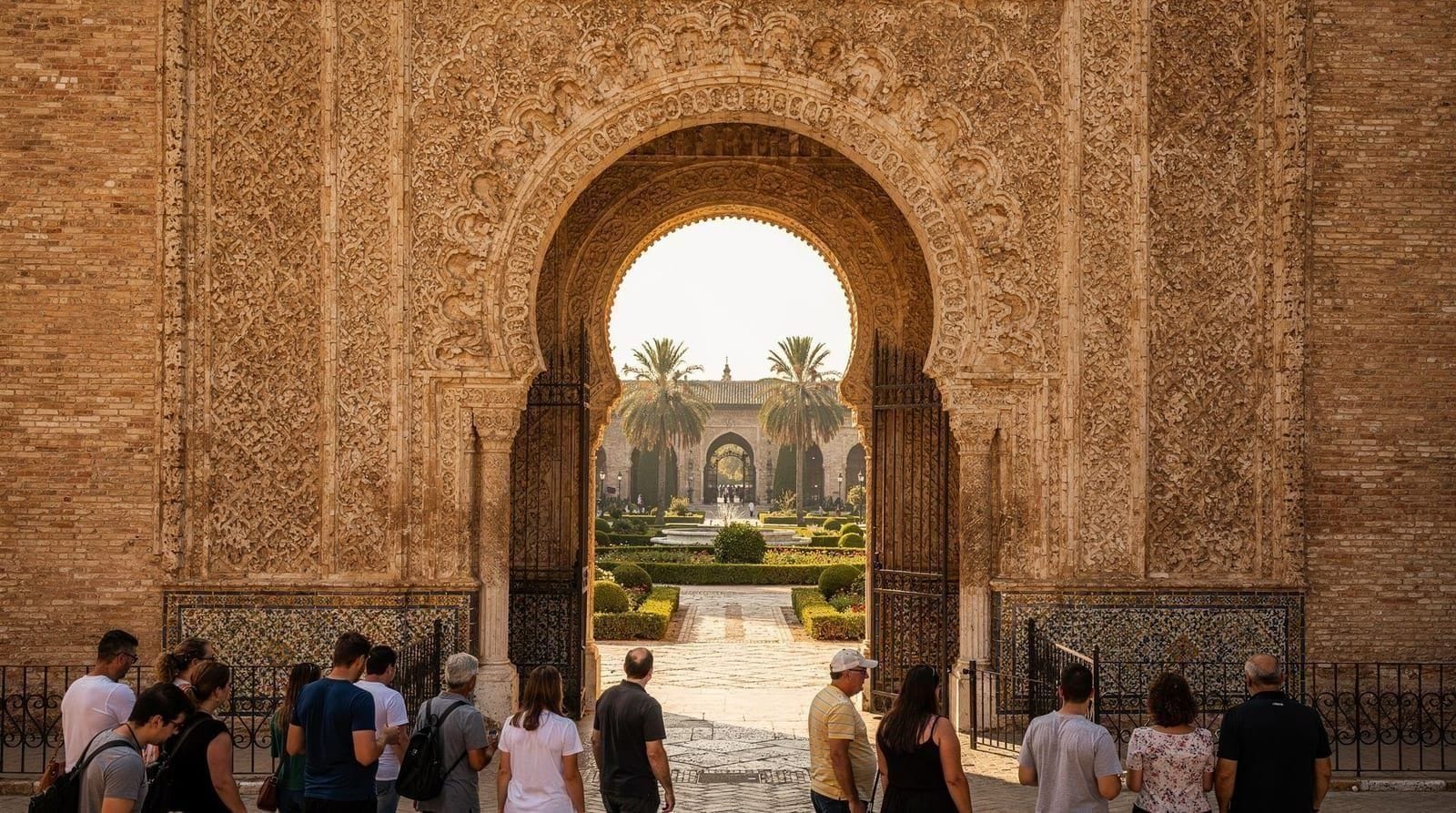
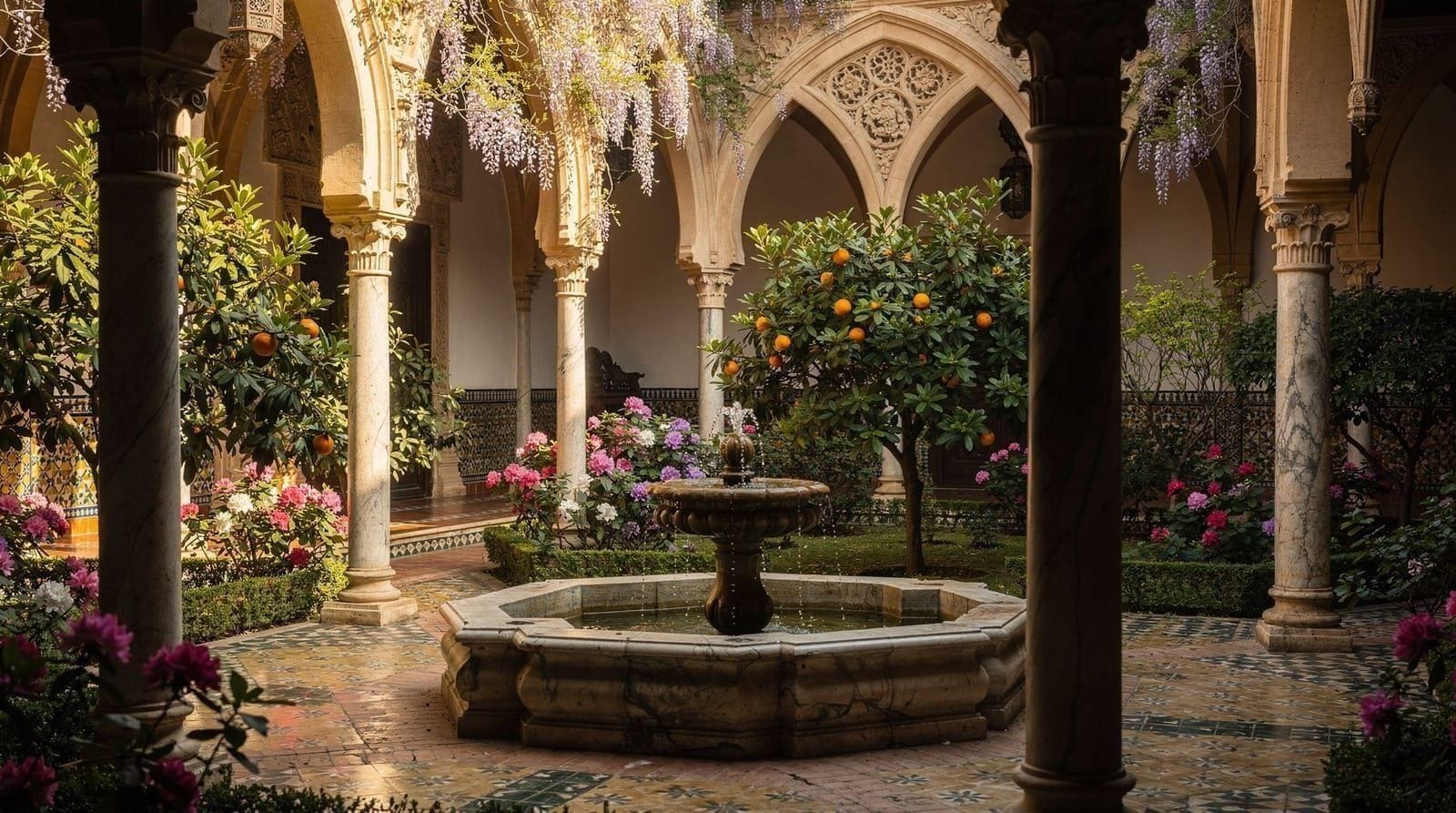
Casa de Pilatos guided tour with admission — licensed guideThe central patio is the architectural heart of the palace and, for most visitors, the primary reason to come. The two-story arcade uses a combination of Gothic pointed arches on the upper level and Renaissance rounded arches on the lower, with Mudéjar carved plasterwork filling the spandrels and friezes. The tilework on the lower walls is Triana azulejo — some of the finest surviving examples of 16th-century Sevillano ceramics.
The patio contains four fountains and a central wellhead. Roman marble busts — copies and originals acquired by the family in Italy — stand on pedestals around the perimeter. The cumulative effect is one of the most satisfying interior spaces in Seville.
The key comparison with the Alcázar: the Alcázar’s Patio de las Doncellas is larger and more architecturally unified (all 14th-century Mudéjar in the Pedro I tradition). The Casa de Pilatos patio is smaller but more layered — you can read several centuries of aristocratic taste in a single space.
The Roman sculpture collection
This is what distinguishes Casa de Pilatos from every other palace in Seville. The first Duke of Alcalá (who served as viceroy of Naples, 1559–1571) was an active collector of classical antiquity. He returned to Seville with a substantial collection of Roman marble sculptures, reliefs, and fragments — some original, some 16th-century copies of classical works, all documented.
The sculptures are displayed throughout the ground floor — in the patio, in the garden, in the rooms off the main arcade. They include portrait busts of emperors and officials, a significant fragment of a Roman sarcophagus, and several free-standing figures. The collection is not rivalled by any other private palace in Spain.
The garden (Jardín Grande) behind the main patio has a further collection of sculptures and antiques displayed among the plantings. The garden is included in the standard entry ticket.
The upper floor: ducal apartments
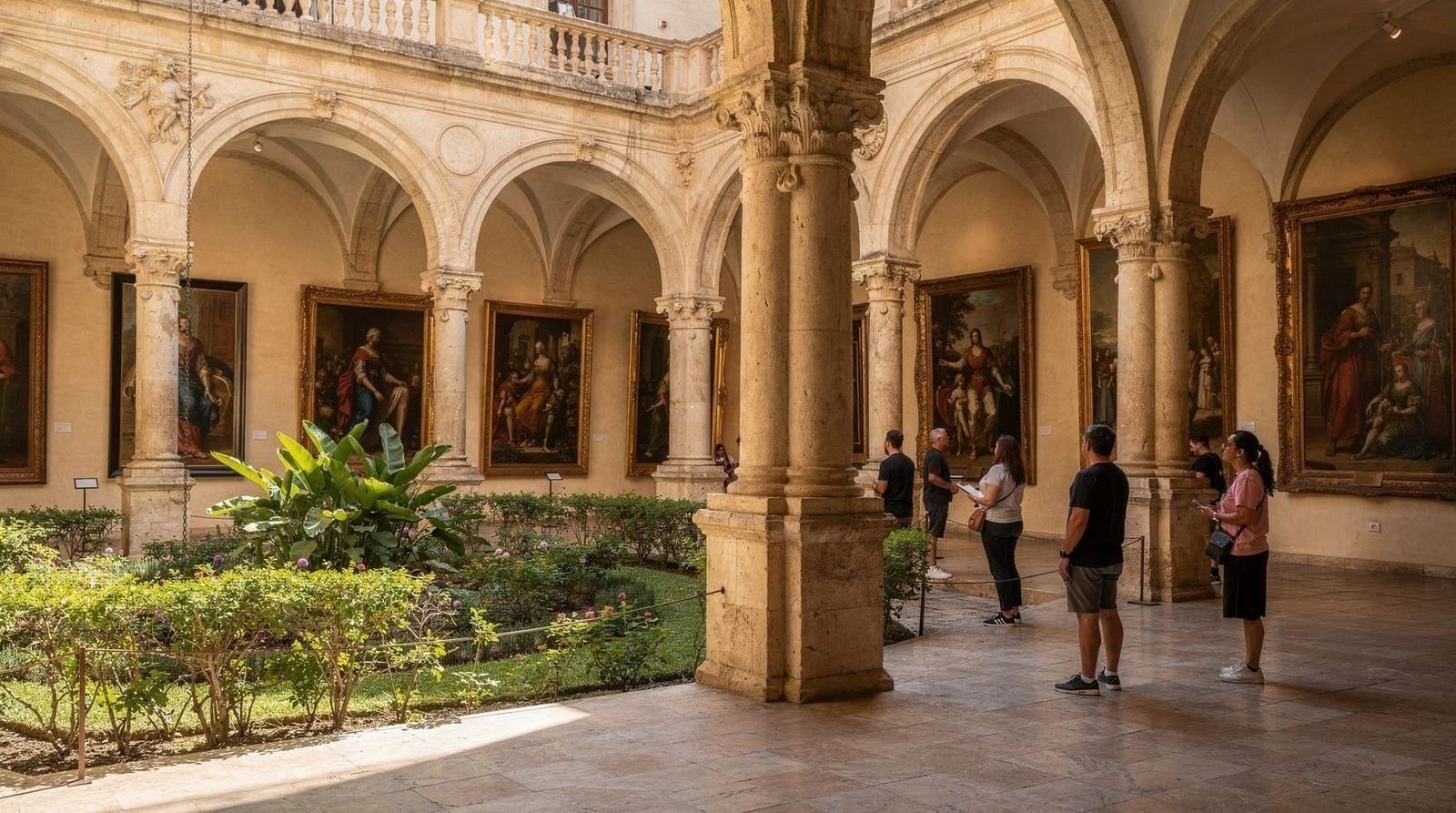
Casa de Pilatos ground floor entry ticket — main patio and gardenThe upper floor (€6) contains the historic apartments of the Medinaceli family. Unlike many “noble apartment” sections in Spanish palaces, these rooms contain genuine family belongings: 17th and 18th-century paintings (including works by Lucas Jordán), tapestries, furniture, and personal objects that accumulate into a portrait of aristocratic life over four centuries.
Access to the upper floor is by guided tour only (tours depart at fixed times — check at the ticket office when you arrive). The tour takes approximately 45 minutes.
For visitors interested in Spanish aristocratic history and the material culture of the Spanish nobility, the upper floor is worth the €6 and the time. For visitors primarily interested in the architecture and art collection, the ground floor is sufficient.
Comparing Casa de Pilatos, the Alcázar, and Palacio de Las Dueñas
These three palaces represent Seville’s three main private residential buildings open to visitors, and each has a different character:
- Alcázar: Royal palace, UNESCO-listed, heavily visited, Mudéjar at the largest scale, government-managed.
- Casa de Pilatos: Aristocratic palace, private ownership, significant Roman collection, more intimate and curated, appropriate for repeat visitors to Seville.
- Palacio de Las Dueñas: Smaller, primarily 19th-century décor, significant for its literary associations (Antonio Machado was born here), lighter visit (45–60 min).
For a full comparison and independent guide to the Palacio de Las Dueñas, see the Palacio de Las Dueñas guide.
Practical information
Address: Plaza de Pilatos, 1, 41003 Seville. In the Santa Cruz quarter, 12 minutes’ walk from the Alcázar.
Hours (2026): 9:00 AM–6:00 PM daily.
Tickets: Ground floor €12. Upper floor €6. Upper floor guided tours depart at set times — ask at the ticket office.
Getting there: On foot from the Cathedral: 10–12 minutes through the Santa Cruz streets. The approach through Calle Aguilas or Calle Ximénez de Enciso is pleasant and passes through the quieter part of the neighbourhood.
For general museum options in Seville, see the museums in Seville guide.
Architectural details worth slowing down for
A guided tour adds value at Casa de Pilatos, but even a self-guided visit benefits from knowing what to look for. A few specific details:
The azulejo tilework. The tile panels on the lower walls of the main patio were made in the early 16th century by Cristóbal de Augusta, a master ceramicist working in the Triana tradition. The patterns use a combination of Mudéjar geometric designs (the repeating star-and-hexagon patterns) and Renaissance figurative elements. Look for the interlocking tiles at the transition between geometric zones — the junctions are technically demanding and show the craftsman’s skill.
The marble sculptures in the patio. Several of the Roman marble busts on pedestals in the main patio are originals — not copies — brought from Italy by the first Duke of Alcalá in the 16th century. The identification plaques (where they exist) describe the proposed identifications; many remain “unidentified Roman male” because attribution of portrait busts requires documentary evidence that often does not survive. The aesthetic quality is consistent regardless of specific identification.
The Gothic archway to the chapel. The transition between the Mudéjar main patio and the Gothic chapel — visible in a single doorway — compresses several decades of architectural history into a single threshold. On one side: geometric plaster, tile, and a horizontally organized arcade. On the other: pointed arch, ribbed vaulting, and vertical emphasis. This kind of compressed architectural transition is one of the most interesting things to find in a Sevillano palace.
The upper staircase ceiling. The Renaissance staircase that connects ground and upper floors has a tiled ceiling (alfarje) in painted wood — coffered geometric panels in the Mudéjar style, designed by craftsmen who were simultaneously working in the new Renaissance idiom of the 16th century. The ceiling shows how craftsmen synthesized the two traditions rather than simply replacing one with the other.
The broader context: Mudéjar palaces in Seville
Seville has three main palaces open to visitors: the Alcázar (royal), Casa de Pilatos (noble), and the Palacio de Las Dueñas (aristocratic). Each represents a different tier of 15th–16th-century Spanish society and a different relationship to the Mudéjar tradition.
The Alcázar was commissioned by a king who deliberately chose Moorish craftsmen and aesthetics as a political statement. Casa de Pilatos was built by a noble family who had seen the palaces of Granada and Naples and wanted to synthesize them. The Dueñas is more restrained — it reflects the aesthetics of an aristocratic household operating in a later period (primarily 19th-century redecoration over an older structure).
For a visitor who wants to understand the Mudéjar tradition in depth, seeing all three gives a more complete picture than seeing only the Alcázar. The differences in scale, purpose, and decorative program are instructive.
Where to eat near Casa de Pilatos
The palace is in the Santa Cruz neighbourhood, which has Seville’s highest density of restaurants. The tourist pressure on pricing is real here — menus near the Cathedral entrance can be significantly marked up compared to the same dish a few streets away.
Three streets worth knowing for eating near the palace:
Calle San Esteban: Runs along the eastern side of the neighbourhood. More residential and working-class than the streets near the Cathedral. Local bars serve tapas at barra prices — €1.50–€2.50 per tapa.
Plaza de los Refinadores: A small square a few minutes from the palace with several bares that serve menú del día (three courses, drink included) at €12–€14. The statue of Don Juan Tenorio in the square is a bonus.
Calle Ximénez de Enciso: Connects the Santa Cruz barrio to the south. Several restaurants on this street have a better local-to-tourist ratio than the main tourist arteries.
The rule of thumb across Santa Cruz: any terrace with a laminated menu visible from the street, showing full-colour photographs of food, is almost certainly overpriced. The bars with handwritten blackboard menus or chalkboard tapas lists are generally better value.
What to do after visiting Casa de Pilatos
The palace is well-positioned for a circuit of the Santa Cruz neighbourhood highlights:
- Casa de Pilatos (1.5–2 hours)
- Walk north through the narrow streets of Santa Cruz — Calle Mesón del Moro, Plaza de los Venerables (stop at the Hospital de los Venerables Sacerdotes if interested in Velázquez — check the official website for current prices)
- Jardines de Murillo (free, public garden at the eastern edge of Santa Cruz — pleasant in the afternoon)
- Continue to the Cathedral via Plaza del Triunfo if not already visited
This circuit is approximately 3–4 hours including the palace and the neighbourhood walking. It covers the most architecturally and historically interesting part of central Seville.
For a guided tour that links Casa de Pilatos with another private palace in the same area, see the combined palace tour option in the museums in Seville guide.
What most visitors miss on a first pass
Because Casa de Pilatos rewards slow looking rather than a checklist approach, first-time visitors often move through in 30-40 minutes and miss details that make repeat visits worthwhile. The ceiling coffers in the main reception rooms — carved and painted wood in geometric Mudéjar patterns, restored but largely original in structure — are easy to walk past while focused on the patio and sculptures at eye level. Several of the ground-floor rooms also display smaller Roman fragments (inscribed stones, decorative reliefs) in wall niches that don’t get the same attention as the free-standing busts in the patio.
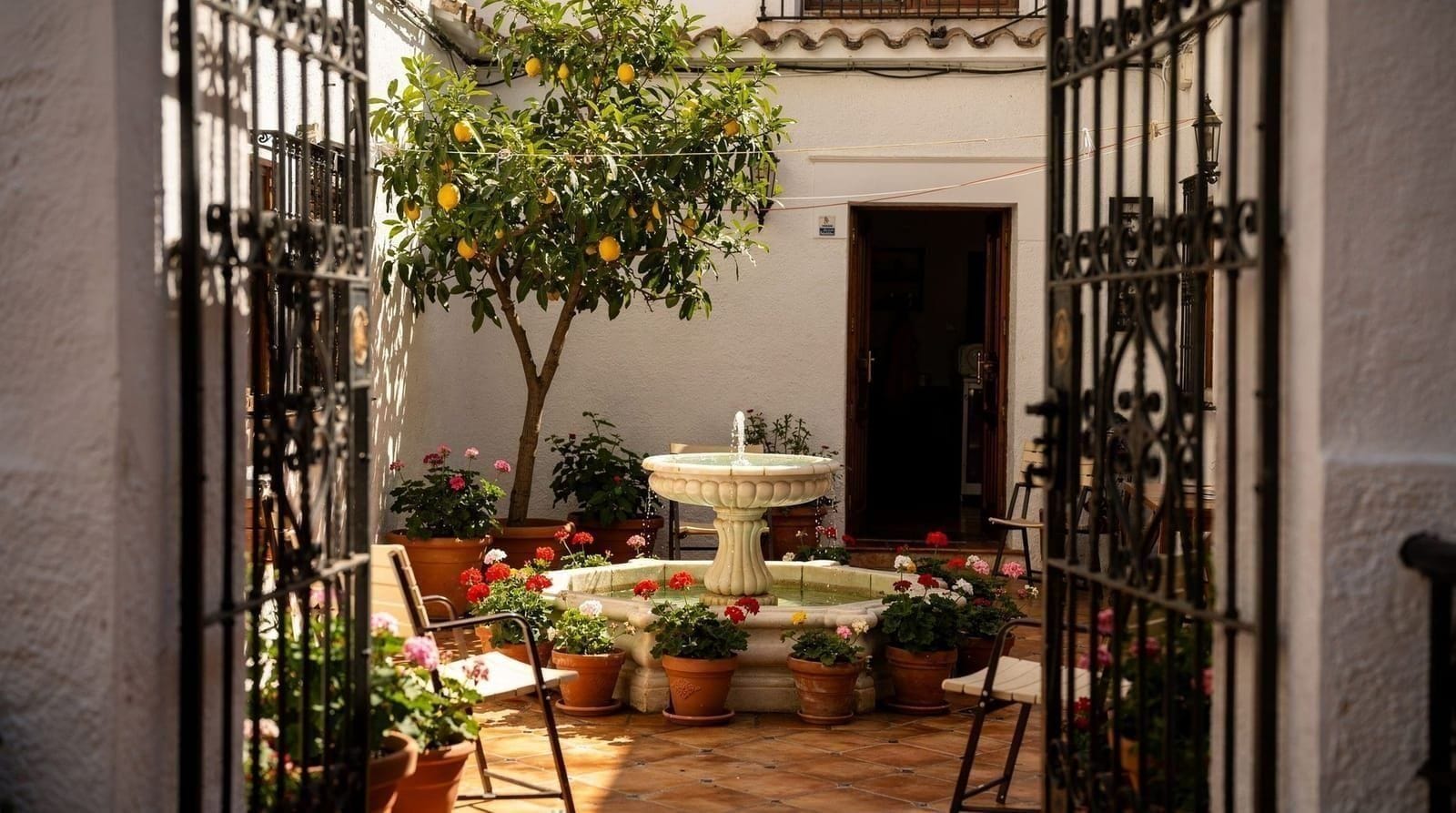
The garden, too, is frequently rushed. Visitors who treat it as a transition space between the patio and the exit miss a genuinely pleasant, quieter corner of the palace — mature planting, additional sculpture, and (particularly in spring) citrus blossom that most of central Seville’s more famous gardens can’t match for calm.
Booking a guided tour vs going independently
The self-guided ground-floor visit is straightforward and doesn’t require a guide to be worthwhile — the architecture and sculpture collection largely speak for themselves. Where a guide adds real value is in explaining the family history (the Medinaceli lineage, the specific circumstances of the Duke of Alcalá’s collecting trips to Naples) and pointing out details like the azulejo craftsmanship that are easy to miss unprompted. For visitors with a strong interest in Spanish aristocratic history specifically, the guided option is worth the premium; for a more general architectural visit, independent exploration at your own pace is perfectly sufficient.
Casa de Pilatos and Palacio de la Condesa de Lebrija combined tourCombining with the Alcázar and Santa Cruz
Casa de Pilatos works best as part of a broader Santa Cruz day rather than a standalone destination. Visitors who plan their Alcázar visit for the morning — see the Real Alcázar complete guide and the skip-the-line ticket guide for booking details — can walk the 12 minutes to Casa de Pilatos after lunch without losing the day to transit. The two visits together give a genuinely rounded sense of Seville’s Mudéjar architecture: royal scale at the Alcázar, aristocratic curation here.
The surrounding Santa Cruz neighbourhood rewards unhurried wandering between the two palaces — narrow lanes, small plazas, and tiled facades that don’t appear on any single monument’s ticket but are part of what makes the area worth a full day.
Fitting the palace into a wider Seville plan
Because the palace is quiet and rarely dictates your schedule, it is a useful piece to slot around the fixed commitments of a trip. If you are still deciding how long to stay, the how many days in Seville guide helps you see where an unhurried palace visit fits, and the Seville in 2 days itinerary shows one way to place it beside the bigger sights. Travellers with a single day can read the Seville in 1 day itinerary and decide whether a short ground-floor visit is worth trading against something else.
The neighbourhood around the palace is easy to explore on foot, and the getting around Seville guide explains why you rarely need transport in this part of town. Visitors who want to pair the palace with the Cathedral can use the Seville Cathedral complete guide to plan the order of the two visits, and the first-time travel tips cover the general habits that make a short stay smoother. For a broader look at the city itself, the Seville destination page gathers the main areas in one place.
Frequently asked questions about Casa de Pilatos guide
Why is it called 'Pilatos' (Pilate's House)?
The name is a 16th-century legend: the first Marquis of Tarifa completed a pilgrimage to Jerusalem in 1519 and measured the distance from the Praetorium (where Pontius Pilate sentenced Christ) to Golgotha. He found it matched the distance from the Casa de Pilatos to the Cruz del Campo cross outside Seville — and established a Via Crucis processional route. The name stuck despite no direct connection to Pilate.How does Casa de Pilatos compare to the Alcázar?
The Alcázar is larger, more famous, and more heavily visited. Casa de Pilatos offers a more intimate experience: smaller groups, fewer visitors, and a collection of Roman sculptures (many brought from Italy by the family in the 16th century) that the Alcázar does not have. If you are specifically interested in Roman art or want a less-crowded Mudéjar palace experience, Casa de Pilatos is the better choice for that specific visit.What is on the ground floor vs the upper floor?
The ground floor (€12 ticket) includes the main patio, the garden, the chapel, and the principal reception rooms. The upper floor (€6) houses the ducal apartments with their collection of paintings, tapestries, and personal objects belonging to the Medinaceli family, who still own the palace.Is Casa de Pilatos still privately owned?
Yes. The palace is owned by the Fundación Casa Ducal de Medinaceli and is the property of the Dukes of Medinaceli — one of Spain's oldest aristocratic houses. The upper floor apartments are the family's actual historic residence. This private ownership means the palace has been maintained by a single family rather than converted to a state museum, which gives it a different character from most public monuments.Can I visit Casa de Pilatos on the same day as the Alcázar?
Yes. The two palaces are 12 minutes apart on foot. A logical sequence: Alcázar in the morning, lunch in Santa Cruz, Casa de Pilatos in early afternoon. Each requires approximately 1.5–2 hours.Do I need to book in advance?
Walk-up tickets are usually available. Unlike the Alcázar, Casa de Pilatos does not typically sell out. In peak season, booking a guided tour in advance ensures your preferred time slot; entry-only tickets are generally available on the day.Is Casa de Pilatos suitable for a quick visit if I'm short on time?
Yes, more so than the Alcázar. A focused visit to the main patio, the Roman sculpture collection, and the garden can be done in under an hour if you skip the upper-floor guided tour. This makes it a good fit for visitors with a tight Santa Cruz itinerary who still want to see one private palace beyond the Alcázar.
Top experiences
Bookable activities with verified prices and instant confirmation on GetYourGuide.