Guadalquivir river cruise guide: what to expect and is it worth it?
Seville: 1-hour Guadalquivir river sightseeing eco cruise
Is a Guadalquivir river cruise worth it in Seville?
For a one-hour cruise (around €18), it is a reasonable way to see the city from the water — the Torre del Oro, the bridges, the Triana waterfront, and the Expo 92 island. It is not a must-do; you can see the same views from both banks for free. The eco-cruise options with solar/electric boats have less noise and pollution and are the better choice environmentally. Dinner cruises are significantly more expensive (€40-65) and offer food that is secondary to the view.
The Guadalquivir is Seville’s defining geographical feature — the river that made the city one of the wealthiest in Europe during the 16th-century Americas trade monopoly, and the body of water that shapes the western edge of the historic centre. A river cruise offers the one viewpoint you cannot otherwise access: looking back at Seville from the water.
This guide covers the practical reality of what river cruises in Seville offer, what they cost, and whether the experience adds meaningfully to a visit.
| Where | Muelle de la sal dock, beside the Torre del Oro |
| Cost | Around €18–22 (standard 1h); €40–65 (dinner cruise) |
| Time needed | 1 hour standard; 2–2.5 hours dinner cruise |
| Best time | Morning (09:00–11:00) or evening (18:00–20:00) |
| Booking | Walk-up usually fine; book ahead in peak season |
Historical context: why this river matters
The Guadalquivir (from the Arabic Wadi al-Kabir, “the great river”) runs 657km from the Sierra de Cazorla mountains in Jaén province to the Atlantic at Sanlúcar de Barrameda — the same estuary mouth that produces manzanilla sherry. Seville sits roughly 80km from the sea, at the highest point that ocean-going ships could navigate before modern river engineering.
This navigability was the economic foundation of Seville’s golden age. From 1503 to 1717, Seville held the monopoly on all trade with the Americas through the Casa de Contratación (House of Trade). The city’s port — along the stretch of river now occupied by the Torre del Oro, the Maestranza, and the Muelle de la sal dock — was for two centuries one of the busiest in the world.
The river today is not navigable to the sea from Seville without passing through the Canal de Alfonso XIII, a 20th-century cut that bypasses a silted section of the original channel. The river in the city is a calm urban waterway, not a shipping channel.
What you actually see on a cruise
The standard 1-hour cruise route covers the section of river between the Puente de Triana (the iron bridge connecting the Arenal district to Triana) and the Puente de las Delicias to the south. You will pass:
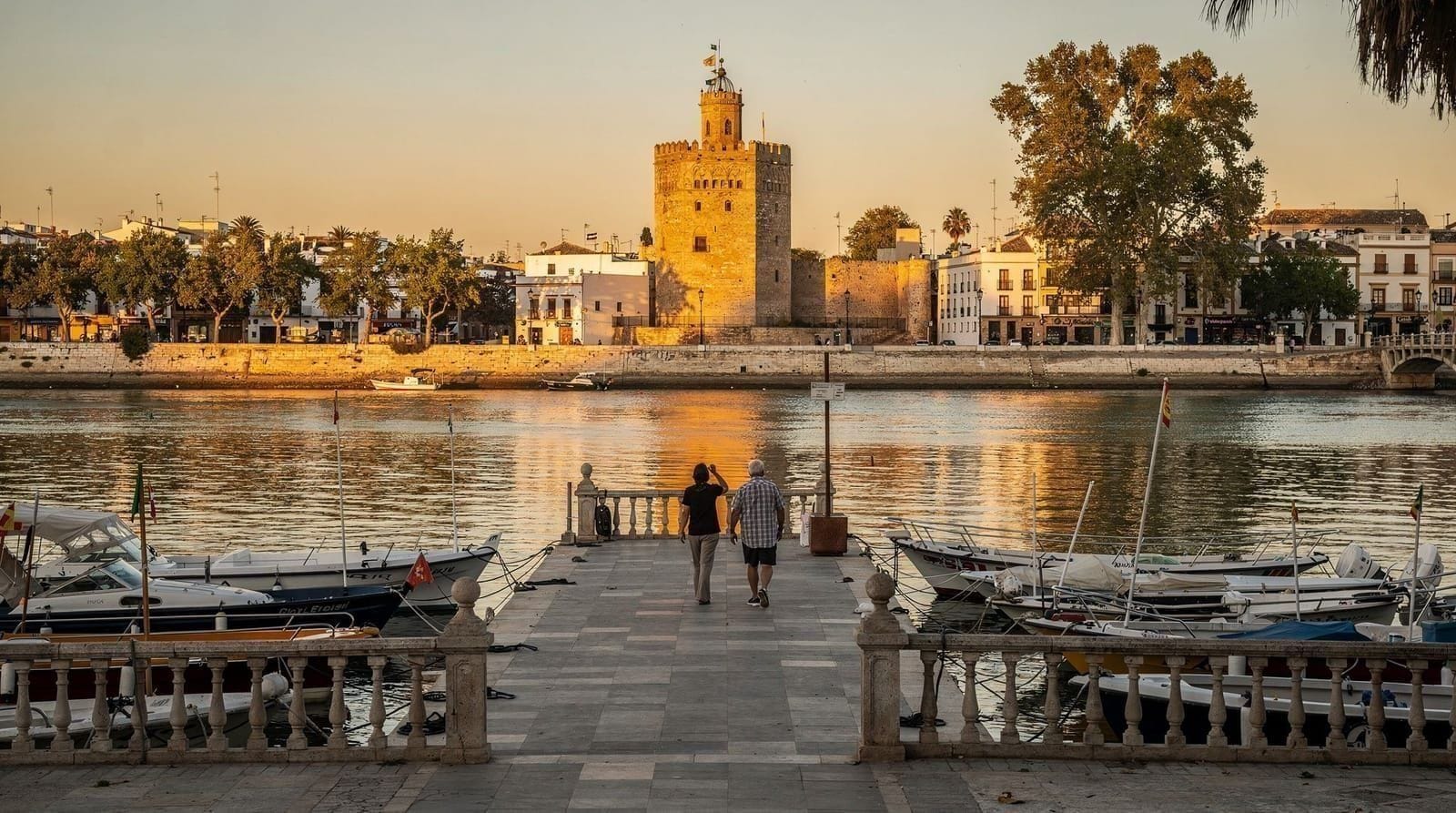
Torre del Oro (Tower of Gold): 13th-century Almohad military tower, originally the southern anchor of a chain stretched across the river to control access to the port. Named for the gold tiles that originally covered its exterior (long gone) or, alternatively, for its role in controlling the flow of gold from the Americas. The river view of the Torre del Oro is different from the land view — you see the circular form against the sky and understand its relationship to the water.
Maestranza riverfront: The curved facade of the Plaza de Toros de la Maestranza (the Baroque bullring) faces the river on the Seville side. Built 1758-1881 in stages, it is the oldest functioning bullring in Spain.
Puente de Triana (Puente de Isabel II): The mid-19th century iron bridge, the first permanent bridge connecting Seville and Triana (previously the crossing was by boat). The bridge’s iron construction was considered architecturally significant at its construction — it was among the earliest iron bridges in Spain.
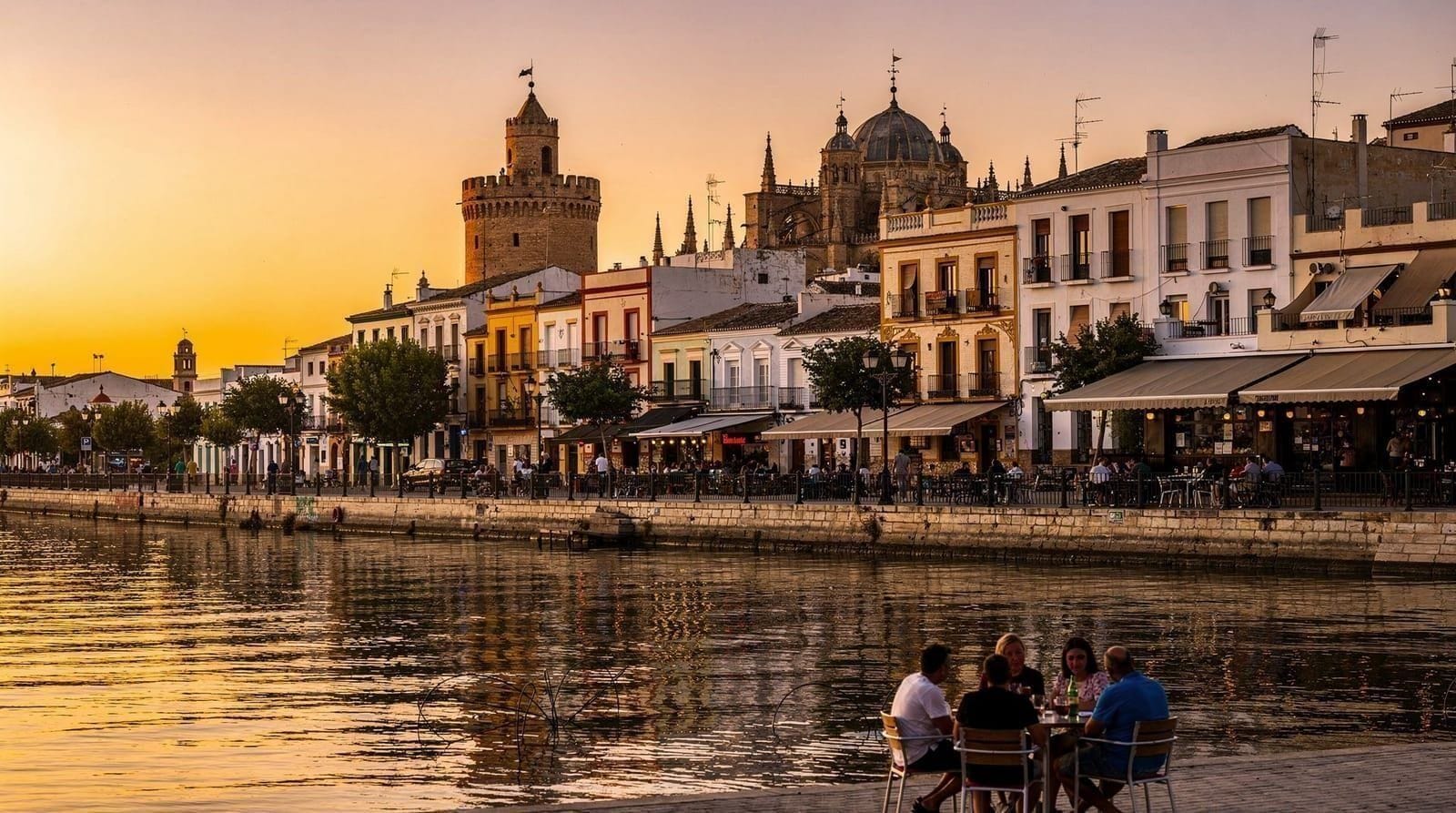
Triana waterfront (Calle Betis): The Triana side of the river — a row of bars and restaurants facing the Seville skyline — is arguably the best view in the city from this angle.
Isla de la Cartuja: The island in the river north of the Puente del Alamillo was the site of Expo 92 (Seville’s 1992 World Exposition, commemorating the 500th anniversary of Columbus’s voyage). Several pavilions remain; the island now contains a science museum, a theme park (Isla Mágica), and commercial spaces.
The eco-cruise: the recommended option
The eco-cruise uses electrically powered boats rather than diesel motor vessels. The practical difference: less engine noise during the cruise, no diesel exhaust on the lower deck, and a quieter experience that allows better audio guide listening. The route and price are similar to standard cruises.
Book 1-hour eco-cruise on the GuadalquivirAudio-guided cruise: independent exploration
For visitors who prefer to orient themselves without a live guide, the audio-guided cruise provides commentary through a device or phone app without a group walking pace. Good for visitors who already have context about Seville’s history and want to apply it to what they are seeing.
Book Guadalquivir cruise with audio guideDinner cruise: an honest assessment
River dinner cruises on the Guadalquivir run approximately 2-2.5 hours and cost €40-65 per person depending on the menu. The food is typically competent but not exceptional — it is difficult to produce restaurant-quality meals at scale on a boat. The view is the primary product.
If you want a dinner with a river view, the bars on Calle Betis in Triana offer the same vista at local prices from a fixed table. The dinner cruise makes sense as a romantic event rather than as a food experience.
Book river cruise with tapas, drinks, and mealPractical details
Timing: Morning cruises (10:00-11:00) have better light for photography on the Triana side. Evening cruises (18:30-20:00) catch the golden hour on the Torre del Oro and the Seville skyline from the west. Both are significantly more comfortable than midday cruises in summer.
Booking: Most boats operate walk-up on weekdays outside high season. In March-May and September-October, booking 1-2 days ahead is advisable for specific times.
Combining with other activities: A river cruise pairs naturally with a walk along the Paseo de Cristóbal Colón before or after, a visit to the El Arenal district, or a crossing to Triana. The El Arenal guide covers the riverfront neighbourhood in detail.
With children: The 1-hour standard cruise is generally well tolerated by children aged 5 and up — the boat movement is gentle and there’s enough to look at to hold attention. The eco-cruise’s quieter engine is a small but real advantage with younger children or anyone sensitive to noise. A dinner cruise, by contrast, is a poor fit for young children given the length and the pace aimed at adults.
Photography: For the classic postcard shot of the Torre del Oro from the water, position yourself on the Seville-facing side as the boat departs the dock, before it turns south. On the return leg near sunset, the Triana-facing side captures the skyline silhouette against the sky.
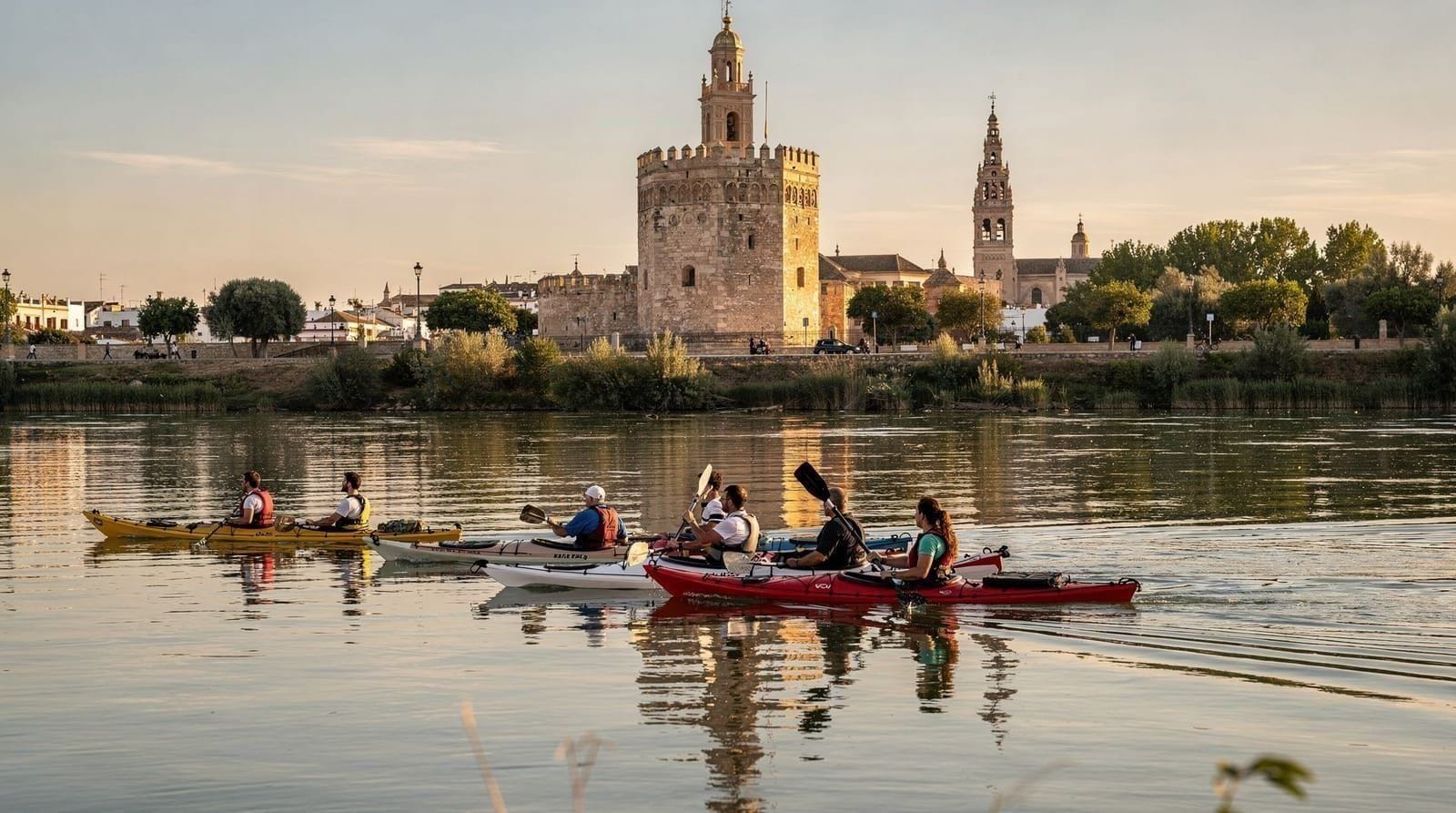
Alternative river activity: For a more active water experience, kayaking and paddleboarding on the Guadalquivir is available. See Kayaking and paddleboarding in Seville: the Guadalquivir river guide for details.
The Guadalquivir in context: a river that made a city
To appreciate what you are seeing from the water, it helps to understand what the Guadalquivir meant to Seville’s history. The river was not just geography — it was the mechanism of empire.
The Casa de Contratación (House of Trade), established in Seville in 1503, gave the city exclusive control over all commerce with the Americas for over two centuries. Every ship returning from the New World — laden with silver from Potosí, gold from New Spain, spices, dye, and agricultural products — had to dock at Seville’s port to pay duties, have cargo inventoried, and receive royal permission to proceed. At its peak in the mid-16th century, the city’s population swelled to 100,000 — the largest city in Spain and one of the wealthiest in Europe.
The Torre del Oro, which you will see from the water, was originally the southern anchor of a chain stretched across the Guadalquivir to prevent unauthorised ships entering the port. The chain mechanism is no longer in place, but the tower stands essentially as it was built by the Almohad dynasty in 1221.
The river’s navigability was ultimately limited by silting. By the 17th century, larger ships were increasingly unable to reach Seville directly; the trade monopoly was transferred to Cádiz in 1717. The canal cut to bypass the siltiest section of the lower Guadalquivir was not constructed until the 20th century. The river in Seville today is calm and navigable but no longer carries commercial shipping.
What is on the Triana side of the river
The western bank of the Guadalquivir through central Seville belongs to Triana — historically a separate municipality, now part of the city but retaining a strong distinct identity. From the cruise, the Triana bank appears as a continuous line of bars and restaurants on Calle Betis, with apartment buildings behind and the bridge silhouettes framing each end.
What is not visible from the water: the ceramics workshops a block inland, the covered market, the Castillo de San Jorge at the base of the Puente de Triana, and the neighbourhood streets that give Triana its character. The river view is the facade; the neighbourhood itself is reached by crossing the bridge and walking in.
The Triana neighborhood guide covers what is behind the riverfront in detail.
Seasonal variations in the cruise experience
Spring (March-May): The most popular period for river cruises coincides with the Semana Santa and Feria seasons. During Semana Santa processions, some riverside streets are occupied by procession routes, which can affect the visual context from the water — seeing a procession route from the river is an unusual perspective on the ceremonies. During Feria week, the city’s social life shifts southward to the fairground, and the riverside is relatively quieter.
Summer (June-August): The river at sunset (18:30-20:00) is genuinely beautiful in summer — the low sun from the west illuminates the Seville skyline gold from the Triana bank and the Triana waterfront from the Seville side. The challenge is midday heat; morning and evening cruises are the reliable options.
Autumn (September-October): Often the best season overall. The Bienal de Flamenco brings cultural activity to the city; the river is calm; the temperatures have dropped from summer peaks. September light is warm and golden; photography conditions are excellent.
Winter (November-February): The river can be higher and slightly more turbulent in winter following rain in the Sierra Morena headwaters. Occasional winter floods are a historical feature of the Guadalquivir; flood barriers in the city limit but do not eliminate flooding risk. In normal conditions, winter cruises are quiet and atmospheric.
What is the Expo 92 island today?
The Isla de la Cartuja — named for the Carthusian monastery on the island that still stands — hosted the 1992 World Exposition commemorating the 500th anniversary of Columbus’s voyage. The theme was “The Age of Discoveries” and the site was developed with new infrastructure including bridges, tram connections, and pavilion buildings.
The post-Expo fate of the island is mixed, as is typical of large exposition sites worldwide. The main surviving components:
- The Cartuja monastery complex is now the CAAC (Centro Andaluz de Arte Contemporáneo), with a contemporary art collection and exhibitions
- The Pabellón de la Navegación is a science museum focused on navigation history and the Guadalquivir’s role in exploration
- Isla Mágica is a theme park on the southern portion of the site
- Several former pavilions are now offices or have been demolished
The island is visible from the cruise in its Expo-era architecture; the modern commercial development alongside it is less photogenic. The northern bridge (Puente del Alamillo, a cable-stayed bridge designed by Santiago Calatrava) is one of the architectural highlights of the Expo legacy and worth seeing from the river.
How the cruise compares to other river activities
A cruise is the passive, sit-back option for experiencing the Guadalquivir. For a more active alternative, kayaking or paddleboarding covers a similar stretch of river under your own effort — see Kayaking and paddleboarding in Seville: the Guadalquivir river guide for the practicalities. For a land-based view of the same landmarks, walking the Paseo de Cristóbal Colón past the Torre del Oro and the Maestranza bullring covers the same visual territory for free, and pairs naturally with any of the best walking tours in Seville. None of these options are mutually exclusive — many visitors do a walk along the bank one day and the cruise itself, ideally at golden hour, on another.
Where to sit and what to bring
On the upper open deck, seats facing the Triana side generally get the better light in the evening; seats facing the Seville side are better for photographing the Torre del Oro and the Maestranza as you pass. Bring sunglasses and, in summer, a hat — there is little shade on most upper decks. A light layer is worth having on evening cruises even in warmer months, since the breeze over open water is noticeably cooler than the streets. If mobility is a factor for anyone in your group, note that some boats access the upper deck by stairs only; the Getting around Seville guide covers general accessibility notes for the city if this affects your wider itinerary.
Fitting the cruise into your wider trip
A river cruise works best as a light addition rather than the centrepiece of a day. If you are still shaping your plans, the 3-day Seville itinerary and the first-timer’s itinerary both leave room for a gentle hour like this, and how many days in Seville helps you decide whether you have the slack for it at all.
Because the dock sits beside the Torre del Oro, the cruise combines naturally with the sights nearby. The Seville Cathedral complete guide and the Real Alcázar complete guide cover the big monuments a short walk away, so you can see them on land in the morning and finish with the view from the water. If you are visiting in the hotter months, the Seville in summer heat guide explains how to structure the day around the temperature, which is exactly why the early and late cruises are the sensible choice.
After the boat, a meal is an easy next step. The where to eat in Seville guide and the best tapas bars in Triana point you to places across the bridge, and the Seville tourist traps to avoid guide is worth a glance before you pick a table right on the riverfront.
For a first-person account of being out on the water, the kayaking the Guadalquivir trip report shows how the same stretch feels when you are paddling rather than sitting back.
Frequently asked questions about Guadalquivir river cruise guide
What do you see on a Guadalquivir river cruise?
The standard 1-hour cruise covers the stretch between the Puente de Triana and the Puente de las Delicias. You will see the Torre del Oro from the river, the Maestranza bullring, the bridges connecting Seville to Triana, the Triana waterfront (Calle Betis), the Isla de la Cartuja (site of Expo 92), and several newer residential and commercial developments along the banks. The city views are attractive; the historical narrative provided by audio guides is serviceable.How much does a river cruise cost in Seville?
Standard 1-hour cruises cost approximately €18-22 per adult. Evening cruises run slightly higher, around €20-25. Dinner cruises are significantly more expensive: €40-65 per person depending on the menu. Children's pricing is typically half adult. The eco-cruise option (solar or electric boats) runs at a similar price to standard cruises.Where do the cruises depart from?
Most cruises depart from the Muelle de la sal — the dock alongside the Torre del Oro on the Paseo de Cristóbal Colón, on the Seville side of the river. The dock is immediately identifiable by the cluster of boats moored along the embankment. Walking distance (5-10 minutes) from Santa Cruz and the Alcázar.Is the eco-cruise different from the standard cruise?
The eco-cruise uses an electric or solar-powered boat, which produces significantly less engine noise and no diesel fumes. The route and duration are similar; the experience is quieter and more pleasant. On a hot summer day, the diesel exhaust from traditional tour boats can be unpleasant. The eco-cruise option is worth the similar price.What is the river cruise like in summer?
In July and August, river cruises can be uncomfortably hot on the upper deck — direct sun on the water reflects intensely and there is minimal shade on most boats. The enclosed lower deck provides shade but less view. Morning cruises (09:00-11:00) and evening cruises (18:00-20:00) are significantly more comfortable than midday. Evening cruises offer better light for photography.Do I need to book a river cruise in advance?
Outside high season (March-May, September-October), most boats operate walk-up departures on weekdays without a wait. During peak weeks or for a specific evening slot with sunset timing, booking a day or two ahead is a reasonable precaution rather than a strict necessity.Is the river cruise accessible for visitors with limited mobility?
Most standard cruise boats have step-free boarding from the Muelle de la sal dock and a level main deck, though upper-deck access on some vessels involves stairs. If mobility is a concern, check with the operator before booking, since boat configurations vary between the standard, eco, and dinner cruise fleets.
Top experiences
Bookable activities with verified prices and instant confirmation on GetYourGuide.