El Arenal neighborhood guide: Seville's riverside quarter between the river and the Cathedral
Seville: Guided tour of bullring with a famous bullfighter
What is El Arenal neighborhood in Seville?
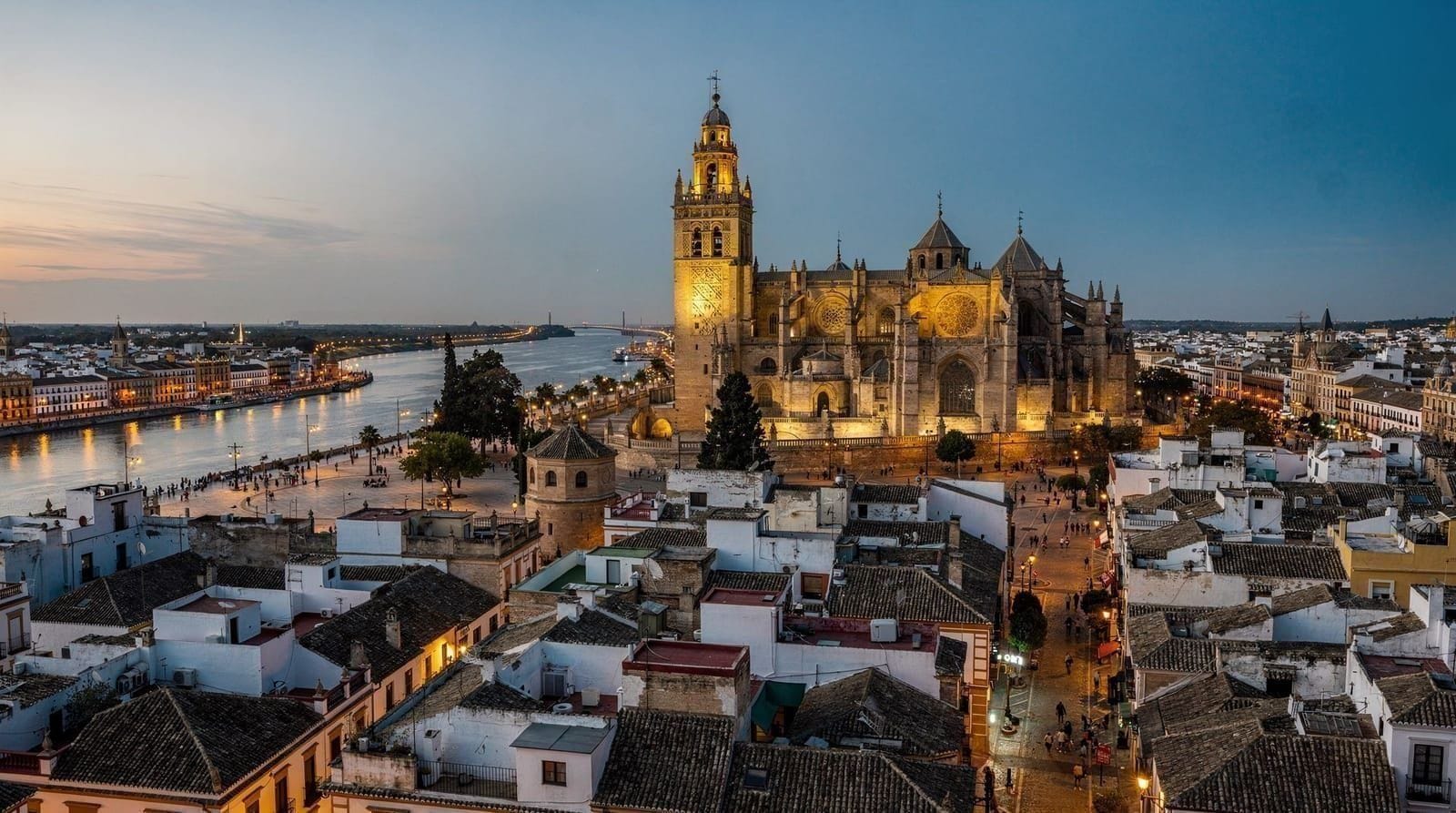
El Arenal is the neighborhood between the Cathedral and the Guadalquivir river, bounded by the historic city walls. It contains the Torre del Oro, the Maestranza bullring, and several of Seville's best tapas bars including La Brunilda. More local than Santa Cruz, more accessible than Triana.
El Arenal takes its name from the sandy riverbank (arenal means sandy ground) that bordered this section of the Guadalquivir before the river embankment was built in the 19th century. It was Seville’s commercial harbor district during the colonial period — the Guadalquivir was navigable from Seville to the Atlantic at this point, and the city’s port handled trade with the Americas from the 15th century onward.
Today El Arenal is the neighborhood between the Cathedral and the river: more residential than Santa Cruz, less discovered than Triana, and home to some of Seville’s significant landmarks.
| Where | Between the Cathedral and the Guadalquivir, west of the historic centre |
| Best for | Torre del Oro, Maestranza bullring, tapas, a quieter base |
| Time needed | 2-3 hours for the main sights; longer with a tapas crawl |
| Getting there | Walkable from the Cathedral in 5-10 minutes |
What defines El Arenal
The neighborhood runs from the city walls (which follow the Paseo de Cristóbal Colón riverside promenade) inward to the streets around the Cathedral and south toward the Triana bridge. Its key reference points are the Torre del Oro (on the riverbank), the Maestranza bullring (on the river promenade), and the Archivo de Indias (on its northeastern edge).
Unlike Santa Cruz, El Arenal has a working residential character: the streets between the river and the cathedral have apartment buildings, local shops, and the kind of neighborhood bars that serve office workers rather than tourists. The closer you get to the river promenade, the more touristy it becomes; the interior streets are more genuine.
How El Arenal fits into a Seville trip
Most visitors pass through El Arenal without ever deciding to visit it. It sits on the natural line between the Cathedral and the river, so it ends up as the connective tissue of a sightseeing day: you cross it on the way to the bridge, on the way back from Triana, or between a morning at the monuments and an evening meal. That is both its strength and its weakness. It is easy to reach and easy to combine with other things, but it rarely feels like a place with its own urgent reason to exist, which is why a short, deliberate walk through it is better than a vague drift.
If you are building a first itinerary, treat El Arenal as a pairing rather than a headline. It slots naturally next to the Seville Cathedral and the Real Alcázar, and the Seville first-timer’s itinerary gives a sense of how the quarter can sit between bigger set pieces. For a slower pace, the two-day itinerary leaves room for an unhurried evening here.
Torre del Oro: the golden tower
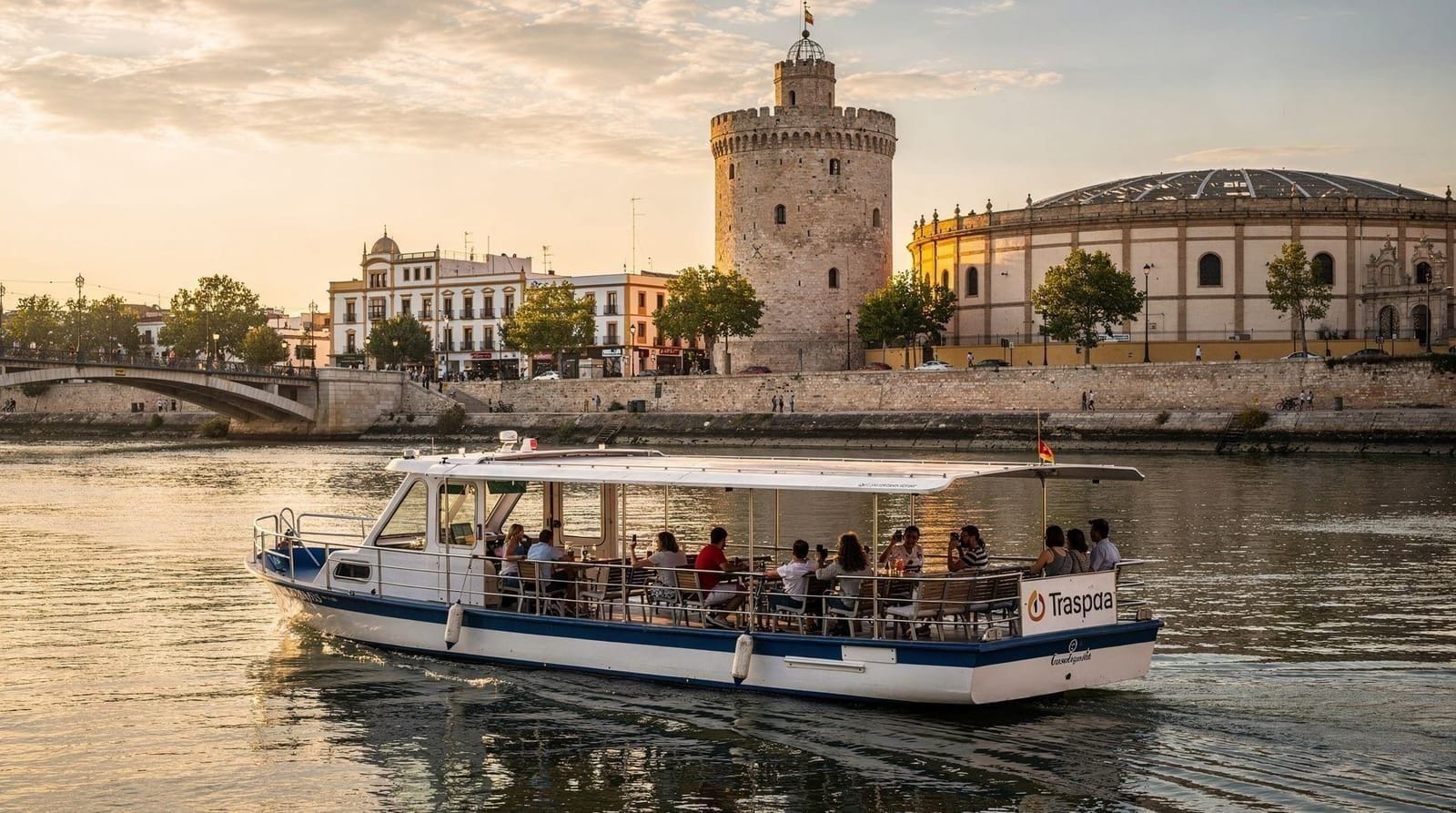
The Torre del Oro (Tower of Gold) was built in 1220 by the Almohad rulers as a watchtower guarding the river approach to Seville. It is 12-sided, built in tapial (rammed earth with a lime coating), and originally formed part of the city walls. A chain stretched from the tower to a corresponding structure on the Triana side could block river access.
The “gold” in the name refers either to the original gold-colored tiles that covered the exterior (now long gone) or to the gold unloaded here from the Americas — historical sources disagree. The tower is currently a small maritime museum covering Seville’s history as a colonial port.
Entry: €3 (free Monday). Worth visiting for the view from the top and the colonial history context. The exterior and river promenade views are free from the walkway.
Maestranza bullring: one of Spain’s great bullrings
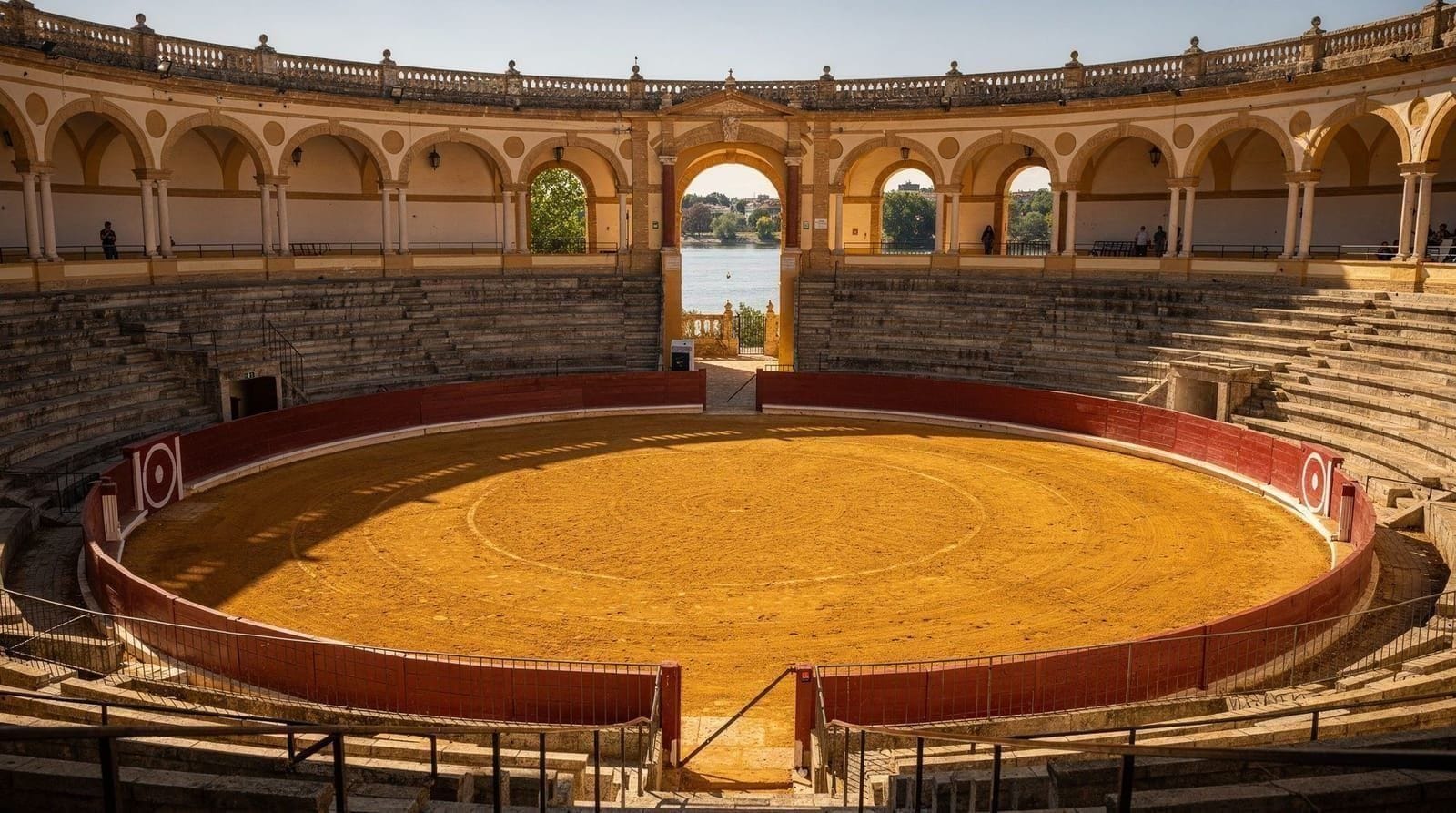
The Plaza de Toros de la Maestranza is the most beautiful bullring in Spain by widespread consensus. Built between 1761 and 1881 in stages (the construction stretched over more than a century due to funding difficulties), the building has a characteristic asymmetrical footprint — one side follows a straight city wall, the other follows a curve. The result is visually distinctive.
The Maestranza operates as a working bullring from the Feria de Abril through October. During this season, tickets for corridas (bullfights) are available but in high demand — the Feria week bullfights are particularly hard to obtain. Outside the bullfighting season, guided tours of the arena, the museum, and the horse stables are available daily.
For those with no interest in bullfighting: the building is architecturally significant regardless of your position on the practice. The interior (arenas of fine sand, the baroque ceremonial entrance, the carved wooden barriers) is genuinely impressive as an architecture. See the Maestranza bullring guide for full visit details.
Book a guided Maestranza bullring tourWhat to expect inside the Maestranza
A guided visit tends to follow the same rhythm: you walk through the ceremonial entrance, step out into the arena itself, and then move through the museum rooms and the working areas behind the scenes. The guide’s value is context. Without it the building is simply handsome; with it you understand why the layout, the seating and the rituals around the ring are arranged as they are. Visitors who find the subject uncomfortable often say the visit is more about history and architecture than about the spectacle, and you can judge for yourself how much of that you want. If you are choosing between a tour and simply admiring the facade from the promenade, the exterior alone is a perfectly good five-minute stop; the interior is where the building earns its reputation.
El Arenal’s tapas scene
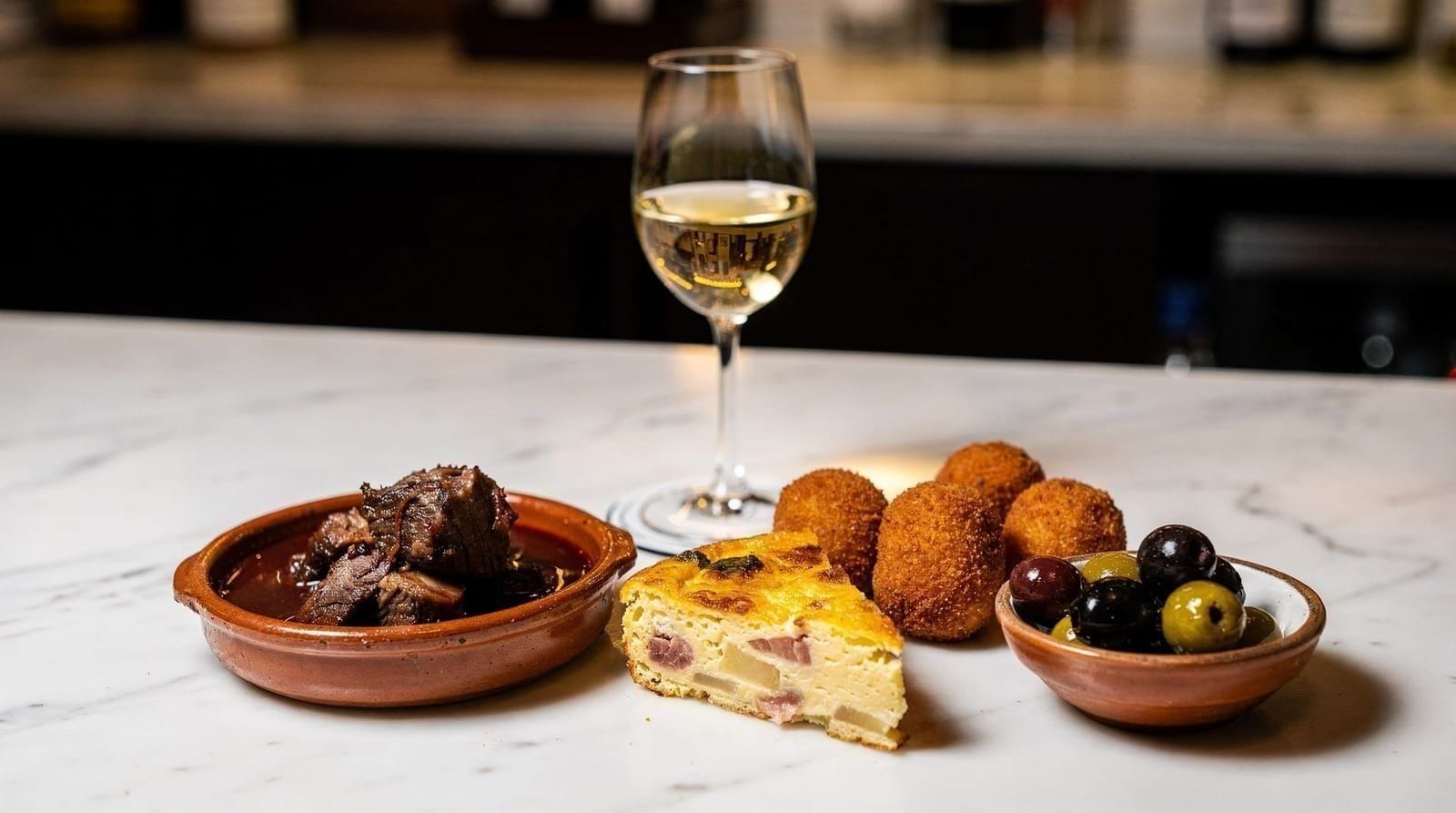
Eating in El Arenal rewards a little restraint. The neighborhood’s best bars are small, and the pleasure of them depends on not arriving at the busiest moment or expecting a table. Think of the area as a place for two or three standing stops rather than one long sit-down meal: a drink and a plate at the counter, then move on. That approach matches how locals eat and keeps the bill closer to the bar price than the terrace price. The logic is explained in more detail in the guide to barra versus terrace pricing.
If tapas are the main reason you are here, the wider best tapas in Seville guide and the best tapas bars in Santa Cruz will help you build a longer route. For help avoiding the places that exist only to catch passing foot traffic, see how to avoid tourist-trap restaurants.
El Arenal is where some of Seville’s most visited tapas bars are located, combining a slightly more local character than Santa Cruz with accessibility from the main monuments.
La Brunilda (Calle Galera 5): The neighborhood’s most notable tapas bar. Creative food, small space, regular queues at lunchtime. The slow-cooked egg dishes and the anchovy preparations are consistently mentioned by regular visitors. No reservations for bar service. Go before 1 PM or after 3 PM for a counter position.
Casa Morales (Calle García de Vinuesa 11): A 19th-century wine bodega that still dispenses wine from barrels. The food is traditional rather than creative; the draw is the interior and the sherry culture. Order fino or manzanilla from the barrel.
Bar Giralda (near the Cathedral): A bar that has the advantage of being immediately adjacent to the main monuments while maintaining lower prices than the pure tourist cafés. The tapas are basic but honest.
The Paseo de Cristóbal Colón riverside terrace bars are scenic but offer tourist-terrace pricing and mid-range food. Good for drinks and the view; not for a serious tapas meal.
Flamenco tablaos in El Arenal
Several of Seville’s established flamenco tablaos are in El Arenal, trading on the neighborhood’s entertainment tradition. The shows are professionally produced and include dinner options.
The honest assessment of El Arenal’s tablaos: they are more polished and less intimate than Triana venues, but easier to book and more consistently available. If you are watching flamenco for the first time, the El Arenal tablaos provide a competent introduction. If you want a more authentic experience, the Triana venues and Casa de la Memoria in Santa Cruz are better options. See the best flamenco shows in Seville guide for a detailed comparison.
Book a flamenco tablao show in El ArenalChoosing a tablao without regret
Before booking any show, decide what you want from the evening. If the aim is an easy, reliable night with a clear start and finish, an El Arenal tablao suits that well. If the aim is the feeling of stumbling into something raw, no tablao will fully deliver it, and you will be happier reading how to tell authentic flamenco from a tourist show first. Newcomers who have never seen flamenco may also enjoy the background in the flamenco beginner’s guide, because knowing what the singer, guitarist and dancer are each doing makes any show more rewarding.
For a different format, the combination of a guided tapas walk followed by a flamenco performance packs both of the neighborhood’s strengths into one evening, which suits visitors with only a night or two.
A short walking route through El Arenal
For visitors with 2-3 hours, a simple loop works well: start at the Torre del Oro on the riverbank, walk south along the Paseo de Cristóbal Colón past the Maestranza bullring, cut inland through the streets around Calle García de Vinuesa toward the Cathedral, and finish with tapas at La Brunilda or Casa Morales. This route covers the neighborhood’s main landmarks and its best tapas bars in a manageable afternoon, and connects naturally into a Cathedral or Alcázar visit if you’re combining El Arenal with the main monuments the same day.
Pace matters more than the order of stops. Leave the Torre del Oro unhurried, because the river light is the reason to linger there, and save the tapas for the end so you are not walking on a full stomach in the heat. In the hotter months, shift the route to early morning or evening; the summer heat guide explains how locals structure their day around the sun. In cooler months the same loop can be done at a relaxed afternoon pace with room for a long stop at a bar.
If you want to keep going after the loop, the Archivo de Indias guide covers the nearby building on the neighborhood’s edge, and the Seville Cathedral and Giralda tickets guide helps you decide how to enter the largest monument next door.
The riverside promenade
The Paseo de Cristóbal Colón runs along the Guadalquivir from the Triana bridge south to the Puente del Generalísimo. It was redesigned in the 1990s for Expo ‘92 and is a pleasant walk with views of the river, the Triana skyline across the water, and the tourist boats.
The promenade is at its best in the early morning (before the tourist boats start running) and in the evening. The summer heat makes midday walks here uncomfortable.
River cruise departure points are on this promenade. See the Guadalquivir river cruise guide for options.
The promenade also works as a simple orientation tool. Because it follows the river, it is almost impossible to get lost here: keep the water on one side and the old city on the other, and you will always find your way back to the bridge or the Cathedral. First-time visitors often use it as their first walk after arriving, to get a feel for the scale of the city before diving into the narrow streets. If you are arranging your first days more generally, the first-time travel tips guide covers the habits that make a short stay easier.
Getting around from El Arenal
One of the quiet advantages of the neighborhood is that most of what you will want to see is reachable on foot. The Cathedral, the Alcázar, the Archivo de Indias and the bridge into Triana are all close, so you rarely need transport during the day. For the occasions when you do, such as an early departure or a day trip, the getting around Seville guide lays out the options, and the day trips guide shows what is worth leaving the city for.
A river outing is also an easy way to see the neighborhood from the water. A private boat trip on the river with tapas on board gives a different angle on the Torre del Oro and the skyline, and it suits couples or small groups who want something relaxed after a day on foot.
Staying in El Arenal
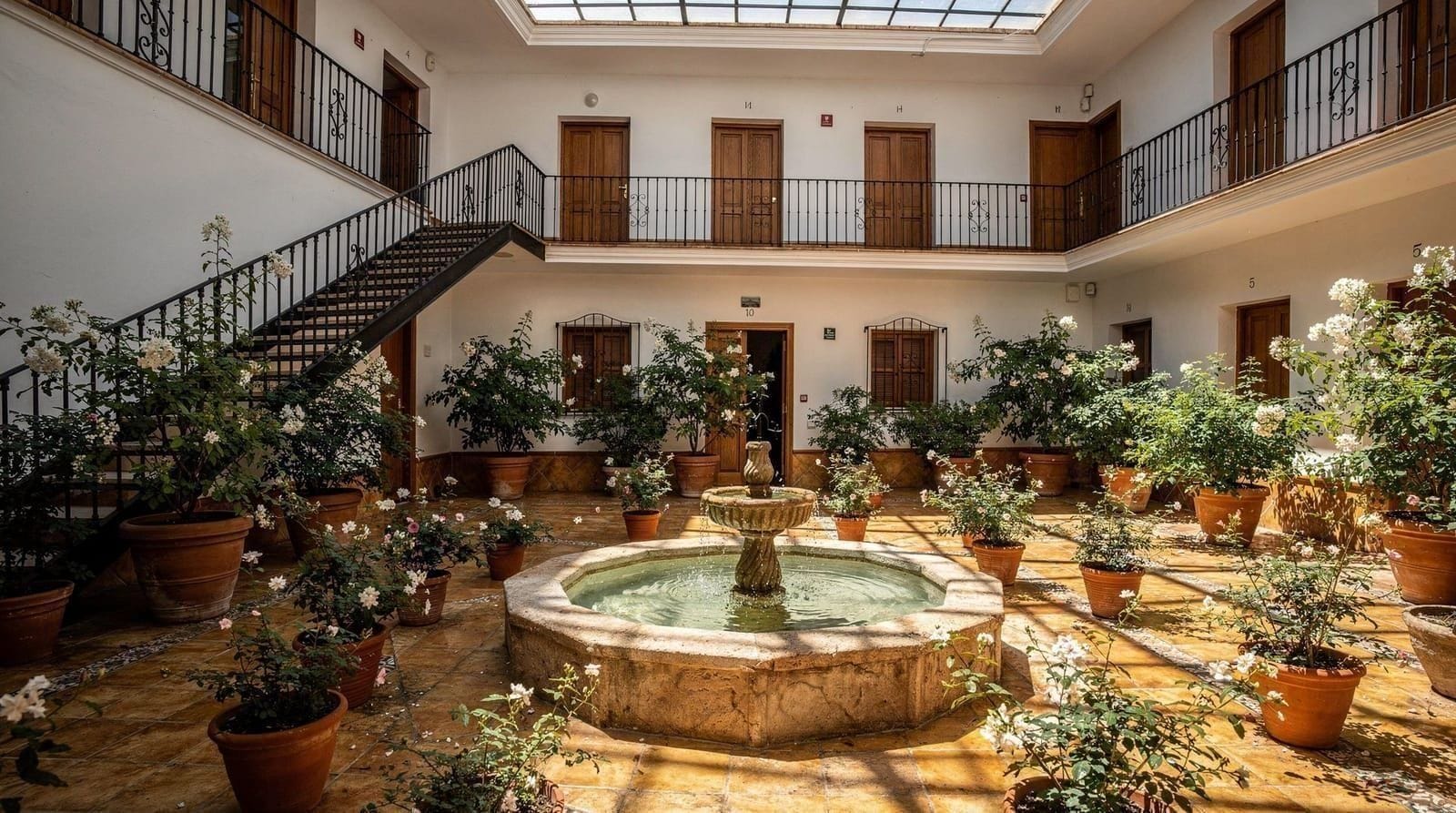
El Arenal is an underrated base: it is closer to the river and slightly quieter than Santa Cruz while remaining within easy walking distance of the Alcázar, Cathedral, and Archivo de Indias. The accommodation range spans from budget guesthouses on the interior streets to upscale hotels on the river promenade.
The neighborhood’s main practical advantage over Santa Cruz: the same monuments are equally accessible but the accommodation and restaurant prices are slightly lower and the street character is slightly more local.
For a full comparison of Seville’s neighborhoods as bases, see where to stay in Seville and best neighborhoods in Seville.
Frequently asked questions about El Arenal neighborhood guide
Is El Arenal a good base for staying in Seville?
Yes, especially for visitors who want walking distance to the Alcázar, Cathedral, and river while paying somewhat less than Santa Cruz. It's quieter than the tourist core and has a genuine residential character on its interior streets, with the riverside promenade a short walk away.What is there to do in El Arenal in one afternoon?
A comfortable afternoon covers the Torre del Oro, a walk along the Paseo de Cristóbal Colón, the exterior (or a tour) of the Maestranza bullring, and a tapas stop at La Brunilda or Casa Morales. Around 2-3 hours on foot, plus lingering time for tapas.