Plaza de Toros de la Maestranza: guide to visiting Seville's bullring
Seville: Bullring guided tour with skip-the-line ticket
How do I visit the Maestranza bullring in Seville?
The Real Maestranza is open for guided tours year-round (shorter hours on bullfighting days). Tours last approximately 45–60 minutes and cover the arena, the royal box, the chapel, the stables, and the museum. Current tour prices are on the official visit website. The bullfighting season runs from Easter Sunday through late October.
The Real Maestranza de Caballería de Sevilla sits on the riverbank in El Arenal, a white and ochre oval that has occupied this site in some form since the 16th century. It is one of the oldest and most architecturally significant bullrings in the world, a national monument, and — for a visitor to Seville — a building that raises real questions about tourism, culture, and personal ethics.
This guide is honest about those questions. It also tells you what to see on the guided tour and how to visit practically.
| Where | El Arenal, Paseo de Cristóbal Colón, riverside |
| Cost | see the official visit website for current prices |
| Time needed | 45-60 minutes for the tour |
| Getting there | 10-minute walk from the Cathedral |
| Season | Bullfighting runs Easter Sunday through late October; the tour runs year-round except on fight days |
The building and its history
Maestranza bullring guided tour with skip-the-line ticketThe Maestranza (the full name is Real Maestranza de Caballería de Sevilla — Royal Cavalry Corporation of Seville) was originally a corporation of noblemen founded in the 17th century to promote equestrian skills for military purposes. The bullring grew from the equestrian exercises they organized.
Construction of the current bullring began in 1761 under Juan de Figueroa. The arena was built in stages over more than a century, with major modifications in 1868 and 1881 that gave it its current circular form. The result is a building that has been incrementally refined rather than designed in a single moment, which accounts for its particular combination of Baroque and Mudéjar elements.
The building is circular with a diameter of approximately 60 metres. The seating is divided into sol (sunny side, hotter and cheaper), sombra (shaded side, cooler and more expensive), and sol y sombra (mixed shade, mid-price). The ring holds approximately 12,500 spectators.
The Palco del Príncipe — the royal box — projects from the barrier on the shaded side. It is used by Spanish royalty when they attend. It has its own entrance, its own small chapel, and an architectural elaborateness that is visible from anywhere in the arena.
The guided tour: what you see
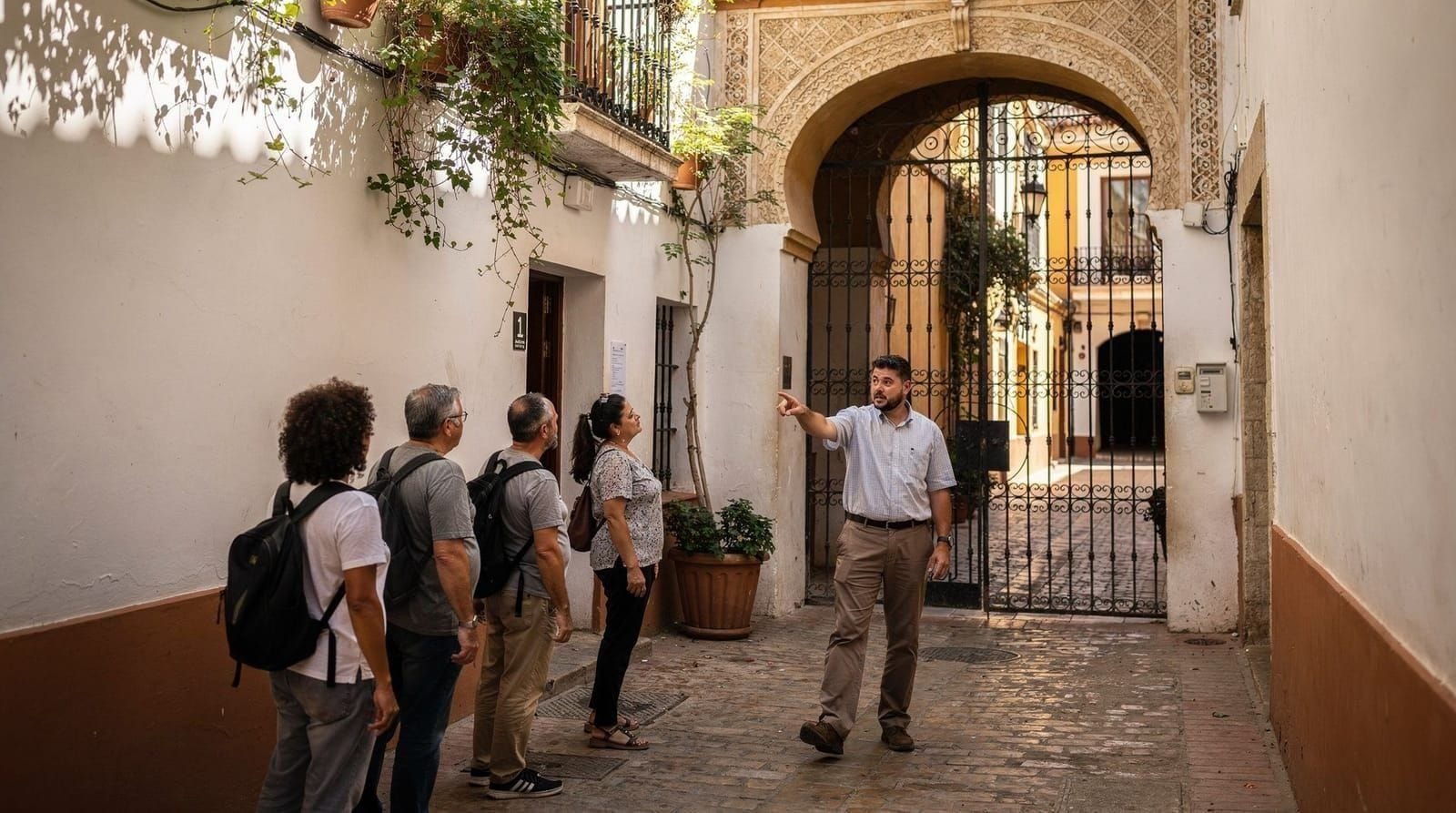
Maestranza guided tour with a famous bullfighter — personal perspectiveThe tour takes approximately 45–60 minutes. Main stops:
The arena floor. You stand on the sand (or, in the off-season, a wooden barrier protects the sand — you are at floor level regardless). The visual perspective from the floor is completely different from the seating: the barrier (the wooden wall that separates the arena from the protection area) is taller than it looks from the stands, and the scale of the space is different when you are at ground level rather than looking down.
The toril. The gate through which the bull enters. The gate is lower and closer to the barrier than most first-time visitors expect. The moment of a bull’s entry — the doors open and the animal enters at speed — is one of the most viscerally intense moments in a live fight.
The chapel (Capilla del Patrocinio de la Maestranza). Before every fight, the matadors pray here. The chapel contains images of the Virgen del Patrocinio and various ex-votos left by bullfighters after particularly dangerous encounters. The combination of religious devotion and violent profession is genuinely interesting regardless of your views on the practice.
The infirmary. The operating room where injured bullfighters are treated. The equipment is minimal but functional — the priority is rapid intervention rather than comprehensive care. Goring injuries are the primary concern; the infirmary has handled many over its history.
The museum. Matador suits (the ornate “suit of lights”), capes, swords, photographs, and portraits spanning three centuries of the Maestranza’s history. The suit of lights on display — hand-embroidered with gold thread — can take thousands of hours to make and cost tens of thousands of euros. They are extraordinary objects regardless of the context.
The honest perspective on visiting
The guided tour of the arena and museum is not a politically neutral act for many visitors, but it is substantially different from attending a live fight. The tour visits an empty arena and a museum; it does not require witnessing or funding a live event.
If you are opposed to bullfighting in principle, you may feel uncomfortable visiting even the museum. That is a legitimate position. If you are curious about a significant aspect of Andalusian culture — one that is woven into the city’s art, literature, and festivals — the tour provides context that is not available elsewhere.
The relevant facts: bullfighting is legal in Spain. It is classified as cultural heritage in Andalusia (though not in Cataluña, where it was banned in 2010). It is popular among a significant subset of the local population. It is opposed by a growing proportion of Spanish opinion, particularly younger demographics. The Maestranza itself is both a functioning venue and a national monument.
What guides typically say vs. what’s useful to know: Many tourist-facing descriptions of the Maestranza either avoid the ethics of bullfighting entirely or lean heavily into one position. The more useful framing for a visitor is practical: the guided tour of the empty arena does not require you to witness or fund a live event, and it is broadly comparable in that respect to visiting a historic theatre or a former colosseum — you are engaging with the architecture and social history of a practice, not participating in it. Attending a live fight is a separate and much more consequential decision, and nothing about visiting the tour commits you to it.
The El Arenal neighbourhood
The Maestranza is the centrepiece of the El Arenal neighbourhood — the district between the Cathedral and the Guadalquivir river. The neighbourhood name refers to the sandy riverbank (arenal = sandy place) that historically formed here. The area was Seville’s working waterfront during the colonial period: the Casa de la Moneda (Royal Mint), the ship-building yards, and the warehouses of the colonial trade all clustered here.
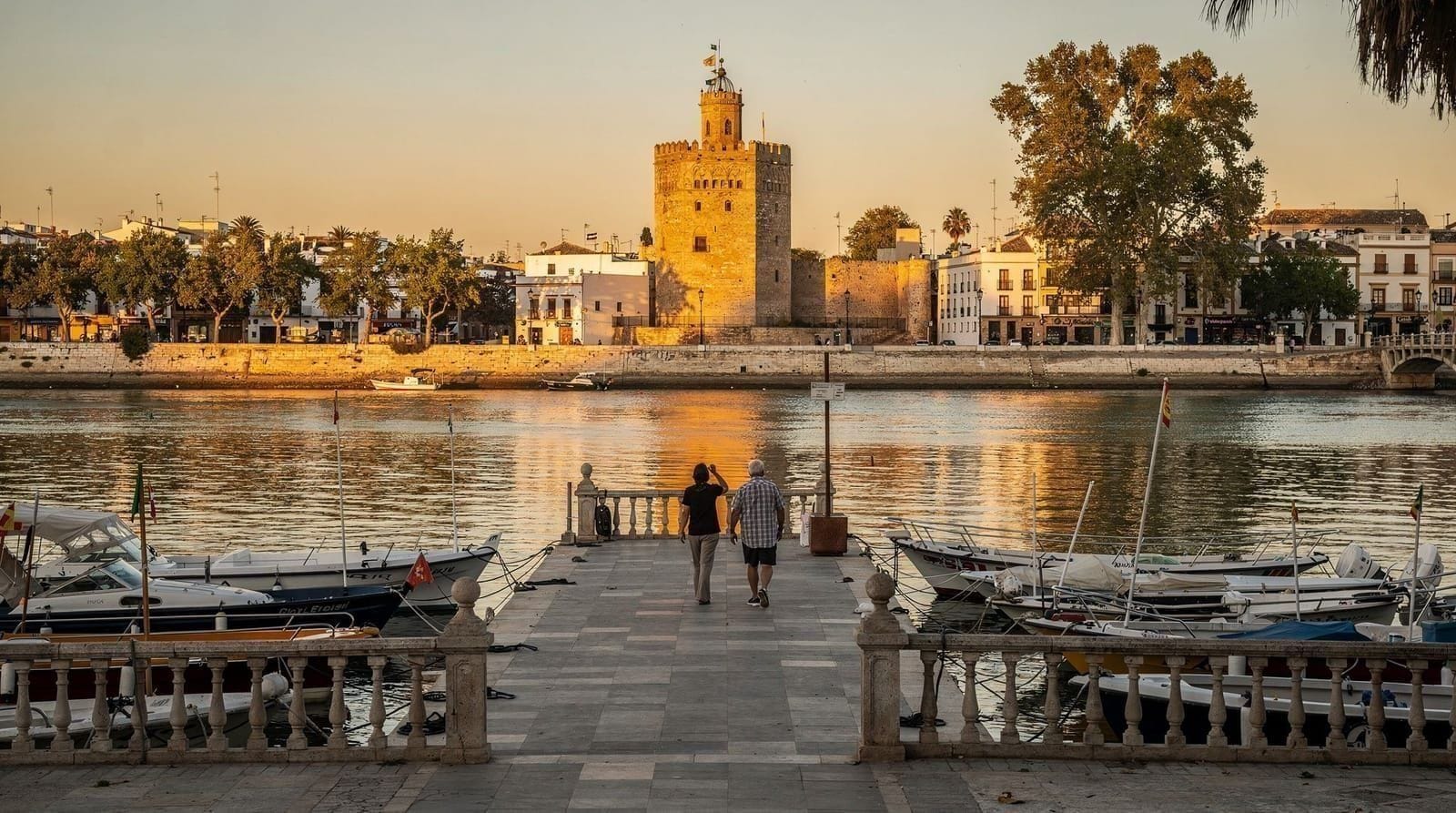
Today El Arenal is primarily a restaurant and hotel district, with the river walk (Paseo de Cristóbal Colón) and the Torre del Oro visible from the Maestranza’s riverside facade. The neighbourhood is quieter than Santa Cruz and has fewer tourist traps. See the El Arenal neighbourhood guide for the fuller picture of what else the district offers beyond the bullring.
Practical information
Address: Paseo de Cristóbal Colón, 12, 41001 Seville. On the riverbank in El Arenal.
Hours: Open daily 9:30 AM–9:30 PM (ticket office closes 30 minutes before); on bullfighting days 9:30 AM–3:00 PM, with occasional closures on event days. Check the official website for specific tour times.
Tickets: Current prices are on the official visit website. The specialist tour with a former matador is more expensive but provides first-person insight.
Comparing the tour options:
| Tour | Price | Best for |
|---|---|---|
| Standard guided tour | See official site | First-time visitors, general interest |
| Skip-the-line tour | See official site | Peak season, limited time |
| Tour with a former matador | Higher | Deeper, first-person perspective on the profession |
Getting there: 10-minute walk from the Cathedral via the river, or 5 minutes from the Torre del Oro.
Accessibility: The tour route includes stairs in several sections (the seating tiers and some museum rooms); check with the ticket office in advance if mobility is a concern, as accommodations vary by section of the building.
Bullfight attendance: If you want to attend a live fight, tickets are sold at the official box office (opens daily; full schedule posted online) and via third-party operators. The season runs Easter Sunday to late October.
The Maestranza in literature and film
The Maestranza appears repeatedly in Spanish literature and film as a symbol of Andalusian identity and masculine performance. Carmen — the 1875 Bizet opera based on Mérimée’s 1845 novella — is set partly in Seville’s bullring, though the opera’s version is more generic than specifically Maestranza-located.
Hemingway visited Seville and wrote about the Maestranza in Death in the Afternoon (1932), his non-fiction account of bullfighting. His description of the light in the arena and the specific character of the Seville audience remains one of the more precisely observed accounts of what the building feels like during a fight.
In contemporary Spanish cinema, the Maestranza appears in several Andalusian-set films as an establishing location for the culture and period. Bigas Luna’s Jamón Jamón (1992) has scenes set in bullring contexts; various television productions use the arena for historical and contemporary period dramas.
The Toro de Osborne: cultural icon context
While not directly connected to the Maestranza, the black bull silhouette that appears on hilltops throughout Andalusia — the Toro de Osborne, originally an advertising billboard for Osborne sherry, now classified as cultural heritage and protected by law after the advertising ban on roadside billboards — represents the same cultural nexus of bullfighting, Andalusia, and Spanish identity that the Maestranza embodies architecturally. Visitors from outside Spain sometimes wonder why large black metal bulls are silhouetted against the sky on hills outside Seville. The short answer: advertising became art became heritage.
The Feria de Abril and the Maestranza connection
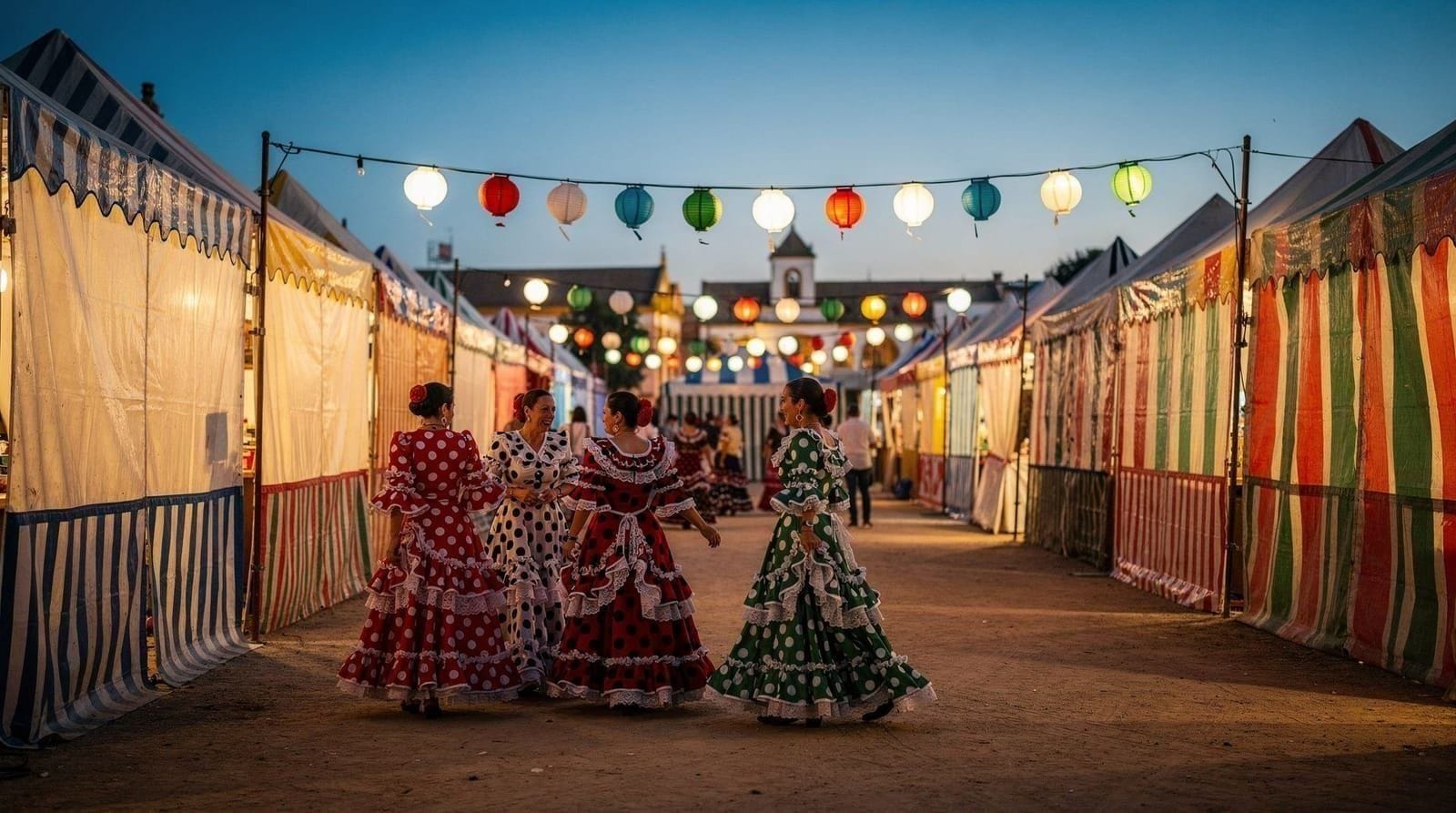
The Feria de Abril — Seville’s spring fair — is held approximately two weeks after Easter in the Real de la Feria fairground in the Remedios district. It is primarily a festival of flamenco, horses, sherry, and casetas (private tent pavilions). But its connection to the Maestranza is direct: the Feria period is the Maestranza’s most prestigious bullfighting week of the year.
The Feria bullfighting series (corridas de feria) runs for 13 consecutive days. The most prominent matadors of the season all appear. The seats — particularly the prime sombra positions and the Palco del Príncipe — are occupied by Seville’s social elite. The tickets for Feria fights are the most expensive of the year and sell out months in advance.
If you are in Seville during Feria and want to attend a fight, book through the official Maestranza box office as early as possible — typically the second week of March for the April series. Third-party ticket sellers during Feria period mark up significantly above face value. See the Feria de Abril guide for the wider festival context, and the Seville in spring guide for how the bullfighting season fits into the season’s broader calendar.
Getting to the Maestranza from other sites
The Maestranza’s location on Paseo de Cristóbal Colón — the riverside promenade — makes it a natural endpoint for a walk from the historic centre:
From the Cathedral: 10 minutes along Calle Dos de Mayo or through the El Arenal neighbourhood, following the river south.
From the Alcázar: 15 minutes along Calle Almirante Espinosa to the river, then south.
From Las Setas (Metropol Parasol): 25 minutes on foot through the Alameda de Hércules neighbourhood and south through El Arenal.
Sevici hire bikes are a practical option for the riverside section — the Paseo de Cristóbal Colón has a dedicated cycling lane for most of its length, and the riverside ride from the Torre del Oro to the Maestranza is one of the most pleasant short bike routes in the city.
Fitting the bullring into a wider Seville plan
The Maestranza works best as one stop among several rather than a full day on its own. If you are still deciding how long to stay in the city, the how many days in Seville guide helps you see where a short bullring visit fits. For a ready-made order of stops, the Seville in one day itinerary and the first-timers itinerary both pass through the riverside area, and the Seville in two days itinerary leaves more breathing room for it. Our broader Seville itinerary planning guide explains how to group sights by neighbourhood so you are not crossing the city back and forth.
If you are comparing skip-the-line options across the city’s major sights, the skip-the-line Seville decoded guide lays out the logic, and it applies to the bullring tour as well. Pairing the bullring with the monuments nearby is common: the Seville Cathedral complete guide and the Real Alcázar complete guide cover the two big sights a short walk away, and the Santa Cruz neighbourhood guide is a natural afternoon after the arena.
Eating and wandering after the tour
After the tour, El Arenal is a good place to sit down for tapas without paying a tourist premium, provided you choose carefully. The barra vs terrace pricing guide explains why standing at the counter usually costs less than a riverside table, and the guide to avoiding tourist-trap restaurants gives you the signs to watch for near the busiest landmarks. If you would rather cross the river afterwards, the Triana neighbourhood guide is the obvious next walk, and the getting around Seville guide covers how to move between the districts. For the city’s other big seasonal event, the Semana Santa guide shows how the Easter processions overlap with the start of the bullfighting season.
The Torre del Oro in proximity
The Torre del Oro — the 13th-century Almohad watchtower that is one of Seville’s most recognizable landmarks — is a 5-minute walk from the Maestranza along the riverside. Both are El Arenal landmarks, and both are appropriate for a half-day circuit of the neighbourhood.
The Torre del Oro contains a small naval museum (check the official museum website for current prices and opening hours) with navigational instruments, maps, and objects relating to Seville’s maritime history. The collection is modest but appropriate to the building’s history as a watchtower for the port. The rooftop gallery (reached via an internal staircase) has views over the river and the Triana neighbourhood across the water.
A practical El Arenal half-day: Torre del Oro (30 minutes), riverside walk south, Maestranza guided tour (1 hour), lunch in one of the riverside restaurants, afternoon in the Santa Cruz neighbourhood or Cathedral. If you’d rather have this route guided rather than self-planned, see the best walking tours in Seville guide for options that cover El Arenal alongside the historic centre.
The museum context: is it worth pairing with other collections?
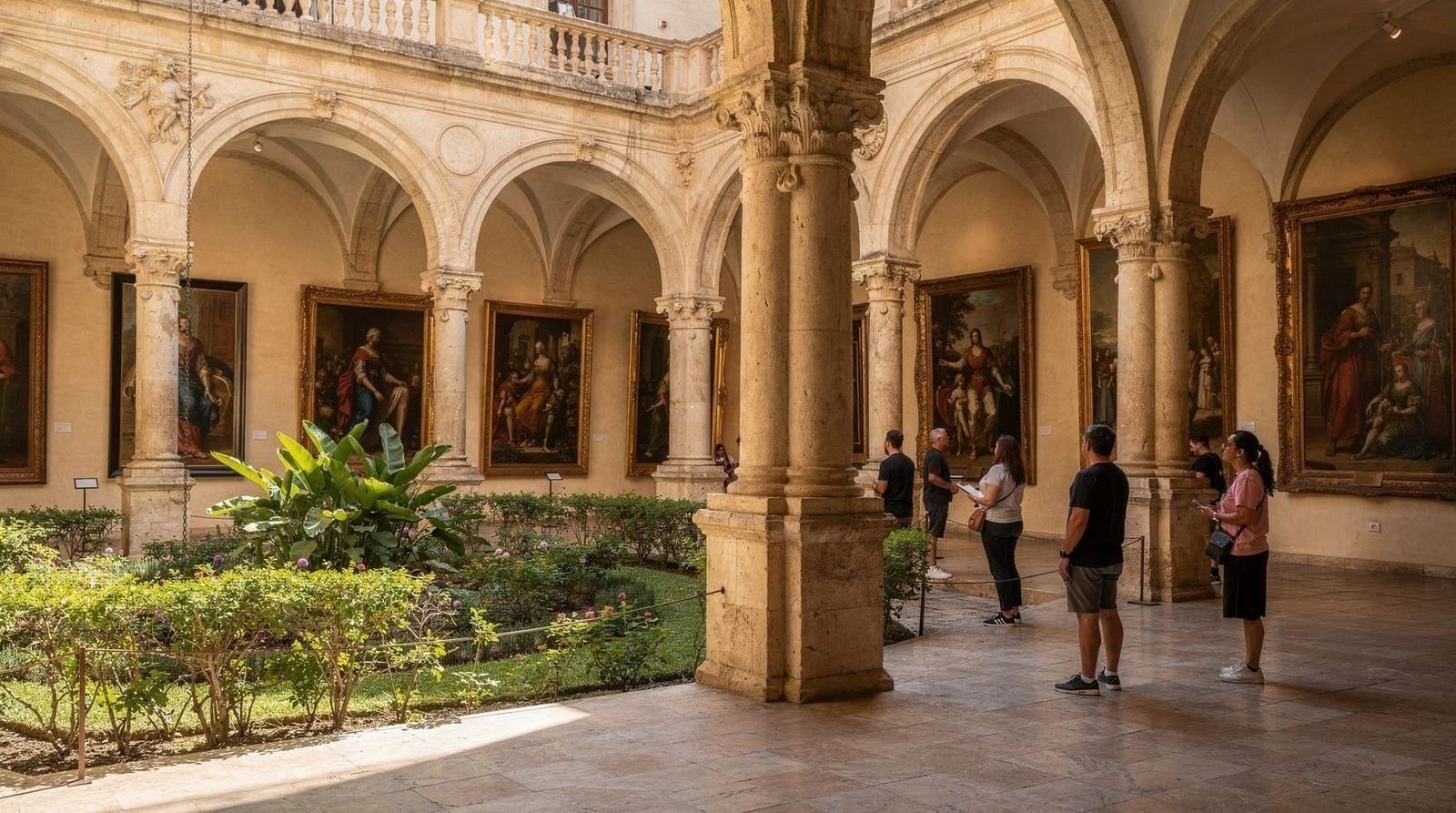
The Maestranza’s own museum is modest compared to Seville’s dedicated art institutions, but for visitors building a museum-focused day, it pairs naturally with a wider circuit. See the museums in Seville guide for how the bullring museum compares to the Museo de Bellas Artes and other collections, and for a realistic sense of how much time to budget if you’re combining several in one day.
Frequently asked questions about Plaza de Toros de la Maestranza
Is visiting the Maestranza ethical for tourists?
This is a genuine question with no simple answer. Bullfighting remains legal in Seville and is classified as cultural heritage in Andalusia. The Maestranza is one of the most historically significant bullrings in Spain. Visiting the guided tour of the empty arena and museum is architecturally and historically informative; attending a live fight is a personal decision that depends on your views on animal welfare.What does the Maestranza tour include?
The guided tour covers: the arena itself (the sand and the barrier), the toril (bull entrance gate), the royal box (Palco del Príncipe), the infirmary, the chapel (where bullfighters pray before entering), the horse stables, and the museum with equipment, portraits, and historical artefacts.When is bullfighting season in Seville?
The official season at the Maestranza runs from Easter Sunday (Domingo de Resurrección) through late October, with major fights during the Feria de Abril and the San Miguel feria in September. The Semana Grande (main bullfighting week) in April during Feria is the most prestigious; all major living matadors appear over this 13-day period.Can I watch a bullfight at the Maestranza?
If you are in Seville during the season (Easter through October) and want to attend, tickets are available through the official Maestranza box office or third-party operators. Prices vary enormously depending on the seat (sol/shade, sol or sombra, position in the arena) and the billing. A mid-range seat for a non-peak fight costs €20–€40. Feria de Abril fights cost significantly more.Is the Maestranza the most important bullring in Spain?
The two most prestigious bullrings in Spain are Las Ventas in Madrid and the Maestranza in Seville. Professionally, Las Ventas is considered the apex (confirming an alternativa — the ceremony of full matador status — at Las Ventas is the highest professional marker). The Maestranza is the more beautiful building architecturally and carries the deeper historical tradition. Both claims have partisans.What is the architectural style of the Maestranza?
The Maestranza was built in stages between 1761 and 1881. The distinctive circular design with its white-and-yellow facade is in the Baroque tradition, influenced by Mudéjar elements. The capacity is approximately 12,500. The building is classified as a national monument of Spain.How does the Maestranza compare to visiting Las Ventas in Madrid?
Both are major national monuments and offer similar guided-tour formats: arena, royal box, chapel, and museum. The Maestranza is generally considered the more beautiful building architecturally, with its distinctive white-and-ochre facade and riverside setting. Las Ventas is larger and holds the higher professional prestige within the bullfighting world. If you are only visiting one city, either tour gives a comparable experience of the tradition.
Top experiences
Bookable activities with verified prices and instant confirmation on GetYourGuide.