Seville in spring: the complete guide to March, April, and May
Seville: Experience the Feria de Abril
Is spring the best time to visit Seville?
Spring (March-May) is the most celebrated time to visit Seville — orange blossom fragrance, perfect temperatures (20-26°C), Semana Santa, and Feria de Abril. It is also the most expensive and most crowded. Late April (after Feria) through May is the sweet spot: all the pleasant weather without the peak crowds.
Seville’s spring reputation is entirely justified. The combination of comfortable temperatures, extraordinary flowering, two of Spain’s most spectacular festivals, and the city at its most animated creates a visitor experience that genuinely rivals any city in Europe at any time of year. The honest caveat: this reputation has been priced in.
| Temperature range | around 15-28°C depending on the month |
| Peak weeks | Semana Santa (late March/April) and Feria de Abril (April) |
| Sweet spot | late April through May — good weather, fewer crowds |
| Booking lead time | 6+ months for festival weeks, 4-6 weeks for May |
| Rain risk | Occasional in March, rare by May |
Spring month by month, at a glance
| Month | Temp (day) | Crowds | Accommodation cost |
|---|---|---|---|
| March | 15-20°C | Moderate, rising late in month | Normal, rising toward Semana Santa |
| April | 18-26°C | Very high around festival weeks | Peak — 3-5x during Semana Santa/Feria |
| May | 22-28°C | Low to moderate | Back to normal |
What makes spring special: orange blossom
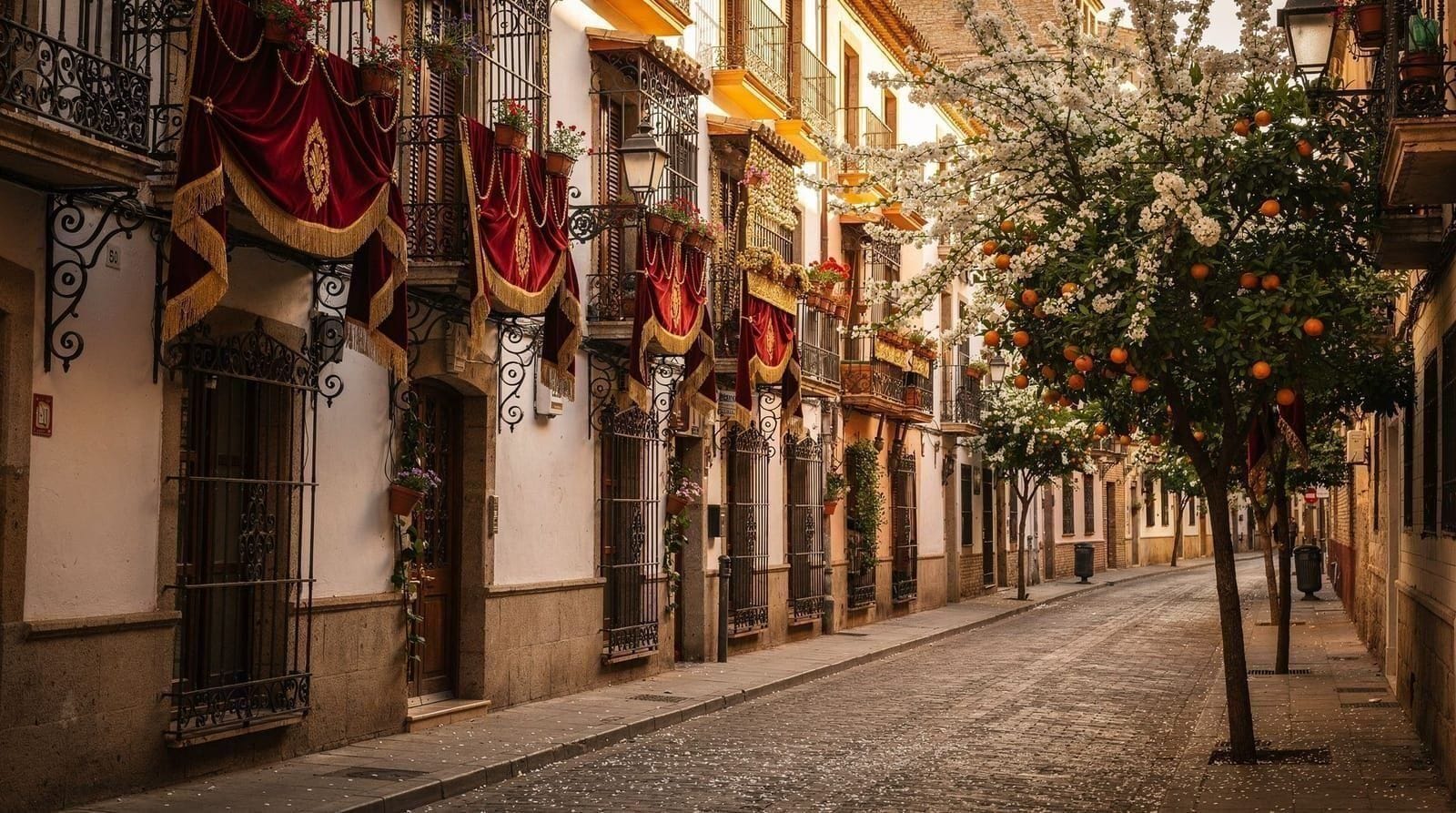
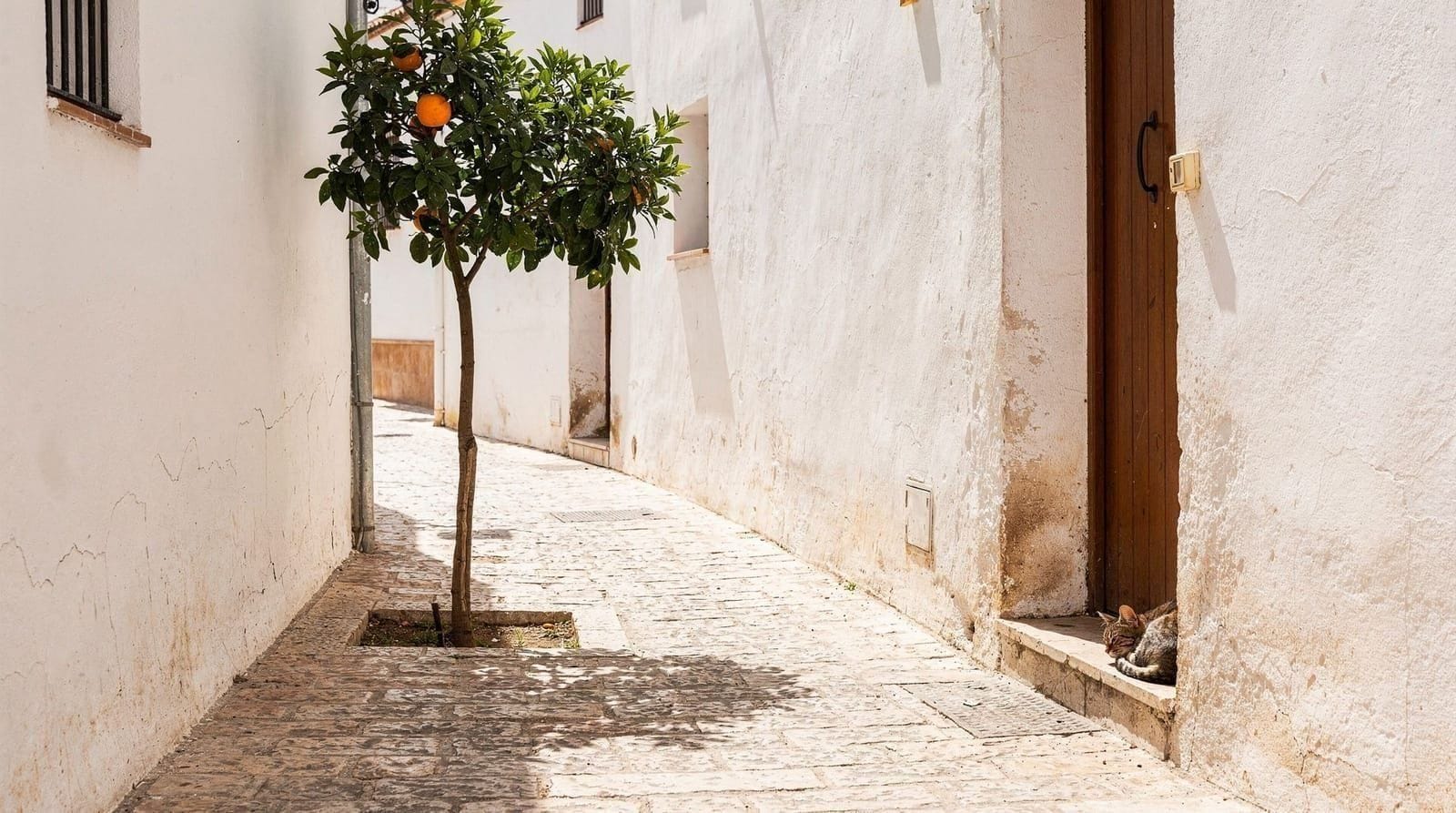
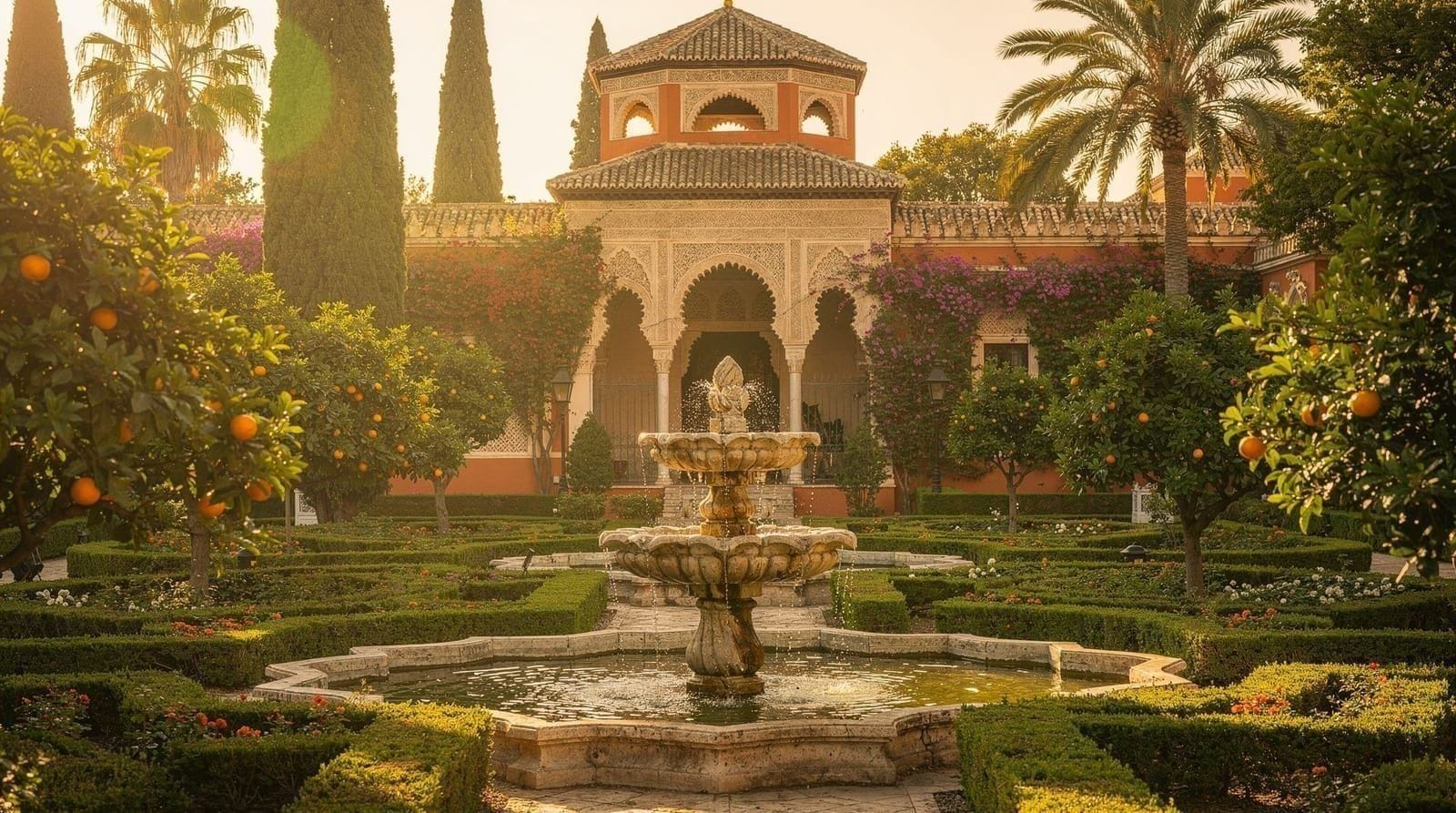
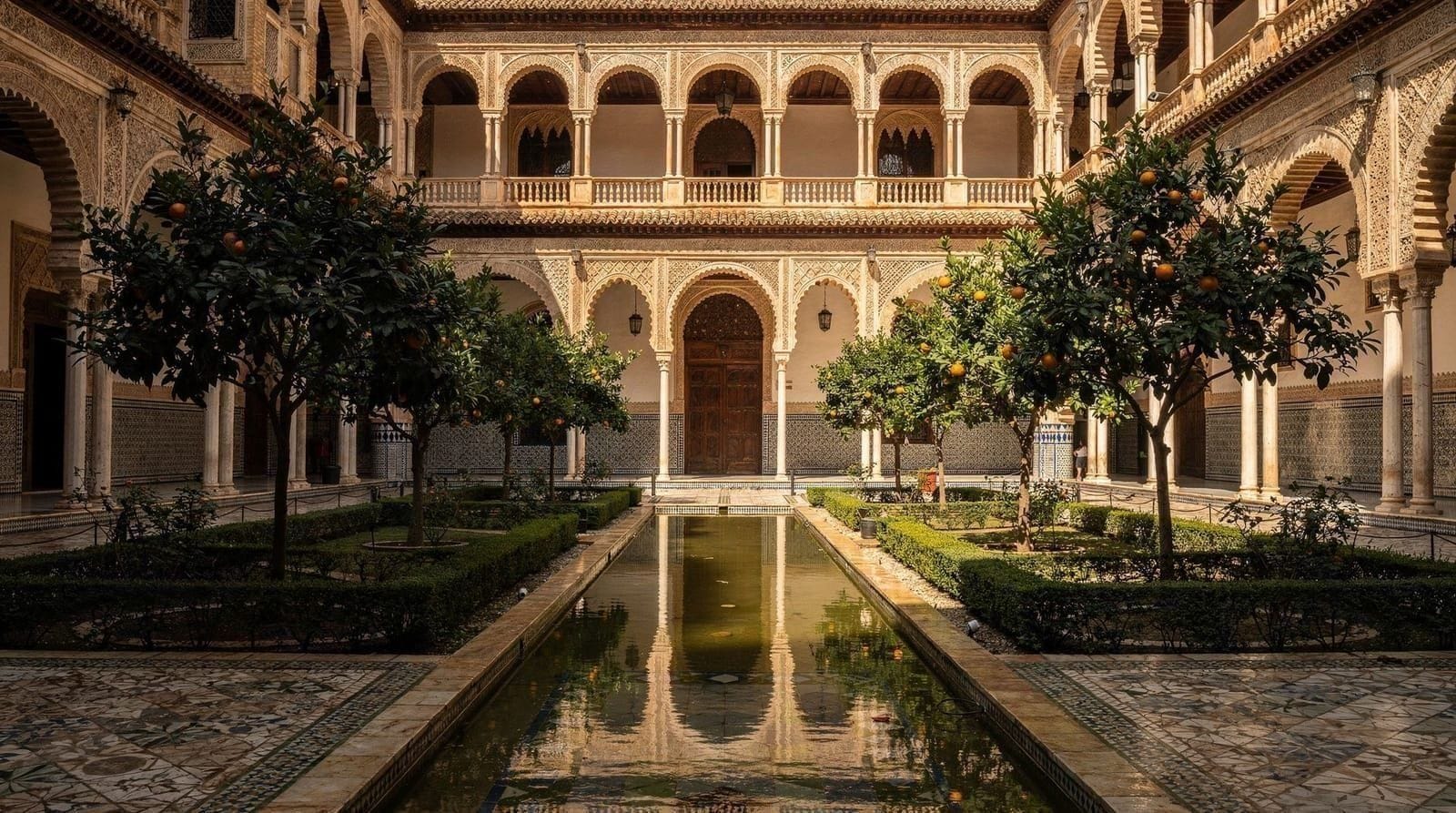
Seville has approximately 40,000 bitter orange trees (Citrus aurantium) planted throughout the city. These are not eating oranges — the Seville orange is too bitter to eat raw but is the standard marmalade orange, exported globally. They were planted for shade, beauty, and scent.
The trees flower from late March to mid-April, and the scent of azahar (orange blossom) during this window is one of the most distinctive urban olfactory experiences anywhere. Walking through the narrow lanes of Santa Cruz in early April morning — jasmine from the Alcázar gardens mixing with azahar from the street trees — is the sensory signature of Seville.
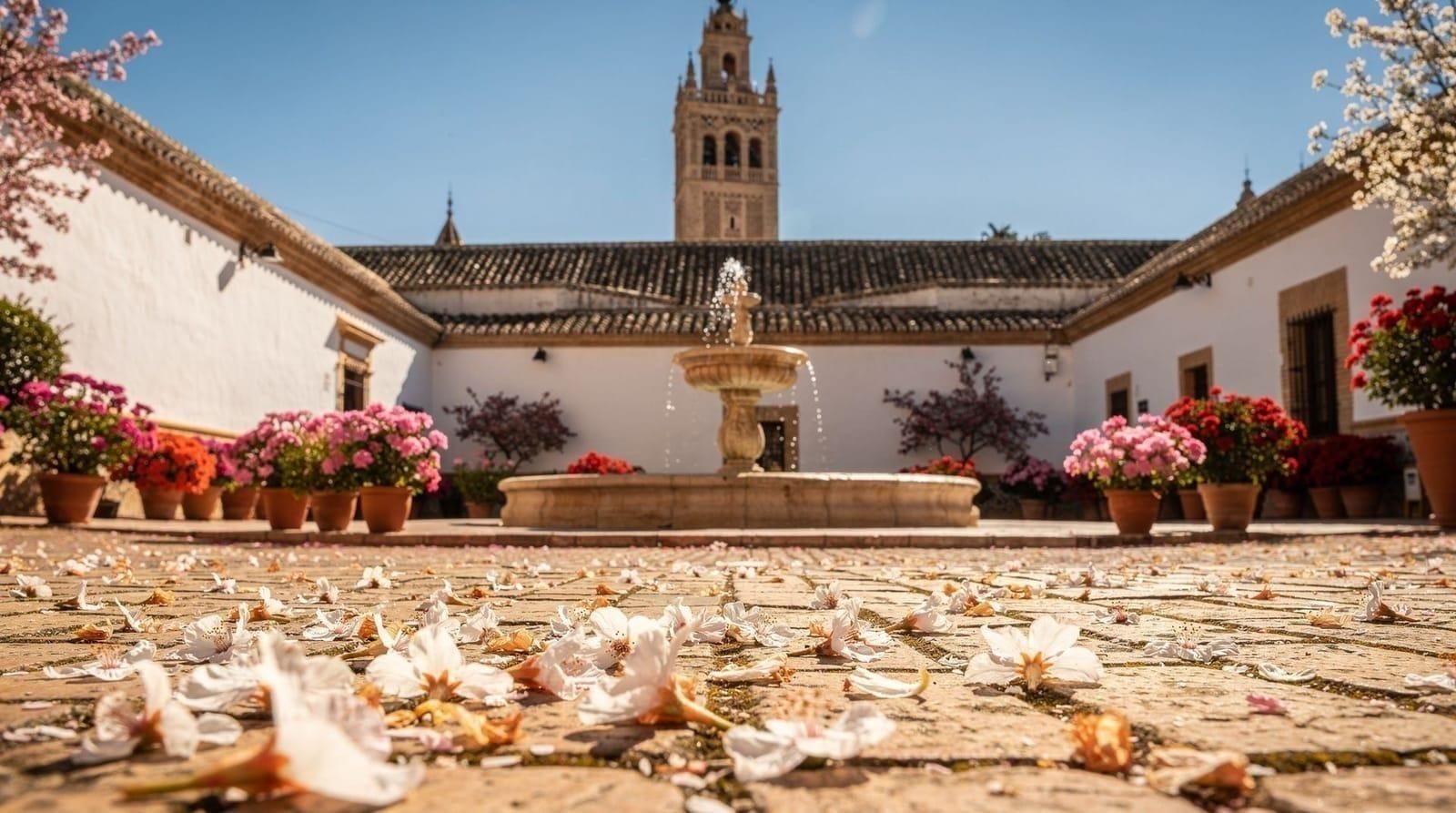
The Jardines de Murillo (eastern edge of the Alcázar) and the Alcázar gardens themselves are the most fragrant concentrations. María Luisa Park’s formal gardens are also excellent.
Practical note: The orange blossom timing shifts by 1-2 weeks depending on winter temperatures. In a warm winter (like 2026), blossom can start in mid-March.
March: building towards the festival season
Early March is a pleasant shoulder season. Temperatures (15-20°C) are comfortable, crowds are moderate, and accommodation prices have not yet reached their April peak. The city is preparing for Semana Santa — brotherhood processions rehearse in the streets at night, churches are beautifully decorated.
Late March is when the season transforms. Orange blossom starts appearing. The final days before Semana Santa (Palm Sunday falls March 29 in 2026) see the city fill with visitors.
What to do in March:
- Visit the Alcázar and Cathedral with smaller queues than April-May
- Start seeing the elaborate pasos (processional floats) displayed in churches (they’re brought out for rehearsal visits in the weeks before Semana Santa)
- Walk the riverfront — the spring light on the Guadalquivir is exceptional
- Day trip to Córdoba before the main season crowds
April: the festival month
April 2026 contains Seville’s two most significant annual events within a month of each other:
Semana Santa (March 29 – April 5, 2026): Holy Week is not a cheerful spring festival — it is a solemn, emotionally powerful religious observance. The 60+ brotherhoods that process through Seville represent centuries of neighbourhood identity, and watching the pasos carried through the streets (each float can weigh over 5,000 kg and is carried by 50-100 costaleros on their shoulders, unseen beneath the float) is an extraordinary experience. The penitents (nazarenos) in white or black conical hoods are the famous visual; less known is the saeta — an impromptu flamenco prayer sung from a balcony as a brotherhood passes below.
For the full guide to Semana Santa processions, routes, and logistics, see the Semana Santa guide.
Accommodation warning for Semana Santa: Book 6-12 months ahead. Hotels in the historic centre charge 3-5× normal rates. The cheapest viable approach is to stay in a neighbourhood hotel and walk in (the processions happen throughout the city, not just the centre), or choose the shoulder days (Monday-Tuesday of Holy Week, which see fewer major processions).
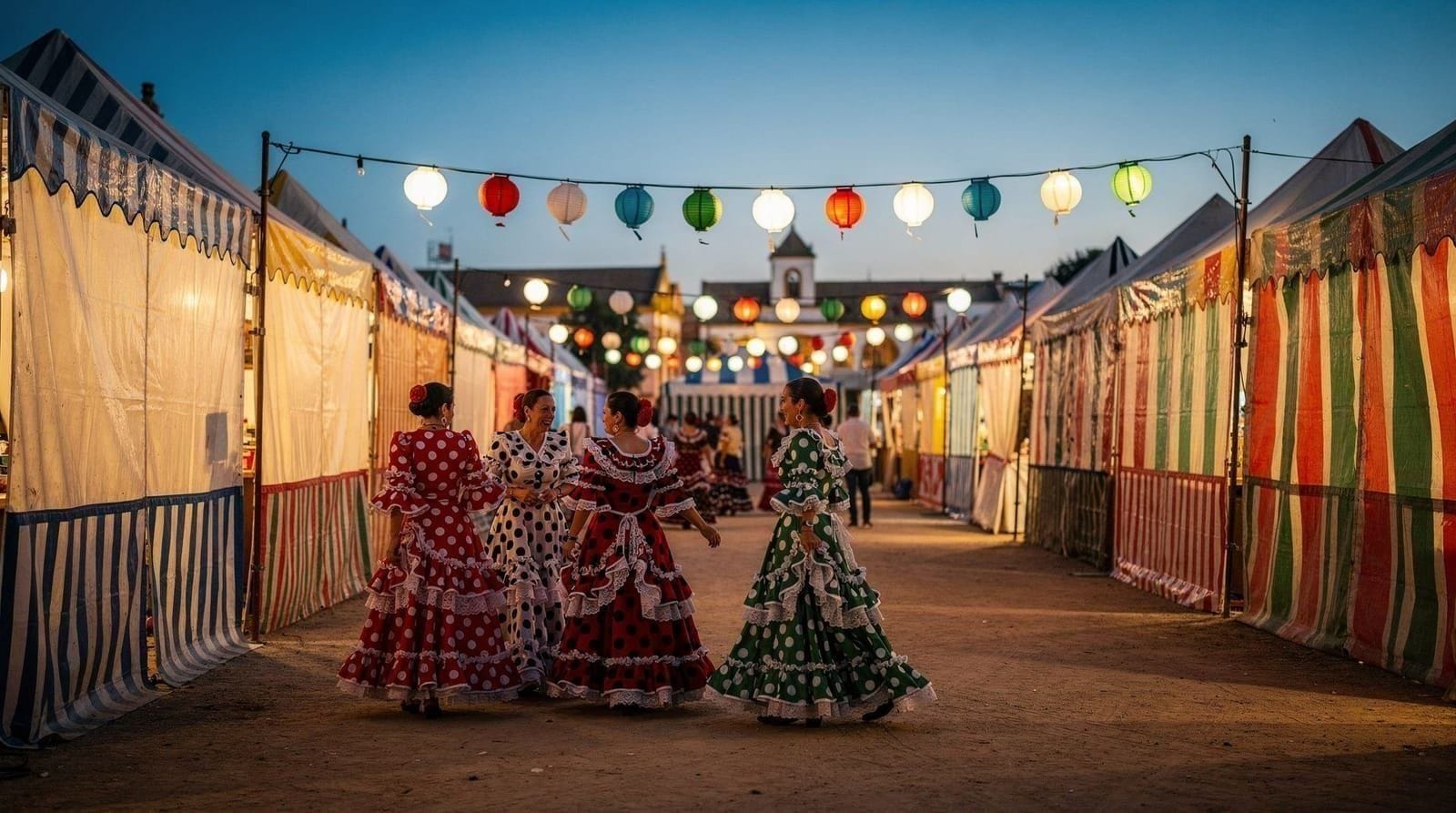
Feria de Abril (April 21-26, 2026): Two weeks after Semana Santa, the city pivots from solemnity to celebration. The Feria de Abril began in 1847 as a livestock fair and evolved into Seville’s defining secular festival. The fairground (Real de la Feria) in Los Remedios neighbourhood fills with hundreds of casetas — private marquees belonging to families, cultural organisations, peñas, and businesses — and runs from midnight Alumbrado (the lighting ceremony) through six days of sevillanas music, sherry, flamenco dress, and Andalusian horses.
What visitors can actually experience: The fairground is open to the public, and there are public casetas where you can eat, drink, and watch the sevillanas. The most authentic experience is being invited to a private caseta (locals are generous; striking up a conversation with a Sevillano in the city in the preceding days often produces invitations). The daytime horse parade (paseo de caballos) on the main boulevard is publicly accessible and spectacular. For the full guide, see the Feria de Abril guide.
If you have no invitation to a private caseta: the public casetas are the realistic way in, and they are a perfectly good evening. Go in the afternoon rather than late at night, when the fairground is calmer and easier to read, and watch how families dress, dance and move between casetas before you join in. Some visitors prefer not to navigate the fair alone, in which case a guided experience of the Feria de Abril takes care of the unwritten rules for you. Either way, wear comfortable shoes: the fairground is large and the ground gets worn down over six days.
How to choose between the two festivals: think about what you want to feel. Semana Santa asks you to stand quietly on a street corner for long stretches and take in sound, incense and candlelight. Feria asks you to join in. Travellers with children, or those who tire of crowds quickly, usually find Feria easier to dip into for an afternoon. For help weighing the whole calendar, the best time to visit Seville guide puts spring next to the other seasons, and the guide to avoiding crowds shows how to find quieter windows even in busy months.
May: the overlooked gem
Late April (after Feria ends April 26) and May is the best-kept secret of Seville’s calendar. The weather is excellent — warm (22-28°C), sunny, occasional cooling breezes. The festival crowds have gone. Accommodation prices are back to normal. But all the infrastructure that Semana Santa and Feria required is still running: restaurants are at full capacity, attractions are staffed properly, and the city is in a good mood.
May is the best month for:
- Visiting the Alcázar without queuing or crowds
- Day trips to Córdoba, Ronda, and Cádiz at a comfortable pace
- María Luisa Park and the Plaza de España at their most relaxed
- Outdoor tapas in the early evenings (the terraza culture peaks in May before the heat makes it impractical)
The rose garden in María Luisa Park peaks in May — a detail no one mentions but genuinely worth seeing.
Building a spring day in Seville
Spring rewards a slow, well-ordered day. Start early in the gardens while the air is cool and fragrant, then move indoors for the middle of the day, when the sun is strongest and the lanes are busiest. The Alcázar suits the morning best; if you want context rather than just a walk through the rooms, a guided Alcázar visit with skip-the-line entry explains the layers of Moorish and Castilian building that are easy to miss alone. Our Real Alcázar complete guide covers the palace room by room, and the skip-the-line decoder explains which ticket type fits which kind of visitor.
Lunch is a good moment to step out of the crowd. Spring evenings are when the terraces fill, but a plate of tapas at the bar at midday is usually calmer, and the barra vs terrace pricing guide shows how to avoid paying a premium for a table in the sun. In the late afternoon, wander the old Jewish quarter when the light turns golden and the day-trippers have left. If you would rather hear the stories behind the streets, a small-group walk through Santa Cruz is a gentle way to spend an hour or two, and the Santa Cruz neighbourhood guide is there if you prefer to go on your own.
Finish with a stroll along the river or through the lanes of Triana as the streetlights come on. Spring evenings are what many visitors remember most, so leave them free rather than packing in one more sight.
How many days to plan in spring
Seville is compact, and spring makes walking a pleasure, but festival weeks change the arithmetic. Crowds slow everything down, processions can close streets without warning, and getting from one side of the centre to the other sometimes means a long detour. Add a buffer day if you are visiting during Semana Santa or Feria. Outside those weeks, the how many days in Seville guide will help you decide, and the 3-day itinerary is a comfortable template that fits spring well because the weather lets you spend most of each day outdoors.
If you are staying longer, spring is also the best time to link Seville with the rest of Andalusia, since the cooler temperatures make train and bus days far more pleasant. The Andalusia week itinerary shows one way to combine them.
Practical spring tips
Booking: For Semana Santa and Feria weeks, book everything 6+ months ahead. For May, 4-6 weeks is usually sufficient.
Alcázar tickets in spring: The 9:30am slot books out furthest ahead in April — try it at entradas.alcazarsevilla.es as soon as you know your dates.
Clothing: Evenings in March and early April can be cool (14-16°C). A light jacket or layer is needed for evening outdoor dining through mid-April. By May, evenings are warm enough for light clothing all night.
Photography tip: The Alcázar gardens in early morning during orange blossom season (late March-early April) are the best combination of fragrant air, low crowds, and beautiful light in Seville. The gardens open at 9:30am — go straight there before visiting the palace.
Where to stay in spring
For Semana Santa or Feria week, location matters less than booking early — processions move throughout the city and Feria’s fairground is in Los Remedios regardless of where you sleep. Outside festival weeks, the historic centre (Santa Cruz, El Arenal) keeps everything within walking distance; Triana is a good, usually cheaper, alternative with its own strong tapas scene. See best neighborhoods in Seville for a full comparison and where to stay in Seville for specific picks by budget.
Day trips that work well in spring
Spring’s mild temperatures make it the best season for day trips that would be uncomfortable in summer heat. Córdoba is an easy train-based day, especially good in March before the peak crowds. Ronda, perched on its gorge, and the white villages route both suit the comfortable spring temperatures for walking. May, once Feria’s crowds have cleared, is a particularly good month for any of these — see best day trips from Seville for the full list.
Parks and gardens in spring
Spring is when Seville’s green spaces are at their best. Beyond the Alcázar gardens, María Luisa Park’s rose garden peaks in May, and the Jardines de Murillo are fragrant with jasmine and orange blossom through April. See the parks and gardens guide for a fuller list of where to walk.
Reading the spring calendar honestly
Spring in Seville is really three different trips under one name: the anticipation of March, the intensity of the festival weeks, and the easy rhythm of May. Which one you get depends entirely on your dates, so it pays to decide what you want before you book anything. If the processions or the fair are the reason you are coming, accept the cost and the crowds, book early, and plan your days around the events rather than around sightseeing. If you simply want beautiful weather and a lively but manageable city, aim for the weeks after Feria.
Whichever you choose, remember that the city’s best moments in spring are often small ones: a scent of orange blossom in a side street, a saeta from a balcony, a table on a terrace as the light fades. Leave room in your plan for them. For first-time visitors, our first-time travel tips and common mistakes pages cover the basics that apply in every season.
Frequently asked questions about Seville in spring
Is Semana Santa or Feria de Abril better for a first visit?
They are very different events, not competing options. Semana Santa is a solemn religious procession week with extraordinary atmosphere but limited festive nightlife. Feria de Abril is a joyful, music-and-dance secular fair. If you can only choose one and want colour, music and a party feel, Feria is the easier first visit; Semana Santa rewards those genuinely interested in the religious tradition and don't mind a more solemn mood.Is late April to May a good alternative to Semana Santa and Feria?
Yes, and for many first-time visitors it's the better choice. Late April through May keeps the warm, comfortable weather and full restaurant and attraction capacity of peak spring, without the 3-5x accommodation prices or the crowds of the two big festival weeks.