Seville in one day: the essential itinerary
Seville: Royal Alcázar entry ticket
What you can realistically see in 24 hours
One day in Seville is enough for the absolute highlights — but only if you protect your morning. The Alcázar and Cathedral together take four to five hours with realistic crowds; trying to add a day trip to Córdoba or Granada on the same day is a recipe for exhaustion and short-changing everything. Stay in the city, walk slowly, and eat well.
This itinerary works best if you arrive the evening before and stay the night — if you’re arriving by train or flight on the day itself, shift everything 90 minutes later and drop the evening flamenco.
| Where | Historic centre: Alcázar, Cathedral, Santa Cruz, Plaza de España |
| Cost | around €90–105/person incl. entries, meals, flamenco |
| Time needed | full day, 8:30–23:00 |
| Getting there | EA airport bus, 35–40 min, €6 |
| Best time | book Alcázar 48–72 hours ahead year-round |
How to use this guide
The schedule below is timed for someone staying in the historic centre. If you’re staying further out (Nervión, Triana), add 10–15 minutes to morning start times. If it’s summer (June–September), pay close attention to the midday rest note — it is not optional.
Seville’s historic centre is compact. The Alcázar, Cathedral, Santa Cruz, and Plaza de España form a roughly triangular area about 1.5 km across at its widest. You will walk approximately 10–14 km on this itinerary.
The booking sequence
The single most important preparation step is booking the Alcázar at least 48–72 hours in advance. Walk-up queues in peak season (spring and summer) are genuinely 60–90 minutes. The official booking platform is real-alcazar.es. Cathedral tickets are available at saintacatedral.es and also via self-service kiosks at the side entrance on Calle Alemanes — a good option if you forgot to book in advance.
For flamenco at Casa de la Memoria, book at casadelamemoria.es 2–4 days ahead. The venue fills up in spring and summer.
Morning: Alcázar and Cathedral (8:30–13:30)
8:30 — Alcázar first
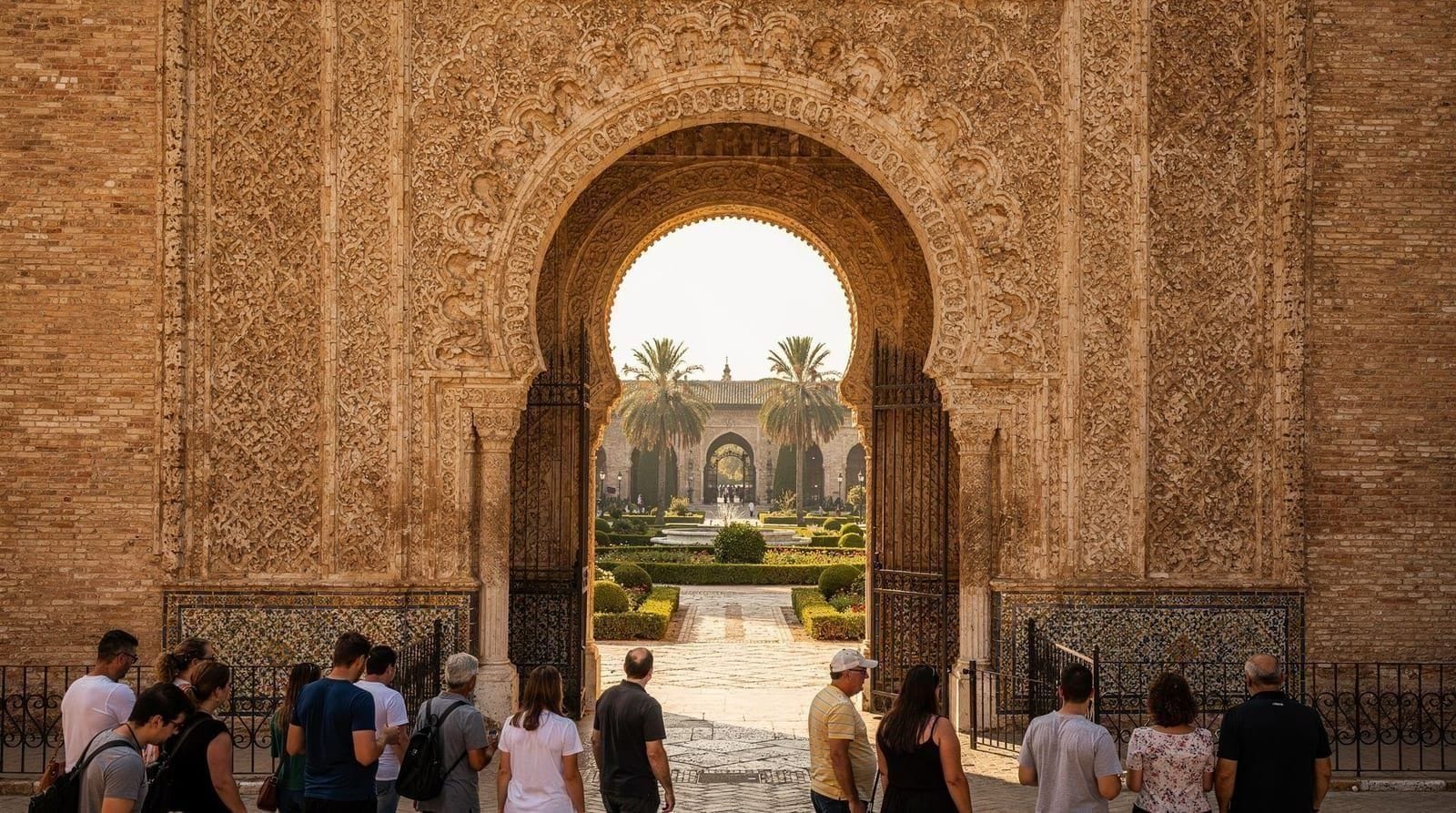
The Royal Alcázar opens at 9:30 (9:00 in summer), and the first time slot fills up within 24 hours of release. Book your skip-the-line ticket at least two or three days in advance.
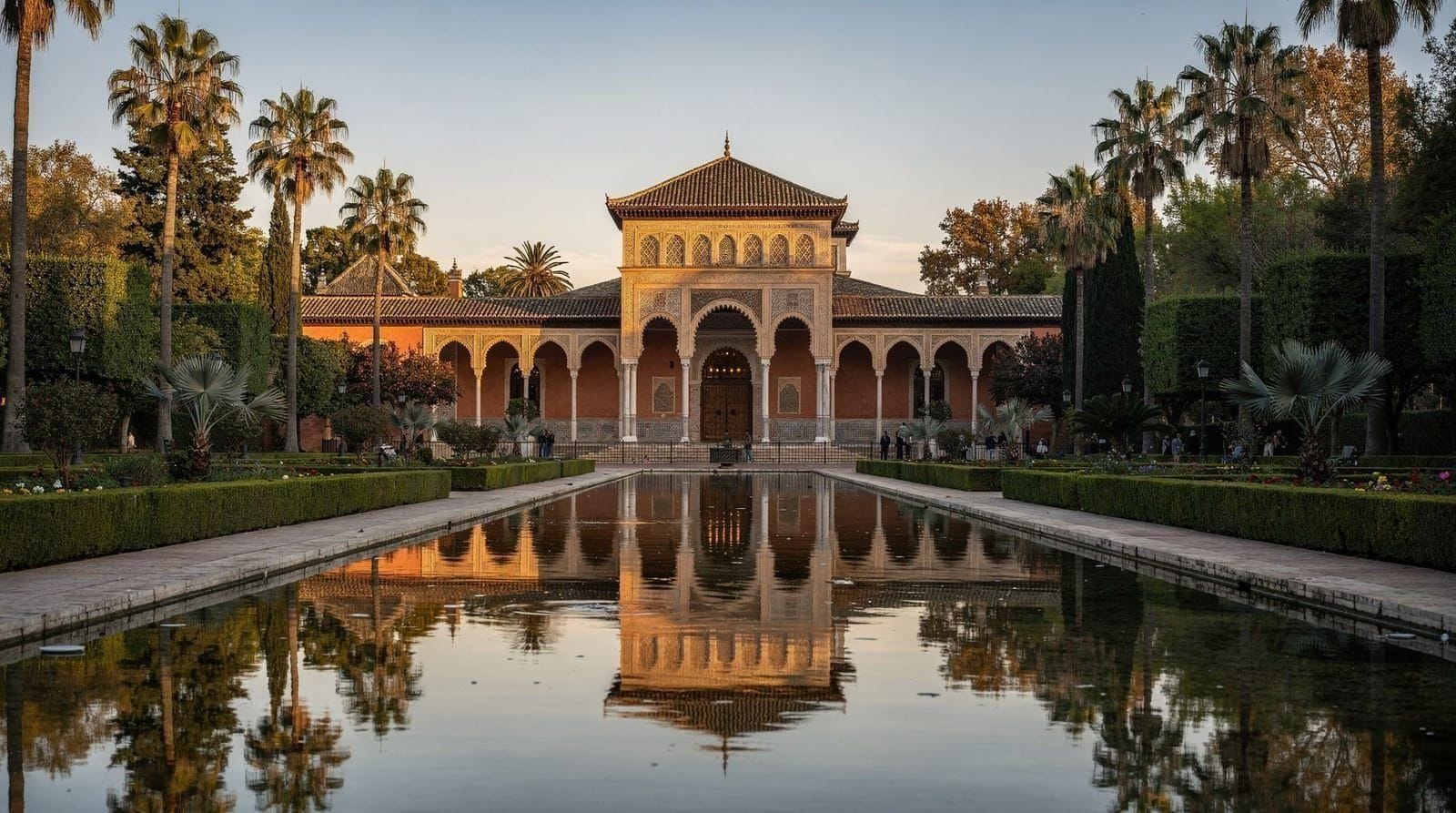
Royal Alcázar entry ticket — skip the queueAim to be at the entrance on Patio de Banderas five minutes before your timed slot. The standard self-guided visit takes about two hours at a comfortable pace. Focus on the Patio de las Doncellas, the Salón de Embajadores, and the upper royal apartments. The gardens are beautiful but can be cut short if time is tight.
Entry prices: adults €15.50, reduced €8 (over 65s and students aged 14–30). Children up to 13 free when accompanied by an adult. The Alcázar is open every day, closing only on 1 and 6 January, Good Friday and 25 December.
10:30 — Cross to the Cathedral
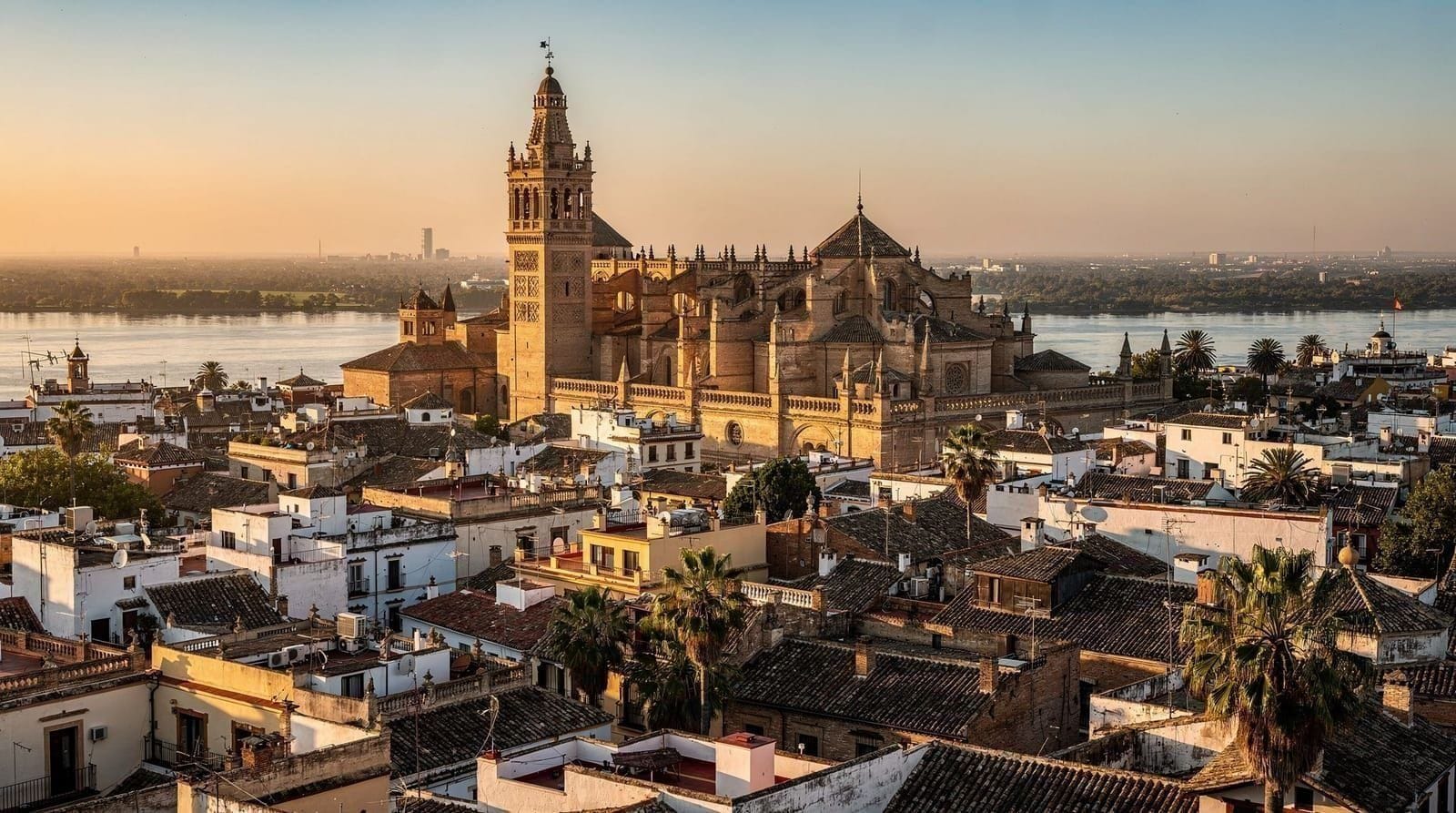
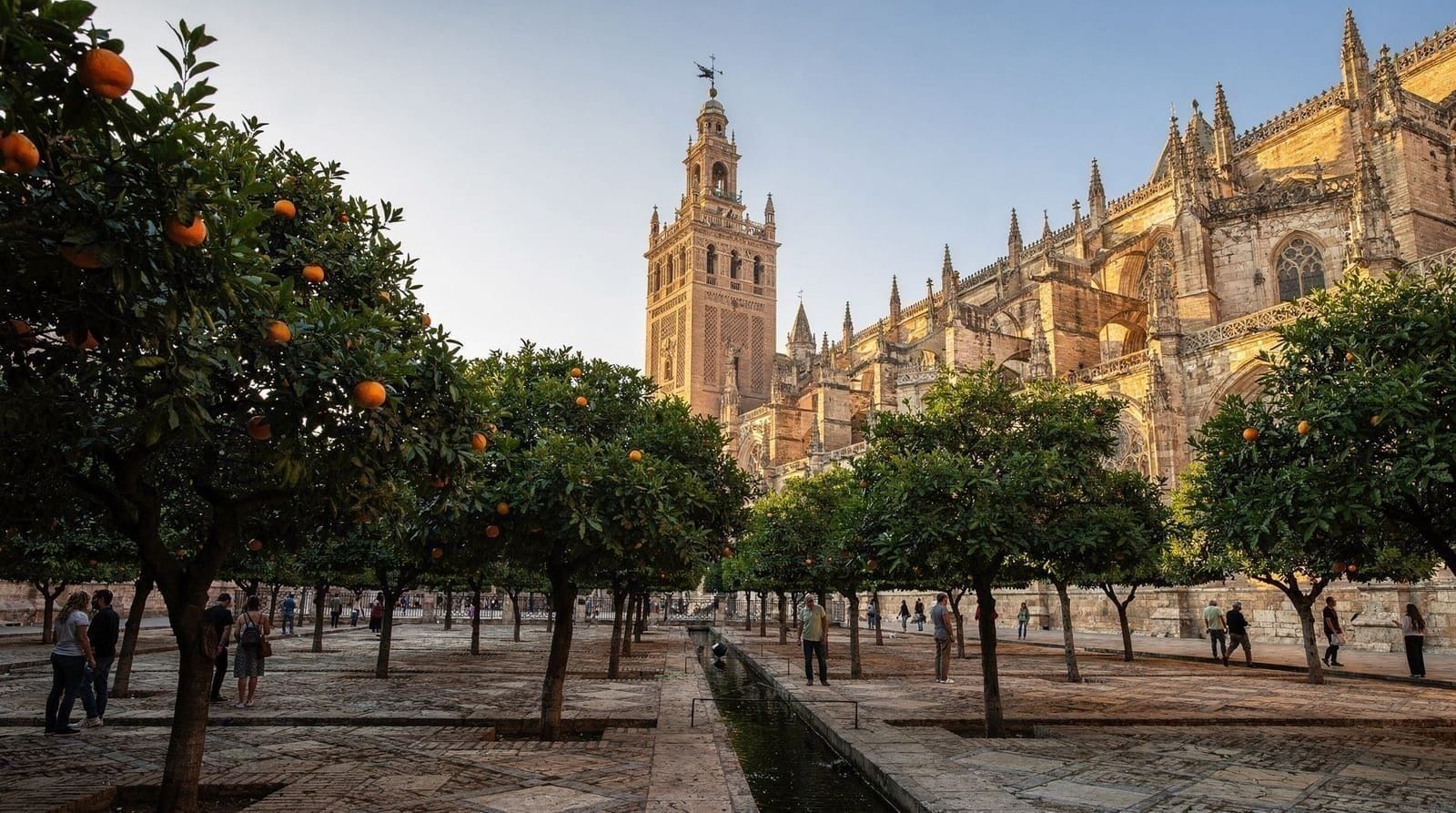
The Cathedral is a five-minute walk from the Alcázar exit. It is directly adjacent to the Giralda — the bell tower you can climb via a spiral ramp (no stairs). Plan 90 minutes for both.
Cathedral and Giralda entry ticketCathedral adult ticket: €13 online (€14 at the ticket office). The Giralda climb is included. Look for Columbus’s tomb just inside the main entrance on the south side. The sacristy treasury has a remarkable silver monstrance; it is easy to miss.
12:30 — Avoid the Cathedral cafés
There are mediocre overpriced cafés immediately outside the Cathedral aimed at tourists. Calle Mateos Gago — the street running east from the Cathedral’s main façade — is lined with restaurants charging €14–18 for a basic set lunch. The food is ordinary and the atmosphere is entirely tourist-facing.
Walk two blocks north to Bodega Santa Cruz (Calle Rodrigo Caro 1) instead — a classic standing bar where a cold beer and a montadito cost about €2.50 at the counter. Sit at the terrace only if you don’t mind paying 30–40% more. The bar itself is much better: chalk tally system on the beam above the counter, cold manzanilla from a tap, jamón carved from the whole leg on the bar.
If Bodega Santa Cruz is full (it often is at midday), try Bar El Comercio (Calle Lineros 9) two minutes further north — quieter, similar quality, good rabo de toro croquetas.
Midday: Santa Cruz and lunch (13:30–15:30)
13:30 — Santa Cruz barrio
The old Jewish quarter is immediately east of the Cathedral. Allow 45–60 minutes to wander the whitewashed alleys, small plazas, and orange trees. The Callejón del Agua and Plaza de Doña Elvira are the most atmospheric corners.
The Barrio de Santa Cruz was the Jewish quarter of medieval Seville until 1391, when a pogrom forced the conversion or expulsion of the community. The whitewashed walls, narrow lanes designed to create shade, and the system of interior courtyards (patios) are a physical inheritance from that period. The Christian churches you walk past — notably Santa María la Blanca — were originally synagogues.
Key spaces for a 45-minute walk:
- Callejón del Agua — the lane that runs alongside the Alcázar’s outer garden wall
- Plaza de Doña Elvira — the most beautiful small plaza in the barrio, with orange trees and a central fountain
- Plaza de los Venerables — slightly larger, anchored by the Hospital de los Venerables (admission: see the official site)
- Calle Agua and Calle Jamerdana — typical narrow residential streets with flowers in window boxes
If you want a guided introduction that explains the history in depth:
Santa Cruz walking tour — context and historyThe rosemary scam: Near the Cathedral perimeter and at the Alcázar entrance, women in traditional dress approach tourists and hand out sprigs of rosemary, claiming they bring good luck or are a gift. They then demand payment — sometimes aggressively, sometimes escalating to physical insistence. This is a well-documented scam. Refuse immediately, do not take the rosemary, and keep walking. Saying “no, gracias” firmly and not making eye contact is the most effective response.
14:30 — Lunch
For a proper sit-down lunch with a menú del día (two courses, bread, drink) around €12–14, try:
- Bodega Santa Cruz (Rodrigo Caro 1) — packed, no reservations, worth the wait. This is the best value in the immediate area.
- Bar El Comercio (Lineros 9) — quieter, good rabo de toro croquetas, slightly more relaxed for a longer lunch
- Las Golondrinas (Antillano Campos 26, five minutes’ walk into El Arenal) — local crowd, excellent jamón, pescaíto frito
Avoid the restaurant rows along Calle Mateos Gago directly opposite the Cathedral — the price-to-quality ratio is consistently poor. Menus posted outside in multiple languages with photographs of the dishes are a reliable warning sign.
Afternoon: Plaza de España and river (15:30–19:00)
15:30 — Rest during the hottest part of the day
In summer (June–September), temperatures hit 38–42°C between 14:00 and 18:00. Seville’s locals genuinely take a siesta. This is not an affectation — the afternoon heat is genuinely oppressive. Use this window to return to your accommodation, rest for an hour with the shutters closed and air conditioning on, and go back out refreshed at 16:30–17:00.
In spring and autumn (October–November, March–April), you can skip the rest entirely and continue walking.
A practical alternative in any season: the Archivo de Indias (free entry, air-conditioned, open until 17:00 Tuesday to Saturday) on Avenida de la Constitución is five minutes from Santa Cruz. It houses original documents from Spain’s colonial history — Columbus’s journals and letters from Hernán Cortés are displayed in rotating exhibitions. The building itself, by Juan de Herrera (the architect of El Escorial), is outstanding.
16:00 — Plaza de España
About 25 minutes on foot from Santa Cruz via Avenida de la Constitución and Calle San Fernando, or one metro stop from San Bernardo to Prado de San Sebastián. Plaza de España is the most architecturally dramatic public space in Seville — and it is entirely free to enter.
The plaza was built for the 1929 Ibero-American Exposition, a world’s fair intended to showcase Spain to Latin American nations. The 170-metre semicircular building designed by Aníbal González combines Neo-Moorish, Art Deco, and Baroque Revival elements in a way that is either spectacular or overwrought depending on your taste. For most visitors, it is spectacular.
Allow 30–45 minutes. Walk the full colonnade, look at all 58 azulejo (painted tile) panels representing each Spanish province — each shows a provincial map and a historic scene — and watch the rowing boats on the canal. The canal rowboat hire is €6 for 35 minutes.
The María Luisa Park adjacent to the plaza is excellent for a 20-minute stroll in the shade. The park has peacocks, shaded benches, and fountains, and connects back toward the city centre via Paseo de las Delicias.
17:30 — Triana bridge and the riverfront
Walk west from Plaza de España along Paseo de Cristóbal Colón (the main riverfront promenade) toward the Puente de Isabel II, the oldest bridge in Seville and the main crossing to Triana.
The walk from Plaza de España takes about 25 minutes. Along the way you pass the Torre del Oro (13th-century Almohad tower, admission to the maritime museum: see the official site — skippable on one day) and the Maestranza bullring, one of the oldest in Spain.
The view from the Triana bridge looking back over the Torre del Oro and the Arenal neighbourhood is the classic Seville skyline. Cross briefly into Triana — the Calle Betis riverfront has outdoor bars and cafés with excellent views — then cross back for the evening.
If you’ve had enough walking, the MetroCentro tram runs along Avenida de la Constitución from near the Cathedral back to the centre. One ticket costs €1.40.
Evening: tapas and flamenco (19:00–23:00)
19:00 — Evening tapas crawl
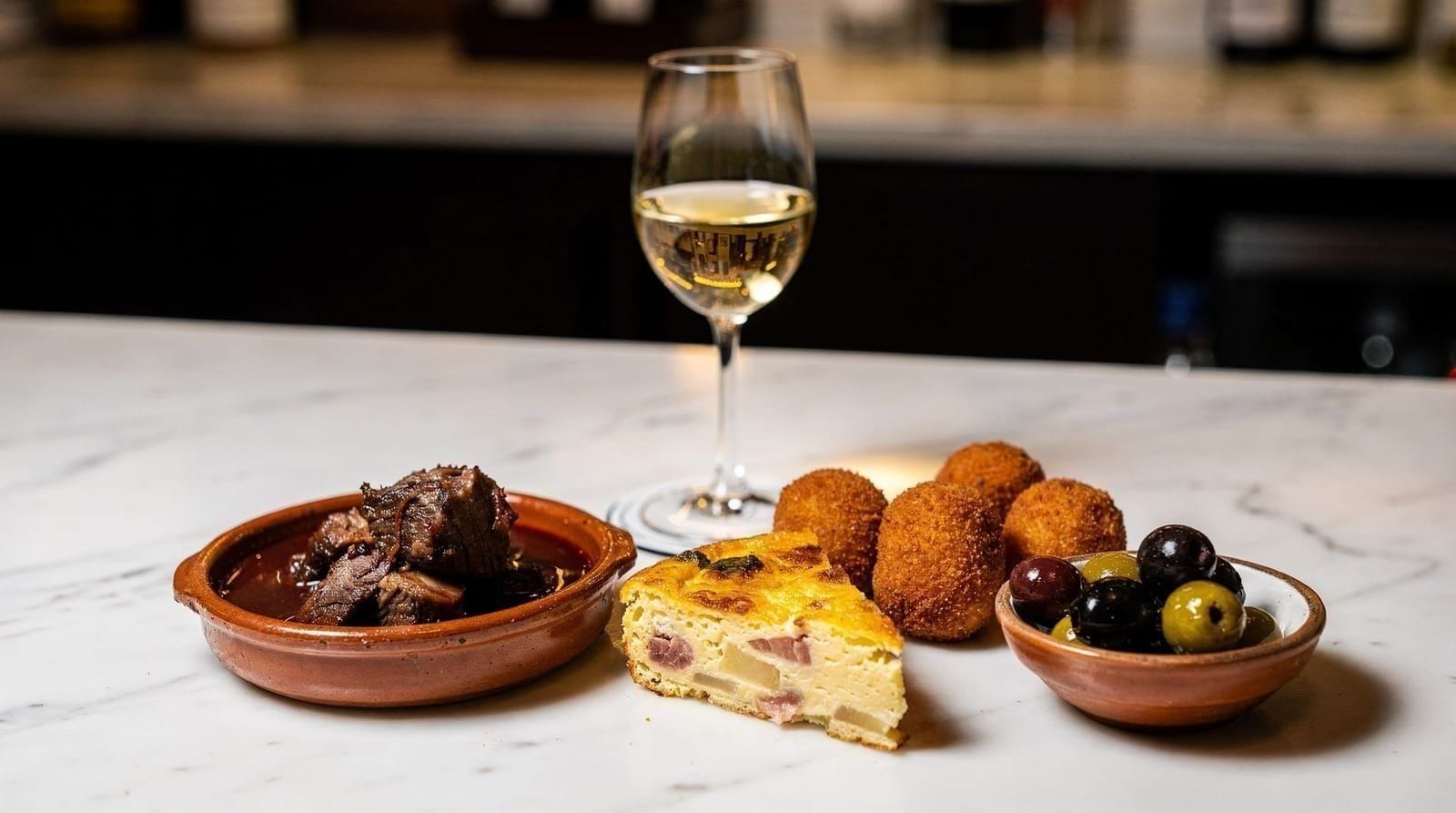
The best tapas in Seville are not served in restaurants with menus. They are served at the barra (bar counter) of traditional standing bars. The etiquette is simple: approach the bar, order what you want (pointing is acceptable), and your bill is tallied on a paper slip or chalk mark. You pay when you leave.
Start at El Rinconcillo (Calle Gerona 40) — Spain’s oldest continuously operating bar, founded in 1670. The chalk tally marks, tobacco-stained ceiling, and tile walls are original. The jamón is served from the whole leg at the counter. The espinacas con garbanzos (spinach with chickpeas in cumin-spiced sauce) is the signature dish and arguably the best version in the city.
Order: jamón montadito (small jamón sandwich, €2.20), espinacas con garbanzos (€3.50), a glass of manzanilla from the tap (€2). Total: approximately €8 per person.
Then walk to Eslava (Calle Eslava 3, Alameda neighbourhood, 15 minutes’ walk) for modern creative tapas — the presa ibérica (shoulder of Iberian pork, slow-cooked) and the rabo de toro croqueta are outstanding. Arrive before 20:30 or expect a wait; Eslava is consistently one of the most popular tapas bars in the city and does not take reservations.
For a third stop if energy allows: Bodega Santa Cruz (Rodrigo Caro 1, near the Cathedral, 10 minutes from Eslava) for a final round of montaditos and a glass of fino or beer before the flamenco.
Understanding Andalusian tapas culture: In Seville, a tapa is not a small plate of expensive designer food. It is a practical piece of food eaten standing at a bar, ideally with a cold drink, as part of a longer evening. The tradition developed because the small quantity of food absorbs alcohol and makes an evening of social drinking sustainable. The best tapas bars in Seville cost €15–25 per person for a full evening’s eating and drinking. Any bar charging more than €5 per tapa (outside of tourist areas) is selling tourist food.
Evening — Flamenco at Casa de la Memoria
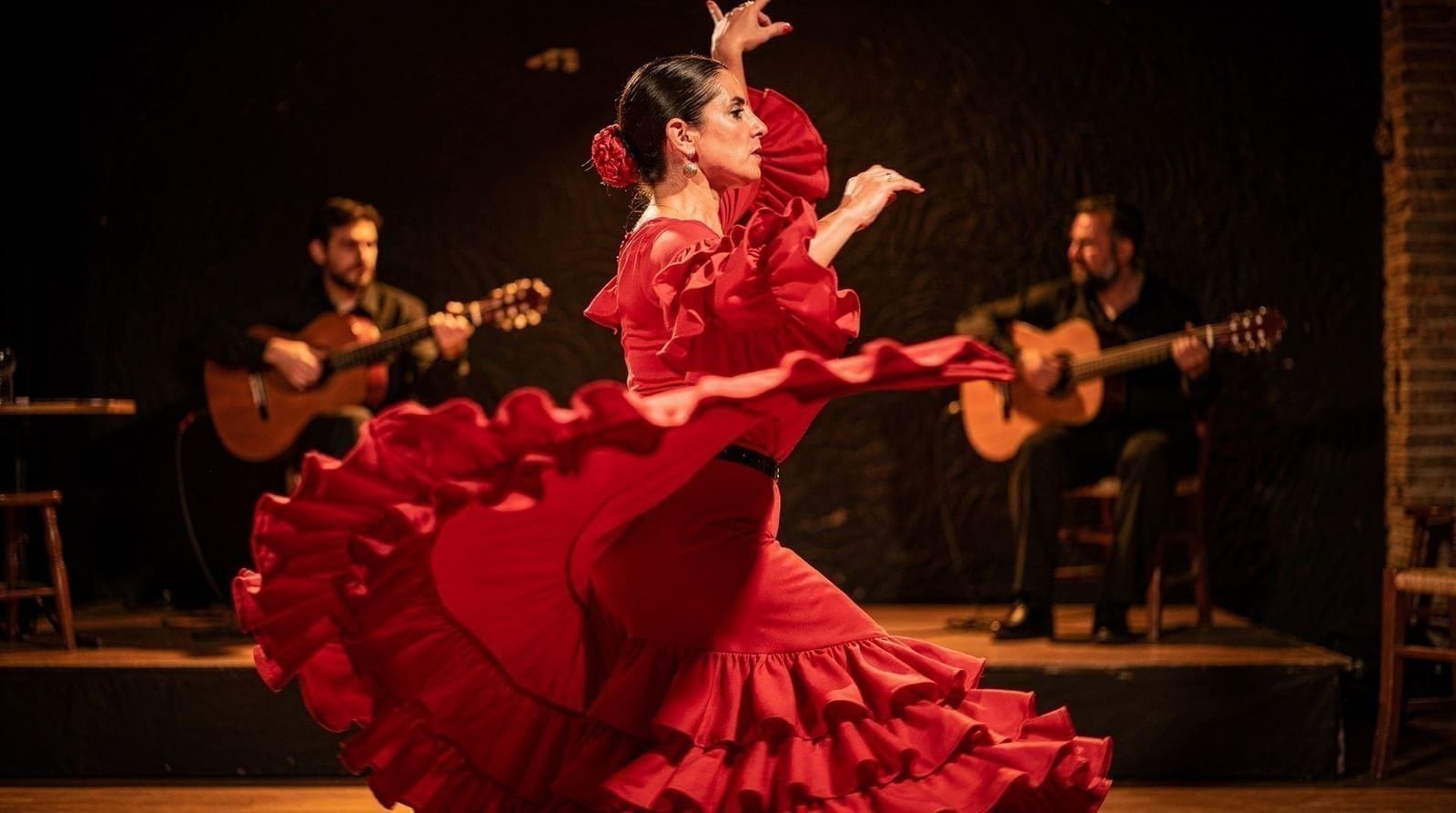
Casa de la Memoria (Calle Cuna 6) is the most reliably excellent venue for first-time flamenco visitors in Seville. The venue is a historic building, the former stables of the Countess of Lebrija’s palace; session times vary by date and season, so check the booking calendar. There is no dinner service, no tourist formula, and no compromise on artistic quality.
Casa de la Memoria flamenco show — book aheadWhat to expect: about 1 hour of flamenco combining cante (song), baile (dance), and guitar. The performers are professional; the venue is intimate enough that you can see the dancer’s facial expression clearly. Flamenco at this level is a visceral experience — the footwork alone (zapateado) generates sounds that resonate physically in a small space.
Tickets: €24 for adults. Book at casadelamemoria.es 2–4 days in advance.
22:30 — Late drink
Seville stays up late. The area around Alameda de Hércules has a good late-night atmosphere — this long pedestrian boulevard lined with bars and restaurants is the social heart of the Centro/Alameda neighbourhood. La Azotea (Jesús del Gran Poder 31) does late-night pintxos and natural wine without the tourist mark-up. The Alameda itself has outdoor seating until midnight or later in summer.
Practical notes
Getting around: Everything on this itinerary is walkable. The longest stretch (Santa Cruz to Plaza de España) is 25 minutes on foot. Wear comfortable shoes with good soles — Seville’s cobblestones, especially in Santa Cruz, are uneven and hard on thin-soled shoes after 10 km. Sandals with a sole thicker than 1.5 cm work; flip-flops do not.
Transport options: The MetroCentro tram runs along Avenida de la Constitución connecting the Cathedral area with San Bernardo (for bus connections) and the west of the city. One tram ticket: €1.40. Taxis are plentiful and inexpensive for short distances (€5–8 across the centre). Uber and Bolt operate in Seville.
Money: Budget around €69–89 per person for this day including entry fees (Alcázar €15.50 + Cathedral €13), lunch (€14–18), afternoon drinks (€6–8), tapas in the evening (€18–22), and flamenco (€24). If you skip the flamenco, total is approximately €40–50. Add transport from/to your accommodation.
What to skip on a single day: The hop-on-hop-off bus (€22) is not worth it for a single day in the city centre — everything is walkable and the bus adds time rather than saving it. The Torre del Oro interior museum (admission on the official site) is modest; the exterior view is sufficient. The Maestranza bullring guided tour (current prices on the official site) is excellent but save it for a second visit.
If you only have half a day: Alcázar first (non-negotiable — book it), then a walk through Santa Cruz to the Cathedral exterior. The Cathedral interior requires 90 minutes to do properly; skip it if you have less than three hours total and save it for a longer visit.
Getting to Seville from the airport: The EA airport bus (35–40 minutes, €6) is the cheapest way in, as there is no train to the airport. From the bus stops, most historic centre hotels are a short walk or a short taxi ride away.
For a more relaxed version of this day spread across two or three days, see the 2-day Seville itinerary and the 3-day Seville itinerary.
Seville in one day: what to see and when
For clarity, here is the complete schedule in one place:
| Time | Activity | Cost |
|---|---|---|
| 8:30 | Alcázar entry (pre-booked slot) | €15.50 |
| 8:30–10:30 | Alcázar interior and gardens | included |
| 10:30–12:00 | Cathedral and Giralda | €13 |
| 12:30 | Lunch at Bodega Santa Cruz | €15–18 |
| 13:30–15:00 | Santa Cruz barrio walk | free |
| 15:30–16:00 | Siesta or Archivo de Indias | free |
| 16:00–17:00 | Plaza de España | free |
| 17:30 | Triana bridge and riverfront walk | free |
| 19:00 | El Rinconcillo tapas | €8–10 |
| 20:15 | Eslava tapas | €12–15 |
| Evening | Flamenco at Casa de la Memoria | €24 |
| 22:30 | Late drink on the Alameda | €5–8 |
| Total | €90–105 |
Times can be compressed or expanded depending on your pace. The Alcázar and Cathedral are the non-negotiable fixed points. Everything else adapts.
Frequently asked questions about one day in Seville
Is one day enough for Seville?
One day is enough to see the Alcázar, Cathedral, Santa Cruz, and catch a flamenco show in the evening. You will miss Triana, the Metropol Parasol, and Casa de Pilatos — but you will not feel cheated if you pace the day well. Most people who try to see everything in one day end up exhausted and remembering very little.
What is the single most important thing to book in advance?
The Alcázar skip-the-line ticket. Walk-up queues at peak times (March–May, summer weekends) can be 90 minutes or longer. The Cathedral also has queues but they move faster. Book both before you travel.
Can I visit Córdoba as a day trip if I only have one day in Seville?
No. The Córdoba AVE train takes 45 minutes each way, and the Mezquita-Catedral alone deserves two hours. Adding that to a one-day Seville visit would mean rushing both cities. If you want both, plan a two-day trip — Seville first, Córdoba the next morning. See the Seville–Córdoba–Granada trip itinerary.
What time should I arrive at the Alcázar?
Aim to be at the entrance when it opens (9:30, or 9:00 in July–August). Pre-booked timed tickets let you enter immediately. The hour before 11:00 is noticeably quieter than midday.
Is it safe to walk at night in Seville?
The historic centre, Triana, and El Arenal are safe for evening walks. Use standard city precautions: keep phone in a front pocket, don’t flash cameras or bags, be alert in crowded areas like La Campana and around the Cathedral. The Alameda de Hércules neighbourhood is lively until late. For a fuller picture, see the is Seville safe guide.
What should I know before arriving with only one day?
Beyond the Alcázar booking, the two most common first-timer mistakes are underestimating the summer heat and falling for the rosemary scam near the Cathedral. Read the Seville common mistakes guide and the rosemary scam guide before you land — both take two minutes and prevent real friction on the day. If you’re flying in, the getting to Seville from the airport guide has more detail than the summary above, including the airport bus route.
Making the most of a single day: what actually matters
Prioritise ruthlessly — don’t try to add extras
The single biggest risk on a one-day visit is trying to fit in “just one more thing.” The Metropol Parasol, Casa de Pilatos, and a river cruise are all excellent, but none of them fit realistically alongside the Alcázar, Cathedral, Santa Cruz, Plaza de España, and flamenco already on this schedule. Resist the temptation — a rushed extra stop degrades the whole day rather than adding to it. If any of those sights matter to you specifically, they are the reason to come back for a 2-day or 3-day visit.
First-timer essentials beyond the schedule
If this is your only day in the city and also your first time in Spain, a few extra pieces of context help: the Seville first-time travel tips guide covers etiquette, tipping, and pace that don’t fit neatly into an hour-by-hour itinerary but shape how smoothly the day goes. And if you’re wondering whether to stay overnight before or after your one day, where to stay in Seville narrows down the historic-centre neighbourhoods that make this exact schedule easiest to walk.
Is the hop-on-hop-off bus worth it for one day?
No, not for this specific itinerary. Everything on this schedule sits within a compact, walkable core, and the bus’s fixed stops and traffic-dependent timing add friction rather than saving time. It becomes more useful on longer visits that include Italica or the outer neighbourhoods. The hop-on-hop-off Seville worth it guide has the full breakdown of when it does and doesn’t make sense.
What if I’m only passing through on a layover or transit day?
If you have less than six hours — say, a cruise stop in nearby Cádiz with a transfer, or a long train layover — cut this itinerary down to the Alcázar and a walk through Santa Cruz, skipping the Cathedral, Plaza de España, and flamenco entirely. Trying to compress the full day into half the time produces a worse experience than doing two things properly. The skip-the-line Seville decoded guide explains which tickets are worth pre-booking even for a very short visit.
Arriving by cruise ship or from Cádiz for the day
Some visitors reach Seville as a shore excursion or day trip from the coast rather than staying overnight. In that case, the timing in this itinerary needs adjusting: allow 45–90 minutes of transfer time each way depending on your port, and consider dropping the evening flamenco to guarantee you’re back at your ship or train on schedule. The Alcázar and Cathedral remain the two non-negotiable stops regardless of how little time you have.
Does the season change this itinerary significantly?
Yes, mainly through the midday rest window. In spring and autumn, you can skip the siesta break entirely and keep walking through the afternoon, which frees up an extra 60–90 minutes for a slower Santa Cruz walk or an additional stop like the Archivo de Indias. In summer, treat the rest as mandatory rather than optional — pushing through the 38–42°C midday heat without it makes the evening tapas and flamenco noticeably less enjoyable, even for fit travellers.
Top experiences
Bookable activities with verified prices and instant confirmation on GetYourGuide.