5 days in Seville: complete itinerary with Córdoba and Ronda
Seville: Royal Alcázar entry ticket
Five days: the full Seville and Andalusia experience
Five days in the Seville region is the right amount for first-time visitors who want to genuinely understand what makes Andalusia distinct: the Moorish architecture, the layered history, the food culture, and the dramatic landscapes. You can cover all of central Seville without rushing, take two day trips to different types of destinations (Córdoba’s urban history and Ronda’s dramatic scenery), and still have evenings for proper tapas and flamenco.
This itinerary combines the 3-day city plan with two day trips: Córdoba on Day 4 and Ronda on Day 5. Alternatively, you can swap Ronda for Granada (longer journey, different experience) — see the note at the end of Day 5.
| Where | Seville historic centre, Triana, Córdoba, Ronda (or Granada) |
| Cost | around €750–1,000/person for 5 days excl. flights |
| Time needed | 5 full days, one Seville base |
| Getting around | AVE for Córdoba, bus for Ronda/Granada |
| Best time | October–November or mid-March, before Semana Santa |
Day 1: The monumental core
Morning (9:00–13:00): Alcázar and Cathedral
Book both entry tickets in advance. The Alcázar at opening time (9:30) is significantly less crowded than at 11:00.
Royal Alcázar skip-the-line entry ticket — €14.50Spend two hours in the Alcázar — Patio de las Doncellas, Salón de Embajadores, upper apartments, gardens. Then walk five minutes to the Cathedral.
Cathedral and Giralda entry ticket — €12Cathedral: 90 minutes. Climb the Giralda by ramp for the best free elevated view in the city.
Afternoon (14:00–18:30)
Lunch at Bodega Santa Cruz (Rodrigo Caro 1). Walk the Barrio de Santa Cruz slowly — Callejón del Agua, Plaza de Doña Elvira, Hospital de los Venerables. Then south to Plaza de España and María Luisa Park (walk or tram number 1).
Evening
El Rinconcillo (Gerona 40), then Flamenco at Casa de la Memoria.
Casa de la Memoria flamenco showDay 2: Triana, river, and rooftops
Morning (9:00–13:00): Triana
Mercado de Triana for breakfast. Centro Cerámica Triana. Walk Calle San Jorge and Calle Betis. Cross back into the city.
Afternoon (14:00–18:00)
Lunch in El Arenal (Las Golondrinas). Guadalquivir river cruise from Torre del Oro.
Guadalquivir eco cruise — 1 hourLate afternoon: Metropol Parasol rooftop (from €16) and the Macarena neighbourhood.
Evening
Aperitivo at Casa Morales (García de Vinuesa 11). Dinner at Eslava (Calle Eslava 3) for creative modern tapas — arrive by 20:30.
Day 3: Hidden palaces and the food scene
Morning: Casa de Pilatos and the old city
9:30 — Casa de Pilatos (Plaza de Pilatos 1, €12)
The most underrated palace in Seville. Mudéjar-Renaissance hybrid, extraordinary azulejo tile courts, relatively few visitors compared to the Alcázar. Allow 90 minutes. See the Casa de Pilatos guide.
11:30 — Palacio de las Dueñas (Calle Dueñas 5, €15)
The Alba family palace. Outstanding art collection, intimate gardens, and one of the most interesting private houses in Spain. Allow 60 minutes.
Afternoon: Guided food tour
A guided food tour is the most efficient way to eat across three or four neighbourhoods in one afternoon. The best guides go beyond the standard tourist tapas circuit and explain what makes Andalusian food culture distinct — the bar tradition, the sherry pairings, the seasonal ingredients.
Seville food tour — tastes, tapas and traditionsMost food tours run 2.5–3 hours and cost €75–90 per person including all tastings. Book at least two days in advance.
Evening
Lighter evening: the rooftop bar at EME Catedral Hotel (Calle Alemanes 27) has a dramatic view over the Giralda and is good for a sunset drink (€10–15 per cocktail, worth it once). Or return to Triana for dinner at Blanca Paloma (Calle Betis 42).
Day 4: Córdoba day trip
Why Córdoba and not Granada?
Córdoba is 45 minutes away by AVE. Granada is 2.5 hours by bus. Córdoba allows you to leave Seville at 8:00, arrive in Córdoba by 9:00, visit the Mezquita, the Jewish Quarter, and lunch — and be back in Seville by 17:30. Granada requires leaving Seville at 7:00 and returning after 20:00 to get meaningful time at the Alhambra. For a 5-day itinerary, Córdoba is the better fit.
If you have already seen Córdoba or specifically want the Alhambra, see the note at the end of this itinerary.
Córdoba day trip with Mezquita by high-speed trainTimetable
8:00 — Depart Seville Santa Justa by AVE. Book tickets at renfe.com in advance.
8:45 — Arrive Córdoba. Taxi or 15-minute walk to the Mezquita.
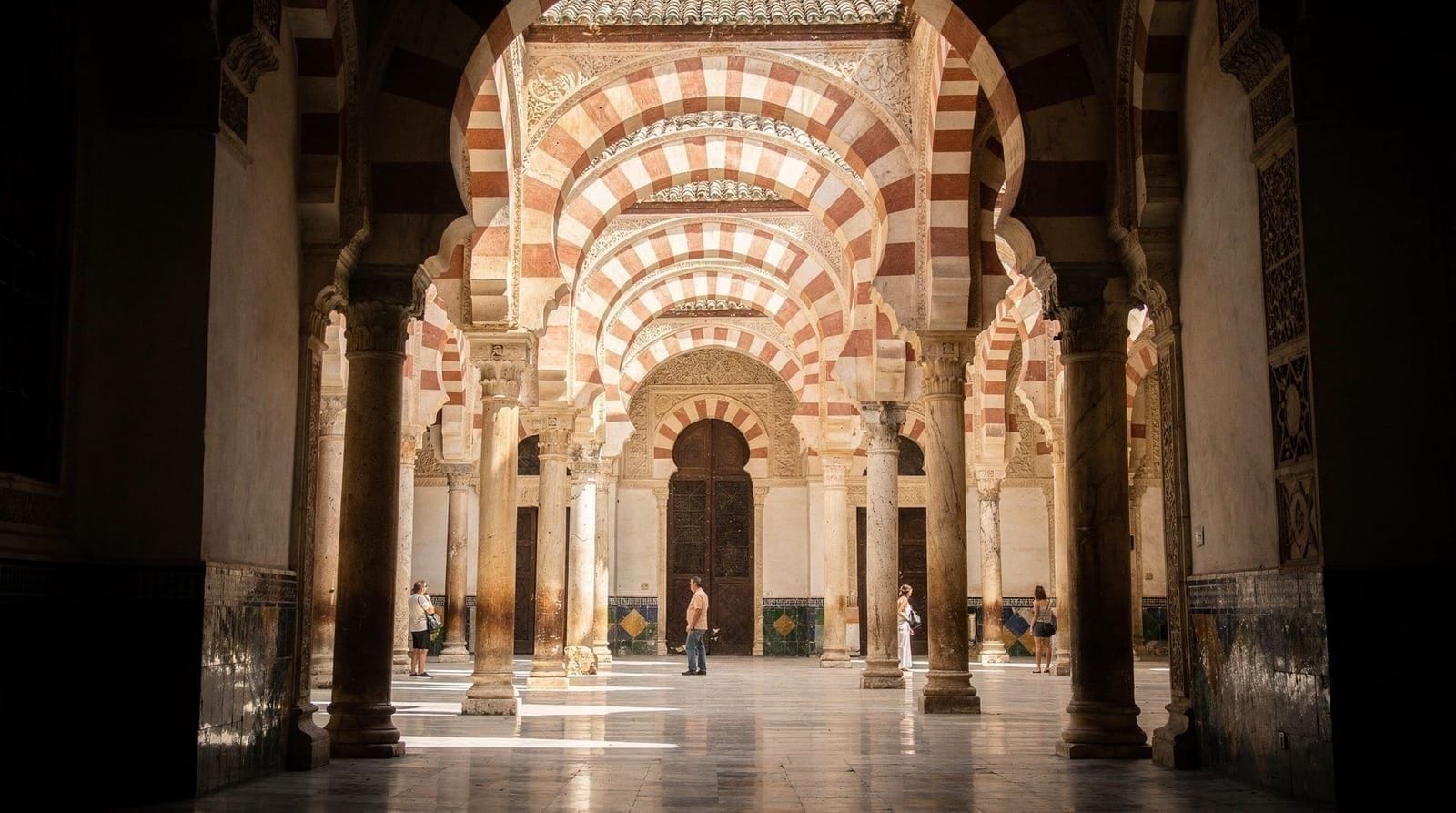
9:00–11:00 — Mezquita-Catedral. Book online (€15). The Hypostyle Hall with 856 columns and red-and-white horseshoe arches is the most unusual interior in Spain. The Christian cathedral inserted into the centre is confronting and fascinating.
11:00–12:30 — Jewish Quarter: the medieval Synagogue (free), Calleja de las Flores, and Alcázar gardens.
13:00 — Lunch. Casa Mazal (Tomás Conde 3) or Bar Santos (Magistral González Francés 3, famous for its tortilla).
15:30 — Optional: Medina Azahara (10 km, bus or taxi from city). The ruined 10th-century caliphal city. Worth 90 minutes if you’re interested in Umayyad history.
17:00–18:00 — Return to Seville. Quiet evening.
For the full guide: Córdoba day trip from Seville.
Day 5: Ronda and the white villages
Ronda is two hours from Seville by bus (Casal bus from Plaza de Armas station) or by guided tour. The train route is scenic but indirect. A guided full-day tour is the most efficient option — it includes transport and a guide for the main sites.
Ronda full-day trip from SevilleWhy Ronda?
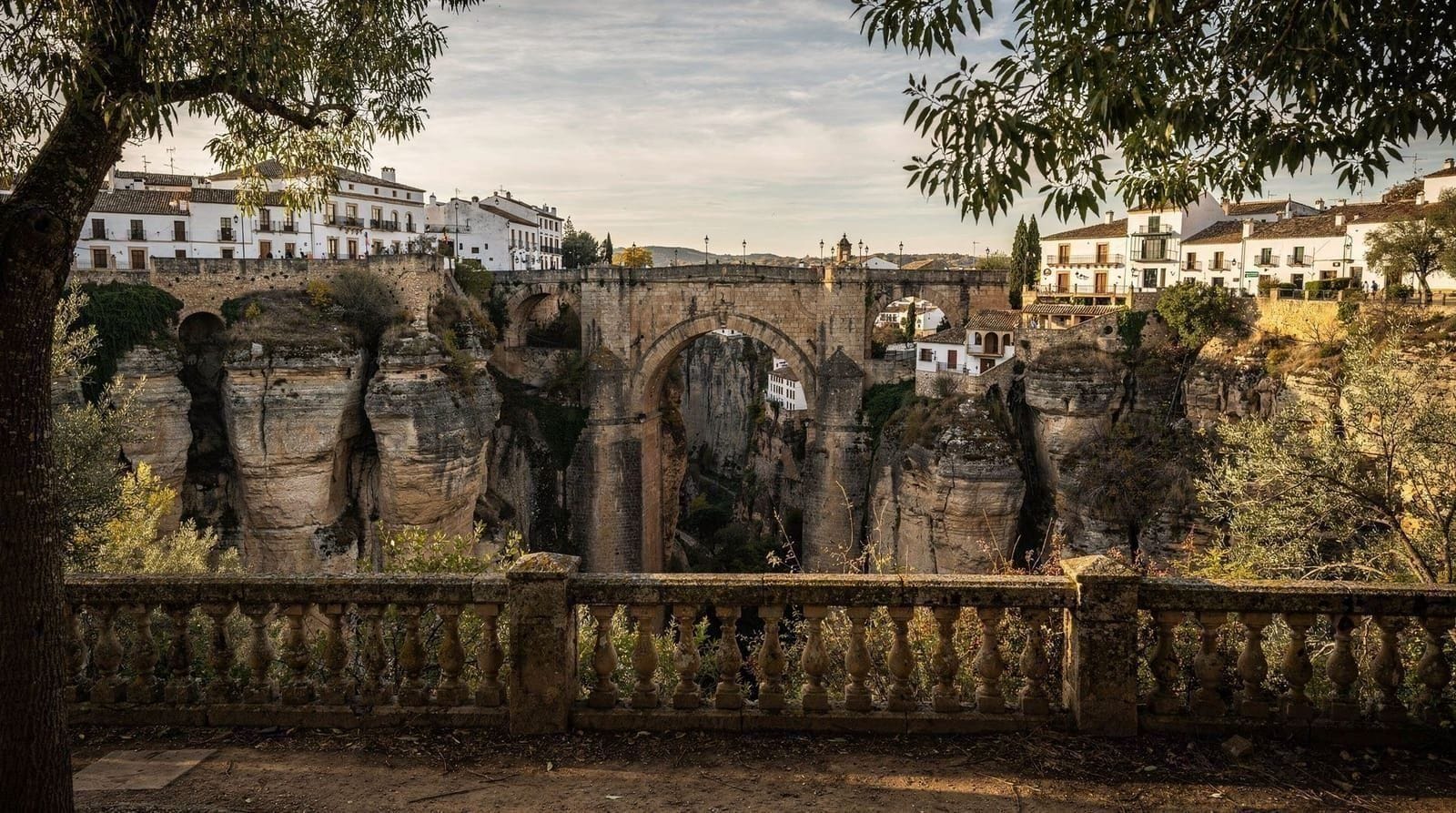
Ronda is built on the edge of a 120-metre gorge. The Puente Nuevo (New Bridge, 1793) spans the gorge and is one of the most dramatic single structures in Andalusia. The old town (La Ciudad) has a Moorish district, the oldest bullring in Spain (1785), and views that justify the journey on their own.
Timetable
7:30 — Depart Seville by bus or tour. Journey: approximately 2 hours.
9:30–10:30 — Arrive Ronda. Walk to the Puente Nuevo for the gorge views. Cross into La Ciudad (old town).
10:30–12:00 — Arab Baths (Baños Árabes, €4.50), Palacio de Mondragón (€3), and the main plaza.
12:00–13:00 — Maestranza bullring (€10 entry with museum). The oldest in Spain, and architecturally beautiful regardless of your view on bullfighting. Goya painted several of its arenas.
13:30 — Lunch. Tragabuches (José Aparicio 1) for contemporary Andalusian food. Pedro Romero (Virgen de la Paz 18) for traditional rabo de toro.
15:00 — Walk the Alameda del Tajo cliff-top gardens. Views over the Serranía de Ronda valley.
16:30 — Depart Ronda.
19:00 — Return to Seville. Final evening: dinner at Taberna del Alabardero (Calle Zaragoza 20) for a proper Andalusian send-off.
For the full guide: Ronda day trip from Seville.
Day 5 alternative: Granada and the Alhambra
If the Alhambra is a priority, swap Day 5 to Granada. The journey is longer (2.5 hours by bus from Plaza de Armas station, or join a guided tour), but the Alhambra complex is genuinely one of the most beautiful palace gardens in the world.
Book Alhambra tickets months in advance — they sell out. Entry to the Nasrid Palaces is on a timed ticket; if you miss your slot, you lose it. The full complex (Nasrid Palaces + Generalife + Alcazaba) takes four to five hours.
Granada day trip with Alhambra and Albaicín from SevilleFor the full guide: Granada day trip from Seville.
Practical notes for five days
Day-trip order: If you want both Córdoba and Granada, see the Seville–Córdoba–Granada trip itinerary which plans both as overnight stops rather than day trips.
Alcázar closure: Closed only on 1 and 6 January, Good Friday and 25 December.
Budget for 5 days (mid-range): Accommodation €90–120/night × 5 = €450–600. Entry fees over 5 days: approximately €80–100. Food (tapas + restaurant): €50–70/day. Flamenco: €24. Day trip transport/tours: €80–120. Total: approximately €750–1,000 per person, excluding flights.
Shoes: By Day 5 you will have covered 50–70 km on cobblestones. Good walking shoes matter.
For seven days in Andalusia with overnight stays in Córdoba, Granada, and Ronda, see the Andalusia week from Seville itinerary.
Five days in Seville: detailed planning notes
Understanding the Alcázar and the Cathedral before you visit
The Royal Alcázar and the Cathedral are adjacent, both on the same small plaza, and together they represent the finest concentration of historic architecture in Seville. Most visitors attempt to see both in a single morning — which works, but requires knowing in advance what to prioritise in each.
In the Alcázar, don’t rush the lower palace (Palacio del Rey Don Pedro): this is the Mudéjar heart of the complex, built by Pedro I in 1364 with craftsmen from Granada and Toledo. The Patio de las Doncellas, with its central reflecting pool and interlaced geometric tile dados, is the centrepiece. The upper royal apartments (Cuarto Real Alto) are still used by the royal family and have a separate entry queue inside the Alcázar — if they’re open during your visit, include them. The gardens are more extensive than they look on maps: allow 30 minutes even if you rush.
In the Cathedral, the main altarpiece (Retablo Mayor) is the largest in the world and requires time to properly absorb — most visitors glance at it from the nave entrance and miss 80% of the detail. Walk to the side chapels: the Capilla Real (Royal Chapel) at the east end has the silver urn containing Ferdinand III’s remains. The sacristy treasury has the Custodia de Juan de Arfe, a silver monstrance 3.26 metres tall. Columbus’s tomb at the south entrance is carried by four metal pallbearers representing the medieval kingdoms of Spain.
Ronda or Granada for Day 5?
The choice between Ronda and Granada on Day 5 comes down to what you value more: spectacular landscape and a compelling single sight (Ronda’s gorge + Puente Nuevo), or the most elaborate Moorish palace complex in Europe plus a fascinating urban neighbourhood (Granada’s Alhambra + Albaicín).
- Choose Ronda if: you’re primarily interested in dramatic Andalusian landscape, you want a shorter journey day (2 hours vs 2.5 hours each way), or you’ve already seen or plan to visit the Alhambra separately
- Choose Granada if: the Alhambra is on your bucket list and this is your only Andalusia trip, or you want more urban context for the Moorish period you’ve been exploring in Seville and Córdoba
If you genuinely want both, consider staying one night in Granada to see the Alhambra at dusk, and taking a different return route. The Seville–Córdoba–Granada itinerary plans exactly this.
Managing the day-trip schedule
Day order matters: Days 4 and 5 (the day trips) should come after you’ve settled into Seville and understand the city. Don’t schedule a day trip on Day 1 or 2 — you’ll be using your best energy on a 5-hour round-trip journey before you know where anything is.
Train booking: AVE Santa Justa to Córdoba: buy tickets at renfe.com as soon as your dates are set. Prices start around €12 one-way with advance booking but increase significantly as the travel date approaches. The same price logic applies to Málaga (connecting for Granada by bus) if you choose that route.
Bus booking for Granada/Ronda: ALSA.es for the Granada bus. Casal (autocaresCasal.es) for Ronda. Both are bookable online. Buy tickets at least 3–5 days ahead in high season; the Granada buses from Seville can fill up on weekend mornings.
Seville’s summer heat — the real planning factor
If your five days fall in July or August, the day-trip days (4 and 5) are physically easier than the full city days because you’re moving between air-conditioned transport and visiting sites that are partly shaded (the Mezquita’s interior is cool, the Alhambra’s gardens have extensive shade). The hardest days in summer are the first two — full urban sightseeing in the heat.
Practical summer rules: start outdoor activity before 10:00. Take a genuine midday rest (12:30–17:00). Plan the most demanding walks (Santa Cruz, Triana, Macarena) for mornings. Keep a reusable water bottle; Seville has public drinking fountains throughout the historic centre. See the Seville in summer heat guide for complete advice.
What makes five days different from three
Three days in Seville is the standard first-visit recommendation for good reason: the Alcázar, Cathedral, Triana, flamenco, tapas, and one day trip cover the essential experience. But five days allows something three days does not — the chance to slow down. On Day 3 of a five-day visit, when you’ve already done the monuments, you can spend a morning at Eslava or Casa Morales drinking coffee and reading without guilt. You can wander into a neighborhood you haven’t visited yet. You can go back to the Alcázar gardens on a quiet morning, this time without an agenda.
Seville’s value as a destination increases significantly when you’re not rushing. The food, the light, and the street life reward slow attention in a way that a three-day tick-box visit cannot fully deliver.
For the full guides on everything you’ll see: Real Alcázar complete guide, Córdoba day trip guide, Ronda day trip guide, Granada day trip guide.
Five days at a glance
| Day | Focus | Away from Seville |
|---|---|---|
| 1 | Alcázar, Cathedral, Santa Cruz, flamenco | No |
| 2 | Triana, river cruise, Metropol Parasol | No |
| 3 | Casa de Pilatos, Palacio de las Dueñas, food tour | No |
| 4 | Córdoba (Mezquita, Jewish Quarter) | Yes — 45 min AVE |
| 5 | Ronda or Granada (see alternative below) | Yes — 2–2.5h bus |
Should five days become seven?
If five days feels like it might still be tight — particularly if you want both Ronda and Granada, or a genuine Atlantic coast day in Cádiz or Jerez — the natural next step is the Andalusia week from Seville itinerary, which adds two more day trips to this same five-day structure without changing hotels. It’s a reasonable upgrade if you’re already committing significant travel time to reach Andalusia and would rather see more while you’re here.
Conversely, if five days feels like more than you need, dropping Day 5 (Ronda/Granada) returns you to the 4-day Seville itinerary, which still covers Córdoba and the city’s palaces.
Frequently asked questions about 5 days in Seville
Should I choose Ronda or Granada for Day 5?
Choose Ronda for dramatic landscape and a shorter journey (2 hours each way); choose Granada if the Alhambra is a genuine priority and you don’t mind the longer 2.5-hour journey. See the comparison earlier in this guide for the full breakdown of both options.
Is five days enough to also see Cádiz or Jerez?
Not within this specific plan — five days is fully allocated to Seville, Córdoba, and Ronda or Granada. If the Atlantic coast interests you too, the Andalusia week from Seville itinerary adds a sixth and seventh day that include Cádiz or Jerez.
Do I need a rental car for five days based in Seville?
No. Every destination in this itinerary — Córdoba by AVE, Ronda or Granada by bus, and everything within Seville itself — is reachable by train, bus, or on foot. A car adds cost and parking hassle in three separate historic centres without saving meaningful time on any of these specific routes.
What’s the best order if I want to do Granada instead of Ronda?
Keep the same structure — Granada simply replaces Ronda on Day 5, using the same mid-week placement logic (settled into the city, not yet at the end of the trip and tired). Because Granada’s journey is 2.5 hours each way versus Ronda’s 2 hours, plan a slightly earlier departure and confirm your Alhambra timed-entry slot well before the day itself.
Top experiences
Bookable activities with verified prices and instant confirmation on GetYourGuide.