Seville packing list: what to bring by season
Seville: Alcázar and Cathedral skip-the-line tickets
What should I pack for Seville?
Comfortable walking shoes (essential — cobblestones everywhere), lightweight clothing in spring and autumn, extreme heat management gear in summer (refillable water bottle, sun hat, loose fabric), and one smart-casual outfit for evening restaurants and flamenco.
Seville is a city of extremes — the most important being the heat. What you need in February is completely different from what you need in July. This packing list is organised by season with an honest assessment of what you actually use versus what takes up space.
| Most important item | broken-in comfortable walking shoes |
| Summer essentials | sun hat, factor 50 sunscreen, refillable water bottle |
| Cathedral dress code | shoulders and knees covered |
| Bag size | 10-15L daypack is enough |
| Power | Type C/F plug, 220V |
Think of the list as a way to plan your days as much as your suitcase. The clothes you bring decide whether you can walk the old centre comfortably, step into a church without fuss, and still enjoy a late dinner. If you are still shaping the trip itself, the Seville itinerary planning guide and the best time to visit Seville guide will help you decide which season’s list applies to you.
Packing priorities by season, at a glance
| Season | Key items | Skip |
|---|---|---|
| Summer (Jun-Sep) | Linen/cotton, sun hat, factor 50, 1L+ water bottle | Jeans, heavy fabrics |
| Spring/Autumn (Mar-May, Sep-Oct) | Layers, light jacket for evenings, one smart-casual outfit | Heavy winter coat |
| Winter (Nov-Feb) | Proper coat, scarf, waterproof shoes or umbrella | Factor 50 sunscreen |
The non-negotiables (every season)
Shoes: Comfortable, broken-in walking shoes with good grip. This is the most important thing you pack. The cobblestones in Santa Cruz and the Plaza del Triunfo are beautiful and brutal. Smooth-soled leather shoes, flip-flops, and new trainers worn for the first time on a trip will result in blisters or twisted ankles on wet cobblestones. Wear whatever you’ve broken in over months.
EU power adapter: Spain uses two-pin Type C/F plugs at 220V/50Hz. If you’re coming from the UK or North America, bring a travel adapter.
Reusable water bottle: Tap water in Seville is safe to drink throughout the city — tested regularly, though it can taste slightly chlorinated in some neighbourhoods. Refilling a 500ml bottle at any bar or café is free and expected. Buying 500ml plastic bottles at €1.50 each when you’re walking in summer heat adds up quickly.
Small daypack or crossbody bag: For carrying water, camera, sun cream, and documents during sightseeing. Keep it small — Seville’s narrow alleys and crowded monuments mean a large rucksack is cumbersome.
Photocopies of passport/ID: Keep a photocopy separate from the original. Spanish law requires you to carry ID; a photocopy is generally accepted. Passport goes in the hotel safe.
Summer packing list (June–September)
Seville in summer is one of the hottest city experiences in Europe. Average July temperature: 36°C. Highs of 42–44°C are not uncommon. This is not aspirational weather — it requires active management.
Clothing essentials:
- Loose-fitting linen or cotton shirts and trousers (dark colours absorb heat)
- Light-coloured, breathable fabrics
- 2–3 changes of clothing per day is normal — you will sweat through clothes
- Sandals with proper arch support for evening walking (not flip-flops for long distances)
- One layer for air-conditioned interiors — restaurants, museums, and shops blast cold air
Heat management:
- Wide-brim sun hat or baseball cap: not a fashion choice, a necessity. Direct sun on your head at 40°C causes rapid dehydration
- UV sunglasses (UV400): Standard quality; strong reflection off tiled plazas
- Factor 50 sunscreen: Reapply every 2 hours on outdoor days. Bring enough — Spanish pharmacies stock it but it’s more expensive than you’d pay at home
- Cooling towel or small spray bottle: Optional but useful for midday if you’re moving between attractions
- Refillable water bottle: 1-litre minimum for summer days
What to leave behind in summer:
- Jeans: too hot to wear outside air-conditioned environments
- Heavy fabrics of any kind
- More than one smart outfit — you’ll swear never to wear it in the heat
Spring and autumn packing list (March–May, September–October)
This is the ideal travel season — temperatures 18–28°C with long daylight hours. The packing is more straightforward.
Clothing:
- Layers: mornings and evenings in March and October can be cool (12–18°C), afternoons warm
- Light jacket or cardigan for evenings
- Mix of short and long sleeves
- Comfortable walking shoes (always)
- One smart-casual outfit for nicer restaurants and flamenco shows
- Light scarf for Cathedral entry (to cover shoulders and knees if needed)
Note for Semana Santa (late March/early April): Evening processions run late and March nights can be cool. Bring a light jacket and comfortable flat shoes — you may stand for 2–3 hours watching a procession. See Semana Santa Seville guide for full event details.
Note for Feria de Abril: If attending the Feria fairground, a traje de flamenca (traditional flamenco dress for women) or the traje corto (short jacket and riding boots for men) is the norm. Visitors are not required to dress traditionally, but smart casual is recommended. You can rent or buy a dress at the market near the fairground.
Winter packing list (November–February)
Seville’s winters are mild by northern European standards (11–17°C) but the city feels damp and colder than the numbers suggest. Rain is possible, particularly in January.
Clothing:
- A proper autumn/winter coat (Seville locals wear them in December-January)
- Waterproof shoes or a compact umbrella
- Scarf and light gloves for January mornings
- Standard layering pieces
What to leave behind in winter:
- Sunscreen factor 50 (standard factor 30 sufficient)
- Heavy heat management gear
Packing for the monuments you will actually visit
Most visitors spend a large part of their trip inside the big monuments, and a few small choices make those visits easier. Inside the palace rooms and gardens you will walk on uneven stone and tile, so the same comfortable shoes serve you everywhere. If you book a timed entry, such as combined skip-the-line tickets for the Alcázar and the Cathedral, you can plan one outfit that works for both: covered shoulders and knees for the Cathedral, and a hat and water for the open courtyards of the palace. Our Real Alcázar complete guide and the Cathedral and Giralda guide explain what to expect inside, and the skip-the-line decoder shows how to choose between ticket types.
Keep your bag small on these visits. Security checks and narrow doorways are easier with a compact crossbody bag than with a rucksack, and a bag you can keep in front of you is also the simplest answer to crowded queues.
Cathedral and mosque dress code
The Cathedral of Seville enforces a dress code: shoulders and knees must be covered. This applies to all visitors regardless of season. In summer, the easiest solution is:
- A lightweight scarf or sarong that can be wrapped around the shoulders or waist over a sleeveless top or shorts — this takes 10 seconds and weighs almost nothing
Do not rely on buying something at the Cathedral entrance — they occasionally have rental wraps but they are not guaranteed. Bring your own.
Walking the old streets in comfort
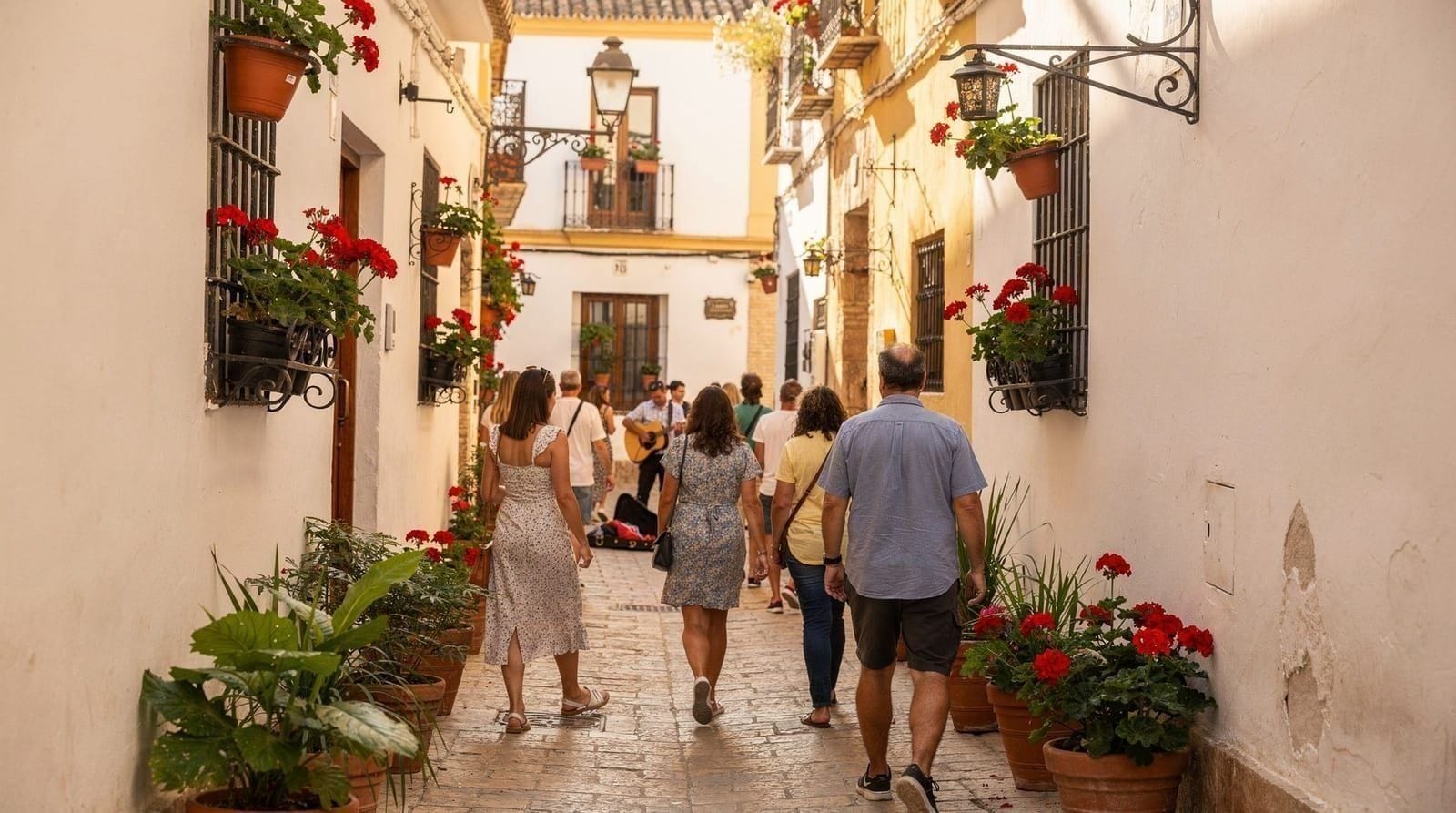
The old quarters are where your shoe choice matters most. If you plan to wander the lanes of the old Jewish quarter, a guided stroll such as a small-group walking tour through the Barrio de Santa Cruz is an easy way to learn the history while you walk, but it also means being on your feet for a good while on stone. Pack accordingly: closed, cushioned shoes, a small bottle of water, and a thin layer for shade and indoor air-conditioning. The Santa Cruz neighbourhood guide and the best walking tours in Seville are useful if you want to compare options before you commit.
Across the river, Triana is just as walkable, and the same footwear rules apply. If you plan to move around the city rather than walk everywhere, see getting around Seville for how buses, trams and bikes fit with what you carry.
Arrival day and airport transfers
Pack your carry-on so that the things you need first are easy to reach: water, sun protection in summer, a layer for the evening, and a phone with offline maps. If you arrive by plane, the airport to city centre guide explains your options for reaching the centre with luggage, and the getting to Seville from the airport page covers the details. If you are continuing by rail, a pre-booked ride such as a private transfer to the Santa Justa train station can save you from hauling a heavy case through hot streets, which is a real consideration if you ignored our advice to travel light.
Day trip additions
For Córdoba by AVE: No special additions needed.
For Ronda or white villages: Comfortable shoes with ankle support if there’s hiking; sun protection in summer.
For Caminito del Rey: Proper walking shoes (not sandals), small daypack with water, sun protection. The walkway is exposed.
For Doñana: Long-sleeved light layer (sun and possible insects), sun hat, binoculars if you have them.
Each of these outings has its own planning page. See the best day trips from Seville for an overview, and the dedicated guides for Córdoba, Ronda and the Caminito del Rey. The practical rule is to keep one small daypack ready that already holds your hat, sun cream and water bottle, so you can leave the hotel without repacking.
Technology and documents
- Travel insurance documentation (carry a copy)
- European Health Insurance Card (EHIC) or equivalent if applicable
- Renfe app (for AVE booking and digital tickets)
- Tussam app or Google Maps (for bus navigation)
- Offline maps downloaded before arrival (Google Maps or Maps.me) — useful in narrow Santa Cruz streets with poor signal
What not to pack
- A heavy guide book: use the online resources
- Excess formal clothing: Seville restaurants are smart-casual at most; no jackets required except at high-end restaurants
- Large backpack for day trips within the city: a 10–15L bag is fine; 30L bags are cumbersome on Seville’s narrow streets and in crowded monuments
- Currency converter: Spain is EUR zone, no conversion needed
- Traveller’s cheques: accepted nowhere
Security and pickpocket prevention
Seville is a safe city and the pickpocket risk is modest by European capitals standards. The areas with the highest pickpocket concentration are the Cathedral queue, La Campana (the main pedestrian shopping street), and public transport. The mitigation is straightforward:
- Keep valuables in a front pocket or an internal zipped pocket, not a rear trouser pocket or the outer pocket of a backpack
- Use a money belt for passport if you’re particularly cautious
- Leave expensive jewellery at the hotel
- Keep your phone in your hand or a front pocket when photographing in crowded areas
See Is Seville safe? Honest safety guide for visitors for a full safety assessment.
Laundry and re-packing for longer stays
For trips of 5 days or longer, especially in summer when you’re changing clothes two or three times a day, packing light and doing a load of laundry midway is more practical than packing for every day individually. Many apartment-style accommodations have a washing machine; if not, self-service launderettes exist in the historic centre and Triana. This matters more in Seville than in cooler cities, since summer heat genuinely does mean more frequent changes of clothes.
What locals actually wear
Sevillanos dress smart-casual even in extreme heat — you’ll rarely see shorts and vest tops outside clearly touristy streets, and evening dining leans slightly dressier than in many northern European cities. You don’t need to match this exactly, but a single smart-casual outfit (long trousers or a dress, closed shoes) makes evening restaurants and flamenco venues more comfortable, and helps a little with the tourist-pricing dynamic described in the first-time travel tips guide and the barra vs terrace pricing guide.
Packing for an evening out
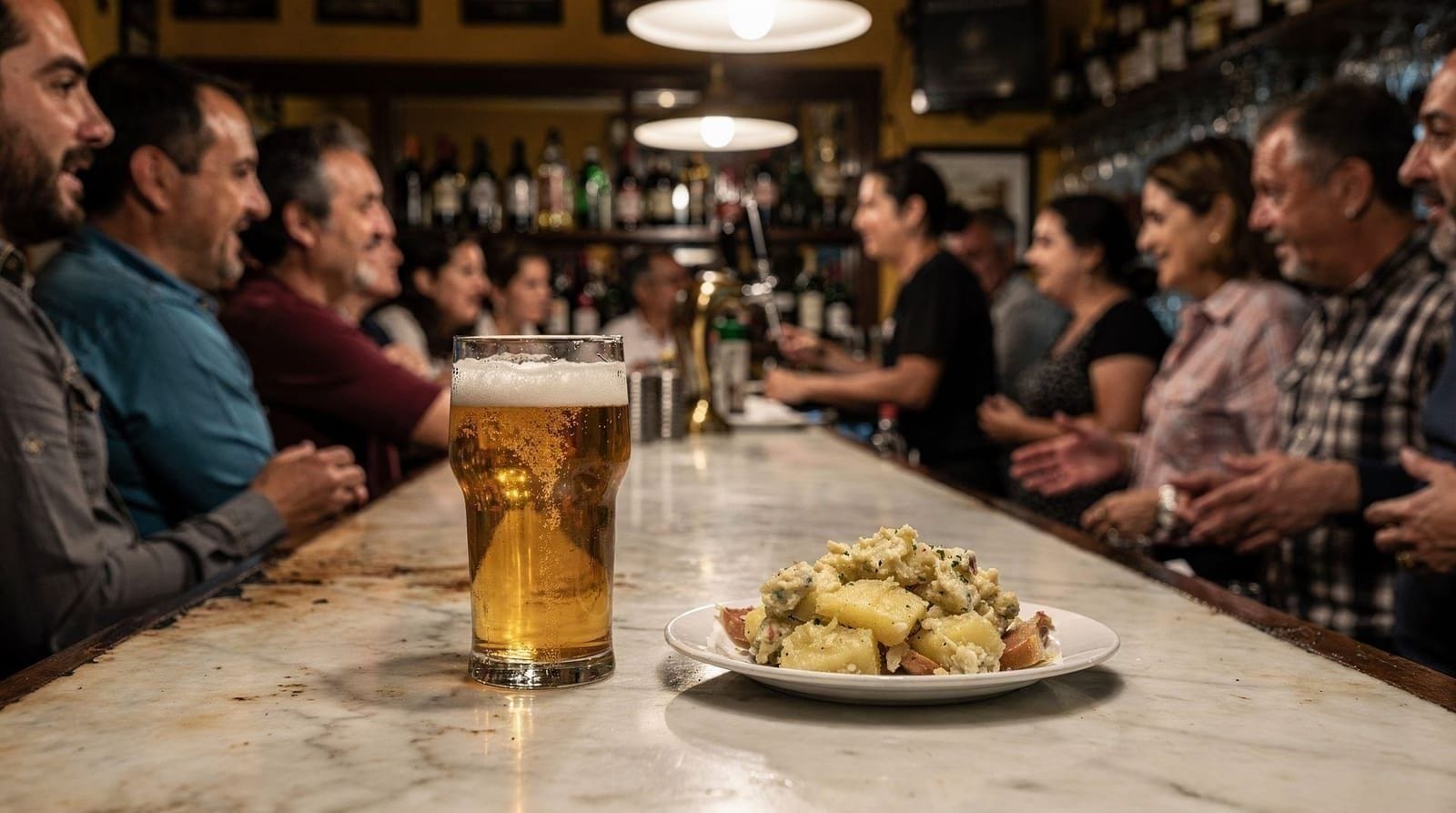
Evenings in Seville are for slow dinners and late shows, so pack one outfit that works for both. Closed shoes you can walk in beat anything fragile, since you will often walk to the venue through old streets. For tapas, the habit of standing at a bar means comfort matters more than formality; see the best tapas in Seville guide and where to eat in Seville for ideas. For a show, the best flamenco shows in Seville guide explains what to look for, and a light layer is useful because venues can feel different from the street outside.
Packing for specific festivals
Beyond Semana Santa and Feria de Abril, if your trip coincides with Christmas in Seville, pack for genuinely cool evenings (5-9°C) despite mild days, since outdoor Christmas market browsing and belén-viewing happen mostly after dark. For summer visitors timing a trip around flamenco or river activities, quick-dry fabrics are worth prioritising over cotton, since they handle both sweat and the possibility of a splash from paddleboarding or kayaking on the Guadalquivir.
Frequently asked questions about Seville packing list
What shoes are best for Seville?
Comfortable, broken-in walking shoes with good grip. The Santa Cruz barrio and most historic streets are cobblestone — smooth-soled shoes and heels are genuinely hazardous on wet cobbles. Flat leather sandals work well in summer if comfortable for distance walking.Is it hot in Seville? What should I wear in summer?
Summer in Seville (June–August) regularly hits 40–42°C. Wear breathable linen or moisture-wicking fabrics. Avoid dark colours that absorb heat. Sun hat, UV sunglasses, and factor 50 sunscreen are not optional — they're medical necessities in July heat. Carry a refillable water bottle at all times.Do I need to dress modestly for the Alcázar or Cathedral?
The Cathedral requires covered shoulders and knees (no shorts, no sleeveless tops). Bring a light scarf or carry a thin layer to cover up on entry. The Alcázar has no dress code. Other Seville churches vary — when in doubt, cover up.What should I bring for Semana Santa or Feria?
For Semana Santa: comfortable shoes and warm layers for late-night processions (March evenings can be cool). For Feria de Abril: if attending the fairground, a traje de flamenca (dress) or traditional suit is customary though not mandatory. Smart casual is fine for visitors.How big a bag do I need for Seville?
Seville is very compact — you do not need a large bag for day-to-day exploring. A small daypack (10–15L) or a crossbody bag is sufficient. Keep valuables out of backpack exterior pockets in the Cathedral queue area and on crowded transport — pickpockets are present though not at a level unusual for a major European tourist city.