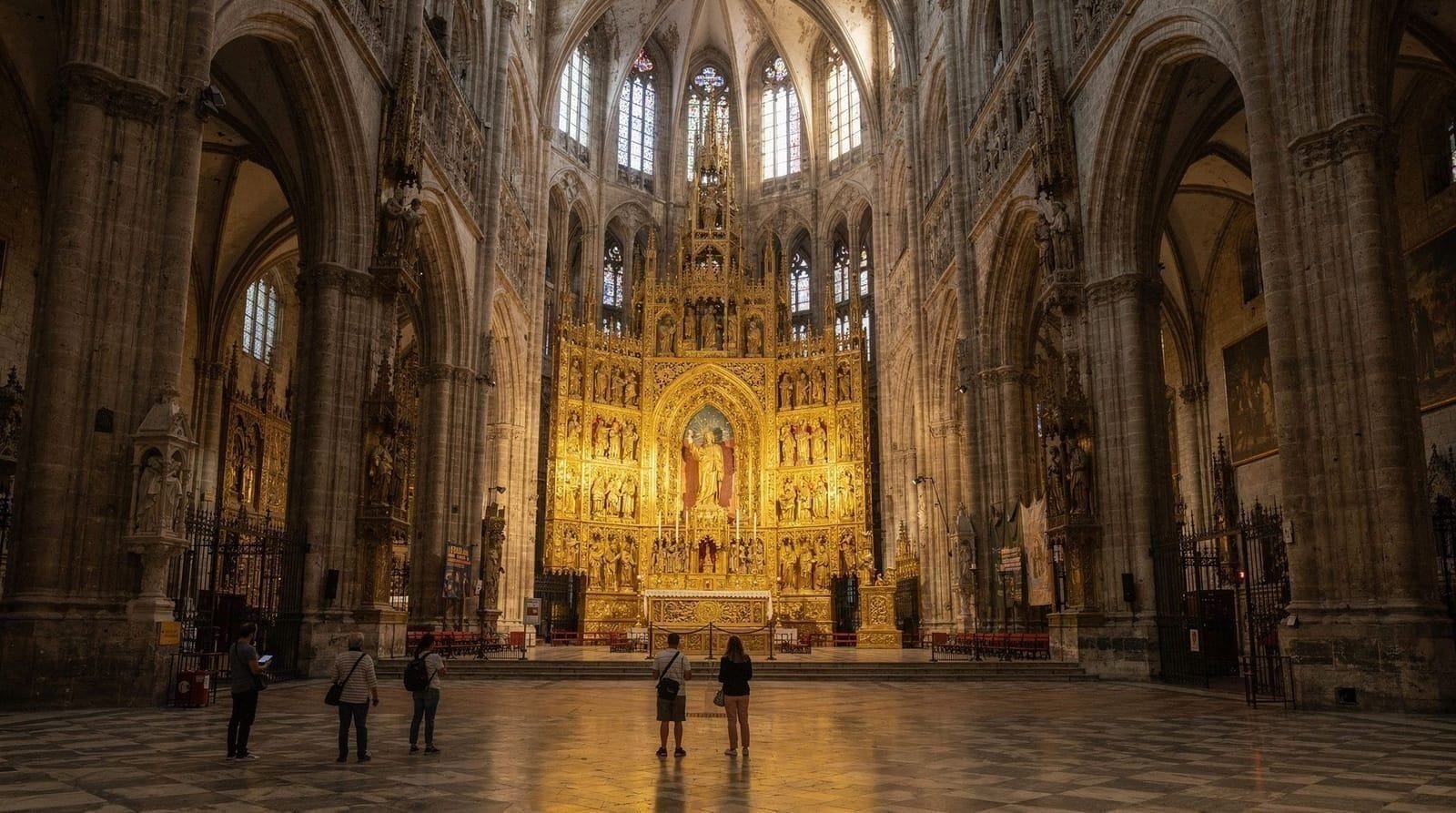
Alcázar vs Cathedral: which to visit first in Seville?
Seville: Alcázar, Cathedral and Giralda skip-the-line tour
Should I visit the Alcázar or Cathedral first in Seville?
Visit the Alcázar first. It opens at 9:30 AM, crowds build quickly, and the gardens require energy and time. The Cathedral opens later (10:45 AM) and is less affected by midday heat. Doing the Alcázar early protects your best hours.
Seville’s two signature monuments sit 5 minutes apart on foot, which means every visitor has to decide: Alcázar first, or Cathedral first? The question sounds trivial but the answer affects your crowd exposure, your energy levels, and how much of each building you actually see versus rush through.
The answer this guide gives is consistent with what the data on crowd patterns supports, not with what makes for a tidy itinerary.
| Order | Alcázar (9:30 AM) then Cathedral (early afternoon) |
| Distance apart | Around 200m / 3 min walk, both on Plaza del Triunfo |
| Cost | Around €15.50-€17.50 Alcázar; around €13 Cathedral |
| Time needed | Half a day for both, roughly 9:30 AM-3:30 PM |
| Exception | Sunday: Cathedral opens 2:30 PM, so order matters less |
The case for Alcázar first
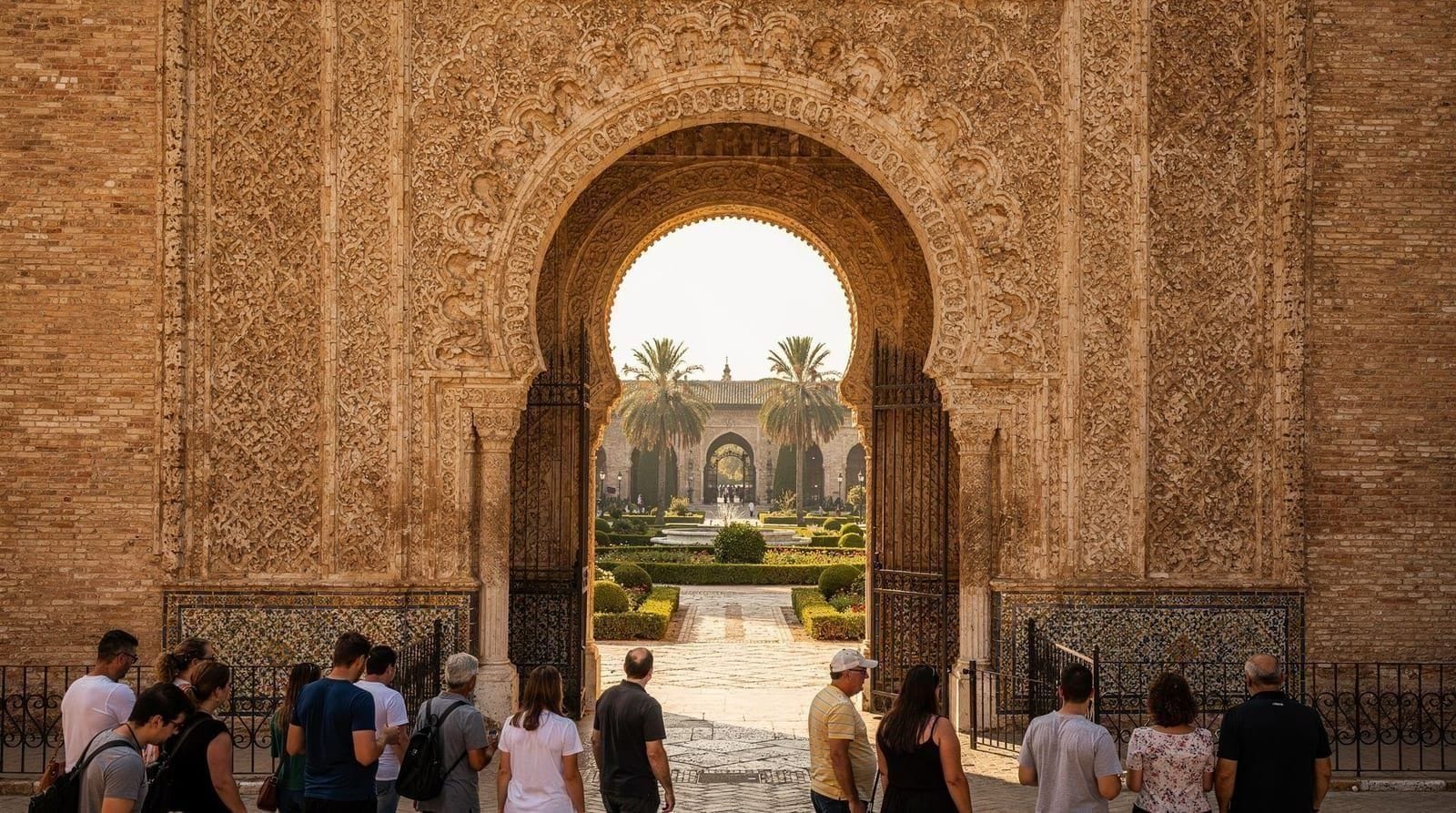
Opening time advantage. The Alcázar opens at 9:30 AM. The Cathedral does not open until 10:45 AM (and not until 2:30 PM on Sundays). If you have a morning slot for the Alcázar, you can be through the Puerta del León while the Cathedral’s queues are still forming. By the time you finish the Alcázar and have a coffee, the Cathedral has been open for two hours and the initial rush has thinned.
Energy consumption. The Alcázar requires more physical engagement: the gardens cover 8 hectares, the rooms are numerous, and there is no clear linear route. You will do more walking, more decision-making, and more stopping to read or listen to a guide. Doing this first, when you are fresh, produces a better visit than doing it after 2 hours in a cathedral.
Heat exposure. The Alcázar gardens are beautiful but there is limited shade in some sections. In summer, the gardens are genuinely punishing between noon and 3 PM. Arriving at the 9:30 AM opening means you experience the gardens in manageable morning temperatures.
Crowd buildup. The Alcázar’s timed entry system means a rush at the start of each hourly window, then a relative lull. The 9:30 AM slot is the least crowded. By 11:30 AM, the Patio de las Doncellas is typically very busy regardless of which hour-window people are in.
Book the Alcázar early-morning timed entry — 9:30 AM slots availableThe case for Cathedral first (and why it is weaker)
Some guides recommend starting at the Cathedral because it is “easier to navigate” or “more familiar” in its Gothic architecture. Both claims are true. The Cathedral is indeed more legible at first glance: it is clearly a Western European church with a nave, transepts, chapels and a tower. The Alcázar requires more contextual knowledge to interpret.
But neither of these arguments holds up against the opening-time reality. You cannot start at the Cathedral first unless you are happy wasting the 9:30–10:45 AM window, and that window is genuinely the best time to be at the Alcázar.
The only scenario where Cathedral-first makes real sense: you are visiting on a Sunday and your Alcázar ticket is for the afternoon. In that case, the Cathedral’s 2:30 PM Sunday opening prevents an early start anyway, and the order of visits becomes less strategically meaningful.
What each monument’s price actually buys
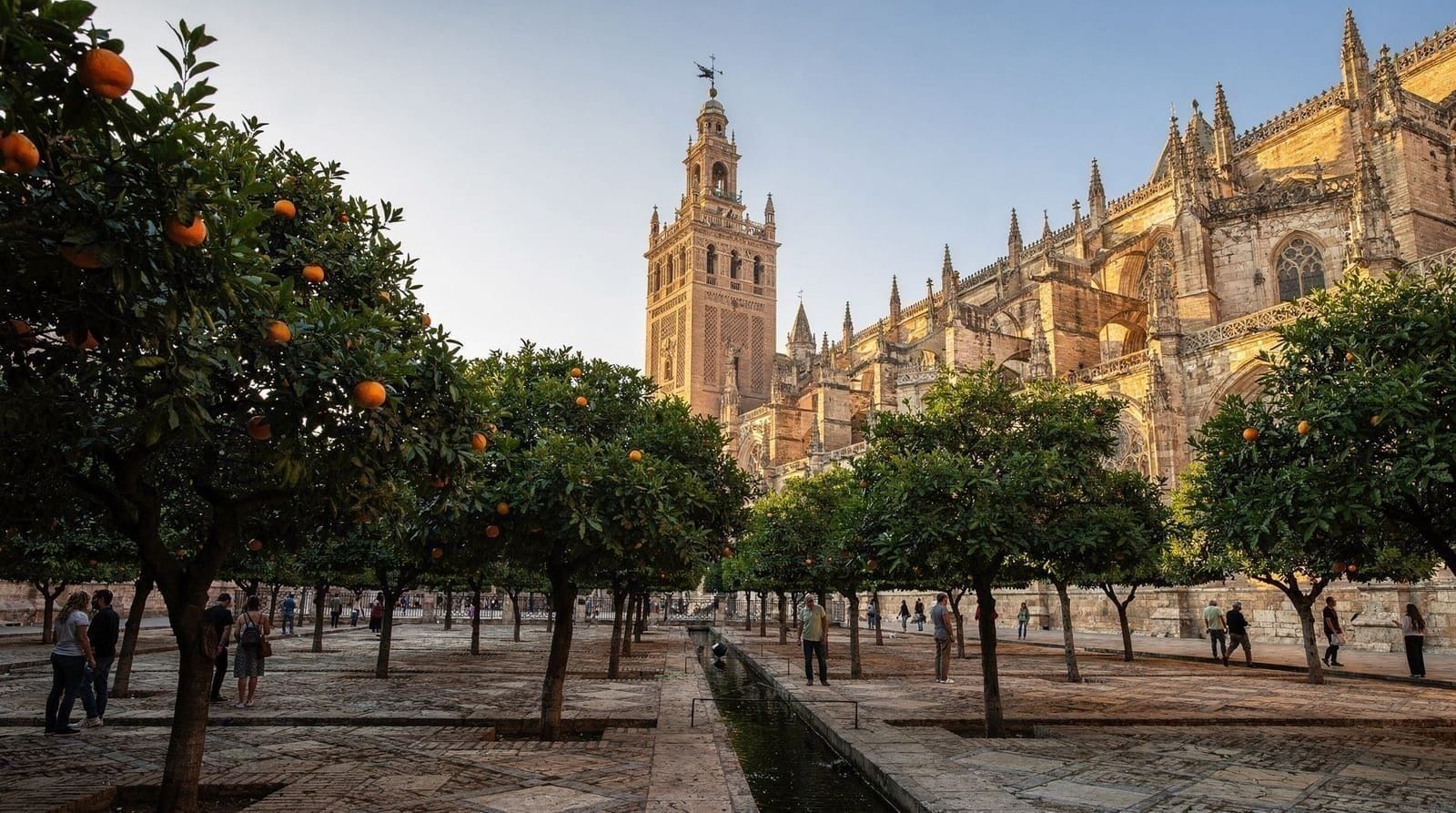
The Alcázar’s higher ticket price (around €15.50-€17.50 versus the Cathedral’s around €13) reflects a smaller, more curated site with tighter capacity controls, not a “better” monument in any simple sense. The Cathedral is enormous — the largest Gothic building in the world by volume — and its ticket covers the full interior, the treasury, and the Giralda climb for a lower price. Neither is the better value outright; they buy different kinds of experience. If budget genuinely constrains you to one paid monument, weigh interest (Mudéjar palace architecture vs Gothic cathedral scale) over price, since the difference between them is only a few euros.
The combined tour option
Alcázar, Cathedral and Giralda combined skip-the-line tourIf you book a combined guided tour covering both monuments, the sequencing decision is made for you: most operators start at the Alcázar and move to the Cathedral in the afternoon. This is the standard approach for good reason.
Combined tours typically run 4–5 hours total and include priority access to both sites, a licensed guide for the Alcázar section (the more interpretation-heavy visit), and a structured but less intense walk through the Cathedral. The value proposition is real: you save on coordination, avoid duplicate queuing, and get expert commentary on the monument where it matters most (the Alcázar).
What the experience actually looks like back-to-back
A realistic back-to-back itinerary:
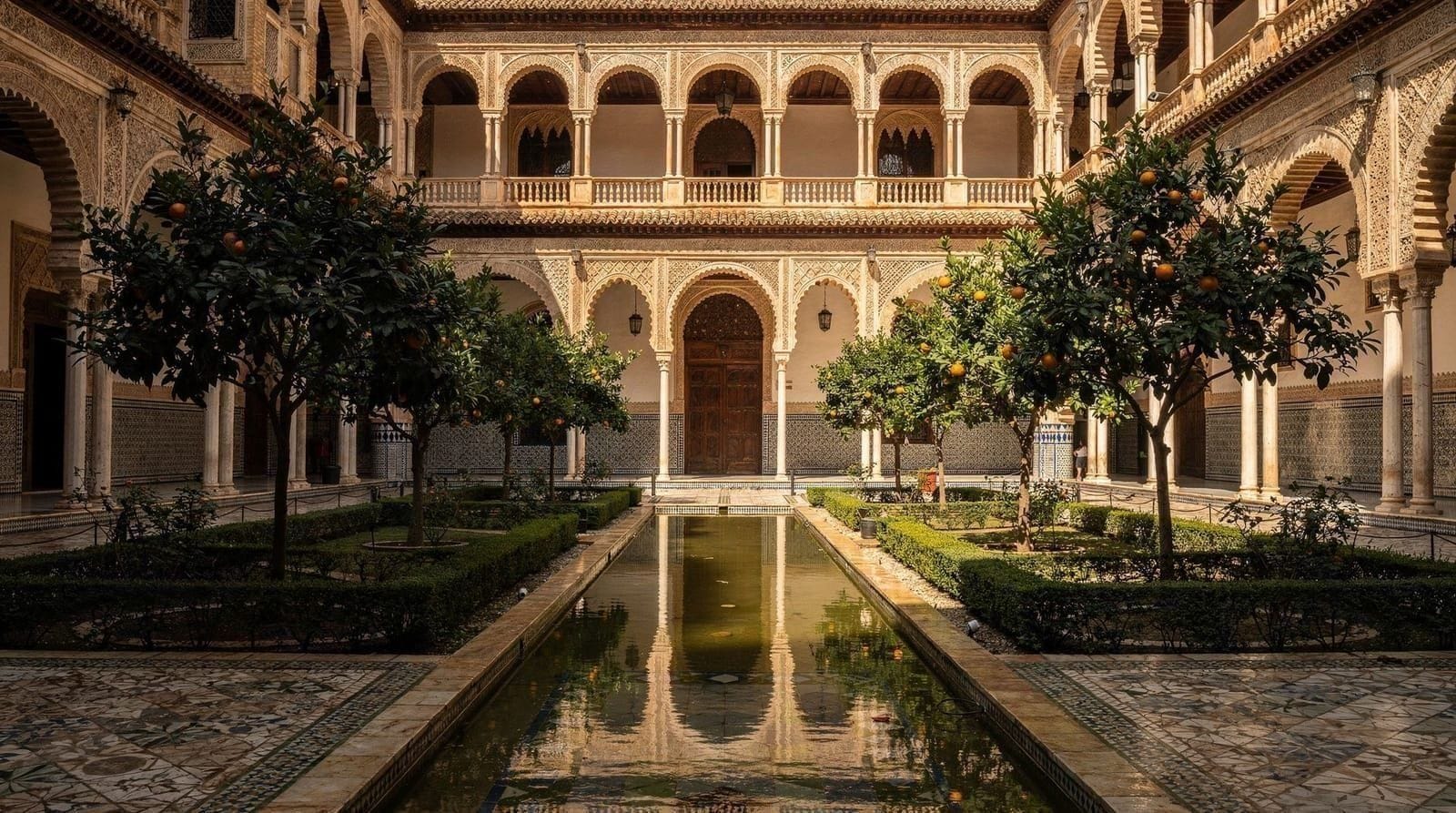
9:30 AM — Enter the Alcázar. Spend the first 30 minutes in the Palacio Mudéjar (the most celebrated section, with the Patio de las Doncellas and the Salon de los Embajadores). Then the Palacio Gótico, the Jardines, and finally the rooftop terraces if you want the panorama. Exit by 12:00–12:30.
12:30 PM — Lunch in the Santa Cruz quarter. The restaurants on Calle Mateos Gago and the surrounding streets are the obvious choice geographically. Note that the most tourist-facing ones near Plaza Alianza mark up prices significantly vs the same dishes a few blocks away.
1:30–2:00 PM — Arrive at the Cathedral. Queue or enter via your timed slot. Spend the first 20 minutes on the nave floor — this is where the building’s sheer scale hits hardest. Then the Capilla Mayor (the high altar retable), Columbus’s tomb in the south transept, and the Giralda climb. Exit by 3:30–4:00 PM.
4:00 PM onwards — Santa Cruz neighbourhood, the Archive of the Indies, or head to the riverfront.
Which monument benefits more from a guided tour?
Both benefit, but the Alcázar benefits more. The Cathedral’s meaning is more legible without interpretation (it is a cathedral, with a recognizable vocabulary). The Alcázar’s layered history — Roman, Visigoth, Almohad, Castilian royal — and its architectural detail (the interlocking geometry of the Mudéjar plasterwork, the symbolic program of the gardens) genuinely rewards expert guidance in a way that transforms the visit.
If you can only afford one guided tour, spend it on the Alcázar.
Practical considerations for planning both
Tickets: Book both in advance, separately, on different platforms if needed. There is no official joint booking system that covers both the Alcázar and Cathedral simultaneously (combined tours through operators are the workaround).
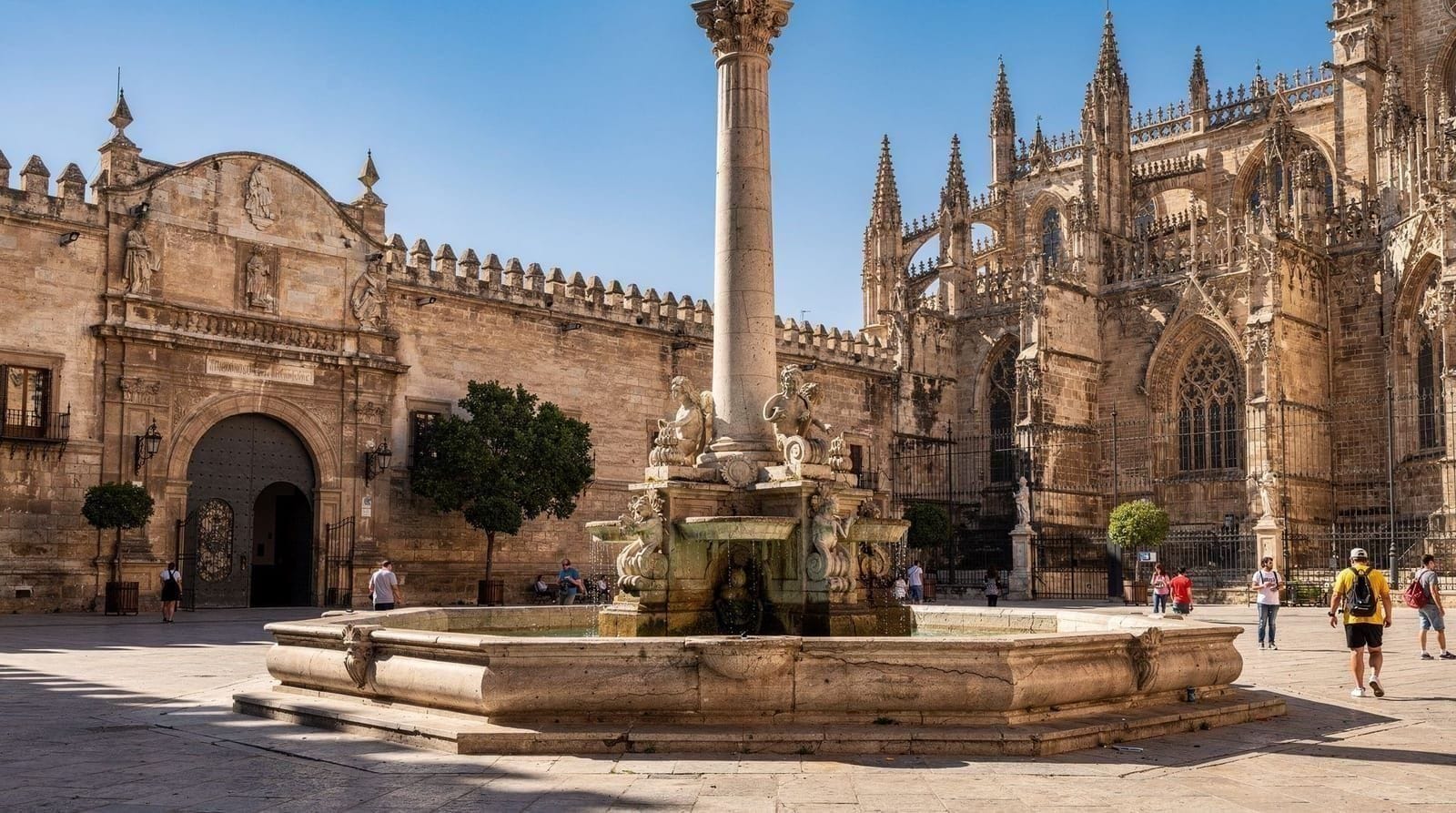
Distance between entrances: The Alcázar’s Puerta del León (main entrance) is on Plaza del Triunfo. The Cathedral’s Puerta de San Cristóbal (south entrance, used by most tour groups) is on the same square, about 200 metres away. You will not walk more than 3 minutes between exits and entrances.
Combined ticket options: See the dedicated guide to combined Alcázar and Cathedral tickets for a breakdown of every joint-access product available.
What most visitors actually experience
The pattern that emerges from visitor accounts is remarkably consistent: people who visit the Alcázar first leave energized and slightly overwhelmed by its complexity. People who visit the Cathedral first sometimes arrive at the Alcázar already tired and find themselves moving faster through the gardens than they would have liked.
The Alcázar demands more from a visitor in terms of attention, physical movement, and interpretive work. The rooms do not announce their significance in the way that Gothic cathedral windows or a carved retable do. The pleasure is slower and more cumulative — the moment when the geometry of the Mudéjar plasterwork suddenly resolves into an intelligible visual system, or when you realize that the fountain in the center of a courtyard is positioned to reflect a specific section of the arcade. That kind of pleasure requires energy.
The Cathedral is an enormous building but its architecture is in a vocabulary most Western visitors already know. The nave is Gothic, overwhelming in scale, and the effect is immediate. The Giralda is a tower and you climb it. The experience is more front-loaded with visual impact and requires less interpretive work.
Put simply: do the more demanding, more rewarding visit first.
Afternoon options after both visits
By 3:30–4:00 PM after visiting both monuments, you will have covered the two major historical attractions in Seville’s centre. Several options for the afternoon:
The Archive of the Indies (free): Immediately on the same plaza as both monuments. 30 minutes, original Columbus documents, no ticket required. An obvious add-on that most visitors skip and then wish they had included.
Santa Cruz neighbourhood: The maze of streets immediately north of the Alcázar is Seville’s most atmospheric quarter — narrow alleys, whitewashed walls, orange trees, small plazas. The Jardines de Murillo (public garden) at the eastern edge is quiet in the afternoon. The area takes an hour to wander properly.
Torre del Oro: A 10-minute walk along the river. The 13th-century Almohad watchtower on the Guadalquivir riverbank now houses a small naval museum (price and opening days: see the official Torre del Oro site). The tower itself and the river views from its gallery are the main draw.
The riverfront (Paseo de Cristóbal Colón): The riverside promenade north and south of the Torre del Oro is one of the most pleasant walking areas in central Seville. In summer it is cooler than the interior streets due to the river air. The evening paseo (between 7–9 PM) is when the Sevillanos themselves use it.
What to eat between visits
If you are following the recommended order (Alcázar morning, Cathedral afternoon), lunch falls between approximately 12:30 and 1:30 PM. The Santa Cruz quarter has the highest density of restaurants, but also the highest density of tourist-priced menus.
Practical guidance: look for the menú del día — the set lunch menu that every Spanish restaurant is legally required to offer on weekdays. A three-course lunch with wine or water costs €12–€15 at most establishments. The same restaurant’s à la carte menu in the evening costs 30–50% more. The menú del día is the correct way to eat lunch in Spain.
The terraces on the streets immediately around the Cathedral (Calle Mateos Gago, Calle Rodrigo Caro) are convenient but priced for tourists. Five minutes further into the Santa Cruz streets — Calle Santa María la Blanca, Calle Ximénez de Enciso — the same menus cost less and the crowds are thinner.
The experience at each monument with a guide vs without
This question affects how you plan both visits. For the Alcázar: a guide makes a substantial difference. The palace’s architectural layers are not self-evident. The transition from Almohad to Pedro I Mudéjar to Carlos V Gothic, visible in a single room, is something that a good guide can articulate in 3 minutes that would otherwise require an hour of reading. If you are visiting without a guide, the audio guide is essential — not optional.
For the Cathedral: the experience gap between guided and self-guided is smaller. The building’s scale and the major objects (the retable, Columbus’s tomb, the Giralda) are legible without interpretation. A guide adds context on the history and the art, which deepens the experience, but you will not leave confused if you go independently with a map.
Implication: if you are budgeting for one guided tour across both visits, spend it on the Alcázar.
Where this decision fits in your wider plan
The order of these two monuments is only one piece of a trip. If you are still deciding how long to stay, the how many days in Seville guide helps you judge whether a half-day for both monuments is realistic, and the Seville 2 days itinerary shows how this pairing slots into a short stay. First-timers who want the whole picture can pair this page with the first-timer itinerary and the first-time travel tips.
Season changes the maths too. In the hottest months the early start matters even more, so read the best time to visit the Alcázar and the guide to Seville in summer heat before locking in a slot. If you are worried about queues in general, the skip-the-line decoded guide explains which ticket types actually save time, and Seville tourist traps to avoid covers the scams and overpriced stops that tend to cluster around exactly these two monuments.
If you only have one day in Seville
Squeezing both monuments plus lunch and a neighbourhood walk into a single day is realistic but leaves little slack. If your day also needs to include the Archive of the Indies and a proper wander through Santa Cruz, start the Alcázar at 9:30 AM sharp and keep the Cathedral visit to 90 minutes rather than lingering. For the full ticket logistics on each monument individually, see the Alcázar tickets and skip-the-line guide and the Seville Cathedral complete guide.
Frequently asked questions about Alcázar vs Cathedral
What time does the Alcázar open vs the Cathedral?
The Alcázar opens at 9:30 AM. The Cathedral opens at 10:45 AM Monday–Saturday and 2:30 PM on Sundays. If you want to use the early morning hours productively, the Alcázar is the only option.Can I visit both the Alcázar and Cathedral in one day?
Yes. Most visitors do both in a single day. A realistic plan: Alcázar 9:30 AM–12:00 PM, lunch nearby, Cathedral 1:30–3:30 PM. This leaves afternoon time for the Santa Cruz neighbourhood.Which is more impressive: the Alcázar or the Cathedral?
They are impressive in very different ways. The Alcázar is intimate, labyrinthine, and garden-rich — Mudéjar architecture at its finest. The Cathedral is overwhelming in scale — the largest Gothic building in the world by volume. Most visitors find the Alcázar more surprising, since its fame is less well-known outside Spain.Is the Alcázar or Cathedral harder to get tickets for?
The Alcázar is harder. Its daily capacity is more limited and timed slots sell out further in advance. The Cathedral has more capacity and its booking infrastructure is more flexible.Which is better if I only have time for one?
The Alcázar, if you have never been to a Mudéjar palace before. The Cathedral, if Gothic architecture and religious history are your primary interest. For most first-time visitors to Seville, the Alcázar offers a more unique experience because no equivalent exists in northern Europe.
Top experiences
Bookable activities with verified prices and instant confirmation on GetYourGuide.