Seville Cathedral and Giralda tickets: complete 2026 guide
Seville: Cathedral and La Giralda entry ticket
How much are Seville Cathedral tickets in 2026?
Adult admission to the Cathedral and Giralda tower is €13 online (€14 at the ticket office). There is no separate charge for the Giralda — it is included in the standard ticket. Children under 13 accompanied by an adult enter free. Book online to avoid the queue.
Seville’s Cathedral is the largest Gothic building in the world by volume. That fact sounds like tourist brochure padding until you stand inside and discover that the nave is so long and wide that the far end genuinely disappears into shadow. The Giralda tower — a 12th-century minaret converted into a bell tower in the 16th century — is attached to the building’s north side and is included in every ticket. Understanding which ticket to buy before you arrive saves you both time and money.
| Cost | €13 online (€14 at the ticket office), standard adult entry, incl. Giralda |
| Free entry | Under-13s accompanied by an adult |
| Time needed | 1.5-2 hours self-guided |
| Book ahead | Advisable April-June and October-November |
| Watch for | The rosemary scam near the entrance |
The rosemary scam: read this before you approach the Cathedral
Before anything else about tickets: be aware of what happens outside the Puerta de la Asunción (the main west entrance) and along the perimeter of the Cathedral.
Women dressed in traditional Andalusian costume will approach you and offer a sprig of rosemary, saying it brings good luck. This is a setup for an aggressive demand for money. Some visitors report demands of €20 or more. The women are persistent and may grab your arm. The correct response is to not take the rosemary in the first place — make eye contact, say “no, gracias” clearly, and keep walking. If you have already accepted the sprig, hand it back and do not give money.
This is not mentioned in most ticket guides. It should be.
Ticket options in 2026
Standard entry ticket
Seville Cathedral and Giralda entry ticket — book onlineAdult: €13 online (€14 at the ticket office). Reduced: €7 online (€8 at the ticket office) for over-65s and students up to 25. Under-13s accompanied by an adult: free. The ticket covers the full Cathedral interior (nave, chapels, sacristy, treasury) and the Giralda tower climb. This is the standard timed-entry ticket.
Online booking is straightforward and available on the Cathedral’s official website and via third-party operators. The official website is sometimes slow during high-demand periods — third-party operators tend to have more consistent booking performance.
Audio-guide ticket
Cathedral and Giralda entry ticket with audio guideAround €16–€18. The audio guide adds structured narration for the main spaces: the Capilla Mayor (high altar), the Capilla Real (Royal Chapel with the tombs of Alfonso X and Ferdinand III), Columbus’s tomb in the south transept, and the Giralda. The English-language audio content is accurate and not excessively marketed — a reasonable choice for independent travellers.
Guided tour
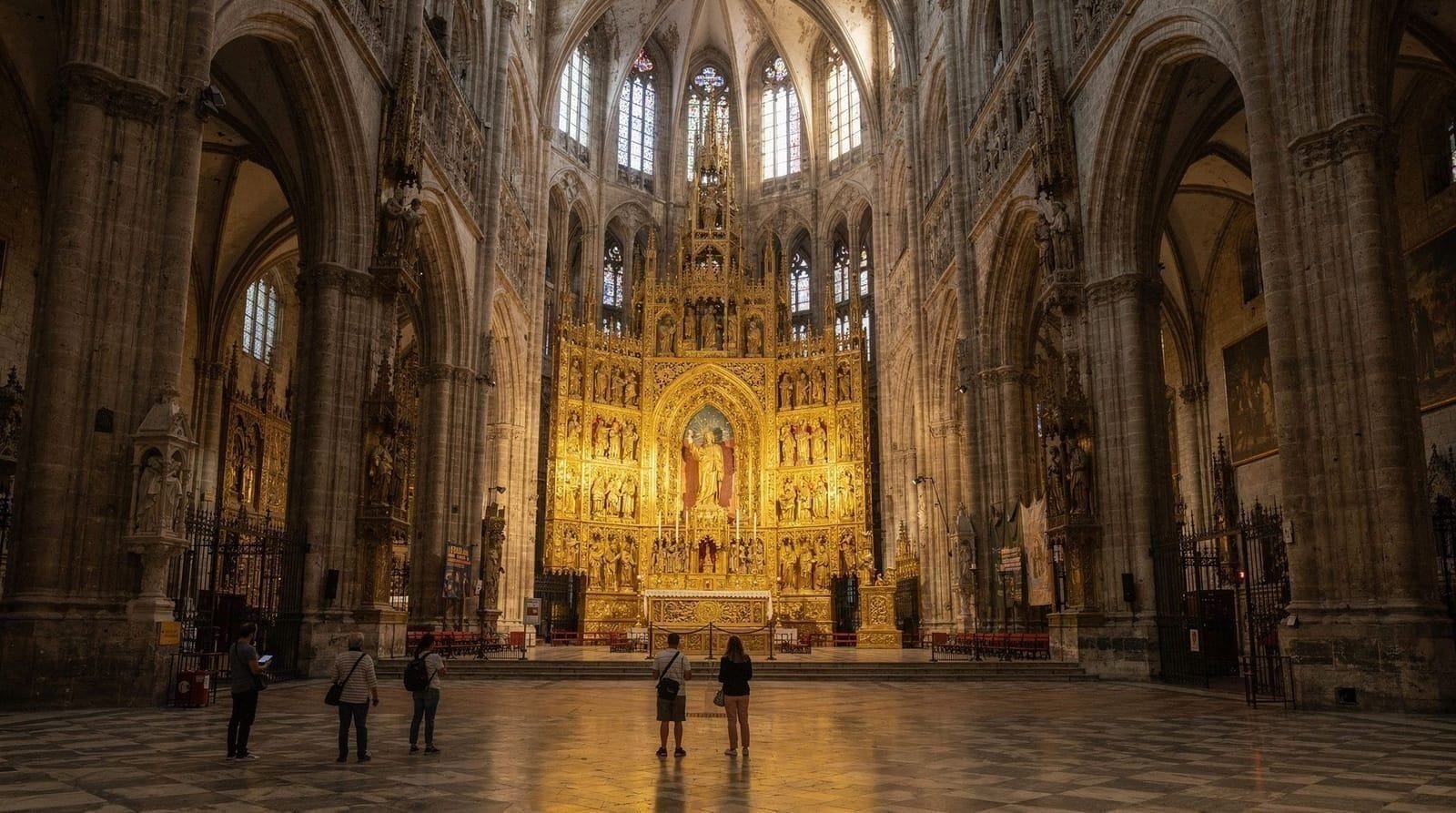
Cathedral and Giralda guided tour with ticketsTypically €25–€35. A licensed guide takes you through the Cathedral over 1.5 hours, with interpretation of the architectural history, the painted retable (one of the largest in the world), the treasury collection, and the Giralda’s significance as a symbol of the city.
The guided tour is worth it if the Cathedral is a centrepiece of your Seville trip. If you are visiting primarily to climb the Giralda and see the view, the standard entry is sufficient.
Small-group guided tour
Small-group Cathedral and Giralda tour with ticketsSimilar price to the standard guided tour but limited to 10–12 people. This makes a meaningful difference: smaller groups can move through the Cathedral’s narrow transept passages more freely, and you can ask questions without holding up 40 other people. Recommended over standard-size guided tours.
The Giralda tower: what to expect
The Giralda is a former minaret — one of the best-preserved examples of Almohad architecture outside Morocco. It was built in the late 12th century as the minaret of the Great Mosque of Seville. When the mosque was demolished and replaced by the Gothic cathedral in the 15th century, the minaret was retained and a Renaissance belfry was added to the top.
The climb is via 35 ramps, not stairs. This was intentional: the muezzin who called the faithful to prayer five times a day needed to reach the top quickly, and doing so on horseback (as legend has it) was the solution. In practice, the ramps make the climb accessible to visitors who struggle with stairs. Pushchairs are technically possible but the width of some turns makes it awkward.
The view from the top (70 metres) is one of the best in the city. On a clear day you can see the Sierra Morena mountains to the north and the Guadalquivir delta to the south. The Cathedral’s Gothic roofline at eye level is particularly striking.
Crowd timing: The Giralda gets busy between 11 AM and 2 PM. If your entry slot is in the early morning (9:30 or 10:00 AM first slots), the tower is significantly less crowded than at midday.
Christopher Columbus’s tomb: the historical footnote
Columbus’s remains are (probably) in the Cathedral. The word “probably” is doing real work there: the history of his remains involves Spain, Cuba, the Dominican Republic and multiple disputed transfers across centuries. The current tomb in the south transept was installed in 1899 after his remains were brought from Cuba. DNA analysis in 2006 confirmed a match with his son Hernando, which supports the Cathedral’s claim.
The tomb shows four crowned figures representing the kingdoms of Castile, León, Aragon and Navarra carrying the coffin. Columbus’s relationship with Spain was complicated in life — he died under house arrest after his governorship of the Indies was revoked — and this level of posthumous ceremony would have surprised him.
Booking in practice
The Cathedral does not use the same booking infrastructure as the Alcázar. The two sites are independent institutions with separate booking systems, even though they are 5 minutes apart.
Peak booking windows: April through June (Feria de Abril, Easter-adjacent travel), October and November. In these periods, book 3–7 days ahead. In low season, same-day online booking is often possible.
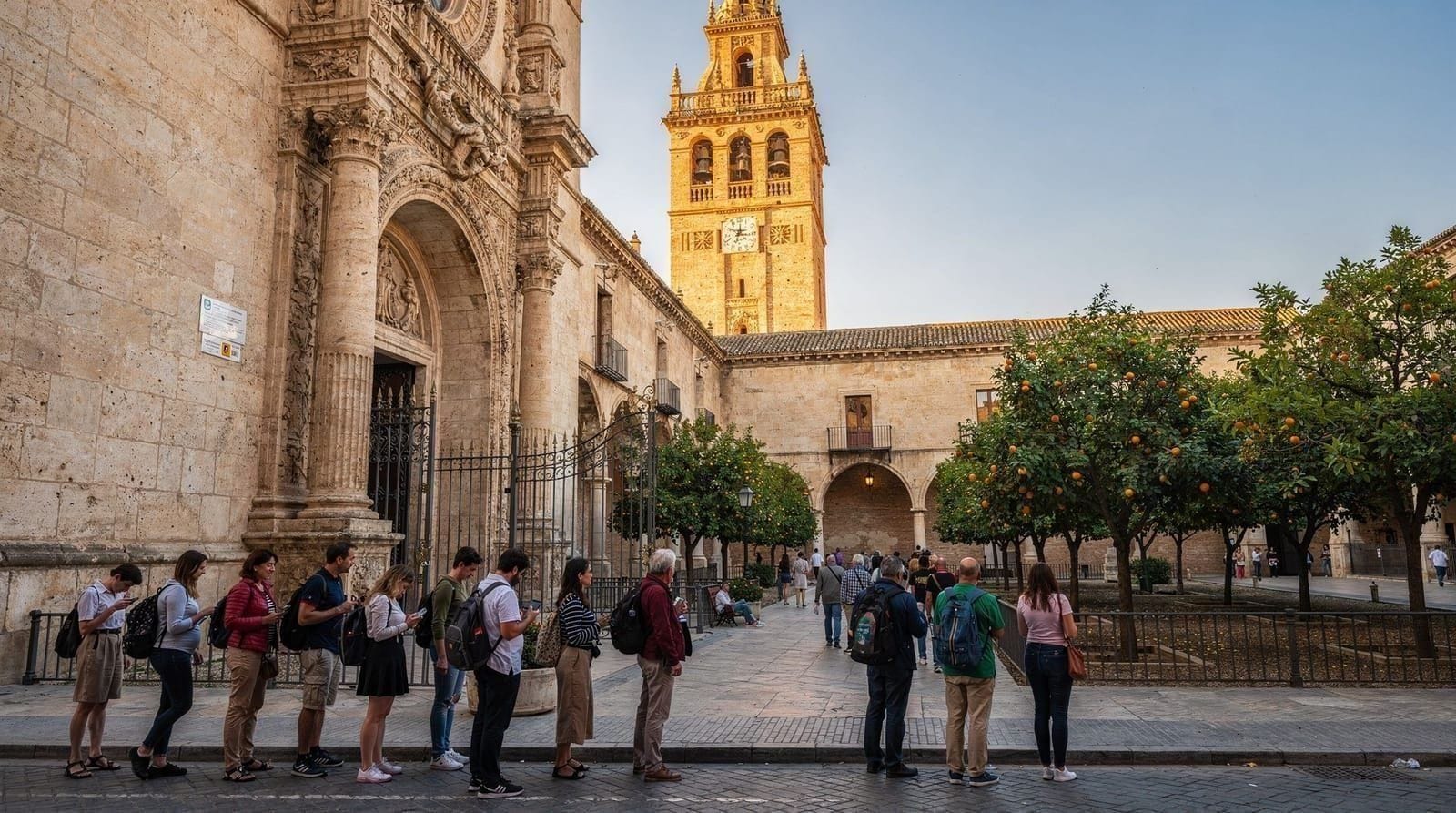
Online vs box office: There is a ticket office at the Puerta de San Cristóbal, but in peak season the queue can be 45–90 minutes long. Online booking is genuinely worth the effort.
Getting there and practical details
Address: Avenida de la Constitución, s/n, 41004 Seville. The main entrance is on the north side (Plaza Virgen de los Reyes) for visiting. The Puerta de San Cristóbal (south) handles most guided tour groups.
Hours (2026): Monday–Saturday 10:45 AM–7:00 PM, Sunday 2:30–7:00 PM; the ticket office closes at 6:00 PM on both days. Times may vary on religious holidays — check the Cathedral’s website before visiting.
Dress code: Shoulders and knees must be covered. The Cathedral is an active place of worship and this is enforced. Bring a scarf or buy a disposable cover at the entrance (sold by vendors outside at €3–€5 — acceptable but unnecessary if you plan ahead).
For the full history and architectural context of the Cathedral, see the Seville Cathedral complete guide. If you want to understand the order in which to visit the Cathedral and Alcázar, the which-first comparison is the most direct resource.
The Cathedral’s neighbourhood context
The Cathedral sits in the densest concentration of historic monuments in Seville. Within 5 minutes’ walk:
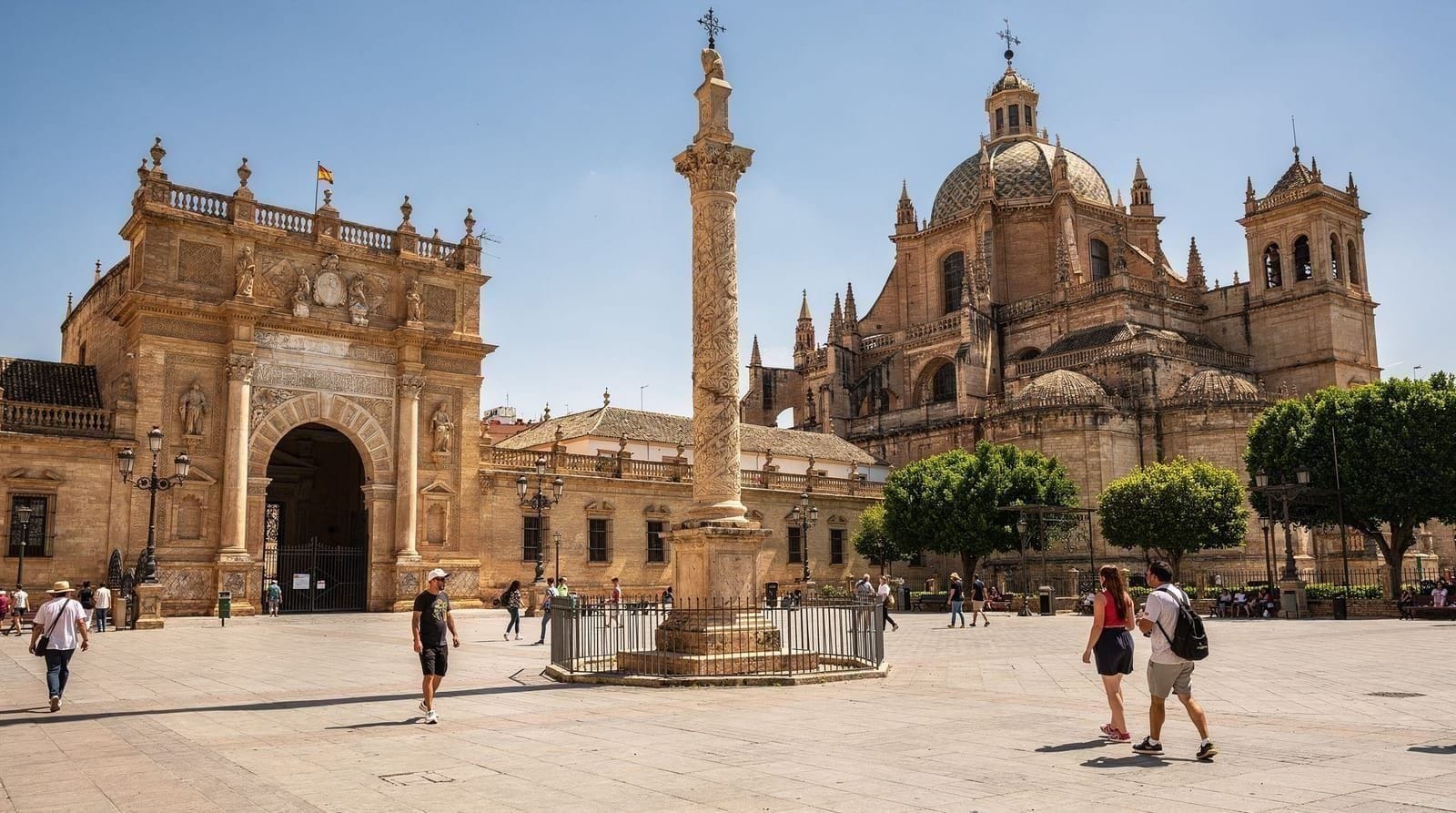
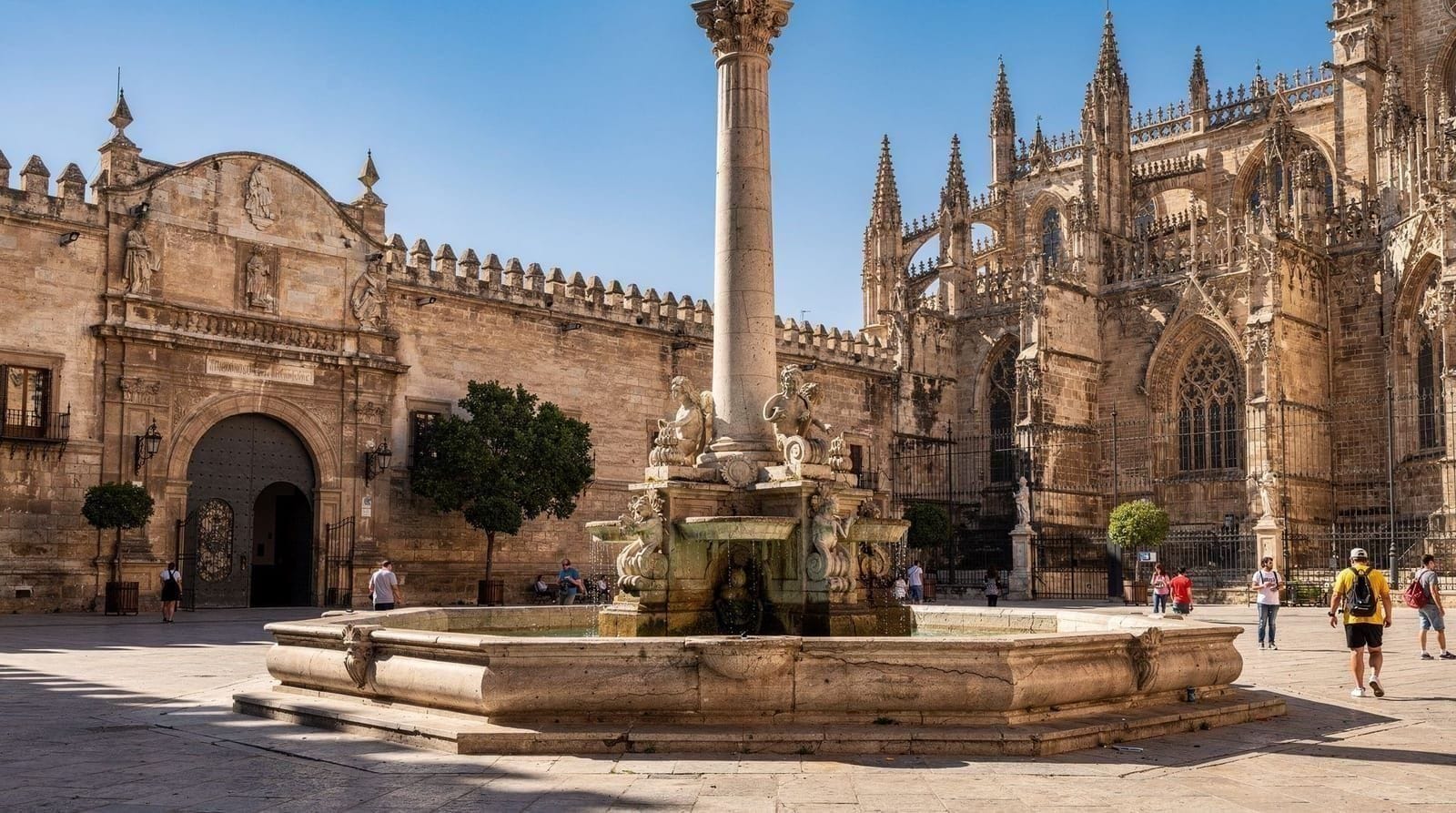
Plaza del Triunfo: The square in front of the Cathedral’s south facade. The Alcázar entrance is on the south side of the same square. The statue of the Immaculate Conception at the square’s centre commemorates the 1755 Lisbon earthquake, which also damaged parts of Seville.
Plaza Virgen de los Reyes: On the north side of the Cathedral, this quiet square is one of the best places to see the Giralda from ground level — the tower is visible in full from the plaza. Horse-drawn carriages park here. The Archbishop’s Palace faces the square.
Calle Mateos Gago: The main restaurant street running east from the Cathedral’s north side into the Santa Cruz quarter. High tourist density and prices to match. The bars on the parallel streets (Calle Rodrigo Caro, Calle Ximénez de Enciso) are noticeably less expensive.
Barrio de Santa Cruz: The historic Jewish quarter, immediately northeast of the Cathedral. The most atmospheric neighbourhood in central Seville for walking — narrow alleys, white walls, tiled street signs, small plazas. Most interesting in the early morning (before 10 AM) or late afternoon (after 5 PM) when day-trip crowds are thinner.
The Giralda as a symbol of Seville
The Giralda has functioned as Seville’s primary symbol — its civic identity marker — for over 800 years. It appears on the city’s coat of arms, on ceramic tiles throughout the city, on the label of every local beer, and in the background of photographs taken from every direction.
The tower’s transition from mosque minaret to cathedral bell tower is an architectural history of the city’s religious and political changes compressed into a single structure. The lower two-thirds — the smooth ashlar shaft with its shallow arched panels — is Almohad construction from the late 12th century. The upper third — the Renaissance belfry with its decorated lantern and the Giraldillo weather vane — is 16th-century Spanish construction. The junction between the two styles is visible at the point where the brickwork changes: below, precise and geometric; above, more ornate and vertical.
The name “Giralda” comes from the Giraldillo weather vane at the top (from girar — to turn). Before it was called the Giralda, the tower was known simply as the minaret. The weather vane was designed by sculptor Bartolomé Morel and installed in 1568. The original bronze figure is now preserved in the Cathedral museum; a replica stands on the tower.
Children and the Cathedral visit
The Cathedral is challenging for children under 10 — it is large, relatively dark in the nave, and requires patience during any guided explanation. Specific elements that work better for younger visitors:
Columbus’s tomb: The four crowned figures carrying the coffin are visually striking and the story (an explorer, a famous journey, a complicated death) is accessible. Most children find this section interesting.
The Giralda ramps: The absence of stairs makes the climb genuinely exciting for children who have been told there are no steps. The ramps are wide and well-lit. Children who are nervous about heights may find the upper sections challenging — the observation deck has railings but the views down are exposed.
The retable (from a child’s perspective): The scale of the high altar retable is impressive to children for the same reason it impresses adults — it is simply very large. The individual painted scenes are not legible from the nave floor without binoculars, but the overall effect of gold and colour registers immediately.
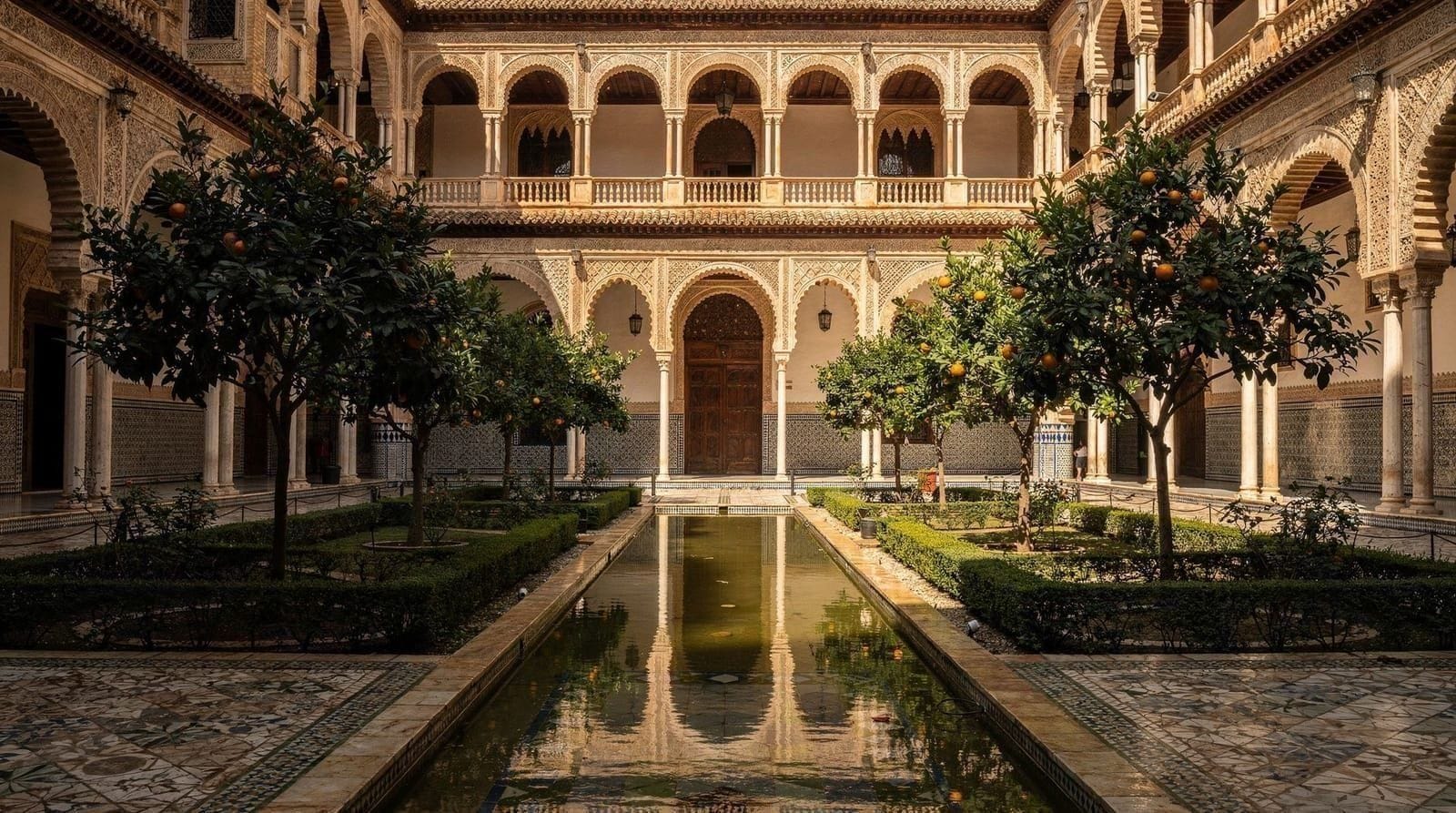
The orange tree courtyard (Patio de los Naranjos): The outdoor courtyard with its rows of orange trees is a welcome break from the interior for restless children. Free access during certain hours.
Practical management: The Cathedral visit in 75 minutes (nave + Columbus’s tomb + Giralda) is manageable for most children over 7. The full 2.5-hour visit (adding sacristy, treasury, chapter house) is too long for most children under 12.
Photography in the Cathedral
The Cathedral’s interior photography conditions are good in the morning (10:45 AM first entry gives morning light) and improve further in the hour before closing. The nave is designed to channel light towards the altar — the effect is most dramatic when the light angle is relatively low, i.e., morning or late afternoon.
The retable: A wide-angle view from the nave floor gives the best sense of scale. The gilded panels are best photographed with the nave’s dim ambient light rather than flash, which flattens the texture.
Columbus’s tomb: The four bronze figures are at eye level and photograph well with natural light from the transept windows. The best light comes from the windows on the tomb’s left side in the morning.
The Giralda from the observation deck: Use the south-facing aspect for the Cathedral roof view. The west-facing aspect for the river. The north-facing aspect for the city roofscape.
For a full historical and architectural deep-dive on the Cathedral, see Seville Cathedral complete guide.
The audio guide vs a guided tour: which adds more
Visitors deciding between the audio-guide ticket and a live guided tour often underestimate how different the two experiences are. The audio guide gives you full control of pace — you can linger at the Capilla Real or skip through sections that don’t interest you, and there’s no risk of losing a guide in a crowd. A live guide, by contrast, can respond to questions in real time and point out details (a specific carving in the retable, a particular tomb inscription) that an audio track can’t adapt to on the fly. For visitors who prefer independence and don’t mind reading a bit of extra context themselves, the audio guide is the better value; for visitors who want a more social, interactive experience or are travelling with people who ask a lot of questions, the live guided tour justifies its higher price.
What to see if you only have 45 minutes
Not every visitor has the full 1.5-2 hours to spend inside. If you’re on a tight schedule — perhaps combining the Cathedral with the Alcázar on the same day and running behind — prioritise in this order: the Capilla Mayor and its retable (the single most visually overwhelming space in the building), Columbus’s tomb in the south transept, and the Giralda climb for the view. The sacristy, treasury, and chapter house are worth returning for on a future visit but can be skipped without missing the building’s core impact.
Combined tickets and skip-the-line terminology
If you’re planning to visit both the Cathedral and the Alcázar, third-party operators sell bundled products that cover both sites, sometimes with a guide included. Whether these are worth the premium over buying separately depends on your priorities — see the combined Alcázar and Cathedral tickets guide for a full price comparison. The phrase “skip-the-line” is also used loosely across Seville’s ticket market and doesn’t always mean genuine queue bypass; the skip-the-line decoded guide explains what to actually look for when comparing products.
Where the Cathedral fits in a longer trip
The Cathedral works best as one anchor in a day rather than the whole day. If you are still shaping your plans, the first-timer’s itinerary and the one-day Seville itinerary both show how to slot it in beside the Alcázar without rushing either. With more time, the three-day itinerary lets you give the interior a slower, quieter visit.
Seville is also a compact city, so the walk between sights is part of the pleasure. The getting around Seville guide explains why you rarely need transport between the Cathedral, the Alcázar and the surrounding quarters. If you are still choosing a base, the where to stay in Seville guide helps you pick somewhere within easy walking distance of the Cathedral.
For a broader view of the other big monument next door, the Real Alcázar complete guide covers what to expect there, and the Seville destination page pulls the whole city together.
Weekday vs weekend visiting
Weekday mornings, particularly Tuesday through Thursday, tend to see noticeably shorter queues and calmer conditions inside the nave than weekends, when both local visitors and tour groups concentrate their Cathedral time. If your schedule allows flexibility, shifting a Cathedral visit to a weekday — even by a day or two — can meaningfully improve the experience without any change to the ticket you book.
A note on the Santa Cruz approach
Most visitors reach the Cathedral by walking through the Santa Cruz neighbourhood, the historic Jewish quarter immediately to the northeast. Arriving this way rather than via Avenida de la Constitución gives a more atmospheric first impression of the Giralda rising above the narrow streets, and it’s worth building 15-20 minutes of unhurried walking into your morning before joining the ticket queue.
Frequently asked questions about Seville Cathedral and Giralda tickets
Is climbing the Giralda included in the Cathedral ticket?
Yes. The Giralda tower is included in the standard €13 admission. There are no stairs — the tower is climbed via a series of ramps, originally designed so that the muezzin could ride a horse to the top. The climb takes about 15–20 minutes and delivers panoramic views over Seville.What is the rosemary scam near the Cathedral?
Women dressed in traditional Andalusian clothing stand near the Cathedral entrance and hand out sprigs of rosemary claiming it brings good luck. They then demand payment — sometimes aggressively. This is a known tourist scam. Do not accept the rosemary. Simply decline and walk on.Do I need to book Cathedral tickets in advance?
In peak season (April, May, October, November), online booking is strongly advisable. The Cathedral has timed-entry slots and they do sell out. In low season (January–February, July–August outside festivals), same-day walk-in is usually possible but not guaranteed.Is there a free entry day for the Cathedral?
Yes, on Sundays only. Free tickets are handed out on site at the Puerta del Príncipe from 5:00 PM, in limited numbers. There is no free Monday slot.How long does a visit to the Cathedral and Giralda take?
Allow 1.5–2 hours for a self-guided visit covering the main nave, the Royal Chapel (Capilla Real), Columbus's tomb, and the Giralda tower. A guided tour typically takes 1.5 hours and covers the same areas with interpretation.Where does the Cathedral guided tour meet?
Guided tours typically meet at the Puerta de San Cristóbal (the south door, on the same square as the Alcázar). Confirm your tour's exact meeting point when you book — some operators use the Plaza Virgen de los Reyes entrance on the north side.Can I combine the Cathedral with a visit to the Alcázar on the same day?
Yes, and it is the standard way to plan the day. Most visitors do the Alcázar first thing (9:30 AM opening), finish around noon, then walk to the Cathedral for an afternoon slot. The two entrances are less than 5 minutes apart on foot.Is a combined Alcázar and Cathedral ticket cheaper than buying separately?
Not usually — buying tickets separately (€15.50 for the Alcázar plus €13 for the Cathedral) is typically the cheapest route. Combined third-party products cost more but bundle the coordination and sometimes a guide. See the full comparison in the combined tickets guide for the trade-offs.
Top experiences
Bookable activities with verified prices and instant confirmation on GetYourGuide.