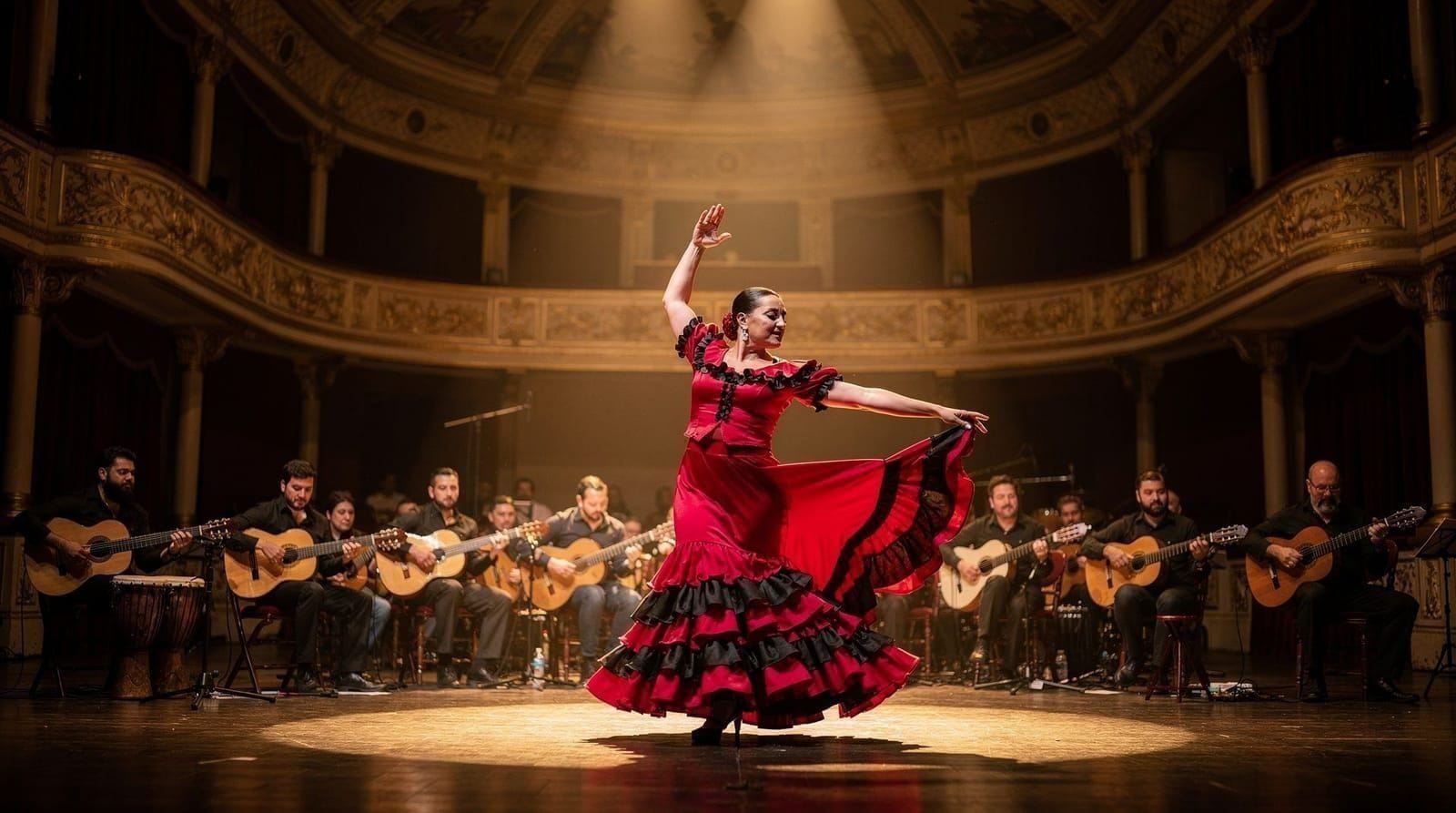
Flamenco 101: a beginner's guide before attending a show in Seville
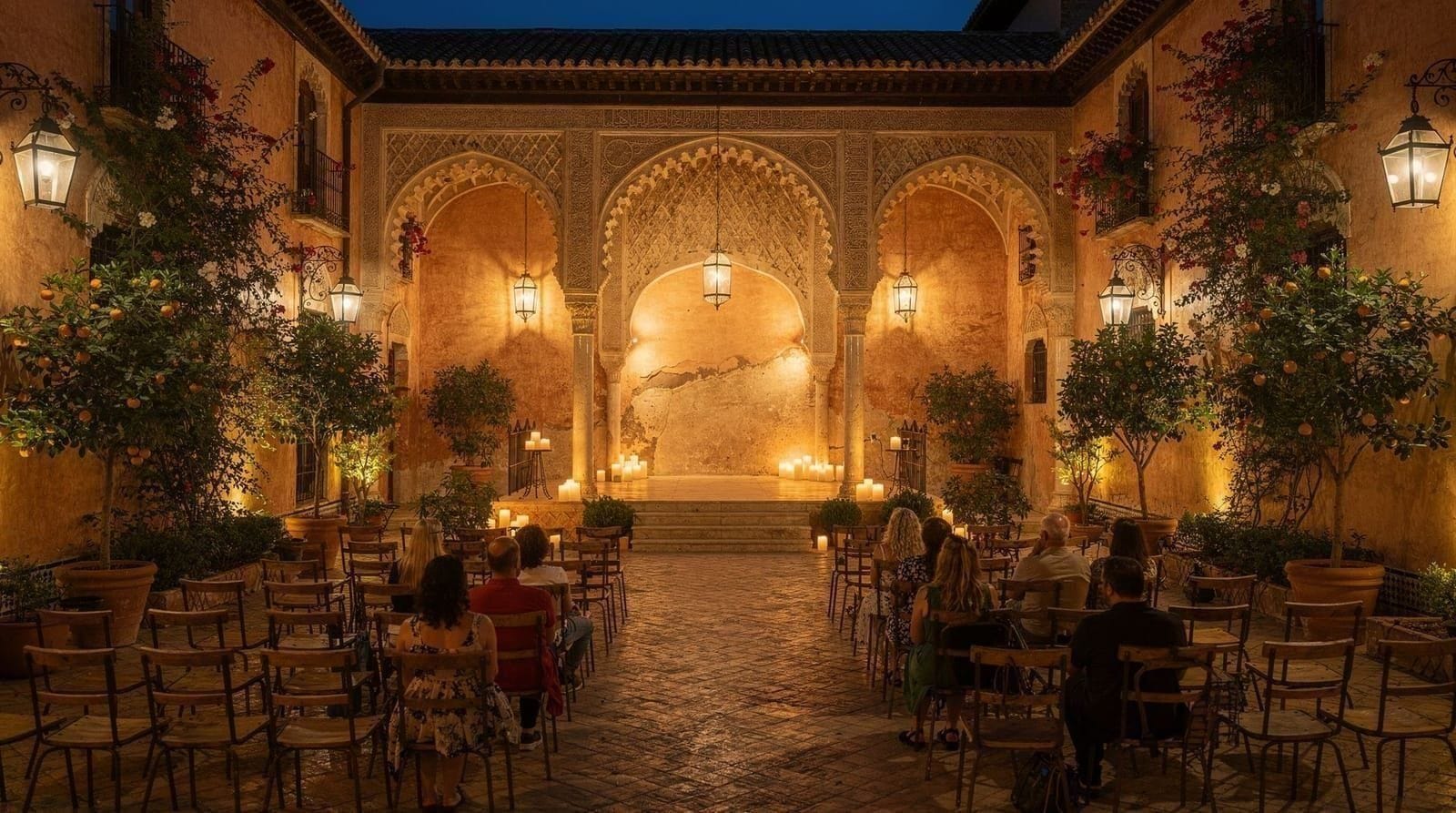
Seville: Casa de la Memoria flamenco show
What do I need to know before attending a flamenco show?
The essentials: flamenco has three core elements — cante (singing), toque (guitar), and baile (dance). The singers perform distinct styles called palos, the most important of which are soleá (slow, deep) and seguiriyas (intense, tragic). The audience response — olé, así se canta — is participatory, not performative. You do not need prior knowledge to enjoy a show, but understanding the palo structure will help you follow what is happening.
| What | Live cante, toque and baile at a tablao (seated flamenco venue) |
| Duration | Typically 60-75 minutes |
| Cost | Around €25-40 for a reputable tablao show |
| Where to start | Casa de la Memoria or Tablao Los Gallos for a first show |
| Prep time | 15-20 minutes of reading, or 30 minutes of listening, is enough |
You are in Seville, you have booked a flamenco show, and you know almost nothing about flamenco. This guide covers what you need in 15-20 minutes of reading. The goal is not to turn you into an expert but to give you the vocabulary and conceptual framework to follow what happens on stage — and to appreciate the moments when something extraordinary occurs.
The three pillars: cante, toque, baile
Every flamenco performance rests on three elements working in conversation:
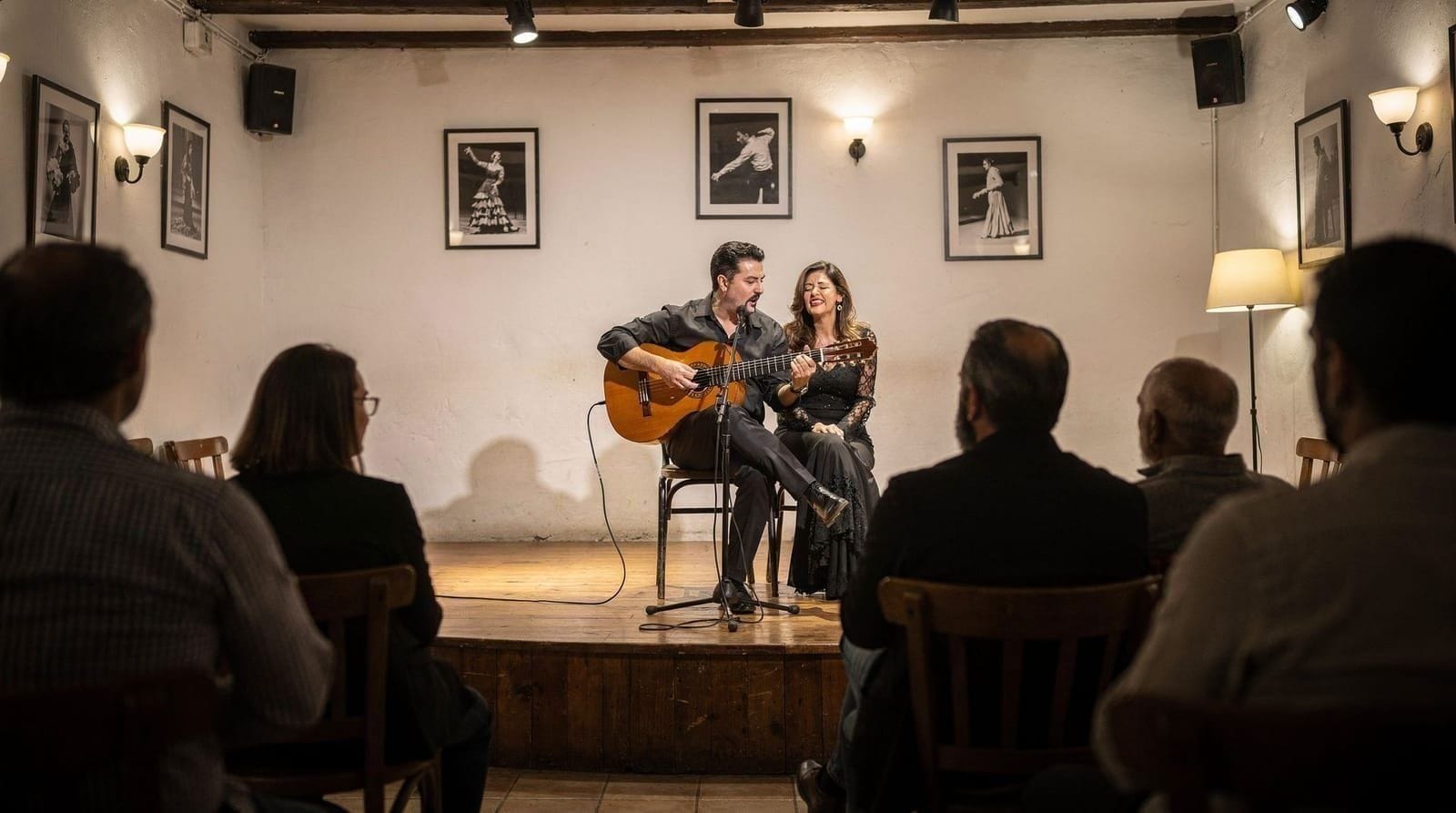
Cante (singing): The cantaor or cantaora performs the palos — the distinct musical styles of flamenco. The voice is often deliberately rough, raw, and unconventionally beautiful by classical standards. The emotional intensity of cante jondo (deep song) is the heart of flamenco; everything else structures around it. At many tablaos aimed at tourist audiences, the singing is underemphasised in favour of visual spectacle. At the best venues, the cantaor is the centre of the performance.
Toque (guitar playing): The tocaor or tocaora accompanies and converses with the singer and dancer. Flamenco guitar technique is distinct from classical guitar — the right-hand rasgueado (strumming across all strings with spread fingers) and the picado (single-string runs) produce a percussive, rhythmically complex sound that drives the compás. The guitar does not simply provide harmonic background; it responds, challenges, and supports the other performers in real time.
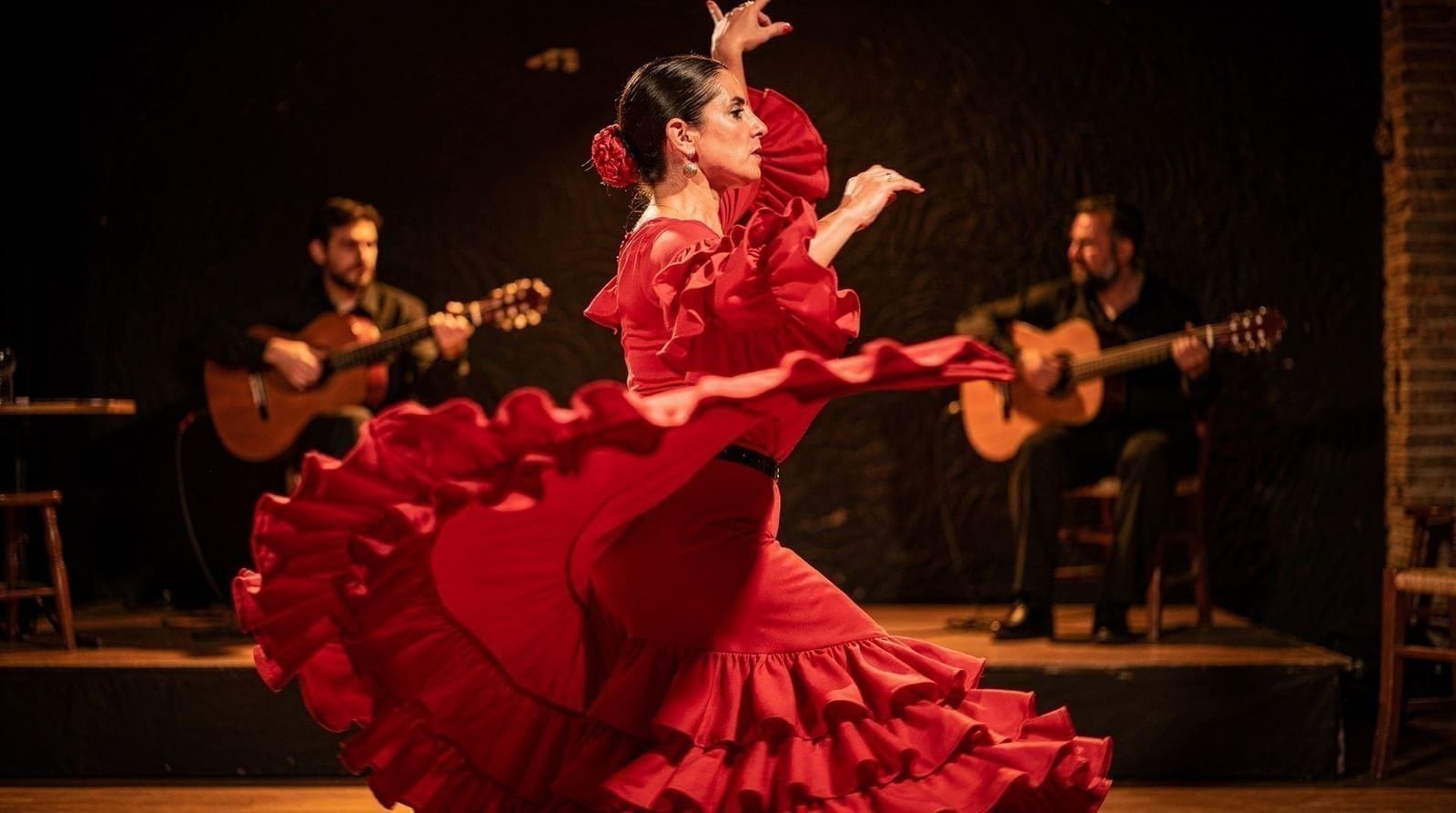
Baile (dance): The bailaor or bailaora performs in response to the cante and toque. The most visible element for most visitors is the zapateado — the footwork sequences where the dancer uses their feet as percussion instruments, producing rhythmic counterpoint against the guitar. Equally important but less immediately dramatic are the arms (braceo), the hands (floreos), and the posture (porte) — the straight-spined, head-high carriage that distinguishes flamenco from other Spanish dance traditions.
A fourth element sometimes listed is the palmas (hand-clapping) provided by supporting performers, which adds rhythmic texture and responds to the performers. The distinction between simple (open-hand) and sordo (muffled) palmas creates rhythmic layering.
Understanding the palos
A palo is a distinct style of flamenco with its own compás (rhythmic structure), harmonic mode, emotional register, and set of performance conventions. There are over 50 recognised palos, though most tablao programmes draw from a smaller repertoire.
The most important to understand before attending a show:
Soleá: The most fundamental palo and considered the “mother” from which other forms descend. The compás is 12-beat with accents on specific beats. The tempo is slow and the emotional register is profound — soledad (solitude) is the emotional territory. When a cantaor and tocaor are deeply engaged in soleá, the performance can produce the intense concentrated silence that indicates real flamenco.
Seguiriyas: Often described as the most intense and tragic of the palos. The compás is 12-beat with a distinctive rhythmic feel different from soleá. Historically associated with cante jondo in its purest form — lamentation, suffering, death. For many aficionados, a great seguiriyas is the measure of a cantaor’s depth.
Alegrías: Upbeat, from Cádiz originally, with a major mode harmonic feel and faster tempo. The dance component is visually spectacular — alegrías shows allow for dramatic choreographic development. Many tablao programmes include alegrías as a crowd-pleasing finale.
Bulerías: The fastest palo, festive and rhythmically complex. The compás is shared with soleá (12-beat) but at a much higher tempo with different accent distribution. Bulerías is the palo most associated with the informal juerga context — it can be improvised, competitive (in the best sense), and joyful.
Tangos: Upbeat and Gypsy in character, not to be confused with Argentine tango. Different rhythm, different origins, different aesthetic entirely. Often appears in tourist-oriented programmes because it is visually engaging and has a recognisable pulse.
Fandango and its variants: A large family of styles with regional subforms. Fandangos de Huelva are popular and accessible; the deeper variants (malagueñas, granaínas) are more challenging. Often used as an emotional release after an intense cante jondo sequence.
The main palos at a glance
| Palo | Tempo | Mood | What to listen for |
|---|---|---|---|
| Soleá | Slow | Profound, solitary | The “mother” palo; deep, meditative singing |
| Seguiriyas | Slow-moderate | Intense, tragic | Lamentation; often the emotional peak of a show |
| Alegrías | Moderate-fast | Bright, joyful | Major-key feel, from Cádiz, dramatic dance |
| Bulerías | Fast | Festive, celebratory | Same 12-beat cycle as soleá, much higher energy |
| Tangos | Moderate | Playful, confident | Not Argentine tango — distinct rhythm and origin |
Use this table as a quick reference during a show: if you can identify roughly which palo is being performed, you’ll understand why the mood on stage shifts the way it does from one section to the next. Most tablao programmes are structured deliberately — often opening with something accessible, moving through a slower, deeper form like soleá or seguiriyas at the emotional centre of the show, and closing with a fast, celebratory palo like bulerías or alegrías so the audience leaves on an upbeat note rather than the raw, unresolved feeling that a seguiriyas can leave hanging in the room. Recognising that arc as it happens, rather than experiencing the show as an undifferentiated sequence of songs, is one of the simplest ways this guide changes what you notice.
The compás (rhythm): what makes flamenco rhythmically complex
Most Western popular music operates in 4/4 time (four beats per bar, equal stress). Most classical music operates in 3/4 or 4/4. Flamenco palos use rhythmic structures of 12 beats with shifting accent patterns — making them difficult for listeners trained on standard Western music to track.
The soleá compás accents fall on beats 3, 6, 8, 10, and 12 of a 12-beat cycle. Bulerías uses the same 12-beat cycle but accents on 1, 3, 5, 6, 8, 10. This is not something you need to master — it is something you need to know exists so that when you feel pulled by the rhythm without being able to identify why, you know that is because the rhythmic structure is genuinely complex.
Key vocabulary for watching a show
Cantaor/cantaora: Male/female singer.
Tocaor/tocaora: Male/female guitarist. (In flamenco, not guitarrista — the distinction signals insider knowledge.)
Bailaor/bailaora: Male/female dancer.
Cuadro flamenco: The performance group — typically singer(s), guitarist(s), dancer(s), and palmeros.
Zapateado: Footwork sequence. The rhythmic striking of the floor with heels, balls of feet, and the edges of specialised shoes (with reinforced nails or tacks on heel and toe).
Braceo: Arm movements — the characteristic curved-wrist, flowing-arm style distinct to flamenco.
Duende: Untranslatable. The quality of genuine emotional intensity and presence. You will know it when you encounter it.
Jondo: From “hondo” (deep). Cante jondo is the deepest, most serious register of flamenco singing.
Aficionado/aficionada: A knowledgeable fan who attends flamenco regularly and understands its traditions.
What to watch for at your specific show
If you are attending Casa de la Memoria or Los Gallos, focus on the interaction between the cantaor and the tocaor — the way the guitarist responds to phrases in the singing with micro-variations in rhythm and harmonic colour. This conversation is where the musical depth of flamenco lives, and it is invisible if you focus only on the dancer.
Watch the dancer’s hands and arms during the quieter passages — the floreos (finger movements) and the braceo are precise and technically demanding in ways that become visible only when the footwork is not claiming your attention.
When an audience member shouts “olé” or “así se canta,” watch the performers’ faces. A good cantaor registers this response physically — not with a performance smile but with a genuine shift in engagement. This feedback loop between audience and performer is central to what makes flamenco a live art form rather than a recorded one.
After the show: continuing the education
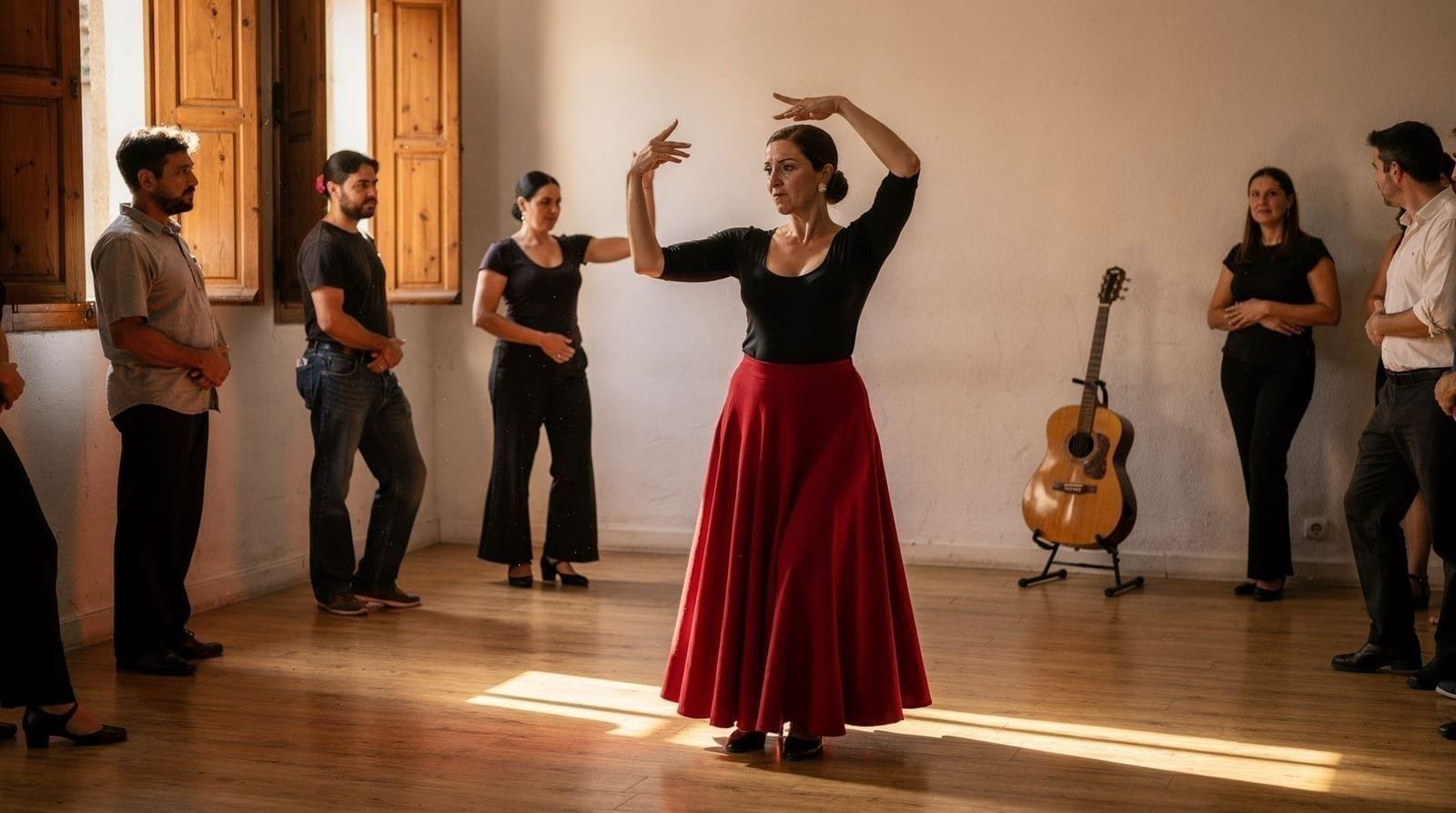
The most efficient education in flamenco after attending a show is trying it yourself. A one-hour beginner dance class will teach you more about zapateado technique than an hour of reading. The physical struggle to produce basic footwork patterns illuminates everything you watched the previous evening.
Book a beginner flamenco dance class in SevilleFor choosing which show to book in the first place, see the best flamenco shows in Seville guide and authentic flamenco vs tourist show for how to avoid a factory-style performance that skips the depth described above.
The Museo del Baile Flamenco on Calle Manuel Rojas Marcos in Santa Cruz provides historical context through photographs, costumes, and documentary film. Small but well-curated; worth 45 minutes before attending a show if you have time.
For the most serious flamenco experience in Seville, the Bienal de Flamenco (September-October in even years) brings the world’s foremost artists to the city. The 2026 Bienal runs 9 September to 3 October. See Bienal de Flamenco de Sevilla 2026: the complete visitor guide.
Book Casa de la Memoria — recommended first tablaoThe emotional content of flamenco: what you are actually hearing
The palos of flamenco encode specific emotional states that have developed over centuries. Understanding the emotional register of what you are hearing — even approximately — makes the performance more accessible.
Soleá encodes soledad — solitude, loneliness, being alone in the world. This is not self-pity; it is a deeper, more existential aloneness. The soleá is meditative and profound. In the best soleá performances, the singer seems to be addressing something beyond the room.
Seguiriyas encodes grief and lamentation in extremity — death, imprisonment, exile. Federico García Lorca described the siguiriyas as “a wild sobbing” and noted that it was “the only oriental thing in the West… it comes from the deepest East.” This is the palo most associated with what Lorca called duende — the spirit of authentic emotional depth.
Bulerías encodes celebration, festivity, and communal joy — but at a speed and rhythmic complexity that requires enormous control from the performers. The emotional register is positive, but the technique demands more from every participant (singer, guitarist, dancer) than many slower palos. Bulerías in the hands of great artists is genuinely exhilarating.
Alegrías encodes happiness and brightness. The name means “joys.” It is from Cádiz, lighter in character than the Seville-origin palos, with a more open melodic character. An alegrías sequence is typically a relief after the intensity of seguiriyas.
Tangos (flamenco tangos) encodes a kind of playful, swaggering vitality — not happiness exactly but energy and street confidence. The tangos flamencas are far removed from Argentine tango despite the shared name; they are quick, rhythmically insistent, and often include sung verses with witty or satirical content.
Listening to flamenco before you arrive
Thirty minutes of listening before attending a show will transform your experience more than any amount of reading. A short list of recordings worth knowing:
For soleá: La Niña de los Peines (Pastora Pavón Cruz) — her recordings from the 1920s-1940s are the benchmark for this form and still definitive. Her voice is extraordinary by any standard.
For seguiriyas: Manolo Caracol — his recordings capture the Triana tradition of deep siguiriyas. More recent: Camarón de la Isla’s early recordings with Paco de Lucía from the 1970s.
For bulerías: José Mercé or Camarón — bulerías at speed, with the rhythmic complexity fully audible.
For guitar: Paco de Lucía’s recordings from the 1970s-80s, particularly the solo albums, show the full range of tocaor technique across multiple palos. His partnership with Camarón de la Isla on albums like La leyenda del tiempo (1979) is the defining document of modern flamenco.
For dance in video: Recordings of Joaquín Cortés or Farruquito for sheer spectacular technique; El Farruquito specifically for Triana-school zapateado.
The Flamenco 101 checklist: what to remember
Before your show, remind yourself of:
- The three pillars: cante (singing), toque (guitar), baile (dance)
- The most important palos you will likely hear: soleá, seguiriyas, alegrías, bulerías
- The 12-beat compás with irregular accents — you will feel pulled by the rhythm without being able to count it, and this is normal
- Duende is real — when it occurs, the room will tell you
During the show:
- Listen to the guitar as much as you watch the dancer
- Watch the interplay between the cantaor and the tocaor
- Notice when the audience responds spontaneously — this marks genuine moments
- Resist photographing during the performance
After the show:
- Try a one-hour dance class (book here)
- Read about the specific palos you heard
- Attend another show if possible — flamenco compounds on itself
Where to see flamenco taken seriously in Seville
If your first show leaves you wanting more depth than a single tablao evening provides, it’s worth being deliberate about your second booking rather than repeating the same format. Triana’s flamenco venues carry the deepest historical connection to the art form’s development — the flamenco in Triana guide covers the neighbourhood’s specific tradition and its resident tablaos. Every September-October of even years, the Bienal de Flamenco brings the world’s leading artists to Seville for a level of performance well beyond what any tablao offers on a normal night; the Bienal de Flamenco guide has the full 2026 programme details and how to plan a visit around it.
Frequently asked questions about Flamenco 101
What is the difference between flamenco and sevillanas?
Sevillanas is a folk dance from Seville, danced socially at the Feria de Abril and other local celebrations. It has a recognisable structure — four parts (coplas), each with a specific choreographic form — and is danced by couples. It is related to flamenco historically but is not flamenco: sevillanas is a social dance, flamenco is an artistic tradition with complex emotional and musical depth. Many visitors confuse them because both involve guitar, distinctive dress, and characteristic hand positions.What does 'duende' mean in flamenco?
Duende is the Spanish word for goblin or spirit, but in flamenco it refers to the quality of genuine emotional intensity that transcends technique — when a performer reaches something real rather than executing something practiced. The poet Federico García Lorca gave the most famous description: duende 'will not appear if he does not see the possibility of death.' It is not something performers can produce on demand, and it does not always occur even in excellent performances. Recognising it when it happens — a silence that falls over an audience, a moment that feels larger than the room — is one of the rewards of attending serious flamenco.What should I listen for during the cante (singing)?
The cantaor sings in palos (styles) that each have a specific compás (rhythmic structure) and emotional register. In soleá, the rhythm is slow and irregular, the emotional tone is profound and solitary. In seguiriyas, it is more intense and tragic. In bulerías, fast and festive. Listen for the way the guitarist responds to the singer rather than accompanying them in a subordinate sense — the best toque is a conversation between equals.Is it appropriate to clap along during a flamenco show?
At tablao performances, audiences are not expected to clap along — this is different from the participatory context of juergas or peñas. Responding with 'olé' or 'así se canta' (that's how you sing) at appropriate moments — after a particularly intense passage, not mid-performance — is welcome and appreciated by performers. Clapping along to the compás unless you are confident you know the rhythm is risky, as many flamenco palos have complex irregular meters.How long does a typical flamenco tablao show last?
Most tablao shows run 60-75 minutes, covering several palos in sequence — often building from a slower, deeper form like soleá toward a faster, celebratory closer like alegrías or bulerías. Some venues run two shows per evening at fixed times rather than one continuous performance.
Top experiences
Bookable activities with verified prices and instant confirmation on GetYourGuide.