Authentic flamenco vs tourist show: how to tell the difference
Seville: Casa de la Memoria flamenco show
How do I know if a flamenco show in Seville is authentic?
Look for: small venue capacity (under 120 seats), no simultaneous dining during the performance, named performers with verifiable credentials, and a programme that includes cante jondo (deep song) as well as dance. The absence of a dinner package does not guarantee quality, but its presence at a venue seating 200+ is a red flag.
Every hotel concierge in Seville will recommend a flamenco show. Every tourist brochure has flamenco on the cover. This has created a market where the word “flamenco” describes everything from century-old artistic tradition to choreographed tourist theatre — and visitors often cannot tell which they are paying for.
This guide gives you concrete criteria to evaluate any show before you book.
| Where | Intimate tablaos: Casa de la Memoria, Los Gallos; dinner-shows: larger venues near the Cathedral |
| Cost | Around €20-40 show-only; €70-90+ for dinner-shows |
| Time needed | 60-90 minutes for a tablao; 2+ hours for a dinner-show |
| Best time | Later shows (21:00-21:30) generally have more engaged performers and audiences |
| Booking | Serious tablaos book out on weekends — reserve ahead |
The spectrum: from juerga to dinner-show
Flamenco exists on a spectrum. At one end is the juerga — an informal, private gathering where flamenco artists perform for themselves and their peers, often late at night and fuelled by sherry and mutual creative challenge. This is the origin context of the art form; it is not generally accessible to tourists and should not be.
At the other end is the large dinner-show tablao: a 200-300 seat venue where flamenco is one element of a packaged evening that also includes a three-course meal, translation earphones, and a gift shop. This exists to serve a market and is honest about what it is.
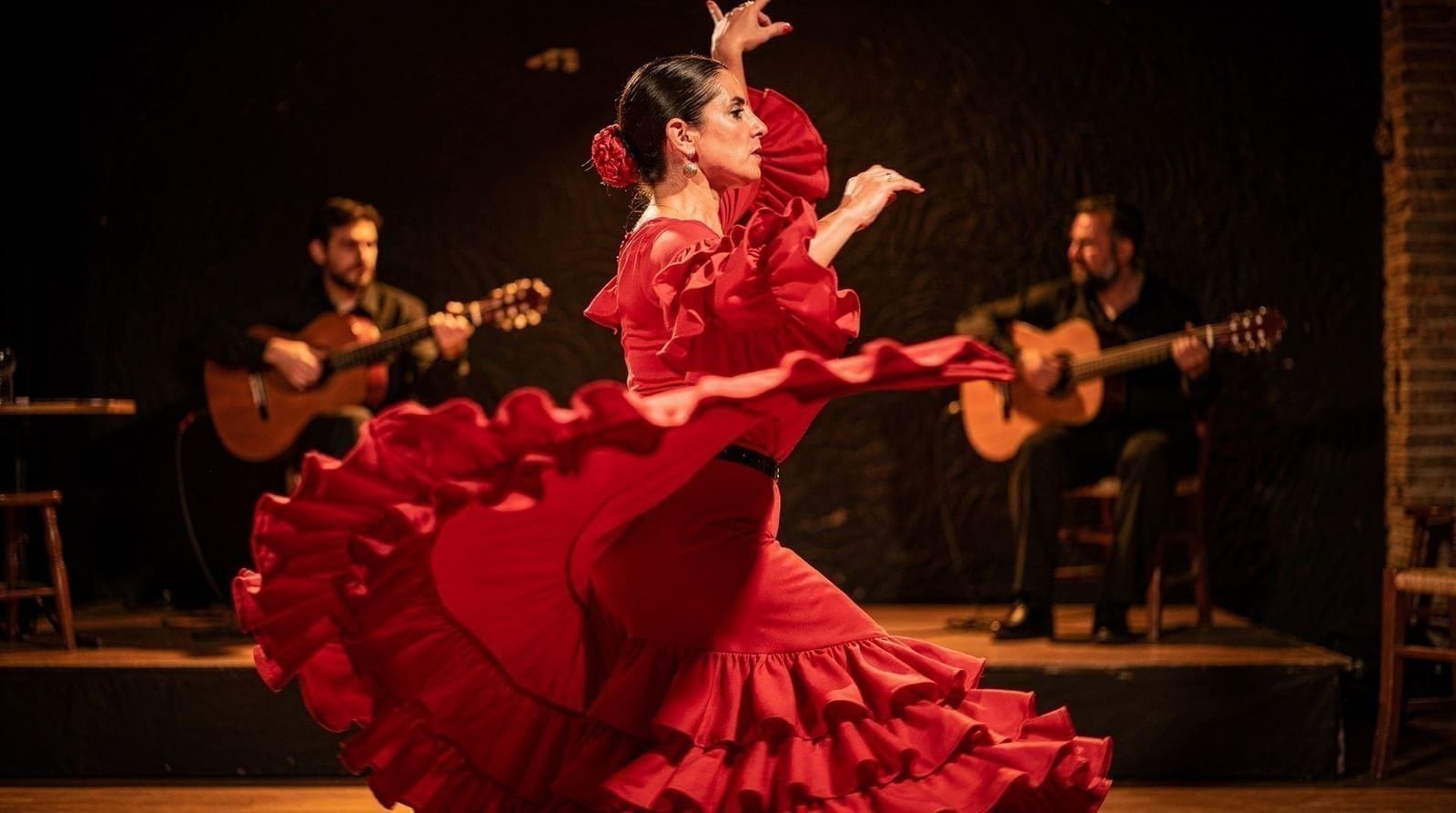
Between these poles are the serious tablaos: dedicated venues where trained performers give structured shows to mixed audiences of tourists and flamenco-knowledgeable visitors. This middle ground is where Seville’s best tablao experiences live, and it is where most visitors should aim.
Eight criteria for evaluating a show
1. Venue capacity. Under 120 seats: generally good. 120-200: mixed quality range. Over 200: more likely a dinner-show format. This is not absolute — there are serious venues with larger capacities — but it is a reliable first filter.
2. Can you eat during the show? If food service happens simultaneously with the performance, you are at a dinner-show. This is a different product from a dedicated flamenco performance. Neither is inherently wrong, but they are not the same thing.
3. Who are the performers? Can you find names and professional backgrounds? Well-run tablaos publish their rosters. If the marketing shows only atmospheric photography and no named performers, treat this as a caution signal.
4. What palos are performed? If the description mentions only “passionate flamenco” and “mesmerising footwork” with no reference to musical styles, you are likely looking at a choreographic showcase rather than a programme of flamenco traditions.
5. Price. This one cuts both ways. Cheap shows (€10-15) are often condensed tourist products. Very expensive shows (€70-90 show-only) may be pricing on brand rather than quality. The honest price range for a serious 75-90 minute tablao in Seville in 2026 is approximately €20-40.
6. Reviews that mention specific performers or palos. Generic enthusiasm (“amazing energy!”) can be written about any competent show. Reviews that describe specific moments — a cantaor’s seguiriyas, a particular zapateado sequence, duende in the audience — come from people who were paying attention to the art form.
7. Start time. Early shows at 18:00 or 18:30 are often shorter and aimed at visitors fitting flamenco into a dinner schedule. Later shows at 21:00-21:30 typically have a different atmospheric charge — both performers and audience are more settled.
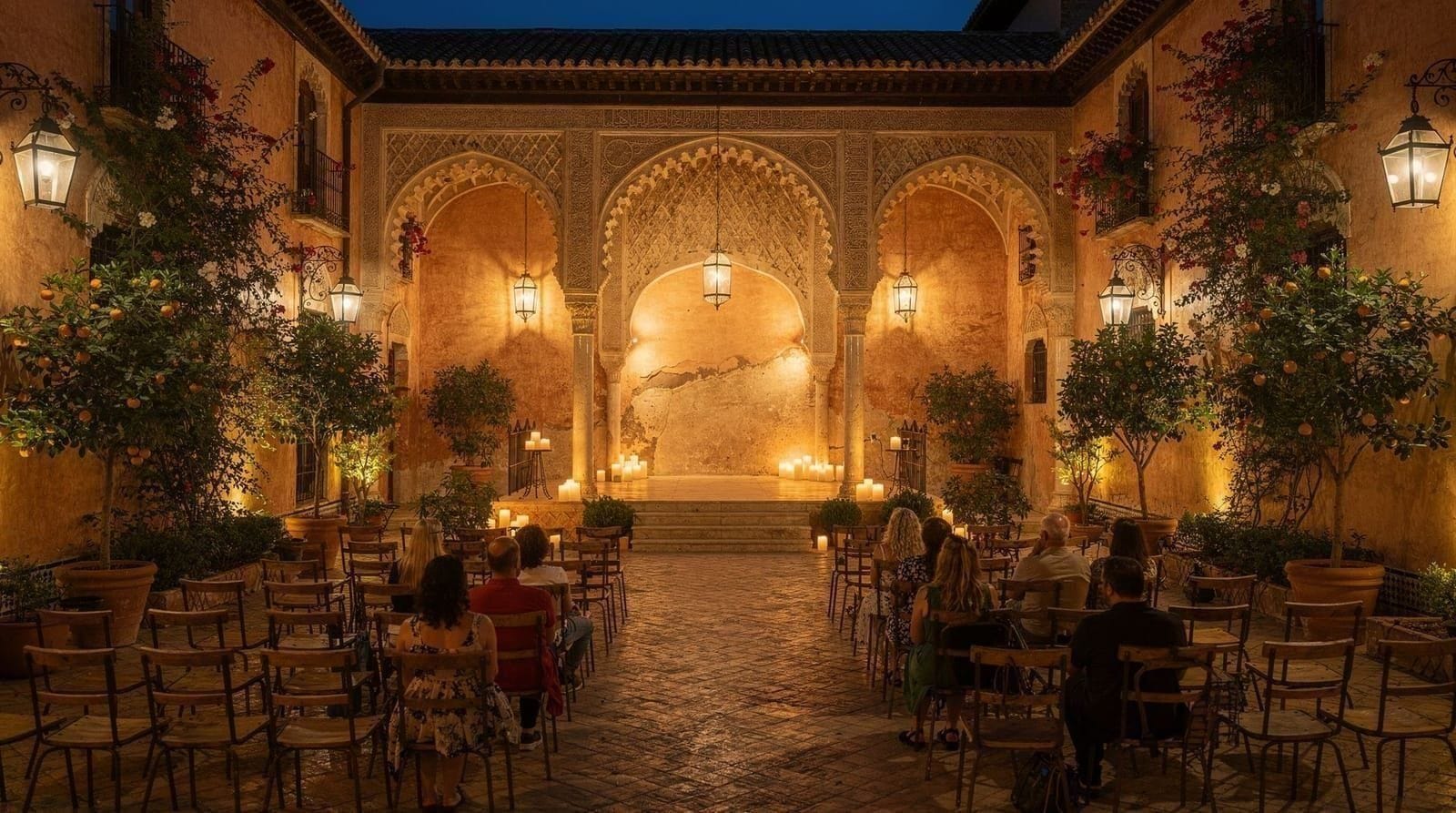
8. Setting. Historic venues (converted palaces, traditional casas) are not automatically better than purpose-built spaces, but they do signal investment in the experience. A venue above a supermarket or in a shopping district is worth additional scrutiny.
Tablao vs dinner-show: side by side
| Intimate tablao | Dinner-show | |
|---|---|---|
| Capacity | Under 120 seats | 200-300 seats |
| Food | None, or drink only | Full three-course meal during the show |
| Price | Around €20-40 | Around €70-90+ |
| Programme | Cante jondo, named performers, varied palos | Choreographed highlights, visual spectacle |
| Best for | Genuine interest in the art form | Groups wanting a packaged evening out |
Neither format is a scam by itself — the dinner-show is honest about what it sells. The problem is only when a dinner-show markets itself as an “authentic flamenco experience” without disclosing the format. Casa de la Memoria sits firmly on the intimate-tablao end of this spectrum.
Specific red flags
Several recurring patterns reliably indicate tourist-oriented shows:
The walk-in no-booking-needed tablao. Genuine flamenco tablaos in Seville book out regularly. If a venue near the Catedral consistently has walk-in availability on weekend evenings in high season, that is telling you something about demand.
The flamenco-and-tapas bundled tour. These are not inherently bad — for many visitors, a combined food and culture evening is an efficient way to experience two things in one night. But they are not the same as attending a dedicated flamenco show. Go in knowing you are getting a sample of both.
Shows described primarily as “romantic” or “magical.” These are marketing words. Flamenco at its most serious is emotionally intense but not romantic in the generic sense — it deals with loss, death, imprisonment, exile, and love in extremity. Shows marketed as romantic evenings may be providing a sanitised version.
Venues advertising “the original authentic flamenco” in their name. Self-proclaimed authenticity is a warning sign in any consumer context.
What a good show actually feels like
At Casa de la Memoria on a good night, the cantaor begins a soleá in a near-empty room that fills with sound that seems too large for the space. The dancer enters after four or five verses, before any footwork, and simply stands — watching the singer, listening, being present. The zapateado (footwork sequence) begins gradually and builds across several minutes with changes in rhythm that require you to track the conversation between feet and guitar. The audience is quiet in a way that feels attentive rather than passive.
This is difficult to describe accurately and impossible to manufacture. But you know when it happens, regardless of prior flamenco knowledge.
Book Casa de la Memoria — Seville’s most intimate tablaoRecommendations by visitor type
First-time visitor, no prior flamenco knowledge: Casa de la Memoria (intimate, concentrated, artistically serious). Read Flamenco 101: a beginner’s guide before attending a show in Seville first for a brief orientation.
Visitor who wants dinner included: El Arenal’s dinner-show is the most professionally managed of the dinner options. Know what you are booking.
Visitor interested in flamenco history: Pair a Los Gallos show with a visit to Triana’s flamenco tradition and consider the Museo del Baile Flamenco.
Visitor during September-October 2026: The Bienal de Flamenco (9 September – 3 October) is the world’s most important flamenco festival. Attending a Bienal programme at the Teatro de la Maestranza is a different level of experience from any tablao. See Bienal de Flamenco de Sevilla 2026: the complete visitor guide.
Visitor who wants to participate: Flamenco dance classes are widely available in Seville for absolute beginners. A one-hour class the day after watching a show is genuinely illuminating.
Book Los Gallos — Seville’s oldest continuous tablaoThe tourist-trap dimension
Seville’s honest-seville guide covers the broader tourist-trap landscape. For flamenco specifically: the highest-risk scenario is booking through hotel concierges or walk-in venues in the immediate vicinity of the Catedral, where commission structures favour referrals to high-margin dinner shows over quality.
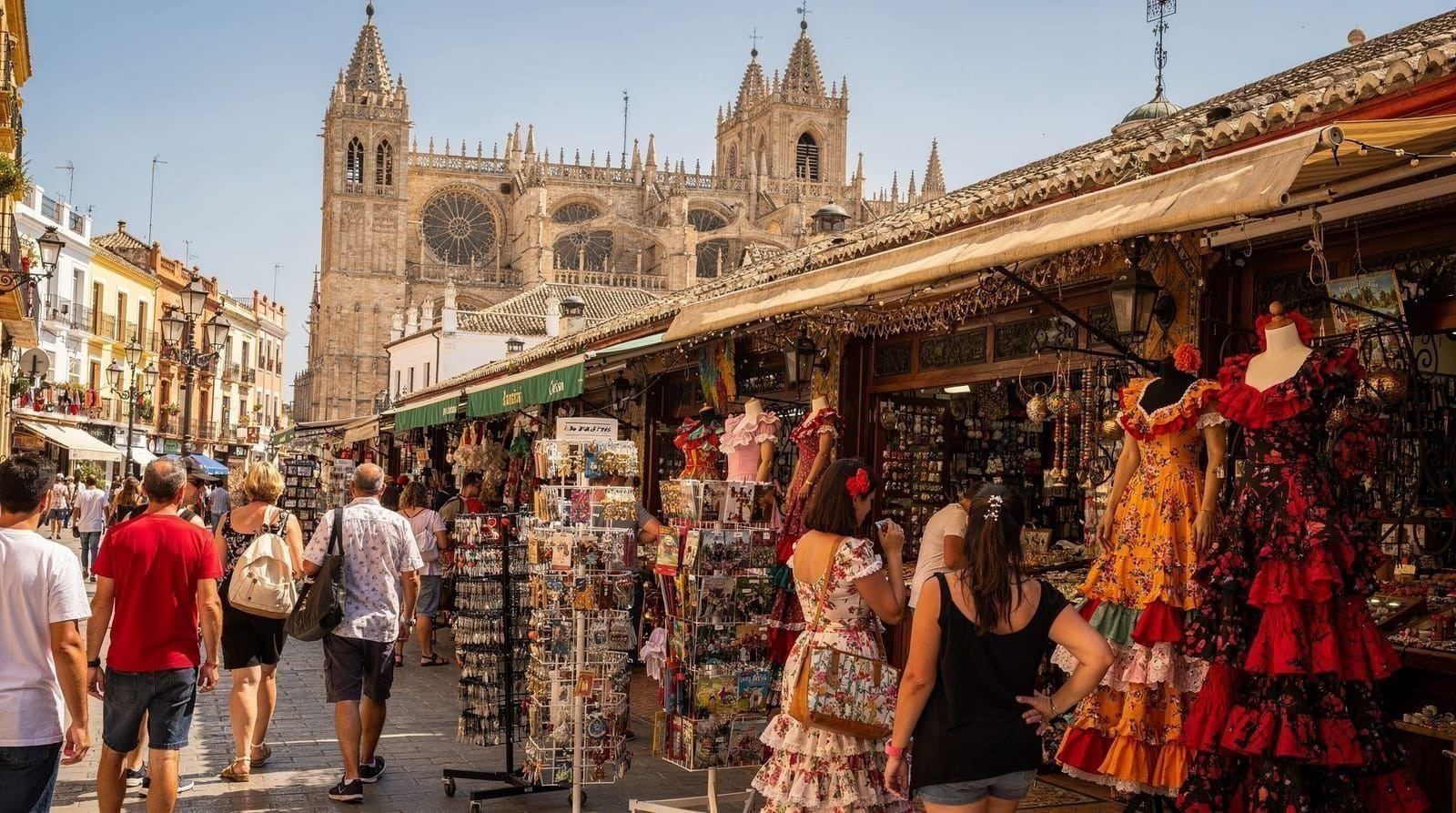
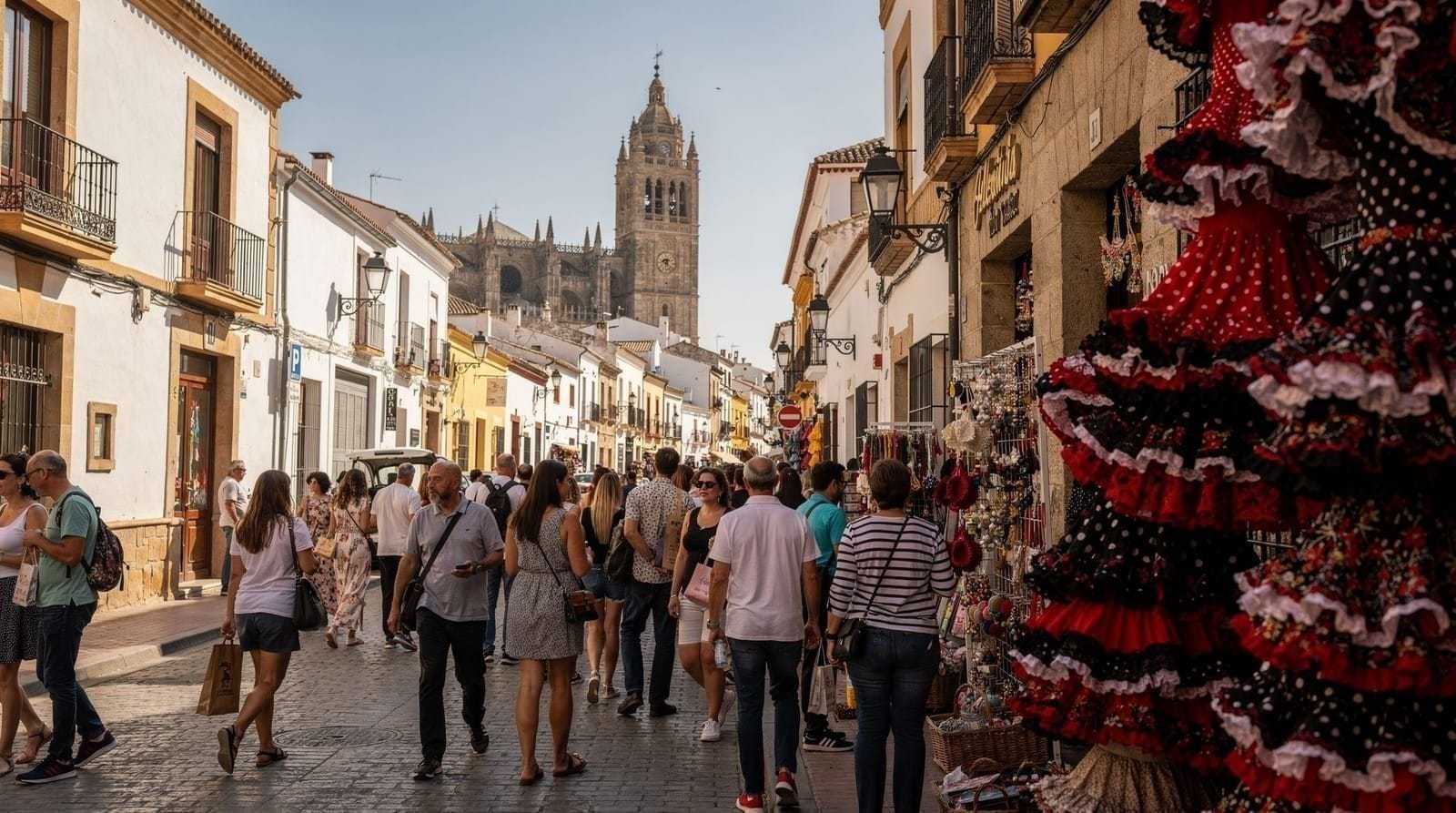
The second risk is mistaking the visual elements of flamenco for the art form itself. Elaborate costumes, dramatic lighting, and emphatic zapateado sequences are not the same thing as a deep, well-structured flamenco programme. They can coexist with one, but they do not constitute one.
Booking directly with venues or through a platform that publishes specific programme information is the most reliable way to know what you are paying for.
What to do if you can only attend one show
If your Seville trip only has room for a single flamenco evening, the honest recommendation is a mid-sized, well-reviewed tablao over either extreme — not the smallest, most exclusive venue you can find, and not the largest dinner-show. Casa de la Memoria strikes this balance for most first-time visitors: intimate enough for the performance to feel direct, established enough that the roster is consistently strong. Pair it with a short walk through Triana beforehand if your schedule allows — flamenco’s neighbourhood roots there add useful context before the performance itself.
Understanding what you hear: a guide to cante jondo
The singing in flamenco — cante (song) — is the element most visitors understand least and the one that most directly expresses the depth of the art form. The voice used in cante jondo (deep song) does not sound like operatic singing, or like pop vocal technique, or like folk singing in any other European tradition.
Cante jondo uses a rough, raw vocal quality — the quiebros (breaks or melismas) where the voice bends, catches, and recovers within a single phrase are technically demanding and emotionally loaded. They come from a tradition of musical expression that developed outside of European classical training and incorporated elements from Moorish music, Jewish liturgical chant, and the specific vocal traditions of Andalusia’s Gitano communities.
When you hear a cantaor singing seguiriyas — the deepest of the palos — the effect is often disconcerting rather than immediately pleasurable. The emotional content is grief and loss at an extreme level. Duende — when it occurs — manifests as a quality of presence that is difficult to describe but immediately recognisable: the room shifts, the audience goes quiet, and you become aware that you are in the presence of something that is not simply entertainment.
Arriving at a show with this context — knowing that you are meant to be confronted rather than comforted — is useful preparation.
The guitar in flamenco: more than accompaniment
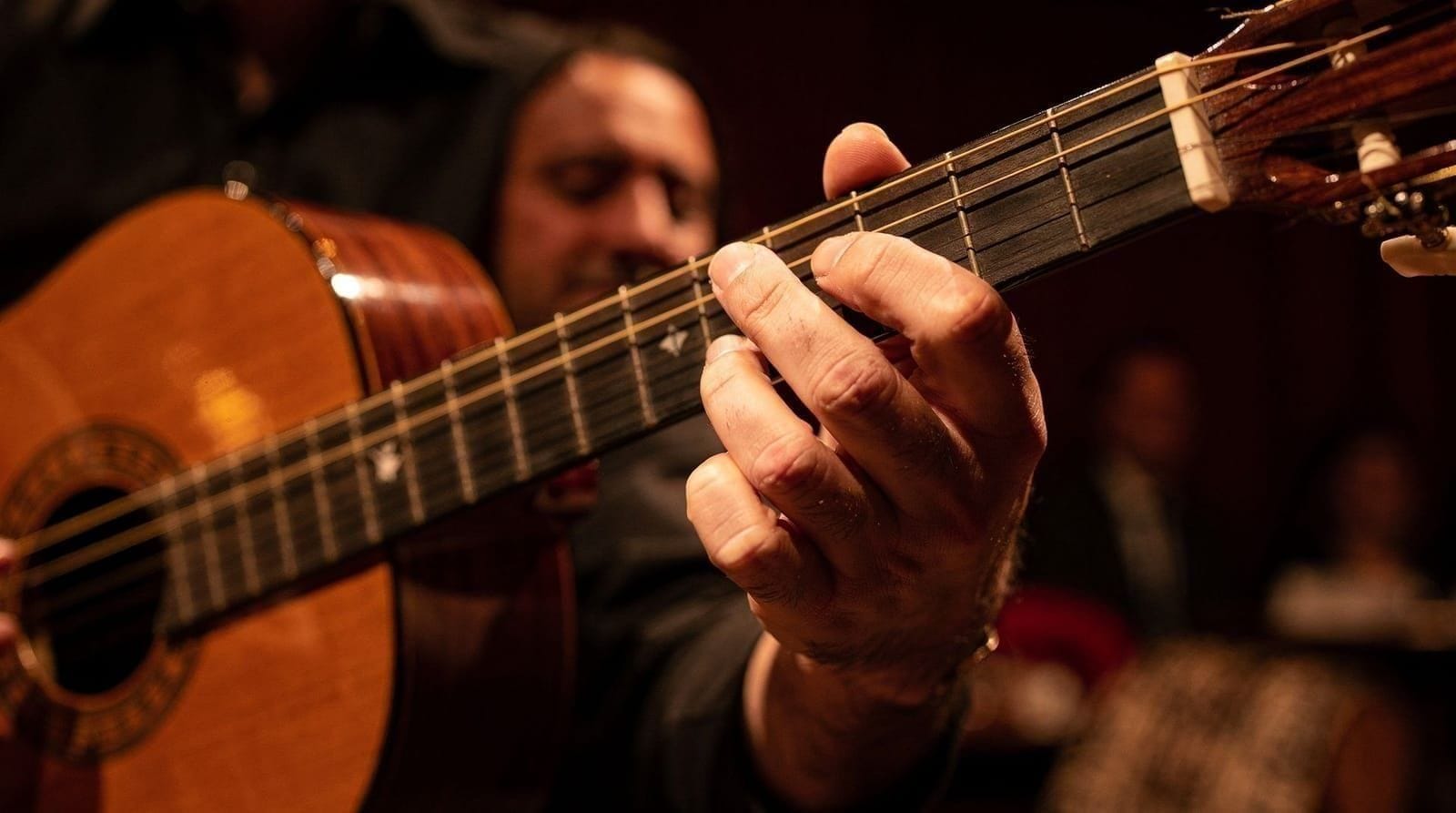
Many visitors who know flamenco primarily through dance are surprised by how central the tocaor (guitarist) is to the experience. In the best flamenco, the guitar does not simply accompany the dancer or singer — it converses with them as an equal, sometimes leading, sometimes responding.
Flamenco guitar technique involves:
Rasgueado: A technique where the fingers of the right hand are swept rapidly across the strings in succession, producing a dense, percussive chord effect. The rasgueado is one of the most distinctive sounds of flamenco guitar.
Picado: Single-string melodic runs, often at high speed. The picado in flamenco is executed with alternating index and middle fingers, producing a crisp, even attack on each note.
Alzapúa: A technique using the right thumb to sweep both down and up across bass strings, producing a heavier, fuller sound. Used particularly in siguiriyas and soleá.
Falseta: A melodic variation or improvised passage played between the main rhythmic patterns. Falsetas are the tocaor’s opportunity for creative expression within the framework of the palo being played.
What to watch for: In the pauses between the cantaor’s phrases, the guitarist fills with melodic material. Listen for whether this filling is generic (the same phrases repeated regardless of the singing) or responsive (specific to what the singer just did). The latter is the marker of a deep musical relationship between the performers.
Historical background: why flamenco came from where it came from
Flamenco’s origins are contested and complex. The two elements most consistently identified by musicologists are:
Gitano (Roma) musical tradition: The Roma who settled in Andalusia from the mid-15th century brought musical traditions from their central European and north Indian origins. The rhythmic complexity, the microtonal ornamentation of the voice, and the specific emotional intensity of their music was one of the key inputs into flamenco’s development.
Moorish and Sephardic musical traces: The 800 years of Moorish rule in Andalusia (711-1492) left musical traces in the modal harmonics and ornamental vocal style of the region. After the expulsion of the Jews in 1492 and the forced conversion or expulsion of Muslims in the early 16th century, elements of those musical traditions were absorbed into the developing folk music of the communities that remained.
The juerga context: The juerga — an informal late-night gathering where flamenco performers played for themselves and each other, fuelled by sherry and mutual creative challenge — was the original context in which flamenco developed as an art form. The tablaos are a formalisation of this for public audiences; the juerga spirit is what distinguishes a great tablao night from a mediocre one.
Practical guidance on timing
The best shows are the late ones. At 19:00, the performers are often not yet fully warmed up and the audience skews toward earlier-dining tourists. By 21:00-21:30, both the performers and the most engaged audience members are present.
This is not a universal rule — a great performer is a great performer at any hour. But if you have flexibility, the late show at Casa de la Memoria or Los Gallos is statistically more likely to produce a memorable experience.
Seasonal context: During the Semana Santa processions (29 March to 5 April 2026), flamenco runs alongside the devotional ceremonies of Holy Week, and the city’s emotional temperature is elevated in a way that affects flamenco performances. This is one of the more unusual confluences of sacred and secular experience available in Seville. The Semana Santa guide covers this context.
For a curated shortlist of venues that pass these criteria, see best flamenco shows in Seville.
Frequently asked questions about Authentic flamenco vs tourist show
What makes flamenco 'authentic'?
Authenticity in flamenco is about the connection between performers — the interplay between the cantaor (singer), tocaor (guitarist), and bailaor/bailaora (dancer) — and the presence of duende, the untranslatable quality of emotional depth and spontaneous intensity. Authentic flamenco can occur at a large venue and be absent from a small one; it is about artistic seriousness, not just venue size. That said, small venues are more likely to host conditions where duende can occur.Is it wrong to enjoy a tourist flamenco show?
No. A professionally produced dinner-show can be entertaining and visually impressive. The issue is misrepresentation: if you are sold an 'authentic flamenco experience' and receive a choreographed tourist performance, you have been misdirected. Go in knowing what you are attending, and you can enjoy it on its own terms.What are the main palos (styles) I should hear at a real flamenco show?
A serious programme should include at least soleá (slow, profound, the 'mother palo'), seguiriyas (the most emotionally intense style), and one upbeat style such as bulerías or alegrías. If the programme consists entirely of upbeat numbers with maximum visual impact and no cante jondo passages, you are watching a show designed for audience approval rather than artistic depth.How long should a good flamenco show be?
60-90 minutes is typical for a tablao show. Shorter than 45 minutes suggests a condensed tourist experience. Longer than 2 hours with food service is a dinner-show event, not a focused performance.
Top experiences
Bookable activities with verified prices and instant confirmation on GetYourGuide.