My first time seeing flamenco: what I didn't expect
I almost didn’t go
Let me be honest: I arrived in Seville convinced that flamenco shows were a tourist trap. I’d done enough research to know that some of the larger tablaos — the dedicated flamenco performance venues — run multiple shows per night, seat two hundred people, and pair their performances with overpriced sangria. I’d read the TripAdvisor complaints: stilted, mechanical, performed-for-cameras.
So for the first two days of my trip I deliberately avoided booking anything. I walked through the Barrio de Santa Cruz and past the brightly lit venues on Calle Agua. I kept my head down.
On day three, a woman running a ceramics stall in Triana told me to go to Casa de la Memoria.
“Not the same,” she said. “Much smaller. They actually know flamenco there.”
| Venue | Casa de la Memoria, Calle Cuna, Centro Histórico |
| Capacity | Around 100 seats, no bad sightlines |
| Length | About 1 hour |
| Price | Around €24, drink not included |
| Booking | Days ahead off-season; a week+ in summer, Semana Santa, Feria |
Looking back, the skepticism was the useful part. It made me ask the right questions before booking, and it is the same habit that helps with the rest of the city: our tourist traps to avoid in Seville guide and the first-time travel tips apply the same logic to restaurants, tickets and tours.
Casa de la Memoria is not what I expected
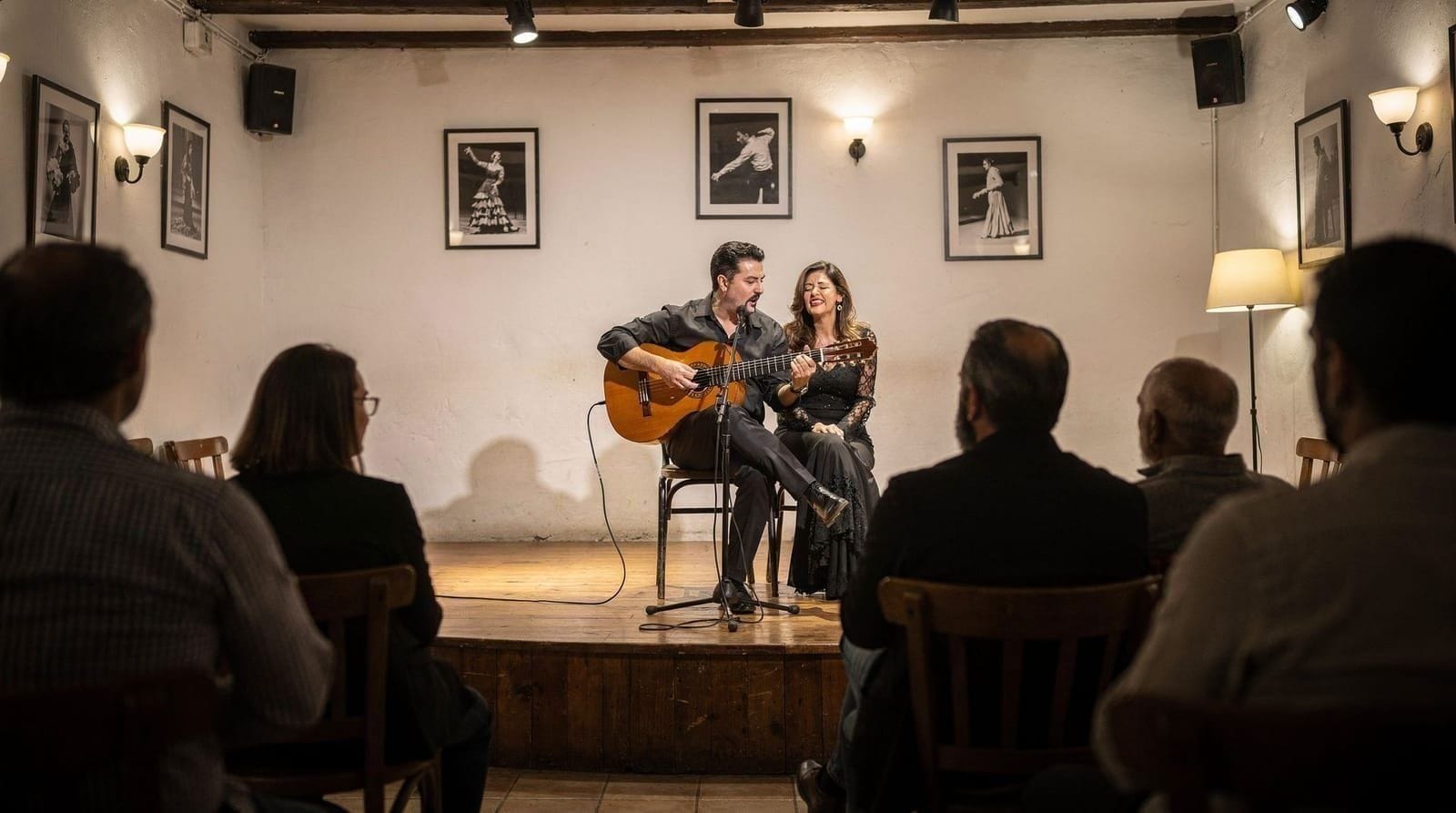
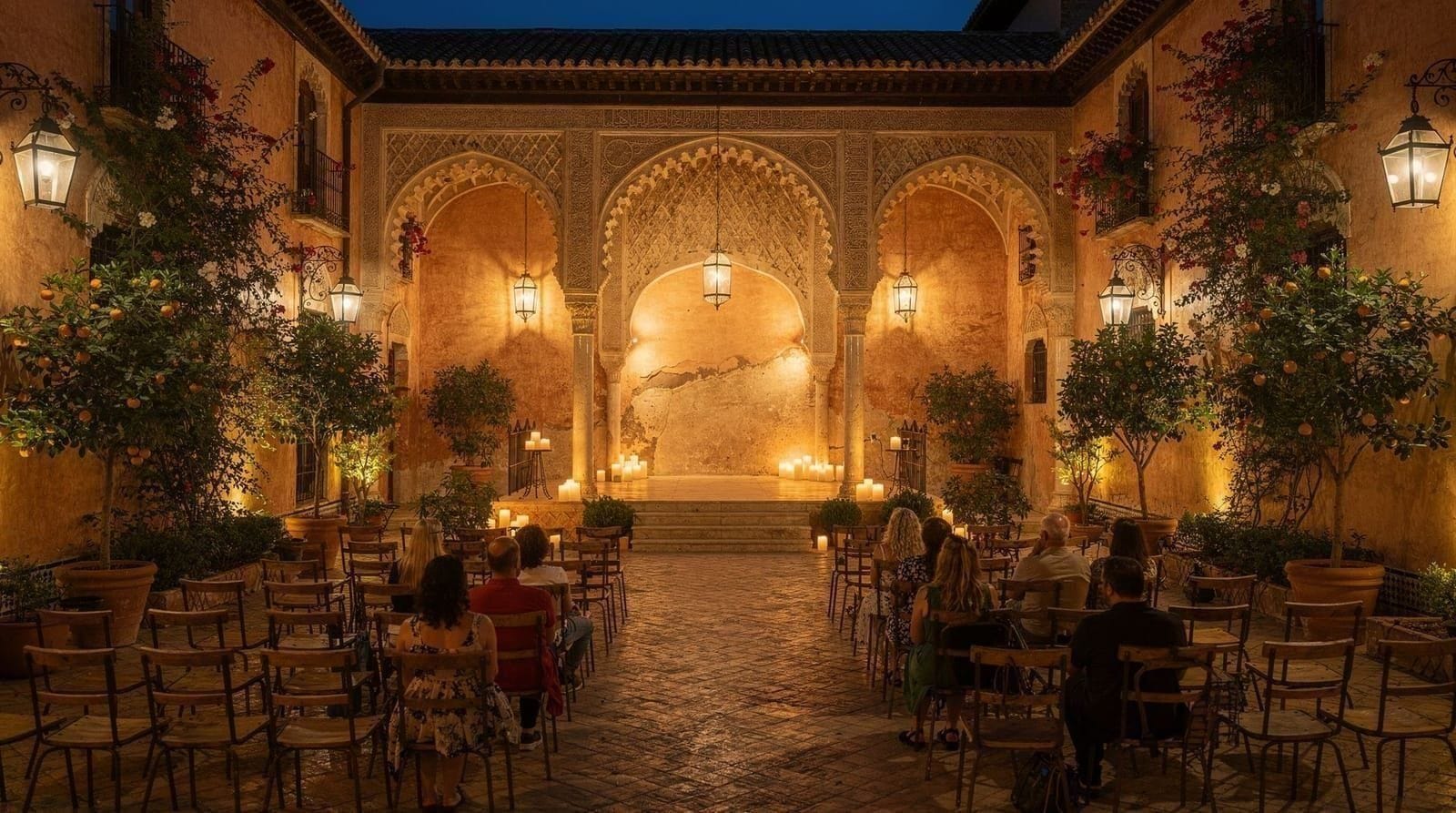
Casa de la Memoria sits on Calle Cuna in the Centro Histórico, a narrow whitewashed space with a maximum capacity of around 100 people. There’s no dinner service, no sangria menu, no English MC explaining the history of flamenco in four-part bullet points. You arrive, you sit on wooden chairs arranged in a rough horseshoe, and the performers walk out without ceremony.
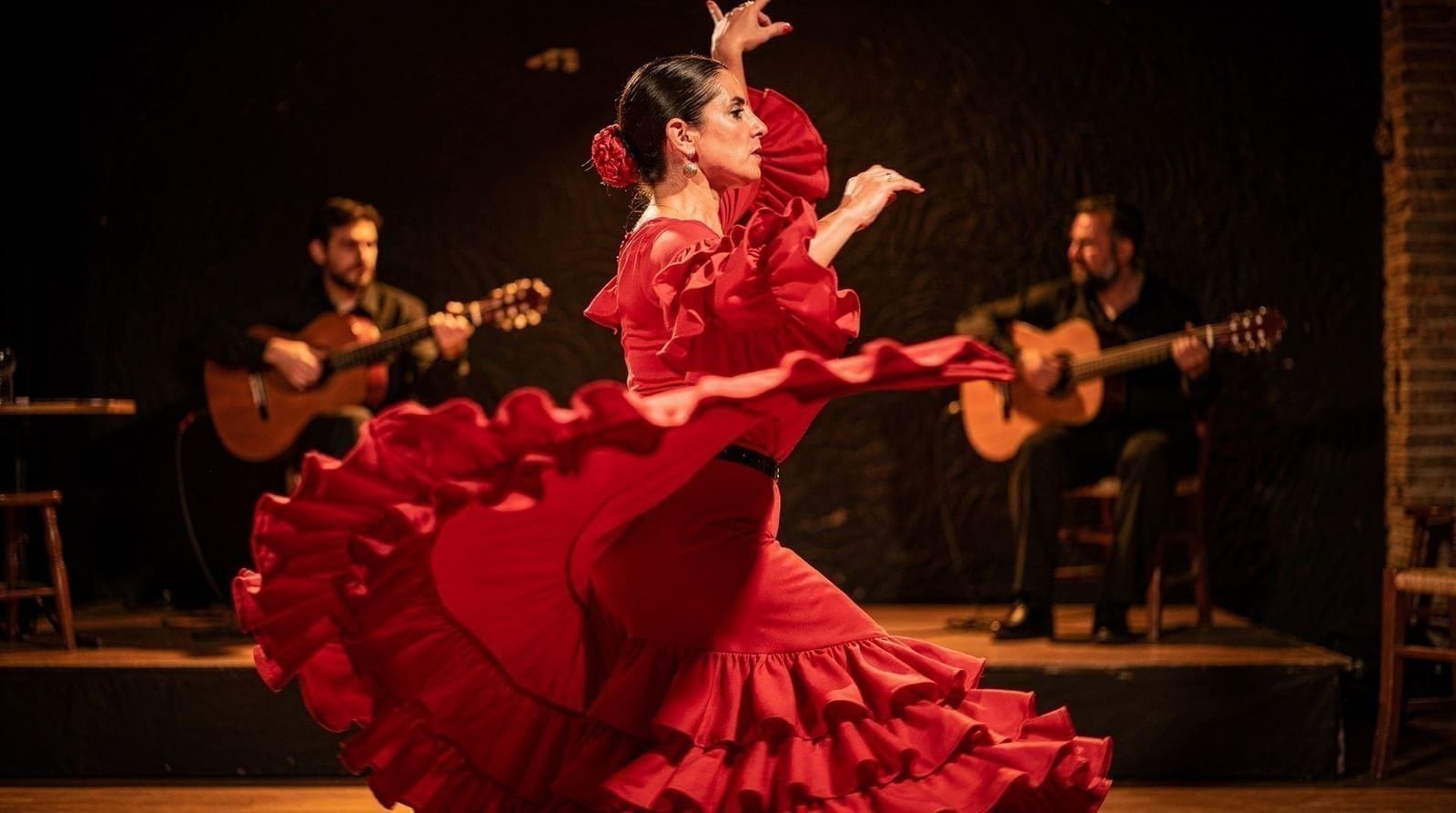
The show I attended ran about 75 minutes. Two dancers (a woman and a man), one singer (a cantaor), a guitarist, and a percussionist. The cantaor performed the first number standing still, eyes closed, in a complete silence I’ve never experienced in a performance space of that size. The style was siguiriyas — one of the most technically and emotionally demanding flamenco forms, traditionally sung at moments of grief. I did not understand a single word. It didn’t matter.
Book Casa de la Memoria flamenco tickets in advanceWhat nobody tells you about watching flamenco
The physicality is the thing. I’d seen clips online; online video does not prepare you for the sound of zapateado (footwork) in a small room with stone floors, or for the sudden crack of palmas (handclapping) from the performers themselves when the rhythm peaks.
In flamenco, the performers respond to each other and to the audience in real time. There is an improvised quality even to prepared material — the guitarist extends a passage because the dancer is in the middle of something extraordinary, the singer responds to a dancer’s expression with a phrase that wasn’t there in the rehearsal version (if there was a rehearsal version). When I later read about this — the concept of the duende, the state of heightened creative intensity that flamenco aims for — I recognised exactly what I’d seen happen twice in those 75 minutes.
The first time: a sequence of footwork that started slow and built through a three-minute crescendo until both the dancer and the guitarist were doing something that looked technically impossible and the cantaor was half-shouting encouragement from the side of the stage. The second: the end of the show, where the female dancer performed a solo that seemed to go on twice as long as it was supposed to, nobody stopped her, and the room broke into the kind of applause where people are making involuntary sounds.
The practical difference between shows
I’ve since talked to people who went to the larger venues — Tablao Los Gallos near the Alcázar, Tablao El Arenal, others. Some had genuinely good experiences. One couple I met described an Arenal show as “technically impressive, like watching athletes.” Another pair at the same show came away flat: “It felt like they were going through motions.”
The difference, from what I can tell, is seating. At larger venues, the further from the stage you sit, the more it feels like watching a performance rather than being inside one. A venue with 40 seats doesn’t have bad seats. A venue with 200 does.
My rough taxonomy:
Intimate venues (under 80 people): Casa de la Memoria, Flamenco Triana (Calle Pureza). These are where you go if you want to come away changed by something.
Mid-size tablaos (80–150 people): Tablao Los Gallos. High technical quality, some tourist infrastructure (drinks available), still capable of genuine moments. The reputation is solid.
Large dinner tablaos (150+ people): Fine for groups, good production values, less reliable for the quality of the specific performance you happen to see.
If you’d rather compare specific venues than take my word for the taxonomy, our best flamenco shows in Seville guide reviews the main tablaos side by side, and the authentic flamenco vs tourist show guide is a useful gut-check before you book anywhere.
How Casa de la Memoria compares to Triana’s flamenco scene
Triana across the river has its own flamenco identity — it’s historically one of the neighbourhoods where flamenco developed, alongside the gitano communities that shaped the art form. A show in Triana feels different from one in the Centro Histórico: smaller, less polished around the edges, sometimes better for it. Our flamenco in Triana guide covers the venues on that side of the river if Casa de la Memoria is sold out or you want a second show on a longer trip.
Book a Tablao El Arenal flamenco show with dinner optionIf seeing a show made you want to understand the craft rather than just watch it, a short flamenco dance class is a good way to spend an afternoon between sights — it also makes the footwork in your next show land differently once you’ve tried a few steps yourself.
What to book and when
Casa de la Memoria sells out. I cannot overstate this. I bought my ticket three days in advance for a Thursday show in October and got the last available seat. In summer months (June–August) and during Semana Santa or Feria de Abril, booking a week ahead is minimum. Two weeks safer.
Tickets at Casa de la Memoria cost €24 for adults (€20 for students and Seville residents). There is no drink included; they sell wine and water at the bar before the show. Buy a glass before you go in and hold onto it, because once the lights dim the bar closes and you’re focused anyway.
Go to our full best flamenco shows in Seville guide for a broader comparison of venues. And if you’re new to flamenco, the flamenco 101 guide gives you enough context to understand what you’re watching — the palos (styles), the structure, the vocabulary the performers use between themselves. For a venue-by-venue take specifically on the show I saw, our Casa de la Memoria review goes deeper than I can in a single trip report.
Fitting a show into your days
A flamenco evening works best when the rest of the day is light. If you are still planning the shape of your trip, our 3 days in Seville itinerary leaves room for an evening show, and the Santa Cruz neighborhood guide is handy for a slow walk and a tapa before you head to your seat. Arriving a little early means you can settle in without rushing, which matters more in a small room than you would think.
What changed
I flew home and spent an embarrassingly long train journey watching YouTube clips of flamenco performances from the 1970s. I’m still at the stage where I’m learning to hear what the performers are doing. But I went in sceptical and came out something else.
The ceramics seller in Triana was right. If you came here as sceptical as I was, that scepticism is healthy — plenty of flamenco marketed at tourists is exactly the tourist theatre I expected, and knowing how to tell the difference before you book saves you a wasted evening; the flamenco tourist traps guide lists the specific red flags to watch for.
Frequently asked questions about seeing flamenco for the first time
Is flamenco in Seville touristy?
Some of it is, especially the large dinner tablaos aimed at tour groups. Smaller venues like Casa de la Memoria, and shows in Triana, keep closer to the art form’s roots. Booking based on venue size and reputation rather than proximity to the Alcázar filters out most of the tourist-theatre versions.
How long is a typical flamenco show?
Most shows run 60–90 minutes, with Casa de la Memoria’s running about an hour. Dinner-tablao formats can run longer once food service is factored in.