Hidden tapas bars in Seville that locals actually love
The research method
I spent six days in Seville asking people where they ate tapas. Not hostel staff or hotel concierges — they give you the same five places everyone else recommends, which are good but not the point. I asked a ceramics teacher in Triana who had five minutes between students. A taxi driver who’d lived in the Macarena his entire life. A former matador (now a wine merchant) who drinks in El Arenal every Thursday evening. A woman selling churros at the Mercado de Triana who had opinions about absolutely everything.
Their answers overlapped in a few places. Here are the bars that came up most consistently, and why they matter.
| Where | Macarena, El Arenal, Triana, Santa Cruz — spread across the city |
| Cost per stop | Around €1.50–6.50 per tapa or montadito |
| Time needed | 3–4 hours for a proper crawl across four or five bars |
| Getting there | Walkable within each neighbourhood; taxi or bus between them |
| Best time | Weekday lunch (1–2:30 pm) or early evening before the tourist rush |
Bar Buhón (Calle Bailén, near the Macarena)
Three people mentioned this place, each independently. It’s a long, narrow bar on Calle Bailén that serves the Macarena neighbourhood — not tourists, who don’t usually penetrate this far north unless they’re visiting the Basílica de la Macarena.
The montaditos here are €1.80–2.20. The boquerones en vinagre (anchovies in vinegar) are made in-house and are sharp and clean. The bar has been here since 1978 and the décor hasn’t changed significantly since then — tiles, hanging jamones, a television that shows football when football is on and bullfighting when bullfighting is on.
Go for lunch on a weekday. Arrive at 1:30 pm to find it beginning to fill with people who work nearby.
Casa Morales (Calle García de Vinuesa, El Arenal)
This one is technically known — it appears in some guide books — but the way it’s described undersells it. Casa Morales has been operating since 1850 and stores wine in enormous clay tinajas (amphora-style vessels) embedded in the walls. The manzanilla is served from these vessels into small copas and costs €1.50.
That’s not a typo. A glass of manzanilla from a 19th-century clay vessel in one of the oldest bars in Seville: €1.50.
The ceramics teacher told me she comes here specifically on days when tourism feels overwhelming. “This is Seville that doesn’t perform,” she said. She’s right. The bar is frequented by local workers from the theatre district, by retired gentlemen who have been drinking here for decades, by the occasional confused tourist who wandered in looking for something else.
Eat the cheese (a sharp Manchego variant, served on a small wooden board, €4.50) and the olives (enormous, marinated in orange peel, €3).
Taberna El Viti (Calle Virgen de la Victoria, Triana)
The taxi driver gave me this one. He drives the route between Triana and the airport 12 times a day and eats at El Viti on his breaks.
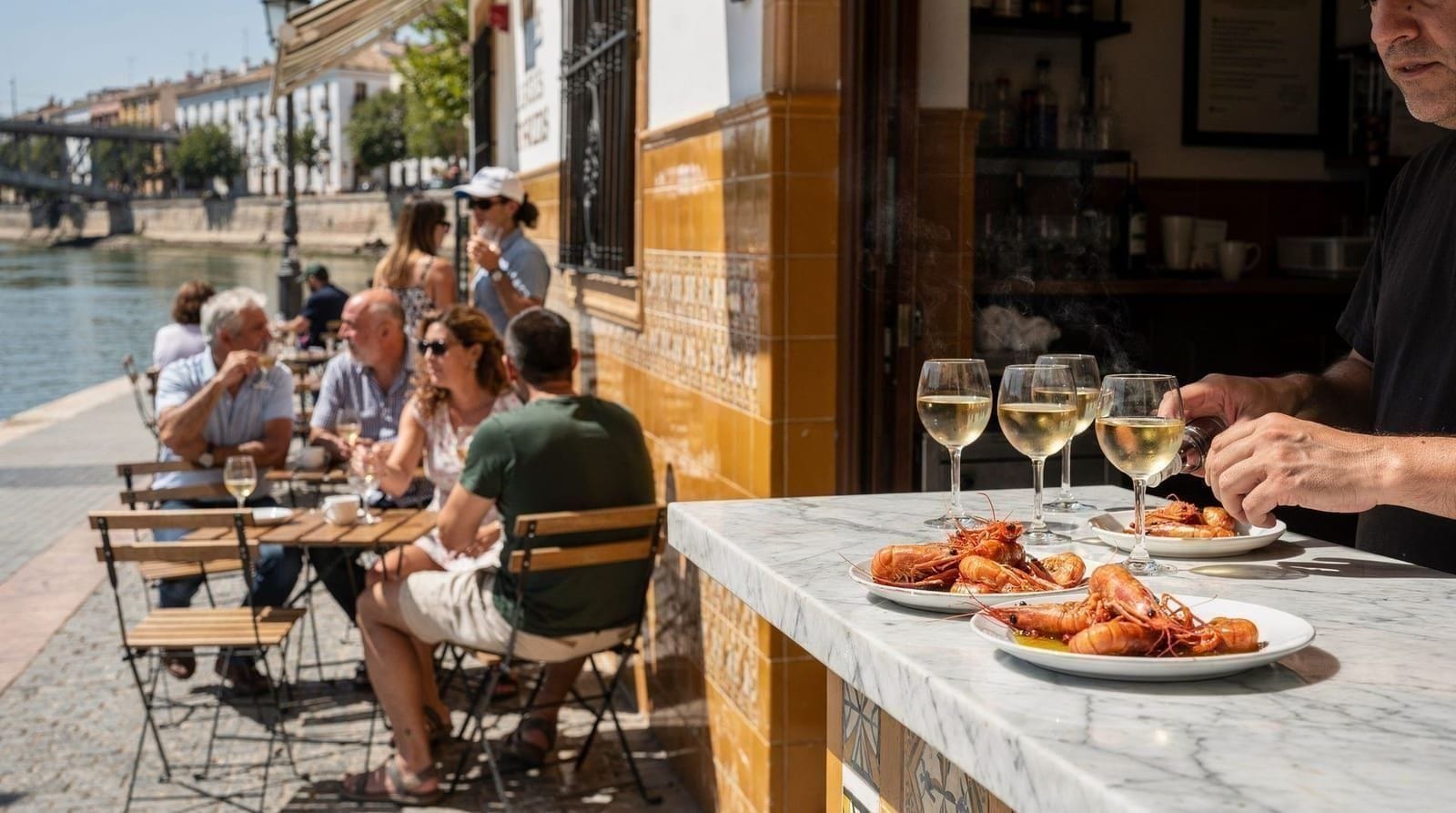
It’s a Triana barrio bar with sawdust on the floor and bullfighting photographs covering the walls — Triana was historically the neighbourhood that produced many of Seville’s great toreros, and the decorative tradition continues in places like this. The gambas al ajillo (prawns in garlic oil) arrive in a small terracotta dish that keeps them warm. Price: €6.50 for a generous portion.
The wine list is a single option: a young Montilla-Moriles at €2 a glass. Nobody is pretending otherwise. Order two.
La Cantina (Mercado de Triana, inside)
The Mercado de Triana on Calle San Jorge has been a food market since 1823, though the current structure is modern. Inside, surrounding the market stalls, are a ring of bars and small restaurants.
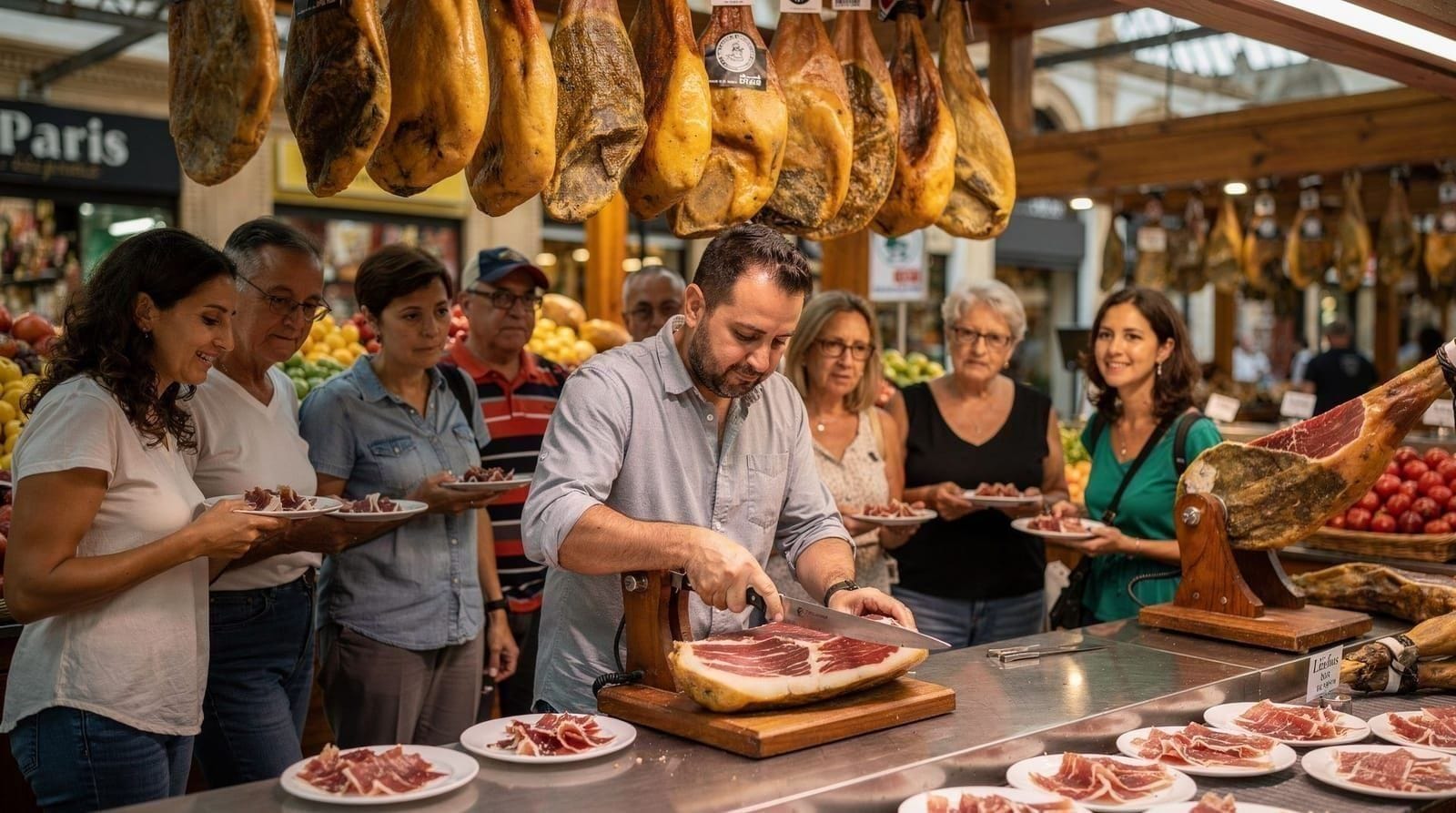
La Cantina operates in a corner of the market and does a mid-morning snack menu that’s almost entirely unknown to visitors: montaditos with freshly sliced jamón ibérico de bellota at €2.40, pan con tomate (bread rubbed with ripe tomato and olive oil, the correct Andalusian breakfast) at €1.80, a glass of orange juice squeezed from Sevillano oranges at €2.50.
Arrive at 10:30 am, when the market is in full operation and the bar is serving market traders on their break.
Bar Las Teresas (Calle Santa Teresa, Santa Cruz)
This is the one place on the list that does appear in tourist guides. But it makes the list because the taxi driver, the ceramics teacher, and the wine merchant all mentioned it separately, and all distinguished it from its neighbours on the tourist circuit.
The key is timing and positioning. Las Teresas has been on Calle Santa Teresa since 1870. The walls are covered in historic photographs of Semana Santa processions, bullfighting posters, and signed dedications from the famous. The bar itself — not the small tables inside, not the terrace — is where locals drink. Stand at the bar. Order the jamón serrano montadito (€2.80) and a glass of Cruzcampo (the local Seville lager, €2). Ignore the laminated menu hanging by the door aimed at people sitting outside.
The wine merchant told me: “You can tell everything about a bar from who stands at the bar and who sits at tables. Las Teresas: Sevillanos at the bar, tourists at tables. Bar is the real bar.”
The five bars at a glance
| Bar | Neighbourhood | Signature order | Price range |
|---|---|---|---|
| Bar Buhón | La Macarena | Boquerones en vinagre | €1.80–2.20 |
| Casa Morales | El Arenal | Manzanilla from the tinaja | €1.50–4.50 |
| Taberna El Viti | Triana | Gambas al ajillo | €2–6.50 |
| La Cantina | Triana (Mercado) | Jamón ibérico montadito | €1.80–2.50 |
| Bar Las Teresas | Santa Cruz | Jamón serrano montadito | €2–2.80 |
Why these bars, and not the guidebook standbys
None of these places advertise. None of them have a menu with photos, a tout by the door, or a flag signalling “English spoken here” — which, according to my panel of locals, is precisely the point. What they share instead: they’ve been open for decades (in Casa Morales’s case, since 1850), they serve a working neighbourhood rather than a tourist circuit, and the prices reflect local rather than tourist-zone economics. A montadito that costs €2 in the Macarena or Triana routinely costs double that a ten-minute walk away in Santa Cruz, for the same ingredients.
If you’re building a longer tapas itinerary rather than a single-evening crawl, our neighbourhood-specific guides go deeper than this list: best tapas bars in Triana and best tapas bars in Santa Cruz both cover more ground than the five bars here, and are worth reading before you commit to a specific evening’s route.
On food tours
If you want to navigate all of this with local guidance, the organised food tours in Seville are more useful than they are in cities where the restaurant ecosystem is simpler. A good guide will take you to places like these rather than the Santa Cruz tourist circuit.
See the Seville ultimate food tourFor something more hands-on than a walking tour, a cooking class covers some of the same dishes (gambas al ajillo, croquetas) from the kitchen side rather than the bar side — worth combining with a crawl like this one on a longer trip. Our learn Spanish cuisine in Seville guide has the details.
Our best tapas in Seville guide covers a broader selection including the well-known standbys. The Triana Market food guide goes into detail on the market bar scene specifically. And the Seville food tour guide helps you evaluate which tour format suits your interests.
Building an evening around these bars
Because the five bars sit in different neighbourhoods, the best approach is to pick one area per outing and let the rest wait for another day. A Triana afternoon pairs El Viti with the market bars, and our Triana neighbourhood guide shows what else is worth seeing between stops. A Macarena lunch works well with a visit to the basilica, and the La Macarena guide covers the area around Bar Buhón.
If you would rather have someone else choose the route, a guided evening is a reasonable alternative. A walking tour built around tapas, taverns and the history of the old town covers the central bars and gives context you will not get from a menu. Keep it as a complement to the neighbourhood bars above rather than a replacement.
Whichever route you take, the habits that matter are the ones in the barra versus terrace pricing guide: stand at the counter, order what the people next to you are eating, and pay at the end. If you are worried about being steered into the wrong place, our guide to avoiding tourist-trap restaurants in Seville lists the warning signs. For a full foodie schedule that fits these bars into a longer stay, see the three days for foodies itinerary, and for the same ideas told as a trip story, read our foodie weekend in Seville.
The rule
The ceramics teacher said it best, when I asked her how you identify a bar where locals eat: “No photos on the menu. No man outside talking to you. No flag near the door. Just a bar.”
Apply accordingly.
Frequently asked questions about finding local tapas bars
How do I find tapas bars locals actually use, not tourist traps?
Look for bars without photo menus, without a tout outside, and without multilingual signage aimed at passersby. Neighbourhood bars in Triana, the Macarena, and El Arenal tend to price and serve for locals rather than tourists; the closer you get to the Cathedral and Santa Cruz, the more that shifts.
Are these bars easy to find without speaking Spanish?
Yes, though a few words help. None of them require reservations, and pointing at what your neighbour ordered works fine. Staff are used to a mix of locals and the occasional curious visitor.