Rooftop bars and views in Seville: where to go and what to pay
Seville: Sunset rooftop walking tour
What is the best rooftop view in Seville?
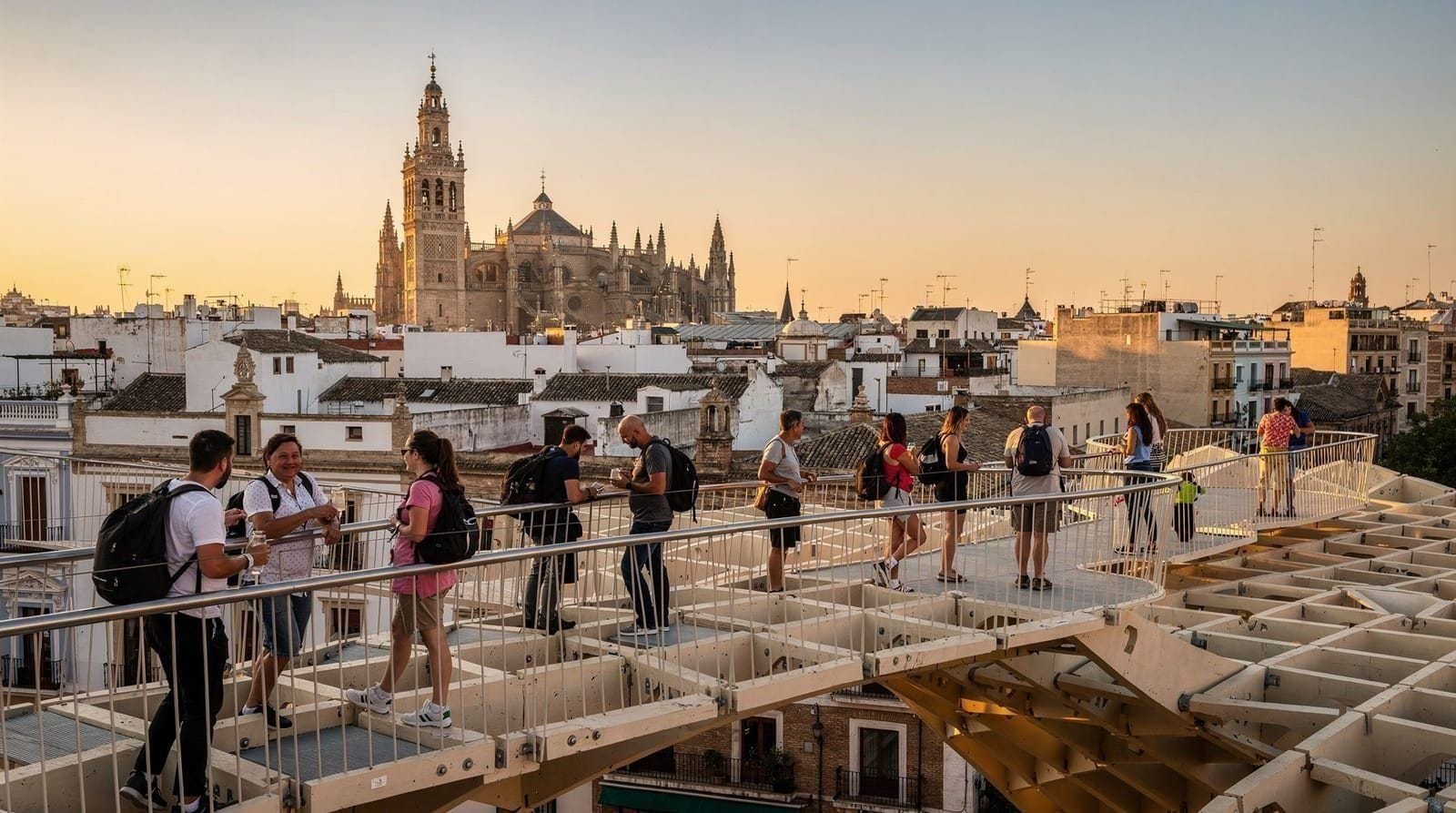
The Metropol Parasol (Setas de Sevilla) on the Plaza de la Encarnación has the best 360-degree view of the historic centre. Tickets start from €16, open until 01:00 in summer and midnight in winter. Hotel rooftop bars (Hotel EME near the Catedral, Hotel Becquer near the Alameda) offer similar views with the bar service premium. Sunset is the most rewarding time for all rooftop experiences.
Seville’s skyline is dominated by two vertical features: the Giralda bell tower (originally the minaret of the Almohad Grand Mosque, 104m) and the Metropol Parasol (the waffle-shaped wooden structure on the Plaza de la Encarnación, 26m). Both offer elevated perspectives on the historic city. Several hotel rooftop bars add bar-service angles. And a walk to the Triana riverbank, at street level, gives one of the best views of the Seville skyline with zero cost.
This guide covers the rooftop options honestly — prices, quality, and when each is worth the money or not.
| Best value | Metropol Parasol — from €16 |
| Best single view | Hotel EME Catedral terrace (Giralda close-up) |
| Best free option | Triana riverbank, Calle Betis, at sunset |
| Best time | The hour before sunset |
| Booking | Rarely needed, except peak Semana Santa/Feria |
Metropol Parasol: the best value elevated view
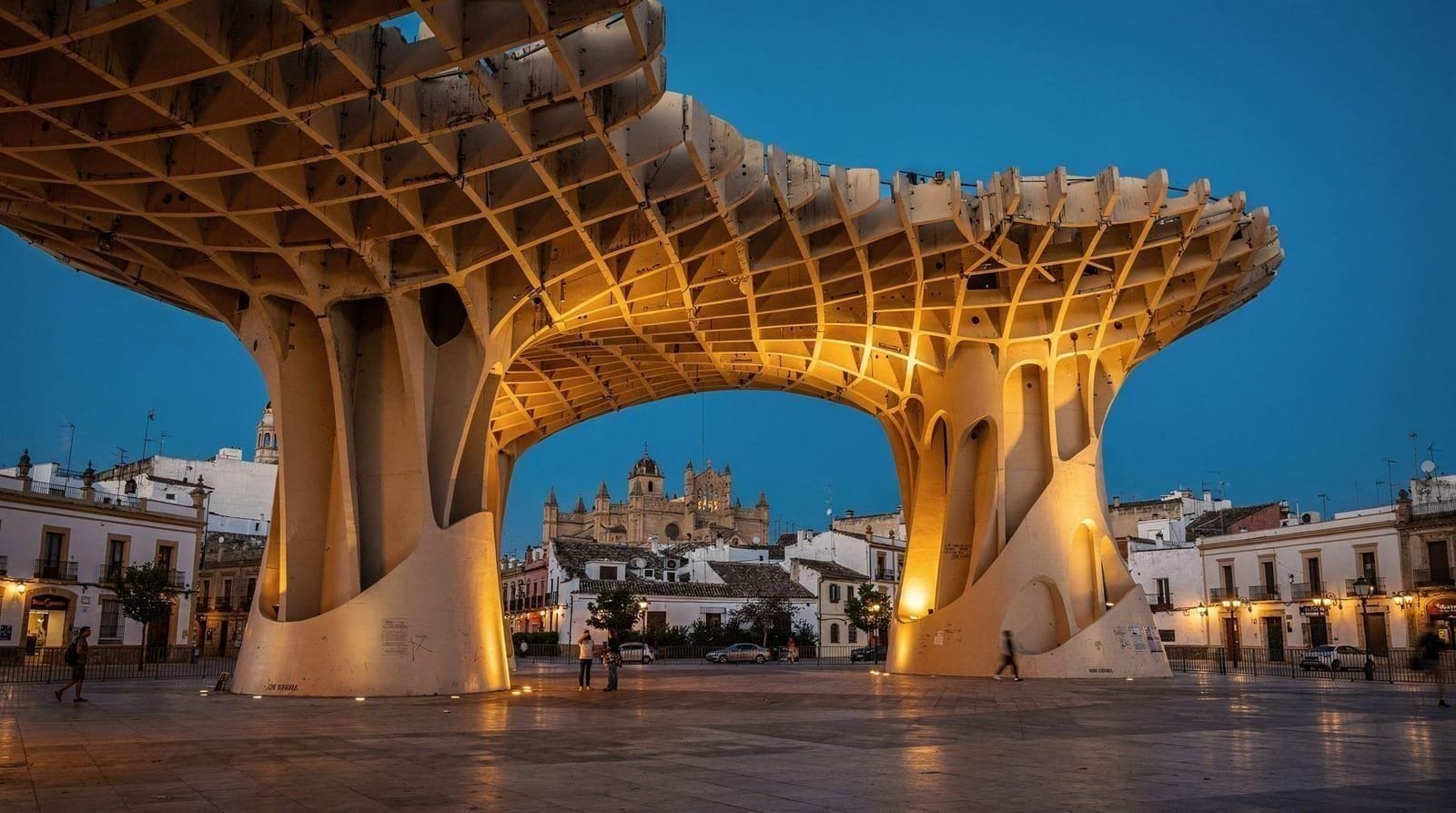
The Metropol Parasol (universally called “Las Setas” — the mushrooms — by Sevillanos, and marketed as “Espacio Metropol Parasol” by its operators) is the most accessible elevated viewpoint in Seville. The wooden lattice structure by German architect Jürgen Mayer H. opened in 2011 and covers the Plaza de la Encarnación — the site of a market that was demolished in the 1990s and subsequently held the structure while archaeological excavation proceeded below.
The rooftop walkway is a curving path that winds across the top of the mushroom-shaped canopies at approximately 26m above street level. At this height, the view over the old city — Giralda, Catedral, the dense rooftops of Santa Cruz, the Guadalquivir in the west — is comprehensive in all directions.
Entry: from €16 per person (reduced from €13). No booking required; walk up to the ticket desk at the base. Open daily from 09:30 until 01:00 in summer and midnight in winter. Evening visits are the most atmospheric.
The Metropol Parasol’s ground level has a Roman ruins museum in the basement (the Antiquarium) and a small market at ground level — the structure was designed to integrate history and commerce vertically. See the Metropol Parasol guide for detailed coverage.
Hotel rooftop bars: the premium view option
Several Seville hotels offer rooftop bar access to non-guests. This is a different experience from the Metropol Parasol — you are in a bar environment with full service, higher prices, and typically a more curated view angle.
Hotel EME Catedral (Calle Alemanes): The most sought-after rooftop view in Seville for a single sight: the hotel’s terrace looks directly at the Giralda from very close range. Drinks cost €8-12 each. In high season (spring, the Feria period), the terrace can be very crowded by 18:00 and may have entry restrictions during peak periods. Arrive early.
Hotel Becquer (Calle Reyes Católicos): Less spectacular than EME but with good city views at slightly lower prices. The atmosphere is somewhat less hectic.
Eurostars Torre Sevilla (Isla de la Cartuja): The tallest building in Seville at 40 floors offers the highest vantage point but is located across the river on the Isla de la Cartuja — removed from the historic centre’s character. Good for panoramic orientation; less intimate than the central options.
What you pay: Budget €8-15 per drink at hotel rooftop bars. This is the standard premium over street-level bar prices in tourist locations. The view is the product; the drink is the access mechanism.
Rooftop options compared
| Option | Cost | Best for |
|---|---|---|
| Metropol Parasol | From €16 | Best value, 360° panoramic view |
| Hotel EME Catedral | €8–12 per drink | Closest view of the Giralda |
| Hotel Becquer | Slightly less than EME | Similar view, calmer atmosphere |
| Eurostars Torre Sevilla | €8–15 per drink | Highest vantage point, away from centre |
| Giralda (via Cathedral) | Included in ~€13–14 ticket | Historic climb, 360° view at 70m |
| Triana riverbank | Free | Classic skyline view, sunset, zero cost |
Free viewpoints that work
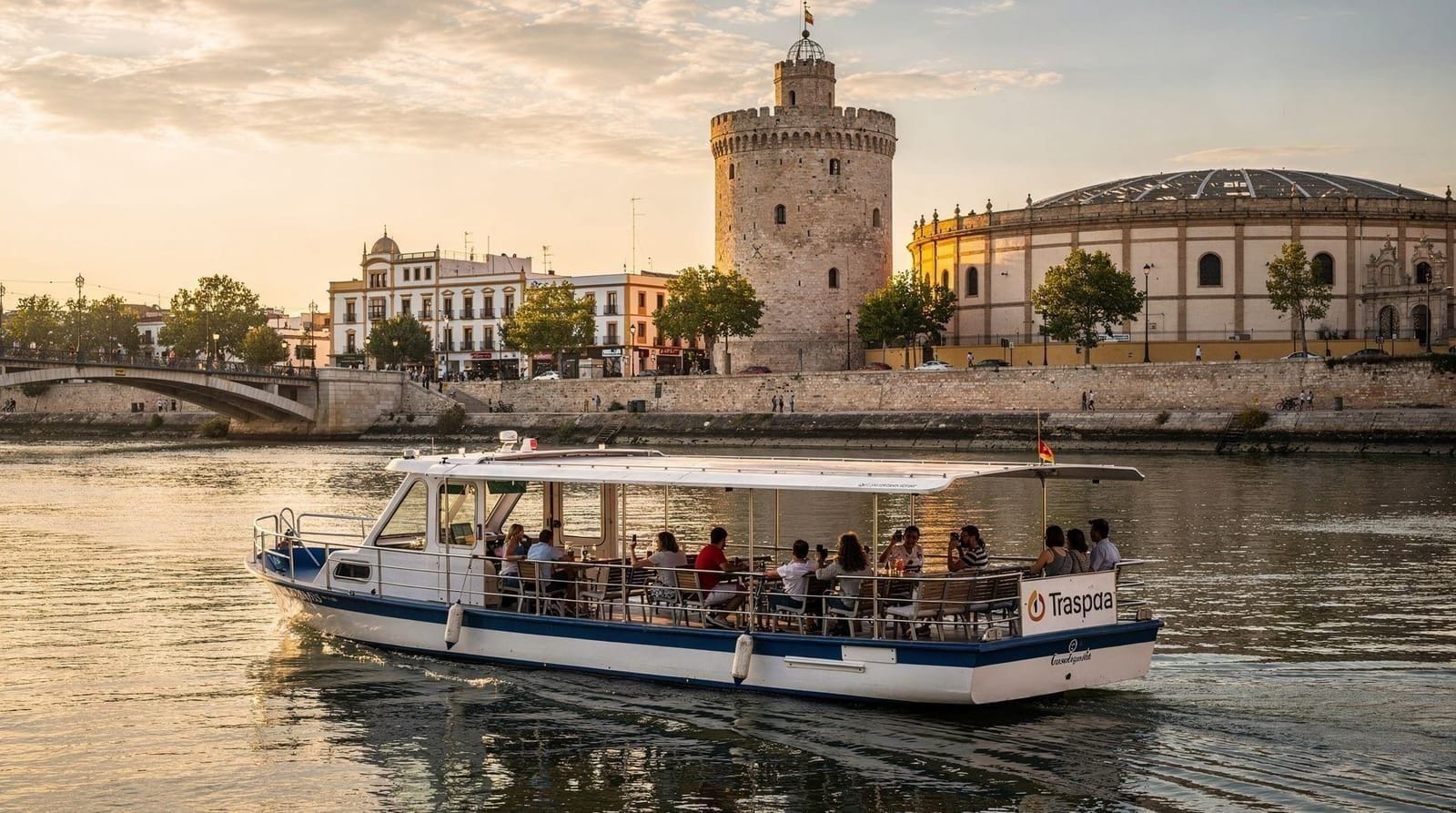
Triana riverbank (Calle Betis): Standing on the Triana side of the Guadalquivir, looking east across the river at Seville, gives one of the city’s most complete skyline views. The Torre del Oro, the Maestranza bulring, the Catedral, and the Giralda are all visible in a single frame at sunset. No cost, no crowds (relative to the Seville side), and the bars on Calle Betis serve at local prices.
Puente del Alamillo: The cable-stayed bridge at the north of the city has pedestrian access and provides dramatic views of the river, the Expo 92 site, and the city in the distance. More of an architecture-enthusiast destination than a classic Seville view.
Jardines de Murillo elevated benches: A minor but genuinely free option — the raised sections of the Jardines de Murillo, on the eastern edge of the Alcázar walls, give a partial elevated view over the Santa Cruz rooftops without any admission cost. Not comparable to the Metropol Parasol in scope, but a pleasant stop if you’re already walking through Santa Cruz at golden hour.
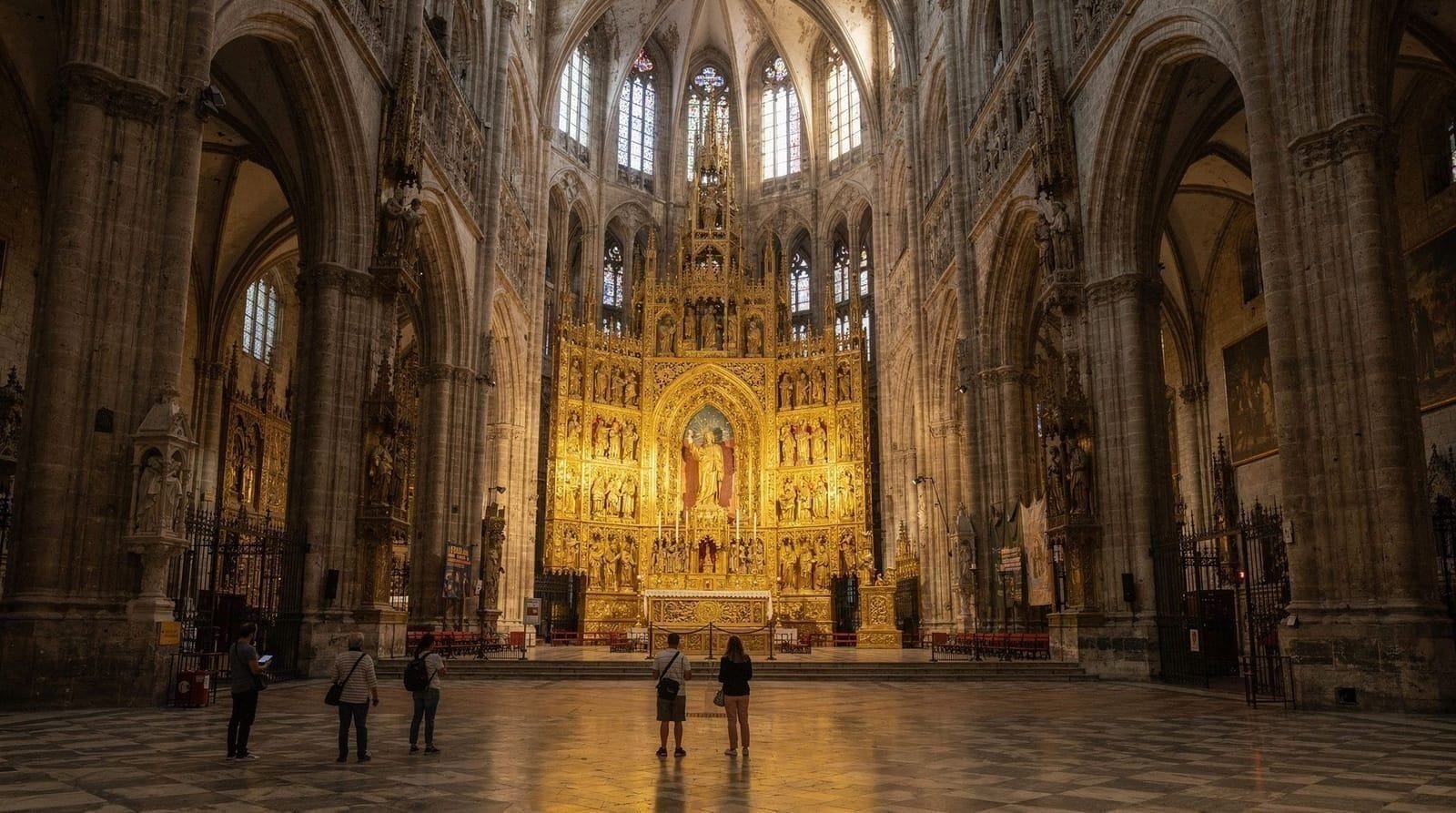
The Giralda: Inside the Catedral (entry €13–14 with the full cathedral ticket), the Giralda ramp leads to the bell chamber at 70m — the highest publicly accessible point in the historic centre. From here you look out across the rooftops of Santa Cruz, south to the Alcázar gardens, and in clear conditions to the Sierra Norte mountains. The historical significance (climbing the same ramp used by the Almohad muezzin in the 12th century) adds to the experience. See Seville Cathedral: complete visitor guide 2026 for the full guide.
Sunset rooftop walking tour
For visitors who want a structured experience combining the city’s best viewpoints with historical narrative, a guided sunset walking tour oriented around rooftops and elevated perspectives covers several of the options above in sequence.
Book sunset rooftop walking tour of SevilleRooftop wine tasting
A wine tasting combined with rooftop views — sherry and local wines with the Seville skyline as backdrop — is available as a distinct product and makes for an atmospheric evening aperitivo.
Book rooftop wine tasting in SevillePhotography on Seville rooftops
The best light for photographing Seville from above is the golden hour before sunset. In summer, this is around 20:00-21:00. In winter, around 17:30-18:30.
Key composition notes: The Giralda and Catedral are best photographed from the north or northwest (the Metropol Parasol angle is good for this). The Guadalquivir at sunset is best from the Triana bank looking east. Night photography requires patience — the city illumination (Giralda, Catedral, Plaza de España) is consistent but camera settings require slow exposure. The Metropol Parasol’s own illumination at night creates an interesting foreground for long-exposure shots.
The Giralda from the inside: the highest historic viewpoint
The Giralda experience deserves more detailed treatment than a passing mention. The tower was originally the minaret of the Almohad Grand Mosque of Seville, built in the 1180s-1190s. At 104m (including the 16th-century Christian bell tower added on top), it is the tallest structure in central Seville.
The interior is accessed through the Seville Cathedral (ticket required: €13–14 including the cathedral). The climb is via a series of ramps rather than stairs — the ramps were designed so that the muezzin could ride a horse to the top to make the call to prayer. This makes the ascent physically comfortable even for visitors who struggle with stairs.
At the top of the ramps, the bell chamber (at approximately 70m) provides 360-degree views. Looking north: the rooftops of Santa Cruz, the winding streets visible as a dense pattern of orange-tile and white plaster. Looking south: the Alcázar gardens, green and ordered. Looking west: the Guadalquivir, the Triana quarter, and in clear conditions the horizon of western Andalusia. Looking east: the modern city, the Santa Justa station, and the distant Sierra Morena mountains.
The view from the Giralda is historically grounded in a way that no purpose-built observation deck can replicate. You are standing where the muezzin stood in the 12th century, looking out over a city that was then the largest city in Europe under Moorish rule.
The Plaza de España: a ground-level view worth including
The Plaza de España is not a rooftop experience — it is at ground level — but its scale and orientation produce views that deserve mention in any guide to Seville’s panoramas. The semicircular colonnade (200m diameter) creates a contained architectural world that is best appreciated by walking the full length and crossing the decorative bridges over the central canal.
The balcony and upper gallery of the colonnade (accessible by stairs at either end) give a view across the full semicircle that is among the most architectural experiences in Seville. The gallery level is not high — 10-12m above the plaza floor — but the sweep of the baroque colonnade from this angle is impressive in a way that ground-level or drone photographs do not capture.
The Plaza de España was built for the 1929 Ibero-American Exposition and is now used as both a tourist attraction and as office space for several government ministries.
Seasonal variations: the best times of year for rooftop views
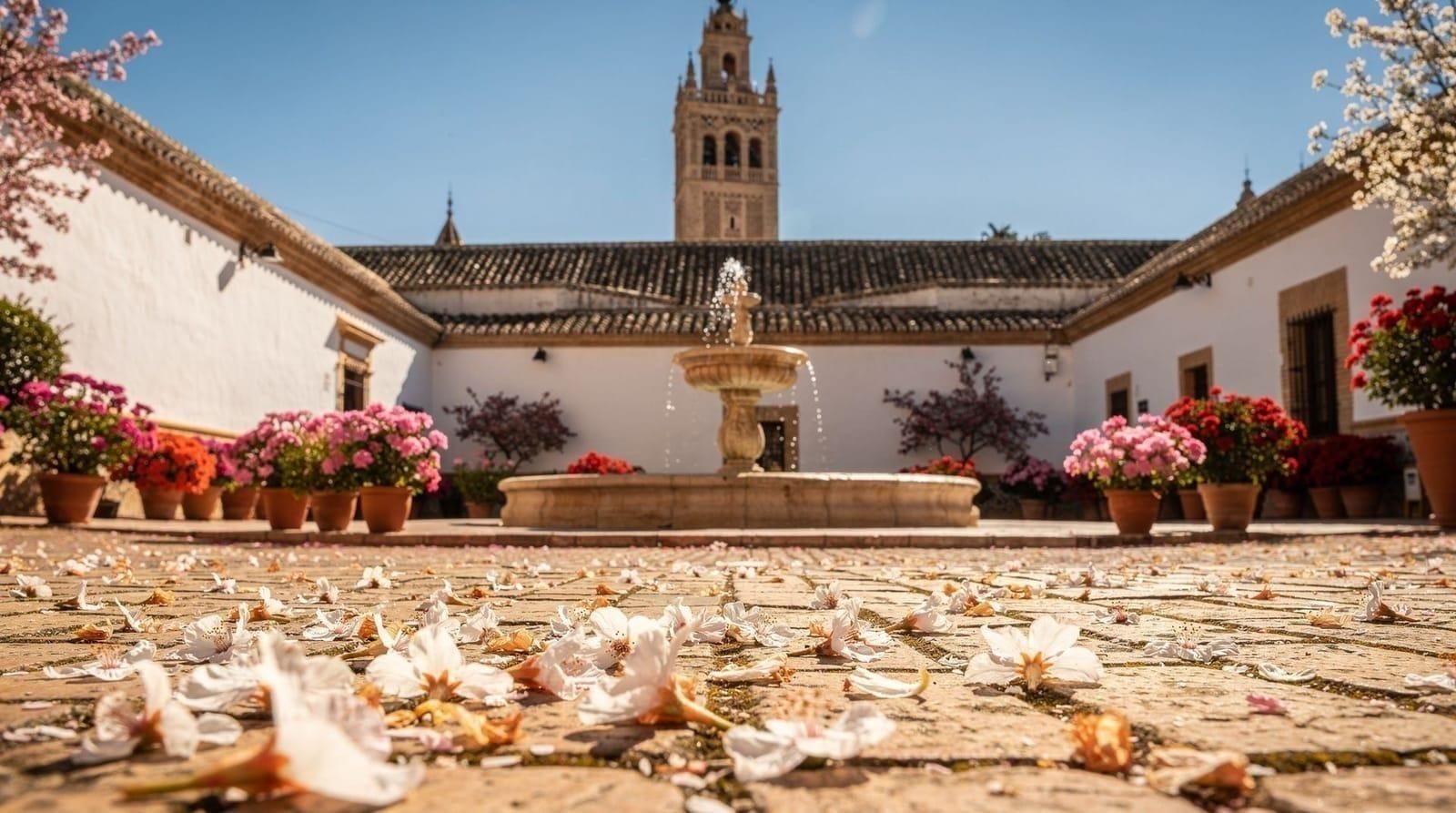
Spring (March-May): Seville in spring has the most beautiful light — clear skies with the orange blossom fragrance in the streets. The Metropol Parasol at sunset in April is surrounded by flowering trees. The temperature (18-25°C) makes extended rooftop time comfortable.
Summer (June-August): Sunset from a rooftop in summer is spectacular — the sky is often perfectly clear and the light on the ochre buildings is intensely warm. The challenge is reaching the rooftop at 37°C. Many hotel rooftop bars have pools or misters; the Metropol Parasol has natural ventilation from its height. Evening rooftop time (19:00-22:00) is the safest summer window.
Autumn (September-October): Arguably the best overall season for views. Clear skies, comfortable temperature, and the amber-gold quality of autumn Mediterranean light make this period excellent for photography.
Winter (November-February): Clear winter days produce crisp, high-contrast views. The city is quiet; the Metropol Parasol at 09:30 opening in December has almost no queue. The risk is overcast days, which produce flat light. Check the forecast before planning a rooftop session in winter.
Combining rooftop views with the city below
The most coherent approach to Seville’s vertical dimension is to combine the Giralda ascent (the most historically meaningful high point) with a Metropol Parasol visit (the best panoramic overview) in the same day. The Giralda gives you depth — what the city looked like before modern development, the geometry of the old street pattern. The Metropol Parasol gives you breadth — the full contemporary city in all directions.
For photography specifically, shooting from the Giralda in the morning and the Metropol Parasol in the evening covers both the light angles and the two most significant perspectives. Both are accessible on a single Catedral/Setas ticket on the same day, walking the 10-minute route between them.
The neighbourhood guides provide the ground-level context to complement the elevated perspective: Santa Cruz, El Arenal, and Triana are all visible from above and worth walking at street level after taking in the view from height.
For current Metropol Parasol ticket options, see the Setas ticket guide. For the best season to plan a rooftop-focused visit generally, see best time to visit Seville, and for coping with the heat if you’re travelling in summer, see the Seville summer heat guide. A different, lower-altitude way to see the same skyline is from the water — see the Guadalquivir river cruise guide.
Guadalquivir river boat tour — see Seville’s skyline from the waterFitting a rooftop into the rest of your trip
A rooftop works best as the closing note of a day rather than a stop of its own. If you only have a short stay, the one-day Seville itinerary leaves natural room for a sunset viewpoint after the main sights, and the first-timer’s itinerary shows how to space the big monuments so you still have energy for an evening on a terrace.
If your day already includes the palace, the complete Real Alcázar guide will help you plan the visit so that you reach a viewpoint while the light is still good. The Plaza de España guide and the María Luisa Park guide cover the ground-level side of the same afternoon, which pairs well with a rooftop drink afterwards.
Crowds matter as much as views. The guide to avoiding the crowds explains which parts of the day and year are calmest, and that advice applies directly to popular terraces at sunset. If you prefer to have someone lead the way, the best walking tours in Seville compares guided options, some of which finish with a view over the old town.
For a first-hand account of chasing the golden hour across the city, read our best rooftops for sunset trip notes, and if you are choosing where to sleep with a view in mind, the where to stay in Seville guide breaks down the neighbourhoods. For the wider picture of the city, the Seville destination page ties everything together.
Frequently asked questions about Rooftop bars and views in Seville
How much does it cost to go up the Metropol Parasol?
Entry to the Metropol Parasol rooftop walkway (Mirador) costs from €16 per person (reduced from €13) and includes the 360° mirador, the Feeling Sevilla film and the Aurora light show. The walkway is open daily from 09:30 until 01:00 in summer and midnight in winter. The views cover the old town, the Giralda, the Catedral, and in clear conditions the distant Sierra Norte. No booking required; just pay at the ticket desk at the base.Which hotel rooftop bars in Seville are worth it?
Hotel EME Catedral has a pool and bar with a direct line-of-sight view to the Giralda — arguably the best single-tower view in Seville. Expect to pay €8-12 per drink. Hotel Becquer on Calle Reyes Católicos has a rooftop with city views at slightly lower prices. The Eurostars Torre Sevilla has the highest vantage point in the city (40 floors) but is located away from the historic centre in a modern commercial area — the views are panoramic but detached from the city's character.Are there free viewpoints with good Seville views?
Yes. The Giralda tower inside the Catedral (included with the €13–14 entry ticket) provides the historically significant elevated view over the old city — this was the minaret of the Almohad mosque, and the ramps (not stairs) inside were designed for horses to carry the muezzin to the top. The Alcázar's upper terraces offer views into the gardens and over the surrounding neighbourhood from inside the palace complex. Both require paid entry to the Catedral and Alcázar respectively.What time is best for rooftop views in Seville?
Sunset — approximately 20:30-21:30 in summer, 18:30-19:30 in winter. The western orientation of Seville's Guadalquivir viewpoints means the light is most flattering in the hour before sunset. The Giralda and Catedral illuminated after dark (lighting begins around 21:00-22:00) are also worth seeing, though photographic conditions are limited.Do I need to book Metropol Parasol tickets in advance?
No booking is required for most of the year — walk-up tickets at the base are normal. During Semana Santa, Feria de Abril, and peak summer sunset hours, a short queue can form, but it rarely exceeds 15–20 minutes. See the setas-metropol-parasol-tickets guide if you want to check current booking options.Is the river view from Triana better than a paid rooftop?
For a free, unhurried sunset view of the classic Seville skyline (Torre del Oro, Giralda, Catedral), the Triana riverbank is genuinely excellent and costs nothing. It lacks the elevated, 360-degree perspective of the Metropol Parasol or a hotel rooftop, so the two are complementary rather than substitutes.
Top experiences
Bookable activities with verified prices and instant confirmation on GetYourGuide.