Las Setas and Metropol Parasol tickets: practical 2026 guide
Seville: Setas de Sevilla (Metropol Parasol) entry ticket
How much do Las Setas tickets cost and should I book in advance?
The Metropol Parasol ticket costs from €16 and includes access to the panoramic walkway at the top. Booking in advance is advisable for sunset slots, which sell out. Morning slots are usually available on the day.
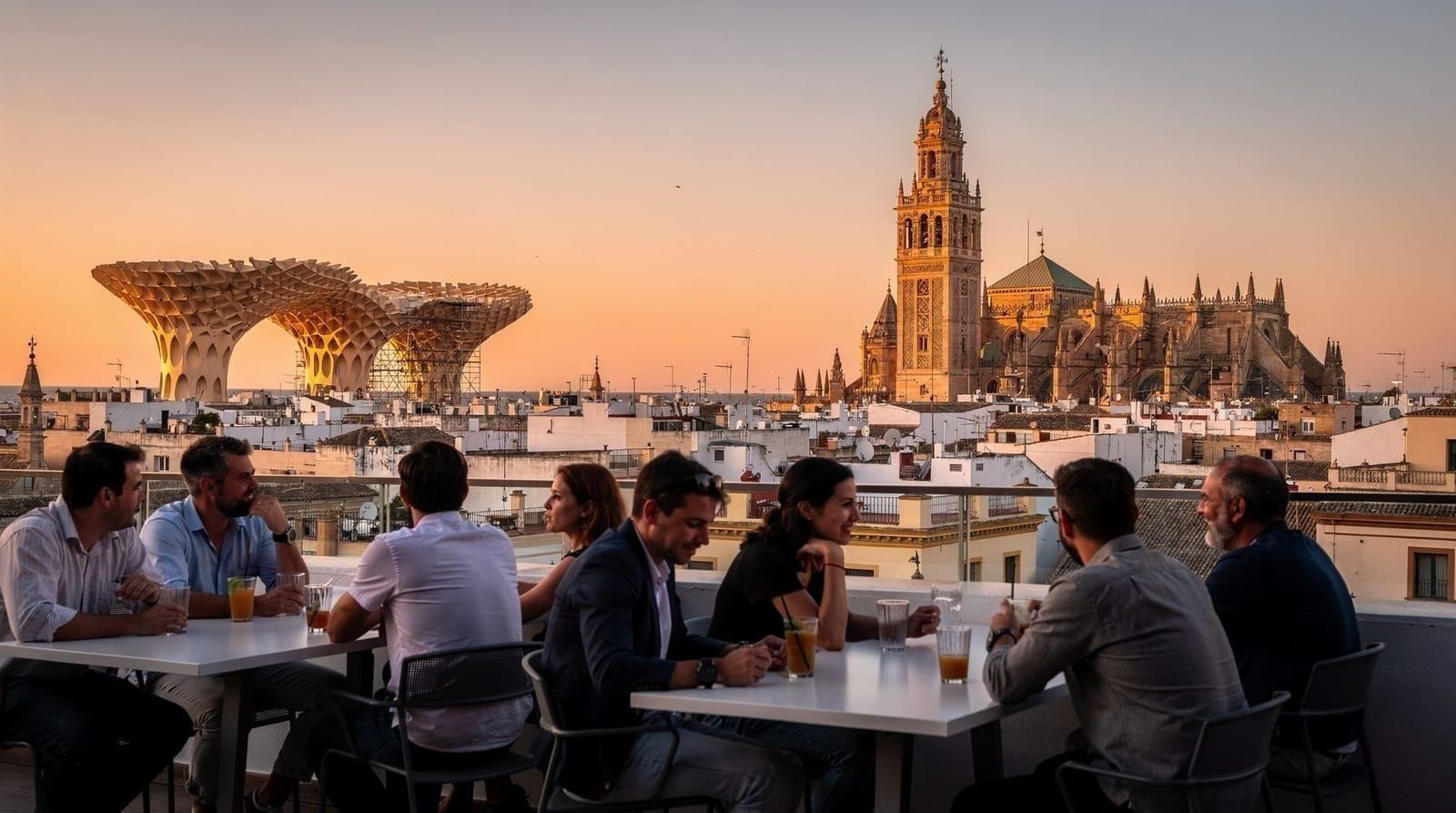
Las Setas — the nickname for the Metropol Parasol structure in Plaza de la Encarnación — is the kind of building that divides opinion. Some Sevillanos hate it: it landed in the middle of a historic square, was years over budget, and its mushroom-shaped wooden canopy looks nothing like anything in the surrounding architecture. Others have come to appreciate it as a genuinely interesting piece of contemporary engineering in a city otherwise entirely defined by its medieval and Baroque past.
For visitors, the relevant question is simpler: is the ticket (from €16) worth it, and when should you go?
| Cost | from €16, includes the walkway |
| Time needed | around 45–75 minutes |
| Best time | Sunset — book 2–4 days ahead in high season |
| Getting there | Plaza de la Encarnación, ~15 min walk from the Alcázar |
| Height | 26 metres, panoramic 360° walkway |
What you actually get for €16
Las Setas Metropol Parasol entry ticket — panoramic walkway accessThe ticket covers the following:
The panoramic walkway. The main draw. A wavy elevated walkway runs along the top of the wooden canopy structure at approximately 26 metres above the square. Views in all directions over central Seville — the Giralda, the cathedral roof, the Torre del Oro, the Guadalquivir river to the west, and the Sierra Morena mountains on clear days to the north. The walkway is genuinely impressive; it feels simultaneously lightweight and substantial given that the entire structure is built from polyurethane-coated wood.
The Antiquarium. The basement archaeological museum, discovered during excavation for the Metropol Parasol’s foundations. Roman mosaics, architectural fragments, and Moorish remains dating from the 1st century AD through the 12th century are preserved in situ behind glass walkways. Worth 20–30 minutes before or after the walkway visit.
Sunset booking: why it matters and when to book
The sunset slot is the most requested time at Las Setas, and demand is real. In spring and summer (April through September), sunset slots book up 2–4 days ahead on weekends, 1–2 days ahead on weekdays. In October and November, sunset slots fill 1–2 days ahead on any day.
If your Seville visit includes a day when you specifically want sunset views — and the Metropol Parasol has some of the best of any accessible rooftop — book as soon as your itinerary is set.
Sunset time varies significantly: roughly 7:30–9:00 PM in summer, 6:15–7:00 PM in autumn and winter. The last entry slot is typically 30–45 minutes before sunset — check the specific timing when booking.
Comparing Las Setas to other Seville viewpoints
Seville has several elevated viewpoints, each with a different character:
Las Setas (26m): 360-degree view, modern, commercial. Good for city overview and photography. From €16.
Giralda tower (70m): Higher, with more impressive views. Included in Cathedral ticket (€13 online). No separate rooftop bar. Best views are directed outward (towards the river, the Macarena quarter). Not suitable for viewing the Cathedral itself — you are on it.
Hotel rooftop bars: Several hotels (Eme Cathedral Hotel, Hotel Doña María) have rooftop bars accessible to non-guests for the price of a drink. Free access, but you are standing rather than on a dedicated walkway. More social, less structured.
For the full comparison of views in the city, see rooftop bars and views in Seville.
The Metropol Parasol in context: architectural background
The Metropol Parasol was designed by German architect Jürgen Mayer H. and completed in 2011, roughly a decade after the project was commissioned. It was originally budgeted at €50 million; the final cost was approximately €102 million. The overruns and delays generated significant controversy in Seville.
The structure is built from bonded laminated timber with a polyurethane coating — the largest wooden lattice structure in the world at the time of construction. The engineering required to build a curved, shell-like wooden structure at this scale was genuinely new territory. Whatever your view of the aesthetics, the construction is not trivial.
The name “Las Setas” (mushrooms) was coined by Sevillanos and stuck. The official name (Metropol Parasol) is used primarily in architectural contexts.
Getting there
Las Setas is in Plaza de la Encarnación, in the La Macarena neighbourhood, approximately a 15-minute walk north of the Alcázar and Cathedral complex. The square is well-served by city buses (lines C3, C4 stop nearby). Parking in the immediate area is limited.
From the Alcázar, the walk north through the Santa Cruz quarter and along Calle Sierpes (Seville’s main shopping street) takes about 15 minutes and is a pleasant route.
Combining Las Setas with nearby attractions
The Palacio de Las Dueñas — the Seville residence of the House of Alba — is 5 minutes’ walk from Las Setas. The two sites make a logical combination for an afternoon in the Macarena neighbourhood.
Walking tour combining Palacio de Las Dueñas, La Macarena and Las SetasThis guided walking combination tour covers all three highlights of the neighbourhood in 3 hours and avoids the navigation challenge of finding the Palacio de Las Dueñas (which is set back from the main street and easy to miss). See the Palacio de Las Dueñas guide for standalone visit information.
The Antiquarium in more detail
The archaeological site below Las Setas is genuinely interesting and consistently undervisited — most people head straight for the elevator to the walkway and miss the basement entirely.
The Antiquarium occupies most of the basement level beneath the Metropol Parasol. The site was discovered in 2002 during preliminary excavations for the Metropol Parasol project. Archaeologists found a 1st-century Roman domus (private residential house) with several rooms and, crucially, intact mosaic floors. The preservation quality was high enough that the city halted construction and redesigned the project to accommodate the site.
What you see on the visit:
The Roman domus: A 1st-century house with multiple rooms arranged around a central atrium. The mosaic floors are the standout feature — black and white geometric patterns (the standard style for domestic mosaics of this period in the western Roman Empire) in the atrium and reception rooms, with more elaborate polychrome work in the main reception room (triclinium). The scale of the house suggests a prosperous family — this was not a modest dwelling.
Commercial premises (tabernae): To one side of the domus, a row of commercial units facing a Roman street. The counter heights and storage areas are visible. Roman tabernae served as shops, bars, and workshops depending on their commercial purpose; the specific function of these units has not been determined conclusively.
Post-Roman occupation layers: Above the Roman level, evidence of continued occupation through the Moorish period (8th–12th centuries) — new wall lines, pottery fragments, modified floor levels. The site illustrates Seville’s continuous occupation across empires.
The walkways through the Antiquarium are glass-bottomed in several sections — you are walking above the Roman floors. This is vertigo-inducing for some visitors but gives a clear view of the spatial relationships between the structures.
Seasonal considerations for the visit
Summer (June–August): The walkway is exposed to direct sun in most sections. Hat, sunscreen, and water are necessary for midday visits. The good news: sunset comes late (9–9:30 PM in July), which means the sunset slot and the cooler evening air coincide. Book the latest available slot — typically 30–40 minutes before official sunset time.
Autumn and spring (March–May, September–November): The most comfortable visiting conditions. Morning and afternoon visits are pleasant. Sunset slots are in demand but bookable with 2–3 days advance notice.
Winter (December–February): Las Setas is open year-round. Winter visits are uncrowded and the low angle of winter sunlight creates dramatic shadows across the wooden lattice structure. The walkway can be cold and windy in January–February. Sunset is early (around 6–6:30 PM), making it compatible with an afternoon visit.
Night visits
Las Setas is open until 1 AM in summer and midnight in winter (last admission 30 minutes before closing), and night visits have a different character from sunset visits: the walkway is lit with embedded LED strips, the city below shows its electric light pattern, and the wooden canopy takes on an amber glow. Night visits are typically walk-up (no pre-booking needed) and rarely crowded after 9 PM.
The combination of a flamenco show in the evening (shows typically start at 7:30–8 PM) followed by a Las Setas night visit is a natural one — both are in the city centre, both are appropriate evening activities, and the night walk gives a pleasant 45 minutes of outdoor time after sitting for 75 minutes at a tablao.
How to get the most from your ticket
The ticket is from €16 and the honest value assessment depends on how you use it:
- If you visit the walkway only (20–30 minutes) and skip the Antiquarium: questionable value at €16.
- If you visit the walkway, spend 30 minutes in the Antiquarium, and stay for sunset: good value at €16 for a 75-minute experience that includes genuine Roman archaeology.
- If you specifically book the sunset slot and the conditions are clear: very good value — the view is memorable and genuinely different from what other Seville viewpoints offer.
What to bring and wear
Comfortable, closed or sturdy sandal-style shoes suit the wooden walkway better than slick-soled footwear, especially if the surface is damp after rain. Sunglasses help with the exposed light at any time other than sunset or night. In winter, the walkway is more exposed to wind than street level, so a light jacket is worth carrying even on a mild day.
Fitting Las Setas into a wider itinerary
Las Setas sits slightly apart from the Alcázar-Cathedral-Santa Cruz cluster that most first-time visitors focus their first day around, which is exactly why it gets skipped by people short on time. It works best as a late-afternoon add-on: spend the morning and early afternoon at the Real Alcázar and Seville Cathedral, walk north through Santa Cruz and Calle Sierpes, and arrive at Las Setas in time for the sunset slot. This sequencing also avoids one of the common mistakes visitors make — trying to cram too many separate neighbourhoods into a single rushed day.
Where Las Setas fits with the rest of your plan
If you are still shaping the trip, the Metropol Parasol overview guide covers the structure itself, while this page stays focused on tickets and timing. The neighbourhood around the square is worth a short wander too: the La Macarena guide explains what else is nearby, and the Alameda de Hércules guide points to a livelier, more local corner of the same side of town for a drink after your visit.
Las Setas works well as one stop in a longer itinerary rather than a day in itself. The Seville in one day and three days in Seville itineraries show where a sunset slot slots in naturally, and the how many days in Seville guide helps you decide whether you have room for it at all. If you are weighing several paid sights against each other, skip-the-line tickets decoded explains when booking ahead is genuinely worth it and when it is not.
Evening plans pair easily with a visit. Once the light has gone, the Plaza de España guide and the flamenco in Triana guide suggest ways to continue the night, and the best time to avoid crowds in Seville helps you choose which day of your stay suits a busy sunset slot best.
Frequently asked questions about Las Setas and Metropol Parasol tickets
What is the best time to visit Las Setas?
Sunset is the most requested slot, and for good reason: the view over Seville's rooflines with the fading light is genuinely dramatic. Book at least 2–3 days ahead for sunset. Midday visits in summer are uncomfortable — the wooden walkway has minimal shade. Morning visits (before noon) are pleasant and uncrowded.What is included in the Las Setas ticket?
The ticket (from €16) includes access to the panoramic walkway on the upper structure.How tall is the Metropol Parasol?
The Metropol Parasol is 26 metres tall — not a skyscraper, but tall enough to provide a 360-degree view over central Seville. The wooden mushroom-shaped canopy covers approximately 150 by 70 metres at ground level.Is the Antiquarium Roman ruins site worth visiting?
Yes. The Antiquarium houses one of the best-preserved Roman ruins sites in Seville, discovered during excavations for the Metropol Parasol. The foundations of a Roman house (domus) with intact mosaic floors are visible. Approximately 20–30 minutes to view properly.Is Las Setas overcrowded?
Less crowded than the Alcázar or Cathedral. The walkway has capacity limits, so queuing at the gate is the main issue at sunset. Pre-booked tickets allow you to skip the gate queue. Morning visits are usually uncrowded.Can I combine Las Setas with a Palacio de Las Dueñas visit?
Yes — they are in the same neighbourhood (La Macarena). The Palacio de Las Dueñas is a 10-minute walk from Las Setas. Some tour operators offer a combined walking tour covering both sites plus the Macarena basilica.Is Las Setas suitable for visitors afraid of heights?
The walkway has solid railings throughout and the drop is not extreme (26m), but the glass-bottomed sections of the Antiquarium below and the elevated, open-air nature of the walkway itself can still feel uncomfortable for visitors with significant height anxiety. There is no requirement to use the glass-floor sections — you can walk around them.How long before sunset should I book my slot?
Book the last available slot before official sunset — typically 30–40 minutes prior — to see the sky change colour while you're still on the walkway. Booking the exact sunset time itself often means the best light happens just as your slot is ending.
Top experiences
Bookable activities with verified prices and instant confirmation on GetYourGuide.