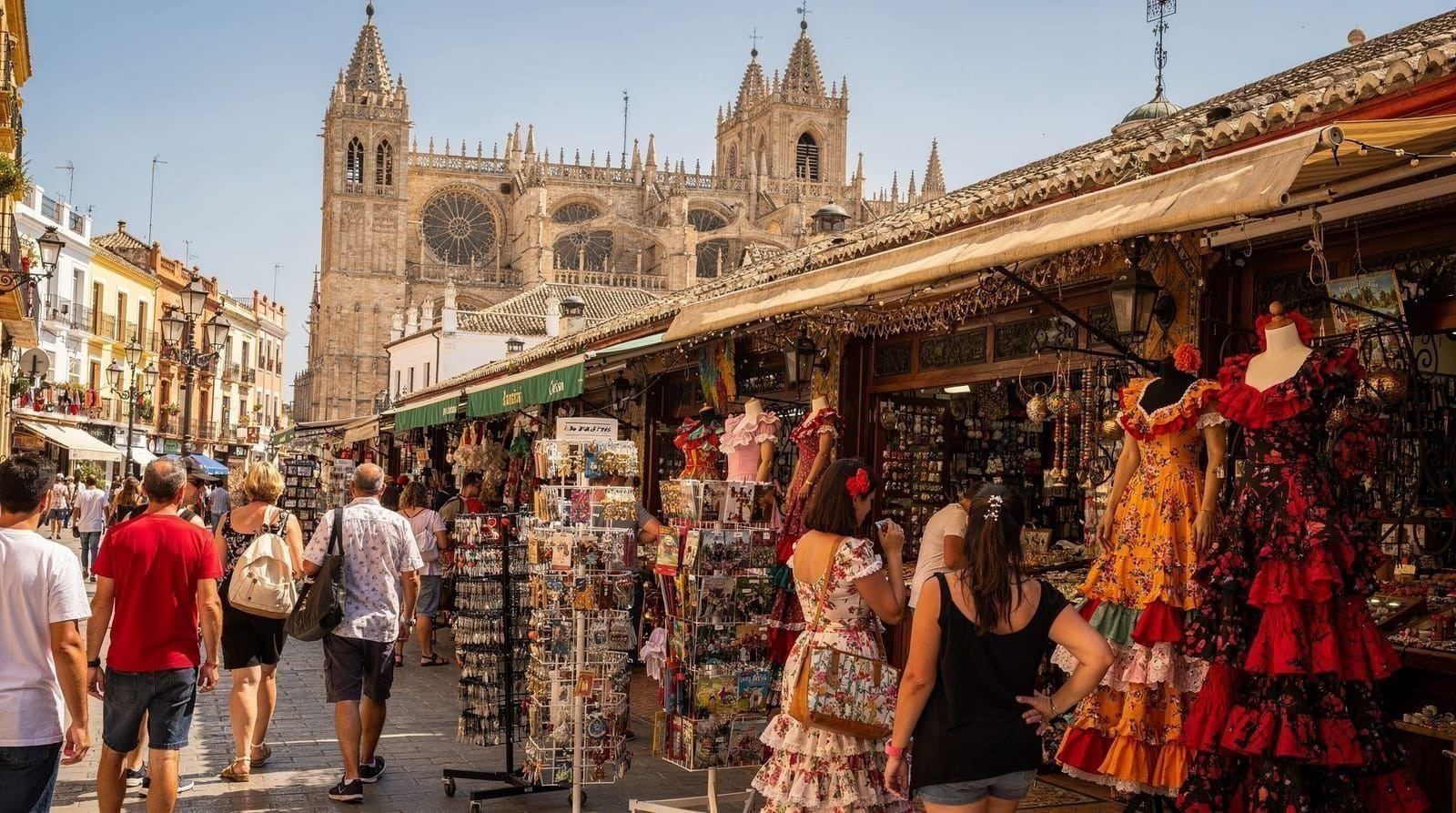
Seville for first-timers: 3-day essential itinerary
Seville: Royal Alcázar entry ticket
What first-time visitors to Seville need to know
Seville is not a difficult city — it is compact, walkable, and genuinely welcoming. But first-time visitors consistently make the same mistakes: not booking the Alcázar in advance and spending two hours in a queue, eating in the tourist restaurants directly opposite the Cathedral, and trying to see too much in one day.
This itinerary is written to avoid all three. It covers the essential sights at a realistic pace, it is honest about what requires advance booking, and it points you toward the bars and restaurants that locals use rather than the ones that appear first in tourist searches.
The itinerary is structured as three days. If you have less time, Day 1 alone covers the absolute non-negotiables.
| Duration | 3 days, best for a first visit |
| Where | Historic centre: Santa Cruz, El Arenal, Triana |
| Cost per person | around €45–65/day incl. entries and food |
| Book ahead | Alcázar (3–7 days), flamenco (2–4 days) |
| Getting around | Entirely on foot |
Before you arrive: what to book
Alcázar: Book at least three to five days in advance, more in spring and summer. Walk-up queues are frequently 90 minutes. Official booking: real-alcazar.es.
Cathedral: Two to three days is usually sufficient, though spring peak season can require more lead time.
Flamenco (Casa de la Memoria): Book two to four days in advance. The venue fills up in peak season. casadelamemoria.es.
AVE trains (if doing day trips): Book as early as possible for the best prices, at renfe.com.
Day 1: The monuments and the historic heart
9:30 — Royal Alcázar
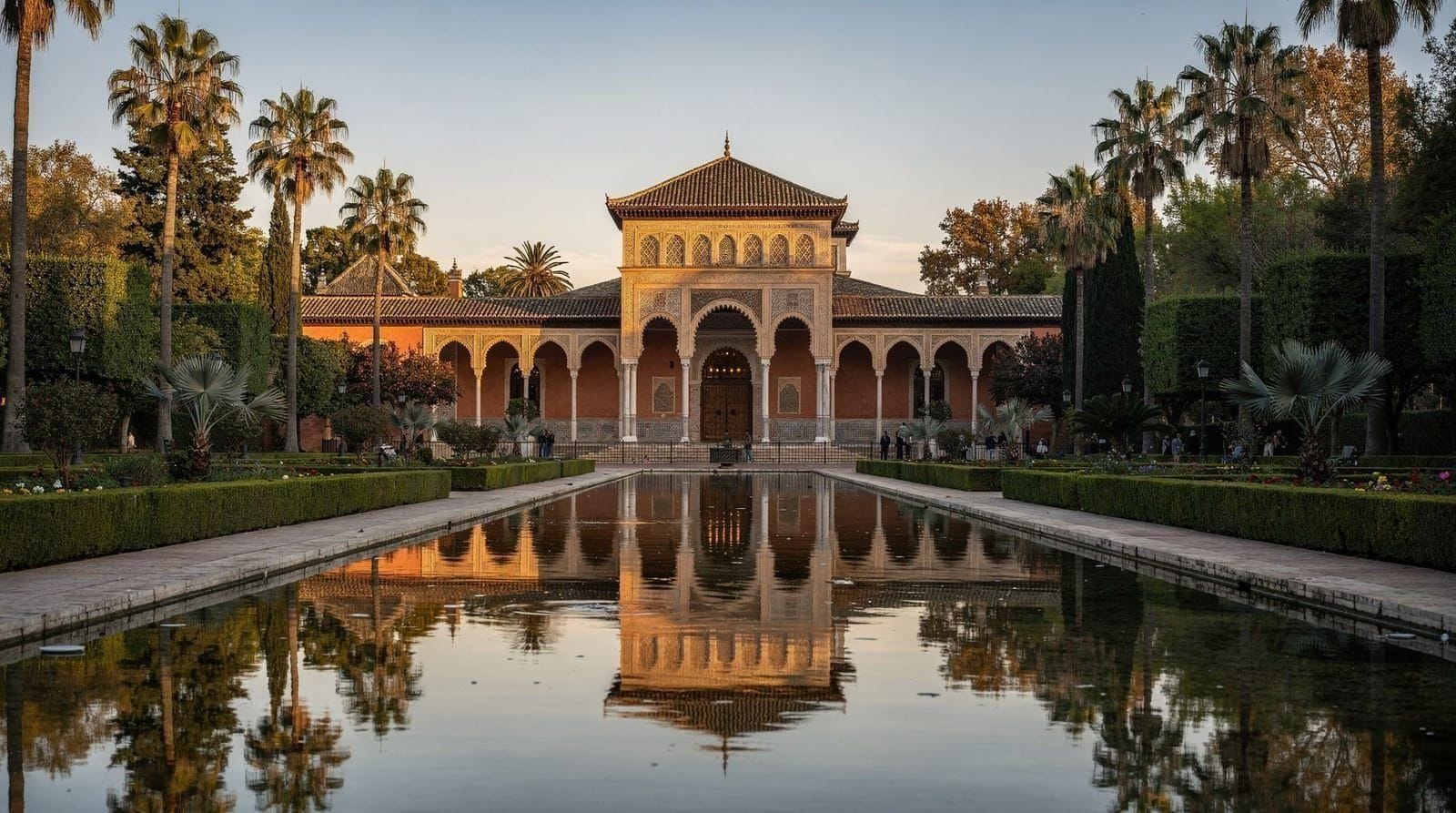
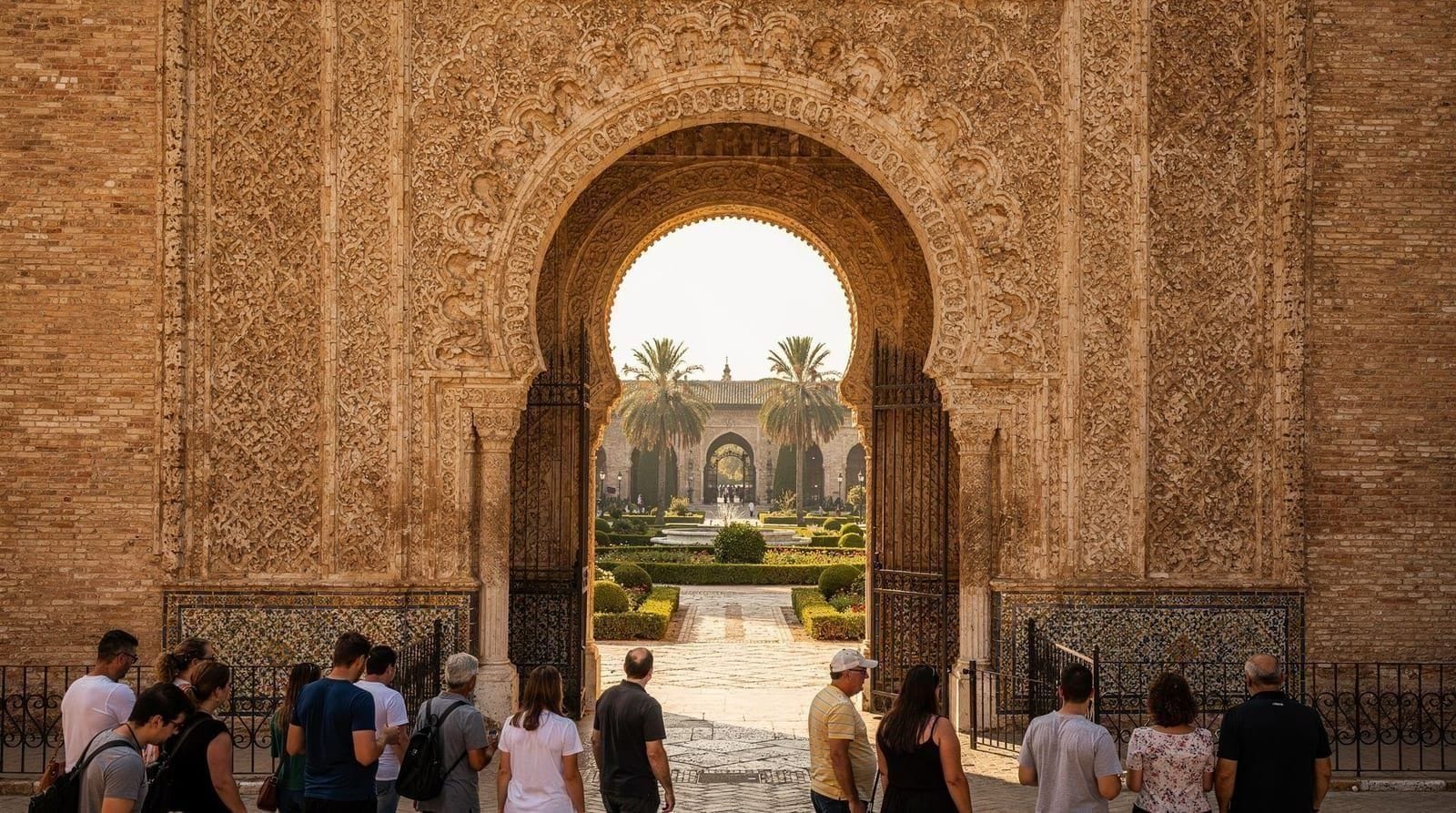
The Alcázar is the most impressive monument in Seville and the essential first stop. It is a working royal palace — the Spanish royal family still uses the upper apartments — and the combination of Moorish, Gothic, Renaissance, and Baroque architecture covers 500 years of history in a single complex.
Royal Alcázar skip-the-line entry ticket — €14.50Enter from Patio de Banderas. Key rooms in order: Patio de las Doncellas (the central reflecting pool courtyard), Salón de Embajadores (the gilded dome throne room), and the upper royal apartments. Don’t rush. Allow two to three hours.
What the Alcázar is not: It is not the Alhambra. The Alhambra in Granada is the more famous Moorish palace. The Alcázar is a different building, less purely Moorish but arguably more layered and interesting for first-time visitors who want to understand how cultures mixed in Andalusia. If you expect the Alhambra, you may be confused — that’s why knowing the difference matters.
11:30 — Seville Cathedral and Giralda
Book online or use the self-service kiosks to skip the walk-up queue.
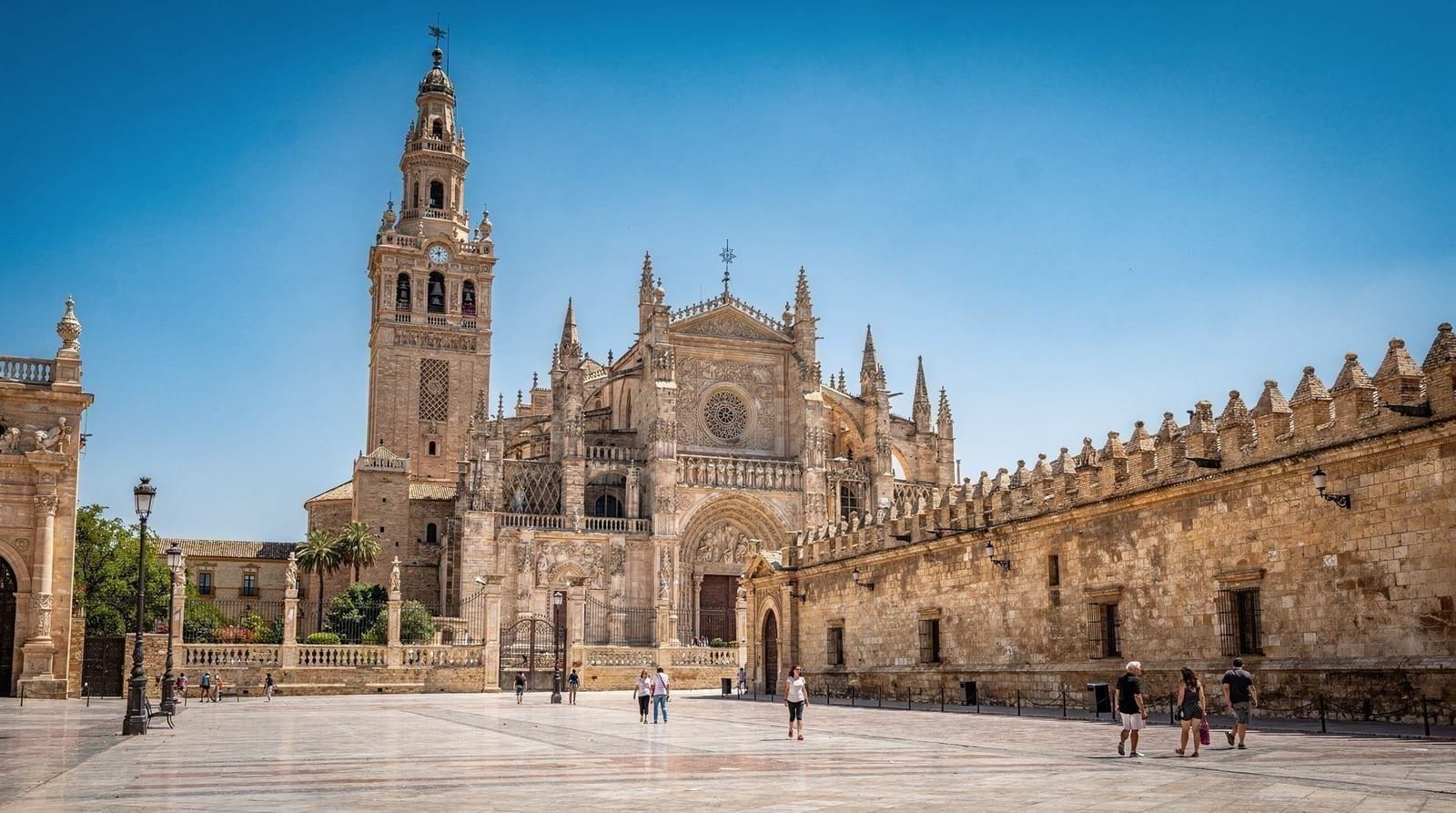
Cathedral and Giralda entry ticket — €12Key facts for first-timers:
- The Cathedral is the largest Gothic church in the world by interior volume
- Columbus’s tomb is inside — four pallbearers representing the kingdoms of Castile, León, Aragón, and Navarra
- The Giralda tower was originally a minaret — the bell tower section was added by Christians after 1248
- You climb the Giralda by ramp (no stairs) — it was designed for a horse
Allow 90 minutes. The view from the Giralda roof (70 metres) is the best free elevated viewpoint in the city.
13:30 — Lunch: avoid the tourist trap restaurants
The restaurant strip on Calle Mateos Gago directly opposite the Cathedral charges 30–50% above average market prices for food of average quality. This is the single most common first-timer disappointment in Seville.
Instead: walk two minutes to Bodega Santa Cruz (Rodrigo Caro 1). Standing bar, chalk tallies, cold manzanilla, excellent montaditos (small open sandwiches), and espinacas con garbanzos (spinach with chickpeas — the classic Sevillano tapa). Price at the barra: €18–22 per person with drinks.
14:30 — Santa Cruz neighbourhood
What to see: The Barrio de Santa Cruz is the old Jewish quarter, now the most atmospheric residential neighbourhood in the city. Walk:
- Callejón del Agua (Water Lane) — the most famous alley, alongside the Alcázar walls
- Plaza de Doña Elvira — orange trees, benches, a fountain
- Plaza de los Venerables — quieter, with the Hospital de los Venerables church
- Jardines de Murillo — walled gardens at the eastern edge
Allow 45–60 minutes. The barrio is small; you cannot get seriously lost.
Warning: Near the Cathedral entrance, women in traditional dress will offer you sprigs of rosemary claiming they bring good luck. They then demand payment — sometimes aggressively. This is a well-documented scam. Say “no, gracias” firmly and keep walking. Do not accept the rosemary.
For a guided introduction to the neighbourhood’s history: Santa Cruz Jewish quarter walking tour.
Santa Cruz old Jewish quarter walking tour16:00 — Plaza de España
Tram number 1 (5 minutes from Archivo de Indias stop, €1.40) or a 25-minute walk south through María Luisa Park.
The Plaza de España is the most architecturally dramatic public space in Seville. Built for the 1929 Ibero-American Exposition, it is a 170-metre semicircular building with 58 province panels in painted azulejo tiles, a canal with rowboats, and the most photographed colonnade in the city. Free entry.
Spend 45 minutes here. Rowboats: €6 for 35 minutes. Good for photography from the bridge over the canal.
20:00 — First tapas evening
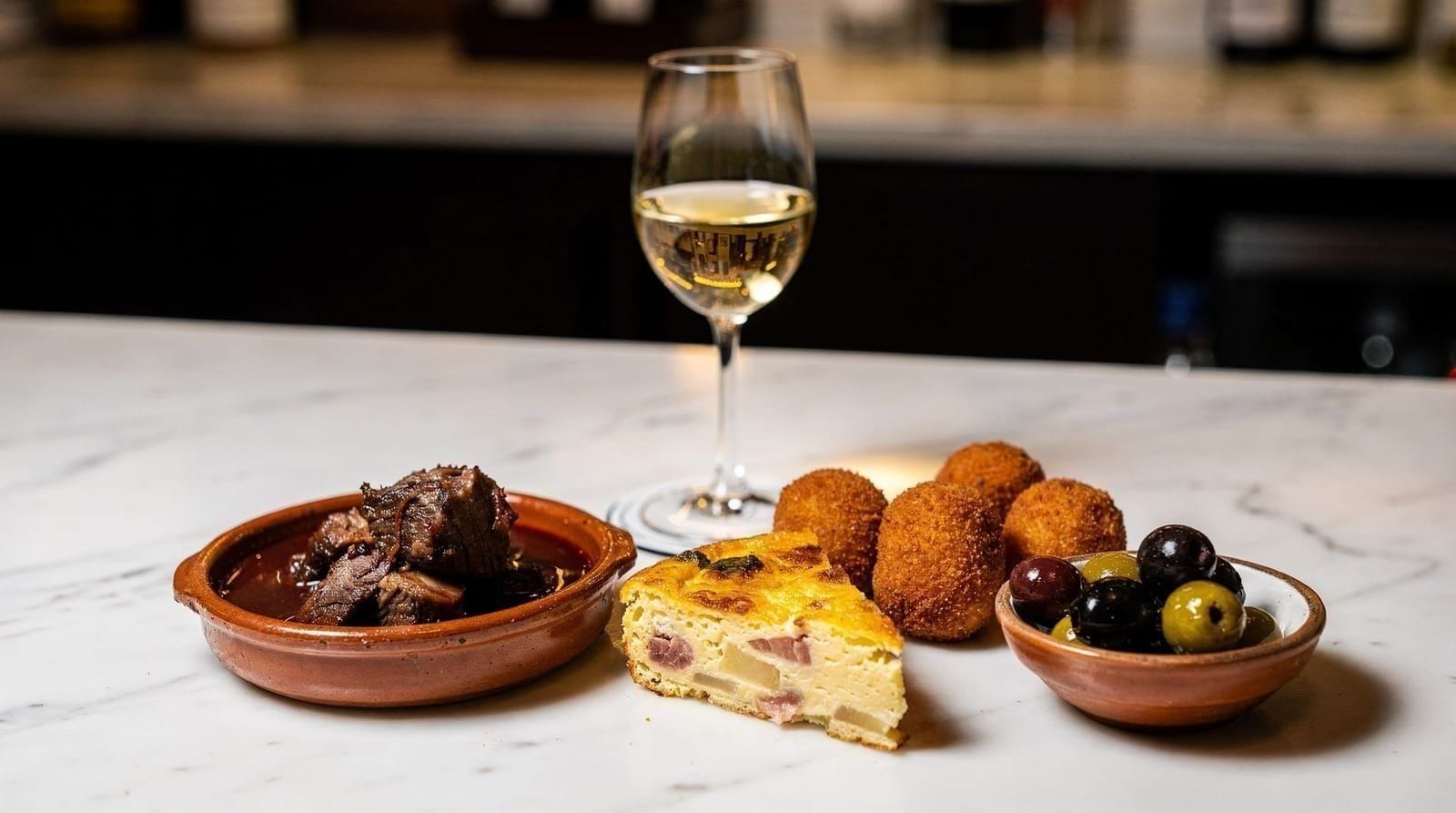
Start at El Rinconcillo (Calle Gerona 40). This bar has been open since 1670. The chalk tallies on the bar track what each table orders. The jamón is sliced from the whole leg at the counter. A glass of cold manzanilla and a plate of espinacas con garbanzos is the correct first order.
Then walk to Eslava (Calle Eslava 3, Alameda neighbourhood, 15 minutes’ walk) for a second stop. Eslava has creative modern tapas — the croqueta de rabo de toro and the presa ibérica are excellent. Arrive before 20:30 to get in without a wait.
Evening — Flamenco at Casa de la Memoria
The evening show at Casa de la Memoria (Calle Cuna 6, in the historic centre) is the best first-timer flamenco option. Intimate venue, serious artists, no dinner service, no tourist-show formula.
Casa de la Memoria flamenco show — book in advanceTickets: €24 for adults. Duration: about 1 hour. For context on why this venue rather than a large tablao, see the best flamenco shows in Seville guide.
Day 2: Triana, the river, and the real Seville
9:00 — Triana market
Cross the Puente de Isabel II into Triana. The Mercado de Triana (Plaza del Altozano) is a working food market. Have coffee and tostada at the market bar for €2.50 — the correct local breakfast.
Triana is historically the neighbourhood of flamenco artists, bullfighters, and ceramics workers. Its character is noticeably different from the tourist-oriented Santa Cruz. The river-facing Calle Betis has the best views back over El Arenal and the Torre del Oro.
What first-timers get wrong about Triana: The neighbourhood is not remote or difficult to reach. It is a 10-minute walk from the Cathedral across the most scenic bridge in the city. Many first-timers miss it entirely by staying in Santa Cruz for their full visit.
11:00 — Macarena neighbourhood
Walk back across the river and north to the Macarena. The Basílica de la Macarena (free entry) houses the most venerated Virgin in Seville. The museum behind the church (€5) has her gold crown and the embroidered mantle. Whether religious or not, the intensity of devotion around this figure is a genuine window into Andalusian culture.
The Almohad walls alongside the church are the best-preserved section of the original 12th-century city walls.
13:00 — Metropol Parasol (Las Setas)
The wooden mushroom-shaped structure at Plaza de la Encarnación is Seville’s most controversial modern building and its most visited free-entry space. The rooftop walkway costs from €16. Allow 45 minutes.
15:30 — Guadalquivir river cruise
One hour on the river gives you the city skyline from the water. The Torre del Oro, the Maestranza bullring, and the Triana waterfront all look different from the river.
Guadalquivir 1-hour eco cruiseDeparts from Muelle de la Sal (near Torre del Oro). Tickets: €18 adults.
Evening
Casa Morales (García de Vinuesa 11) for vermouth. Then a longer dinner at Bar El Comercio (Lineros 9) for traditional rabo de toro, or a continuation of the tapas crawl through El Arenal.
Day 3: What you may have missed and departure options
Morning (9:30–12:30): Casa de Pilatos
Most first-timers exhaust themselves at the Alcázar and never make it to Casa de Pilatos. This is a mistake. The 16th-century palace (Plaza de Pilatos 1, €12 ground floor) has arguably the finest azulejo tile work in Seville — and almost no queues. The Roman statue collection in the basement is excellent.
See the Casa de Pilatos guide.
Afternoon (14:00–18:00): Slow exploration
For a third day, the pace is slower and more personal. Possible options:
- Bike tour: A two-hour bike tour covers the city’s geography more efficiently than walking. Seville bike guide.
- Sherry tasting: A 90-minute structured tasting of the region’s wines. Genuinely different from wine tasting elsewhere and highly applicable to the three days of eating you’ve just done.
- Palacio de las Dueñas: The Alba family’s private palace (Calle Dueñas 5, €15). Excellent art collection, intimate.
- Second visit to something you rushed: The Alcázar gardens alone are worth a return in the afternoon. The Cathedral at a quieter hour is different.
Evening: Final tapas
No itinerary can substitute for your own sense of what worked on the trip. A final evening in Seville means returning to the bar you liked best — or trying the one thing you didn’t get to.
If you want a proper final dinner: Abantal (Alcalde José de la Bandera 7, Michelin star, book ahead) for the most ambitious cooking in the city, or Taberna del Alabardero (Zaragoza 20) for excellent traditional food in an elegant room.
Essential first-timer tips
Spanish mealtimes are real: Lunch 14:00–16:00. Dinner 21:00–23:00. Attempting to eat at 12:00 or 18:00 gets you empty restaurants and often a limited menu.
The barra vs the terrace: Eating and drinking at the bar counter (barra) gives local prices. The terrace costs 20–40% more. This is the same food, same quality — the difference is purely the positioning. Almost no restaurants enforce or explain this clearly.
What’s worth queuing for: The Alcázar (book online — don’t queue). The Cathedral (book online, or use side-entrance kiosks). Eslava tapas bar (arrive at opening time or accept the queue). Everything else in Seville either has no meaningful queue or has alternatives that are just as good.
What’s not worth the money: The horse carriage tours are fine but overpriced for what they are (€40–60 for 30 minutes). The hop-on-hop-off bus is useful for orientation but not necessary for a three-day visit on foot. Large dinner-and-flamenco shows at major tablaos are professionally competent but not the real thing — see Casa de la Memoria instead.
For a comprehensive first-timer resource, see the Seville first-time travel tips guide and the tourist traps to avoid guide.
Getting from the airport and finding your feet
Seville Airport (SVQ) is 10 km from the centre. The EA airport bus (€6 one-way) runs to the Prado de San Sebastián and Plaza de Armas, taking about 35 minutes; a taxi costs a fixed €26 and takes 20 minutes. Neither requires advance booking. First-timers arriving jet-lagged or on an early flight often underestimate how walkable the historic centre is once they’ve dropped bags — most of Day 1’s sights sit within a 15-minute radius of each other, so a slow orientation walk on arrival afternoon (before the itinerary above properly starts) is a good use of a few spare hours. See the getting to Seville from the airport guide for the full breakdown of options.
How this itinerary compares to a longer stay
Three days is deliberately the minimum for a satisfying first visit, not a compressed version of a longer trip. If it turns out you have more time, the extra days are best spent one of two ways: adding a Córdoba day trip (45 minutes each way by AVE, genuinely easy — see the Córdoba day trip guide), or simply slowing down and repeating the things that worked, since Seville rewards a second visit to the Alcázar gardens or a second flamenco show more than most cities do. First-timers who try to add Granada onto a three-day Seville trip without extending it usually regret the rush; Granada deserves its own day, ideally with an overnight, which is why it isn’t part of this itinerary.
Seville for first-timers: context and background
Understanding the city’s layout
Seville’s historic centre is compact and logical once you have a mental map. The key spatial relationships:
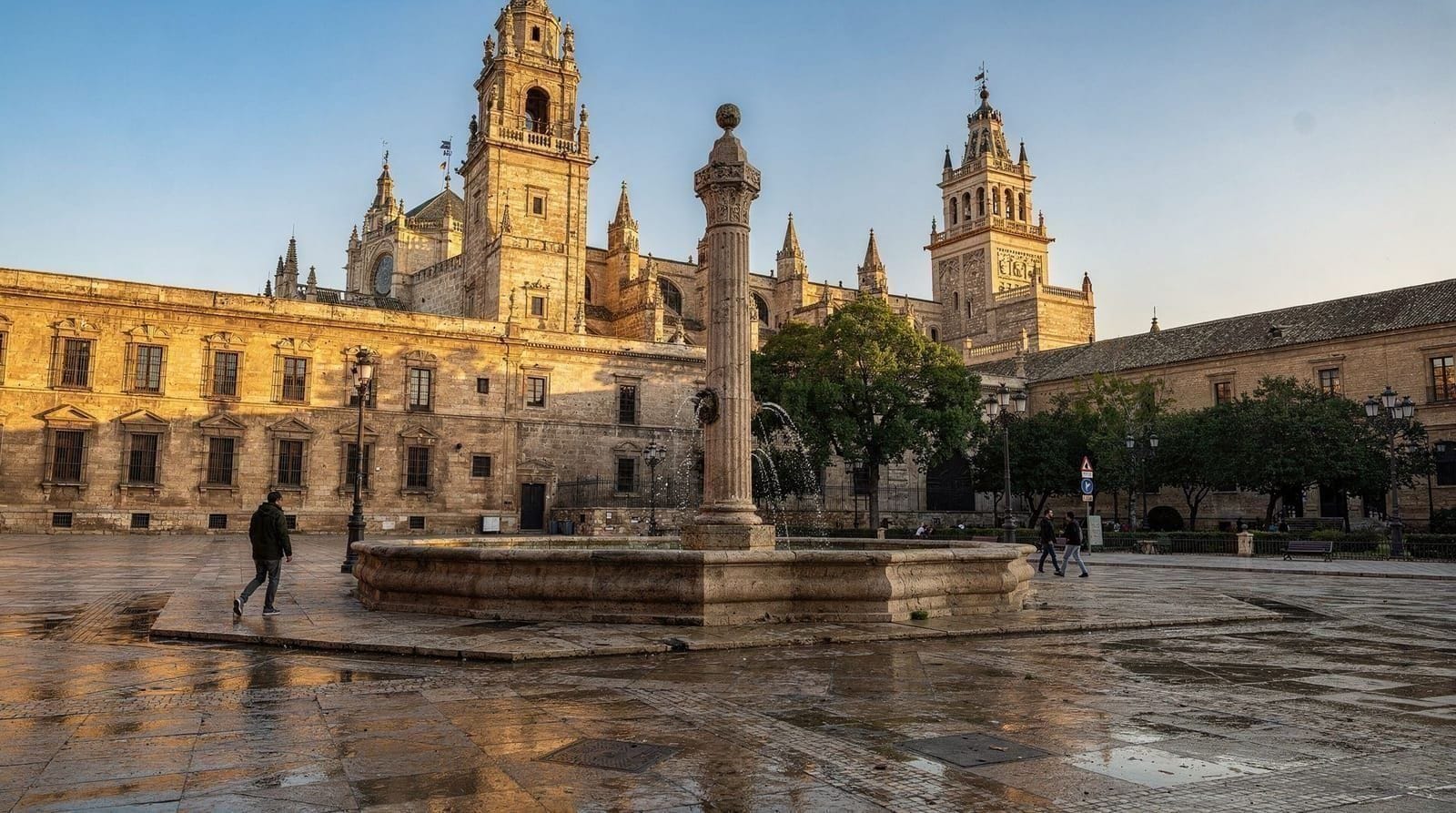
The Alcázar and Cathedral sit at the south edge of the historic centre, on a small plaza (Plaza del Triunfo). The Barrio de Santa Cruz extends east from this plaza — a labyrinthine quarter that was the Jewish neighbourhood until 1391.
North of the Cathedral, Avenida de la Constitución runs north to the commercial centre (La Campana, Calle Sierpes) — this is the main pedestrian spine. The Alameda de Hércules is further north: a long pedestrian boulevard with bars, restaurants, and a younger, more local crowd.
The Guadalquivir river is the western boundary of the historic centre. The Torre del Oro sits on the riverbank; the bullring (Maestranza) is nearby. El Arenal is the neighbourhood between the river and the Cathedral.
Triana is across the river — reached via the Puente de Isabel II. It is a distinct neighbourhood, not simply an extension of the historic centre.
María Luisa Park and Plaza de España are south of the centre, 25 minutes on foot.
What first-timers typically misunderstand
The Alcázar is not the Alhambra: The two palaces are frequently confused. The Alhambra is in Granada and is more famous internationally. The Alcázar is in Seville and is arguably more complex historically (it has been modified continuously from the 10th to the 20th century). Neither is “better” — they are different buildings from different periods of Islamic rule. Visiting both on the same trip (possible with day trips) gives a complete picture.
Flamenco is not a tourist attraction: Flamenco is a serious art form that developed in the Roma and Andalusian communities of southern Spain over several centuries. The best performances are emotionally demanding and musically complex — not background music. The Casa de la Memoria’s roughly one-hour show format, with professional performers in an intimate space, gives a genuinely authentic experience. The large tablao dinner shows are not equivalent.
Seville is not Madrid or Barcelona: The city’s pace is different — slower, hotter, later. Lunch is a serious meal at 14:30. Shops close from 14:00–17:00. Dinner starts at 21:00. The city does not organise itself around the schedules of tourists from northern climates.
The Santa Cruz barrio is not the whole of Seville: Most first-time visitors spend the majority of their time in Santa Cruz and the Cathedral area and conclude that Seville is beautiful but touristy. The best parts of the city — Triana, the Alameda, the Macarena — are outside the tourist circuit and take 15–20 minutes to reach on foot.
Seville’s best-kept non-secrets
The following are not secret — they appear in good guidebooks — but are consistently undervisited by first-timers who run out of time:
Casa de Pilatos: Better Mudéjar tilework than most of the Alcázar and virtually no queue. Fifteen minutes from the Cathedral. Entry €12.
Archivo de Indias: Free entry. One of the finest Renaissance buildings in Spain, with original Columbus documents on display. Many visitors walk past it repeatedly without entering.
Alameda de Hércules: Seville’s most genuine outdoor living room. Long, lined with trees and bars, used by local families and young Sevillanos for evening walks and drinks. Not touristy in the least.
Macarena neighbourhood: North of the centre, 20 minutes’ walk from the Cathedral. The Basílica, the Roman walls, and the street life are all excellent. Almost no tourist crowds.
Bodega Santa Cruz: On Calle Rodrigo Caro, directly south of the Cathedral. The single best-value tapas bar in the historic centre. Consistently overlooked because the tourist restaurants on Mateos Gago are more prominent.
How the city changes by season
Semana Santa (Holy Week, 29 March–5 April 2026): The most intense week in Seville. 57 brotherhoods (cofradías) process their floats (pasos) through the city over seven days, with the most important processions on Wednesday, Thursday, and Good Friday night. Float patrols can take 12 hours to complete their route. The streets are packed from 18:00 to 04:00. Hotels charge peak prices. Book accommodation 4–6 months ahead if visiting during Semana Santa.
Feria de Abril (21–26 April 2026): A week-long spring fair in the Los Remedios neighbourhood south of the centre. Traditional Andalusian dress (trajes de flamenca), horse parades, casetas (private tent-bars), dancing until dawn. It is primarily a private event — most casetas require an invitation or member connection — but the atmosphere is visible from the fairground entrance and the general area is festive. Arrange a caseta visit through a local contact if possible.
Bienal de Flamenco (September–October 2026, even years): The world’s most important flamenco festival. Held every two years in Seville, it brings the world’s leading flamenco artists to stages across the city. Tickets for individual performances are sold at the Teatro de la Maestranza box office and online. The 2026 edition runs 9 September to 3 October.
For detailed seasonal advice: best time to visit Seville guide, Semana Santa guide, Feria de Abril guide.
Day-by-day summary
| Day | Morning | Afternoon | Evening |
|---|---|---|---|
| 1 | Alcázar | Cathedral & Giralda, Santa Cruz | Flamenco at Casa de la Memoria |
| 2 | Triana market | Macarena, Metropol Parasol | River cruise, tapas |
| 3 | Casa de Pilatos | Bike tour, sherry, or a second visit | Final tapas / Michelin dinner |
If you only have one day, not three
Some first-timers land in Seville with a single day (a stopover, a cruise call, a work trip with one free afternoon). If that’s you, Day 1 above is deliberately front-loaded to work as a standalone plan: Alcázar, Cathedral, Santa Cruz, and the evening flamenco cover the non-negotiables in one packed but realistic day. Cut Plaza de España if time is genuinely tight — it’s the most skippable single stop on Day 1, however beautiful. For a purpose-built version of this compression, see the one day in Seville itinerary; for the fuller argument on how much time the city actually deserves, see how many days in Seville.
Frequently asked questions about Seville for first-timers
Is three days enough for a first visit to Seville?
Yes, for a focused first look. Three days covers the Alcázar, Cathedral, Santa Cruz, Triana, the river, and a flamenco show without feeling rushed, plus a third day for Casa de Pilatos and whatever caught your eye on Days 1–2. If you also want a Córdoba or Granada day trip, budget a fourth or fifth day — see the 4-day or 5-day versions.
What’s the single most important thing to book before arriving?
The Royal Alcázar. It’s the most-visited monument in the city, timed-entry only, and walk-up queues are frequently 90 minutes in peak season. Book online a few days to a week ahead — earlier in spring and summer.
Top experiences
Bookable activities with verified prices and instant confirmation on GetYourGuide.