Sherry tasting in Seville: best experiences, bars, and guided tastings
Seville: Sherry wine and tapas tasting
Where is the best place to taste sherry in Seville?
The Arenal district and Triana neighbourhood have the best sherry-focused bars, serving chilled fino and manzanilla by the glass (€2-4) alongside tapas. For a structured introduction, guided sherry-and-tapas tasting experiences run 90-120 minutes and cover 4-6 wines with food pairing. To experience the full range and see the bodegas, a day trip to Jerez (1 hour by train) is the logical extension.
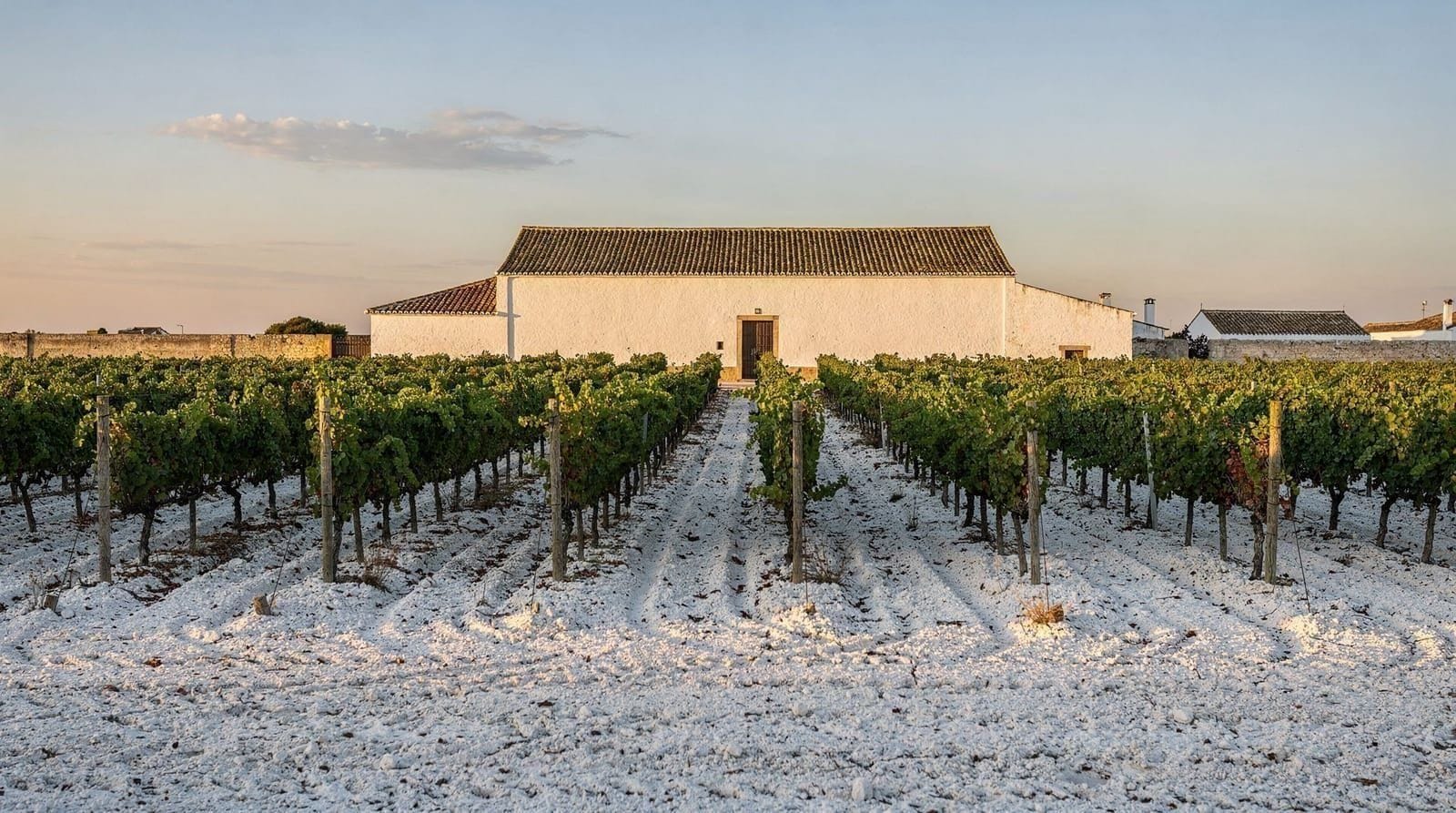
Seville is 60 kilometres from the Sherry Triangle — close enough that sherry functions as the region’s de facto house wine. The city’s traditional bars and tabernas serve fino and manzanilla by the glass as a default aperitivo alongside jamón and olives. If you want to understand what sherry tastes like in its natural context, you do not need to go to Jerez first — start in Seville’s oldest neighbourhoods, order a chilled fino at a barra, and pay €2.50.
This guide covers where and how to taste sherry in Seville, from casual bar glasses to structured tasting experiences.
| Where | Triana, El Arenal, selective spots in Santa Cruz |
| Cost per glass | Around €2-4 at the barra, more on a terrace |
| Guided tasting | Around €25-45, 90-120 minutes |
| Best order | Bien frío, por favor (well chilled, please) |
| Extend it | Jerez bodega day trip, around 1hr by train |
The anatomy of a good sherry bar in Seville
Not every bar in Seville serves serious sherry. The generic tourist-trap restaurants in Santa Cruz near the Catedral typically have a limited sherry list — fino tío pepe and something sweet, if anything. The bars worth seeking out have several characteristics:
A proper sherry list: Multiple producers, multiple styles. If the menu lists only one or two sherries, this is not a specialist venue.
Cold storage: Fino and manzanilla deteriorate at warm temperatures. Good bars keep their fino in refrigerated storage and pour it cold. You can test this by noticing whether the bottle is pulled from a fridge or from a shelf.
Food that matches the wine: A bar serving fino with jamón ibérico and fresh seafood is aligning the food with the wine’s characteristics. A bar serving fino with chips and aioli is not thinking about the pairing.
Barra focus: The best sherry experiences in Seville happen standing at a counter (barra) or at a small table, not on a terrace. Terraces are for looking at the view; the barra is where the wine tastes correctly contextualised.
Where to taste: neighbourhoods and types of venue
Triana
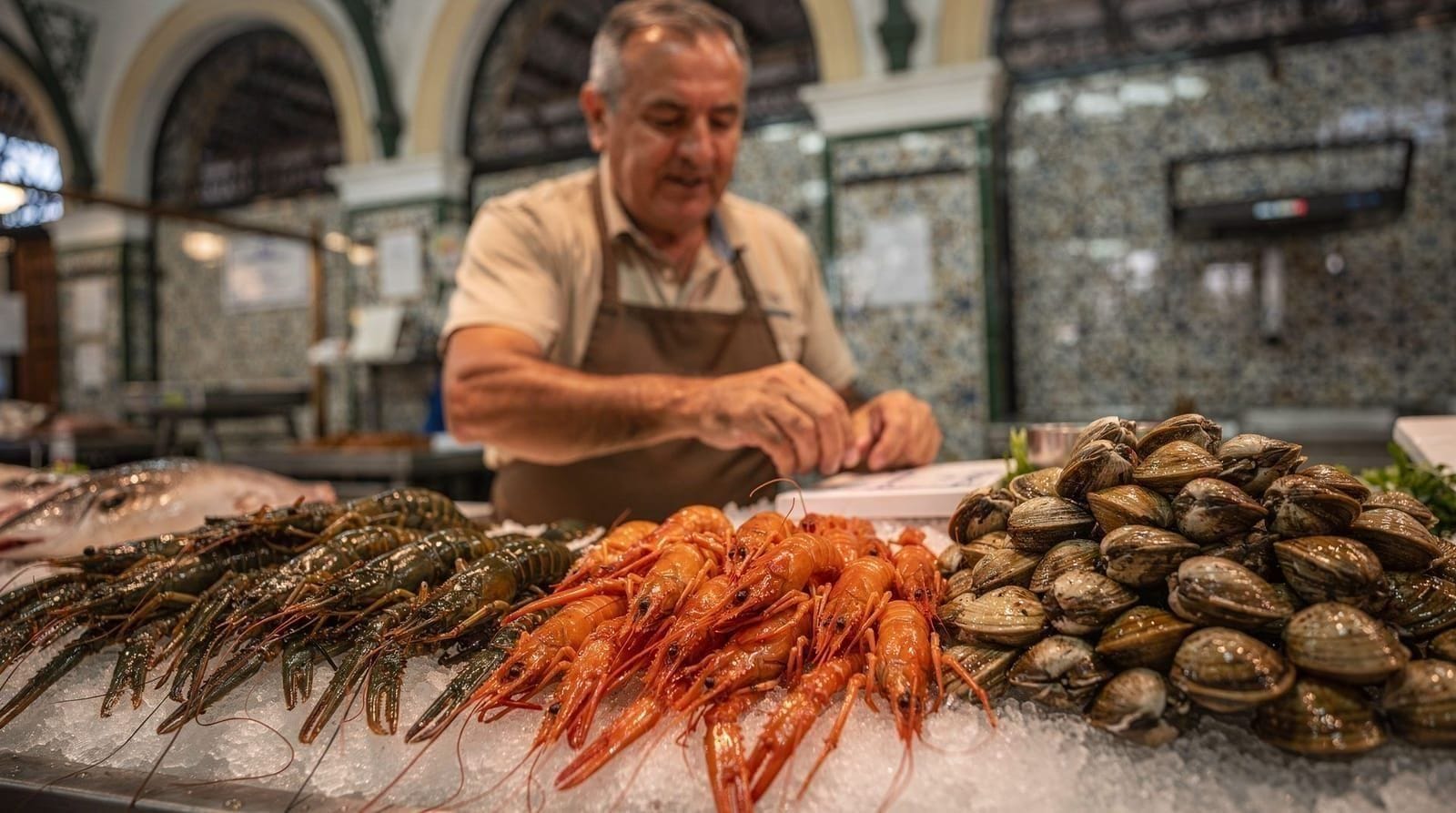
Triana has a working-class, non-tourist-trap character that makes it consistently good for honest wine experiences. Several bars on and around Calle Betis and Calle Pureza serve a full range of sherries with proper service. The Mercado de Triana’s food stalls are good for eating alongside a glass bought from the market’s wine counter.
The Triana market guide covers the food component in more detail, and the Triana neighbourhood guide helps you place these bars within a longer walk. If you want food-first stops to pair with your glass, the best tapas bars in Triana is the natural companion read.
El Arenal
The Arenal district between the Maestranza bullring and the Guadalquivir has several traditional tabernas that have served sherry and tapas for decades. Less overtly touristy than Santa Cruz (though by no means tourist-free), the Arenal bars tend toward a local clientele at lunchtime and mixed crowds in the evening. The El Arenal guide describes the district in more depth if you want to build a wider afternoon around it.
Santa Cruz — selectively
Most of the tourist-facing restaurants and bars in Santa Cruz overcharge and underdeliver on sherry. But there are exceptions: older bars on the less-trafficked streets within the quarter have authentic selections and local prices. The test is simple: walk past the terrace to the barra and see what is on the list. The Santa Cruz neighbourhood guide shows which parts of the quarter are quieter, and barra vs terrace pricing explains why the counter is almost always the better deal.
Guided sherry tastings in Seville
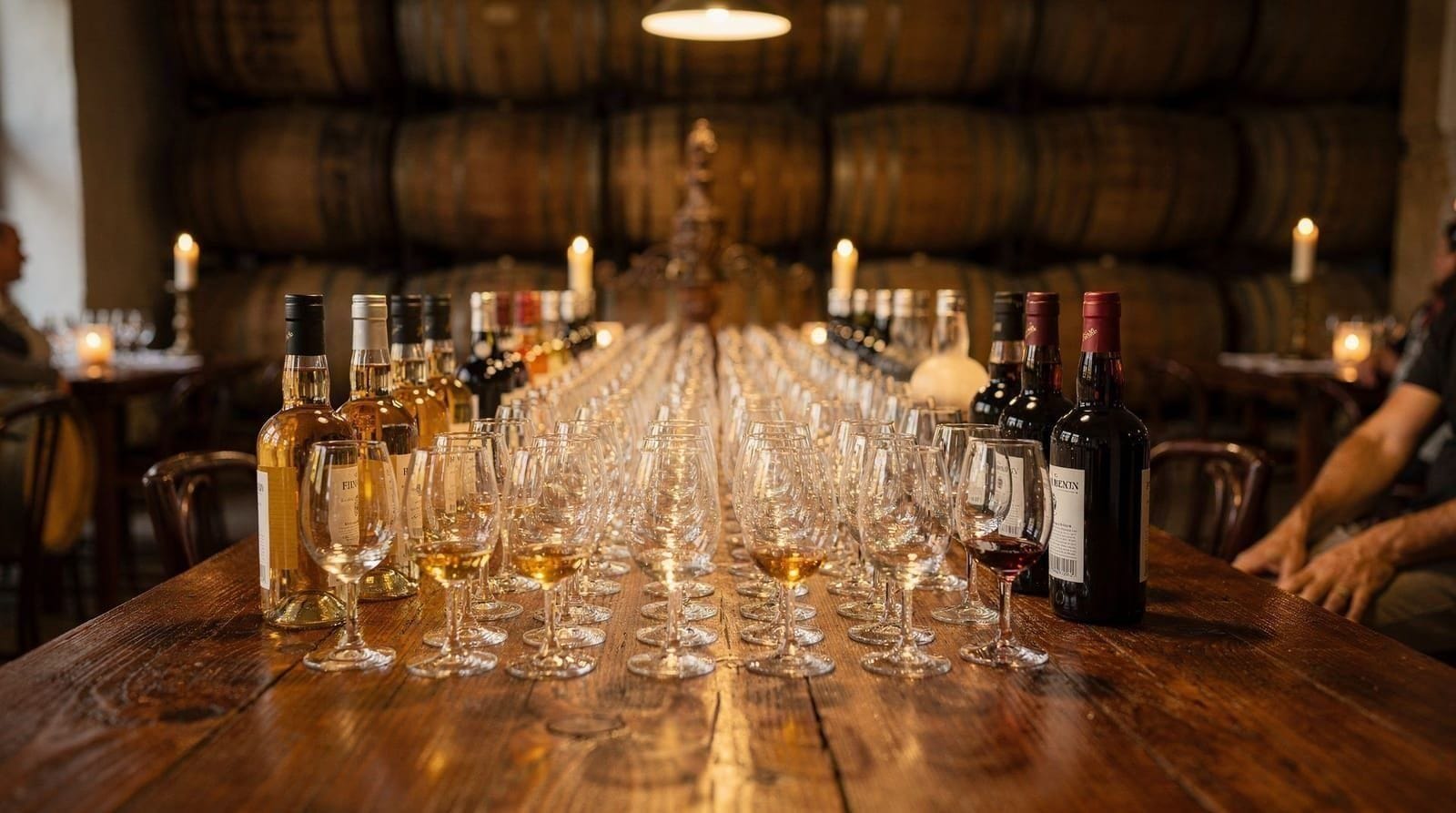
For visitors who want a structured introduction to sherry — multiple styles in sequence, with food pairing and explanation — guided tasting experiences are the most efficient format.
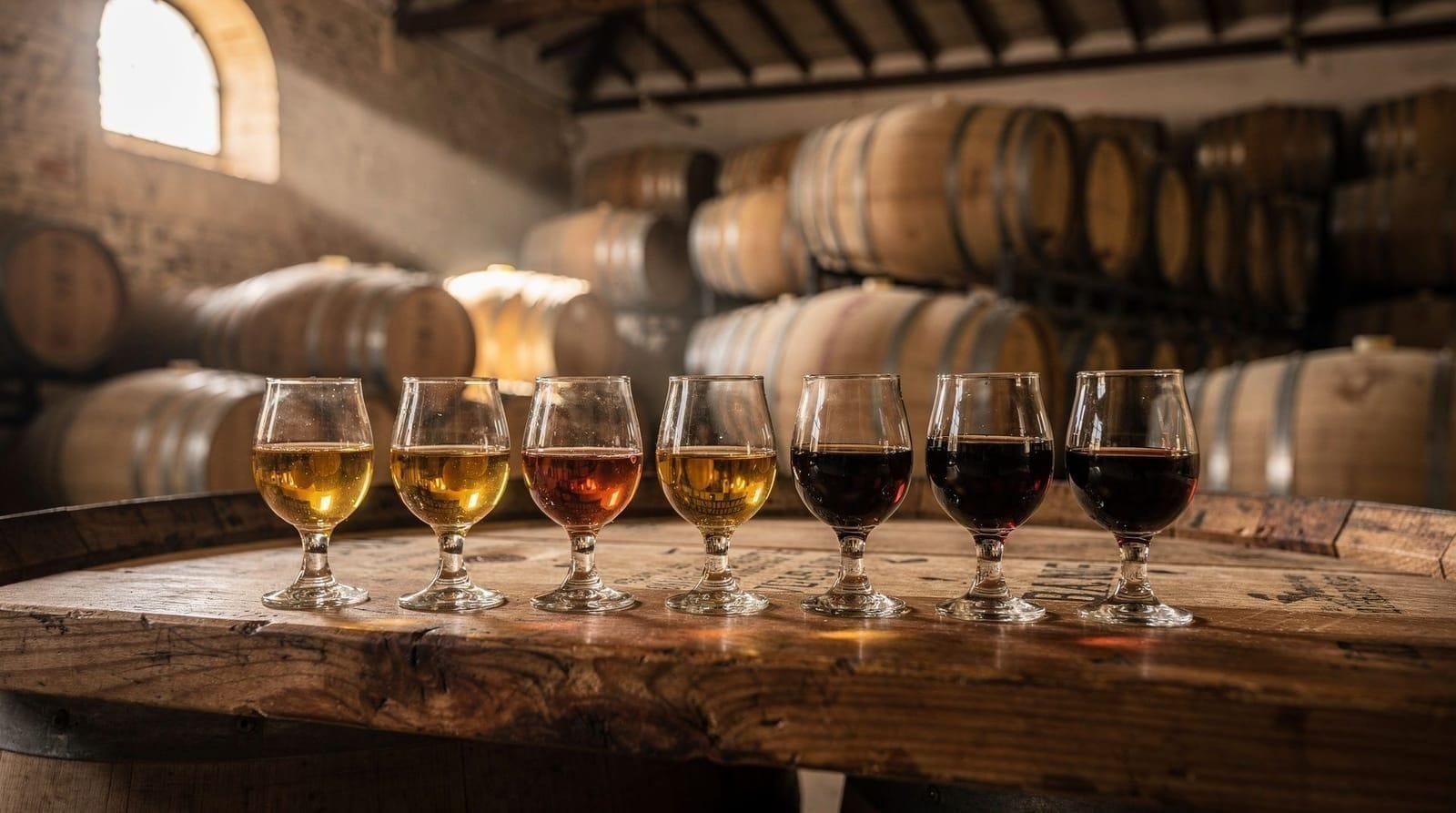
A well-structured 90-120 minute sherry tasting typically covers:
- Fino (chilled, with jamón and olives)
- Manzanilla (contrasting the fino’s character with coastal salinity)
- Amontillado (demonstrating the transition to oxidative aging)
- Oloroso (full oxidative character, dry style)
- Pedro Ximénez (sweet, with cheese or chocolate)
The tapas pairing component is not decorative — it demonstrates how each sherry style functions at the table, which is the most useful thing to understand if you intend to order sherry throughout a meal.
Book a sherry and tapas tasting experience in Seville Book sherry tasting with light snacks in SevilleRooftop wine experiences
For a different format — views of Seville alongside the wine — rooftop wine tasting experiences combine sherry and local wines with the city panorama. Less educational than a dedicated sherry tasting but useful if you want a combined wine-and-views experience as an evening aperitivo. For more places with a view, see the rooftop bars and views guide.
Book rooftop wine tasting in SevilleThe ordering vocabulary
In a traditional Seville bar, knowing what to ask for saves confusion:
- Una copa de fino — a glass of fino (typically 100ml in a chilled copita)
- Una manzanilla — a glass of manzanilla (sometimes served in a broader glass)
- Un fino en rama — unfiltered fino (richer, more complex — not all bars have it)
- Una manzanilla pasada — aged manzanilla (more complex than fresh manzanilla)
- Un palo cortado — if you want to try something rare and exceptional
- Bien frío, por favor — well chilled, please (worth saying for fino if there is any doubt)
From Seville to the source: day trip to Jerez
Tasting sherry in Seville is an excellent introduction. Understanding where it comes from requires going to Jerez.
The train from Santa Justa station to Jerez takes approximately 1 hour (check current fares on the Renfe website). Bodega visits in Jerez run 60-90 minutes and include tastings. The combination of seeing the solera system, walking through aging halls with tens of thousands of barrels, and tasting wines directly from the source is qualitatively different from anything available in Seville.
The Jerez bodegas guide covers which bodegas are most visitor-accessible, how to book, and how to structure the day trip. The wider Jerez day trip from Seville covers the logistics, Jerez de la Frontera gives the town’s background, and the sherry guide to Andalusia explains the styles and the region in detail. For a personal account, read our Jerez sherry and horses trip report. The wine tours from Seville guide covers organised options that handle the logistics.
The Jerez sherry tasting experience available through GetYourGuide combines the tasting with transport logistics for visitors who do not want to arrange their own train travel.
Book Jerez sherry tasting from SevilleWhat to bring home
The best sherry to buy and transport is Pedro Ximénez — its high sugar content means it is robust and travels well, and the best bottles (Valdespino El Candado, González Byass Noé, Lustau San Emilio) are genuinely impressive and relatively affordable (€10-18 for 375ml). Fino does not travel or store well and is not worth buying to take home unless you plan to drink it within days.
Amontillado and oloroso from reputable producers (Lustau, Valdespino, El Maestro Sierra) are excellent purchases and available in Seville’s better wine shops. The markets in Triana occasionally have interesting local bottlings not available in export markets.
How sherry is served: a practical guide to getting it right
The way sherry is served makes a significant difference to how it tastes. The common failures in tourist bars:
Warm fino: The single most common error. Fino and manzanilla served at room temperature taste flat, slightly oxidised, and unpleasant. They should be ice-cold — taken from a refrigerator and poured immediately. If a bar pulls fino from a shelf, the wine will be at ambient temperature (which in Seville in summer means 28-30°C). Ask for it from the fridge (del frigorífico) or say “bien frío.”
Oversized portions: A proper serving of fino is approximately 100ml in a narrow copita. Larger pours warm up before you finish them, defeating the temperature requirement. If you order a fino and receive a 200ml glass, either drink it quickly or ask for a smaller measure.
Stale fino: Once opened, a bottle of fino begins to oxidise. The best bars cycle through their fino stock quickly (daily in busy periods). A bar that serves fino at peak freshness from a just-opened bottle is perceptibly different from one serving from a bottle opened three days ago.
Inappropriate glassware: Fino in a wide-mouth red wine glass loses aroma quickly and warms faster than in a narrow copita. If you are given a large glass, ask if they have something smaller.
The fino en rama experience
Fino en rama is unfiltered, unchilled-stabilised fino — bottled directly from the barrel with minimal processing. It is richer, more complex, and more variable than standard fino. The flor influence is more pronounced; the character changes from bottle to bottle and from season to season (fino en rama is often released in spring when the flor is at its most active).
Not every bar carries fino en rama, but the better sherry-focused wine bars in Seville typically have at least one option. La Gitana en Rama (from Bodegas Hidalgo La Gitana in Sanlúcar), Fino Tío Pepe en Rama (from González Byass), and Fino La Panesa en Rama (from Emilio Hidalgo) are the most consistently available labels.
The price premium over standard fino is typically €1-2 per glass. For visitors who want to understand what fino can be at its most characterful, fino en rama is worth seeking out.
Sherry and tapas: specific pairings worth trying in Seville
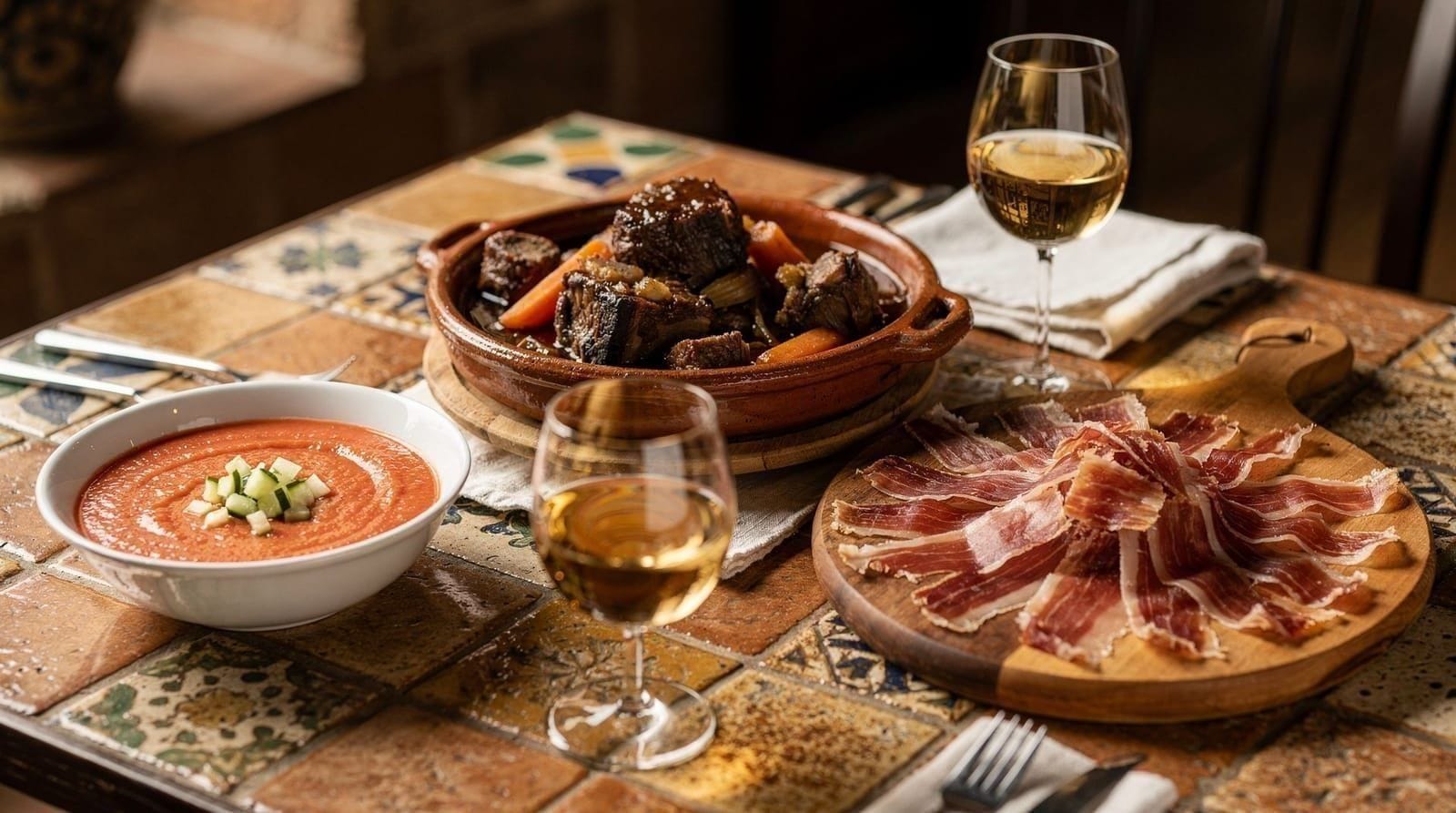
Fino + jamón ibérico de bellota: The canonical pairing. The nuttiness and salinity of fino mirrors the nutty fat of the acorn-fed ham. Both at their best are extraordinary; together they are transcendent. Budget €4-5 for a glass of fino and €8-12 for a ración of good jamón at a proper bar.
Manzanilla + boquerones en vinagre: White anchovies marinated in vinegar and olive oil, the acidity of which echoes the manzanilla’s marine character. A tapa widely available in Seville tapas bars.
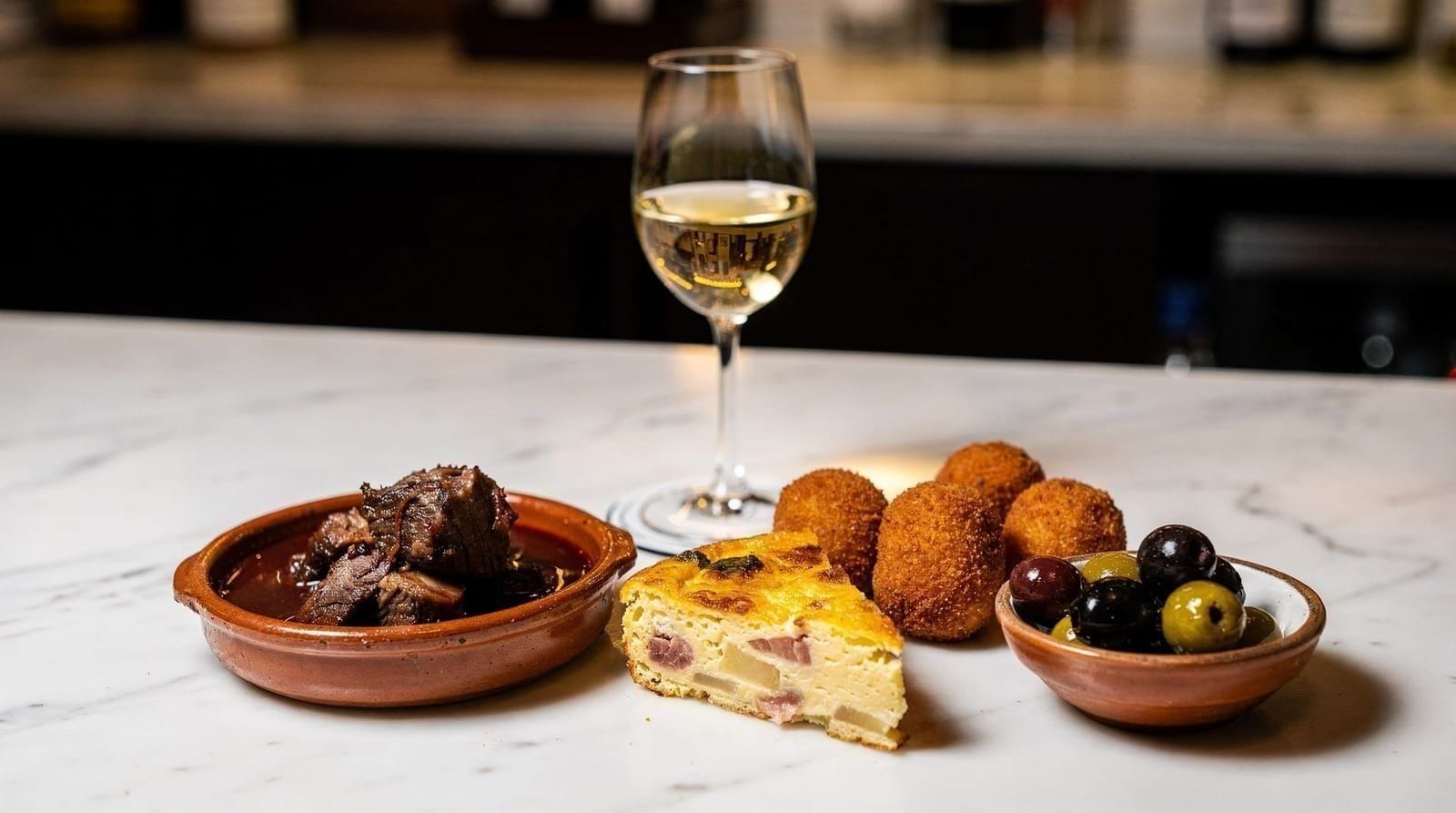
Oloroso + rabo de toro: The bull’s tail stew is a Seville and Córdoba speciality — slow-braised until the meat falls from the bone in a rich, wine-based sauce. A dry oloroso (seco, not dulce) has the body to stand alongside the stew’s richness without being overwhelmed.
Pedro Ximénez + aged manchego: The contrast between the intense sweetness of PX and the crystalline saltiness of very aged manchego (18+ months) works because both are concentrated and powerful — they match intensity rather than balance each other.
Building a sherry itinerary in Seville
For visitors specifically focused on experiencing sherry in Seville, a two-day mini-itinerary:
Day 1 — Seville:
- Morning: Walk through Triana, noting the sherry bars on Calle Betis. Stop for a fino and jamón at a traditional bar (barra, not terrace).
- Afternoon: Guided sherry and tapas tasting (90-120 minutes) covering the main styles in sequence with food pairing.
- Evening: Return to Triana or the Arenal for dinner with a glass of amontillado alongside the main course.
Day 2 — Jerez:
- Train from Santa Justa to Jerez (1 hour). Morning bodega tour at González Byass or Lustau. Lunch in the Barrio de Santiago. Optional afternoon: Real Escuela horse show (Tuesday/Thursday). Return to Seville for the evening.
This two-day structure covers both the city-based tasting experience and the source context in Jerez without requiring accommodation outside Seville.
Timing your tasting around Seville’s rhythm
Sherry bars in Seville follow the city’s own eating and drinking rhythm rather than a tourist schedule. The barra fills up around 1-2pm for a pre-lunch fino, quiets during the mid-afternoon heat, and picks up again from around 8pm for the evening aperitivo — arriving at 6pm expecting a lively scene will often find a half-empty bar. If you’re building a tasting into a wider day of sightseeing, the late-morning lull between about 11am and 1pm is a good window for a quiet, unhurried glass before the lunchtime crowd arrives, especially in Triana and the Arenal where locals outnumber tourists at the barra.
Combining sherry with a wider tapas crawl
Sherry rarely stands alone in Seville — it’s ordered alongside food, not as a separate activity. If you’re planning an evening around it, pair the tasting stops with a broader look at the best tapas bars in Seville rather than treating wine and food as separate outings; the best barras do both well in the same visit. For a deeper dive into what to order alongside your fino or oloroso, the traditional Andalusian dishes guide covers the classics — jamón, boquerones, rabo de toro — that sherry was built to accompany. If you would rather have someone lead the evening, Seville tapas tours compared sets the guided options side by side, and the Seville food tour guide widens the picture. Anyone planning meals around the city can also fold a sherry stop into the 3 days for foodies itinerary.
Frequently asked questions about Sherry tasting in Seville
How much does sherry cost to drink in Seville bars?
A glass of fino or manzanilla at a traditional bar in Seville costs €2-3 at the barra (counter). Tourist-facing wine bars with dedicated sherry lists charge €4-6. Guided tasting experiences through GetYourGuide run €25-45 per person depending on length and whether food is included. The price difference between barra and terrace can be 30-50% at the same venue — always sit or stand inside if price matters.What should I order for a first sherry experience in Seville?
Start with a chilled fino or manzanilla — dry, saline, nutty, served cold. This is the style Andalusians drink daily and the most approachable entry point. If you immediately want to understand the range, ask for a copita of fino followed by an amontillado — the contrast between biological (fino) and oxidative (amontillado) aging is the fundamental structural divide in sherry production.Is it true you should drink sherry cold?
Fino and manzanilla: absolutely. These wines are served cold in Andalusia — typically from a chilled bottle, poured into a small copita or small wine glass, and consumed before they warm up. Serving them at room temperature in a Seville summer (28-35°C) is genuinely unpleasant. Amontillado and oloroso are served slightly less cold, around 12-14°C. Pedro Ximénez is typically served at room temperature or slightly cool.What time of day is best for a sherry tasting in Seville?
The late-morning window between around 11am and 1pm is a good time for an unhurried glass before the lunch crowd, while the early evening from around 8pm is when Seville's barras fill up for the aperitivo. Mid-afternoon (roughly 4-7pm) tends to be quiet, following the city's own siesta-influenced rhythm, so don't expect a lively scene if you arrive then.
Top experiences
Bookable activities with verified prices and instant confirmation on GetYourGuide.